
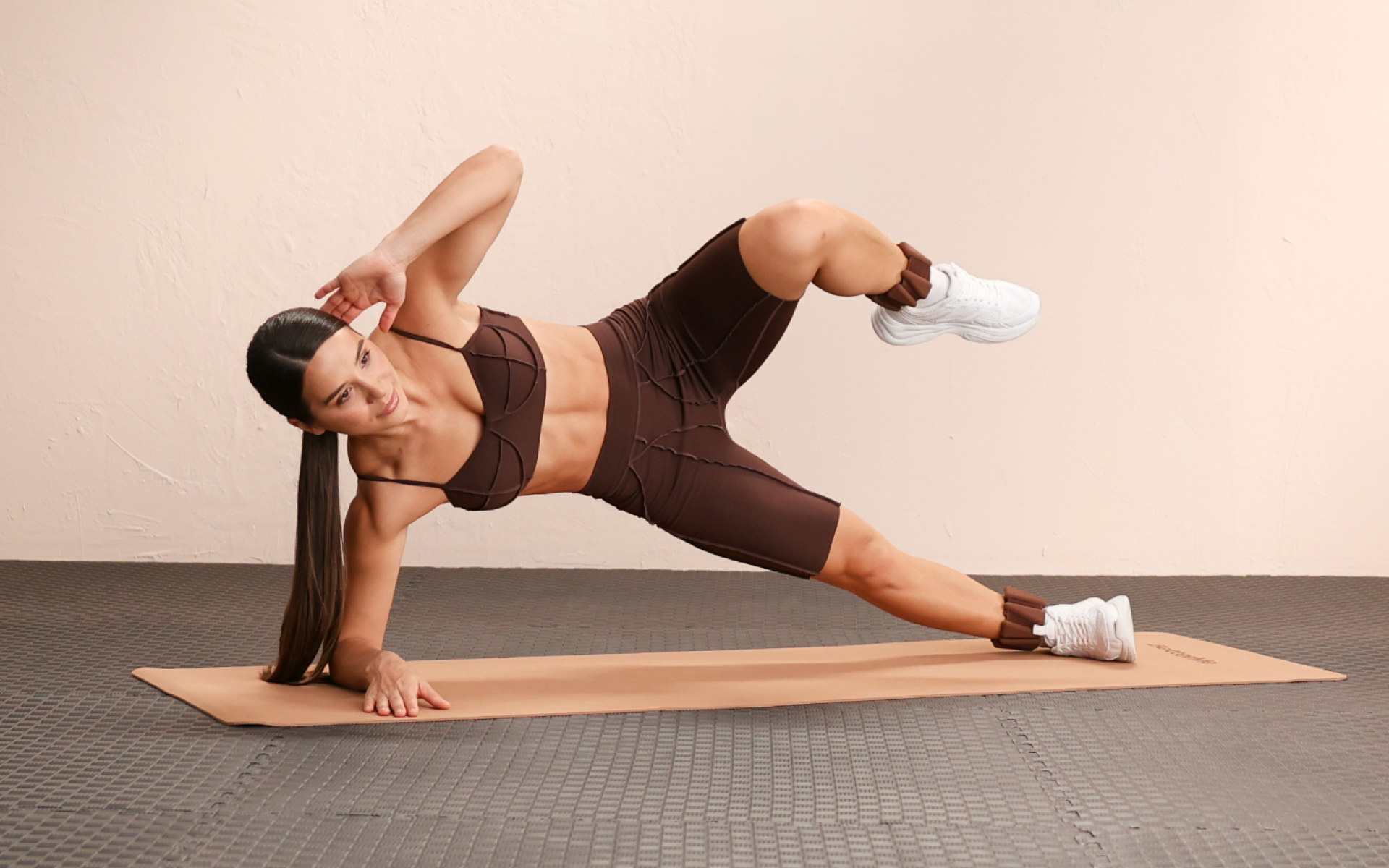
Deep core exercises for women are focused on improving coordination and endurance in the trunk muscles. These movements emphasize breathing, gentle bracing, and steady control, rather than intense crunching. A well-rounded routine usually includes options such as the dead bug, bird dog, and side plank variations. With regular practice, these exercises may help many people lay a steadier foundation for daily tasks and other workouts. The best approach involves light abdominal tension, consistent breathing, and slow, deliberate movements.
Deep core muscles are the supportive muscles that are wrapped around your midsection. They include your diaphragm, pelvic floor, transversus abdominis, and multifidus. This article is for women looking to practice trunk control, support steadier breathing during movement, and establish a steady foundation for exercise.
Laying this foundation matters because these muscles support your back and manage abdominal pressure. When they work together well, everyday activities tend to feel much smoother.
If you want to start a helpful movement practice, try adding a few thoughtful routines to your week. Keep reading to learn how to incorporate these movements into your daily life.
What Are the Deep Core Muscles?
Your deep core works like a supportive cylinder around your midsection. These muscles are often targeted through core structural exercises that emphasize stability, posture, and pressure management. It helps manage pressure, coordinate breathing, and support your back during movement (1).
These muscles often work in the background. Learning the basics can make it easier to understand what you’re trying to feel during exercise.
| Muscle group | Role | What it can feel like | Example movement |
|---|---|---|---|
| Diaphragm | Primary breathing muscle at the top of the core cylinder | Expansion in the lower ribs and belly during an inhale | Deep, slow 360-degree breathing |
| Transversus abdominis | Deepest abdominal layer that’s wrapped around the waist | A gentle tightening or drawing-in feeling around the waist | Exhaling and lightly bracing the midsection |
| Multifidus | Small muscles that run along the back | Subtle steadiness in the lower-back area | Extending an arm or leg while keeping the trunk still |
| Pelvic floor | A hammock of muscles at the bottom of the pelvis | A gentle lifting sensation from the bottom up | Coordinating an exhale with a light upward lift |

How Do I Activate My Deep Core?
“Activating” a muscle is a practical shorthand used by many coaches. It doesn’t mean a hidden muscle was fully off and now switched on. In most cases, it means improving coordination, breathing, bracing, and timing.
Focus on Your Breathing
Start by breathing into your lower ribs and belly. This helps your diaphragm move more fully. Try not to lift your chest and shoulders toward your ears.
Add a Light Brace
When you exhale, create gentle tension around your waist. Imagine zipping up a snug pair of pants. Keep the effort light—around 20-30% of your maximum squeeze.
Maintain Rib and Pelvis Position
Try to keep your ribs stacked over your pelvis. Avoid arching your lower back too much. This position helps your trunk muscles work together.
Use Movement for Coordination
Practice keeping that light tension while moving your arms or legs. This can build control and help your body stay steady during motion.
Follow this step-by-step sequence to practice coordination:
- Lie on your back with your knees bent.
- Inhale slowly through your nose to expand your ribs.
- Exhale and gently tighten your midsection.
- Keep breathing normally while maintaining this light brace.
Read more: Bodyweight Core Exercises: A Simple Way to Build Strength
What Are the Best Deep Core Exercises for Women?
In this context, “best” means simple, controlled exercises that are easy to scale. They help many people practice breathing and trunk control without feeling overwhelmed.
Many of the best deep core exercises for women start with simple bodyweight options. These movements can also be considered easy core exercises because they focus on control, breathing, and coordination rather than intensity. If you’re looking for deep core exercises for beginners, it often makes sense to begin with slower, low-complexity movements. Later, you may choose to explore weighted variations once your control feels more consistent.
| Exercise | Target area | Equipment | Who it suits | Progression |
|---|---|---|---|---|
| 90-90 breathing | Diaphragm and breath coordination | Wall or chair | Beginners | Add a light brace on the exhale |
| Heel slides | Lower trunk stability | None | Beginners | Slide both heels slightly at once |
| Dead bug | Overall trunk control | None | Intermediate | Hold light dumbbells in hands |
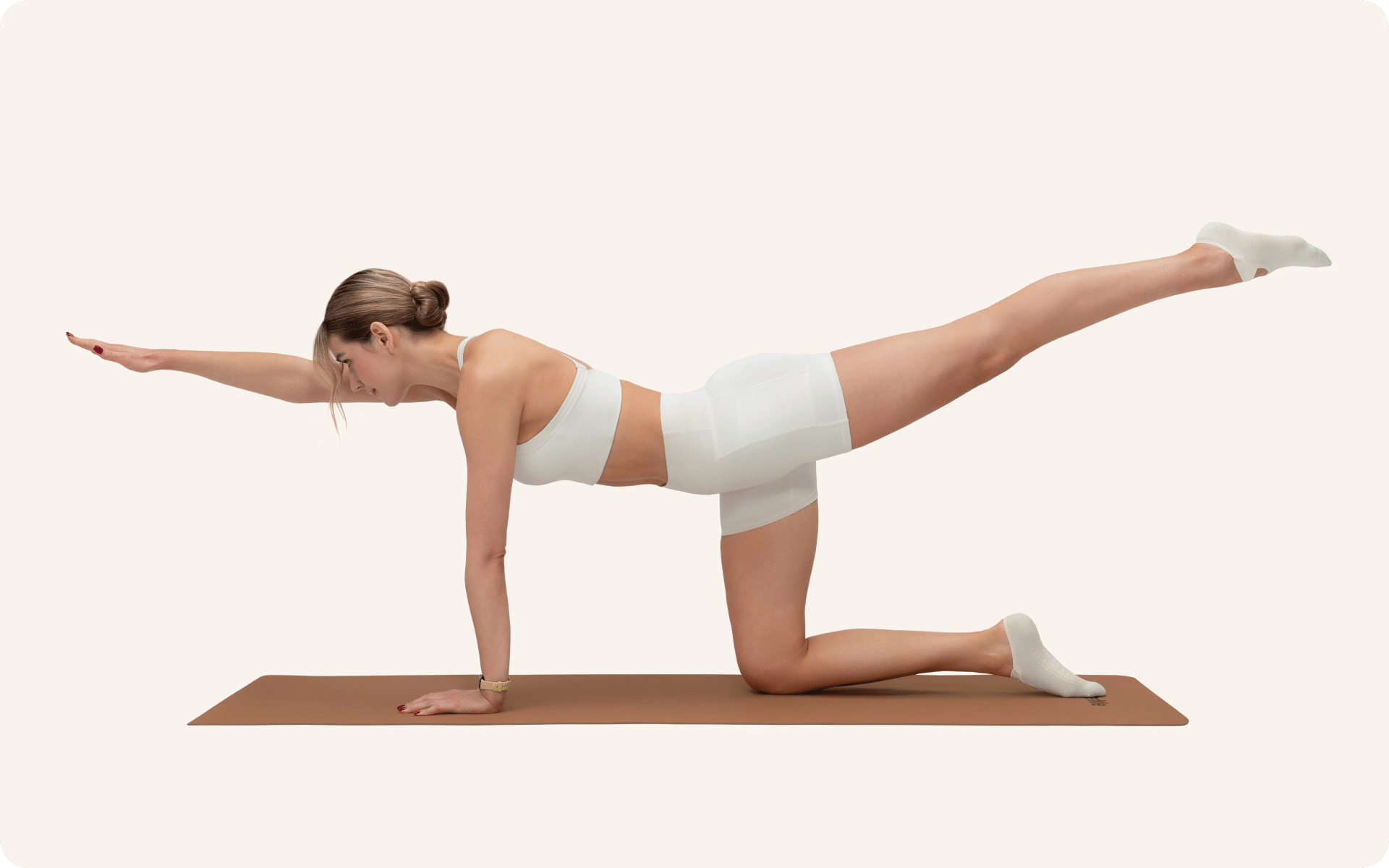
| Bird dog | Back and trunk steadiness | None | Intermediate | Draw a small square with your hand |
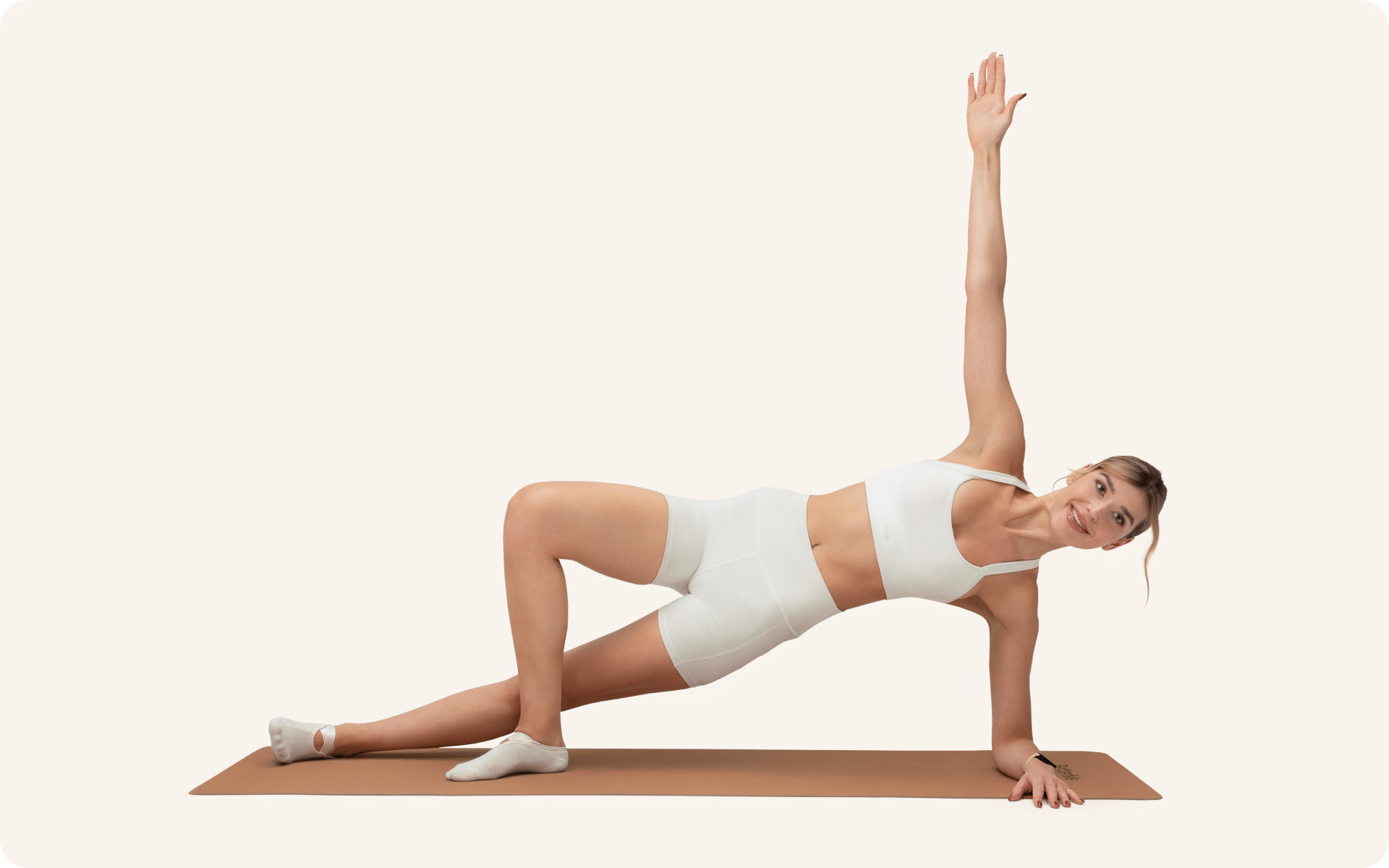
| Side plank variation | Side abdominals | None | All levels | Straighten the top leg |
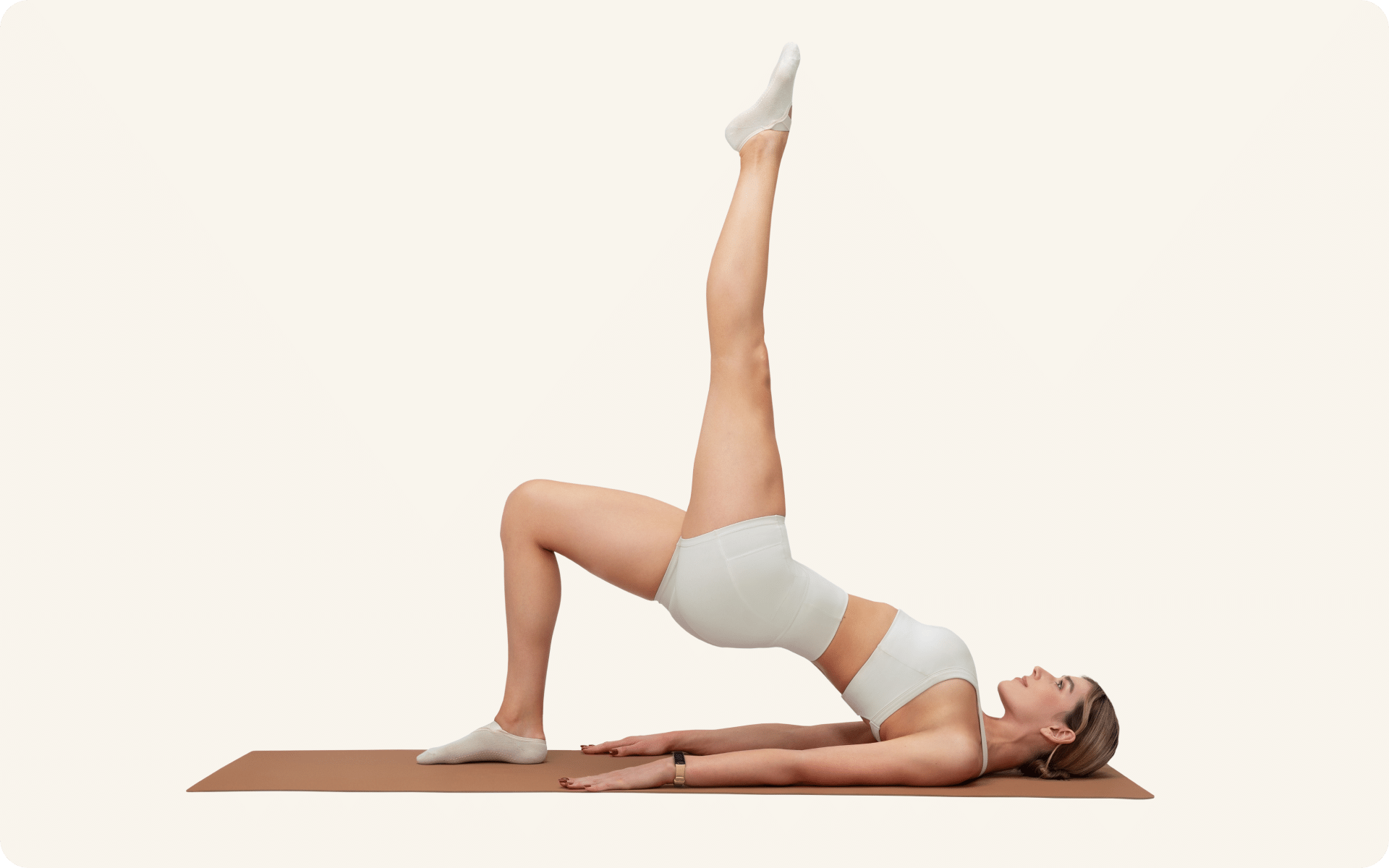
| Glute bridge march | Pelvis stability | None | Intermediate | Hold one leg up longer |
| Suitcase carry | Side steadiness | Dumbbell | Intermediate | Use a slightly heavier weight |
| Goblet march | Front and core steadiness | Dumbbell | Intermediate | Lift the knees higher with control |
90-90 Breathing
This is a strong starting point for beginners as it simplifies rib position and breathing.
- Lie on your back.
- Place your feet on a wall or a chair so your knees are bent at 90 degrees.
- Inhale deeply into your ribs and belly.
- Exhale fully while gently tightening your waist.
- Repeat for several breath cycles.
Heel Slides
Heel slides are a practical option if you want deep core exercises for women at home.
- Lie on your back with your knees bent and your feet flat.
- Establish a light brace around your waist.
- Slowly slide one heel away from your body until the leg is straight.
- Pull the heel back to the starting position.
- Switch legs and repeat, keeping your pelvis steady.
Dead Bug
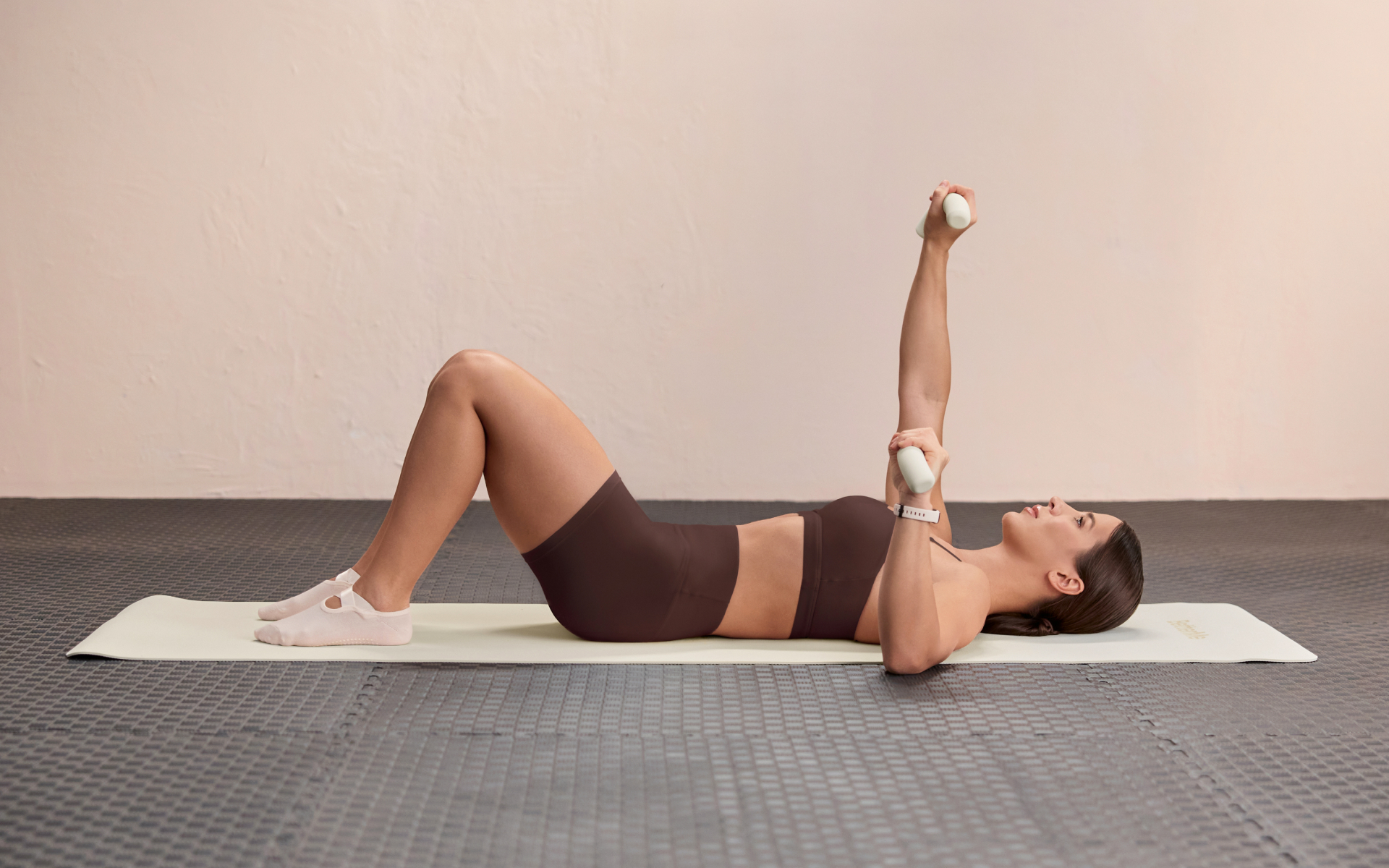
- Lie on your back with your arms reaching up and your knees at 90 degrees.
- Create a gentle brace and keep your lower back near the floor.
- Slowly lower one arm and the opposite leg toward the floor.
- Stop before your back arches or your ribs flare.
- Return to the start and switch sides.
Bird Dog
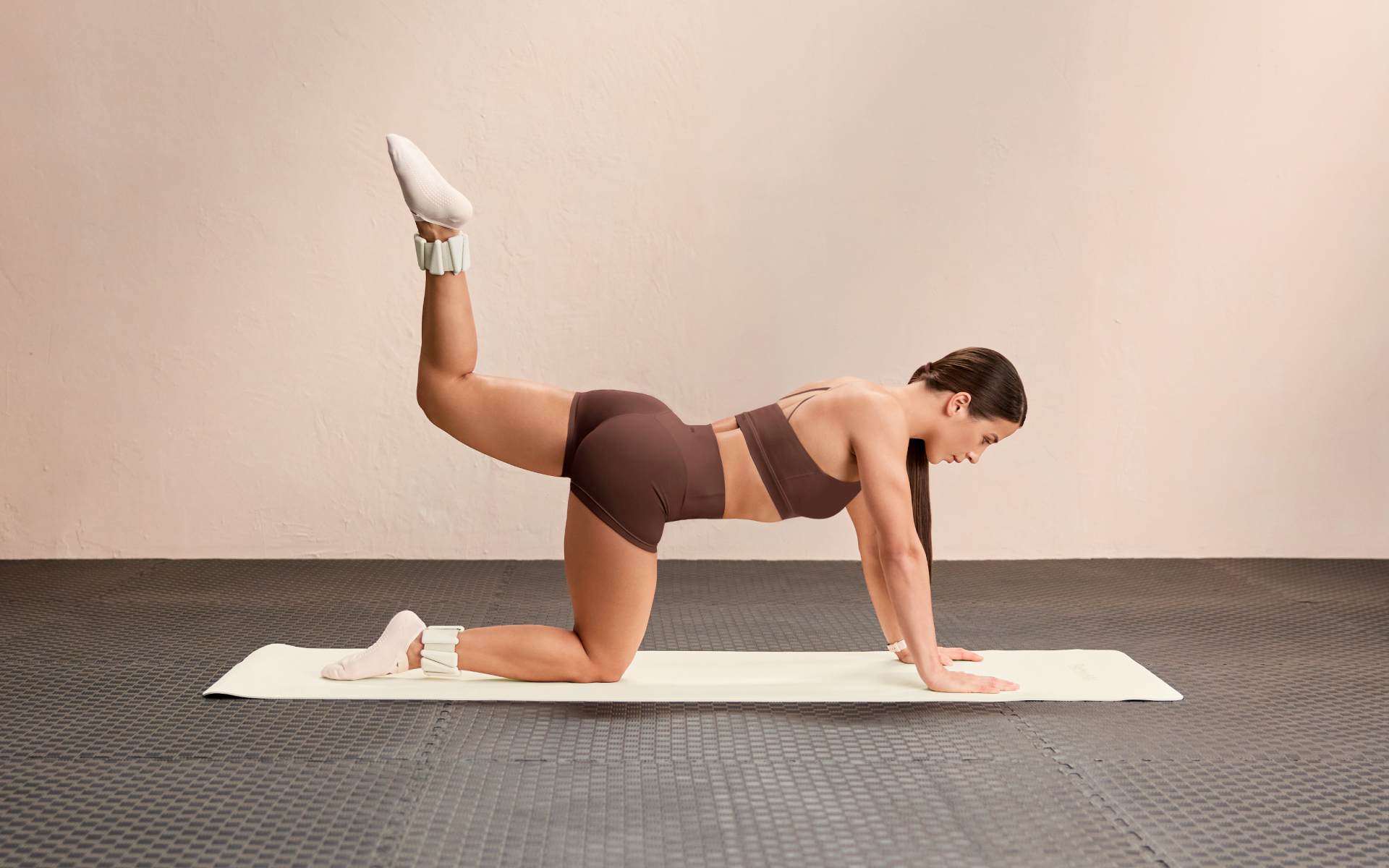
- Start on your hands and knees.
- Keep your back relatively flat and brace your midsection lightly.
- Reach one arm forward and the opposite leg backward.
- Keep your hips level and avoid twisting your trunk.
- Return to the starting position and switch sides.
Side Plank Variation
- Lie on your side with your elbow under your shoulder and your knees bent.
- Lift your hips off the floor, resting on your elbow and bottom knee.
- Hold this position while breathing steadily.
- Lower your hips with control.
- Repeat on the other side.
Glute Bridge March
- Lie on your back with your knees bent and your feet flat.
- Lift your hips into a bridge position.
- Keep your pelvis steady and lift one foot off the floor slightly.
- Place the foot down and lift the other foot.
- Continue marching while keeping your hips level.
Suitcase Carry
If you want to explore deep core exercises for women with weights, this is a practical place to start.
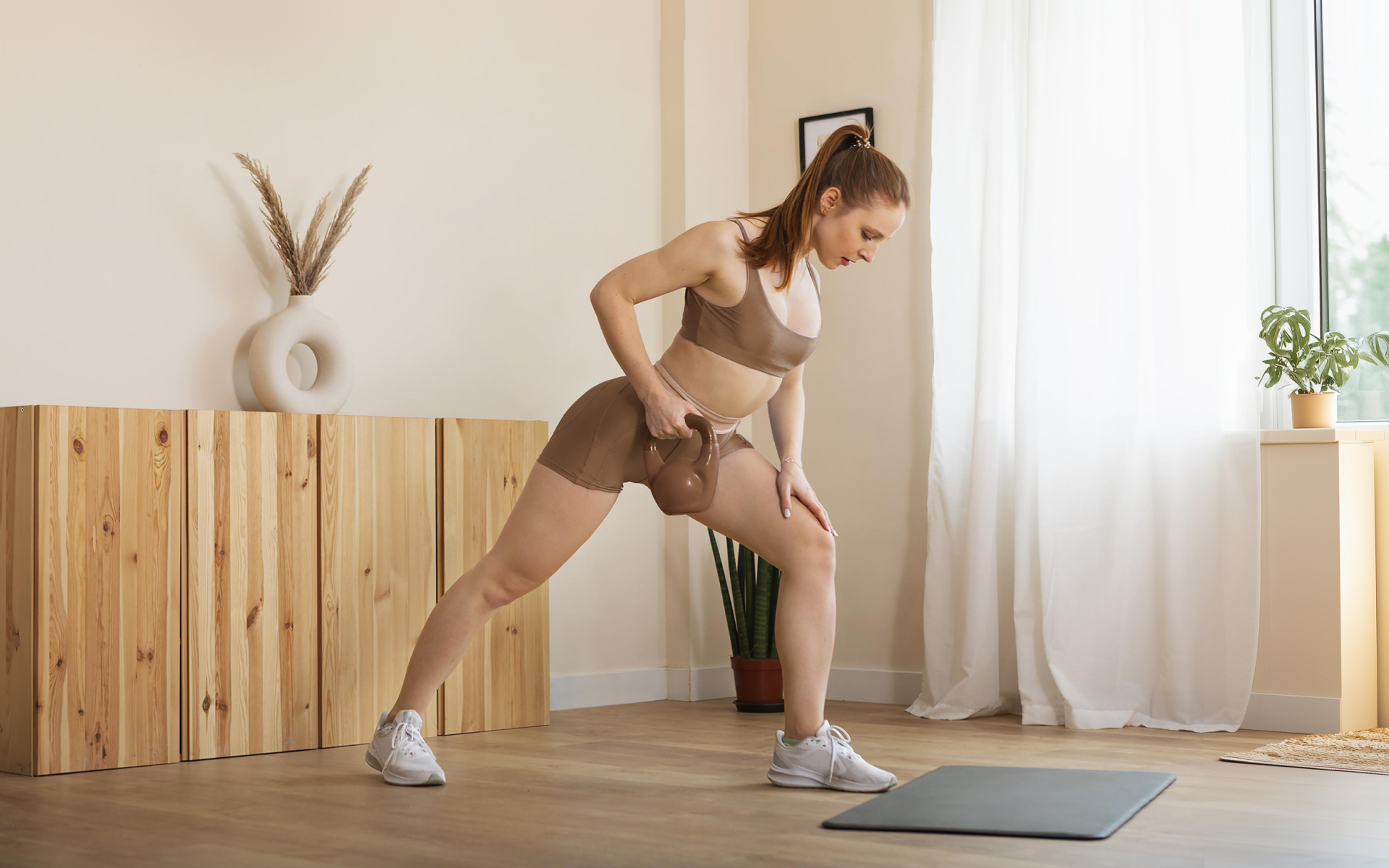
- Hold a dumbbell or kettlebell in one hand.
- Stand tall with a gentle brace around your waist.
- Walk slowly forward for a set distance.
- Avoid leaning toward or away from the weight.
- Switch hands and repeat the walk.
Goblet March
- Hold a single weight vertically in front of your chest.
- Stand tall and brace your midsection.
- Slowly lift one knee up toward hip height.
- Lower the foot with control and switch legs.
- Keep your trunk steady and avoid leaning backward.
Whether you’re a workout beast or just a beginner making your first foray into the world of fitness and dieting – BetterMe has a lot to offer to both newbies and experts! Install the app and experience the versatility first-hand!

How Do I Know If I’m Engaging My Deep Core Muscles?
There’s no single feeling that guarantees perfect engagement. However, a few helpful cues can make the experience easier to recognize.
You may notice subtle tension around your lower abdomen and waist. Your trunk may feel steady enough that controlling your ribs and pelvis becomes easier. You should also still be able to breathe without feeling locked up.
You’ll likely not feel a dramatic “switch-on” moment. Intense shaking or a hard, vacuumed-in stomach often means you’re overworking. Aim to feel supported rather than stiff.
Why Am I Struggling to Engage My Core?
Many people find trunk control challenging at first. That doesn’t mean you’re doing something wrong. In many cases, it simply means your body is still learning how to coordinate breathing, bracing, and movement at the same time.
This process can feel subtle, and subtle skills often take longer to notice. If your deep core work feels awkward, inconsistent, or unclear, a few common issues may be making the process harder.
Over-Bracing
Squeezing as hard as possible can limit movement. It can also make your trunk feel rigid instead of steady. For many people, a lighter effort creates better control.
A useful cue is to think “firm, but still breathing”. If you can’t inhale and exhale smoothly, you may be using too much tension.
Breath-Holding
If you hold your breath, you may rely more on internal pressure than coordinated muscle control. This can make an exercise feel strong, but not necessarily well-organized.
Try exhaling during the hardest part of a movement, then keep your breath calm instead of clamping down through the whole rep.
Going Too Hard Too Soon
Advanced exercises can cause other muscles to take over. When a movement is too challenging, people often compensate by arching the back, rushing the motion, or gripping through the hips and shoulders.
Start with easier options and shorter sets. Controlled reps usually teach more than pushing through a harder variation too early.
Cue Overload
Thinking about too many instructions at once can make the whole process feel confusing. If you’re trying to manage ribs, pelvis, breath, shoulders, neck, and leg movement all at once, your attention may get scattered.
Pick one main cue at a time. For example:
- “Breathe into my ribs”
- “Exhale and tighten gently”
- “Keep my trunk steady”
Once one cue feels more natural, add another.
Read more: 7 Gentle Core Exercises for the Elderly

Expecting a Dramatic Sensation
Deep core work is often subtle. Many people expect a strong burn, shaking, or a big visible contraction. If this doesn’t happen, they assume the exercise isn’t working.
In reality, effective deep core work often feels calm and controlled. A steadier trunk, smoother breathing, and better balance during simple movements can be more useful signs than intensity alone.
Moving Too Fast
Speed can hide what the trunk is doing. If you rush through reps, it becomes more difficult to notice whether you’re staying steady or simply getting through the motion.
Slow the exercise down enough to feel each phase. A brief pause at the hardest point can help you notice whether you’re still breathing and staying organized.
Using an Exercise That Does Not Match Your Current Level
Not every exercise fits every person at every stage. Some movements are better for learning awareness, while others challenge endurance and control.
If one move feels frustrating, switch to a simpler option instead of forcing it. Deep core exercises with no equipment for women can be a helpful starting point as they reduce complexity and let you focus on coordination first.
Letting Your Neck, Hips, or Shoulders Take Over
Sometimes the issue isn’t that your trunk is doing nothing, it’s that other areas are doing too much. You may notice tight shoulders, a clenched jaw, gripping through the glutes, or a stiff neck.
When this happens, reduce the effort, then ask whether you can keep the same shape with less tension everywhere else.
What Can Help Right Away?
If you feel stuck, simplify the task. These quick adjustments can make deep core practice feel more manageable:
- Shorten the range of motion
- Slow the pace
- Reduce the number of reps
- Focus on one breathing cue
- Choose a more beginner-friendly move
Small changes often improve body awareness faster than doing more.
Can I Train My Deep Core Every Day?
No, it’s usually not helpful to do focused core routines every day. Your muscles usually need rest time to perform well and maintain good movement quality (2).
Doing these movements daily can lead to local fatigue. When muscles are tired, coordination often drops. This can make it harder to practice the kind of control you actually want to build (3).
Daily training can also become monotonous. A few focused sessions each week often work better than repeating the same drills every day (4).
Intense sweat sessions, working weight loss tips, lip-smacking recipes come in one package with the BetterMe Well-Being Coach app—all at your fingertips, start transforming your life now!
How Long Does It Take to Notice Changes from Deep Core Exercises?
There’s no fixed timeline for noticing changes. Consistency matters more than speed, and progress may show up in different ways for different people.
For many people, the first changes are not visual. You may notice that breathing feels smoother during exercises, your trunk feels steadier, or simple movements feel more controlled. Some people may notice these shifts within a few weeks of regular practice.
For some people, more noticeable changes in coordination and endurance may show up around 4-8 weeks (5). Even then, individual outcomes vary, and the timeline depends on your starting point, exercise choice, recovery, and how often you practice.
It also helps to know what kind of change you’re looking for. Improvements in movement quality, balance, and stability during strength training or daily activities may occur at different rates for different people.
Some people search for deep core exercises for smaller waist goals. However, the primary purpose of these exercises is to enhance trunk control, stability, and coordination rather than directly alter body shape.
A few factors can influence how quickly you notice progress:
- How often you practice
- Whether the exercises match your current level
- How much attention you give to breathing
- Whether you recover well between sessions
- How consistent your routine is over time
It’s also common to feel “off” before things feel easier. Early on, you may become more aware of compensations, breath-holding, or extra tension. That doesn’t mean that you’re getting worse—it may simply mean your awareness is improving.
A useful way to track progress is to look for small wins, such as:
- Smoother reps
- Less rushing
- Easier breathing during holds
- Better control of your ribs and pelvis
- More confidence with beginner movements
These signs often matter more than chasing a deadline. Deep core training is usually less about instant change and more about building a skill that becomes stronger with repetition.
Disclaimer: Individual results vary widely, and progress depends on your body, consistency, exercise selection, recovery, and overall activity levels.
Frequently Asked Questions
Does engaging your core just mean that you tighten it?
No, engaging your core means more than just tightening it. It involves coordinating a light brace with steady breathing and controlled movement. Squeezing too hard can limit mobility and make an exercise feel more forced than useful. For many people, gentle support works better than rigid tension.
Should I engage my core when walking?
No, you don’t need to consciously engage your core when walking. Your body usually handles the necessary muscle activity during normal walking on its own. Forcing a brace during an easy walk can change your natural rhythm and make breathing feel less relaxed. A tall posture and easy breathing are often enough.
What are common deep core training mistakes?
Common mistakes include breath-holding, over-bracing, and choosing exercises that are too advanced. Many people also rush through reps or expect a dramatic feeling every time.
Deep core practice tends to work better when the movement is slow, the effort is moderate, and breathing stays steady. A simpler exercise often teaches more than a harder one.
How many deep core exercises should I do per session?
You can usually start with 3-5 exercises per session. This gives you enough variety to practice different patterns without creating too much fatigue. Many people do well with 1-3 sets of each move, depending on experience and energy. If your form starts slipping, it may help to stop earlier and keep the quality high.
Can deep core exercises help with balance?
Yes, deep core exercises may help support balance. A steadier trunk gives your arms and legs a more stable base to move from. This can make it easier to control your position during standing, walking, and single-leg work. The change is often gradual, but improved trunk control may carry over into daily movement (6).
Do deep core exercises burn belly fat?
No, deep core exercises don’t directly burn fat from one area. Fat loss is shaped by overall habits, including nutrition, movement, sleep, and consistency over time (7). These exercises are more useful for improving coordination, breathing, and trunk control. They can still be a valuable part of a well-rounded routine, but not a spot-reduction tool.
The Bottom Line
Building a reliable movement practice takes time and patience. By exploring deep core exercises for women, you may support steadier breathing, bracing, and trunk control over time. Start with simple variations, remain consistent, and let steady practice build your confidence.
DISCLAIMER:
This article is intended for general informational purposes only and does not serve to address individual circumstances. It is not a substitute for professional advice or help and should not be relied on for making any kind of decision-making. Any action taken as a direct or indirect result of the information in this article is entirely at your own risk and is your sole responsibility.
BetterMe, its content staff, and its medical advisors accept no responsibility for inaccuracies, errors, misstatements, inconsistencies, or omissions and specifically disclaim any liability, loss or risk, personal, professional or otherwise, which may be incurred as a consequence, directly or indirectly, of the use and/or application of any content.
You should always seek the advice of your physician or other qualified health provider with any questions you may have regarding a medical condition or your specific situation. Never disregard professional medical advice or delay seeking it because of BetterMe content. If you suspect or think you may have a medical emergency, call your doctor.
SOURCES:
- Abdominal Muscles (2024, my.clevelandclinic.org)
- Why Rest Days Are Important for Muscle Building (2024, nasm.org)
- Research progress on exercise fatigue from the perspective of fatigue biomarkers (2026, pmc.ncbi.nlm.nih.gov)
- A Novel Approach to Training Monotony and Acute-Chronic Workload Index: A Comparative Study in Soccer (2021, frontiersin.org)
- Load-induced human skeletal muscle hypertrophy: Mechanisms, myths, and misconceptions (2026, sciencedirect.com)
- Core exercises: Why you should strengthen your core muscles (2025, mayoclinic.org)

 Reviewed by