
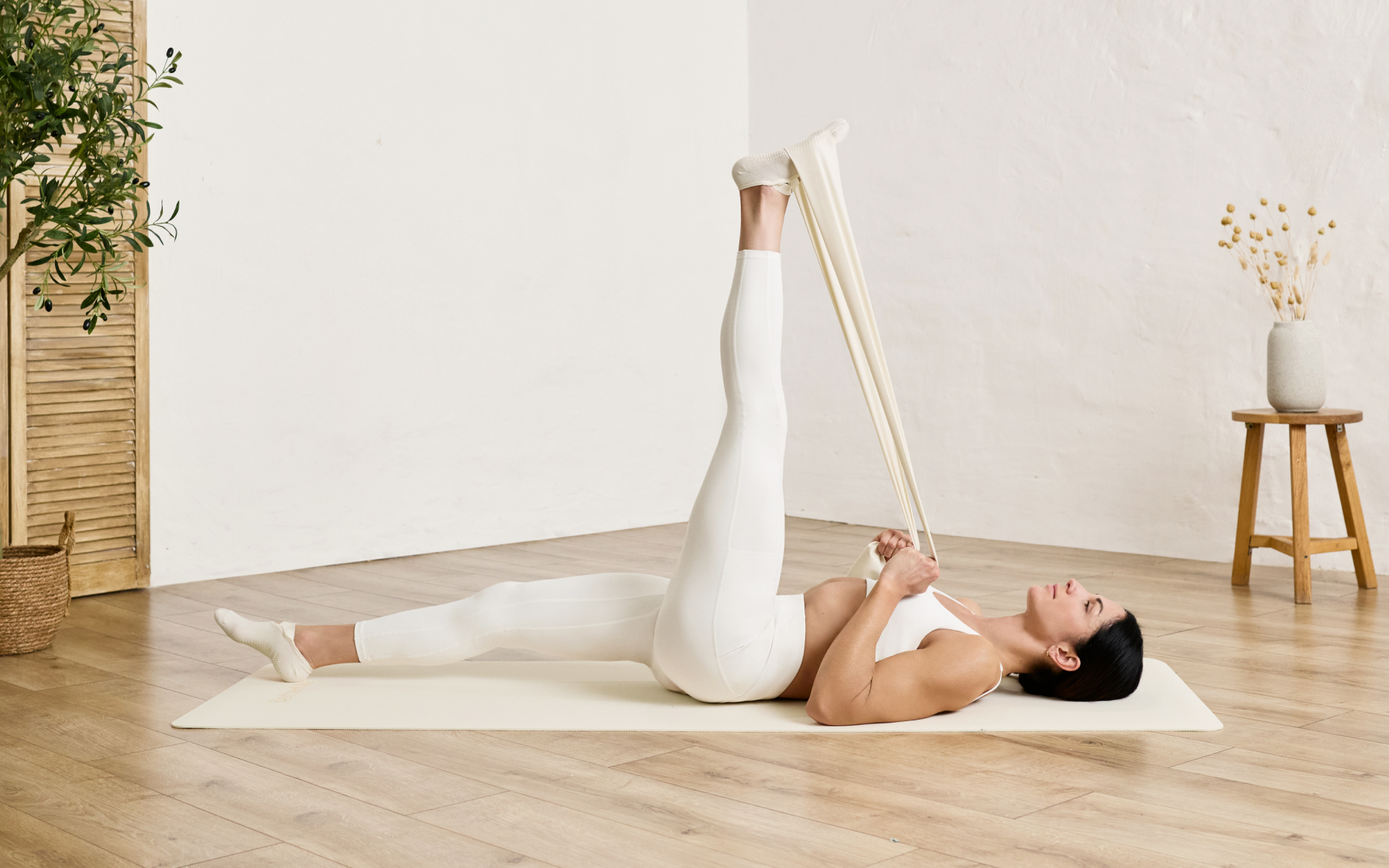
Indoor fitness activities are simply any form of physical exercise you can perform inside a building. This could be your home, an apartment common area, your office, or a dedicated gym. The goal is to move your body to support overall wellbeing, strength, or endurance without stepping outside.
Examples range from bodyweight strength training and dance cardio to more restorative practices like yoga or Pilates. Even using what’s available, like a set of stairs for a step workout, counts as a valuable indoor fitness activity. These activities offer a convenient and practical way to stay active regardless of the weather or time of day.
Ahead, we discuss common indoor fitness activities and share a workout you can do at home.
What Are Some Good Indoor Fitness Activities?
Finding the right indoor fitness activity depends on your goals, available space, and what you enjoy. Here are some activities that can be adapted for different fitness levels.
| Activity | Good For | Equipment Needed | Recommended Frequency |
|---|---|---|---|
| Bodyweight Strength Training | Muscular strength, endurance (1) | None | 2-4 times per week |
| Yoga | Flexibility, balance, muscular endurance (2) | Yoga mat (optional) | 3-5 times per week |
| Pilates | Core strength, posture, flexibility (3) | Mat (optional), resistance bands | 2-4 times per week |
| High-Intensity Interval Training (HIIT) | Cardiovascular health, endurance (4) | None (can add weights) | 1-3 times per week |
| Dance Cardio | Cardiovascular health, coordination (5) | None | 3-5 times per week |
| Stationary Cycling | Cardiovascular endurance, leg strength (6) | Stationary bike | 3-5 times per week |
| Rowing | Full-body strength, cardiovascular health (7) | Rowing machine | 2-4 times per week |
| Stair Climbing | Cardiovascular health, leg strength (8) | Stairs or step machine | 3-5 times per week |
| Kettlebell/Dumbbell Training | Power, strength, endurance (9) | Kettlebell or Dumbbell (s) | 2-3 times per week |
| Resistance Band Workouts | Muscular strength, stability (10) | Resistance bands | 2-4 times per week |
These indoor fitness activities for adults provide a solid foundation for a comprehensive, year-round fitness plan.
Read more about a great indoor walking workout.
Can Indoor Workouts Reduce Body Fat Effectively?
Indoor workouts can support body fat reduction when approached consistently. A calorie deficit is commonly understood as a key factor in body fat reduction, meaning you burn more calories than you consume. Physical activity, whether performed indoors or outdoors, can increase your total daily energy expenditure and contribute to that deficit (11).
The effectiveness of an indoor workout depends on its intensity, duration, and type. For instance, High-Intensity Interval Training (HIIT) is commonly used as a time-efficient workout option. HIIT involves short bursts of intense exercise, pushing your heart rate to 80-95% of its maximum, followed by brief recovery periods. This method may help increase calorie expenditure in a short amount of time and may keep energy expenditure elevated for a period after the workout concludes (4).
Steady-state cardio exercises, like using a stationary bike or rowing machine for 30-60 minutes at a moderate intensity, can also help increase calorie expenditure and support body fat reduction over time (5).
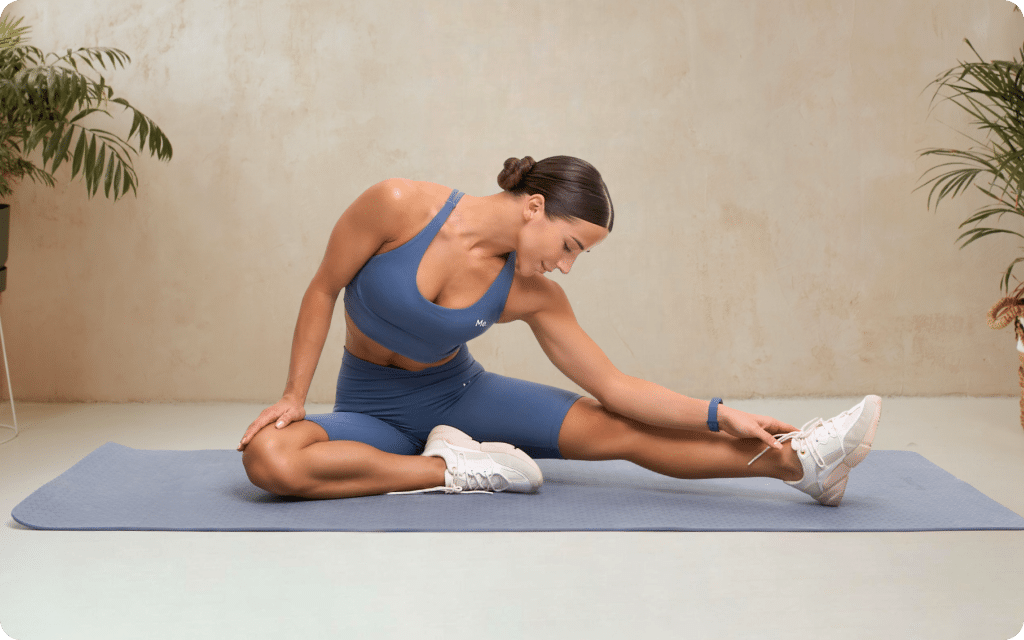
Strength training can also play an important role. Building muscle mass may support higher daily energy expenditure over time, including the energy your body uses at rest. Over time, more muscle may support body composition goals and make long-term routine management easier for some people (12).
Ultimately, consistency is one of the most important factors. Engaging in regular indoor fitness activities, combined with a balanced eating pattern, can be a practical strategy for supporting body fat reduction over time.
Read more: Best Indoor Walking Apps for Weight Loss: An Evidence-Based Guide
What Indoor Exercise Burns Belly Fat Best?
The idea that you can “spot reduce” fat from a specific area, like the belly, is a common misconception. Your body stores fat based on genetics, hormones, and overall lifestyle; it also loses fat from all over your body, not just from the area you are exercising. Therefore, no single exercise will specifically burn belly fat.
However, a comprehensive fitness plan paired with a balanced nutritional approach can support overall body fat reduction, which may also affect the midsection over time. A practical approach often includes a combination of cardio exercise and total-body strength training.
- High-Intensity Interval Training (HIIT): As mentioned, HIIT can be a useful option for increasing calorie expenditure. Workouts that incorporate full-body movements like burpees, high knees, and mountain climbers elevate your heart rate and engage multiple muscle groups, leading to a high calorie burn that contributes to fat loss (4).
- Full-Body Strength Training: Exercises like squats, deadlifts, push-ups, and rows can help build muscle tissue. Higher muscle mass may support greater daily energy expenditure, which can help with overall body fat reduction over time (12).
- Core-Strengthening Exercises: While exercises like planks, leg raises, and Russian twists will not specifically target fat loss in one area, they can help build a stronger, more stable core. A stronger core may support posture and contribute to a more defined look as overall body fat changes (13).
A practical approach is to focus on a consistent routine that supports a calorie deficit through a mix of cardio and strength work.
Reasons why BetterMe is a safe bet: a wide range of calorie-blasting workouts, finger-licking recipes, 24/7 support, challenges that’ll keep you on your best game, and that just scratches the surface! Start using our app and watch the magic happen.
What Equipment Do I Need for Home Workouts?
You can still get an effective workout with zero equipment. However, a few strategic purchases can add variety and intensity to your indoor fitness activities at home.
Here is a list of versatile and space-efficient equipment:
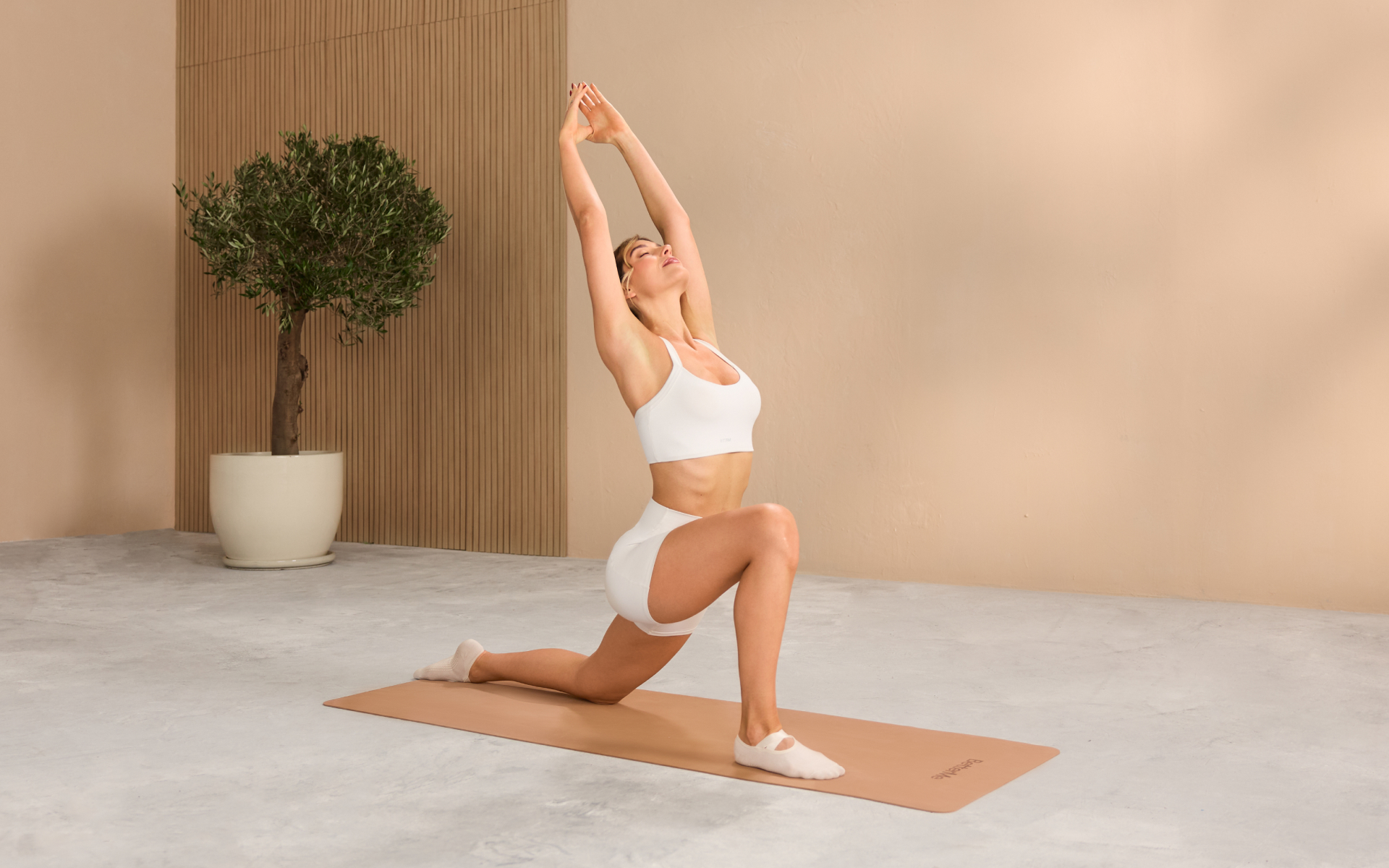
- Yoga mat: Provides cushioning and a non-slip surface for floor exercises, yoga, and Pilates. It defines your workout space and makes exercises more comfortable.
- Resistance bands: These come in various forms, including flat loop bands, tube bands with handles, and mini-bands. They are excellent for adding resistance to strength exercises, supporting stretches, and helping engage smaller stabilizing muscles. They are lightweight, affordable, and easy to store.
- Dumbbells: A set of adjustable dumbbells or a few pairs in varying weights (e.g., a light pair at 5-10 lbs, a medium pair at 15-25 lbs) can add variety and progression to your strength training. They can be used for a vast range of exercises targeting every major muscle group.
- Kettlebell: A single kettlebell (a good starting weight for women is 15-25 lbs; for men, 25-40 lbs) can be very versatile for developing power, strength, and cardiovascular endurance through exercises like swings, goblet squats, and presses.
- Jump rope: An inexpensive and highly effective tool for cardiovascular conditioning. It improves coordination, agility, and can help increase calorie expenditure in a short period.
You don’t need all of these at once. Starting with a mat and a set of resistance bands can provide plenty of options for indoor fitness activities for beginners.
Read more about the benefits of indoor cycling.
What Is a Good Indoor Workout without Equipment?
A bodyweight workout can be an effective option for building strength and improving cardiovascular fitness. The key is to focus on proper form and progressive overload, which can be achieved by increasing reps, decreasing rest time, or performing more challenging variations of each exercise.
Here is a sample full-body workout you can do at home with no equipment.
Program Notes
Goal: Full-body strength and conditioning.
Equipment: None. A mat is optional for comfort.
Structure: Perform each exercise for the prescribed number of repetitions (reps) and sets. Rest for 45-60 seconds between sets and 60-90 seconds between exercises.
Effort: Aim for an effort level where you feel you have 2-3 reps “in reserve” at the end of each set. This helps you train with enough effort to support progress without reaching total failure.
BetterMe will shake off your mental funk, rid you of your energy-zapping habits, and help you sculpt the body of your dreams. Intrigued? Hurry up and change your life for the better!
Bodyweight Workout Program
| Exercise | Sets | Reps |
|---|---|---|
| 1. Bodyweight Squats | 3 | 12-15 |
| 2. Push-Ups | 3 | As Many Reps As Possible (AMRAP) |
| 3. Glute Bridges | 3 | 15-20 |
| 4. Plank | 3 | Hold for 30-60 seconds |
| 5. Lunges | 3 | 10-12 per leg |
| 6. Mountain Climbers | 3 | 30-45 seconds |
Exercise Instructions
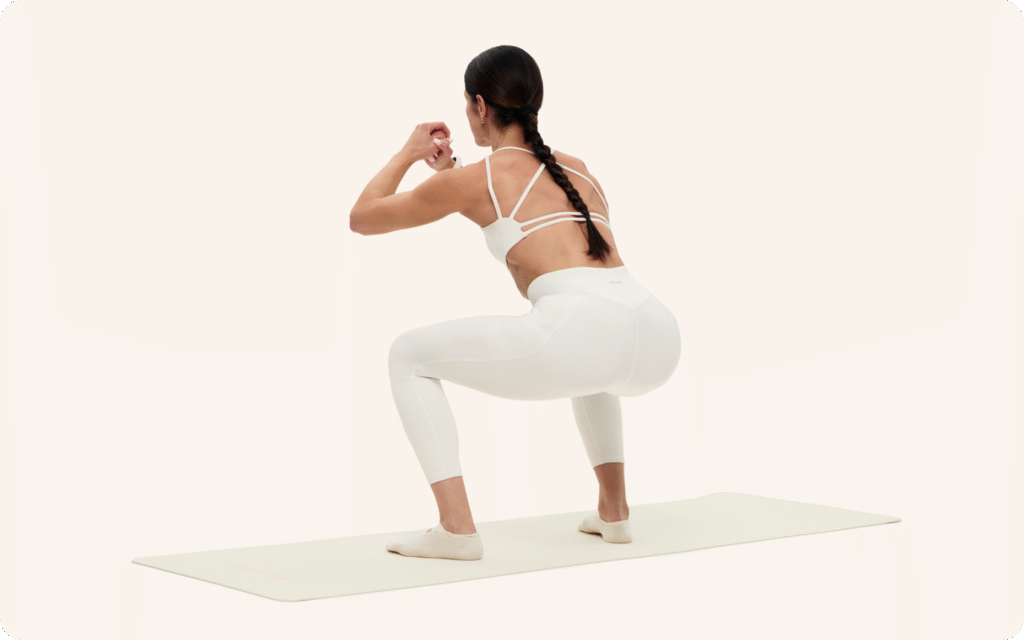
Bodyweight Squats
- Stand with your feet shoulder-width apart, toes pointing slightly outward.
- Keep your chest up and your core engaged. Initiate the movement by pushing your hips back as if sitting in a chair.
- Lower your hips until your thighs are parallel to the floor, ensuring your knees track in line with your toes.
- Drive through your heels to return to the starting position, squeezing your glutes at the top.
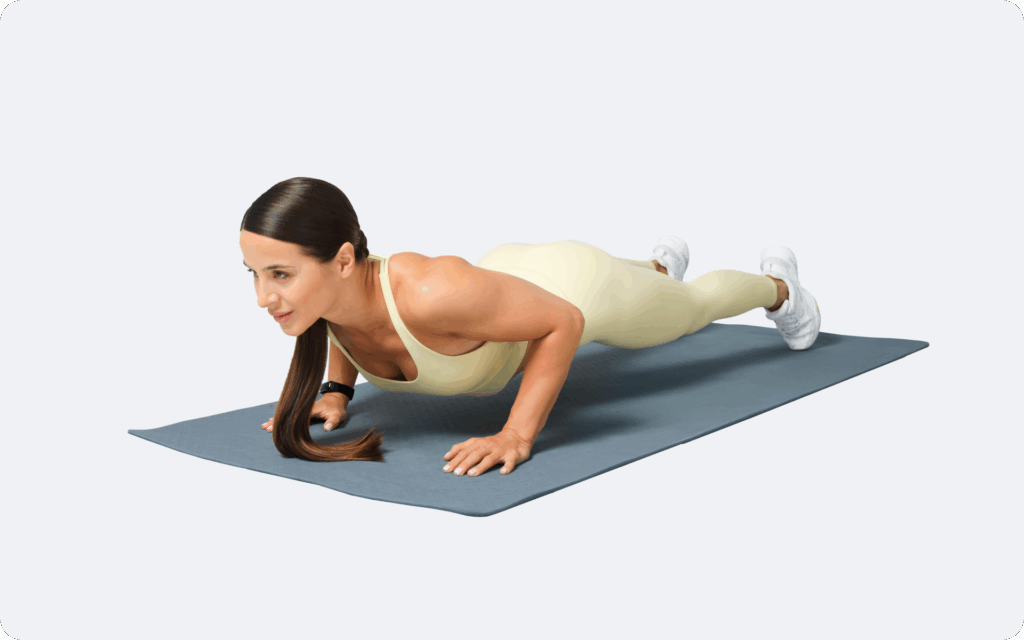
Push-Ups
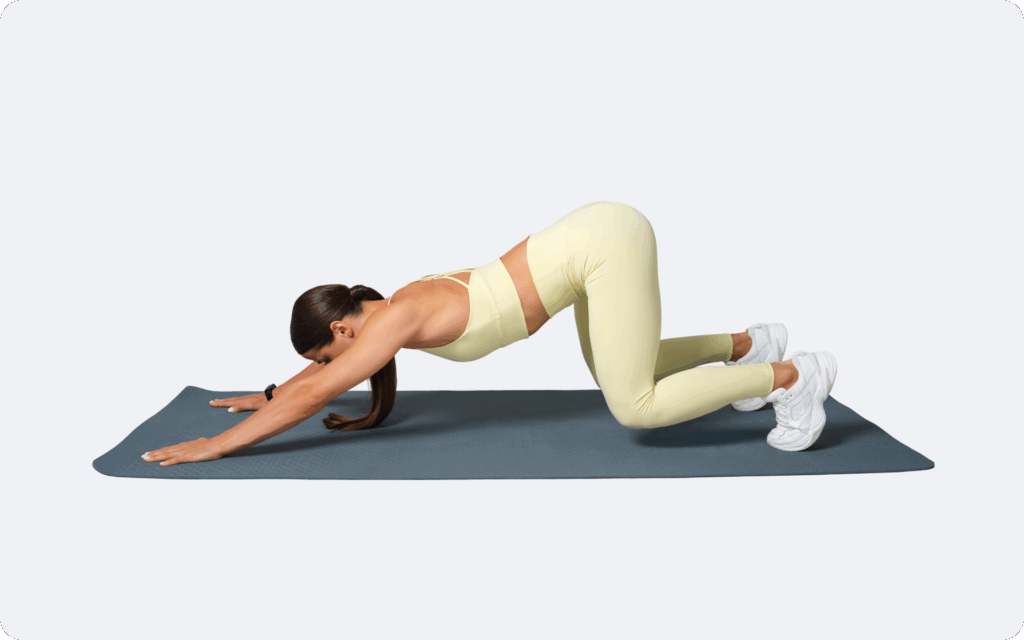
- Start in a high plank position with your hands slightly wider than your shoulders, arms straight. Your body should form a straight line from your head to your heels.
- Engage your core and lower your body until your chest is a few inches from the floor. Keep your elbows at a 45-degree angle to your body.
- Press through your hands to push your body back to the starting position.
- If this is too difficult, perform the push-ups on your knees.
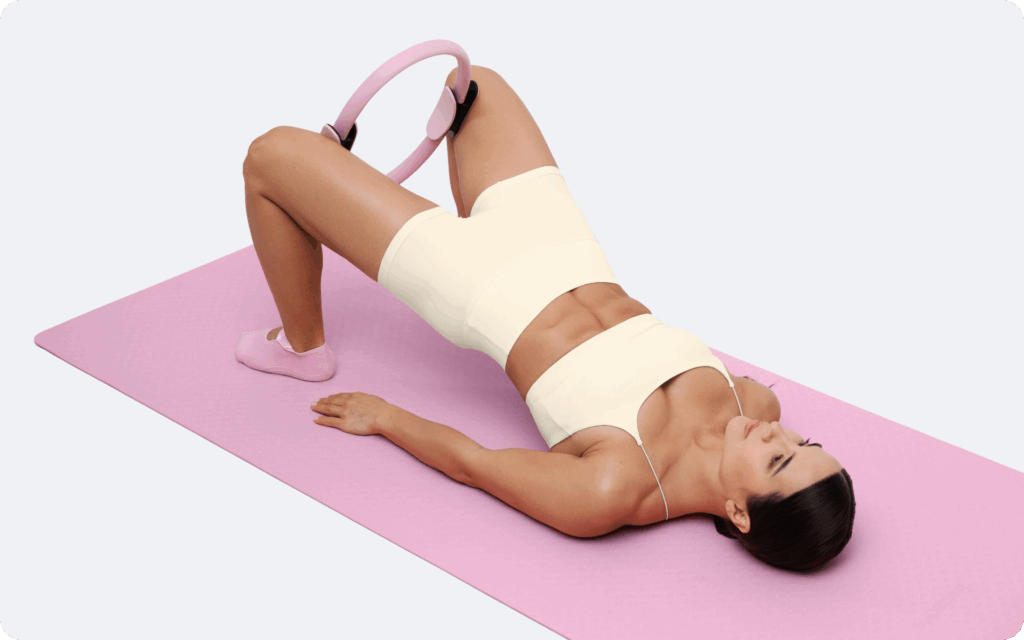
Glute Bridges
- Lie on your back with your knees bent, feet flat on the floor hip-width apart, and your arms by your sides with palms down.
- Engage your core and glutes, then lift your hips off the floor until your body forms a straight line from your shoulders to your knees.
- Squeeze your glutes at the top of the movement.
- Lower your hips back down to the starting position with control.
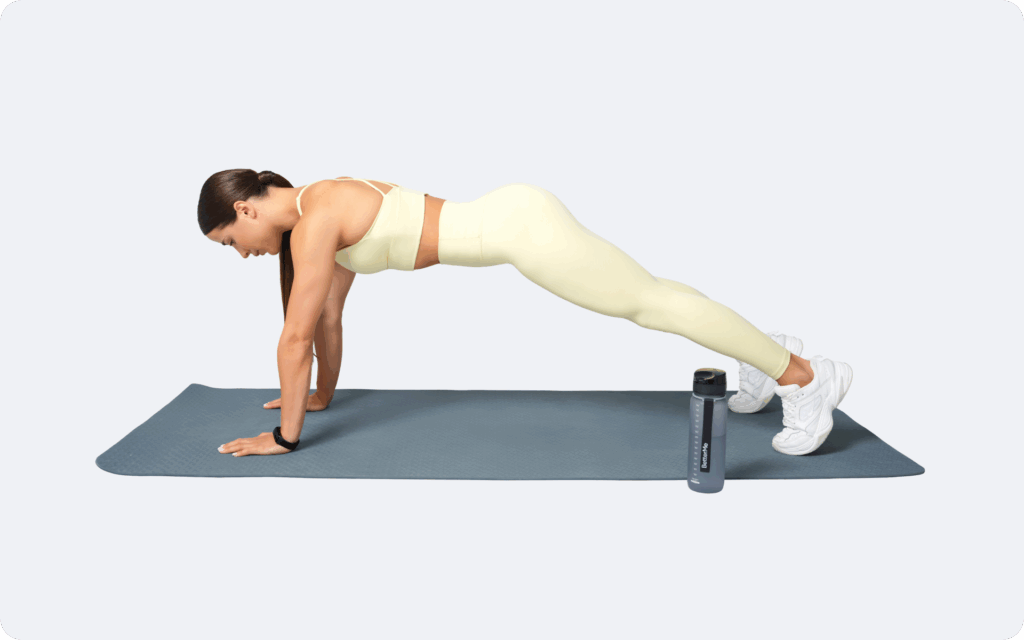
Plank
- Position yourself on your forearms with your elbows directly under your shoulders. Extend your legs straight behind you, feet together.
- Lift your hips so your body forms a straight line from your head to your heels.
- Engage your core, glutes, and quads. Avoid letting your hips sag or rise too high.
- Hold this position for the prescribed time, breathing steadily.
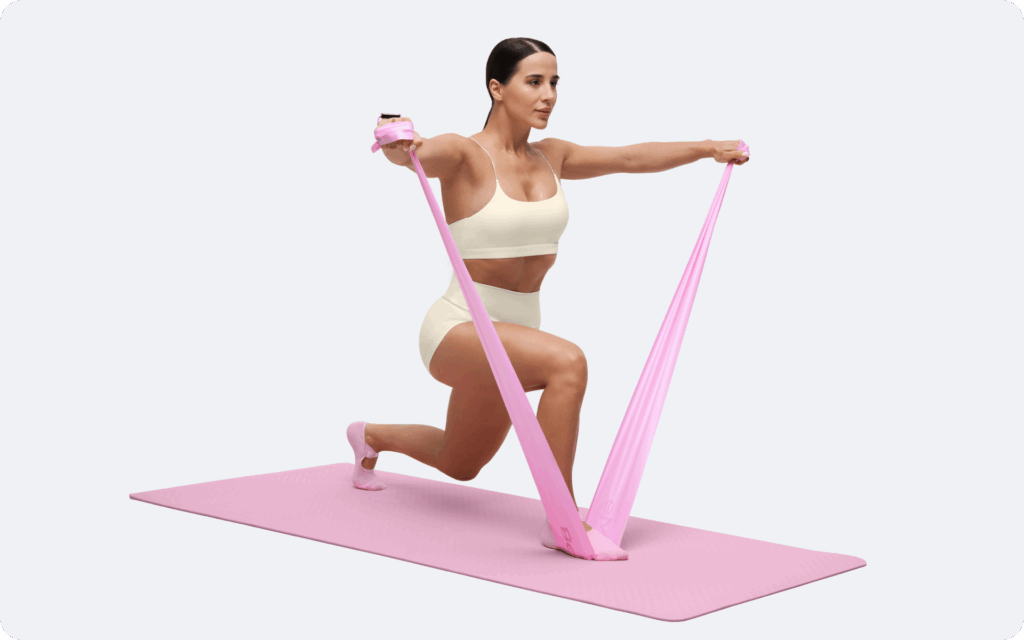
Lunges
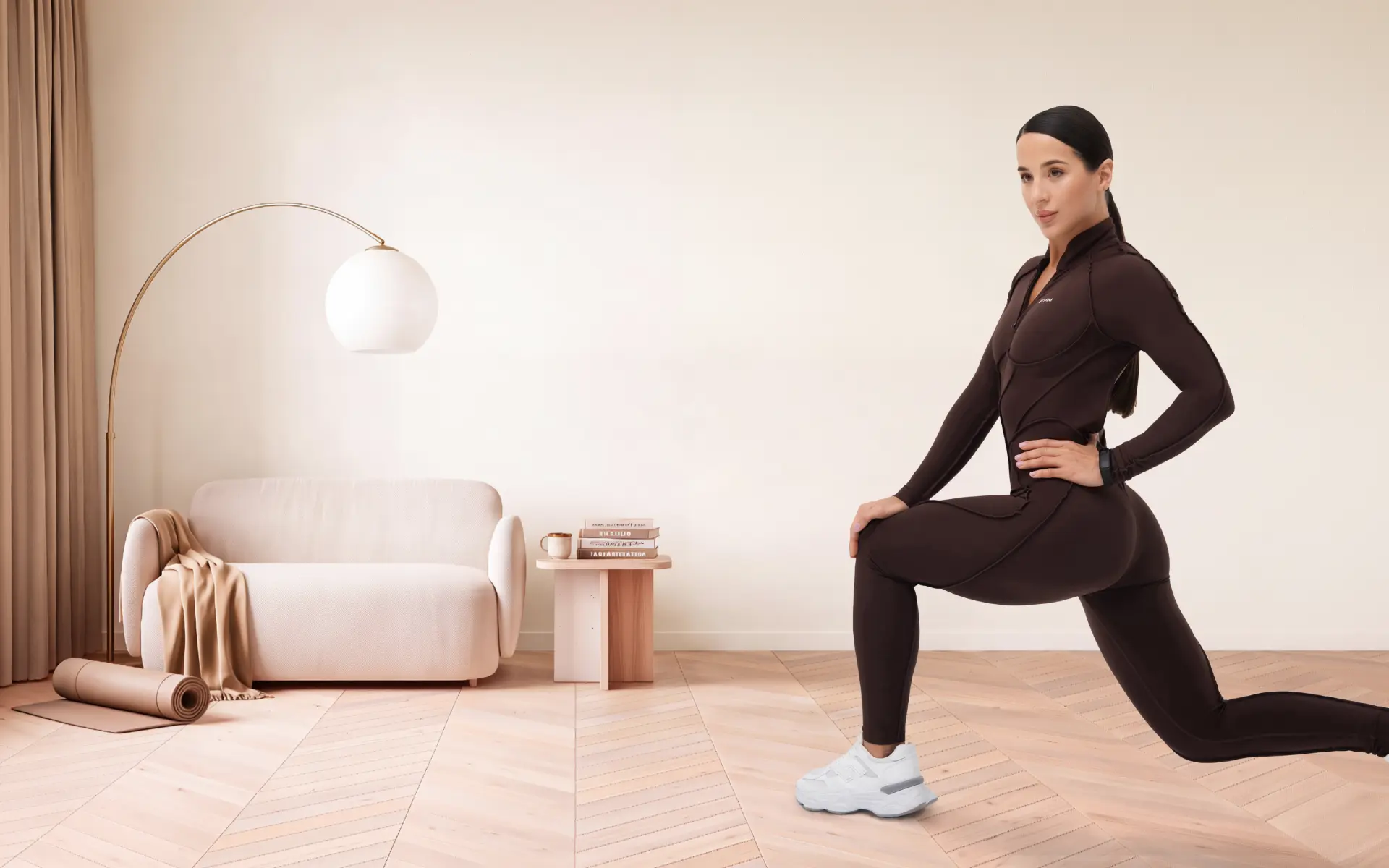
- Stand with your feet together. Take a large step forward with your right foot.
- Lower your hips until both knees are bent at a 90-degree angle. Your front knee should be directly above your ankle, and your back knee should hover just above the floor.
- Keep your chest up and core engaged.
- Push off your right foot to return to the starting position. Repeat on the left side. That completes one rep per leg.
Mountain Climbers
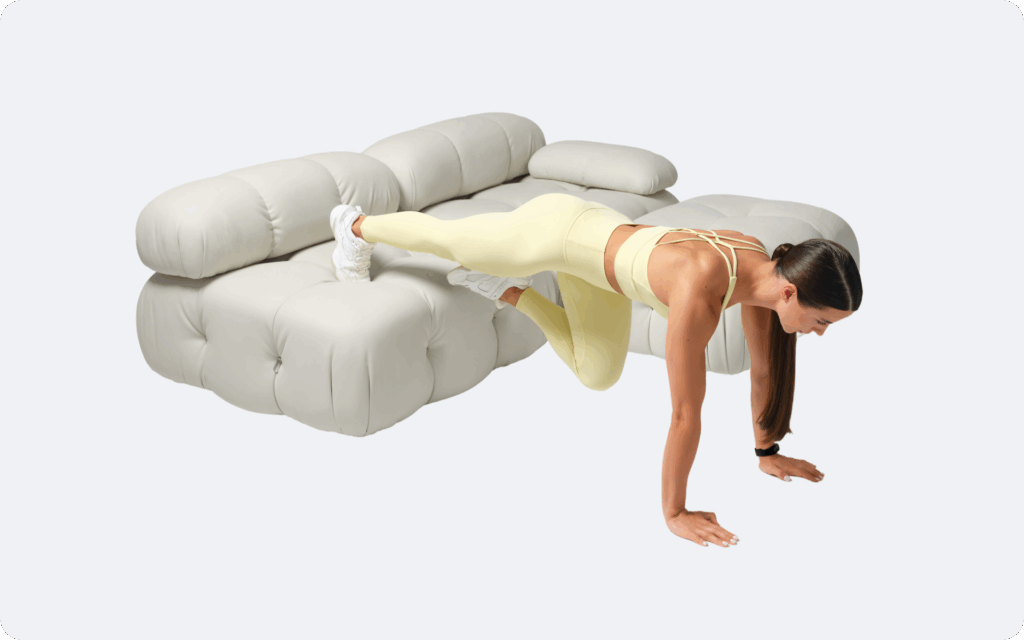
- Start in a high plank position, hands under your shoulders and body in a straight line.
- Engage your core and bring your right knee toward your chest.
- Quickly switch legs, bringing your left knee toward your chest as you extend your right leg back.
- Continue alternating legs in a running motion while maintaining a stable, flat back.
Read more about different types of indoor exercise.
Is 30 Minutes of Exercise a Day Enough to Lose Weight?
Yes, 30 minutes of exercise a day can be enough to contribute to weight loss, provided it’s part of a broader strategy that includes a healthy diet.
General health guidelines, such as those from the Centers for Disease Control and Prevention, recommend at least 150 minutes of moderate-intensity aerobic activity or 75 minutes of vigorous-intensity aerobic activity per week (14). A daily 30-minute workout five days a week easily meets this recommendation.
The effectiveness of a 30-minute session depends on its intensity. A 30-minute moderate-intensity workout, like brisk walking on a treadmill at 3-4 mph or steady cycling, can burn a notable number of calories. For example, a 155-pound person can burn approximately 150-200 calories during 30 minutes of moderate-intensity exercise.
To maximize the impact of a 30-minute workout, consider incorporating higher intensity exercise. A 30-minute HIIT session can burn more calories than a steady-state workout of the same duration and can also provide a greater post-exercise metabolic boost (15).
However, weight loss is primarily governed by a calorie deficit (16). While 30 minutes of exercise creates a calorie burn, it cannot outpace a diet that is high in excess calories. Therefore, combining daily 30-minute workouts with mindful eating habits is the most effective path to achieving sustainable weight loss.
Read more: Pilates At Home Challenge: A Detailed Guide For Building Core Strength Without Leaving Your Room
How To Stay Motivated for Indoor Workouts?
Staying motivated for workouts at home can be challenging without the external accountability of a gym or class. Here are some practical strategies to maintain your drive.
- Set a Schedule: Treat your workouts like any other important appointment. Block out specific times in your calendar for your fitness sessions. Consistency builds routine, and routine builds habit.
- Define Your “Why”: What is your primary reason for exercising? Is it for overall wellbeing, more energy, stress management, or a specific performance goal? Write it down and place it where you can see it daily. Connecting to your deeper purpose can fuel you on days when motivation is low.
- Find Activities You Enjoy: Exercise shouldn’t feel like a punishment. If you hate running on a treadmill, don’t do it. Explore different indoor fitness activities until you find something you genuinely look forward to, whether it’s dance cardio, kettlebell training, or yoga.
- Track Your Progress: Keep a workout journal or use an app to log your sessions, the weights you lift, or the duration of your cardio. Seeing how far you’ve come is a powerful motivator. Progress isn’t always linear, but tracking helps you see the upward trend over time.
- Set Small, Achievable Goals: Instead of a vague goal like “get fit,” set specific, measurable targets. This could be holding a plank for 60 seconds, completing 10 push-ups in a row, or working out three times a week for a month. Achieving these small wins builds confidence and momentum.
- Create an Inviting Workout Space: Dedicate a clean, organized corner of your home for your workouts. Having your equipment ready and your space prepared removes a significant barrier to getting started.
Yes, you can contribute to weight loss by exercising 20 minutes a day, especially if the exercise is high-intensity and paired with a diet that supports a calorie deficit. A 20-minute HIIT session can be a useful option for increasing calorie expenditure (4). Consistency is key. The 7-minute workout is a form of high-intensity circuit training. It can support cardiovascular fitness and offer some general fitness benefits in a very short amount of time (17). While it’s better than no activity, it is unlikely to be sufficient on its own for significant weight loss or muscle gain without support from other activities and a balanced eating pattern. Walking 30 minutes a day can support overall body fat reduction, which may also affect the belly area over time. It contributes to a calorie deficit, especially when done consistently (18). However, it will not specifically target belly fat, as spot reduction is not possible (19). Incline walking increases the intensity of the workout, causing you to burn more calories than walking on a flat surface. This increased calorie burn can contribute to overall fat loss, which may also reduce belly fat over time (20).It can be a useful strategy within a broader fitness and nutrition plan. The 12-3-30 workout, which involves walking on a treadmill at an incline of 12% at a speed of 3 mph for 30 minutes, can be a useful way to increase calorie expenditure and support fat loss as part of a broader routine. It is a challenging, low-impact, moderate-to-high intensity workout that can contribute to a calorie deficit and support cardiovascular fitness (21).Frequently Asked Questions
Can I lose weight by exercising 20 minutes a day?
Does the 7-minute workout really work?
Will I lose belly fat if I walk 30 minutes a day?
Can I lose belly fat by incline walking?
Does 12-3-30 actually burn fat?
The Bottom Line
Embracing indoor fitness is about creating a sustainable, practical, and effective routine that supports your overall wellbeing year-round. By understanding the principles behind fat loss, muscle building, and motivation, you can design a plan that works for you. Start with what you have, find activities you enjoy, and focus on consistency.
DISCLAIMER:
This article is intended for general informational purposes only and does not serve to address individual circumstances. It is not a substitute for professional advice or help and should not be relied on for making any kind of decision-making. Any action taken as a direct or indirect result of the information in this article is entirely at your own risk and is your sole responsibility.
BetterMe, its content staff, and its medical advisors accept no responsibility for inaccuracies, errors, misstatements, inconsistencies, or omissions and specifically disclaim any liability, loss or risk, personal, professional or otherwise, which may be incurred as a consequence, directly or indirectly, of the use and/or application of any content.
You should always seek the advice of your physician or other qualified health provider with any questions you may have regarding a medical condition or your specific situation. Never disregard professional medical advice or delay seeking it because of BetterMe content. If you suspect or think you may have a medical emergency, call your doctor.
SOURCES:
- Benefits of Bodyweight Training (2025, humankinetics.me)
- Yoga – health benefits (n.d., betterhealth.vic.gov.au)
- Pilates – health benefits (2022, betterhealth.vic.gov.au)
- Evidence-Based Effects of High-Intensity Interval Training on Exercise Capacity and Health: A Review with Historical Perspective (2021, mdpi.com)
- Cardiovascular Benefits of Dance as a Unique Form of Exercise: A Literature Review (2025, journals.lww.com)
- Health Benefits of Indoor Cycling: A Systematic Review (2019, pmc.ncbi.nlm.nih.gov)
- 10 Benefits of Rowing Exercise (2025, humankinetics.me)
- Daily stair climbing is associated with decreased risk for the metabolic syndrome (2021, link.springer.com)
- Enhancing Athletic Performance: A Comprehensive Review on Kettlebell Training (2024, pmc.ncbi.nlm.nih.gov)
- Effects of training with elastic resistance versus conventional resistance on muscular strength: A systematic review and meta-analysis (2019, journals.sagepub.com)
- What is Steady-State Cardio? (n.d., nasm.org)
- Increasing muscle mass to improve metabolism (2013, pmc.ncbi.nlm.nih.gov)
- Core exercises: Why you should strengthen your core muscles (2025, mayoclinic.org)
- What Counts as Physical Activity for Adults (2023, cdc.gov)
- Is high-intensity interval training a time-efficient exercise strategy to improve health and fitness? (2014, pubmed.ncbi.nlm.nih.gov)
- Fat Loss Depends on Energy Deficit Only, Independently of the Method for Weight Loss (2007, karger.com)
- Effect of 7-minute workout on weight and body composition (2017, researchgate.net)
- Effects of Walking Speed on Total and Regional Body Fat in Healthy Postmenopausal Women (2022, pmc.ncbi.nlm.nih.gov)
- Spot reduction: why targeting weight loss to a specific area is a myth (2023, sydney.edu.au)
- Energetics and biomechanics of inclined treadmill walking in obese adults (2011, pubmed.ncbi.nlm.nih.gov)
- An Exploratory Study Comparing the Metabolic Responses between the 12-3-30 Treadmill Workout and Self-Paced Treadmill Running (2025, pmc.ncbi.nlm.nih.gov)
 Reviewed by

 By
By 
 By
By