Aging brings changes to the body that can make movement feel more challenging. Over time, muscle strength can decline, joints may lose flexibility, and balance may feel less reliable (1).
These shifts are part of a process that is known as age-related physical vulnerability, which may be associated with falls and reduced activity and reduce the ability to stay active. These changes vary between people. Regular movement may help support strength, balance, and everyday mobility.
Mobility exercises play a key role here. By improving strength, flexibility, and balance, they may support independence and controlled everyday movement (2)
Among the many approaches to staying mobile, yoga can be a gentle movement option. Some people use it to support mobility, body awareness, and a sense of calm (3).
Here is what to know about yoga for older adults and seven supported poses to consider.
If you have joint, muscle, balance, heart, or back concerns, consult a healthcare professional before starting this routine. Use a stable chair, move within a comfortable range, and stop if a movement causes discomfort.
Is Yoga Good for Older Men?
Yoga offers older men a structured, adaptable way to support regular movement as they age. Potential benefits discussed in research include:
Improved Mobility and Balance
Mobility and balance tend to decline with age, increasing the risk of falls. Yoga addresses this through movements that challenge stability and coordination (4). Poses such as tree and warrior require controlled shifts of body weight, enhancing proprioception (the body’s ability to sense its position and movement in space).
This is essential for gait, the sequence of movements during walking. Some research suggests that yoga practice may support aspects of balance, gait, and posture (5). Slow, deliberate transitions can also provide an opportunity to practice controlled movement.
Enhanced Muscular Strength and Flexibility
Aging naturally reduces muscle mass (a process called sarcopenia) and decreases joint flexibility (1). Yoga helps slow these effects by combining isometric holds and dynamic stretches (6) For example, postures such as chair pose or plank engage multiple muscle groups, which promotes endurance and strength in areas prone to weakness, such as the thighs and core.
Flexibility can contribute to comfortable movement in the back and joints (7). Gentle backbends or seated stretches move the back through a comfortable range and may help with everyday stiffness. This can help older men maintain functional independence in day-to-day activities (6).
Support for Mental and Cognitive Wellbeing
Yoga also includes breathing and attention practices. Research has explored possible associations with stress, mood, memory, and attention, although findings and individual experiences vary (8).
The practice combines mindful breathing with structured movement. Some people find this combination calming, while physiological responses and research findings vary (9).
Research has also examined how movement and attention practices relate to brain function (10). These findings should not be interpreted as a promise that yoga will prevent or reverse age-related cognitive changes.
Movement, Physical Function, and Aging
Frailty is a condition that is characterized by weakness, slow walking speed, and lower physical resilience. Yoga addresses these markers by strengthening the musculoskeletal system and improving gait mechanics (3).
Poses that target lower extremity strength, such as warrior II or bridge, enhance the muscles that are needed for walking and standing. Coupled with yoga’s effect on coordination, this can improve gait speed, an established predictor of longevity.
Yoga’s dual focus on physical and mental well-being creates a holistic framework for aging gracefully. It bridges the gap between maintaining physical independence and nurturing overall vitality (4).
Does Yoga Reduce Signs of Aging?
Yoga won’t turn back the clock or erase visible signs of aging. However, it offers a holistic approach to managing its effects.
- Flexibility and movement: May support range of motion and everyday mobility (6).
- Strengthens Muscles and Bones: Supports muscle retention and bone density, which reduces fall risk (11).
- Cardiovascular wellbeing: Gentle activity can contribute to an active lifestyle; individual responses vary (12).
- Supports Cognitive Function: Mindfulness and meditation improve mental clarity and memory (13).
- Stress management: Breathing and mindful movement may help some people feel calmer.
- Posture and gait: Controlled movement may support body awareness and balance.
Yoga can be one part of an active lifestyle alongside adequate nutrition, regular movement, and sleep.
Read more: 6 Seated Core Exercises for Seniors to Do at Home
Which Types of Yoga May Suit Older Adults?
When it comes to yoga for older adults, how you practice is often more important than the specific type of yoga you choose. The key is to prioritize comfort, adaptability, and an approach that matches your current abilities.
Start with gentle movements. It’s important to ease into yoga slowly, particularly if it’s new to you or if you’ve reduced joint flexibility or muscle strength. Focus on controlled, deliberate movements rather than rushing through poses. This allows your body to adapt while reducing strain.
Proper alignment is another important factor. Good posture in yoga doesn’t just help you perform poses effectively, it can help you avoid unnecessary strain. If you’re unsure about alignment, consider working with a certified instructor who can guide you through each pose and offer modifications.
Listening to your body cannot be emphasized enough. Yoga isn’t about forcing your way into challenging positions. Pay attention to what feels comfortable and what doesn’t. If a movement feels painful or unnatural, adjust or pause altogether. The idea is to build strength and flexibility, not to push through discomfort.
That being said, some yoga styles are particularly well-suited for older adults. Hatha yoga, for example, moves at a slower pace with a focus on foundational poses, which may suit beginners. Restorative yoga emphasizes relaxation and uses props such as bolsters or blankets to support your body in restful positions. It focuses on relaxation and gently supported movement. Chair yoga is another popular option, offering seated poses for people who may have difficulty getting up and down from the floor.

What Can a Daily Yoga Routine for Older Men Include?
Creating a daily yoga routine doesn’t have to be complex, particularly if you’re just starting out. Chair yoga offers an excellent entry point for older men who want to improve mobility and maintain their independence.
A stable chair can provide support and may reduce the balance demands of some movements. Below are 7 simple chair yoga poses to incorporate into your day:
1. Seated Cat-Cow Stretch
This pose gently stretches the spine and improves mobility in your back.
- Sit upright in your chair with your feet flat on the ground.
- Place your hands on your knees.
- On an inhale, arch your back gently, lifting your chest and tilting your pelvis forward (cow pose).
- On an exhale, round your back, tucking your chin towards your chest as your pelvis tilts back (cat pose).
- Move between these two positions slowly for 5-6 breaths.
This stretch loosens up the back and improves spinal flexibility, which often becomes limited with age.
2. Chair Forward Fold
A simple way to stretch your hamstrings and lower back.
- Sit near the edge of your chair with both feet firmly on the floor.
- Gently hinge forward at the hips, reaching your hands toward your shins or the floor (depending on your range).
- Keep your back neutral and avoid rounding your shoulders.
- Hold for 3-5 breaths, then slowly return to an upright position.
This pose is excellent for releasing tension in the back and promoting flexibility in the legs.
3. Seated Side Stretch
This helps open your rib cage and promotes better range of motion in your sides and shoulders.
- Sit tall with your feet flat on the floor.
- Extend one arm overhead, keeping your other hand resting on your chair for support.
- Lean gently to the side, creating a stretch along the side of your body.
- Hold for a few breaths, then switch sides.
Move slowly to avoid overstretching and keep your movements controlled.
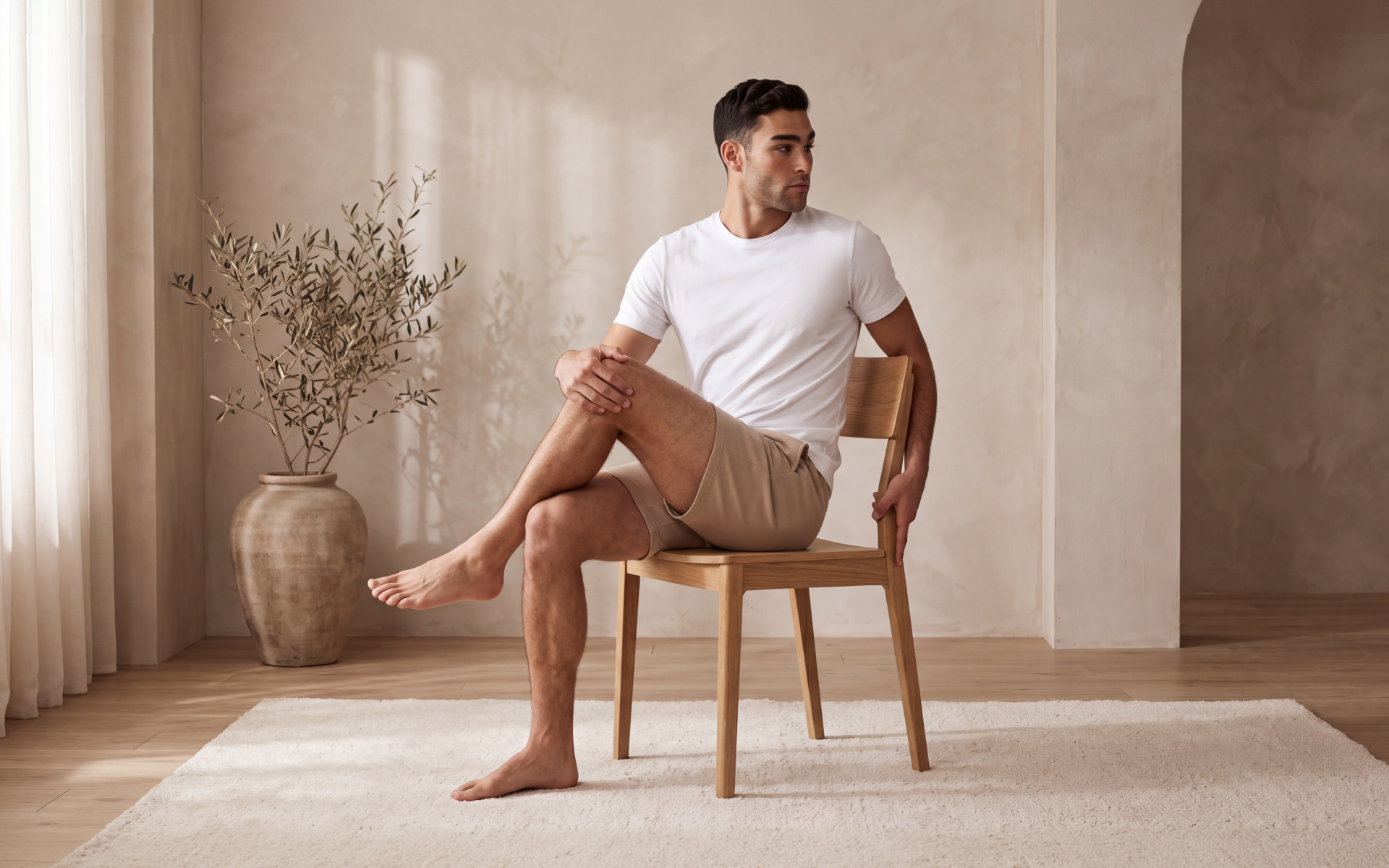
4. Seated Spinal Twist
A gentle rotation to improve spinal mobility and release tension.
- Sit comfortably with your feet hip-width apart.
- Place your right hand on the outside of your left knee.
- Use your left hand to grip the back of your chair for support.
- Slowly twist your upper body to the left, keeping your spine tall.
- Hold for a few breaths, then return to center and repeat on the other side.
This pose improves flexibility in your spine and encourages better posture.
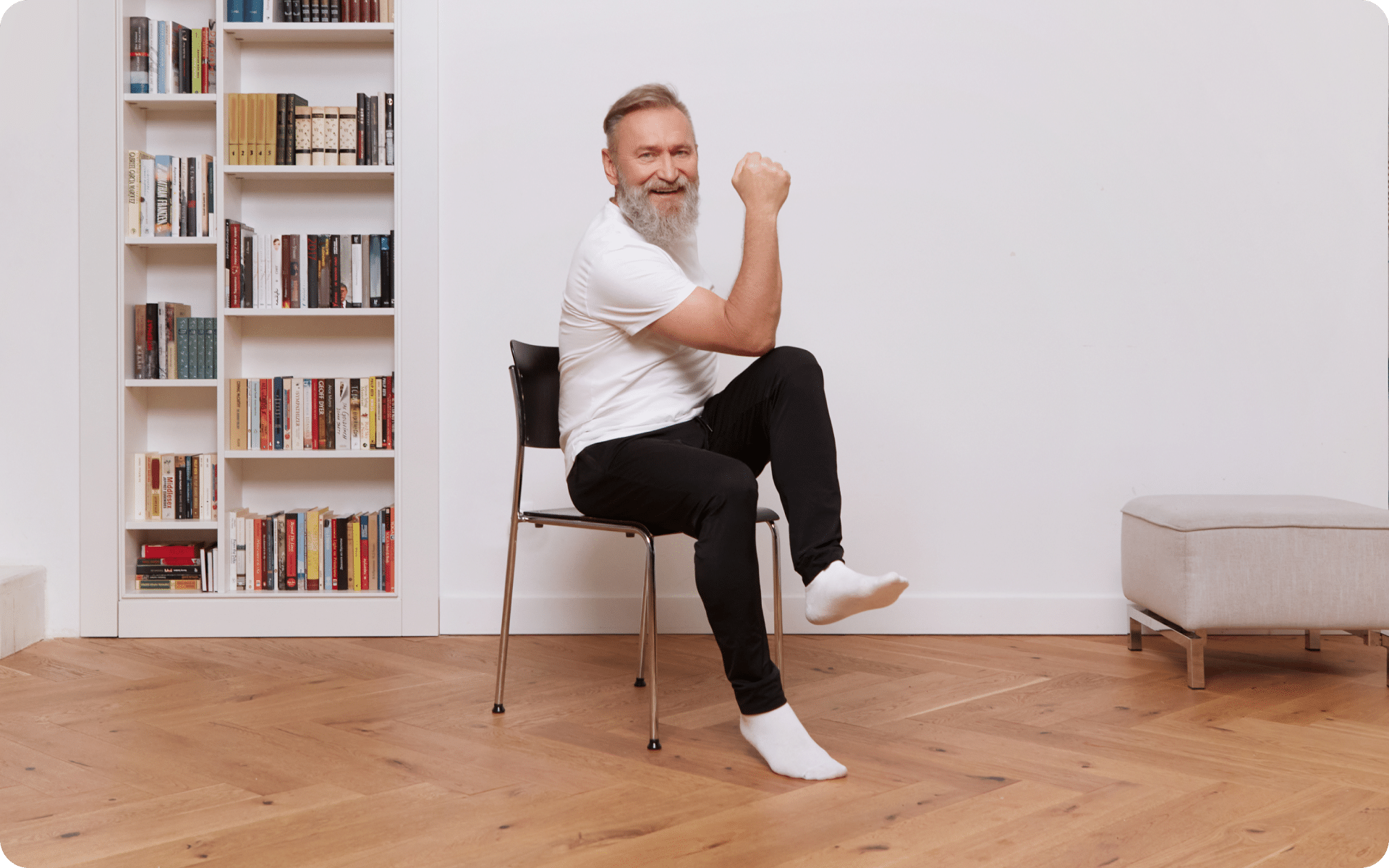
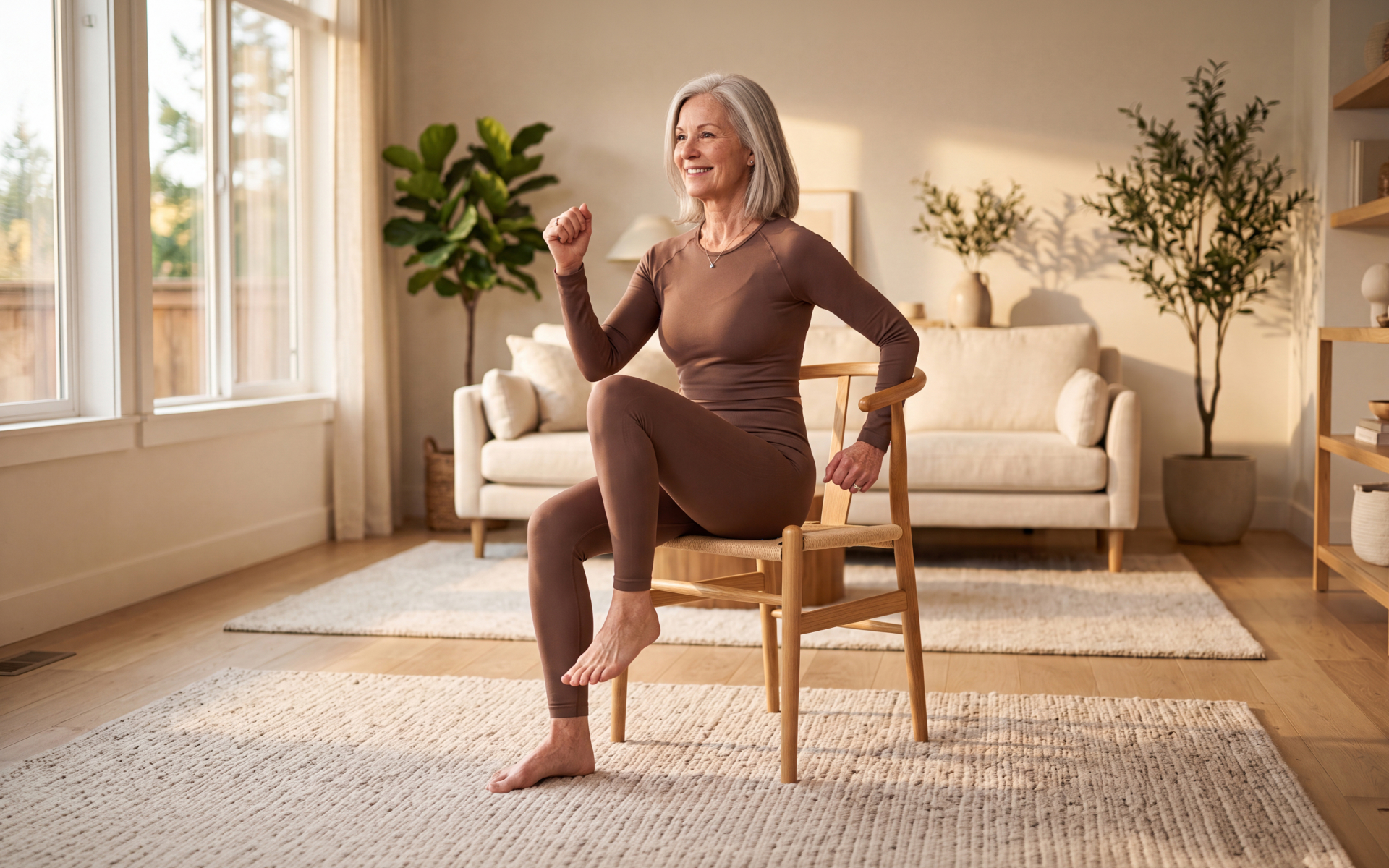
5. Seated Marching
A great pose to build strength and coordination in your lower body.
- Sit upright with your feet flat and your hands resting on your thighs.
- Lift one knee as high as you comfortably can, then lower it back down.
- Alternate legs in a slow, controlled “marching” motion.
- Continue for about 30 seconds to a minute.
This exercise gently works your hip flexors and engages your core.
6. Heel-to-Toe Taps
This builds ankle mobility and promotes circulation in your lower legs.
- Remain seated with your feet flat.
- Extend one leg slightly, tapping your heel on the ground, then point your toes and tap them on the floor.
- Repeat about 10 times, then switch to the other leg.
This movement is especially good for improving blood flow and maintaining joint mobility in the lower body.
7. Chair Pose (Supported)
A fantastic way to build leg strength and balance.
- Stand behind your chair, holding the backrest for support.
- Place your feet hip-width apart.
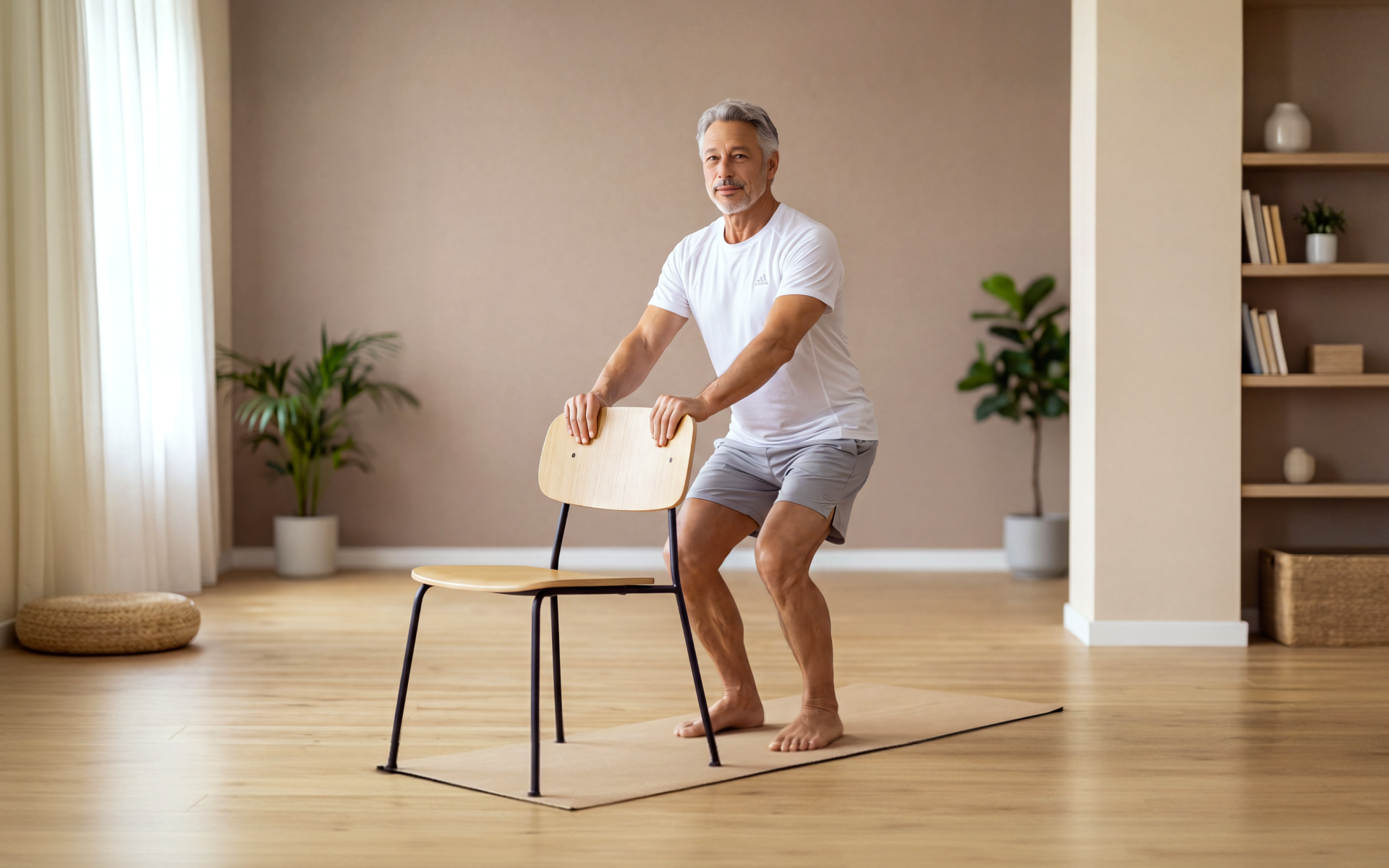
- Bend your knees slightly, as if sitting down into an invisible chair.
- Keep your weight in your heels and back straight.
- Hold for 3-5 breaths, then gently straighten your legs.
This pose strengthens the thighs and promotes stability without overloading the joints.
Whether you’re just starting your fitness journey or looking to add more structure to your routine, BetterMe offers tools that can support different wellness goals. Explore the app and see how its workout, nutrition, and habit-building features can fit into your lifestyle.
Safety Tips for Your Routine
- Go Slow: Never rush – move intentionally and listen to your body.
- Focus on Form: Quality over quantity is key – controlled alignment can help limit unnecessary strain.
- Breathe Steadily: Match your movements with slow, even breaths for relaxation and control.
- Modify When Needed: Everyone’s body is different – it’s okay to skip or change a pose to fit your comfort level.
What Yoga Poses Should Seniors Avoid?
While yoga offers incredible benefits, some poses may not be ideal for seniors, particularly those who are new to the practice or have limited mobility. Here are a few poses that should be approached with caution:
- Headstand (Sirsasana) – This advanced pose places significant pressure on the neck and shoulders, which may create excessive strain in those with reduced neck strength or joint issues.
- Full Wheel Pose (Urdhva Dhanurasana) – This deep backbend requires strong flexibility in the spine and shoulders. It can feel stressful for those with lower-back discomfort or tightness in the upper body.
- Lotus Pose (Padmasana) – Sitting with your legs crossed tightly can strain the knees and hips, particularly if you have arthritis or limited joint mobility.
- Four-Limbed Staff Pose (Chaturanga Dandasana) – This pose requires upper-body strength and shoulder stability, which can be difficult for seniors and increase the risk of shoulder strain.
- Crow Pose (Bakasana) – Balancing on the hands can be risky as it requires wrist strength and exposes the practitioner to potential falls if balance is lost.
- Standing Forward Fold (Uttanasana) – Folding deeply from the waist can strain the lower back and hamstrings, particularly without proper support or flexibility.
- Plow Pose (Halasana) – This inversion compresses the neck and spine, which may exacerbate mobility issues or cause tension in the upper body.
Instead of these challenging poses, seniors may benefit from modified or supported versions. Props such as a chair, blocks, or straps can provide support and make movements easier to adapt. Always prioritize comfort and move within your range of capability.
Read more: 7 Great Seniors’ Chair Yoga Exercises for Any Fitness Level
How Often Should Seniors Do Yoga?
Starting with shorter, gentle sessions two to three times a week can be a manageable way to ease into regular practice. These sessions allow the body to adapt gradually, which helps build strength, improve flexibility, and boost confidence without overdoing it.
As you become more comfortable, you can increase the frequency to four or five times a week, depending on how your body feels. However, it’s essential to listen to your body. Fatigue, discomfort, or pain are signals that you should take a step back and rest. Rest days allow time between sessions and can help you manage fatigue and discomfort.
For seniors who are dealing with specific health conditions, such as arthritis, osteoporosis, or heart issues, it’s wise to consult a healthcare provider before you start a yoga routine. They can offer guidance based on your circumstances and help you decide whether the practice suits you.
Frequently Asked Questions
Is 70 too old to start yoga?
No, 70 isn’t too old to start yoga. Yoga can be adapted to suit all ages and fitness levels, which makes it an excellent option for older adults. Gentle practices, such as chair yoga or beginner-level classes, can help improve flexibility, strength, and balance without putting any unnecessary strain on the body. Starting at any age can bring physical and mental benefits.
Can yoga prevent shrinking?
Yoga cannot entirely prevent shrinking, which typically results from age-related spinal compression and bone density loss. However, regular yoga practice can help maintain better posture, strengthen the core and back muscles, and promote spinal mobility. These benefits may reduce the appearance of height loss over time.
Which posture removes old age in yoga?
No single yoga posture can “remove” aging, as aging is a natural process. However, poses such as mountain pose (Tadasana) and bridge pose (Setu Bandhasana) may support posture, strength, and comfortable movement as you age.
Does face yoga prevent aging?
Face yoga may improve circulation and muscle tone in the face, which could lead to a more refreshed look. However, research on whether it affects visible signs of aging or wrinkles remains limited. It can be a fun addition to a healthy lifestyle but shouldn’t be relied on as an anti-aging remedy.
The Bottom Line
Yoga offers older men a structured, adaptable way to support regular movement as they age. Research has explored possible relationships with gait, balance, strength, and mental wellbeing, although outcomes vary. While it may not be a one-size-fits-all solution, the adaptability of the practice allows it to be adapted for varied fitness levels and needs.
If you’re considering yoga, it’s worth finding a class or routine that is tailored to your abilities. You may start with gentle or chair yoga before progressing to more dynamic styles. After all, informed choices lead to better outcomes, both on and off the mat.
DISCLAIMER:
This article is intended for general informational purposes only and does not serve to address individual circumstances. It is not a substitute for professional advice or help and should not be relied on for making any kind of decision-making. Any action taken as a direct or indirect result of the information in this article is entirely at your own risk and is your sole responsibility.
BetterMe, its content staff, and its medical advisors accept no responsibility for inaccuracies, errors, misstatements, inconsistencies, or omissions and specifically disclaim any liability, loss or risk, personal, professional or otherwise, which may be incurred as a consequence, directly or indirectly, of the use and/or application of any content.
You should always seek the advice of your physician or other qualified health provider with any questions you may have regarding a medical condition or your specific situation. Never disregard professional medical advice or delay seeking it because of BetterMe content. If you suspect or think you may have a medical emergency, call your doctor.
SOURCES:
- Physiology, Aging (2023, ncbi.nlm.nih.gov)
- Mechanism-Driven Strategies for Reducing Fall Risk in the Elderly: A Multidisciplinary Review of Exercise Interventions (2024, mdpi.com)
- Strong evidence that yoga protects against frailty (2023, news.harvard.edu)
- Yoga-based exercise improves balance and mobility in people aged 60 and over: a systematic review and meta-analysis (2015, academic.oup.com)
- Harnessing the benefits of yoga for myositis, muscle dystrophies, and other musculoskeletal disorders (2022, link.springer.com)
- Improvement in muscular strength, body flexibility and balance by yoɡasana and with reduced detraining effects by yoɡa breathing maneuvers: A non-randomized controlled study (2023, pmc.ncbi.nlm.nih.gov)
- Flexibility (n.d., physio-pedia.com)
- Yoga for better mental health (2024, health.harvard.edu)
- Breath of Life: The Respiratory Vagal Stimulation Model of Contemplative Activity (2018, frontiersin.org)
- Neuroprotective effects of yoga practice: age-, experience-, and frequency-dependent plasticity (2015, frontiersin.org)
- Yoga and Bone Health (2021, journals.lww.com)
- Yoga – A promising technique to control cardiovascular disease (2014, pmc.ncbi.nlm.nih.gov)
 Reviewed by