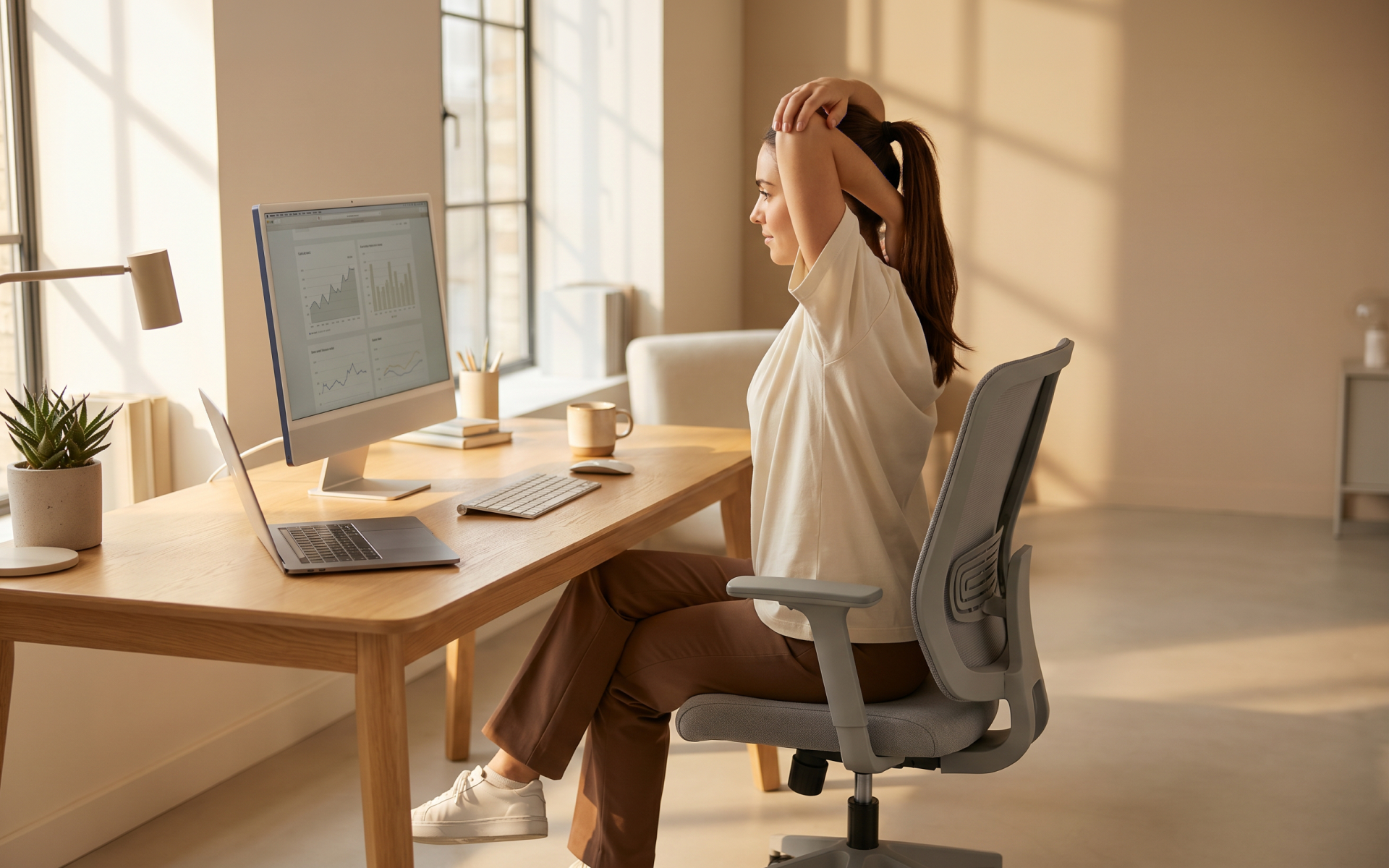
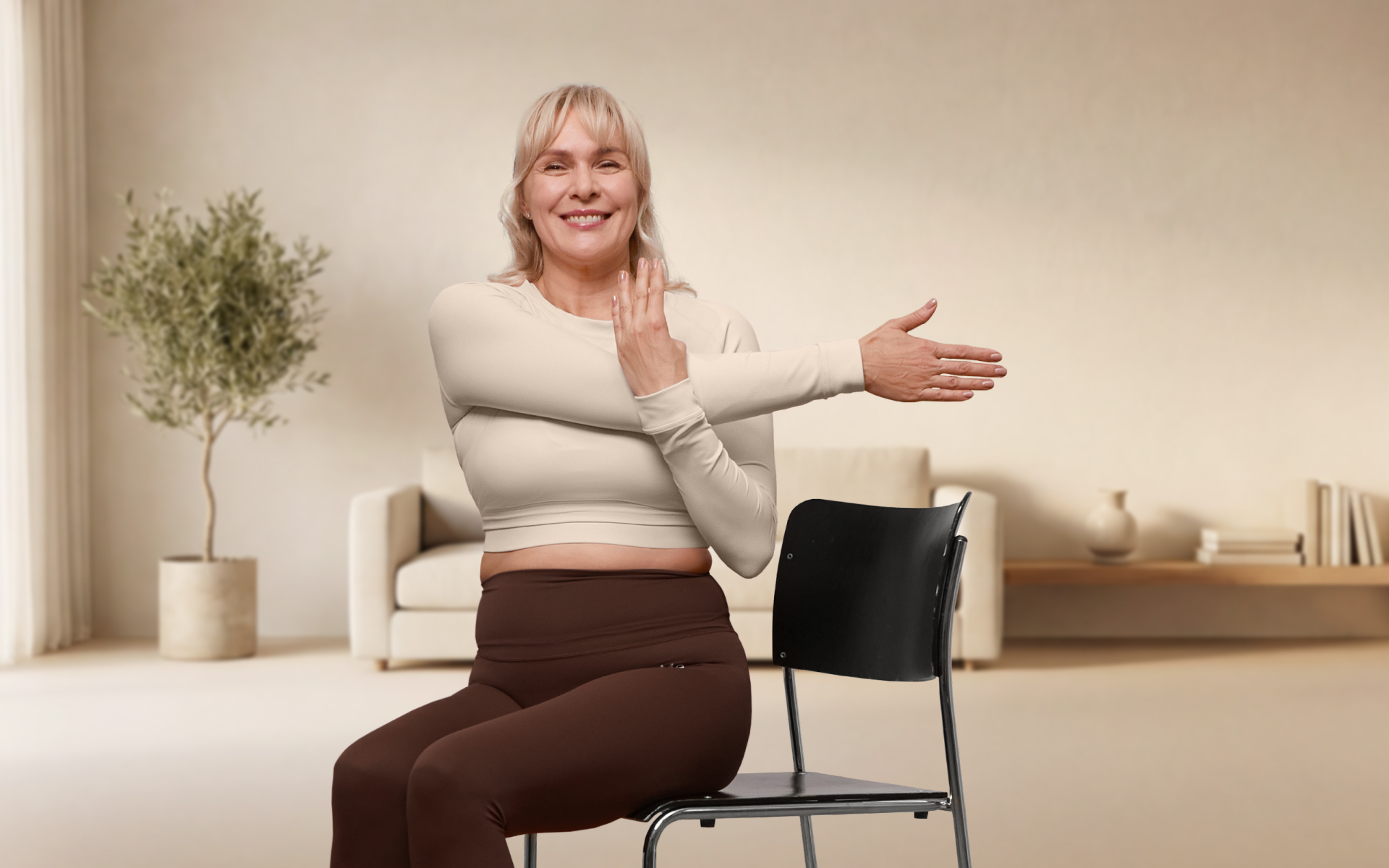
Chair-based exercises for seniors are seen as an effective way to stay active and mobile—the chair can be used as an additional support for a wide variety of exercises.
If you’re a beginner or looking for new ways to boost your home-based fitness routine, chair-based exercises at home are at your service. With consistent practice, seniors may notice improvements in their posture, mood, and energy levels. With that being said, it’s important that seniors and those with pre-existing health concerns contact a medical professional before getting started on any new form of exercise.
Do Chair Workouts Really Work for Seniors?
Some people may wonder if chair workouts really work for seniors. Chair-based exercises for the elderly are designed to promote muscle strength, improve balance, and enhance overall quality of life, according to the research (1).
Research has also shown that seniors who consistently participate in chair-based moves experience better tolerance to exercise in general (1).
The key to getting all the perks from the seated positions is consistency and gradually increasing intensity.
What Are the Benefits of Chair-Based Exercises for Seniors?
Chair-based exercises for older adults are considered a gentle yet effective way to stay active, improve health, and feel more confident moving. Here’s a deeper look at the major benefits:
- Build muscle strength with minimal joint strain: Seated exercises target the arms, legs, and core while reducing the pressure or impact that is typically seen with heavy resistance training. A chair allows for the sensitive joints such as the knees and hips to get a little bit of a break. This makes them ideal for seniors, people recovering from injuries, or anyone with limited mobility (2).
- Enhanced posture work and mobility: Seated exercises can work to improve movement and confidence in moving in people with limited mobility. Combining posture work with mindful breathing, sitting exercises help improve body alignment and make movements feel more comfortable (3).
- Improved muscle endurance and flexibility in postmenopausal women: One study suggests that chair-based exercises may help postmenopausal women maintain physical function (4).
- Better cognitive functions: A 2025 randomized trial showed that chair-based exercises can boost brain power and keep legs strong in healthy adults (5).
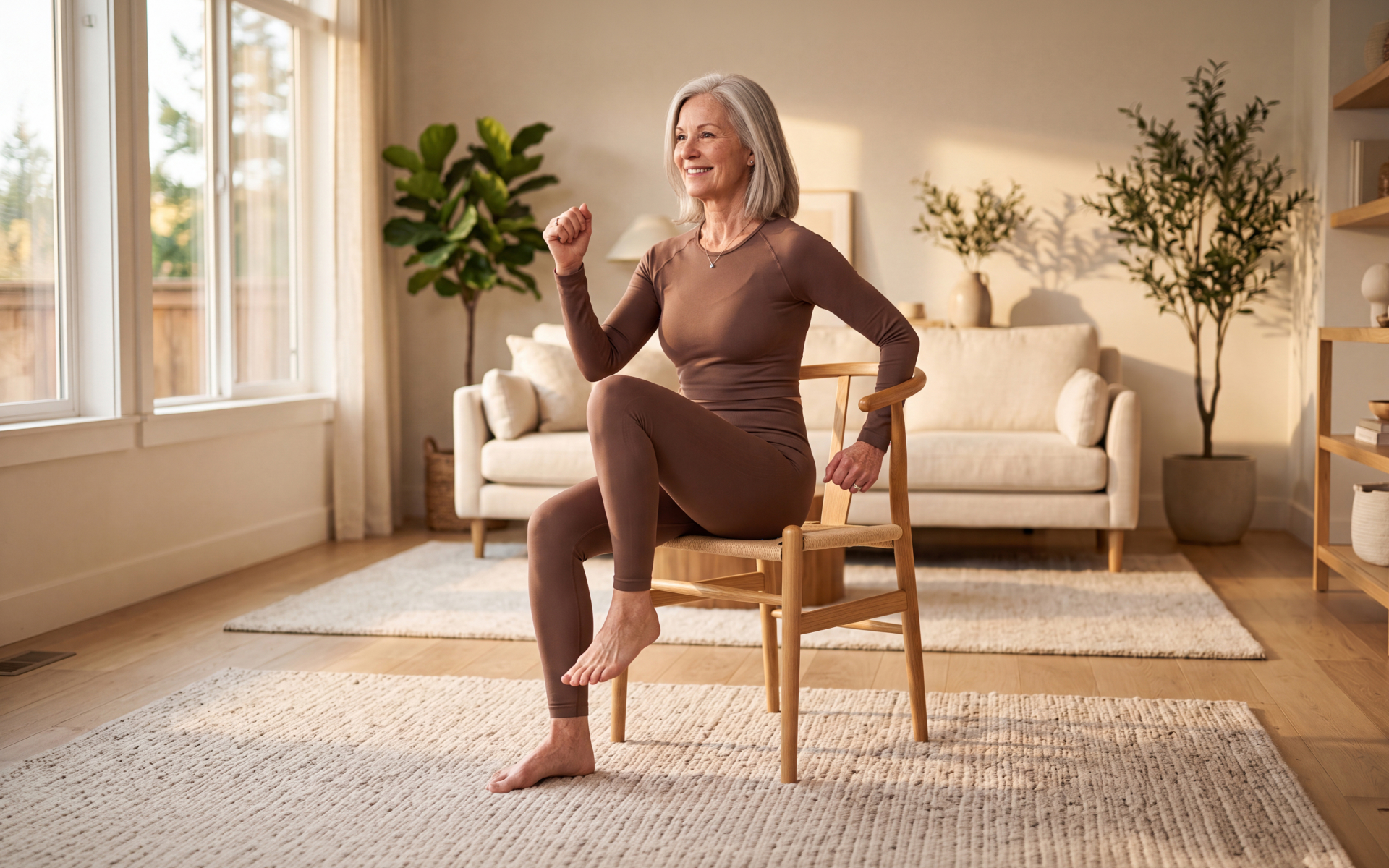
- Promoted circulation: Gentle movements such as marching in place while seated or arm raises encourage blood flow.
- Supported weight management: Chair-based exercises for weight loss may help you burn calories by increasing your heart rate. Over time, they can support a healthy weight and total body well-being (6).
Best of all, chair exercises can be tailored to fit just about everyone, whether you’re just starting out or looking for a low-impact way to stay active. A chair may be able to provide that extra support that you need to effectively perform an exercise.
What Is the Number One Exercise for Seniors at Home?
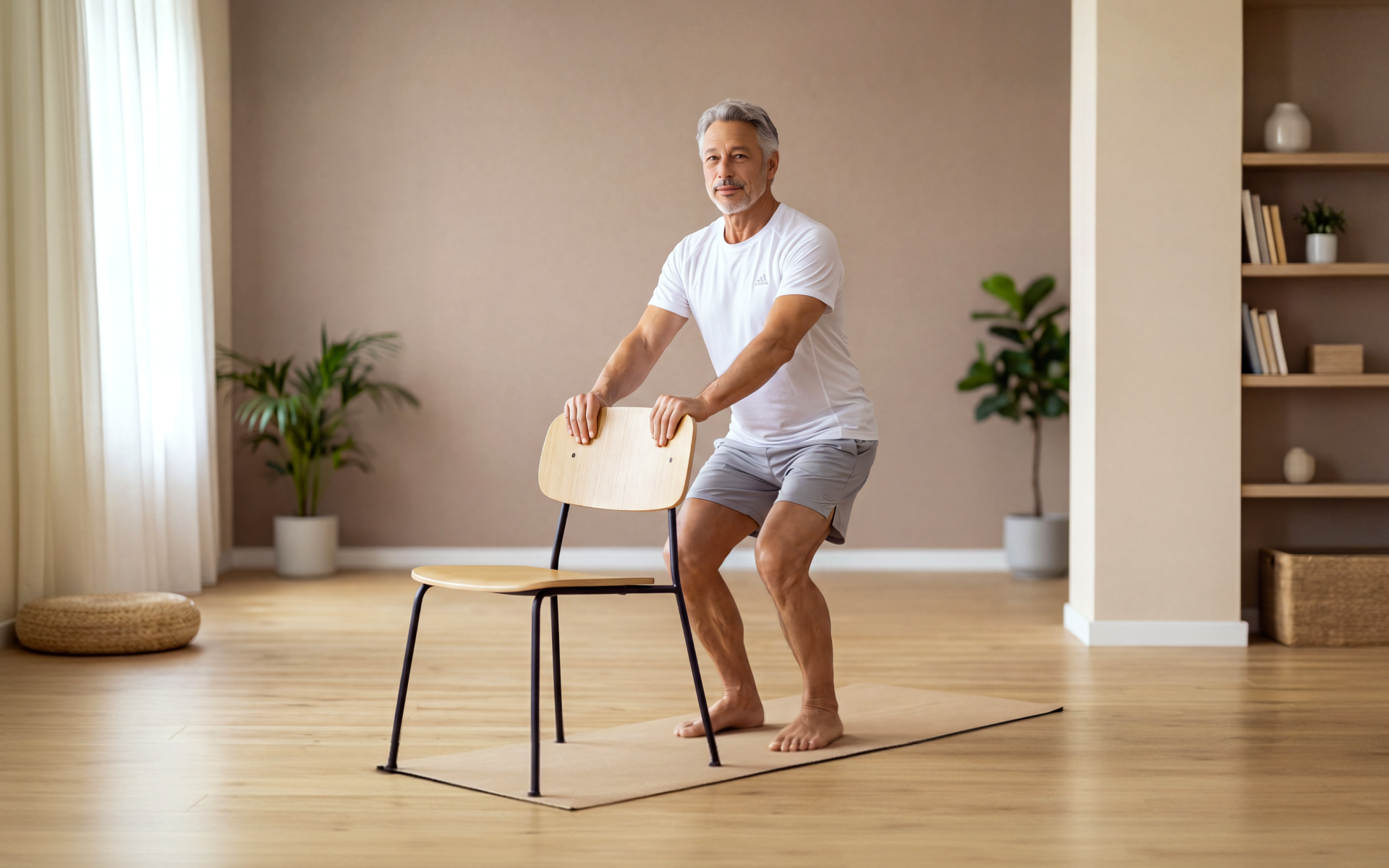
In our opinion, the ultimate exercise for seniors at home is the chair squat. This is a functional movement that the majority of us do constantly throughout the day. As it’s so prevalent in our daily lives, it’s important that we practice it. For this exercise, think about powerfully standing up from a seated position by pressing through your heels and extending your knees. Your head and chest will remain high as you stand tall in front of the chair. Finally, lower your glutes back down to the chair by bending the knees as you control your descent.
Beyond boosting circulation, it helps strengthen leg muscles and improve balance. An ideal exercise to keep everyday movements easier and more comfortable.
Do you want to level up a bit? Pick up the speed or even try it with only 1 leg at a time. Pair it with a chair yoga sequence for seniors and gentle arm movements, and you’ve got a full-body workout that’s doable right from your favorite chair.
How to do a chair squat:
- Stand in front of a sturdy chair with your feet approximately shoulder-width apart.
- Keep your chest up, your back straight, and your core engaged. Extend your arms forward to help with balance.
- Slowly push your hips back as if you’re about to sit down. Bend your knees and lower your body in a controlled way.
- Lightly touch the chair with your glutes, but don’t fully sit or relax. Pause briefly while staying tight and balanced.
- Push through your heels to stand back up. Squeeze your glutes at the top and return to the starting position.
BetterMe Well-Being Coach app helps you achieve your body goals with ease and efficiency by helping to choose proper meal plans and effective workouts. Start using our app and you will see good results in a short time.
What Is a Good Chair-Based Exercises Program for Seniors?
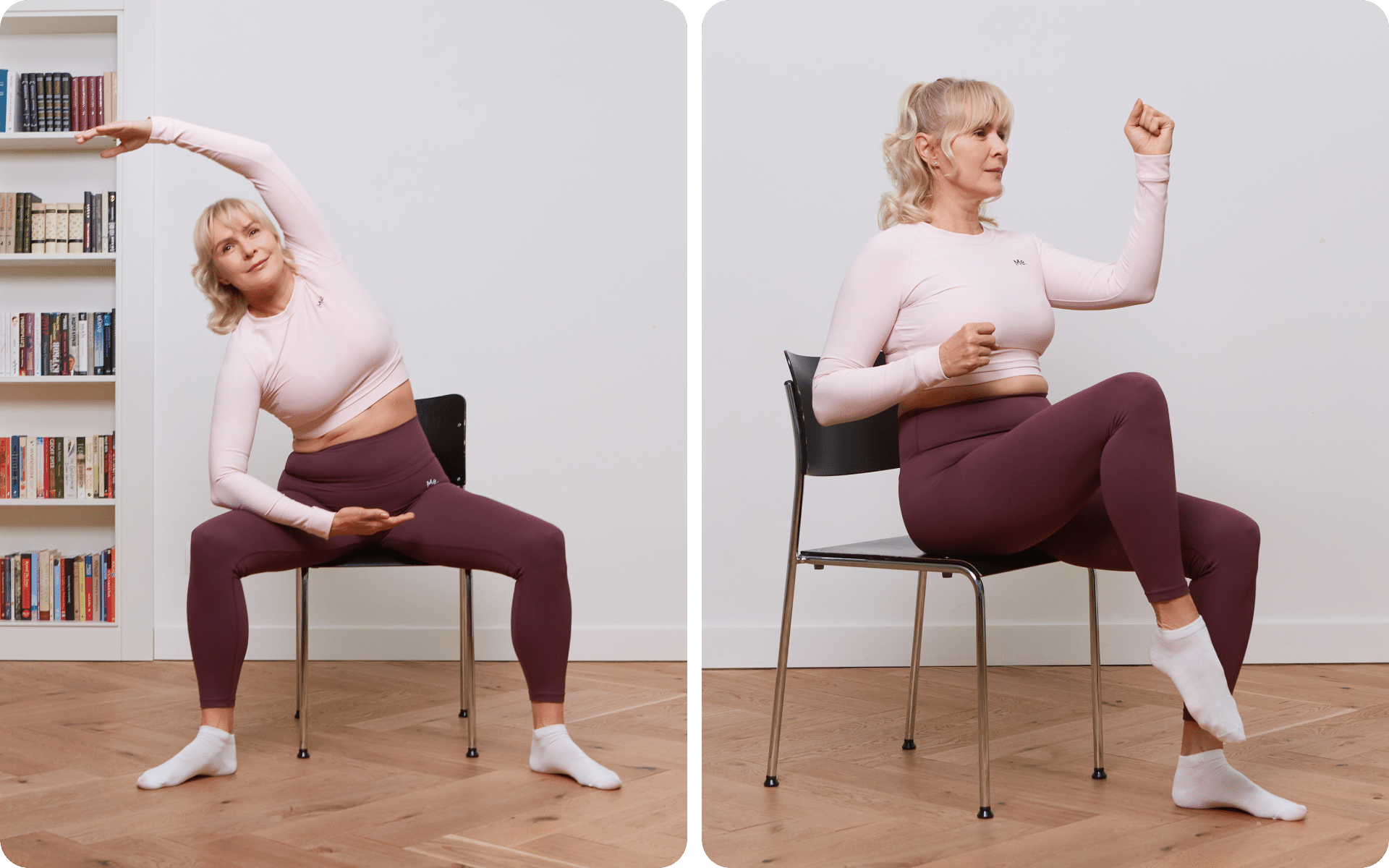
Staying active doesn’t have to mean jumping, running, or risking a tumble. Check out this well-rounded chair-based exercise program for the elderly with instructions and benefits for each move (7).
How to Use This Program
- Frequency: Aim to perform this routine 3-5 days per week.
- Sets: Start with 1 set of 10 reps each, progressing to 2-3 sets as you feel stronger.
- Equipment: A sturdy, non‑wheeled chair (ideally without arms) and light hand weights or water bottles if you have them.
- Safety: Move slowly, breathe steadily, and stop if you feel pain. Always check with a healthcare provider before starting a new exercise routine.
Easy Warm-Up Routine
Begin your workout with gentle, seated stretches to wake up the body and ease into movement.
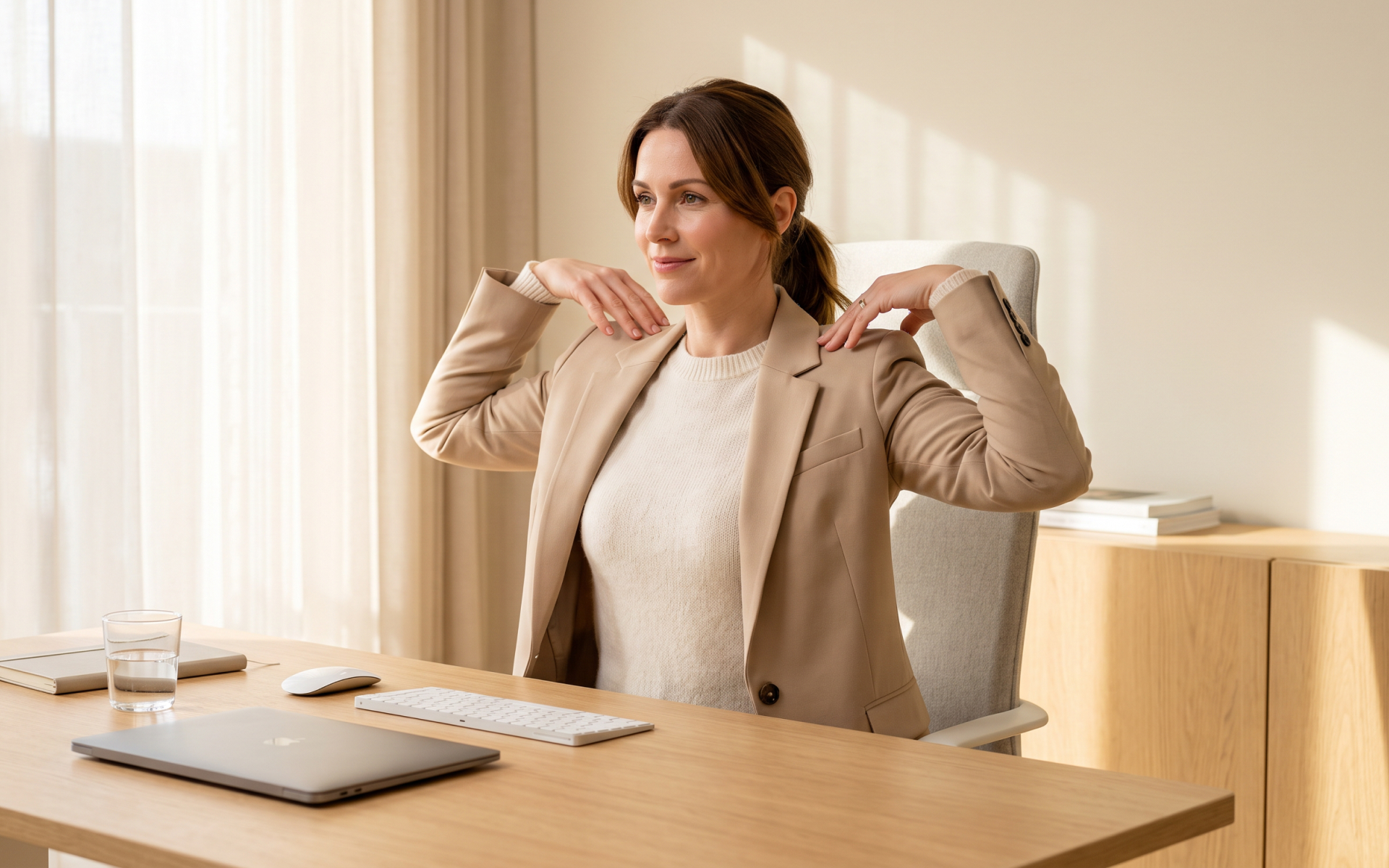
- Roll your shoulders back.
- Slowly tilt your head side to side to release neck tension.
- Extend your legs one at a time to loosen up your hips and thighs.
- Alternate marching moves with both legs to boost circulation.
Keep all the movements slow and controlled, focusing on deep breaths.
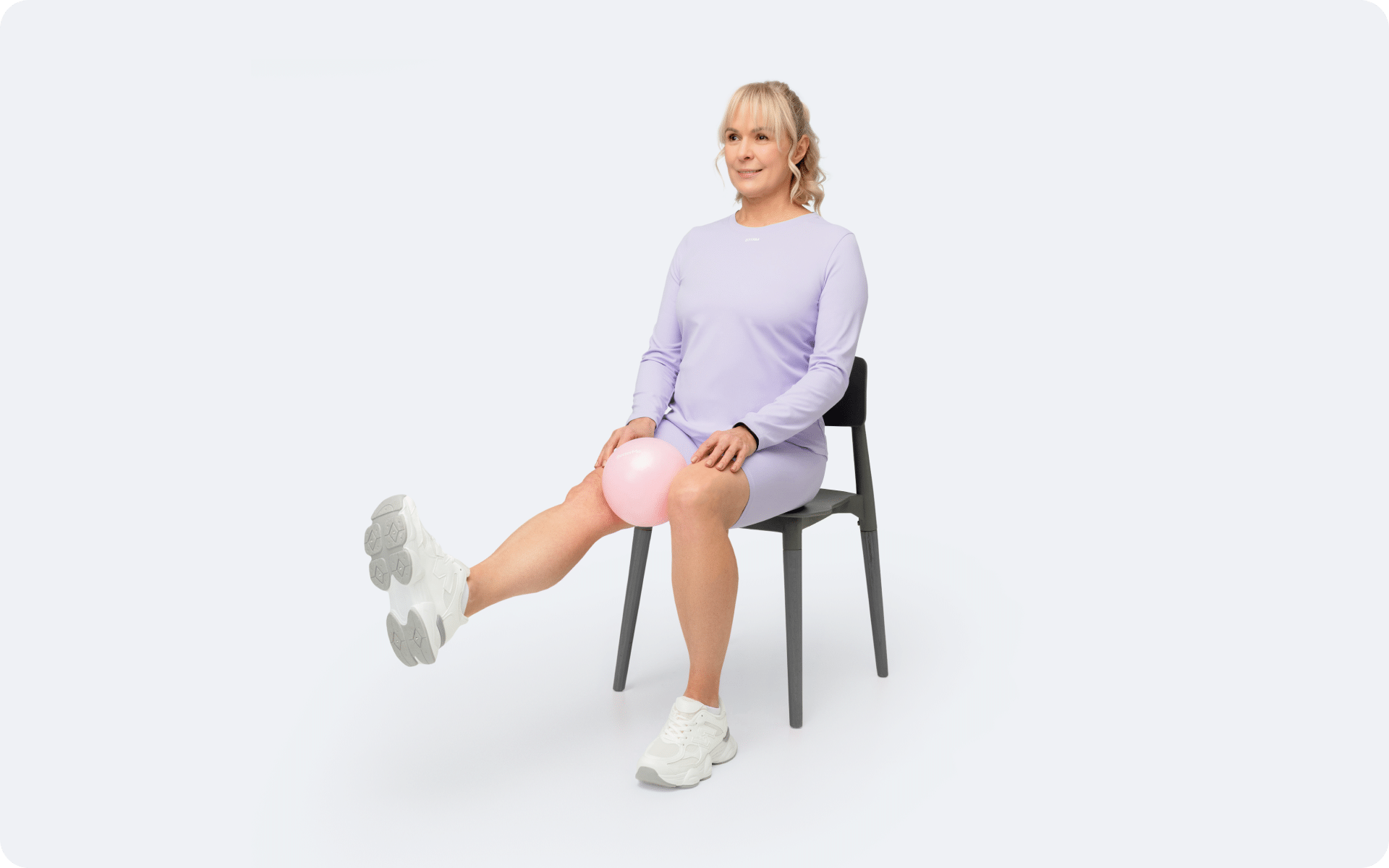
Seated Leg Extensions
Step-by-step instructions:
- Sit near the front edge of the chair with your back tall and your shoulders relaxed. Place both hands lightly on the chair sides or your knees for stability.
- Engage your core and slowly lift your right leg, extending it until the thigh and lower leg form a straight line, parallel to the floor. Keep your toes pointed forward.
- Pause for 1-2 seconds. Lower your leg slowly and switch to the left leg.
Benefits: Strengthens the thighs and knees, and makes daily moves such as standing, walking, and stair climbing easier on the body.
Heel Raises
Step-by-step instructions:
- Sit tall, placing your feet flat on the floor, hip-width apart, and your knees at 90 degrees.
- Rest your hands lightly on the chair sides for balance.
- Inhale, then exhale as you slowly lift your heels off the floor, keeping your toes grounded.
- Hold for 1-2 seconds at the top, then slowly lower your heels to the floor.
- Repeat 10-15 times.
Benefits: Strengthens calves, improves ankle stability, enhances balance, and boosts circulation.
Read more: Seated Pilates for Seniors: A Gentle Way to Stay Fit
Toe Raises
Step-by-step instructions:
- Sit tall on the chair with your heels pressed firmly on the floor, your feet hip-width apart.
- Exhale as you lift your toes toward the ceiling, flexing the front of your lower legs.
- Hold for 1-2 seconds, then inhale as you slowly lower your toes.
- Repeat 10-15 times.
Benefits: Strengthens your shin muscles and improves ankle flexibility, which are thought to combine to reduce the chance of falling.
Shoulder Blade Squeezes
Step-by-step instructions:
- Sit tall on the chair with your shoulders relaxed and your feet flat. Your hands can rest on your knees.
- Bend your elbows so your arms are parallel to the floor, then gently pull them back, squeezing your shoulder blades together.
- Keep your arms close to your sides. Pause for a moment, then slowly release.
- Hold for 2-3 seconds, feeling the muscles between your shoulder blades engage.
- Relax slowly and repeat 10-12 times.
Benefits: Improves posture, tones the upper back, smoothes rounded shoulders, and eases upper-back tension.
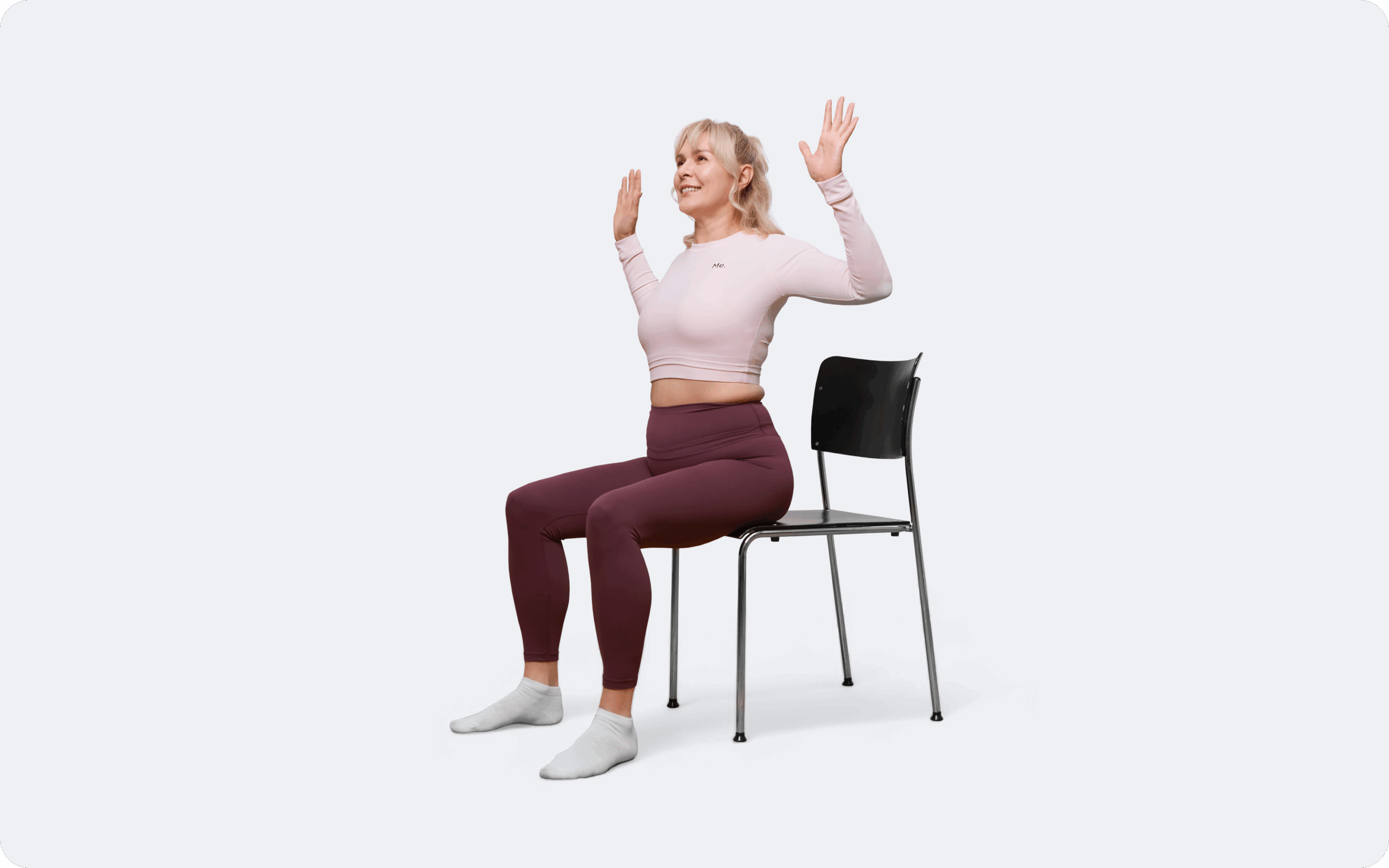
Arm Raises
Step-by-step instruction:
- Sit tall with both feet flat on the floor, your legs at hip-width apart, and your back straight.
- Keep your gaze forward and position your hands so your thumbs point upward.
- Slowly lift both arms to about a 45-degree angle (roughly halfway between straight in front of you and out to the sides), keeping them no higher than shoulder level.
- Lower your arms with control and repeat 10 times.
Benefits: Can work to strengthen shoulders and arms, boost mobility and posture, and improve functional movement such as reaching or lifting everyday items.
Side Bend Stretches
Step-by-step instructions:
- Sit tall with both feet flat on the floor, your legs hip-width apart.
- Lift your right arm straight overhead. Keeping your feet grounded and your hips firmly seated, gently lean to the left as far as feels comfortable.
- Slowly return to the center.
- Repeat 5-8 times, then switch sides, lifting your left arm and bending to the right.
Benefits: Stretches the back and core and enhances flexibility and lateral mobility.
A Short Cool Down
Wind down with slow, mindful movements to help your body recover.
Focus on deep, steady breathing—Inhale through your nose and exhale slowly through your mouth. Relax your muscles and lower your heart rate.
Add gentle seated stretches for your neck, shoulders, arms, and legs:
- Gently tilt your head side to side to stretch your neck.
- Roll your shoulders back to release any tension.
- Extend one leg at a time and reach toward your shin or ankle for a light hamstring stretch.
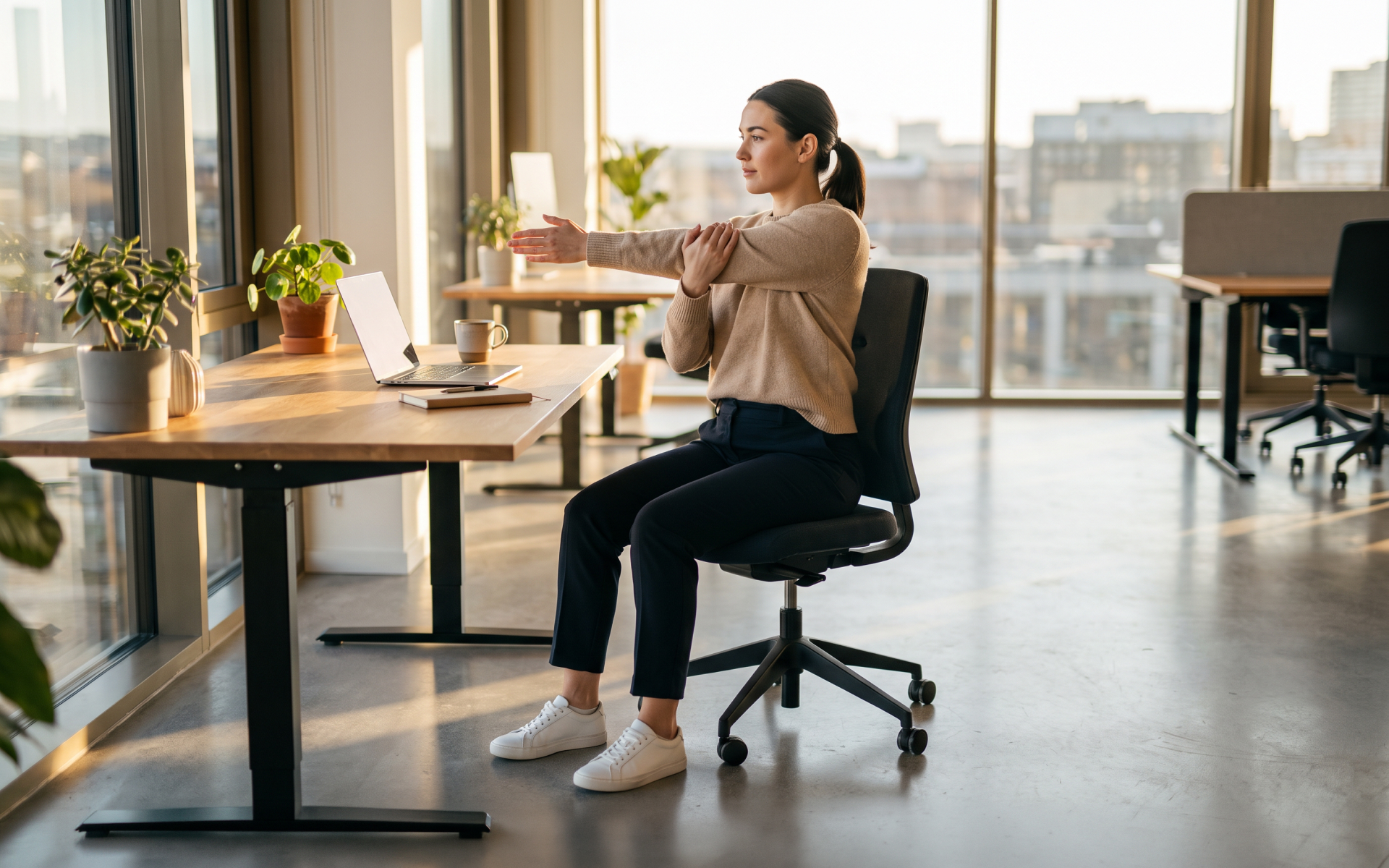
- Bring one arm across your chest to stretch your shoulders.
- Lift an arm overhead and lean slightly to the side for a gentle side-body stretch.
Cool downs such as the one listed above can help release tension, improve flexibility, and leave you feeling calm, refreshed, and relaxed after a workout. (8)
Reasons why BetterMe is a safe bet: a wide range of calorie-blasting workouts, finger-licking recipes, 24/7 support, challenges that’ll keep you on your best game, and that just scratches the surface! Start using our app and watch the magic happen.
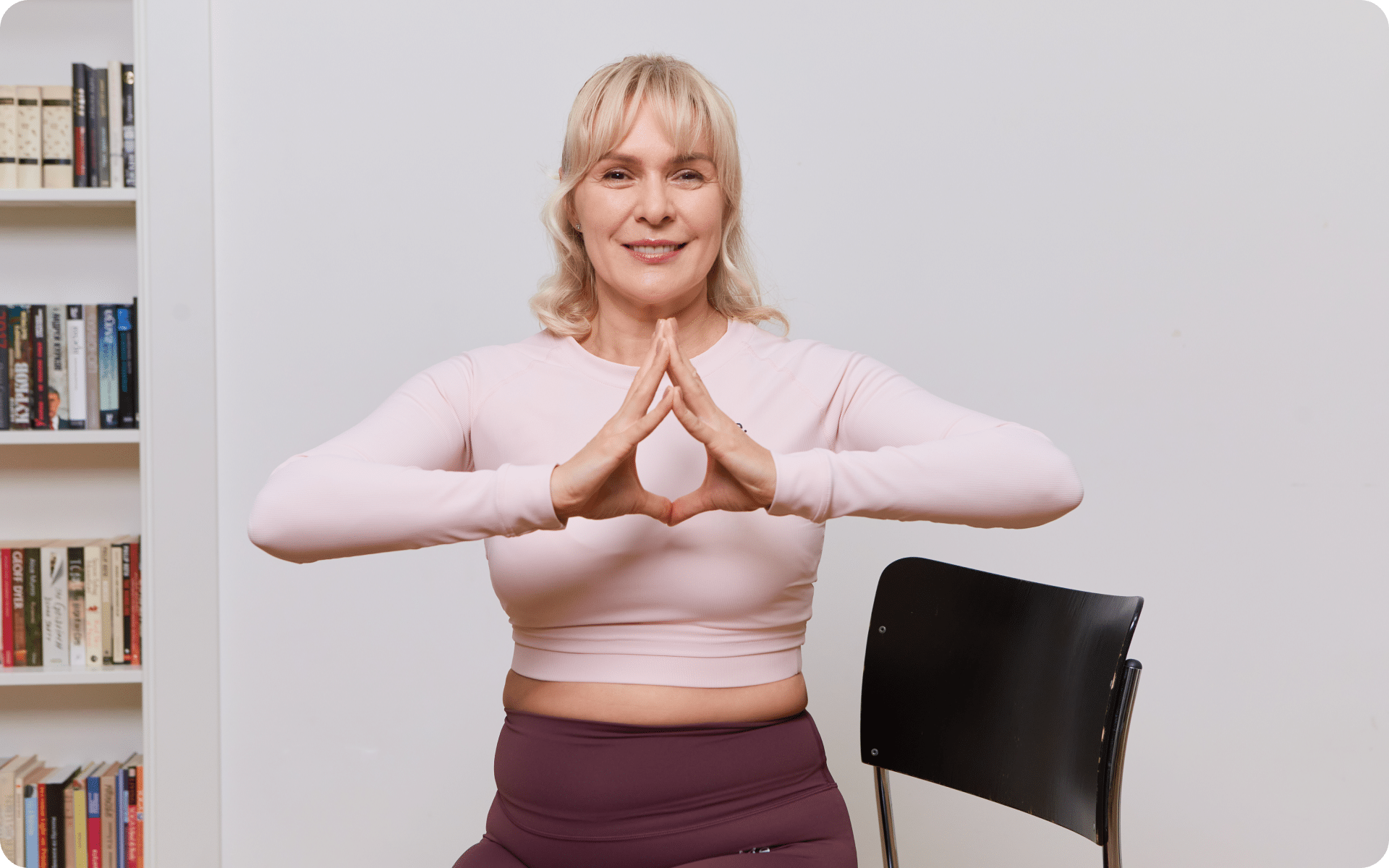
What Are Some Common Mistakes with Chair-Based Exercises?
Even gentle chair exercises for seniors can lose their effectiveness if your form slips. Here’s what to watch for:
- Slouching through moves: When you let your posture collapse, this takes the focus off your core and back. Instead, sit tall, keep your chest lifted, and engage your muscles for maximum benefit.
- Locking your joints: There are a number of ways that a joint can be injured. Some common sports injuries include those to the ankle, hips, knees or elbows. When exercising or even just in general daily life, you should try to keep a soft bend in the knees for protection and balance. This basically preps the body for anything that gets thrown at it. Try it for yourself with a partner: stand tall with your feet close, knees locked, and have someone push your torso—you’ll likely fall to the side. Now try it again with a wide foot base and slight bend in the knees—it should be much easier to stay balanced and upright in this position.
- Skipping the warm-up (and cool-down): Jumping straight to the exercise can lead to stiffness or injury. A few minutes of gentle movement before and after can make a difference.
- Holding your breath: It’s easy to forget about breathing, but it keeps oxygen flowing and helps you move with control. Exhale during effort, inhale as you release.
- Rushing with each move: Speed isn’t necessarily your main goal here. Slow, controlled movements engage muscles, helping you stay focused and maintain proper form more easily (9). If slow movements are your thing, yoga chair exercises for seniors are an ideal option, as long as you have your doctor’s approval. That being said, there’s a time and place for speed. As you build up your strength, you can control your descent in your squat and then press yourself back up powerfully. This can make the exercise more challenging, which is a great tool for hypertrophy (10).
Read more: Seated Yoga Poses for Seniors That May Feel Surprisingly Good After Too Much Sitting
How Many Times a Week Should a Senior Do Chair Exercises?
It’s generally recommended to aim for 3-5 sessions per week. Short, consistent workouts throughout the week can be an effective way to increase your daily movement.
However, if you’re just starting out, start with 2-3 sessions until you gradually build up as your strength and confidence grow. The real secret lies in consistency. Remember, regular movements help maintain muscle tone, support bone health, and boost overall well-being (11).
Can You Lose Belly Fat Doing Exercises on a Chair?
Generally, chair-based exercises for beginners may contribute to weight loss when paired with a balanced diet. While chair workouts may not burn calories as quickly as high-intensity routines, they still play an important role in supporting a healthy, sustainable weight loss (8).
For even better results, try mixing your routine with brisk walking or other forms of exercise.
Pairing diet and exercise may lead to great weight loss in your body, including the abdominal area (12). A study on postmenopausal women found that both diet and a combination of diet and exercise can reduce abdominal fat. However, adding exercises may lead to greater improvements in fat loss (12).
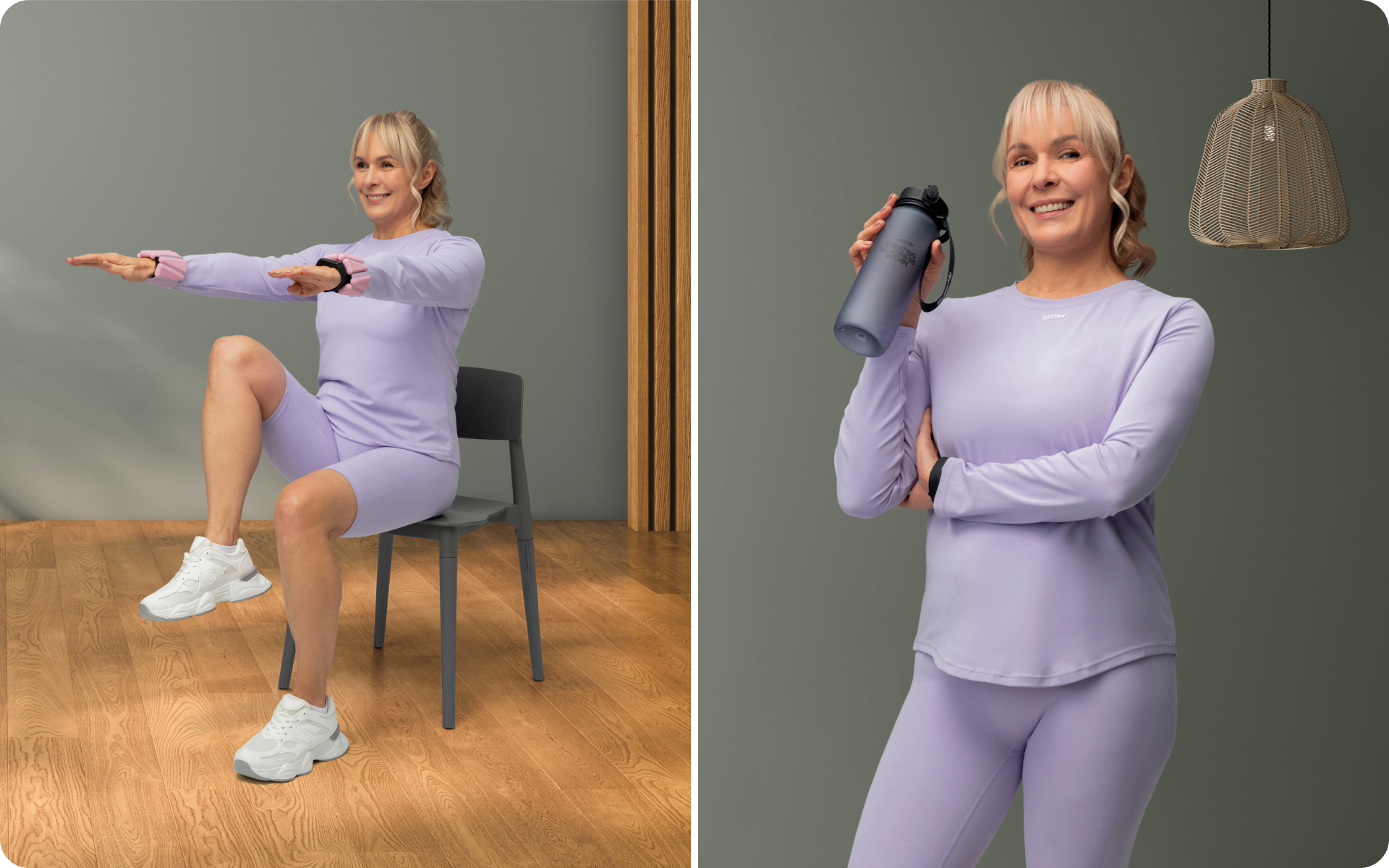
Frequently Asked Questions
Should you do chair exercises every day?
We’d recommend engaging in a wide variety of exercises throughout the week. Chair yoga could be one of the many forms of movement that you do. The best workout is one that you can stay consistent with for a long period of time, (13) so find what you love and try your best to stick with it.
What exercises should seniors do every day?
There are many different exercises you can perform with a chair. Some of our favorites are chair squats, seated marches, toe raises, arms lifts, and other low-impact moves that are described in this guide.
What exercises should seniors not do?
Many exercises may be appropriate for older adults who have adequate strength, flexibility, and mobility. Suitability varies for every individual, so any exercise should be carefully adapted and supervised. It’s best to consult a physical therapist to ensure these exercises are appropriate for you.
Which three foods should seniors avoid?
We’d advise speaking with a health professional such as a dietician in order to discover what foods work for you. It really comes down to what your goals are and what you’re hoping to achieve through your food intake and exercise.
Generally, if you’re looking to lose weight, you’ll want to burn more calories than you consume. This is called being in a calorie deficit. On the other hand, if you’re looking to gain weight, it’s advised that you undergo a calorie surplus.
It’s important for seniors to speak with a medical professional to get a comprehensive list of what they should avoid. You may have a preexisting condition or an allergy that you must avoid at all costs. We all have unique bodies and ultimately, we all have different needs.
Who should try chair-based exercises?
The majority of people could benefit from chair-based exercises. However, as we’ve constantly mentioned, it’s important to contact a medical professional before getting started. This form of exercise may appear “easy” on the outside, but there are a variety of different movements and strategies you can use to make these workouts more challenging.
The Bottom Line
In this short guide to staying active and mobile, you’ve unpacked some of our favorite chair-based exercises for seniors. These low-impact moves can be scaled up to challenge even an expert fitness enthusiast.
Chair-based exercises for older adults may be good for mobility, flexibility, and muscle strength. Doing them regularly will keep you active from the comfort of your own home.
DISCLAIMER:
This article is intended for general informational purposes only and does not serve to address individual circumstances. It is not a substitute for professional advice or help and should not be relied on for making any kind of decision-making. Any action taken as a direct or indirect result of the information in this article is entirely at your own risk and is your sole responsibility.
BetterMe, its content staff, and its medical advisors accept no responsibility for inaccuracies, errors, misstatements, inconsistencies, or omissions and specifically disclaim any liability, loss or risk, personal, professional or otherwise, which may be incurred as a consequence, directly or indirectly, of the use and/or application of any content.
You should always seek the advice of your physician or other qualified health provider with any questions you may have regarding a medical condition or your specific situation. Never disregard professional medical advice or delay seeking it because of BetterMe content. If you suspect or think you may have a medical emergency, call your doctor.
SOURCES:
- Do Chair Based Exercises Help in Improving Balance, Physical Fitness, and Quality of Life in Various Populations? A Systematic Review (2024, researchgate.net)
- The Effect of Chair-Based Exercise on Physical Function in Older Adults: A Systematic Review and Meta-Analysis (2021, pmc.ncbi.nlm.nih.gov)
- The benefits of seated exercise (2025, emduk.org)
- The effect of chair-based exercise on physical functioning in postmenopausal women: a meta-analysis (2025, pmc.ncbi.nlm.nih.gov)
- Effectiveness of Chair-Based Exercises and Cognitive Training With Synchronous Telerehabilitation Method in Healthy Older Adults: A Pilot Randomised Controlled Study (2025, pubmed.ncbi.nlm.nih.gov)
- Do Chair Exercises Help You Lose Weight? (2025, moveability.org.uk)
- 11 Chair Exercises for Seniors, Older Adults and People With Limited Mobility (2024, clevelandclinic.org)
- Anatomy of sports injuries (2021, books.google.com.ua)
- Go slower for strength training gains (2025, health.harvard.edu)
- Effects of Resistance Training Overload Progression Protocols on Strength and Muscle Mass (2024, thieme-connect.com)
- Physical activity (2024, who.int)
- Effect of diet with or without exercise on abdominal fat in postmenopausal women – a randomised trial (2019, pmc.ncbi.nlm.nih.gov)
- American College of Sports Medicine Position Stand. Resistance Training Prescription for Muscle Function, Hypertrophy, and Physical Performance in Healthy Adults: An Overview of Reviews (2026, acsm.org, 2026)
 Reviewed by