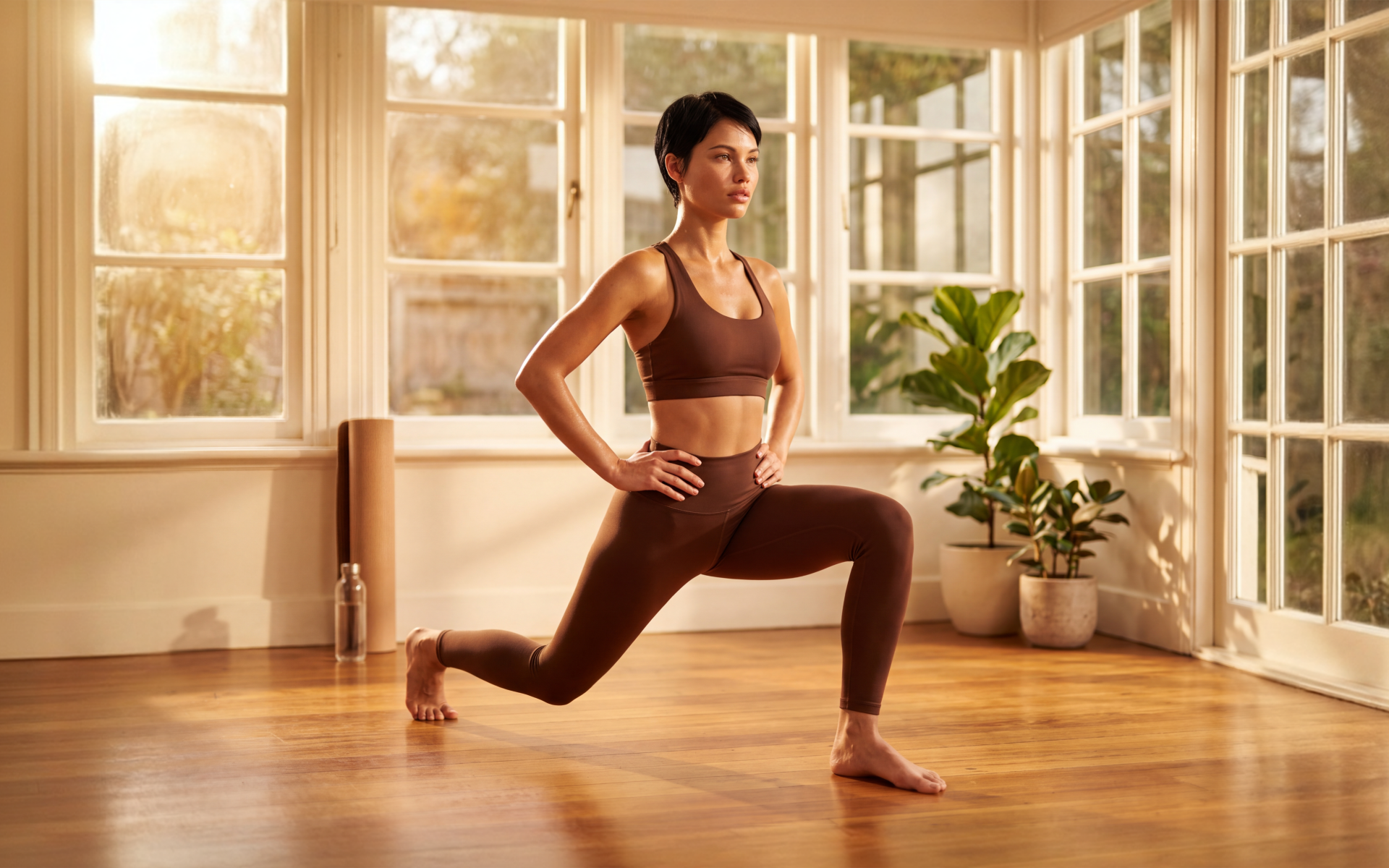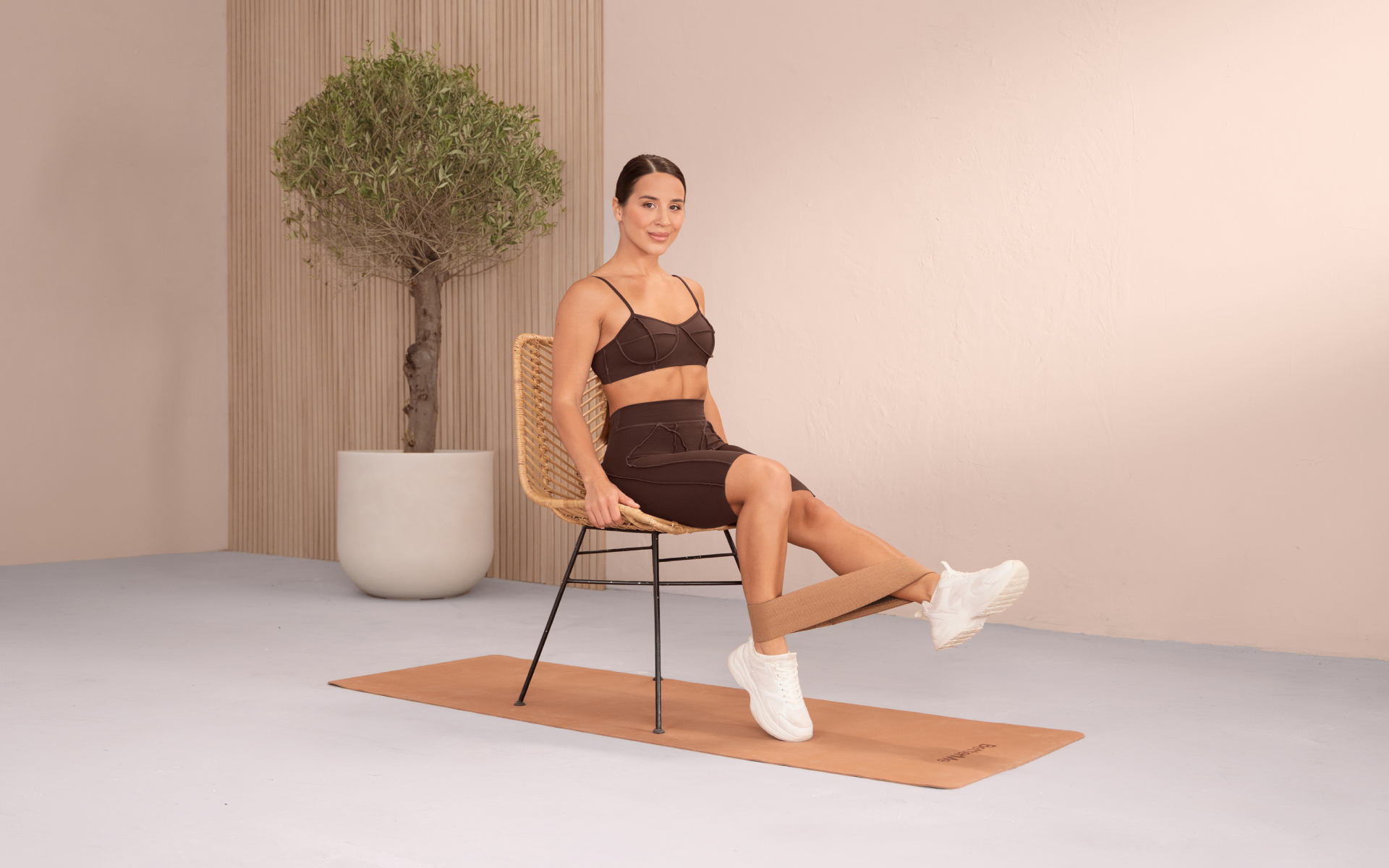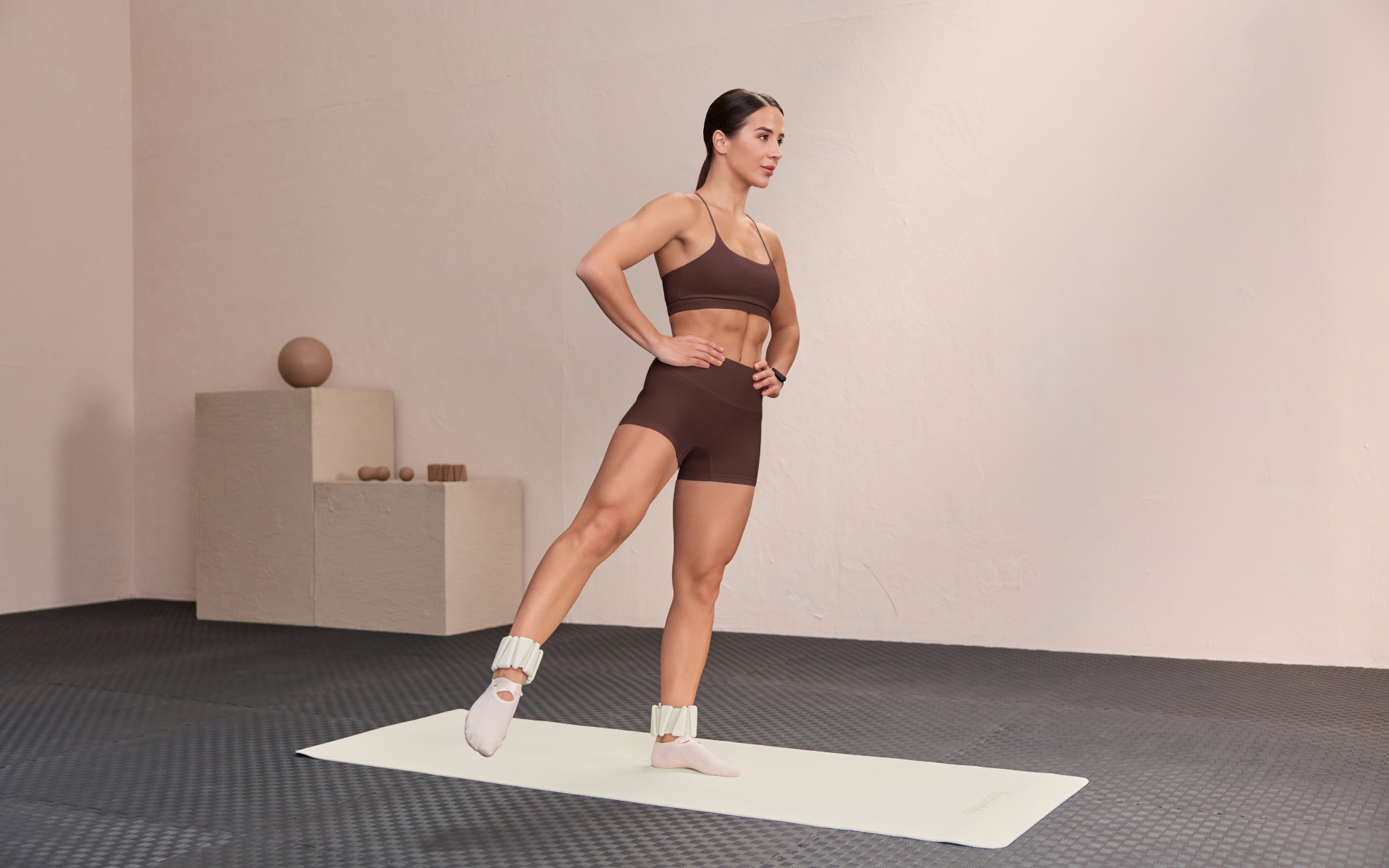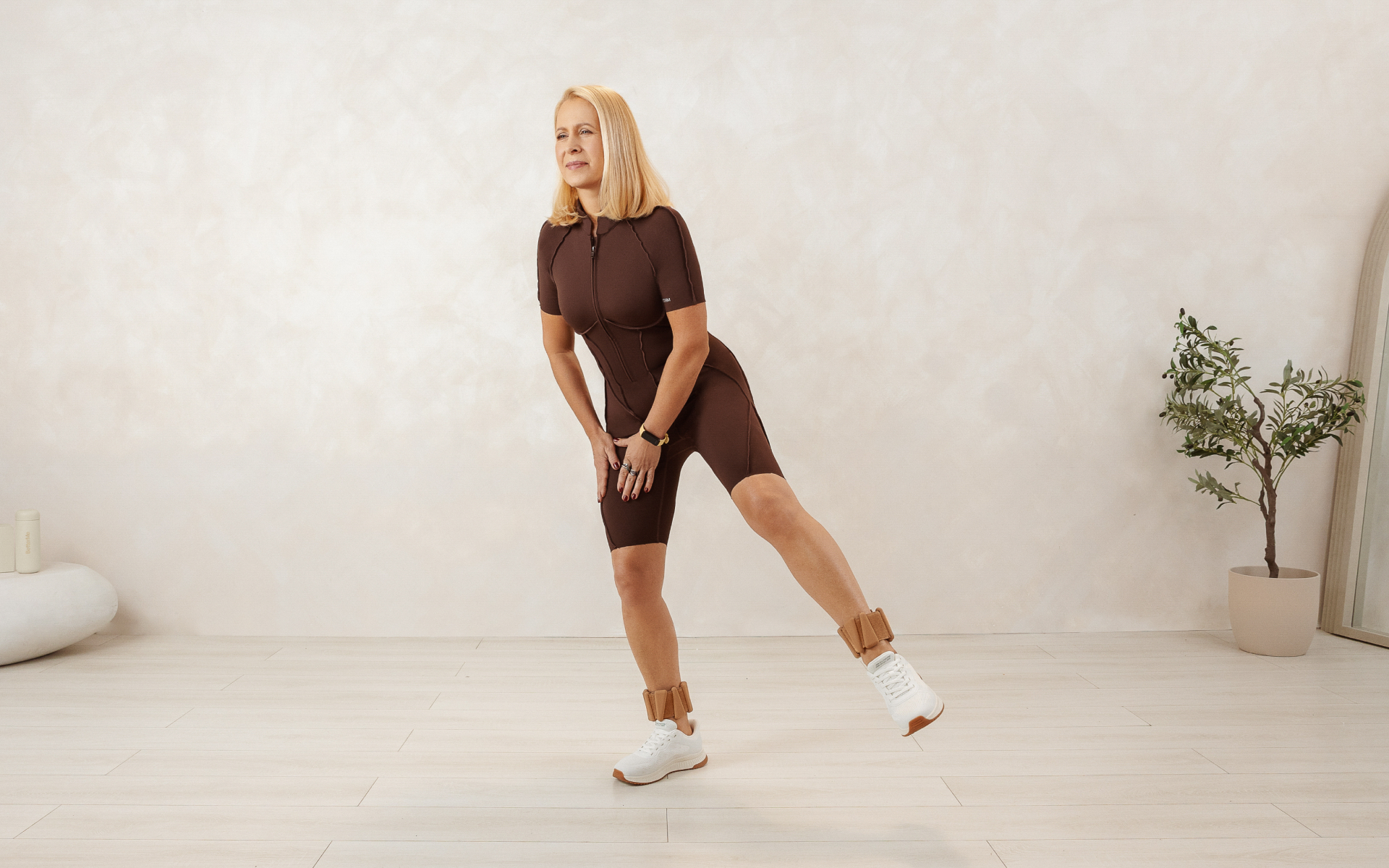
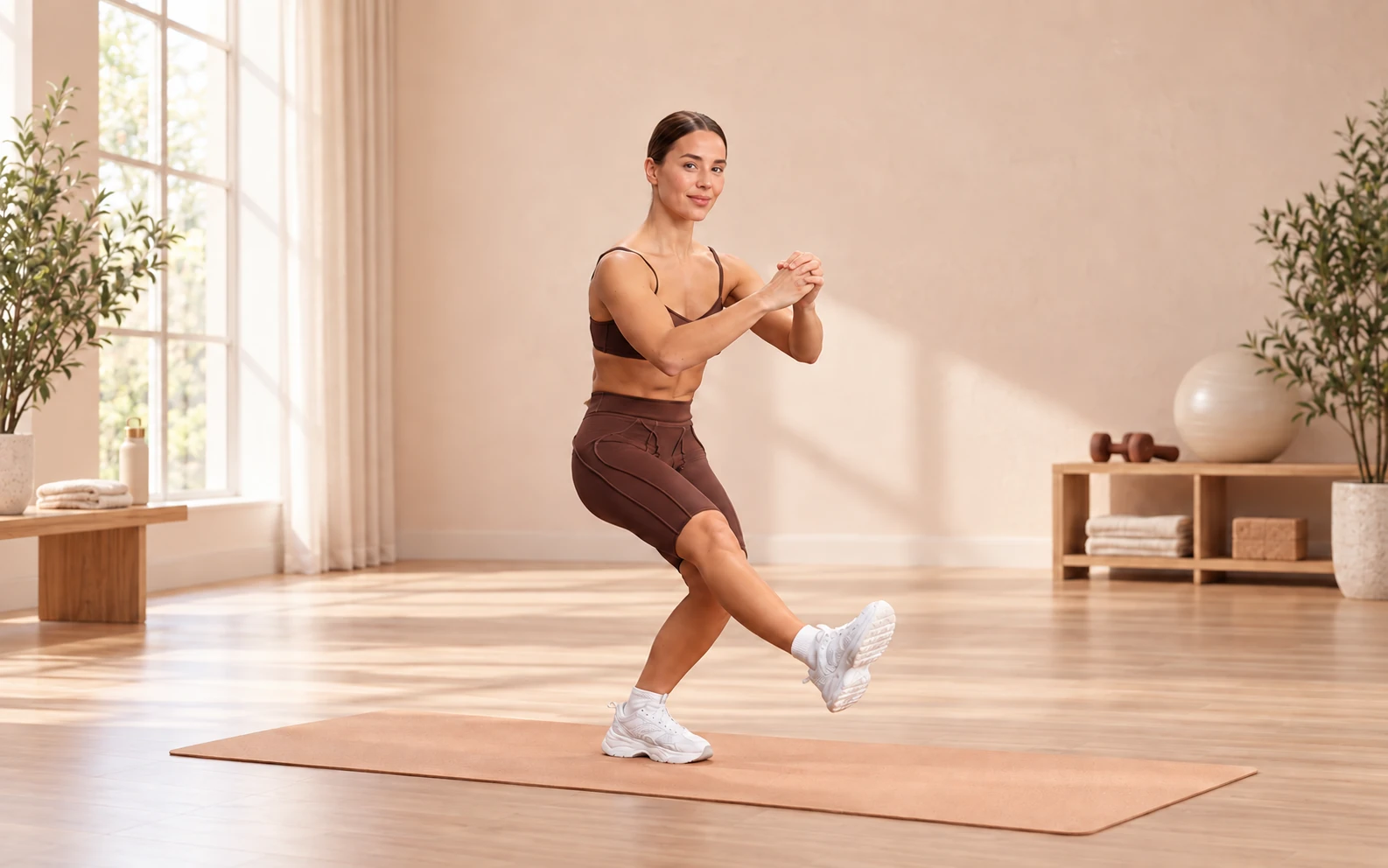
Standing leg exercises are performed on your feet to target muscles in your lower body. These exercises can help you build strength, improve stability, and support daily movement patterns. You can perform them with or without equipment, which makes them an accessible choice for many people. If standing movements feel difficult at first, leg exercises while sitting may be a gentler starting point before progressing to a standing routine. Adding them to your routine can focus on your quads, hamstrings, glutes, and calves.
Standing leg exercises are lower-body movements that are performed while on your feet, rather than while seated or lying down. This routine can be suitable for anyone who is looking to build strength, regardless of their current fitness level. Lower-body strength is important as it supports everything you do, from walking to carrying groceries. In this guide, you’ll learn about the benefits, routines, and form tips for these movements. Are you ready to start your journey? Let’s explore these helpful movements to support your physical wellness.
Can Standing Leg Exercises Help Improve Balance?
Standing leg movements often require you to manage your center of gravity while in motion. Some research has explored associations between lower-body resistance training and improved stability. It is thought that challenging your muscles in a standing position can engage your core and stabilizing muscles (1).
However, balance improvement can vary significantly from person to person. It will depend on your starting point, current mobility, and how consistently you practice. These exercises aren’t a guaranteed fix for coordination issues—they simply provide a practical way to challenge your body’s awareness in space.
If you’re a beginner, you may want to hold onto a sturdy chair or wall for support. Wall exercises for legs, such as supported squats, calf raises, or standing leg lifts, can be a practical way to build confidence while reducing balance demands. You can gradually reduce your reliance on support as you feel more comfortable. Always listen to your body and choose variations that feel appropriate for your current level.
What Are the Best Standing Leg Exercises?
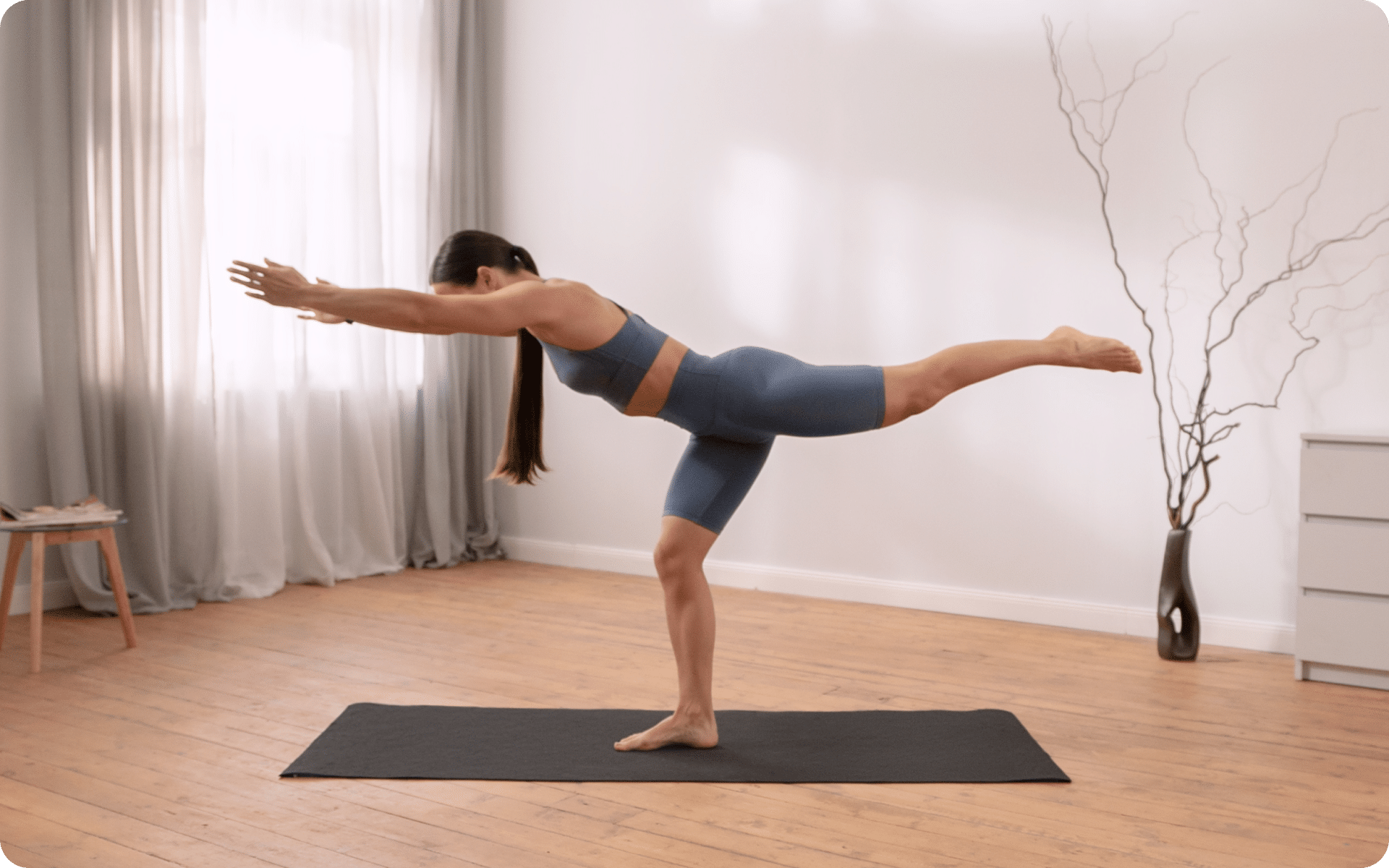
The best standing leg exercises are movements that engage multiple large muscle groups while offering room for progression. A well-rounded routine usually includes squats, lunges, hinges, and calf movements. These exercises can be adjusted to fit your preferences and available equipment.
| Exercise | Main muscles targeted | Equipment needed | Beginner note |
|---|---|---|---|
| Bodyweight squat | Quads, glutes, hamstrings | None | Keep your chest up and go only as low as is comfortable |
| Reverse lunge | Quads, glutes | None or dumbbells | Step back slowly to maintain your balance |
| Romanian deadlift (RDL) | Hamstrings, glutes | Dumbbells or kettlebell | Focus on pushing your hips back, not bending your knees |
| Standing calf raise | Calves | None or wall for support | Pause at the top of the movement for a stronger contraction |
| Lateral lunge | Quads, glutes, inner thighs | None or dumbbells | Keep your trailing leg straight as you step to the side |
| Step-up | Quads, glutes | Sturdy box or step | Push through your full foot on the step |
Bodyweight Squat
The squat is a foundational movement that targets your entire lower body. Doing standing leg exercises at home is simple when you start with this classic move.
- Stand with your feet slightly wider than shoulder-width apart.
- Keep your chest tall and your core engaged.
- Push your hips back and bend your knees to lower your body.
- Go down as far as feels comfortable, then push through your feet to return to standing.
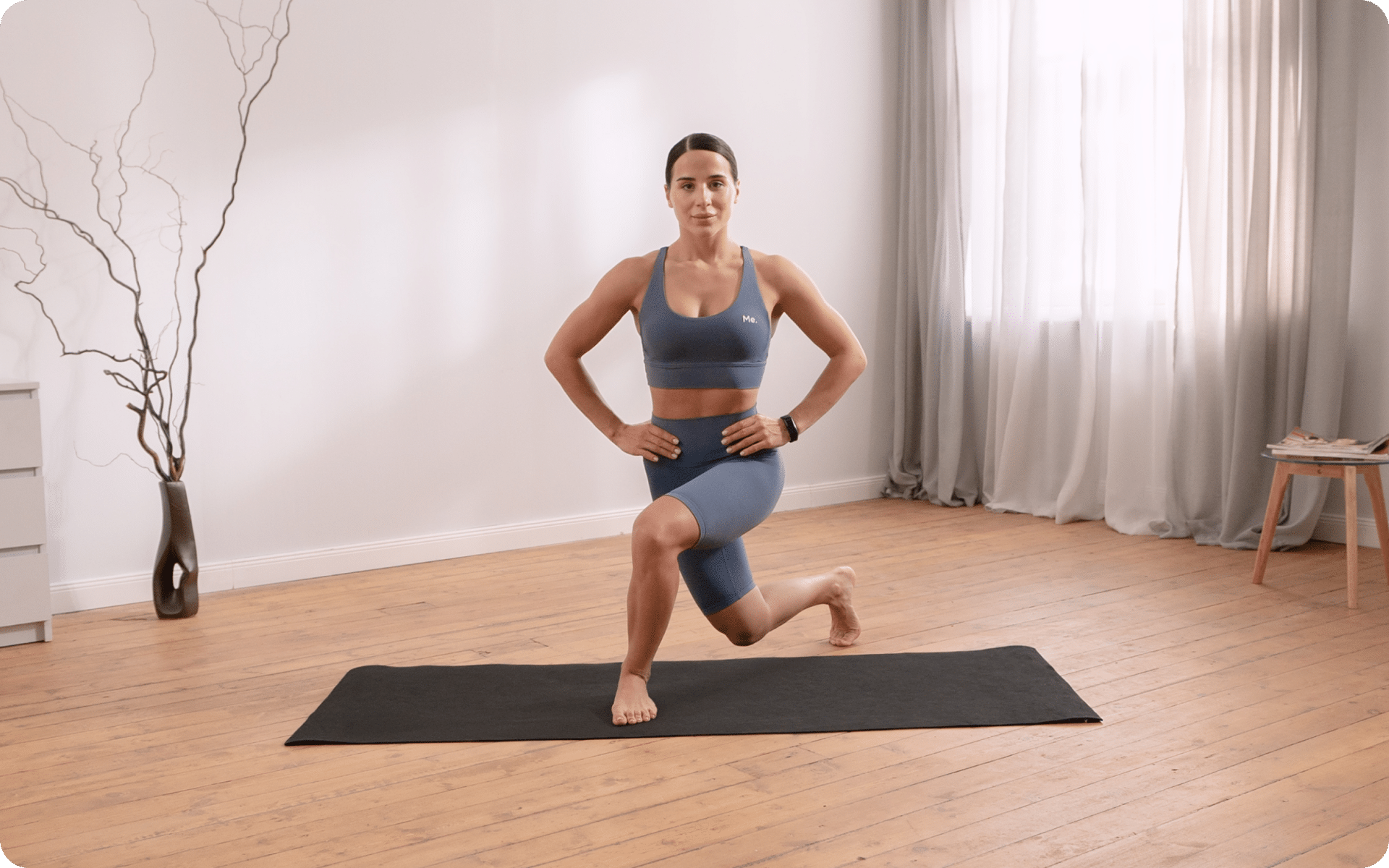
Reverse Lunge
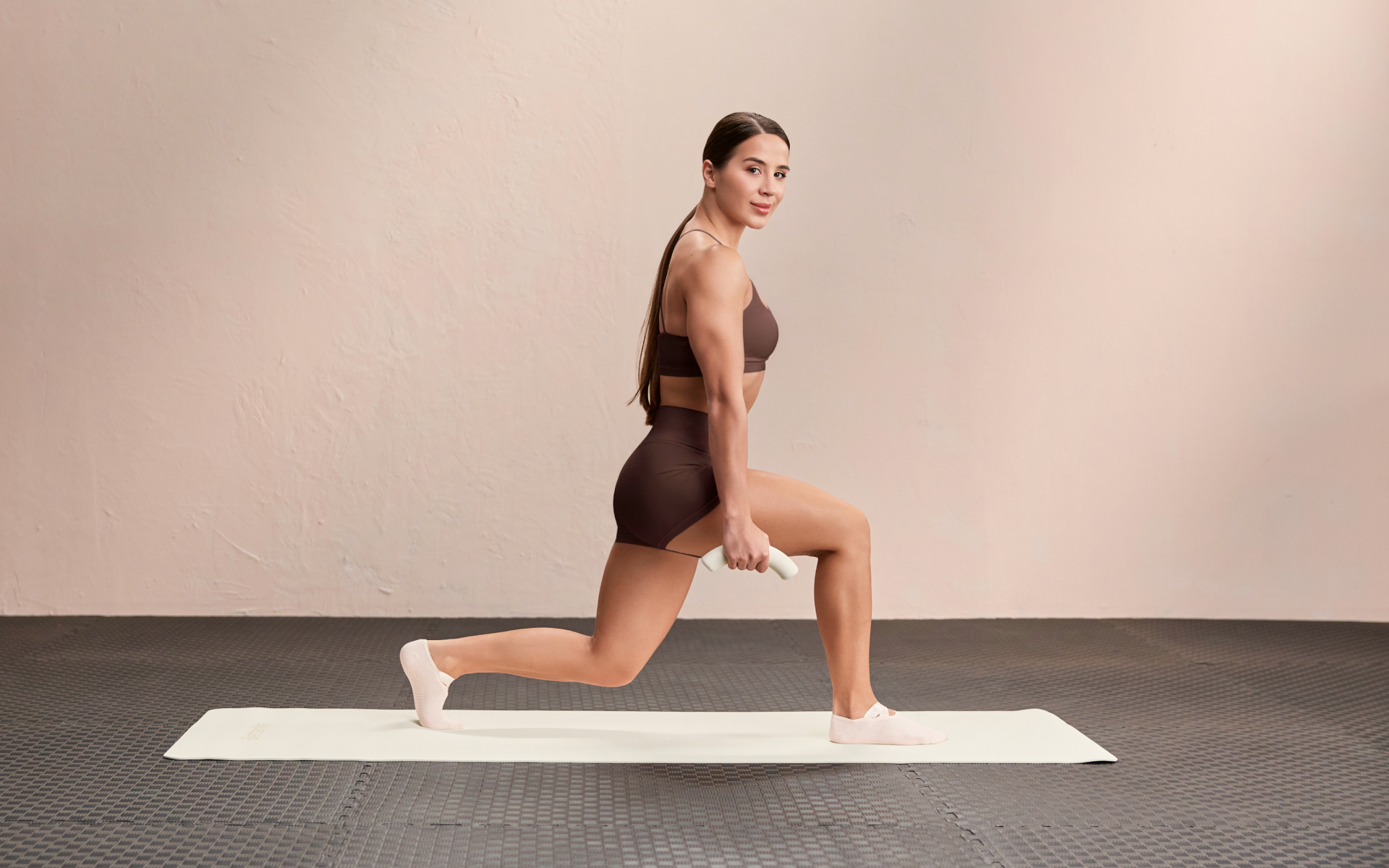
This movement focuses heavily on your quads and glutes while challenging your stability. It’s a great option for many people looking to build unilateral strength.
- Stand tall with your feet together.
- Take a large step backward with your right foot.
- Lower your hips until both knees are bent at an almost 90-degree angle.
- Push off your back foot to return to the starting position, then switch legs.
Romanian Deadlift (RDL)
The RDL is an excellent hinge movement that targets the back of your legs. You can easily do standing leg exercises with dumbbells to increase the challenge here.
- Hold a dumbbell in each hand in front of your thighs.
- Stand with your feet hip-width apart and a slight bend in your knees.
- Push your hips backward while keeping your back flat.
- Lower the weights until you feel a stretch in your hamstrings, then squeeze your glutes to stand up.
Standing Calf Raise
Calf raises isolate the muscles on the back of your lower legs. This movement is gentle and straightforward, which makes it an excellent addition to standing leg exercises for seniors.
- Stand tall with your feet hip-width apart.
- Slowly lift your heels off the floor, rising onto the balls of your feet.
- Hold the top position for a brief second.
- Slowly lower your heels back to the ground.
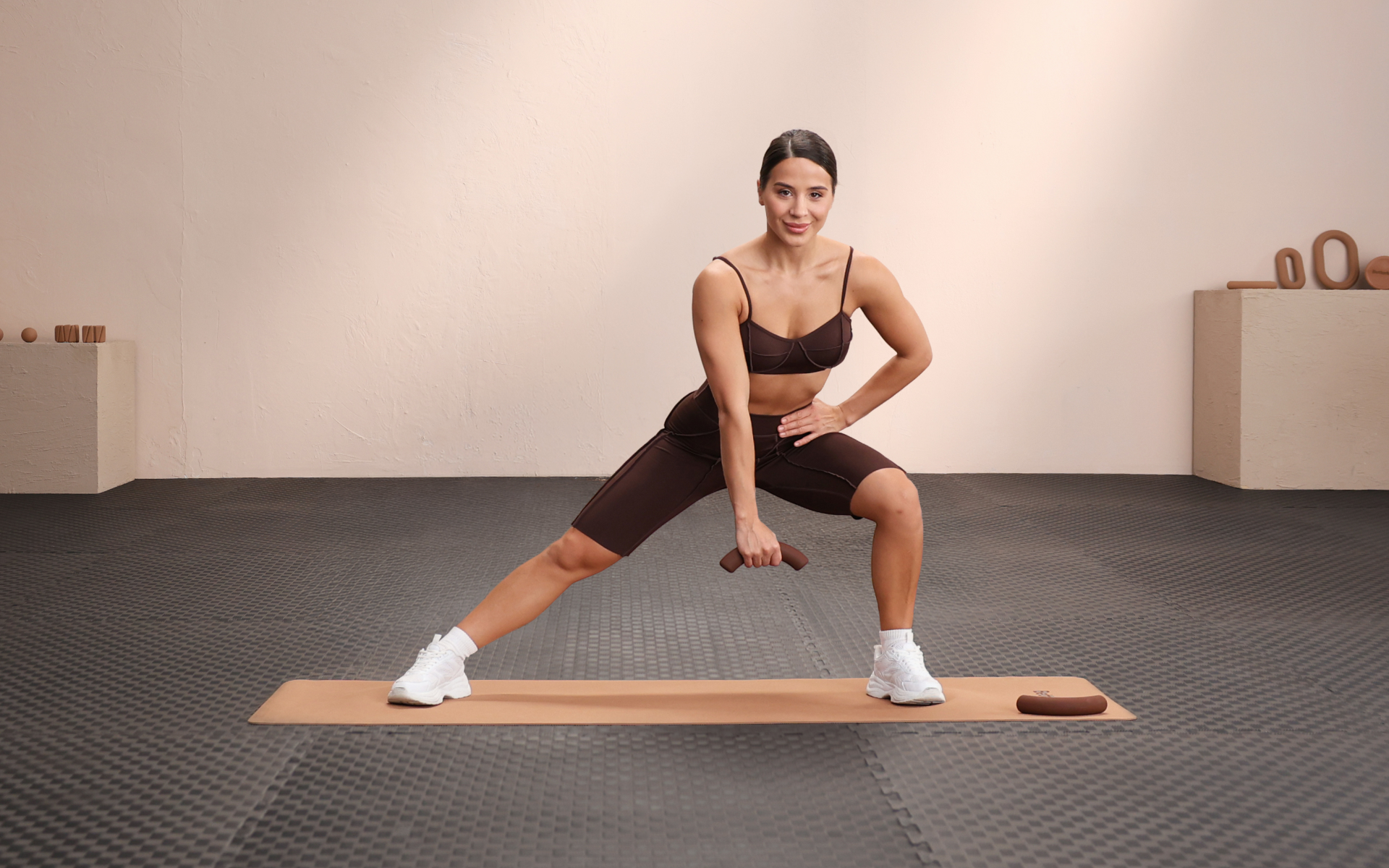
Lateral Lunge
The lateral lunge moves your body side-to-side, which engages your inner and outer thigh muscles. This is one of the most effective standing leg exercises with no equipment needed to challenge new movement patterns.
- Stand with your feet together and your hands clasped in front of your chest.
- Take a wide step to the right side.
- Bend your right knee and push your hips back, keeping your left leg straight.
- Push off your right foot to return to the center, then repeat on the other side.
Step-Up
Step-ups mimic the natural motion of climbing stairs and build excellent functional strength. You can perform these standing leg exercises with weights once the bodyweight version feels too easy.
- Stand in front of a sturdy box, step, or bench.
- Place your right foot entirely on the elevated surface.
- Push through your right foot to lift your body up until your right leg is straight.
- Slowly step back down with control and repeat on the other side.
Read more: Wall Stretches for Legs: A Beginner’s Guide to Better Flexibility
What Is a Simple Standing Leg Workout?
A simple lower-body workout combines several foundational movements with adequate rest. You can easily adapt this routine to match your current fitness level and available time.
| Exercise | Sets | Reps/time | Rest | Load | Effort | Notes |
|---|---|---|---|---|---|---|
| Bodyweight squat | 3 | 10-15 reps | 60 seconds | Bodyweight | Moderate | Focus on a slow, controlled descent |
| Reverse lunge | 3 | 8-12 per leg | 60 seconds | Bodyweight or light | Moderate | Alternate legs or complete one side first |
| Romanian deadlift | 3 | 10-12 reps | 60 seconds | Light to moderate | Moderate to high | Keep the weights close to your legs |
| Standing calf raise | 3 | 15-20 reps | 45 seconds | Bodyweight | Low to moderate | Hold onto a wall if you need balance support |
When you’re following this program, it helps to understand a few acute variables:
- Load refers to the amount of weight you use, which can just be your body weight.
- Volume is the total number of sets and reps you perform during the session.
- Rest is the time you take to recover between sets, which helps you maintain good form.
- Effort describes how hard the exercise feels by the end of a set.
Some research has suggested that a personalized, goal-dependent approach with relatively high effort can be beneficial. Progressive overload means gradually increasing the load, reps, or volume over time to maintain a sufficient stimulus. This gradual progression can help your muscles adapt and grow stronger over time.
Can You Build Lower-Body Strength Without Equipment?
Yes, you can build noticeable lower-body strength using only your body weight. While external weights offer a straightforward way to add resistance, they’re not the only option. Your body provides plenty of load to challenge your muscles (2), particularly when you’re just starting out. Many of these bodyweight movements also work well as leg calisthenics exercises, as they rely on controlled movement, balance, and muscular endurance rather than machines or heavy weights.
To continue progressing without equipment, you can change the tempo of your movements. Slowing down the lowering phase of a squat makes the exercise significantly harder (3). You can also add pauses at the bottom of a movement to increase the time your muscles spend working (4). Expanding your range of motion is another great way to increase the challenge (5).
In addition, you can adjust your repetition ranges. Performing more reps per set can help create the effort needed to stimulate muscle growth (6). Trying single-leg variations, such as reverse lunges, also increases the load on each individual leg.
Intense sweat sessions, working weight loss tips, lip-smacking recipes come in one package with the BetterMe Well-Being Coach app—all at your fingertips, start transforming your life now!
How Often Should You Do Standing Leg Exercises?
You should aim to perform lower-body exercises two to three times a week to see balanced results. This frequency allows you to stimulate the muscles frequently while providing enough days for rest and recovery. Current guidelines often emphasize a personalized, goal-dependent approach to exercise frequency (7).
It can be helpful to aim for a relatively high effort during your working sets when you train your legs. A practical rule of thumb is to finish your set feeling like you could only do about two more reps with good form. This is often referred to as keeping two reps in reserve.
Over time, you should aim for progressive overload to keep challenging your muscles. This means slowly increasing the load, reps, and volume across your weekly sessions (8). Consistently challenging your muscles with adequate volume is often associated with positive physical adaptations (9).
How Long Does It Take to Build Leg Strength?
There is no fixed timeline for building leg strength that applies to everyone. Early adaptations to a new routine are often related to skill acquisition and improved coordination. You may notice that you feel stronger and more stable within the first few weeks of training.
Changes in actual muscle size generally take a bit longer to become visible. For many people, noticeable physical changes may take several weeks to a few months of consistent effort. Your body needs time to lay down new muscle tissue in response to your workouts.
Please remember that individual outcomes vary significantly. Your results will depend on your training history, effort levels, nutritional habits, and overall program setup. Patience and consistency are your best tools when you’re working toward fitness goals.
Read more: Cardio After Leg Day: Should You Do It?
What Mistakes Should You Avoid?
Avoiding common errors can help you get the most out of your training routine. Small adjustments to your form and planning can make your workouts more effective and enjoyable.
- Rushing through repetitions: Moving too fast reduces the time your muscles are under tension. Slow down and control the movement.
- Skipping the warm-up: Jumping straight into intense exercise can be jarring. Spend a few minutes doing light movements to prepare your body.
- Letting your knees cave in: This often happens during squats or lunges. Focus on pressing your knees outward slightly to engage your glutes.
- Ignoring your core: A relaxed midsection can compromise your balance. Keep your core gently braced during all standing movements.
- Holding your breath: Breathing smoothly helps regulate your exertion. Exhale during the hardest part of the movement.
- Sacrificing form for weight: Lifting heavier loads with poor form is counterproductive. Always prioritize technique over the amount of weight.
- Inconsistent training: Doing a massive workout once a month will not yield steady progress. Aim for a manageable, regular routine.
Frequently Asked Questions
Are standing leg exercises low-impact?
Many standing leg movements are low-impact as you keep at least one foot on the ground. Exercises such as squats, lunges, and calf raises don’t involve jumping or hard landings. However, the impact level depends on the specific exercise and how you choose to perform it.
Can standing strengthen your legs?
Standing simply on its own is an everyday posture, not a dedicated strengthening activity. To build strength, you need to challenge your muscles through a range of motion with specific exercises. Adding purposeful movements such as squats or lunges to your standing time creates the necessary effort for muscle growth.
Is training the legs twice a week enough?
Training your legs twice a week can be enough for most fitness goals. This frequency usually allows you to accumulate sufficient total training volume. It also provides adequate time for your muscles to recover and adapt between your workout sessions.
What is the number one exercise for legs?
There’s no single best exercise that works perfectly for every person. The ideal movement will depend entirely on your personal goals, mobility, and equipment access. Squats are very popular, but a well-rounded routine that includes multiple movements is often the best approach.
Which muscles do standing leg exercises work?
These exercises primarily target the large muscle groups in your lower body. Depending on the movement, you’ll engage your quadriceps, hamstrings, glutes, and calves. Many of these exercises also require your core muscles to activate for stability.
The Bottom Line
Standing leg exercises offer a practical way to support your lower-body strength and daily movement patterns. By adding movements such as squats and lunges to your routine, you can build a steady habit that you can adjust over time. Start small, focus on your form, and enjoy the process of challenging your body.
DISCLAIMER:
This article is intended for general informational purposes only and does not serve to address individual circumstances. It is not a substitute for professional advice or help and should not be relied on for making any kind of decision-making. Any action taken as a direct or indirect result of the information in this article is entirely at your own risk and is your sole responsibility.
BetterMe, its content staff, and its medical advisors accept no responsibility for inaccuracies, errors, misstatements, inconsistencies, or omissions and specifically disclaim any liability, loss or risk, personal, professional or otherwise, which may be incurred as a consequence, directly or indirectly, of the use and/or application of any content.
You should always seek the advice of your physician or other qualified health provider with any questions you may have regarding a medical condition or your specific situation. Never disregard professional medical advice or delay seeking it because of BetterMe content. If you suspect or think you may have a medical emergency, call your doctor.
SOURCES:
- Effects of variable resistance training on lower limb explosive power in athletes: a systematic review and meta-analysis (2026, pmc.ncbi.nlm.nih.gov)
- Benefits of Bodyweight Training (2025, humankinetics.me)
- Go slower for strength training gains (2025, health.harvard.edu)
- Effect of Pause Versus Rebound Techniques on Neuromuscular and Functional Performance After a Prolonged Velocity-Based Training (2021, pubmed.ncbi.nlm.nih.gov)
- Effects of squat training with different depths on lower limb muscle volumes (2019, pubmed.ncbi.nlm.nih.gov)
- Loading Recommendations for Muscle Strength, Hypertrophy, and Local Endurance: A Re-Examination of the Repetition Continuum (2021, mdpi.com)
- Effect of different training frequencies on maximal strength performance and muscle hypertrophy in trained individuals—a within-subject design (2022, journals.plos.org)
- Effects of Resistance Training Overload Progression Protocols on Strength and Muscle Mass (2024, pubmed.ncbi.nlm.nih.gov)
- The influence of resistance exercise training prescription variables on skeletal muscle mass, strength, and physical function in healthy adults: An umbrella review (2024, sciencedirect.com)
 Reviewed by