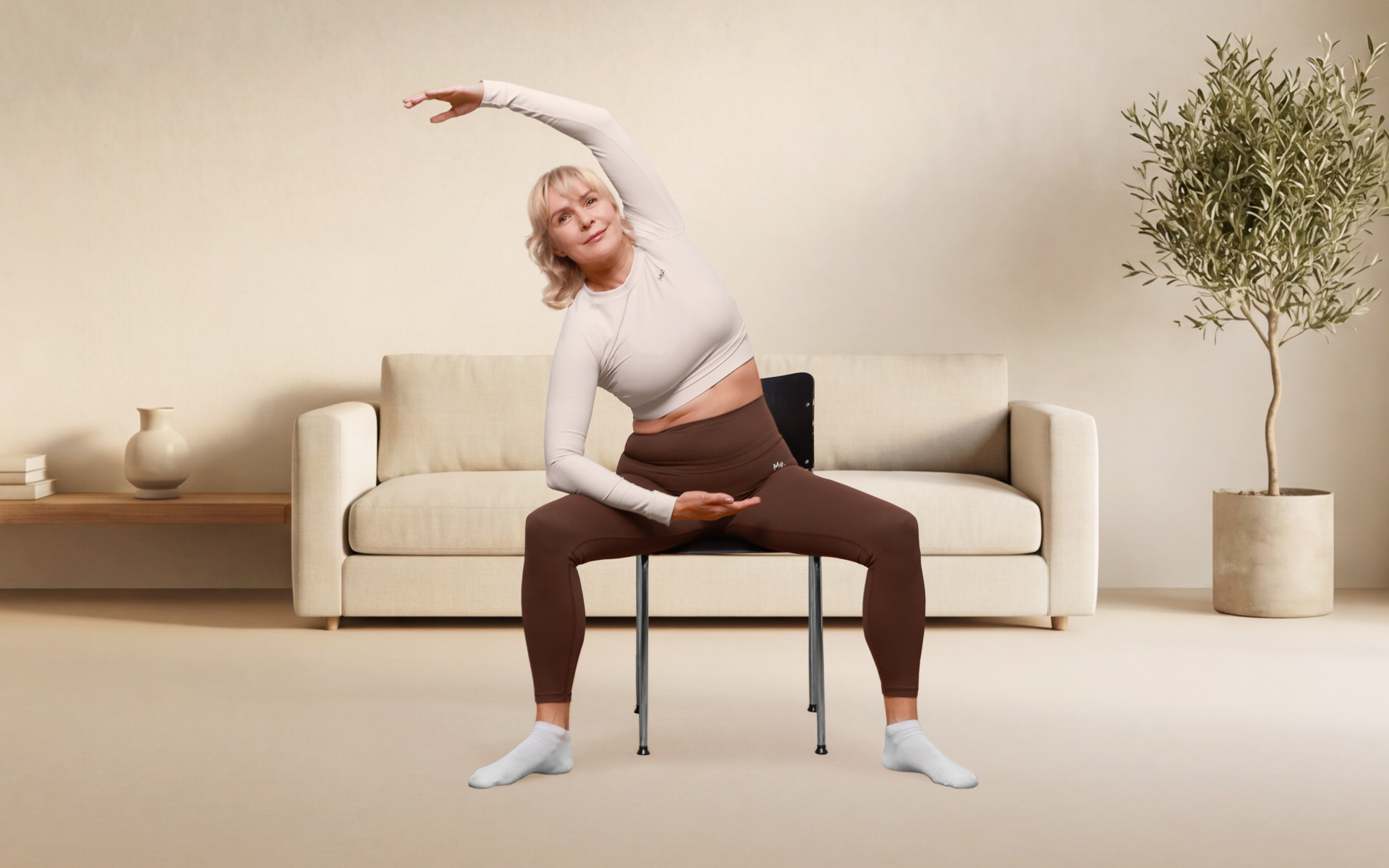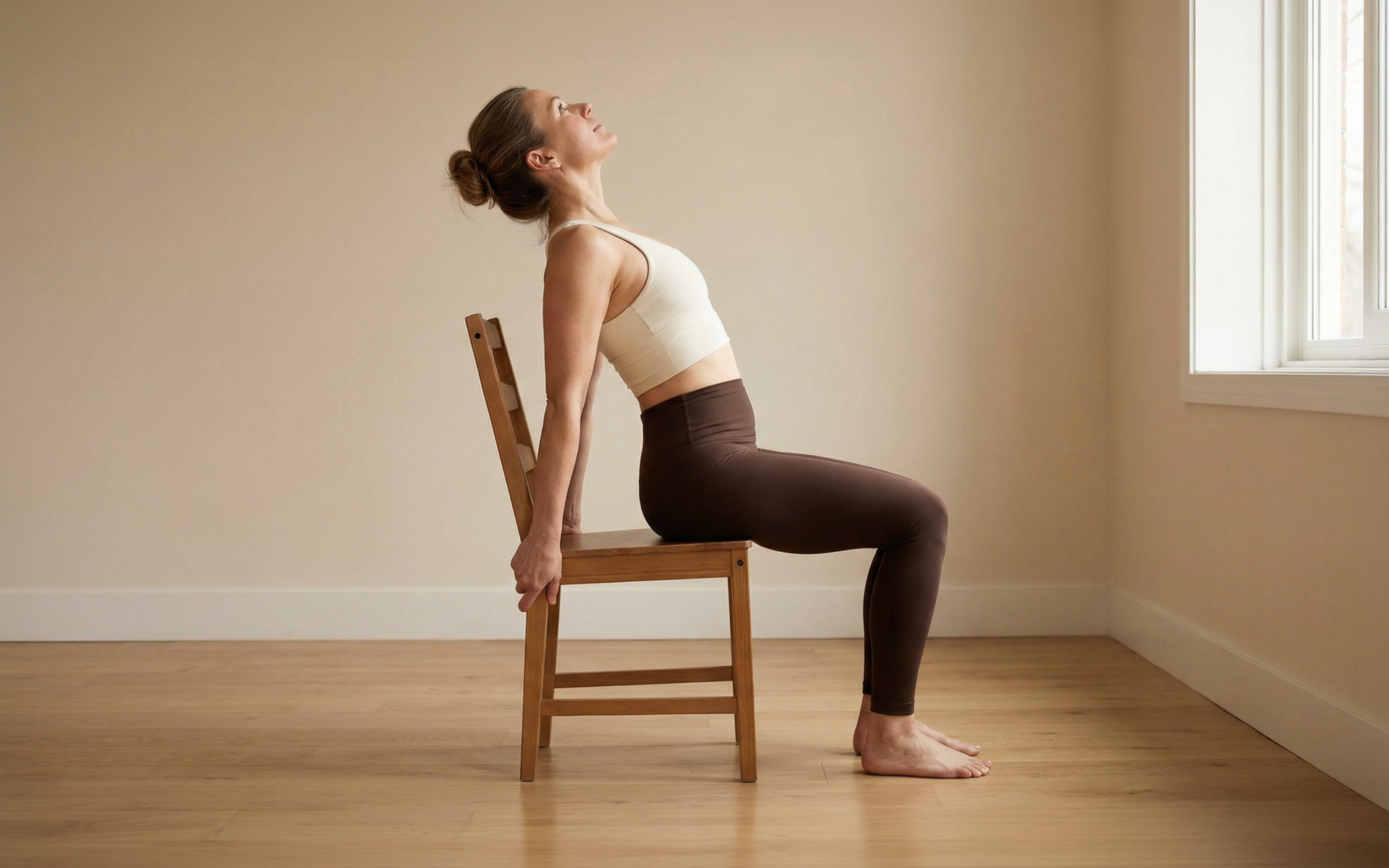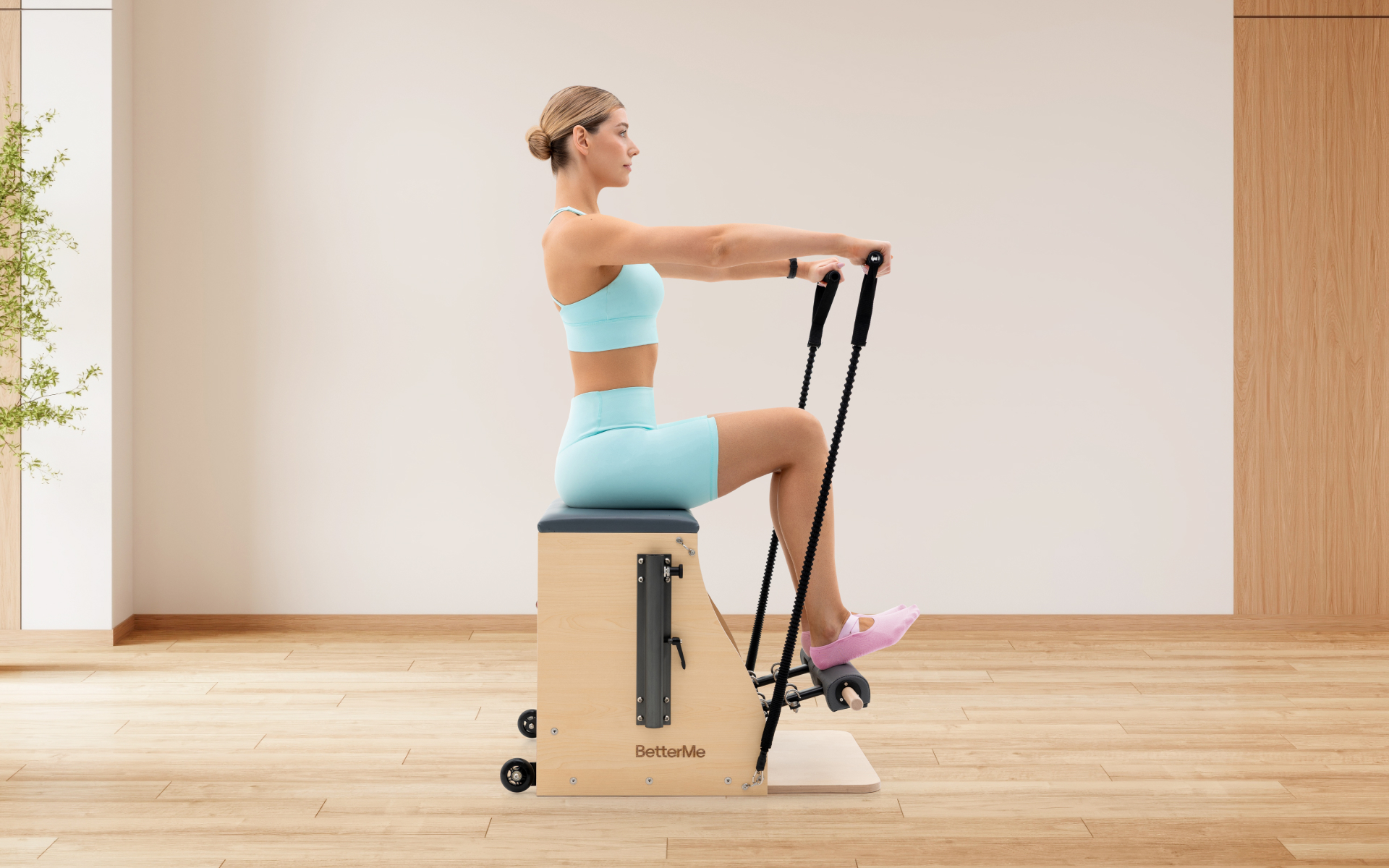
Nearly 30% of adults over the age of 65 experience a fall each year. These falls can lead to injuries and reduced independence. But why do they occur so frequently? One of the primary contributors is the gradual decline in lower -body muscle mass and power that occurs with age.
If you or a loved one is struggling with mobility, you’re not alone. You may think that heavy weights are the only way to build muscle, but that’s simply not true. You can challenge your leg muscles and support everyday movement right from a sturdy chair.
In this guide, we’ll look at common causes of leg weakness and share a seated routine that may help support everyday movement. We’ll explore the underlying causes of muscle loss and provide a structured routine of seated leg exercises for seniors at home.
What Causes Weak Legs in Seniors?
30% of older adults over 65 will experience a fall every year and one of the main causes is weak legs (1). Leg weakness in older adults is rarely caused by a single factor. Instead, it’s typically the result of a combination of physiological, lifestyle, and neurological changes. One common factor is age-related loss of muscle mass and function, which accelerates significantly after the age of 60 (2).
Research has indicated that adults can lose 3-5% of their muscle mass per decade after age 30 (3). Over time, this decline may reduce how much force your muscles can produce. This means your muscles can no longer generate the force required to lift your body weight efficiently.
Physical inactivity exacerbates this natural decline. When muscles aren’t regularly subjected to mechanical stress, they atrophy, which means they shrink in size and lose their contractile strength (4).
Furthermore, age-related changes in the nervous system slow motor unit firing rates (5). This slows communication between the brain and leg muscles, which contributes to weakness and impaired balance.
To support your muscles and mobility, targeted movement may help. If you want to explore supportive routines that pair well with strength training, you may benefit from chair yoga mobility exercises for seniors.
BetterMe: Health Coaching app helps you achieve your body goals with ease and efficiency by helping to choose proper meal plans and effective workouts. Start using our app and you will see good results in a short time.
Can Elderly People Regain Leg Strength?
Many older adults can improve leg strength over time. The human body retains its ability to adapt to physical stress well into the later years (6).
When you challenge your muscles through resistance training, you create localized metabolic stress and mechanical tension. These stressors trigger a hypertrophic response, which tells the muscle to grow while also repairing any muscle damage that may have occurred. When this occurs regularly over time, the muscles grow thicker and stronger over time(7).
Furthermore, strength training improves neuromuscular efficiency or how the brain talks to the muscles. Within the first 2-4 weeks of a new exercise program, your brain becomes much better at recruiting more muscle fibers (8).
You don’t need to lift massive amounts of weight to see these adaptations. Using lighter loads, such as your own body weight or light resistance bands, taken close to muscular fatigue can produce significant strength gains in new trainees.
For those who are dealing with specific joint issues, incorporating mindful movement can be incredibly beneficial. For instance, you could look at yoga for knee strength.
Read more: A Guide to Seated Balance Exercises for Seniors to Stay Strong
How Can I Strengthen My 70-Year-Old Legs?
Strengthening the legs of a 70-year-old requires a structured, safe, and progressive approach. A more structured routine is usually more helpful than doing random movements.
You must apply the principle of progressive overload. Progressive overload means gradually increasing the demands placed on the musculoskeletal system to continuously stimulate adaptation (9). In short, it means to perform a little bit more work over time to continually promote growth.
Start with seated leg exercises for seniors at home. These provide a stable base of support, eliminating the balance component so you can focus entirely on muscle contraction. You should aim for a training frequency of 2-3 days per week. This allows for at least 48 hours of recovery between sessions, which is when the actual muscle growth occurs.
During these sessions, the effort level is critical. You should perform each set to a Rating of Perceived Exertion (RPE) of 6-8 on a 10-point scale. This means that by the end of your set, you should feel like you could only complete 2-4 more repetitions with good form.
If you’re bedbound or have severely limited mobility, you can even begin with leg strengthening exercises for seniors in bed. With approval from your primary care physician and the support of a qualified physical therapist, it’s possible.
What Are Some Effective Seated Leg Exercises for Seniors?
To get the best results, you need a well-rounded program. The following program focuses on all the major muscle groups in the lower body.
Program Notes:
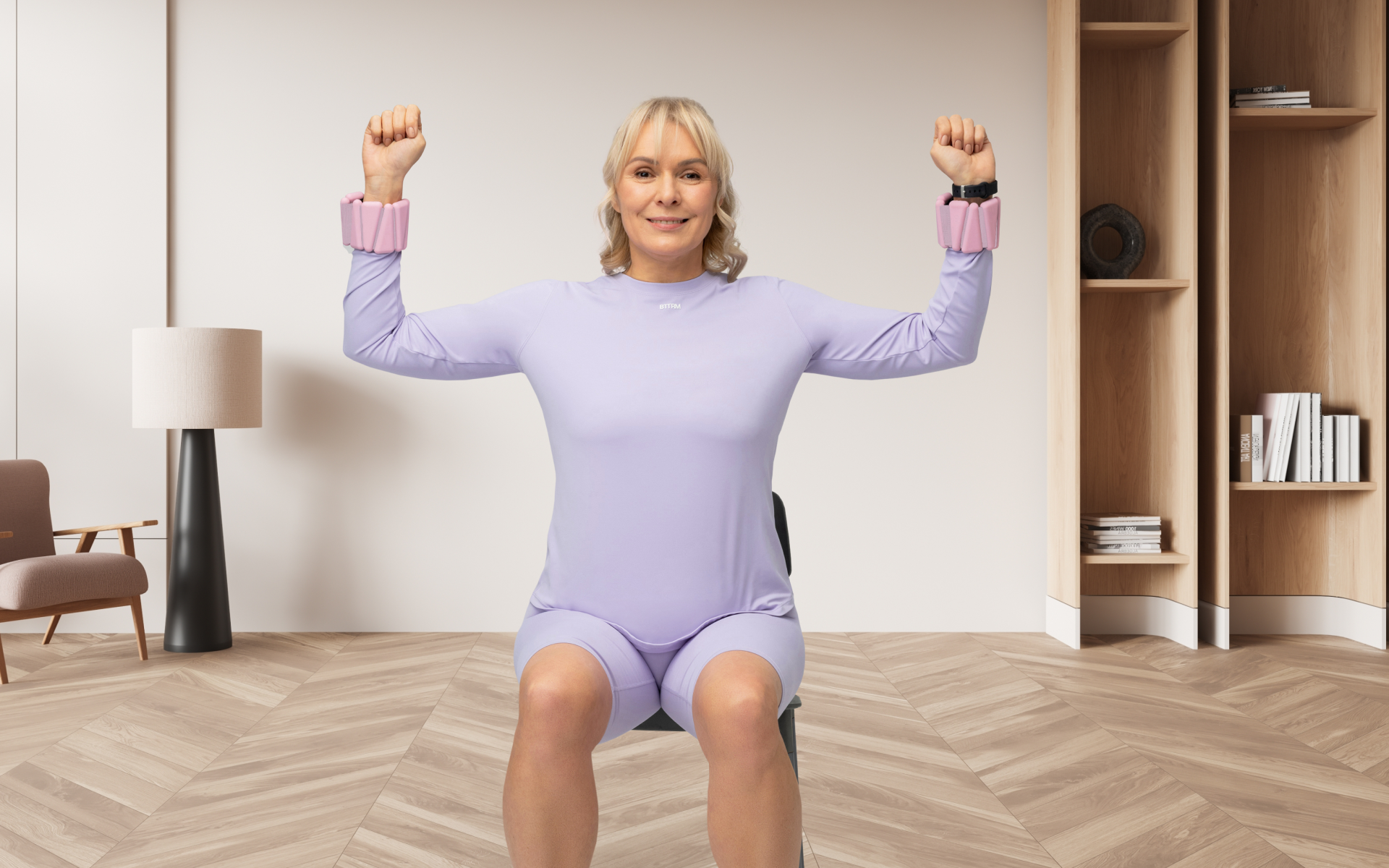
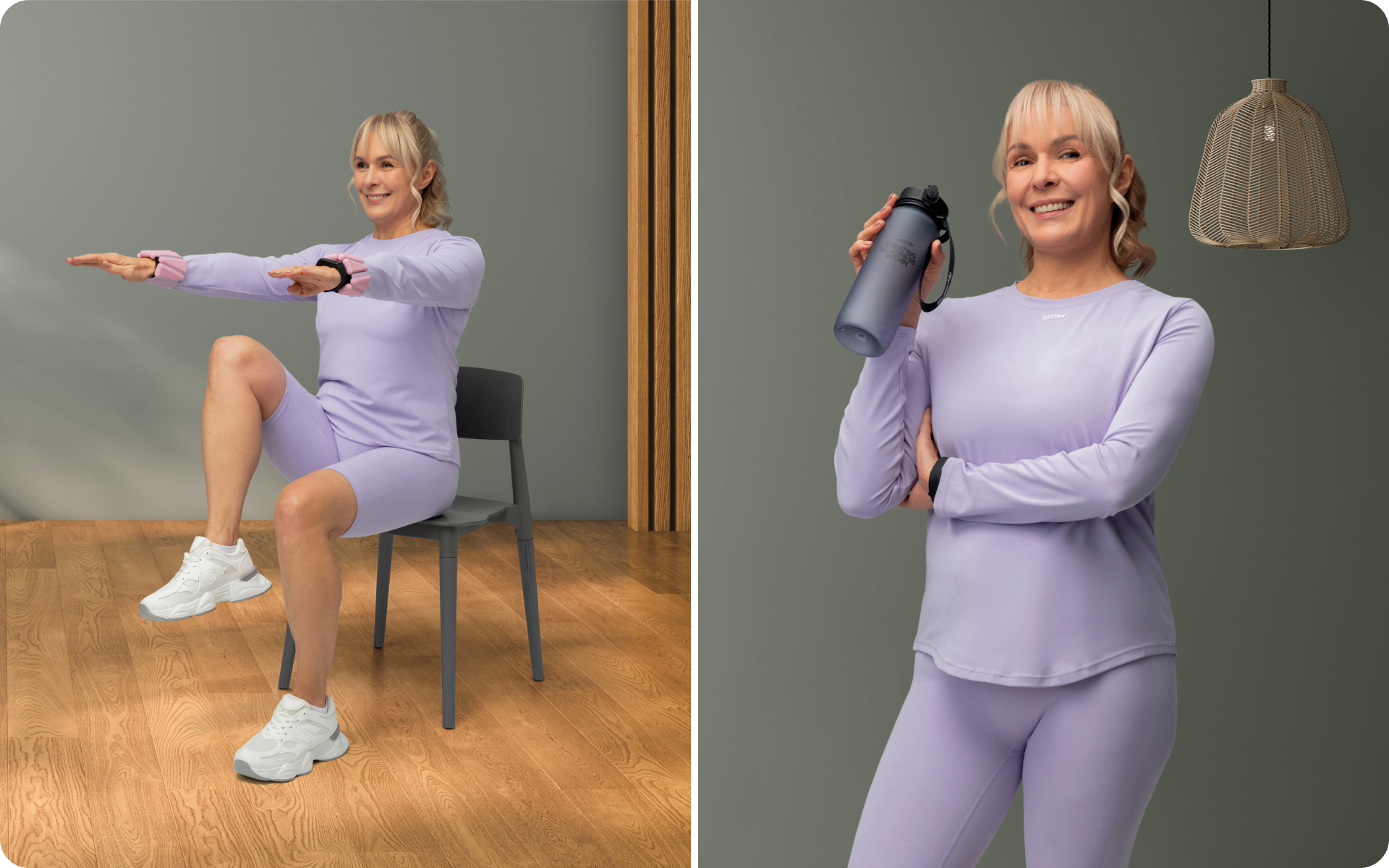
- Equipment needed: A sturdy, armless chair and optional light ankle weights (1-3 lbs).
- Split structure: Full lower body, performed 2-3 times per week.
- Optimal rep and set schemes: 2-3 sets of 10-15 repetitions per exercise.
- Rest schemes: 60-90 seconds of rest between sets to allow for energy system recovery.
The Training Program
| Exercise name | Sets | Repetitions | Rest period | Target muscle group |
|---|---|---|---|---|
| Seated knee extensions | 3 | 10-15 | 60 seconds | Quadriceps |
| Seated calf raises | 3 | 15-20 | 60 seconds | Calves (gastrocnemius/soleus) |
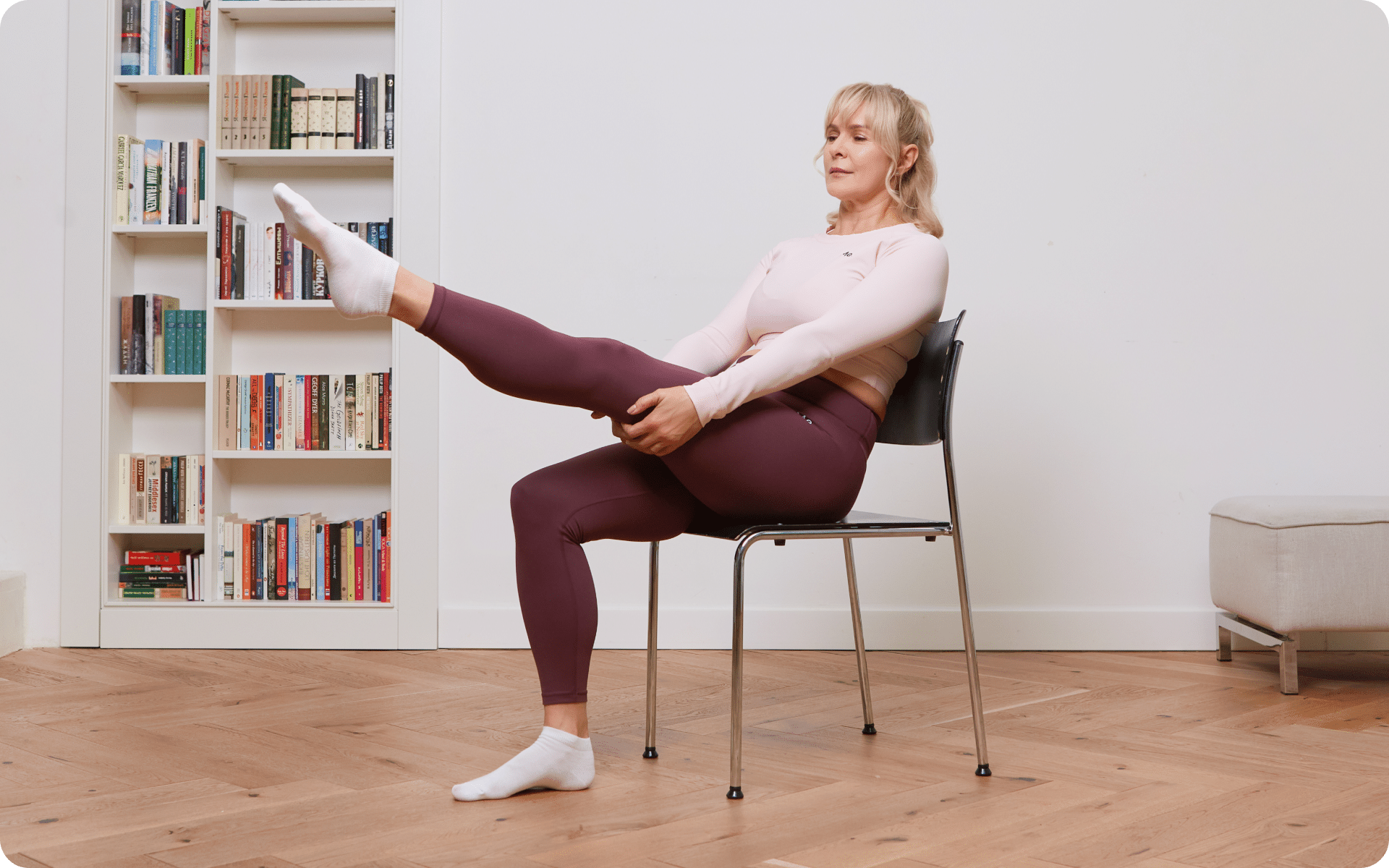
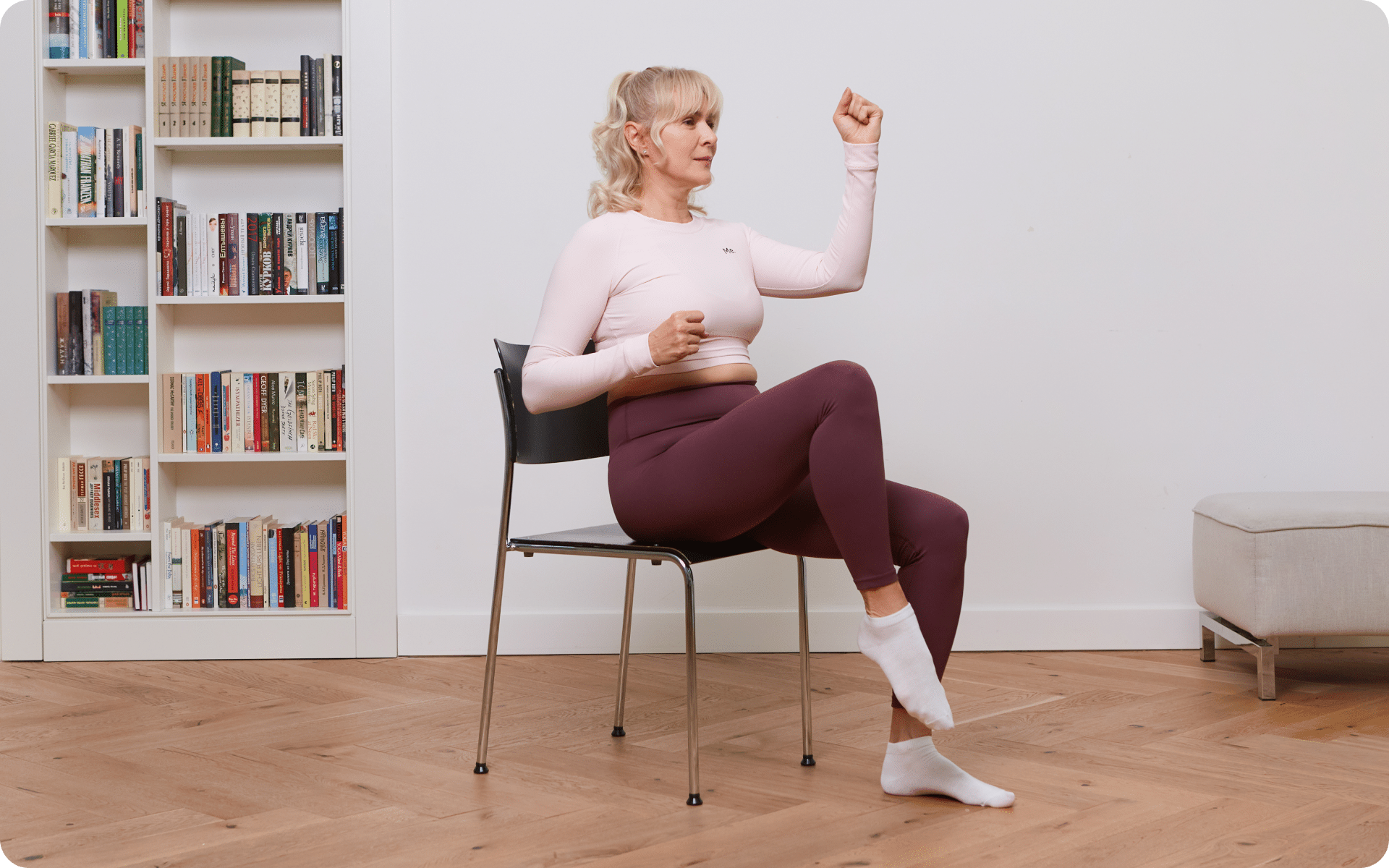
| Seated hip marches | 3 | 10-12 per leg | 60 seconds | Hip flexors |
| Seated leg abductions | 2 | 12-15 | 60 seconds | Gluteus medius/abductors |
| Sit-to-stands (chair squats) | 3 | 8-12 | 90 seconds | Glutes, quads, hamstrings |
| Seated heel slides | 2 | 10-15 per leg | 60 seconds | Hamstrings |
Exercise Instructions
Seated Knee Extensions
- Sit upright in a sturdy chair with your back fully supported and your feet flat on the floor.
- Slowly extend your right leg straight out in front of you until your knee is fully locked.
- Squeeze the muscle on the front of your thigh (quadriceps) hard for a full 2 seconds.
- Slowly lower your foot back to the starting position over a 3-second count.
- Repeat for the prescribed repetitions, then switch legs.
Seated Calf Raises
- Sit on the edge of your chair with your feet flat on the ground, shoulder-width apart.
- Push down through the balls of your feet and lift your heels as high off the ground as possible.
- Pause at the top for 1 second, feeling the contraction in the back of your lower legs.
- Slowly lower your heels back to the floor with control.
- Perform these in a smooth, continuous rhythm for the target rep range.
Seated Hip Marches
- Sit tall in your chair, engaging your core by pulling your belly button slightly inward.
- Lift your right knee up toward your chest as high as you comfortably can, keeping your torso perfectly still.
- Hold the elevated position for 1 second.
- Lower your right foot back to the floor with control.
- Alternate legs, marching in place until you complete the reps for both sides.
Seated Leg Abductions
- Sit upright with your feet together and your knees touching.
- Keeping your feet flat on the floor, push your knees outward away from each other as far as your mobility allows.
- Hold the maximal stretch for 2 seconds to engage your outer hip muscles.
- Slowly bring your knees back together to the starting position.
- To increase the difficulty, you can tie a light resistance band around your lower thighs.
Sit-to-Stands (Chair Squats)
- Sit on the front half of your chair with your feet slightly wider than shoulder-width apart.
- Lean your torso slightly forward, keeping your spine straight.
- Push forcefully through your heels to stand up completely straight, squeezing your glutes at the top.
- Slowly push your hips back and lower yourself down to the chair, taking 3 full seconds to descend.
- Barely touch the chair before driving back up to keep the tension on your muscles.
Seated Heel Slides
- Sit near the edge of your chair with both feet flat on the floor.
- Extend your right leg straight out, resting your heel on the floor with your toes pointing up.
- Press your heel firmly into the ground and slide it back toward the chair, feeling the back of your thigh (hamstring) contract.
- Slide the foot back out to the extended position with a slow, controlled motion.
- Complete all repetitions on one leg before switching to the other.
As you build competence with these chair exercises for legs and thighs, you may want to focus on improving your joint range of motion. For this, you can incorporate dedicated leg mobility exercises.
Whether you’re looking to simply pep up your fitness routine, jazz up your diet with mouth-watering low-calorie recipes or want to get your act together and significantly drop that number on your scale – BetterMe: Health Coaching app has got you covered! Improve your body and revamp your life!
What Foods Are Good for Leg Strength for Seniors?
Exercise provides the stimulus for muscle growth, but food provides the building blocks. If you don’t consume adequate nutrients, your body doesn’t have the material it needs to repair damaged muscle or build new muscle. Protein is one of the key nutrients for older adults who want to support strength.
Older adults may respond differently to protein intake than younger adults. This means that they may require greater protein intakes to effectively stimulate muscle protein synthesis (10).
Research has indicated that protein doses of 40 g per meal (roughly 0.40 g/kg) are needed to elicit a maximal anabolic response in older individuals, and higher daily protein intakes (1.0-1.5 g/kg/day) are recommended to help counter age-related muscle loss (10).
Excellent sources include:
- Lean poultry
- Fish
- Eggs
- Greek yogurt
- Plant-based options such as lentils
In addition to protein, vitamin D and calcium are essential for bone density and muscle function (11). Aim for 800-1000 IU of vitamin D daily, sourced from fortified milks, fatty fish, or safe sun exposure.
Finally, omega-3 fatty acids, which are found in walnuts and salmon, can help reduce systemic inflammation and support joint health during your training journey (12).
Read more: 8 Chair Stretching Exercises For The Elderly
What Happens If a Senior Does Leg Exercises Every Day?
While enthusiasm is commendable, doing intense leg training every day may be too much for some people. Muscle tissue doesn’t grow while you’re working out, it grows while you’re resting.
When you perform resistance training, you create mechanical fatigue and metabolic waste within the muscle fibers. Rest allows your body to return to baseline (13).
If you perform seated leg exercises for seniors at home every day without taking rest days, you may feel overly fatigued, sore, or uncomfortable if you don’t allow enough recovery time. Your body requires approximately 48 hours to complete the protein synthesis process that repairs and strengthens the muscle (14).
Instead of daily resistance training, alternate your activity. Lift weights or do chair exercises 2-3 days a week. Alternatively, use an upper/lower training split that allows for more training without overdoing it on a particular muscle group.
On the off days, engage in light aerobic activity, such as 20 minutes of brisk walking or gentle stretching. This approach maximizes your strength gains while keeping your joints healthy and your central nervous system refreshed.
Frequently Asked Questions
What are some signs of weak leg muscles?
Common signs include difficulty rising from a low chair without using your hands, unsteadiness while walking, a frequent fear of falling, and the inability to climb a flight of stairs without severe fatigue.
How far should an 80-year-old walk every day?
There is no universal distance, but aiming for 20-30 minutes of continuous, moderate-intensity walking (roughly 1 to 1.5 miles) per day is an excellent target for cardiovascular health and maintaining basic joint mobility.
What is the best time of day for seniors to walk?
The optimal time is typically mid-morning or early evening. These times allow your joints to loosen up after waking, avoid the peak heat of midday, and ensure optimal visibility for safety.
What is the number one best leg exercise?
While there’s no single “best” exercise, the sit-to-stand (or bodyweight squat) is highly regarded. It trains the entire lower body simultaneously and directly translates to the functional ability to get out of a chair or bed.
What is the easiest leg muscle to build?
The quadriceps are often among the most responsive leg muscles to resistance training due to their size and substantial fast-twitch fiber contribution (15). In contrast, the calf muscles, particularly the soleus, tend to be slower to hypertrophy and may require higher training volumes or specific loading strategies to stimulate significant growth (16).
The Bottom Line
Supporting your mobility and building lower-body strength doesn’t require an expensive gym membership or heavy, intimidating equipment. It requires consistency, deliberate effort, and an understanding of how your muscles adapt to stress.
By incorporating these straightforward chair movements into your weekly routine, you can help support the muscle coordination needed for everyday movement. Take control of your physical independence today. Start with just one set, focus on your form, and watch your strength steadily return.
DISCLAIMER:
This article is intended for general informational purposes only and does not serve to address individual circumstances. It is not a substitute for professional advice or help and should not be relied on for making any kind of decision-making. Any action taken as a direct or indirect result of the information in this article is entirely at your own risk and is your sole responsibility.
BetterMe, its content staff, and its medical advisors accept no responsibility for inaccuracies, errors, misstatements, inconsistencies, or omissions and specifically disclaim any liability, loss or risk, personal, professional or otherwise, which may be incurred as a consequence, directly or indirectly, of the use and/or application of any content.
You should always seek the advice of your physician or other qualified health provider with any questions you may have regarding a medical condition or your specific situation. Never disregard professional medical advice or delay seeking it because of BetterMe content. If you suspect or think you may have a medical emergency, call your doctor.
SOURCES:
- Facts About Falls (2026, cdc.gov)
- Acute Sarcopenia: Mechanisms and Management (2024, mdpi.com)
- Preserve your muscle mass (2016, health.harvard.edu)
- Physiological and morphological impact of physical activity and nutritional interventions to offset disuse-induced skeletal muscle atrophy (2025, pmc.ncbi.nlm.nih.gov)
- The aging neuromuscular system and motor performance (2016, pmc.ncbi.nlm.nih.gov)
- Enhancing physical fitness in older adults: a six-month medium intensity training intervention yields significant improvements (2025, link.springer.com)
- Anabolic signals and muscle hypertrophy – Significance for strength training in sports medicine (2025, sciencedirect.com)
- Neuromuscular adaptations to resistance training in elite versus recreational athletes (2025, frontiersin.org)
- Effects of Resistance Training Overload Progression Protocols on Strength and Muscle Mass (2024, pubmed.ncbi.nlm.nih.gov)
- Critical variables regulating age-related anabolic responses to protein nutrition in skeletal muscle (2024, frontiersin.org)
- Calcium and Vitamin D: Important for Bone Health (2023, niams.nih.gov)
- Dietary omega-3 fatty acids aid in the modulation of inflammation and metabolic health (2014, pmc.ncbi.nlm.nih.gov)
- Skeletal muscle and resistance exercise training; the role of protein synthesis in recovery and remodeling (2016, pmc.ncbi.nlm.nih.gov)
- Why Rest Days Are Important for Muscle Building (n.d., nasm.org)
- Vastus Lateralis and Vastus Intermedius as Predictors of Quadriceps Femoris Muscle Hypertrophy after Strength Training (2022, mdpi.com)
- Triceps surae muscle hypertrophy is greater after standing versus seated calf-raise training (2023, pubmed.ncbi.nlm.nih.gov)
 Reviewed by
 Reviewed by