
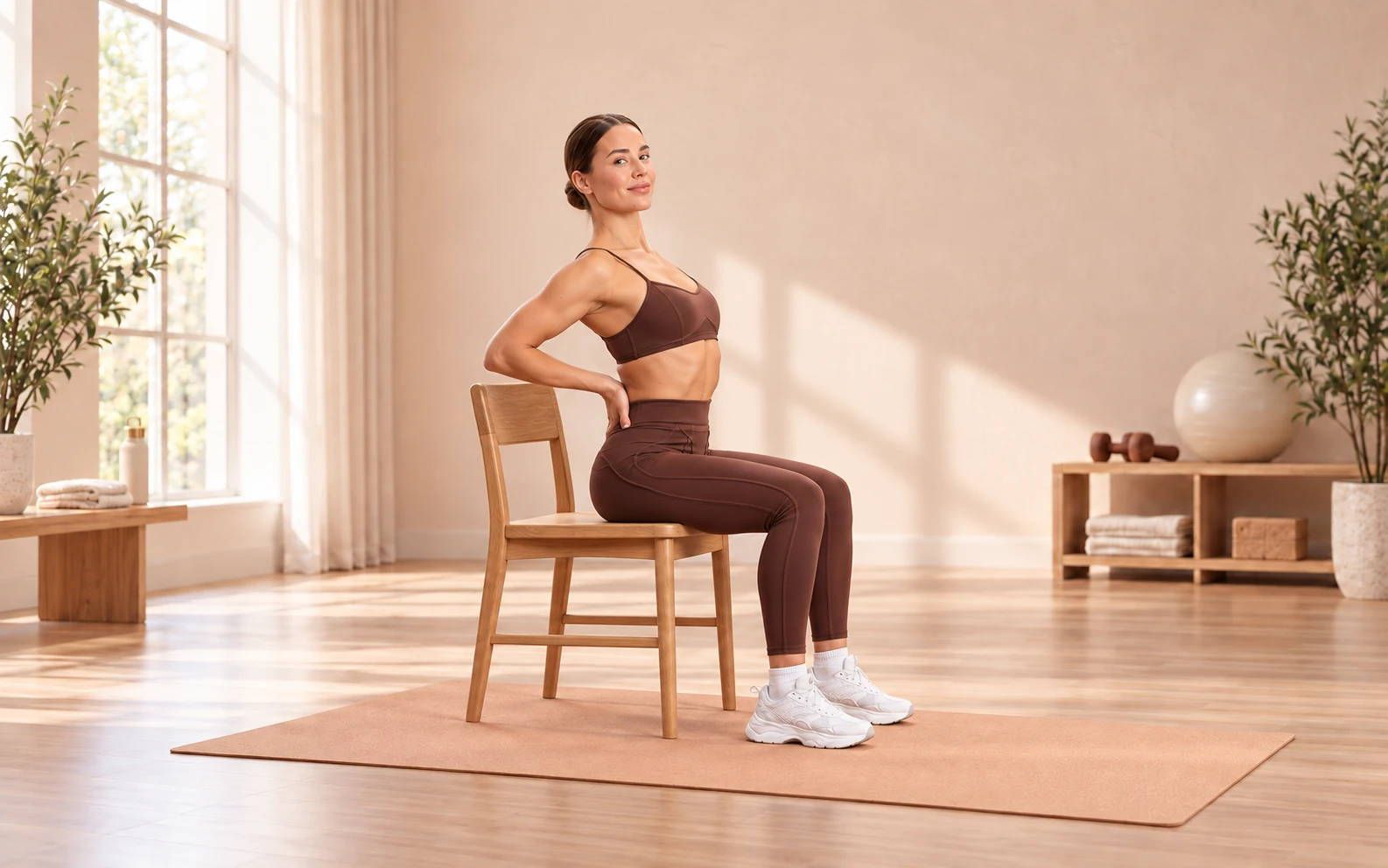
Chair yoga camel pose adapts a kneeling backbend to a chair. Use stable support and a comfortable range. This guide covers steps and modifications, with context from a chair-yoga study in older women (1) and our chair yoga for beginners guide.
A qualitative evaluation examined experiences of chair-based yoga among older adults with multiple long-term conditions (2). It does not establish that this individual pose suits every participant.
A systematic review examined yoga and physical function in older adults (3). It did not study this specific pose, so its findings should not be treated as camel-pose outcomes.
This guide explains how to practice the chair yoga camel pose with control.
Long periods of sitting involve little movement. A chair can also serve as support for gentle exercise.
This article covers the chair yoga camel pose, how to practice it, and variations that use support.
If you have joint, muscle, or spine-related concerns, please consult your physician before starting this workout.
Key takeaways
- The chair version modifies the traditional kneeling camel pose.
- Use a sturdy chair and keep your feet grounded during the movement.
- Move through a comfortable range and return upright slowly.
- A cushion or chair back can provide support during variations.
- The floor version reaches toward the heels; the chair version does not.
- Ask a qualified health professional about exercise if you have joint, muscle, or spine-related concerns.
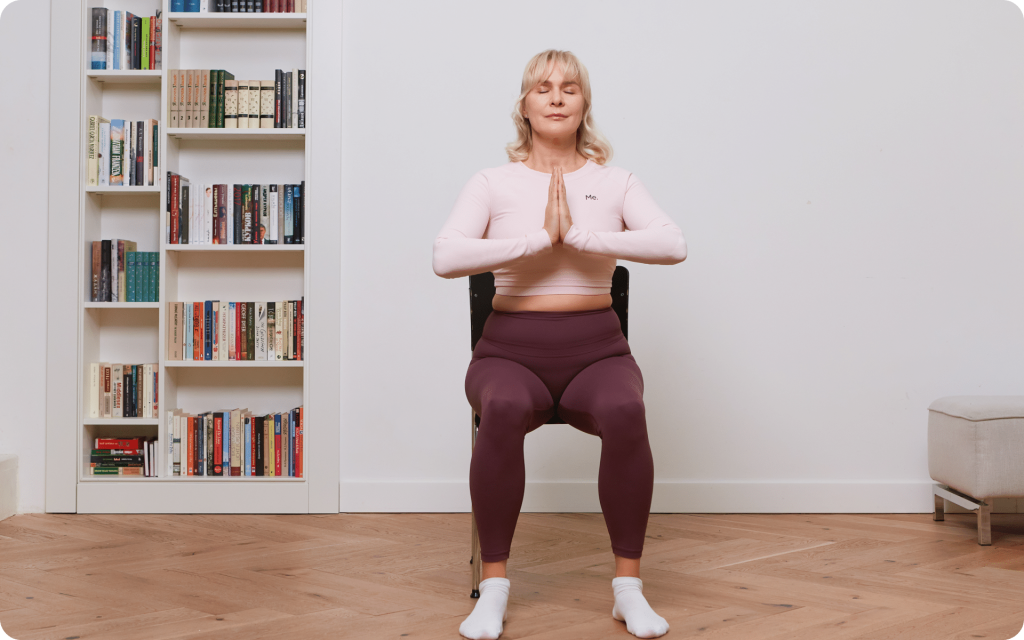
What is the camel pose on a chair?
The camel pose on the chair is a modified version of a traditional Ustrasana (camel pose). In the non-chair version of the pose, you kneel and bend backward, reaching your hands to your heels while lifting your chest and opening your heart.
The chair changes the range and support used in the pose. It is included in some chair yoga sessions and involves the upper body and core.
How does camel pose move the body?
The pose involves a supported backward bend. The following sections describe movement, not guaranteed benefits.
A chair variation is described as a supported backbend (4). Keep the movement within your comfort.
- Shoulder and upper-back movement
- Movement through the front of the body
- Support from the back and legs
- Chest movement and breathing
- Posture and alignment
How do the shoulders and upper back move?
The spine moves in different directions during daily activities, including when looking at a phone or working at a laptop.
Camel pose includes a backward bend. Keep the movement within a comfortable range.
Read more: How to Use a Yoga Chair at Home as a Beginner
How does the front of the body move?
The chair version and traditional floor version involve different positions. Both include movement through the front of the body.
In the floor version, reaching toward the heels accompanies the backbend. The chair version uses the chair for support instead.
What supports the torso?
During the chair version, the back, core, and legs help support the torso. The amount of effort varies with the position and range.
How can you breathe during the movement?
The pose involves chest movement and controlled breathing. Some people may find mindful breathing relaxing; experiences vary.
How can you adjust alignment?
Keep the seated setup comfortable and the movement small. For other movement examples, explore our chair yoga poses for balance guide.
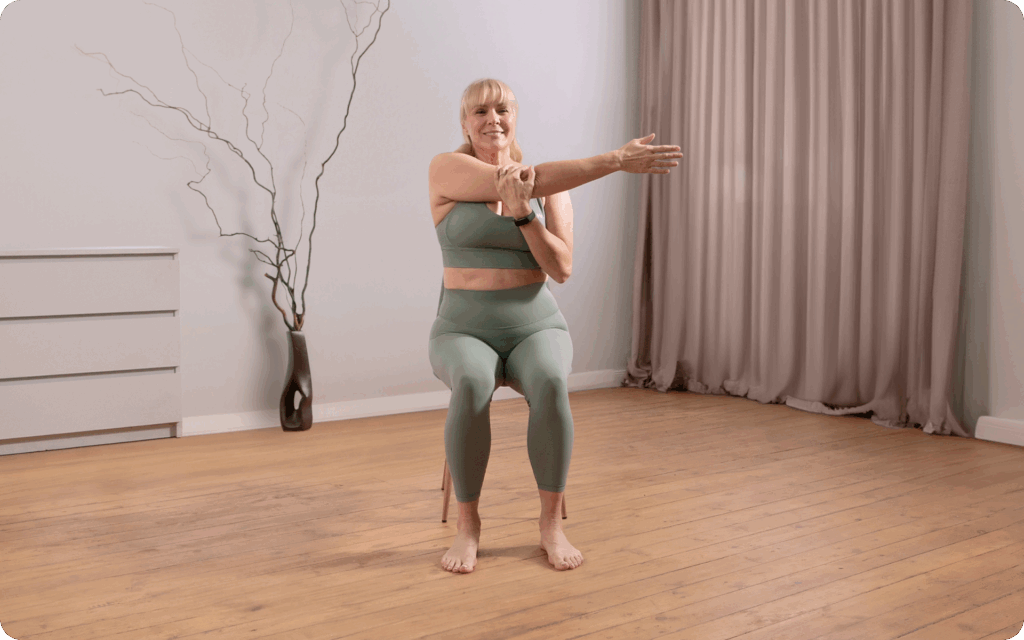
How do you practice chair yoga camel pose?
The supported chair variation uses the chair back rather than reaching for the heels (4). Keep the chair stable and avoid forcing the range.
Use these steps to practice the chair yoga camel pose:
- Sit on a sturdy, stable chair with your feet grounded about hip-width apart.
- Hold a reachable part of the chair behind you without forcing your shoulders.
- Lift your chest slightly into a small supported backbend, keeping your chin gently tucked.
- Breathe slowly for a few comfortable breaths.
- Return your torso gradually to an upright position.
- Release your hands when you are settled upright.
These are practical setup adjustments, not separately validated exercise programs. General adult activity guidance includes aerobic and muscle-strengthening activities (5); one pose does not cover a complete activity plan.
BetterMe: Health Coaching app can help you build a more structured approach to your wellness routine with meal plans, workouts, and habit-tracking tools. Start using the app to explore options that may support your personal fitness and nutrition goals.
How can you adjust the supported setup?
How can you use a smaller range?
- Begin from a comfortable upright seated position.
- Lift your chest slightly without forcing a backward bend.
- Return upright when the movement no longer feels comfortable.
How can you pad the chair back?
- Cover the chair back with a folded blanket or thin cushion.
- Use it for comfortable contact rather than pushing into a deeper bend.
How can you adjust hand support?
- Choose a reachable grip that keeps your shoulders comfortable.
- Keep both hands supported rather than reaching farther behind you.
- Skip the backbend if you cannot find a comfortable supported position.

What are some common mistakes with camel pose?
The chair yoga camel pose may feel simple, but moving too far or tilting the head back can feel uncomfortable. Move gradually and keep the neck relaxed.
These adjustments may help keep the movement comfortable.
- You force a deep lower-back bend. Reduce the range rather than pushing farther.
- You drop your head back. Try a gently tucked chin and a relaxed neck.
- You hold your breath. Return to a smaller range that allows comfortable breathing.
- Your seated setup feels awkward. Adjust your feet to a comfortable hip-width position.
- You move into the pose too quickly. Move gradually and use the chair back or a cushion for support.
Read more: Why Is The Chair Yoga Mountain Pose Worth Adding to Your Daily Routine?
Why is camel pose so difficult?
The camel pose may feel challenging because it involves movement through the chest, shoulders, and hips.
A backbend may feel unfamiliar or uncomfortable for some people. Use a smaller supported movement rather than aiming for a full range.
Movement preferences and coordination vary. A chair yoga sequence can include other seated movements if this pose does not suit you.
In the floor version, some people may not reach their heels comfortably. The chair version uses different support points.
The chair-based version may suit beginners. Some people may feel more supported in the chair; others may prefer a different modification.
Who should avoid camel pose?
If you have a health condition or questions about exercise, talk to a medical professional before starting. General yoga guidance notes that some people may need to modify or avoid particular practices (6). Discuss individual needs, including:
- Preexisting back, knee, or hip concerns.
- Balance concerns.
- Questions about a comfortable range of motion.
- Current discomfort during movement.
- Severe high blood pressure.
- Pregnancy.
- Other conditions for which your clinician recommends modifications.
- Questions about returning to exercise.
The chair version changes the range and support used in the movement. It does not establish whether the pose is suitable for a particular health condition.
A clinician or qualified instructor can help you discuss individual modifications. Do not treat the seated setup as approval for a particular condition.
Whether you’re just starting your fitness journey or looking to add more structure to your routine, BetterMe offers tools that can support different wellness goals. Explore the app and see how its workout, nutrition, and habit-building features can fit into your lifestyle.
Camel pose involves a backbend and movement through the chest and shoulders. The chair version uses support instead of reaching for the heels. That description does not establish strength, flexibility, or posture gains from this single pose. Hold the pose for a few comfortable breaths, then return upright. Do not force the range or hold the position if it feels uncomfortable. The camel pose doesn’t directly reduce belly fat. It does not target fat loss in one area. It may be included in a broader movement routine, but changes in body composition depend on many factors. Camel pose is not a method for changing breast size. Choose it for movement practice rather than a promised appearance outcome.FAQs
Which areas are involved in camel pose?
How long should you hold a camel pose?
Does camel pose reduce belly fat?
Can camel pose reduce breast size?
The bottom line
This article covered the chair yoga camel pose, practice steps, and supported variations.
The pose involves a backbend and may be adjusted to your comfort. Individual movement and flexibility vary.
If you have preexisting concerns, discuss suitable movements with your clinician before starting.
DISCLAIMER:
This article is intended for general informational purposes only and does not serve to address individual circumstances. It is not a substitute for professional advice or help and should not be relied on for making any kind of decision-making. Any action taken as a direct or indirect result of the information in this article is entirely at your own risk and is your sole responsibility.
BetterMe, its content staff, and its medical advisors accept no responsibility for inaccuracies, errors, misstatements, inconsistencies, or omissions and specifically disclaim any liability, loss or risk, personal, professional or otherwise, which may be incurred as a consequence, directly or indirectly, of the use and/or application of any content.
You should always seek the advice of your physician or other qualified health provider with any questions you may have regarding a medical condition or your specific situation. Never disregard professional medical advice or delay seeking it because of BetterMe content. If you suspect or think you may have a medical emergency, call your doctor.
SOURCES:
- Effect of Chair Yoga Therapy on Functional Fitness and Daily Life Activities among Older Female Adults with Knee Osteoarthritis in Taiwan: A Quasi-Experimental Study (2023, pubmed.ncbi.nlm.nih.gov)
- Perceptions and experiences of chair-based yoga by older adults with multimorbidity: a qualitative process evaluation of the Gentle Years Yoga randomised controlled trial (2025, bmcgeriatr.biomedcentral.com)
- The effects of yoga compared to active and inactive controls on physical function and health related quality of life in older adults- systematic review and meta-analysis of randomised controlled trials (2019, pubmed.ncbi.nlm.nih.gov)
- Camel Pose: How to Practice Ustrasana (2021, yogajournal.com)
- Top 10 Things to Know About the Second Edition of the Physical Activity Guidelines for Americans (2025, odphp.health.gov)
- Yoga: Effectiveness and Safety (n.d., nccih.nih.gov)
 Reviewed by
 Reviewed by
 Reviewed by