The postpartum period comes with many physical, emotional, and mental changes and challenges. Amid caring for a newborn and adjusting to a new routine, many mothers often find their own needs taking a backseat.
Exercise is an important part of a healthy lifestyle, and this is no exception for a new mother. However, finding the time and energy to move again can feel overwhelming.
A structured postpartum workout plan at home offers a gentle and flexible way to ease back into fitness. To make the most of such a plan, it’s important to know when to start, which exercises to avoid, and how to track your progress.
In this article, we’ll explore how to create an effective at-home postpartum workout plan that helps you regain strength, tone up, and feel confident in your body again.
Always consult your physician before you start any recovery fitness program to make sure it’s suitable for your specific needs.
What Is a Simple Postpartum Workout Plan at Home?
A simple postpartum workout plan at home is a gentle routine to help new moms ease back into regular movement and fitness after childbirth. Such a routine focuses on slow, mindful progress rather than intensity as the mother’s body is still recovering. A good routine should:
- Be balanced, supporting both physical recovery and emotional well-being
- Be flexible – allowing a new mother to move at her own pace in the comfort of her home.
The postpartum period isn’t easy and any routine shouldn’t add any more pressure or stress to the mother.
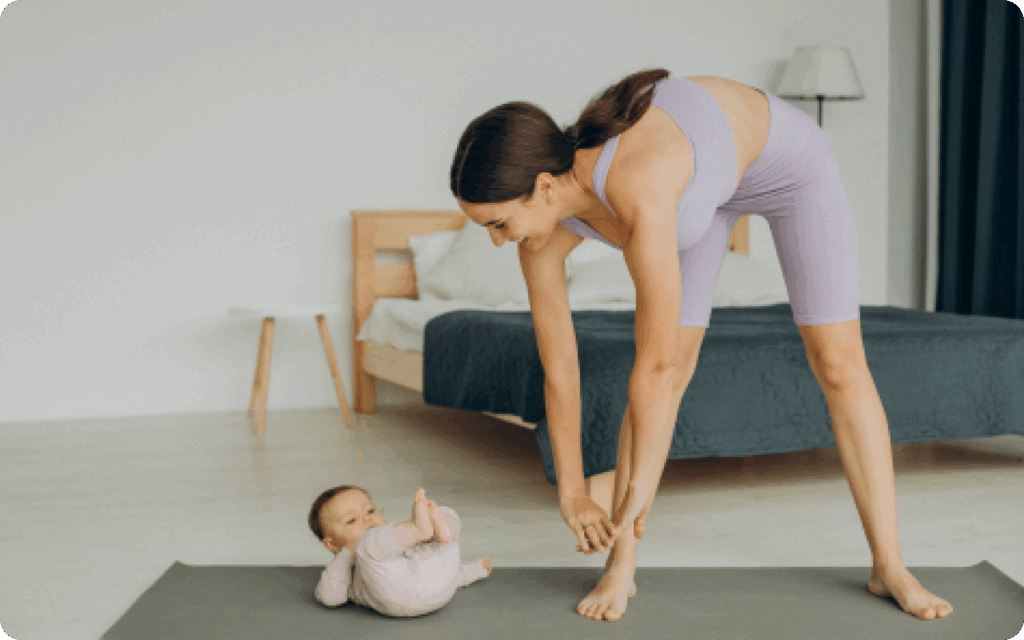
How Soon Should I Start Exercising Postpartum?
It’s best to speak to your physician about this as recommendations vary. For example:
- One study found that “recommendations for musculoskeletal intervention postpartum vary from no activity until medical consult to full clearance to self-guided exercise at six weeks,” showing that there is no standard regarding when women should be expected to start exercising after childbirth (1).
- In one study that looked at the physical activity guidelines around the world, researchers stated that in Australia, postpartum women were encouraged to start pelvic floor exercises as soon as they were comfortable following the birth (several times each day) and continue for life.
All other countries in the review were found to encourage physical activity postpartum, but none mentioned when this should start (2).
- In a recent study done on Ethiopian women, researchers mentioned that in women whose postnatal physical fitness was considered “normal”, they could start exercising during the first 4-6 weeks after giving birth (3).
Due to how different and vague the available recommendations are, we highly suggest seeking guidance from your doctor. They can look at your individual conditions, i.e. how you gave birth, your current well-being, and the well-being of your baby, and best advise you on when you can safely start your postpartum workout plan at home for weight loss.
Reasons why BetterMe is a safe bet: a wide range of calorie-blasting workouts, finger-licking recipes, 24/7 support, challenges that’ll keep you on your best game, and that just scratches the surface! Start using our app and watch the magic happen.
Don’t disregard the importance of exercise after childbirth. Some public well-being guidance suggests that postpartum women should (4):
- Exercise for at least 150 minutes a week through moderate-intensity aerobic physical activity
- Incorporate a variety of aerobic and muscle-strengthening activities, in addition to gentle stretching exercises
Research has shown that when women engage in physical activity after birth, it may help them (3):
- Ensure optimal functioning of various bodily systems and support comfort
- Support a gradual return to movement, improve overall physical well-being, and help some people feel more comfortable in their back over time
- Feel more emotionally steady and improve pelvic floor engagement and control over time
- Build cardio fitness and sustainable routines around movement and eating, which can support overall well-being
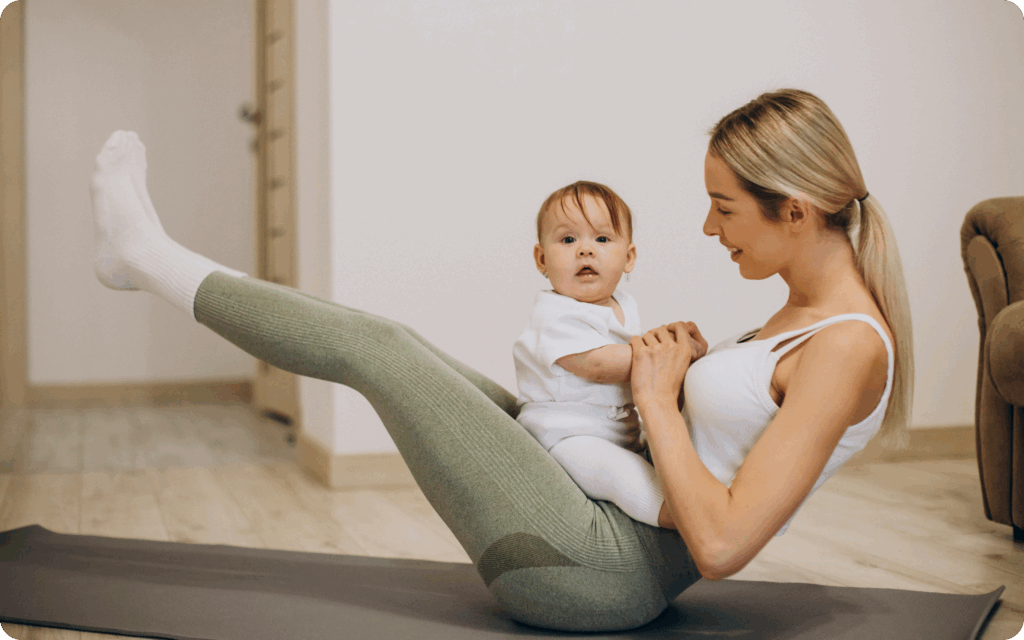
What Is the Best Way to Exercise After Giving Birth?
The best way to start or get back into exercise after childbirth is by starting slowly and progressively increasing the intensity. Once your doctor gives you the green light to exercise, choose low-impact activities such as:
- Walking
- Swimming
- Pilates
- Pelvic floor exercises
Many people start doing these exercises for a few weeks before they go back to their doctor and seek approval to increase the intensity. Once your healthcare provider says it’s okay, you can then add more high-impact exercises to your program. This would be the best time to include exercises such as running or weight lifting in your postpartum workout plan week-by-week routine.
Read more: Postpartum Tummy Workout: What Is It & How Does It Benefit New Mothers?
Can You Tone a Postpartum Belly?
Yes, you can. A postpartum belly has three main causes:
- Weight gain during pregnancy and during the postpartum period
- Loose skin from the skin around the belly not shrinking at the same time as the stomach once the woman gives birth
- Stretched and separated abdominal muscles from the baby in the womb, pushing on these muscles as they grow(5, 6, 7).
When the belly issue is caused by either weight gain or loose skin after pregnancy, diet and exercise can help tone the belly. They do this by helping you lose the excess fat and increasing muscle mass, which helps fill up or hide the appearance of loose skin.
To tone an after-pregnancy stomach that’s caused by separated and stretched abdominal muscles, exercise, specifically deep abdominal muscle workouts, offers better results. Unlike regular ab workouts, these specific exercises focus on deep core engagement and control, which tone the postpartum belly (8, 9).
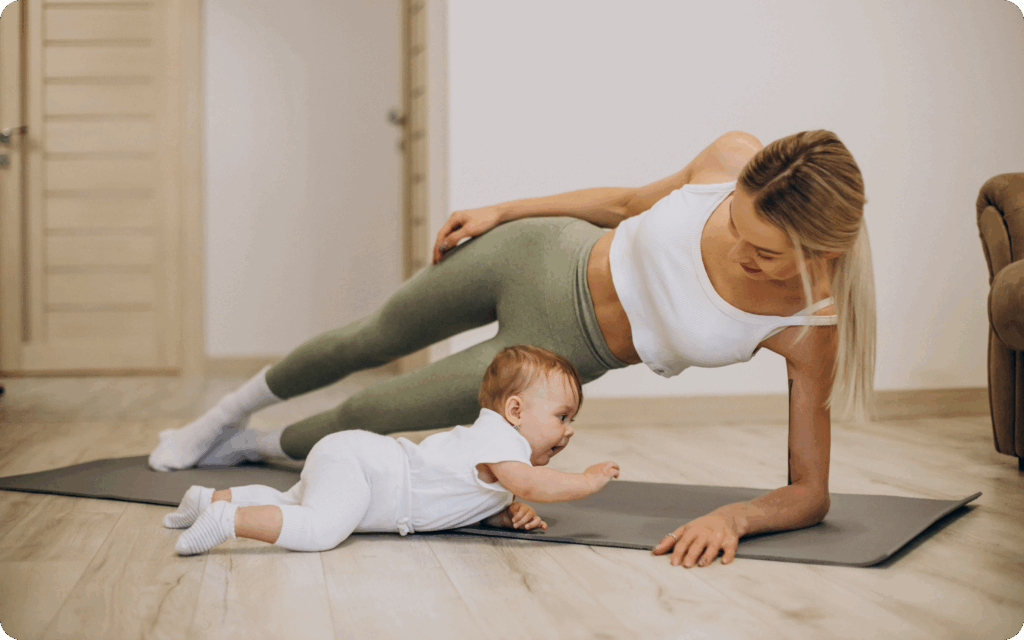
What Is a Postpartum Workout Plan at Home to Tone Up Gently?
We must insist that you first speak to your healthcare provider before you do any postpartum workouts at home. That being said, here are some exercises you can do to help you tone up.
Kegels
While this isn’t a toning move, kegels and other pelvic floor exercises after childbirth can support pelvic floor strength and improve bladder control for some people (10, 11).
- Tighten your pelvic floor muscles – these are the ones used to stop the flow of urination.
- Tighten and hold for 10 seconds, then release.
- Repeat throughout the day.
Lying Leg Slides
- Lie flat on your back, bending your knees slightly, with your feet flat on the floor. Engage your abdominal muscles. Don’t move your back.
- On an inhale, slide one leg from a bent to a straight position. Exhale and bend it back again.
- Keep both feet on the floor and keep them relaxed.
- Repeat this process with the opposite leg.
- Do 2-3 sets of 10 reps per leg.
Whether you’re a workout beast or just a beginner making your first foray into the world of fitness and dieting – BetterMe has a lot to offer to both newbies and experts! Install the app and experience the versatility first-hand!
Deep Belly/Diaphragmatic Breathing
Like kegels, this isn’t an exercise to help you tone. However, it can help recover and strengthen your core and pelvic floor.
- Start by lying flat on the floor on a yoga mat.
- Relax your body, placing one hand on your chest and the other on your stomach.
- Take a deep breath in through the nose, expanding your stomach. Ensure that your chest remains relatively still and hold your breath for 2 to 3 seconds.
- Exhale slowly. Your hand should remain on your chest and stomach throughout.
- Repeat this several times for 2 to 3 minutes.
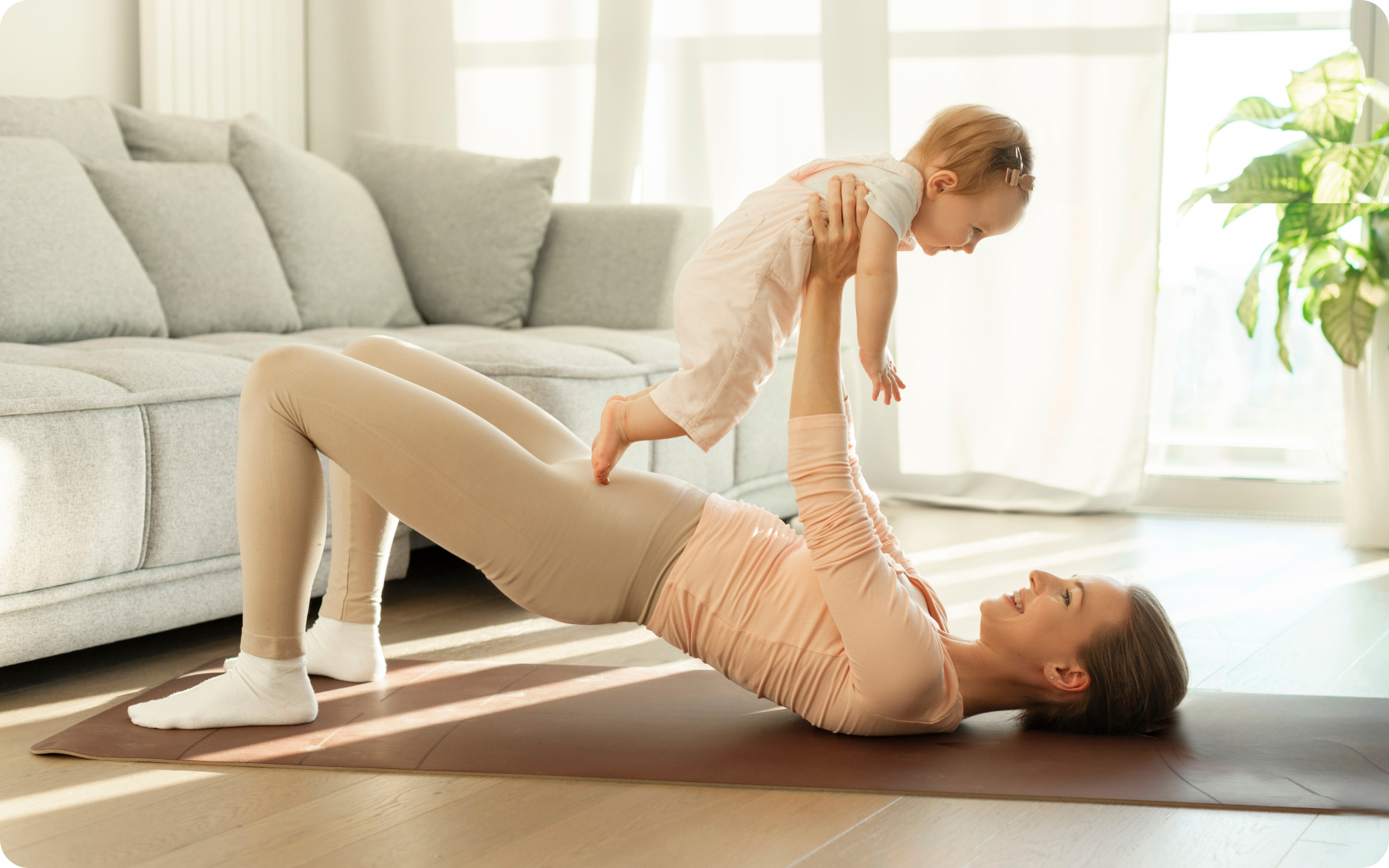
Elevated Glute Bridges
- Lie on your back on the floor with your knees bent.
- Instead of placing your feet on the floor as you would during a basic glute bridge, place them on an elevated surface such as a chair or a bench.
- Drive your feet through the floor, squeezing your glutes to extend your hips fully, creating a nice, straight line from your knees to your shoulders.
- Hold this position for a second or two, and be sure to keep squeezing your glutes hard.
- Reverse the motion to lower your body down smoothly to the floor. Don’t drop your hips or hyperextend your spine.
- This is one rep. Repeat movement for desired reps (8-12).

Aerobic Exercises
Easy full-body, low-impact aerobics such as walking (bonus points if with the baby in a front carrier), swimming, or dancing can help you easily tone your whole body without putting you under too much strain. Remember to pace yourself. For example, start at 10-20 minutes per day, and slowly increase to 30-40 minutes over several weeks.
Dead Bug
- Lie on your back on your yoga/exercise mat.
- Raise your legs so your knees are at a 90-degree angle and stacked directly above your hips. Raise both arms toward the ceiling.
- Engage your core and gently lower your left leg and your right arm toward the floor. Hold, then lift each at the same time back to the starting position.
- Alternate and do this movement with the opposite leg and arm.
- Keep alternating for 2-3 sets of 8-12 repetitions.
Are you looking for more tips for a flat tummy after pregnancy? Check out this article for more information and exercise examples.
Read more: 10+ Postpartum Pilates Exercises for New Moms to Do at Home
What Is a Good Postpartum Workout Schedule?
It’s recommended that postpartum women engage in physical activities for 150 minutes a week. This generally translates to 30 minutes a day of exercise, 5 days a week.
However, the postpartum period is often incredibly stressful for women, and they may be unable to exercise 5 days a week. If this feels like your reality, you can start by exercising 2 to 3 times a week, for example:
- Mondays and Fridays
- Monday, Wednesday, and Saturday
- Tuesday and Wednesday
- Tuesday, Thursday, and Sunday
Over time and once you’ve gotten the hang of your new schedule with your new baby, you can gradually increase the number of days you exercise per week and the amount of time you spend exercising in each session.
Make sure to use a postpartum workout app to help you keep track of the days and the exercises you do.
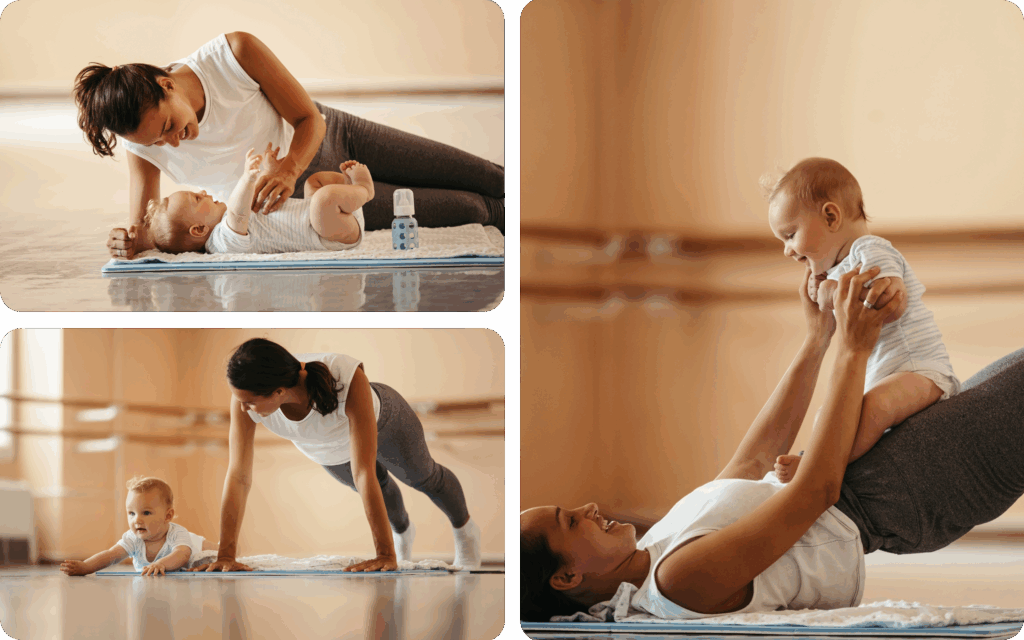
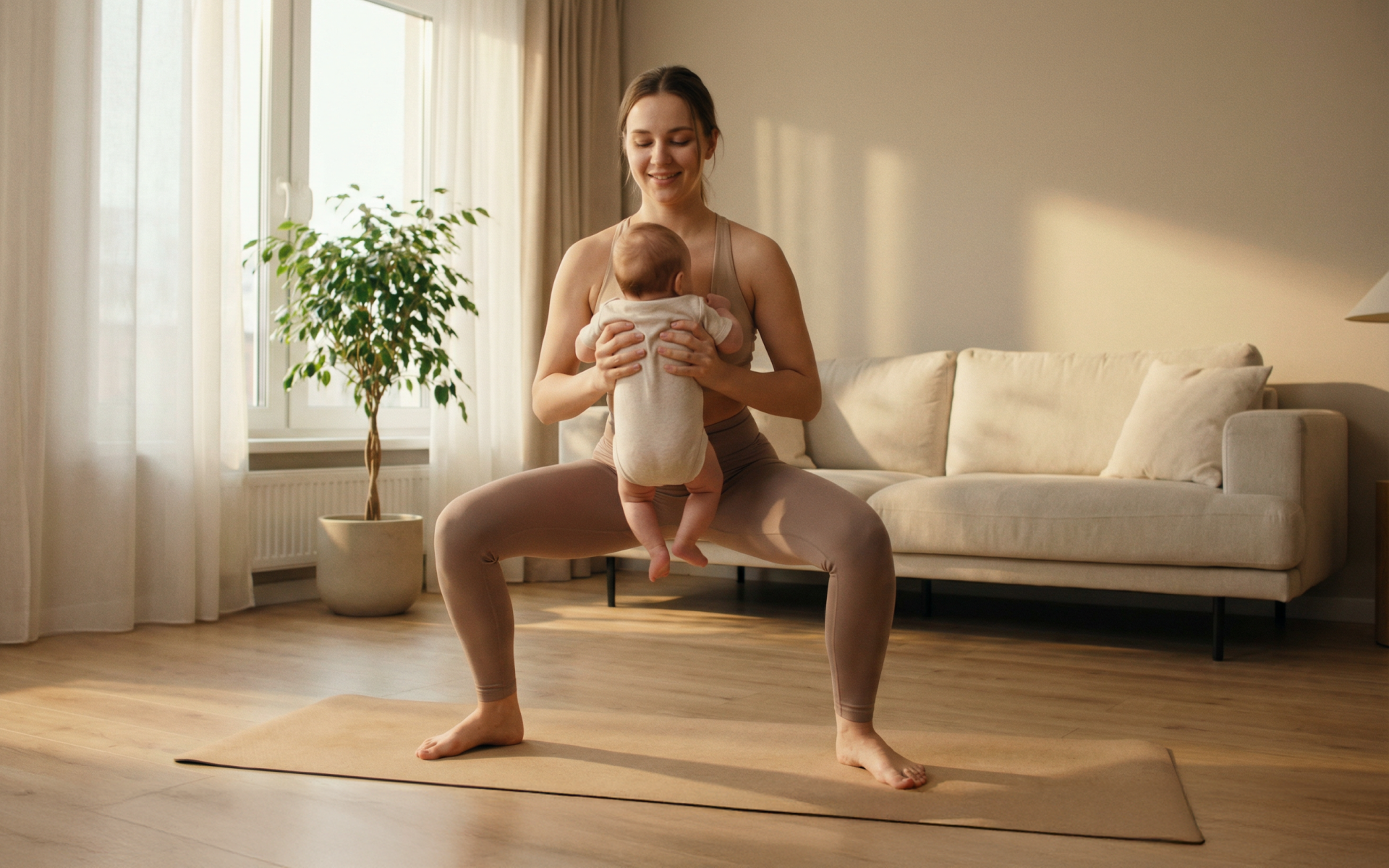
According to research, you can start doing at-home bodyweight squat exercises 2 weeks after giving birth (12). To reduce your weight after giving birth, you need a combination of a sustainable diet that relies on balanced and nutritious foods, hydration, and gentle, low-impact, full-body workouts. However, focusing on weight loss immediately after delivery may not be the right thing, as it could negatively impact you and your baby. To do this safely, please speak to your healthcare provider. They can guide you on which exercises to do and how soon to do them, in addition to how to eat so you can take care of yourself and your baby and achieve your weight goals safely. This largely depends on an individual and their circumstances. Some say that the first 6 weeks are the hardest, while others say that the first 4 months are particularly tough. In most cases, traditional beliefs and practices often dictate what foods women can and can’t eat during pregnancy and for certain periods postpartum (13, 14). Traditions aside, most women are advised to avoid foods that are high in mercury, undercooked or raw meat and seafood, processed foods, caffeine, and alcohol.Frequently Asked Questions
Can I do squats 2 weeks postpartum?
How can I lose weight right after delivery?
What is the hardest time postpartum?
What foods should I avoid after birth?
The Bottom Line
A postpartum workout plan at home can help a new mom gently and gradually work on regaining her prepregnancy body and feel like her old self. However, this process mustn’t be rushed. Speak to your healthcare provider to find out the best time for you to start exercising and the best exercises you can gently engage in while reaching for your goals.
DISCLAIMER:
This article is intended for general informational purposes only and does not serve to address individual circumstances. It is not a substitute for professional advice or help and should not be relied on for making any kind of decision-making. Any action taken as a direct or indirect result of the information in this article is entirely at your own risk and is your sole responsibility.
BetterMe, its content staff, and its medical advisors accept no responsibility for inaccuracies, errors, misstatements, inconsistencies, or omissions and specifically disclaim any liability, loss or risk, personal, professional or otherwise, which may be incurred as a consequence, directly or indirectly, of the use and/or application of any content.
You should always seek the advice of your physician or other qualified health provider with any questions you may have regarding a medical condition or your specific situation. Never disregard professional medical advice or delay seeking it because of BetterMe content. If you suspect or think you may have a medical emergency, call your doctor.
SOURCES:
- Maximizing Recovery in the Postpartum Period: A Timeline for Rehabilitation from Pregnancy through Return to Sport (2022, pmc.ncbi.nlm.nih.gov)
- A review of public health guidelines for postpartum physical activity and sedentary behavior from around the world (2024, sciencedirect.com)
- Assessment of post-partum physical exercise practice and its associated factors among women in postpartum period, in West Wollega zone, Oromia, Ethiopia (2025, frontiersin.org)
- WHO GUIDELINES ON PHYSICAL ACTIVITY AND SEDENTARY BEHAVIOUR (2020, iris.who.int)
- Diastasis Recti Rehabilitation (2023, ncbi.nlm.nih.gov)
- Primiparous women’s knowledge of diastasis recti abdominis, concerns about abdominal appearance, treatments, and perceived abdominal muscle strength 6–8 months postpartum. A cross sectional comparison study (2022, bmcwomenshealth.biomedcentral.com)
- Diastasis recti abdominis during pregnancy and 12 months after childbirth: prevalence, risk factors and report of lumbopelvic pain (2016, bjsm.bmj.com)
- Efficacy of deep core stability exercise program in postpartum women with diastasis recti abdominis: a randomised controlled trial (2019, pmc.ncbi.nlm.nih.gov)
- Diastasis Recti Abdominis Rehabilitation in the Postpartum Period: A Scoping Review of Current Clinical Practice (2024, link.springer.com)
- Prenatal and Postpartum Experience, Knowledge and Engagement with Kegels: A Longitudinal, Prospective, Multisite Study (2021, pmc.ncbi.nlm.nih.gov)
- Role of postpartum Kegel exercises in the prevention and cure of stress incontinence (2016, ijrcog.org)
- Returning to exercise and sport after childbirth (2025, ouh.nhs.uk)
- Traditional prenatal and postpartum food restrictions among women in northern Lao PDR (2021, pmc.ncbi.nlm.nih.gov)
- Traditional food taboos and practices during pregnancy, postpartum recovery, and infant care of Zulu women in northern KwaZulu-Natal (2021, ethnobiomed.biomedcentral.com)
 Reviewed by
 Reviewed by