
A postpartum workout schedule can organize short movement sessions around your readiness, rest, and care responsibilities. Start with activities your clinician considers appropriate, then repeat a manageable week before increasing demand. Use the weekly calendar as a planning aid with no fixed return date.
Always consult your physician before you start any recovery fitness program to make sure that it’s suitable for your specific needs.
Use our postpartum workout plan for a broader explanation of starting considerations.
Key takeaways
- Readiness for gentle movement and readiness for strenuous exercise are separate decisions (1).
- After a complicated delivery or cesarean, advice is needed before strenuous activity (1).
- The general postpartum aerobic recommendation is 150 moderate minutes weekly, adapted with your clinician (2).
- This BetterMe editorial example offers three optional activity windows and four flexible rest or easy-movement days.
- Program stages do not correspond to mandatory days or months after birth.
- A repeated or shortened week is a valid scheduling choice when capacity changes.
How long after giving birth can you go back to the gym?
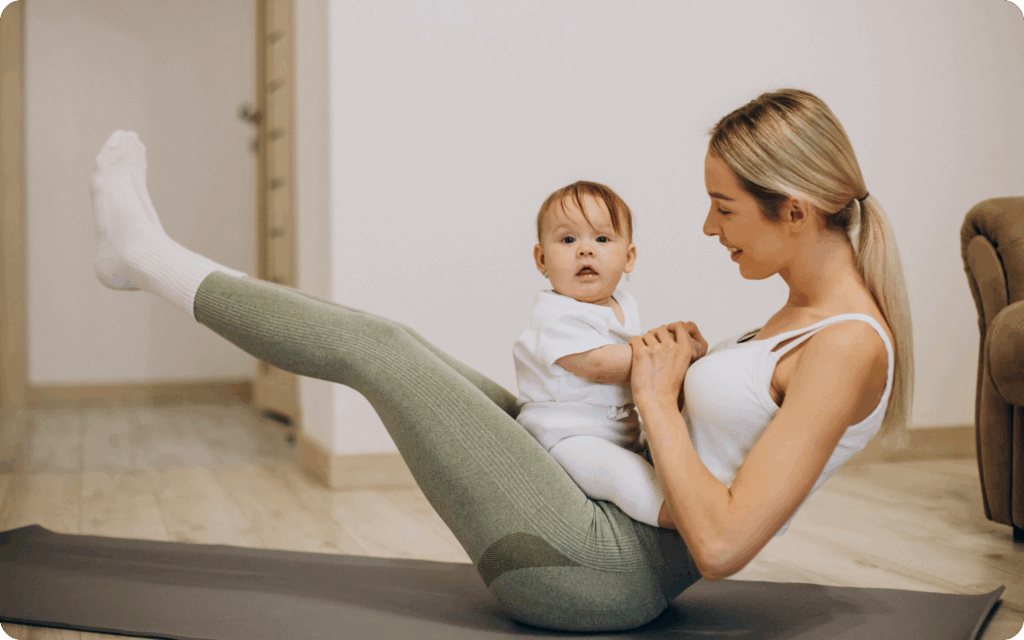
A gym return depends on the activity and your individual circumstances, not simply how many weeks have passed. Gentle movement after a straightforward birth may begin when you feel ready, while strenuous exercise after a complicated delivery needs professional advice (1).
Discuss lifting, classes, cycling, and impact work separately. Being ready for a short walk does not establish readiness for every gym exercise. Ask about equipment setup and suitable substitutions before returning to old loads.
Whether you’re a workout beast or just a beginner making your first foray into the world of fitness and dieting – BetterMe has a lot to offer to both newbies and experts! Install the app and experience the versatility first-hand!
What is a flexible weekly postpartum schedule?
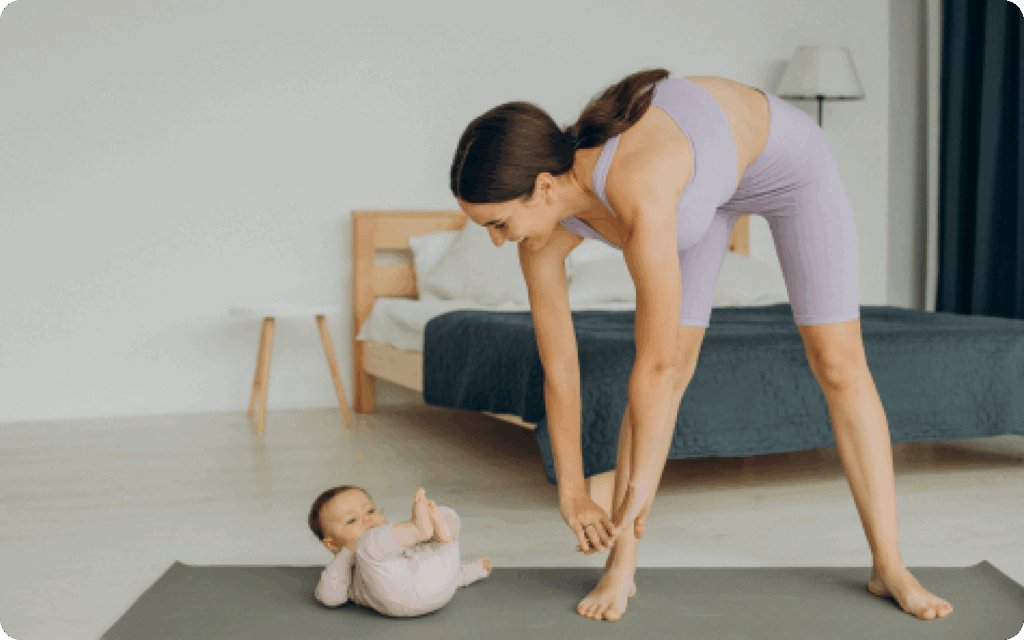
A flexible weekly schedule alternates optional activity windows with opportunities for rest. The following BetterMe editorial example is for someone cleared for the selected activities. Durations are adjustable planning choices.
|
Day |
Optional activity |
Easier choice |
|---|---|---|
|
Monday |
Comfortable walk; 5 to 10 minutes |
Shorter walk or rest |
|
Tuesday |
Rest or small-range shoulder movement |
Rest |
|
Wednesday |
Approved light exercise; 5 to 15 minutes |
Repeat a short walk |
|
Thursday |
Rest |
Rest |
|
Friday |
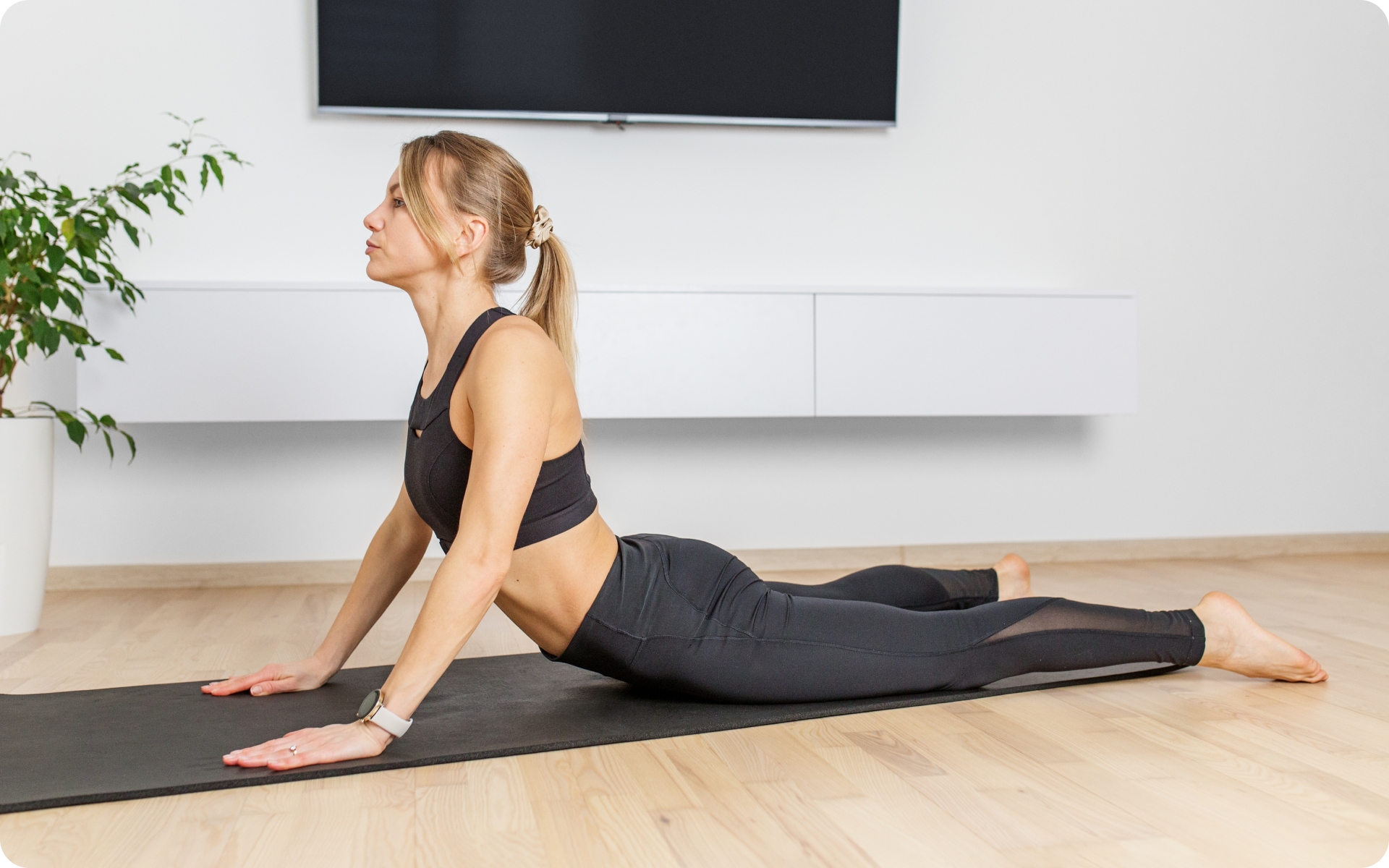
Suitable gentle yoga or mobility; 5 to 10 minutes |
Supported seated movement |
|
Saturday |
Optional easy outing |
Rest |
|
Sunday |
Rest and review the week |
Rest |
You can split an activity into shorter windows, or keep only one or two windows in a busy week. Public guidance allows moderate activity to be accumulated in smaller chunks (2). This sample may be well below the longer-term recommendation, and that is not a reason to push immediately.
For a no-gym format, see our postpartum home workout plan.
How should the schedule change over time?
Change the schedule according to what you can repeat comfortably, with your clinician’s restrictions in mind. Use readiness stages rather than assigning exercises to mandatory days, weeks, or months after birth.
|
Stage |
Focus |
Possible next step |
|---|---|---|
|
Finding a starting point |
Rest, daily activity, and approved gentle movement |
Keep activity brief |
|
Establishing consistency |
Repeat one or two manageable sessions |
Add an activity window |
|
Broadening the routine |
Suitable strength or instructed yoga |
Add one movement or a small amount of time |
|
Increasing capacity |
More sustained or challenging activity |
Discuss strenuous and impact activity separately |
A good week does not require moving to the next stage. No stage is a self-test that proves clinical readiness. Our 12-week postpartum program guide separates program weeks from time since delivery.
Which exercise options can you discuss with your care team?
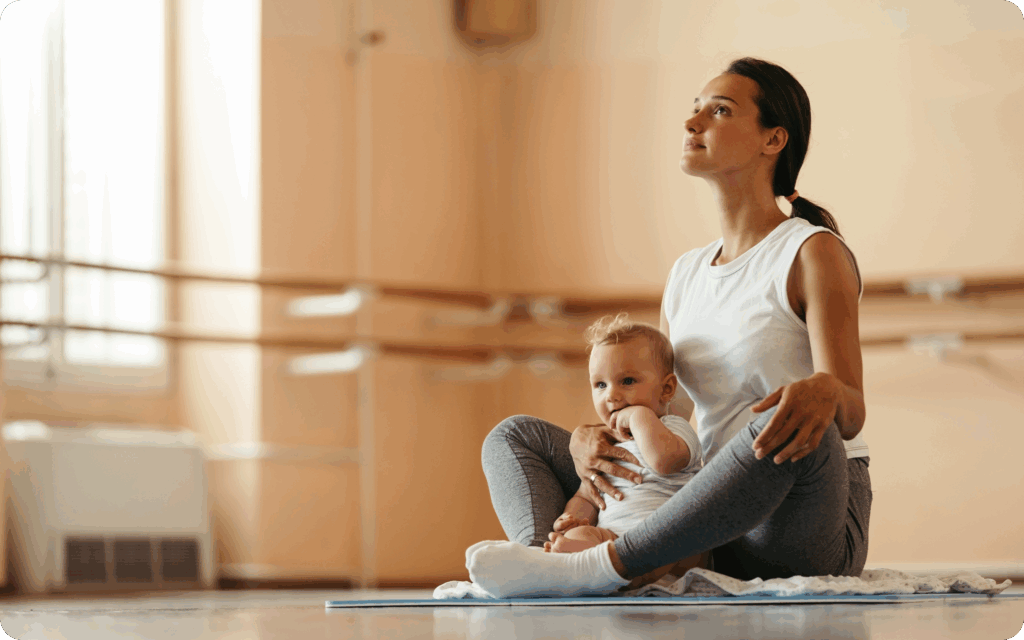
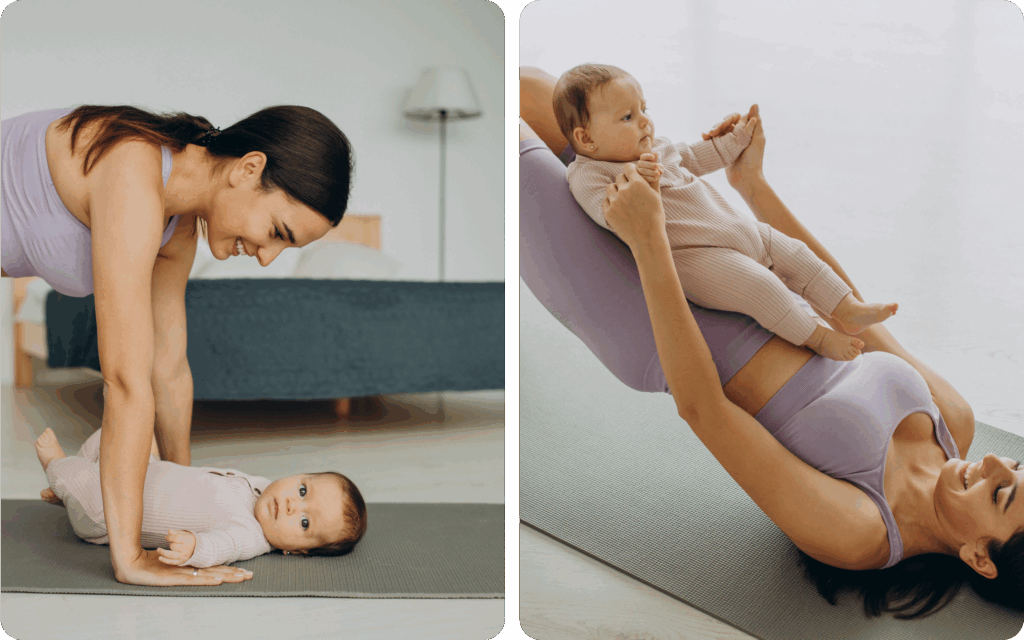
Discuss movements that match your current capacity and the positions you can use comfortably. Walking, gentle stretching, and pelvic-floor exercises appear in general postnatal guidance, but individual instruction may still be needed (1).
|
Option |
Practical adjustment |
|---|---|
|
Shoulder movement |
Small seated range |
|
Supported squat |
Higher chair; fewer reps |
|
Bridge |
Smaller lift or omit floor work |
|
Row |
Light resistance and stable torso |
|
Wall push-up |
Stand closer to the wall |
|
Standing bird dog |
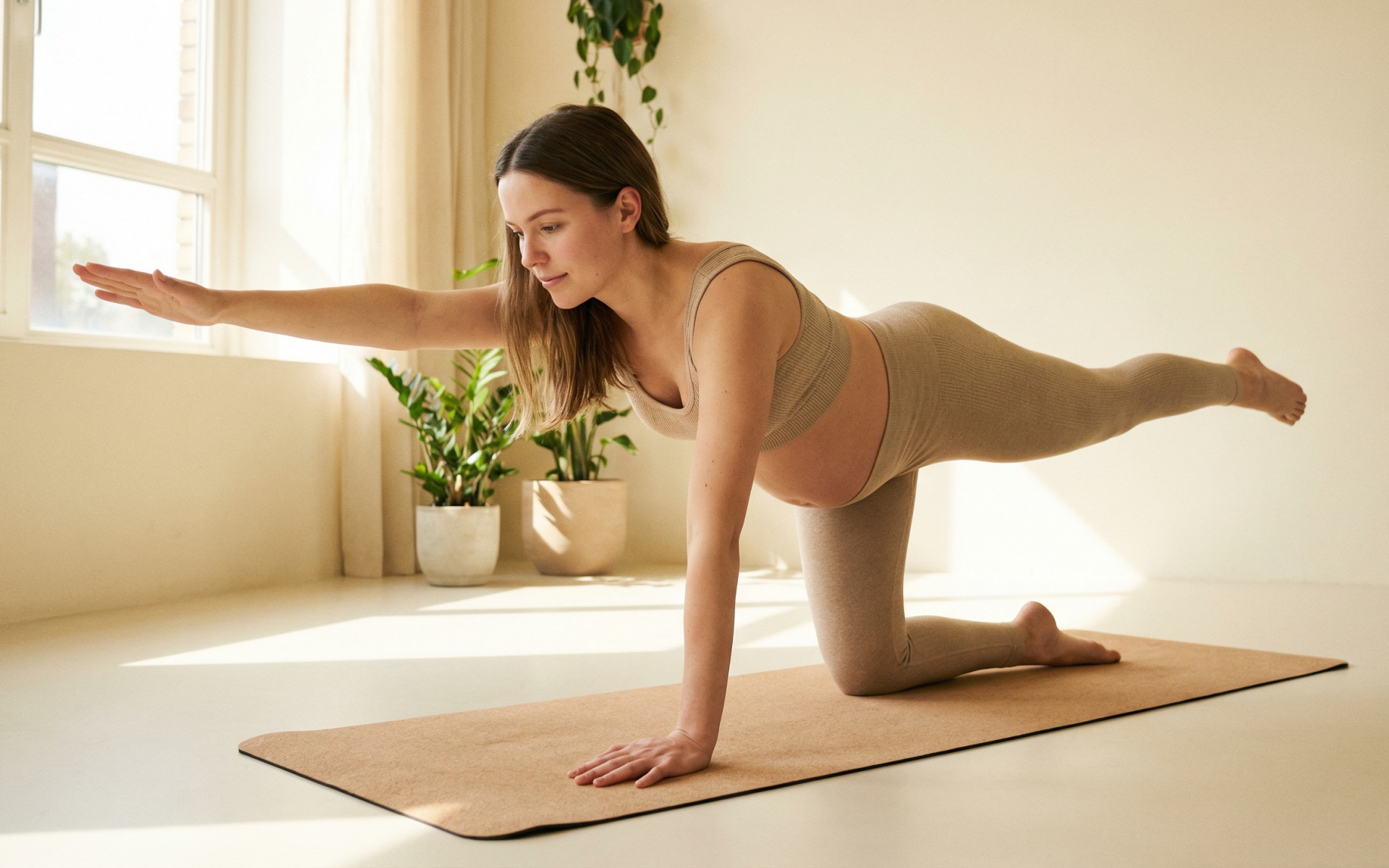
Keep both feet grounded; use a wall reach |
|
Core exercise |
Select a version with your clinician rather than follow a fixed daily routine |
Supported squat
- Position a stable chair behind you for the supported squat.
- Lower through a comfortable supported squat range.
- Stand from the supported squat without bouncing.
Light row
- Establish a stable support position for the light row.
- Pull the light row resistance toward your torso.
- Return the light row resistance with control.
Wall push-up
- Place your hands on a stable wall for the wall push-up.
- Lower toward the wall during the wall push-up.
- Press away during the wall push-up without straining.
These are general exercise reminders for movements already considered appropriate for you. They do not replace an individual exercise assessment.

How does breastfeeding affect planning?
Plan activity around feeding times and your comfort. General postnatal guidance emphasizes a balanced diet, fluids, and rest (1). Choose a convenient activity window, comfortable support, and an easy way to pause.
If feeding, sleep, or daily demands change, shorten the session rather than treating the calendar as a rule. Ask your care team about individual nutrition concerns.
BetterMe Well-Being Coach app helps you achieve your body goals with ease and efficiency by helping to choose proper meal plans and effective workouts. Start using our app and you will see good results in a short time.

How do you build a week around feeding, sleep, and help?
Place essential care tasks and available help on the calendar before optional exercise. Allow room for rest, food, fluids, and activity. Leave some time unscheduled. Some days may contain no planned workout.
Choose an activity window that can be interrupted. For example, a short familiar walk or a seated movement practice may be simpler than assembling several floor exercises. Keep the baby in an appropriate separate resting space or arrange another adult’s care when needed.
If feeding times change, move or shorten the session. Do not postpone a necessary feed to finish a circuit. The same flexibility applies to meals, appointments, and rest. A calendar that repeatedly conflicts with those needs should be reduced.
What can you record after an activity window?
Record the activity, its duration, and any changes from the plan. Walking time is different from the whole outing if part was spent sitting or attending to the baby. A strength practice should identify the exercise version and repetitions, not only elapsed minutes.
Keep the notes brief. A sentence such as short indoor walk, extra pause, or chair version used can explain why the next plan needs adjusting. The record does not clear you for more demanding exercise.
If something concerning occurs during activity, stop and describe it to your care team. A comfortable session does not prove that every later exercise suits you. Your clinician may need to assess a specific concern and discuss the movement that brought it on.
How can walking fit a changing day?
Use a familiar route with an easy way to shorten it. Walking can increase gradually when appropriate; no date requires adding distance. An indoor route can be a practical option when weather or leaving home makes an outing difficult.
If using a stroller, follow its instructions and choose terrain you can manage. Adjust the handle position for comfortable use and avoid hanging exercise weights from it. Walking while pushing a stroller adds a task; do not assume it feels like walking without one.
Keep the outing within your selected workload. A destination farther away requires the return journey as well. Plan a route you can finish without treating the walk home as extra effort you had not counted.
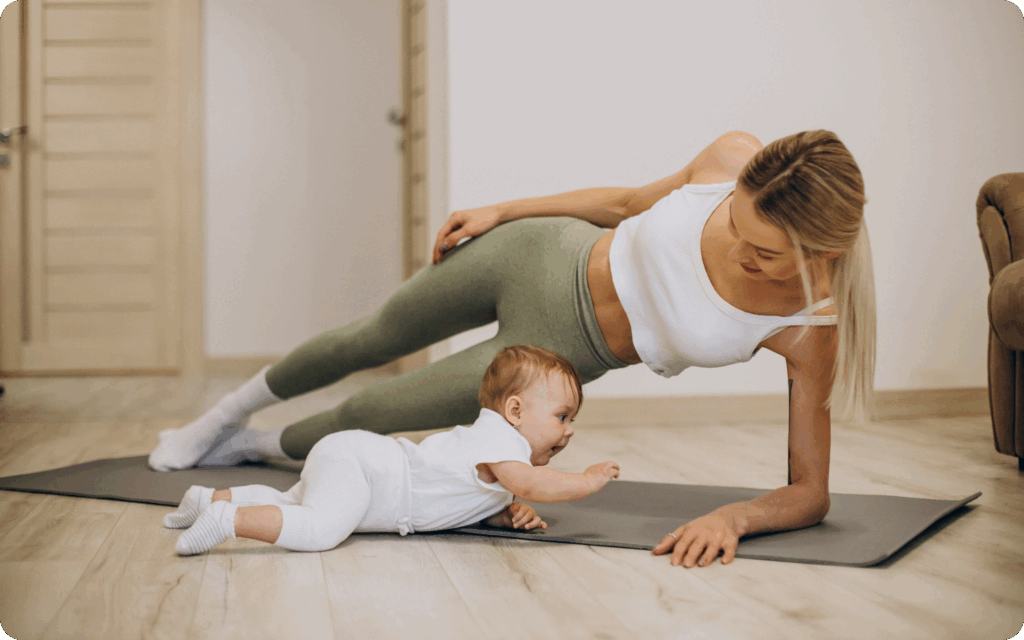
How can you choose between a class and home practice?
Look at the actual exercise demands. Yoga, strength work, and dynamic movements have different demands. A postnatal class may offer relevant instruction, but its label does not replace your care team’s guidance or an individual assessment.
Ask how the instructor handles floor transfers, support, and pauses. Tell them about recent birth and any relevant restrictions. A plan to omit a movement is more useful than expecting to follow an entire sequence because everyone else does.
Home practice can keep familiar movements nearby. Prepare the chair, wall, or mat before beginning, and put equipment away afterward. Keep weights and bands out of the baby’s reach. If a setup is awkward, use another suitable activity rather than improvising an anchor or platform.
What should a weekly review change?
Review which sessions were workable that week. You may keep the same activity windows, drop one, or change a movement. A skipped session does not create an exercise debt.
Separate changes in daily capacity from a progression deadline. Returning to a previous workload after an interrupted week is a legitimate choice. When considering running or heavier lifting, ask about those activities directly rather than assuming a stage label supplies permission.
Use the calendar to organize appropriate activity, meals, and rest; seek clinical advice for questions about how exercise feels or affects you.
When planning outside activity, allow time to prepare and return home. A short walk does not need to include errands that make the route longer than intended. Keep an easier route available and check the conditions before leaving. If the outing is impractical, use another suitable activity window or rest rather than trying to preserve a streak.
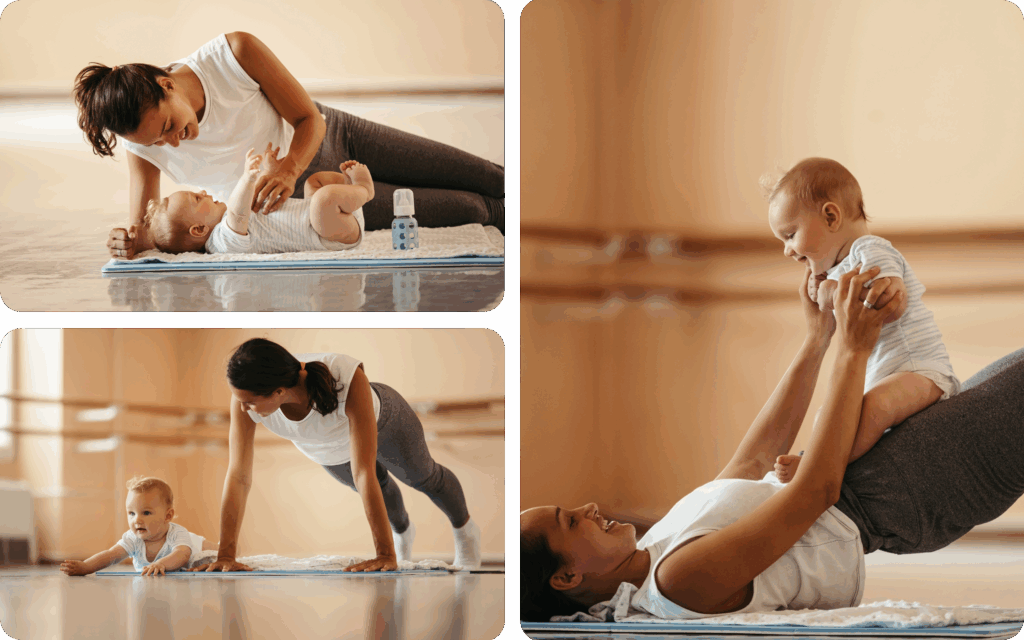
How do you judge effort?
Judge effort by the activity, your breathing, and how manageable the session feels. During moderate aerobic activity, you can generally talk but not sing (3). Gentle mobility or relaxed breathing should not be counted as moderate aerobic work simply because the session lasts ten minutes.
Start and finish more demanding activity gradually (4). For yoga, choose a qualified instructor and discuss pose modifications (5). A public postnatal yoga resource requires clearance before returning to exercise (6).

Skip the missed session and return to a manageable routine. There is no need to double the next session or restart the whole calendar. Not automatically. Review the demands of the old routine and discuss your current readiness before returning to the same loads or impact activity. A checkup is an opportunity to ask about running, not a universal running clearance. Your delivery experience and current capacity still matter (1).Frequently Asked Questions
What if you miss a postpartum workout?
Can you follow your pre-pregnancy gym routine?
Is a six-week check enough to start running?
The bottom line
Use the weekly schedule to make activity easier to organize, with room for rest and change. Repeat the stage you can manage rather than advancing on a postpartum date. Our yoga guide for moms can help you discuss another movement option with an instructor.
DISCLAIMER:
This article is intended for general informational purposes only and does not serve to address individual circumstances. It is not a substitute for professional advice or help and should not be relied on for making any kind of decision-making. Any action taken as a direct or indirect result of the information in this article is entirely at your own risk and is your sole responsibility.
BetterMe, its content staff, and its medical advisors accept no responsibility for inaccuracies, errors, misstatements, inconsistencies, or omissions and specifically disclaim any liability, loss or risk, personal, professional or otherwise, which may be incurred as a consequence, directly or indirectly, of the use and/or application of any content.
You should always seek the advice of your physician or other qualified health provider with any questions you may have regarding a medical condition or your specific situation. Never disregard professional medical advice or delay seeking it because of BetterMe content. If you suspect or think you may have a medical emergency, call your doctor.
SOURCES:
- Keeping fit and healthy with a baby (2026, nhs.uk)
- Pregnant & Postpartum Activity: An Overview (2025, cdc.gov)
- How to Measure Physical Activity Intensity (2025, cdc.gov)
- Warm Up, Cool Down (2024, heart.org)
- Yoga: Effectiveness and Safety (2023, nccih.nih.gov)
- Prenatal and postnatal yoga video (2025, nhs.uk)
 Reviewed by
 Reviewed by