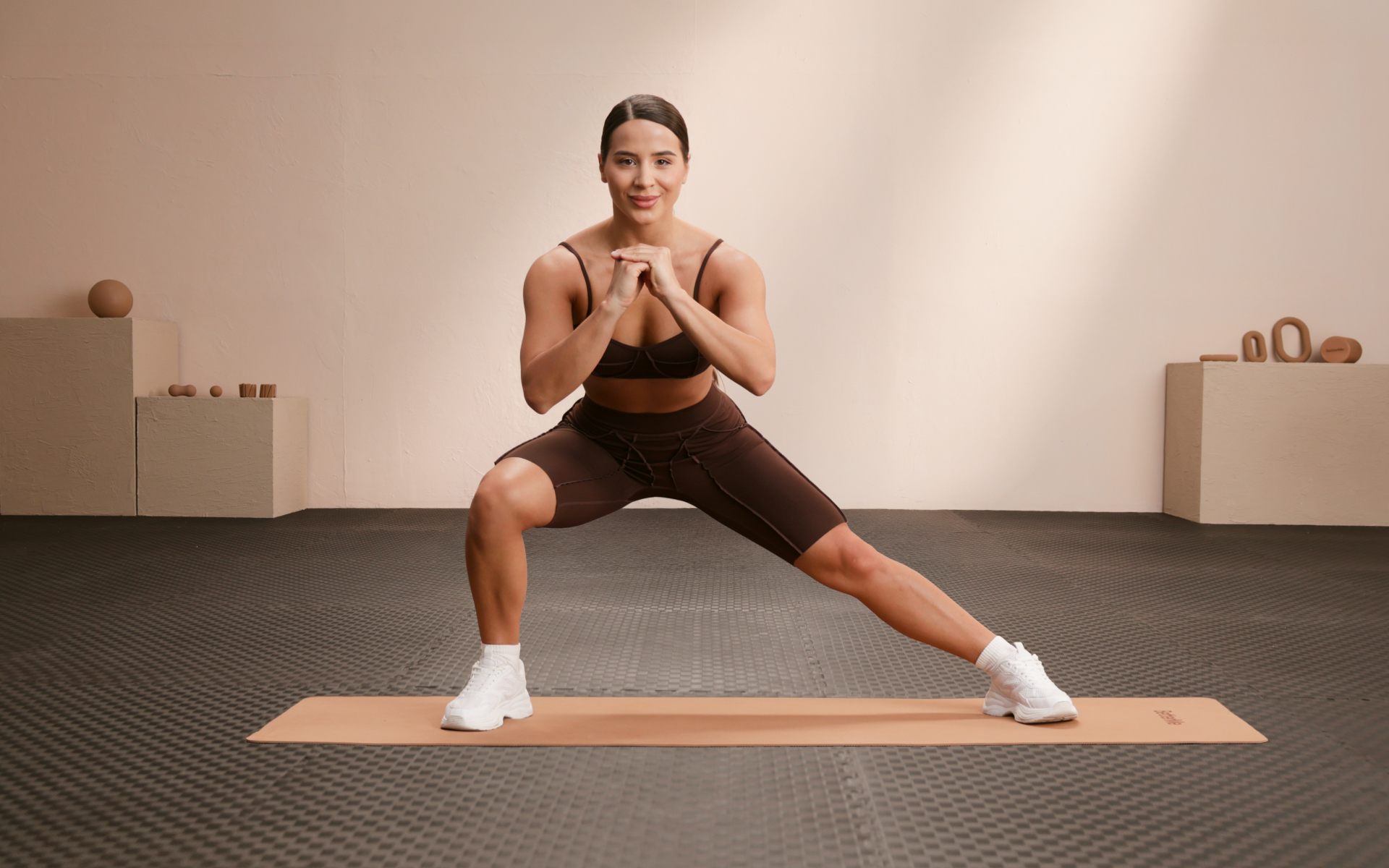
Calisthenic exercises are bodyweight movements—such as push-ups, squats, and planks—that build strength using little to no equipment. You can do them at home, target your upper body, lower body, and core, and adjust each move to match your level. For many people, a simple mix of 6-12 moves, done 2-3 times a week, can be a practical starting point.
Calisthenic exercises use your own body weight as resistance. This means pushing, pulling, squatting, and holding positions without machines or heavy gear. This guide is for beginners and anyone who wants flexible, low-cost training that they can do almost anywhere.
We’ll walk through which muscles these bodyweight exercises target, the main types to know, and 12 full-body calisthenics exercises for your upper body, lower body, and core. You’ll also find a sample workout, common mistakes to skip, and tips on how to adjust your workout plan.
Are you ready to move? Let’s break it down step by step.
Key Takeaways
- Calisthenic exercises are bodyweight movements that fall into five types: pushing, pulling, lower-body, core, and conditioning.
- Pushing moves work the chest, shoulders, and triceps (1), and pulling moves work the back and biceps (3).
- Lower-body moves work the glutes, quads, and hamstrings (4), and core moves work the abs and obliques (8, 9).
- A beginner starting point is 2 sets of 6 to 10 reps for upper-body moves with 60 to 90 seconds of rest, and 2 sets of 8 to 12 reps per leg for lower-body moves.
- For core work, a beginner starting point is 2 to 3 rounds of 20 to 40 second planks.
- Beginners can train calisthenics 2 to 3 times a week, intermediate and advanced trainees 3 to 4 times, and 2 sessions still count on busy weeks.
- For many people, form and endurance improve within 4 to 6 weeks (17), while changes in strength and muscle definition often take 8 to 12 weeks or more, and results vary from person to person.
What Muscles Do Calisthenic Exercises Work?
Calisthenic exercises can work nearly every major muscle group, particularly when you pick the right moves. By mixing pushing, pulling, and lower-body movements, you cover your whole body over a week.
Here’s a simple breakdown of what basic calisthenic exercises target.
| Movement type | Main muscles targeted | Example move |
|---|---|---|
| Pushing | Chest, shoulders, triceps | Push-up |
| Pulling | Back, biceps, forearms | Let-me-up (table row) |
| Lower body | Glutes, quads, hamstrings | Bodyweight squat |
| Core | Abs, obliques, lower back | Plank |
Most moves also engage your core for stability. A push-up, for example, works your chest while your midsection holds you steady.
This whole-body reach is one reason bodyweight calisthenics exercises appeal to busy people. You can train many areas with just a handful of movements.
What Are the Main Types of Calisthenic Exercises?
The main types of calisthenic exercises are pushing, pulling, lower-body, and core movements. Together, they cover the body’s basic movement patterns.
Knowing these categories helps you build a balanced routine. Here’s a quick look at each.
1. Pushing Calisthenic Exercises
Pushing calisthenic exercises are those that push a resistance away from the body. This includes exercises such as:
- Push-ups
- Dips
- Pike push-ups
2. Pulling Calisthenic Exercises
These bring your body toward something, such as a bar or table edge. Rows and pull-ups are common examples.
3. Lower-Body Calisthenic Exercises
These power your legs and hips. Squats and lunges lead this category.
4. Core Calisthenic Exercises
These focus on your midsection for stability. Planks and leg lifts are popular here.
5. Conditioning Calisthenic Exercises
Many basic calisthenics exercises blend two or more types. A bear crawl, for example, mixes pushing and core work. A mountain climber pairs core stability with lower-body movement.
If you’re looking for a gentle starting point, explore our easy calisthenics moves guide to ease into each category.
What Upper-Body Calisthenic Exercises Can You Do?
Some of the best upper-body calisthenic exercises are the push-ups, dips, and rows. These simple bodyweight exercises focus on the chest, shoulders, back, and arms.
Start with what feels manageable. You can make most moves easier or harder by changing your angle or hand position.
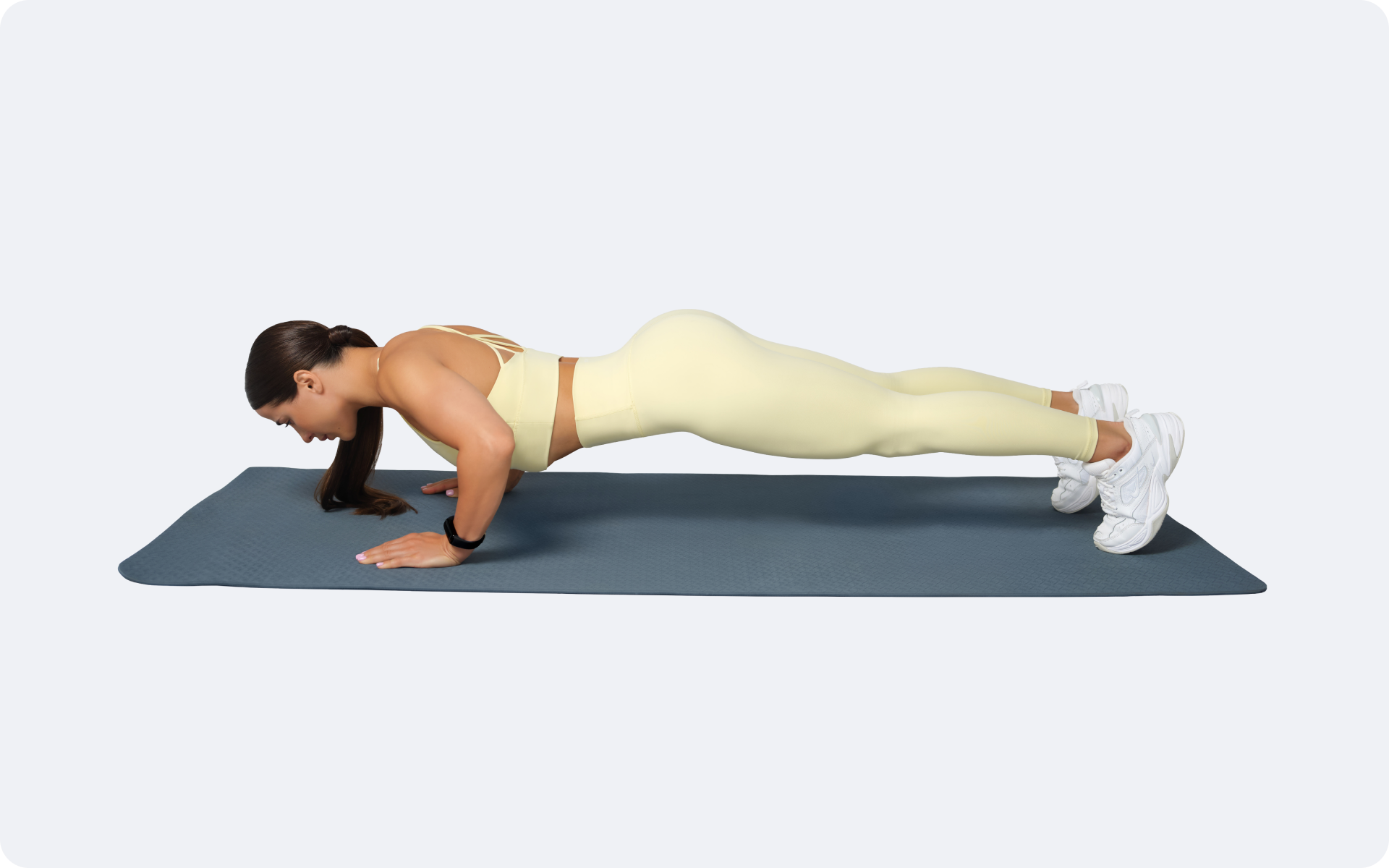
1. Push-Ups
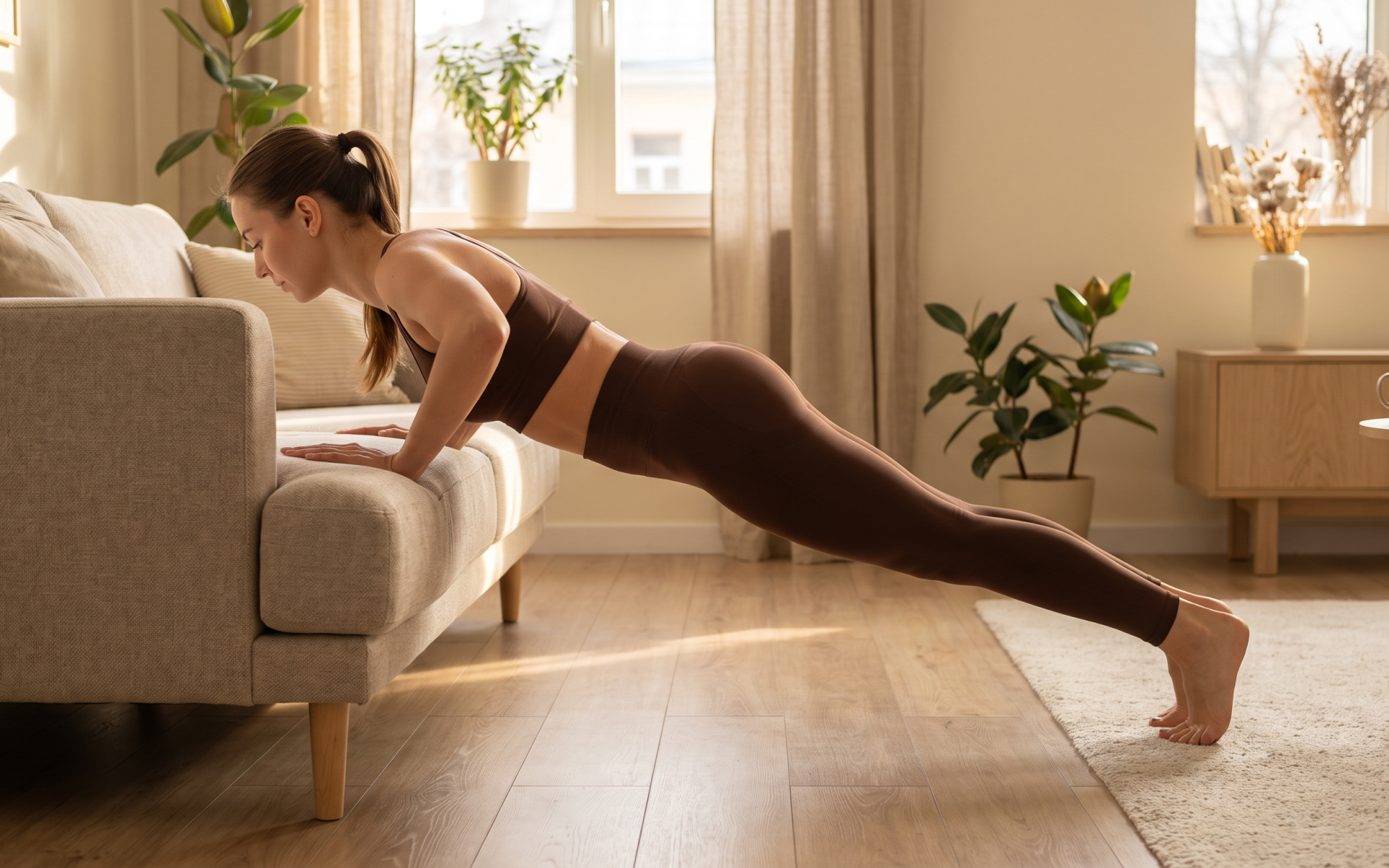
The push-up works your chest, shoulders, and triceps (1). To make it easier, place your hands on a raised surface such as a sturdy table.
2. Dips
Dips target your lower chest, front shoulders, and triceps (2). You can use two stable chairs or the edge of a bench.
3. Let-Me-Ups (Table Rows)
This pulling move works your back and biceps (3). You lie under a sturdy waist-height table and pull your chest toward the edge.
4. Military Press
This move shifts focus to your shoulders. You start with your hips raised in an inverted “V” and press your head toward the floor.
A good starting point for many beginners is 2 sets of 6-10 reps per move. Rest for 60-90 seconds between sets. Individual capacity varies, so adjust the reps to match how you feel.
BetterMe offers a variety of workouts, recipes, challenges, and support tools to help you stay more consistent with your wellness routine. Explore the app to find features that fit your goals, preferences, and schedule.
What Lower-Body Calisthenic Exercises Can You Do?
Common lower-body calisthenic exercises include squats, lunges, and step-ups. These lower-body calisthenic exercises need little to no equipment and can be done at home.
Focus on slow, controlled movement first. Speed and jumping variations can come later.
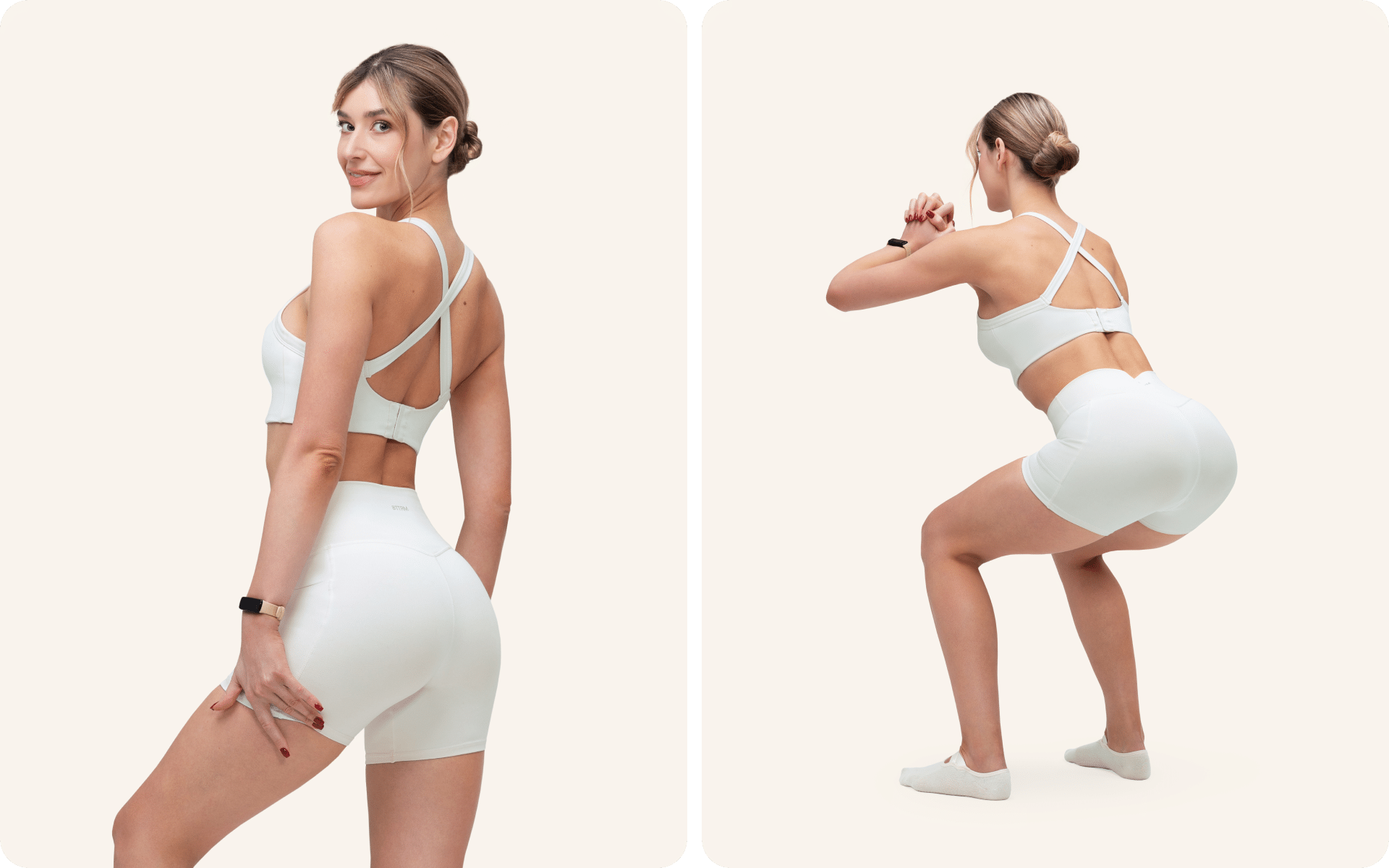
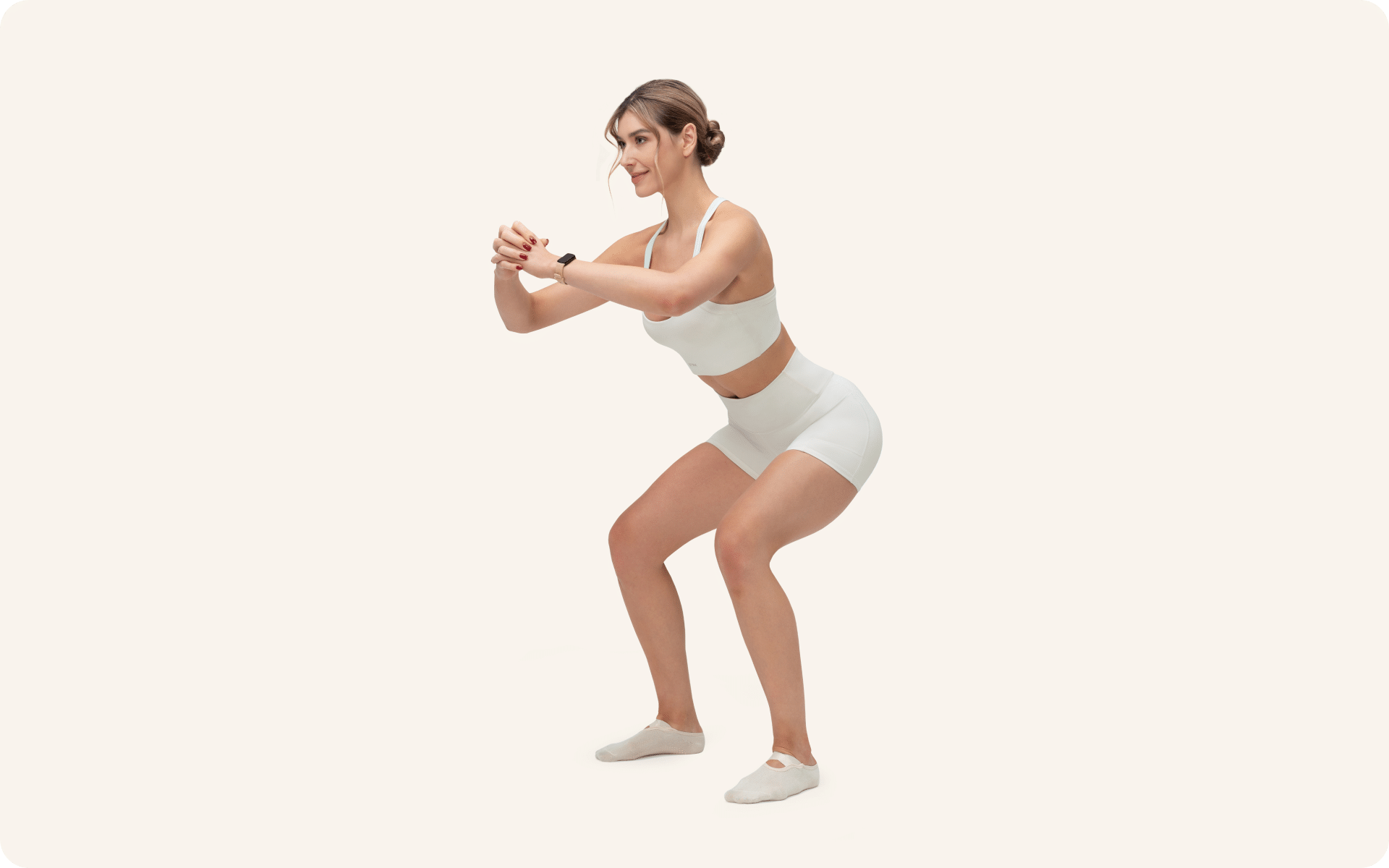
1. Bodyweight Squats
The squat targets your glutes, quads, and hamstrings (4). Push your hips back, keep your chest lifted, and lower until comfortable.
2. Back Lunges
Stepping backward helps your hips line up naturally (5). This move works your thighs and glutes while challenging balance.
3. Romanian Deadlifts
This hip-hinge move focuses on your hamstrings and glutes (6). Push your hips back and bend forward with a long, neutral back.
4. Step-Ups
Step-ups focus on single-leg movement and balance (7). Use a sturdy step or low bench and drive through your front foot.
Many people start with 2 sets of 8-12 reps per leg. If a move feels too easy, you can add a pause at the bottom or slow the lowering phase. Results depend on consistency and your starting point.
Read more: 15-Minute Calisthenics Workout: A Quick Full-Body Routine for Busy Days
What Core Calisthenic Exercises Help Build Stability?
Core calisthenic exercises such as planks and leg lifts focus on stability through your midsection. Core stability is involved in many everyday and workout movements.
These moves focus on holding a strong, steady position rather than rushing through reps.
1. Plank
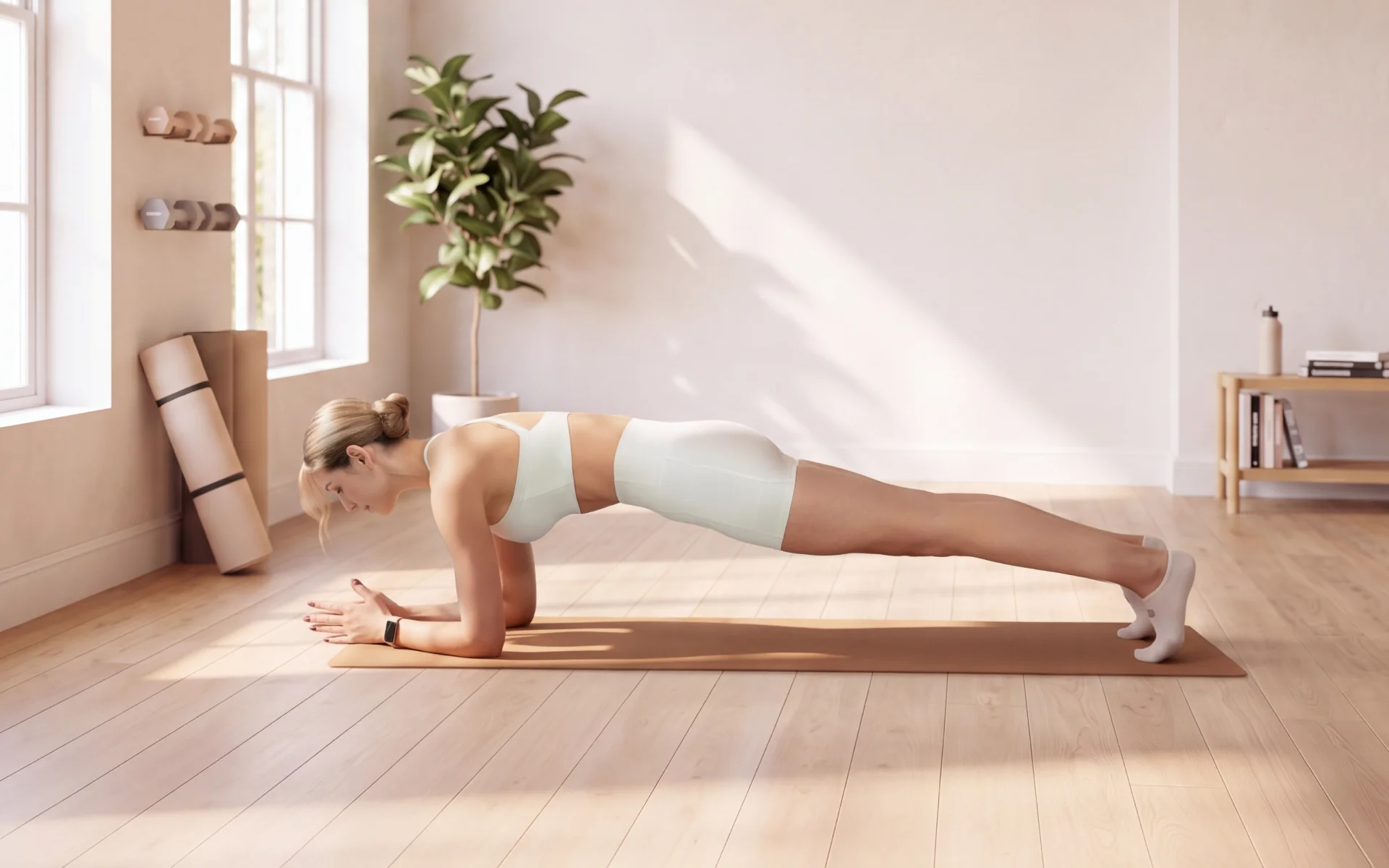
The plank trains your whole midsection to stay long and steady (8). Keep your body in one straight line from head to heels.
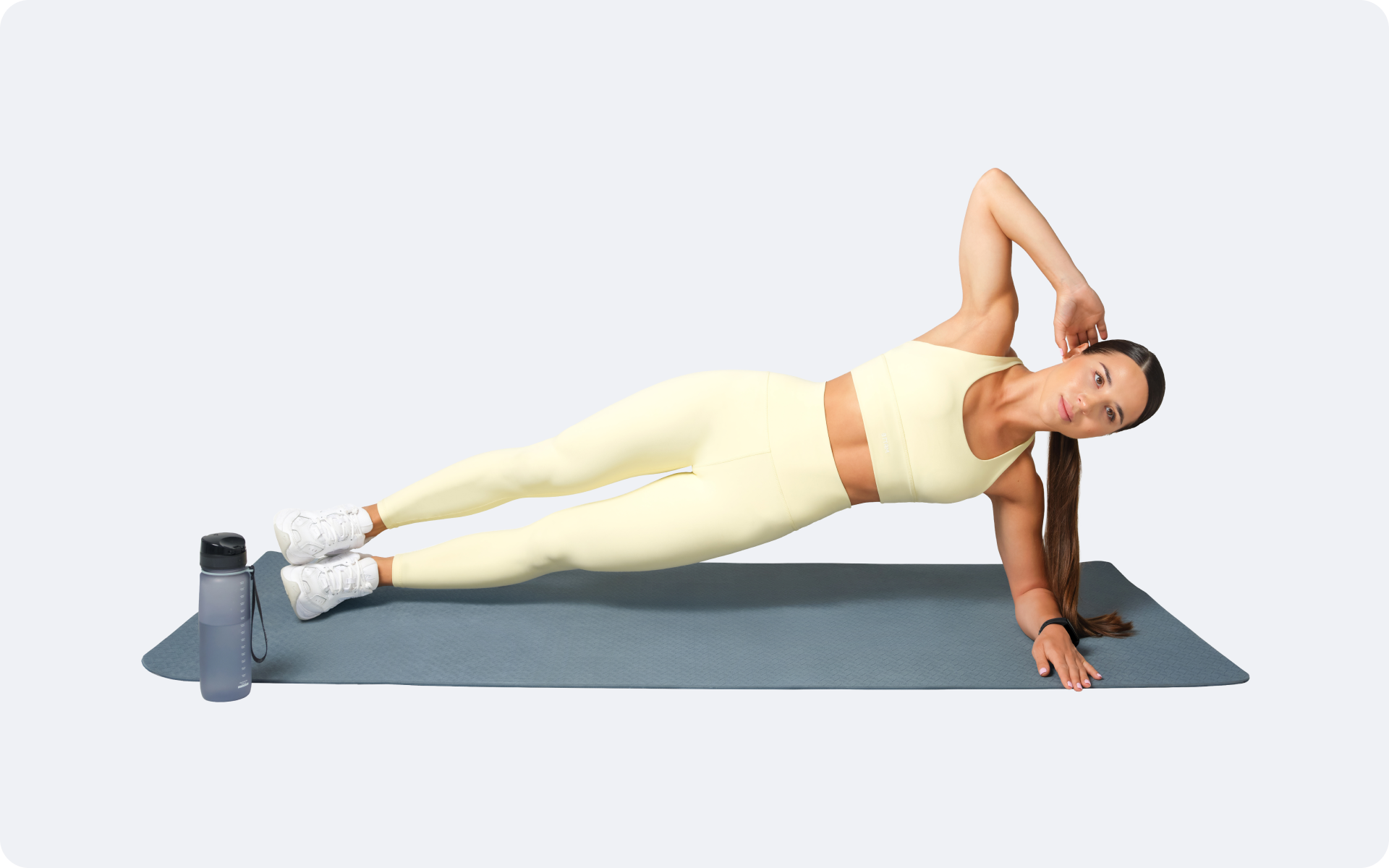
2. Side Plank
This targets your obliques and the sides of your torso (8). Stack your feet and lift your hips off the floor.
3. Hanging or Lying Leg Lifts
Leg lifts work your lower abs and hip flexors (9). Lower your legs slowly to keep tension in your midsection.
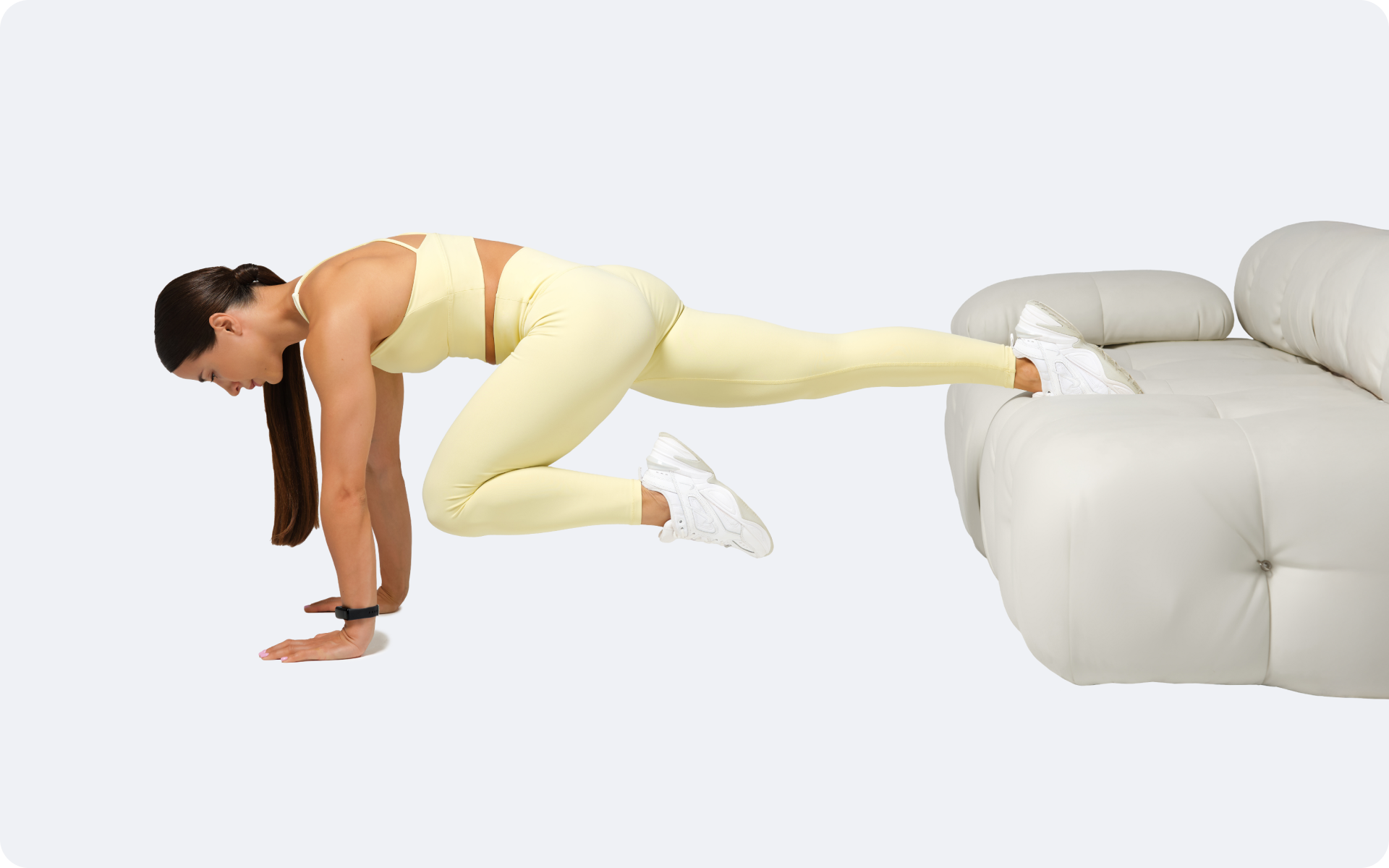
4. Mountain Climbers
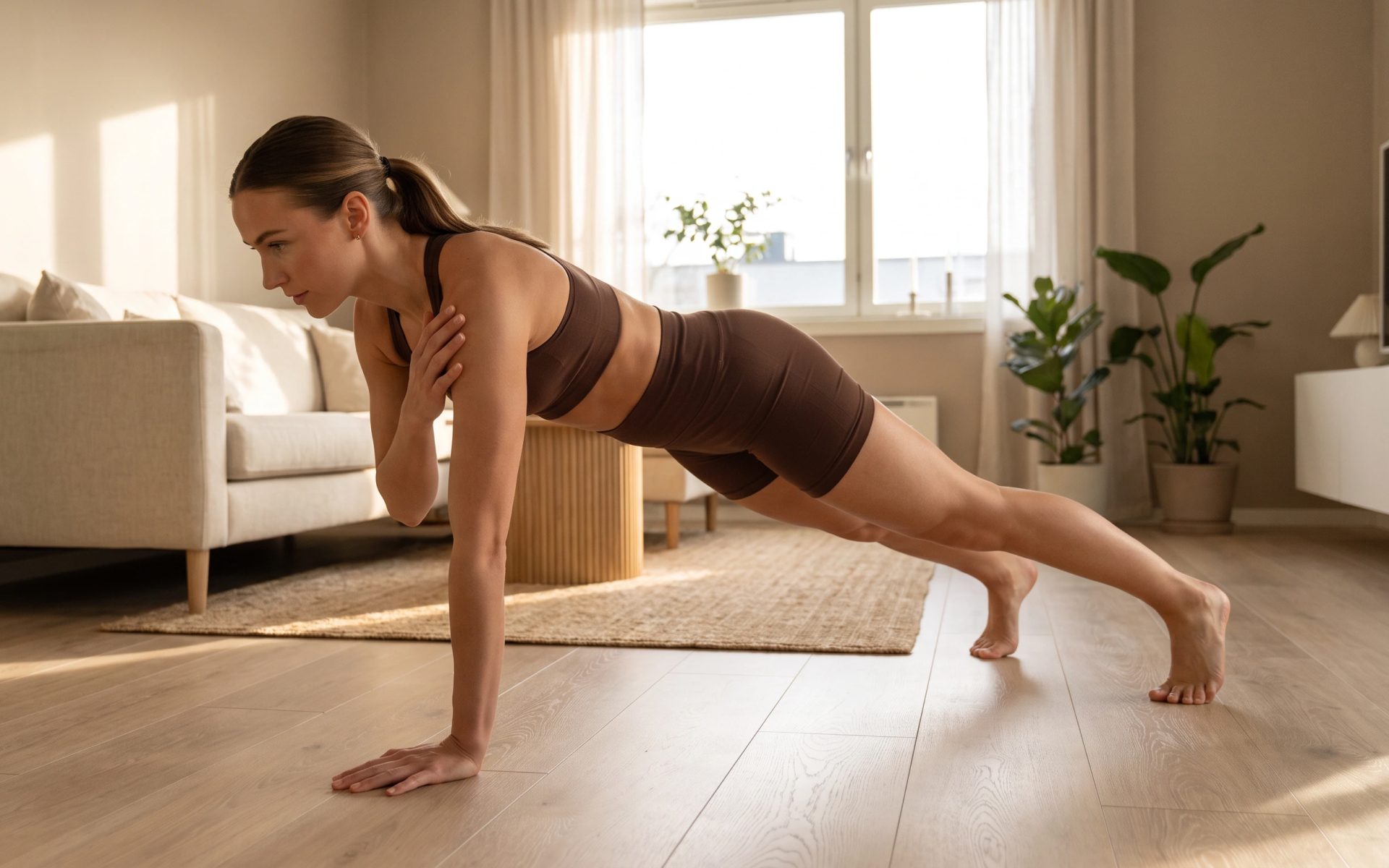
This dynamic move focuses on core control and may raise your heart rate. Run your knees toward your chest from a push-up position.
Increase your time and reps gradually as the moves start to feel more manageable.
For holds such as the plank, try 2-3 rounds of 20-40 seconds.
For leg lifts and climbers, aim for 2 sets of 8-12 reps.
How Do You Combine Calisthenic Exercises into a Simple Workout?
You combine calisthenic exercises by picking one or two moves from each category and repeating them in rounds. A balanced session covers pushing, pulling, legs, and core.
Consistency, frequency, and gradual progression are useful principles for building a routine. Below is a sample full-body workout you can try at home.
| Exercise | Category | Sets | Reps/time | Rest |
|---|---|---|---|---|
| Push-up | Upper body (push) | 2 | 6-10 reps | 60 secs |
| Let-me-up (table row) | Upper body (pull) | 2 | 6-10 reps | 60 secs |
| Bodyweight squat | Lower body | 2 | 8-12 reps | 60 secs |
| Back lunge | Lower body | 2 | 8-12 per leg | 60 secs |
| Plank | Core | 2 | 20-40 sec | 45 secs |
| Mountain climber | Core | 2 | 8-12 per side | 45 secs |
Exercise Instructions
Here’s how to perform each move in the workout above.
Push-Up
- Place your hands slightly wider than shoulder-width apart.
- Keep your body in one straight line from your head to your heels.
- Lower your chest toward the floor with control.
- Press back up to the start. Raise your hands onto a table to make it easier.
Let-Me-Up (Table Row)
- Lie under a sturdy waist-height table.
- Grip the edge with both hands, keeping your arms straight.
- Pull your chest toward the table edge.
- Lower yourself slowly. Bend your knees to reduce difficulty.
Bodyweight Squat
- Stand with your feet about hip-width apart, your toes forward.
- Push your hips back as if sitting into a chair.
- Lower until comfortable, keeping your chest lifted.
- Drive through your feet to stand tall.
Back Lunge
- Stand tall with your feet together.
- Step one foot straight back and lower your back knee toward the floor.
- Keep your front knee over your ankle.
- Push through your front foot to return. Switch legs.
Plank
- Rest on your forearms and toes.
- Keep your body in one straight line.
- Tighten your midsection and avoid letting your hips sag.
- Breathe steadily and hold for your set time.
Mountain Climber
- Start in a push-up position with straight arms.
- Drive one knee toward your chest.
- Switch legs in a steady, running motion.
- Keep your hips low and your core tight.
BetterMe Well-Being Coach app can help you build a more structured approach to your wellness routine with meal plans, workouts, and habit-tracking tools. Start using the app to explore options that may support your personal fitness and nutrition goals.
What Mistakes Should You Avoid When Doing Calisthenic Exercises?
The most common mistake is rushing through reps with sloppy form. Quality movement is usually more practical than rushing through higher rep counts.
Here are a few habits that are worth watching.
- Skipping warm-ups. A few minutes of light movement can prepare your body (10).
- Doing too much, too soon. Sudden jumps in volume may make the workout harder to recover from (11).
- Ignoring your weaker side. Try single-limb moves starting with your weaker side first.
- Holding your breath. Steady breathing helps you stay controlled.
- Forgetting rest days. Rest days are part of a balanced routine, not a setback.
If you slip up or miss a session, that’s okay. Leave the guilt behind and pick up where you left off. These simple calisthenics exercises are easier to maintain as a repeatable habit, not a one-time push.
Read more: Push Calisthenics Workout: A Guide to Building Upper-Body Strength
How Often Should You Do Calisthenic Exercises?
Many beginners start with 2-3 sessions of calisthenic exercises per week, with at least one rest day between full-body workouts. This gives your muscles time between sessions (12).
Frequency can shift based on your schedule, energy, and goals. Here’s a simple guide.
| Level | Sessions per week | Suggested focus |
|---|---|---|
| Beginner | 2-3 | Full-body, 6 moves |
| Intermediate/advanced | 3-4 | Full-body or upper/lower split |
| Any level, when you have a busy week | 2 | 2 short sessions to maintain |
Short, frequent sessions may feel more manageable than long, rare ones—even a 10-minute round on your living room floor counts.
When life gets hectic, scaling back to two short sessions may make the routine feel more manageable. Outcomes vary from person to person, so listen to your body. For a gentle entry point, you can check out beginner calisthenics exercises to keep your routine approachable.
Frequently Asked Questions
Are calisthenic exercises enough to build strength?
For many people, calisthenic exercises can be part of a strength-focused routine, particularly when the challenge increases over time. You increase the challenge by adding reps, slowing your tempo, or shifting to harder variations such as single-arm or single-leg moves. Progress depends on consistency, effort, and gradual overload (13). Individual results vary based on your starting point and how often you train.
Do you need equipment for calisthenic exercises?
You don’t need equipment for most calisthenic exercises, as your body weight provides the resistance. A sturdy table, two chairs, or a doorway can expand your options for pulling moves. No-equipment calisthenics exercises such as push-ups, squats, and planks cover a lot of ground. A pull-up bar is helpful later, but it’s optional when you’re starting out.
Can calisthenic exercises replace gym workouts?
Calisthenic exercises can serve as a complete routine for many people, depending on their goals. You can train your upper body, lower body, and core using bodyweight moves alone (14). Adjusting leverage, adding pauses, or moving to single-limb versions can change the level of challenge. Your ideal setup depends on your preferences, available time, and what you enjoy doing.
Can calisthenic exercises help with mobility?
Many calisthenic exercises can support mobility and flexibility (15), which is your ability to move joints through their full range (16). When performed with full range of motion, moves such as deep squats, lunges, and dynamic stretches encourage controlled motion at your hips, shoulders, and back. Adding a few mobility-focused movements to your warm-up may make the session feel easier to start. As always, individual experience differs from person to person.
How long does it take to get better at calisthenics?
Many people notice improvements in form and endurance within 4-6 weeks of regular practice. Changes in strength or muscle definition can take longer, sometimes 8-12 weeks or more (17). Your timeline depends on consistency, effort, recovery, and your starting point. Individual outcomes vary, so focus on steady habits rather than a set deadline.
The Bottom Line
Calisthenic exercises give you a flexible, low-cost way to train your upper body, lower body, and core almost anywhere. You can start with a few manageable moves, train 2-3 times a week, and adjust as the routine starts to feel easier. With steady, repeatable effort, you can build a routine that fits your life.
DISCLAIMER:
This article is intended for general informational purposes only and does not serve to address individual circumstances. It is not a substitute for professional advice or help and should not be relied on for making any kind of decision-making. Any action taken as a direct or indirect result of the information in this article is entirely at your own risk and is your sole responsibility.
BetterMe, its content staff, and its medical advisors accept no responsibility for inaccuracies, errors, misstatements, inconsistencies, or omissions and specifically disclaim any liability, loss or risk, personal, professional or otherwise, which may be incurred as a consequence, directly or indirectly, of the use and/or application of any content.
You should always seek the advice of your physician or other qualified health provider with any questions you may have regarding a medical condition or your specific situation. Never disregard professional medical advice or delay seeking it because of BetterMe content. If you suspect or think you may have a medical emergency, call your doctor.
SOURCES:
- Electromyographic Activation of the Pectoralis Major and Triceps Brachii Muscles During Standard, Diamond, and Wide Hand Position Push-Ups (2026, mdpi.com)
- Fatigue Increases Muscle Activations but Does Not Change Maximal Joint Angles during the Bar Dip (2022, mdpi.com)
- The Bodyweight Row Exercise (2026, journals.lww.com)
- A Biomechanical Review of the Squat Exercise: Implications for Clinical Practice (2024, pmc.ncbi.nlm.nih.gov)
- The Reverse Lunge: A Descriptive Electromyographic Study (2024, mdpi.com)
- Electromyographic activity in deadlift exercise and its variants. A systematic review (2020, pmc.ncbi.nlm.nih.gov)
- Building stronger legs (2025, health.harvard.edu)
- Effectiveness of Modified Plank vs Conventional Plank on Core Muscle Endurance and Stability in Recreational Athletes: A Quasi-Experimental study (2021, researchgate.net)
- The Effects of Curl-Up and Straight Leg Raising Exercises in Different Hip Joint Positions on Abdominal Muscle Thickness (2023, sciencedirect.com)
- Dynamic Warm-ups Play Pivotal Role in Athletic Performance and Injury Prevention (2024, pmc.ncbi.nlm.nih.gov)
- How Does Altering the Volume-Load of Plyometric Exercises Affect the Inflammatory Response, Oxidative Stress, and Muscle Damage in Male Soccer Players? (2024, pmc.ncbi.nlm.nih.gov)
- American College of Sports Medicine Position Stand. Resistance Training Prescription for Muscle Function, Hypertrophy, and Physical Performance in Healthy Adults: An Overview of Reviews (2026, journals.lww.com)
- Attention to Progression Principles and Variables of Exercise Prescription in Workplace-Related Resistance Training Interventions: A Systematic Review of Controlled Trials (2022, fronteirsin.org)
- Bodyweight Training for Muscular Strength & Endurance (2022, researchgate.net)
- A Comprehensive Review of Calisthenics: Evolution, Science, and Practice (2025, ijcrt.org)
- The Influence of Resistance Training on Joint Flexibility in Healthy Adults: A Systematic Review, Meta-analysis, and Meta-regression (2024, journals.lww.com)
- Changes in Body Composition and Strength after 12 Weeks of High-Intensity Functional Training with Two Different Loads in Physically Active Men and Women: A Randomized Controlled Study (2022, mdpi.com)
 By
By 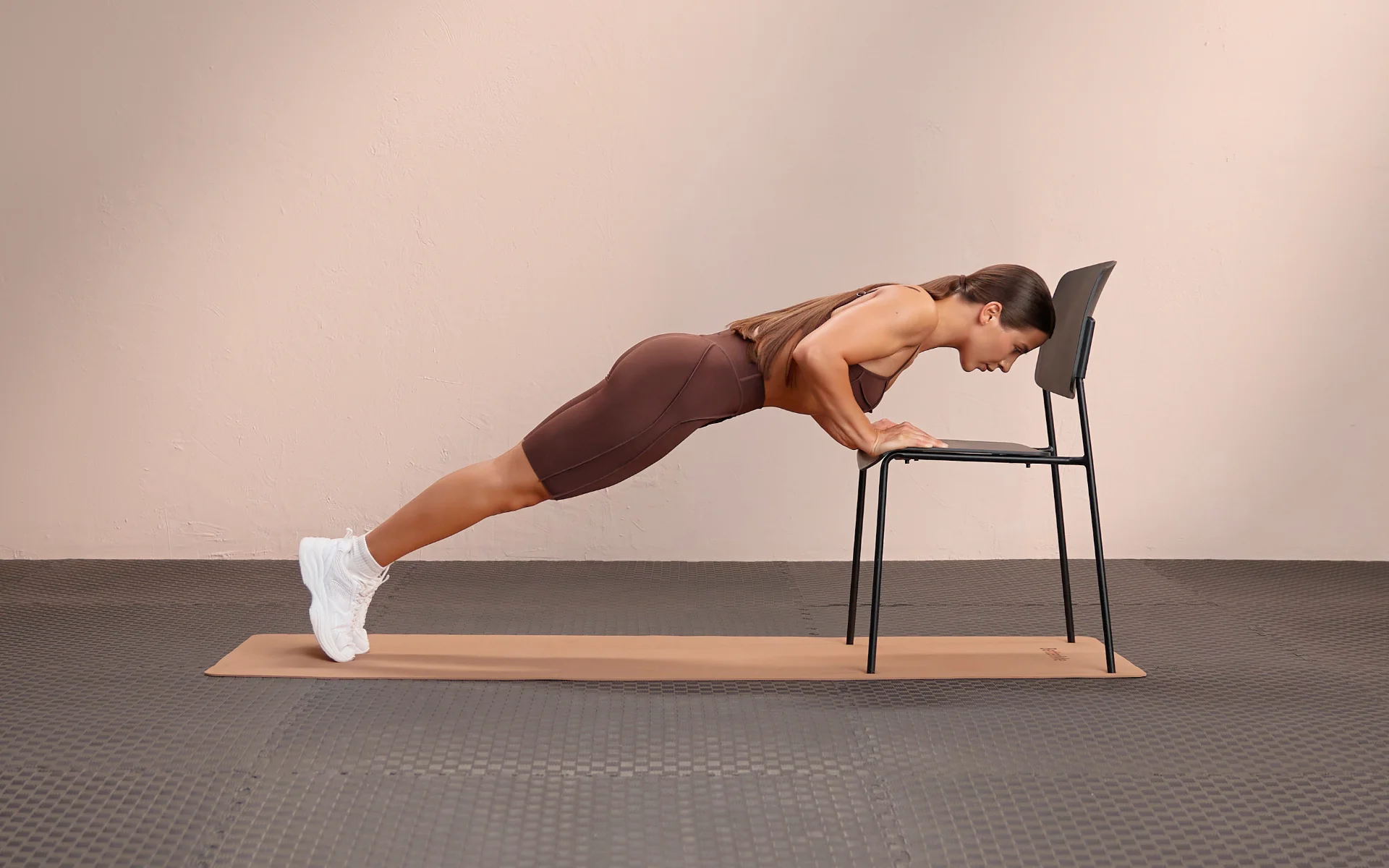
 Reviewed by