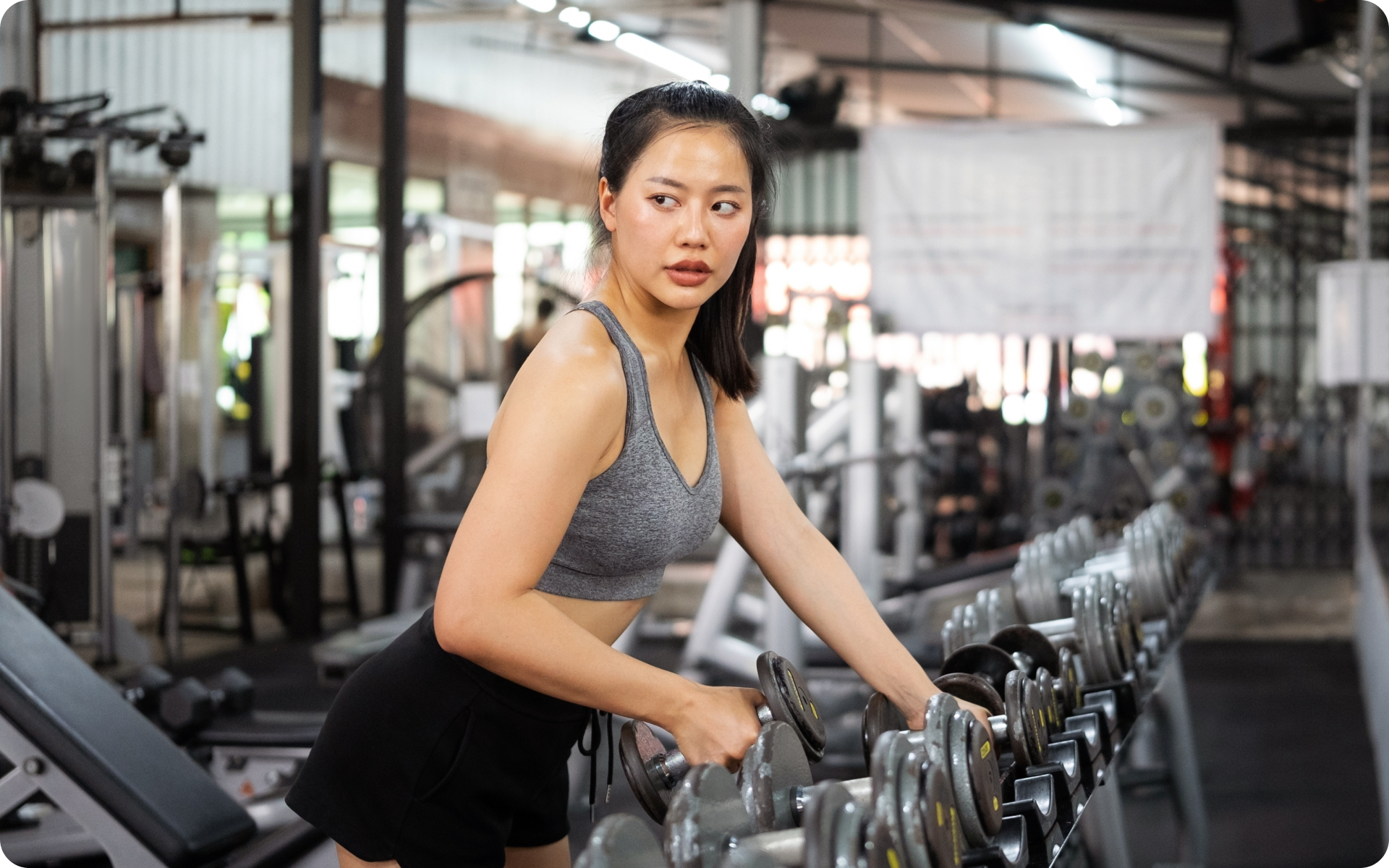
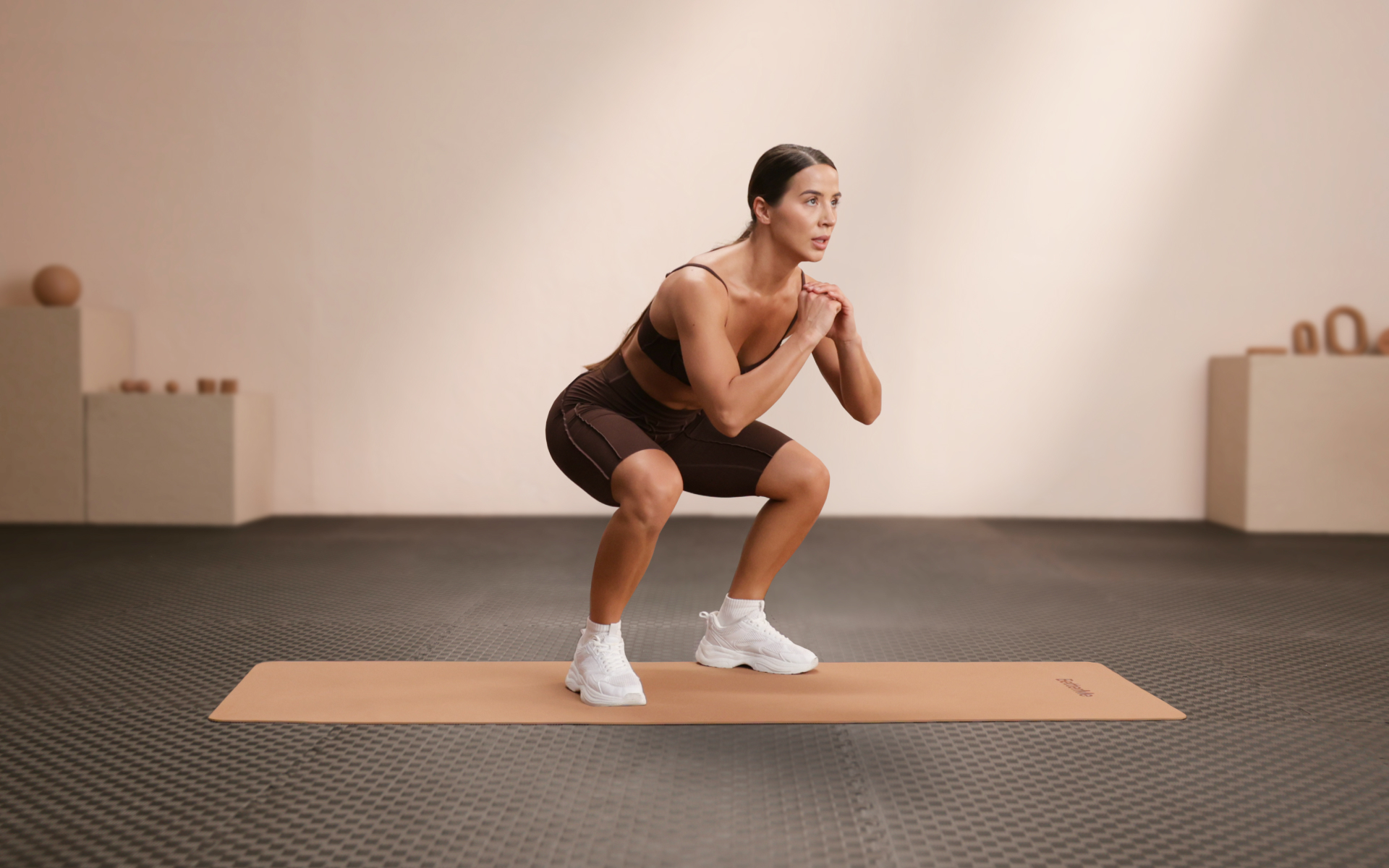
The most useful leg strengthening exercises cover three patterns: a squat, a hip hinge, and a single-leg move. Many adults can start with 3 to 6 moves on 2 non-consecutive days a week, which matches the general advice to work all major muscle groups at least twice weekly 1. This guide suits beginners, gym regulars, and older adults, and it shows how to pick a starting level, follow a two-day plan, and add load over time.
If you have a joint condition, a recent injury, or ongoing knee or hip discomfort, check with a doctor or physical therapist before starting a new strength routine.
If you have joint, muscle, or spine-related concerns, please consult your physician before starting this workout.
Key takeaways
A balanced leg routine trains squatting, hinging, and single-leg control twice a week and adds load only when form holds.
- Leg routines are built on three patterns: knee-dominant (squatting), hip-dominant (hinging), and unilateral (one-leg).
- Front squats place greater emphasis on the quadriceps because of the upright torso position 2.
- Romanian deadlifts place the hamstrings and glutes under high tension, particularly during the lowering phase 3.
- The soleus is a deeper calf muscle that supports ankle stability and endurance 4.
- Adults are advised to do muscle-strengthening activity at least 2 days a week 1.
- For older adults, programs that combine balance and functional moves with resistance work were linked to fewer falls in a large review 5.
- Leave rest time between demanding leg sessions and adjust the schedule when fatigue affects technique.
What are the 3 most useful exercises for strengthening the legs?
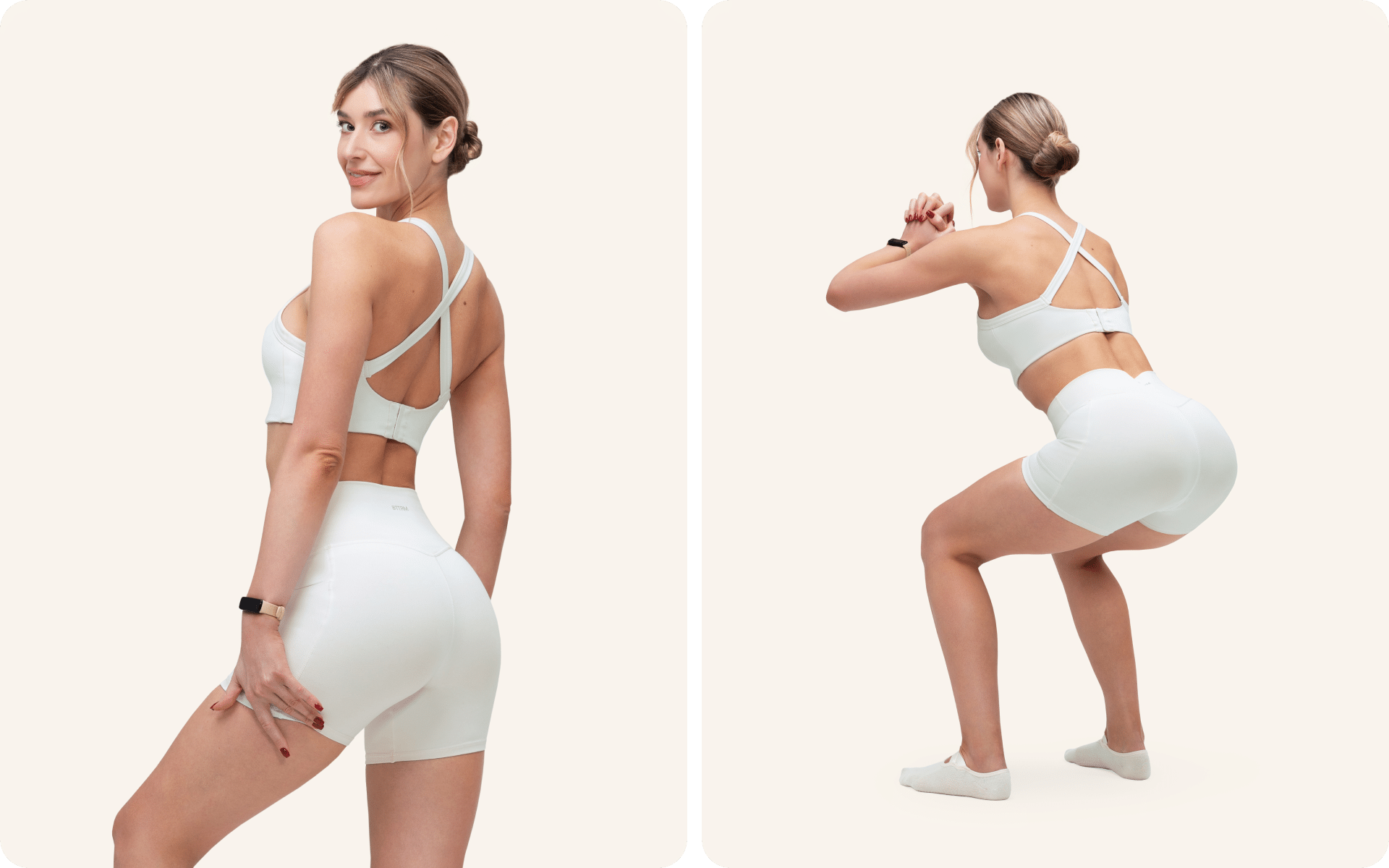
For many people, the three most useful leg workouts are the squat, the Romanian deadlift, and the split squat or step-up, because together they cover all three movement patterns.
- Squat (goblet, back, or front): trains the quads, glutes, and adductors through a deep knee and hip bend. Front squats shift more emphasis to the front thigh muscles 2.
- Romanian deadlift: trains the hamstrings and glutes through a hip hinge with a slight knee bend 3.
- Split squat or step-up: trains one leg at a time, which adds a balance challenge and shows differences between your right leg and left leg.
Which movement patterns should a leg-strengthening routine include?
A leg-strengthening routine usually includes three patterns: knee-dominant squatting, hip-dominant hinging, and unilateral one-leg work. In one review, hip strengthening was linked with better balance in adults with ongoing ankle issues 6.
- Knee-dominant (squatting): you bend at the hips and knees together, and most of the load falls on the quads at the front of the thigh 7.
- Hip-dominant (bending at the hips): you push the hips back with only a small knee bend, which shifts more of the work to the hamstrings and glutes 8.
- Unilateral (one-leg): a split or one-leg stance challenges one leg at a time and adds a balance demand 9.
One 2025 study in adolescent distance runners found that a complex lower-limb training program improved leg strength in that group 10.
Read more: Leg gym workout: machines, free weights, sets, and frequency
What are knee-dominant leg strengthening exercises?
Knee-dominant leg routines are moves where the main action is the knee bending and straightening, so they mostly strengthen your quads at the front of the thigh.
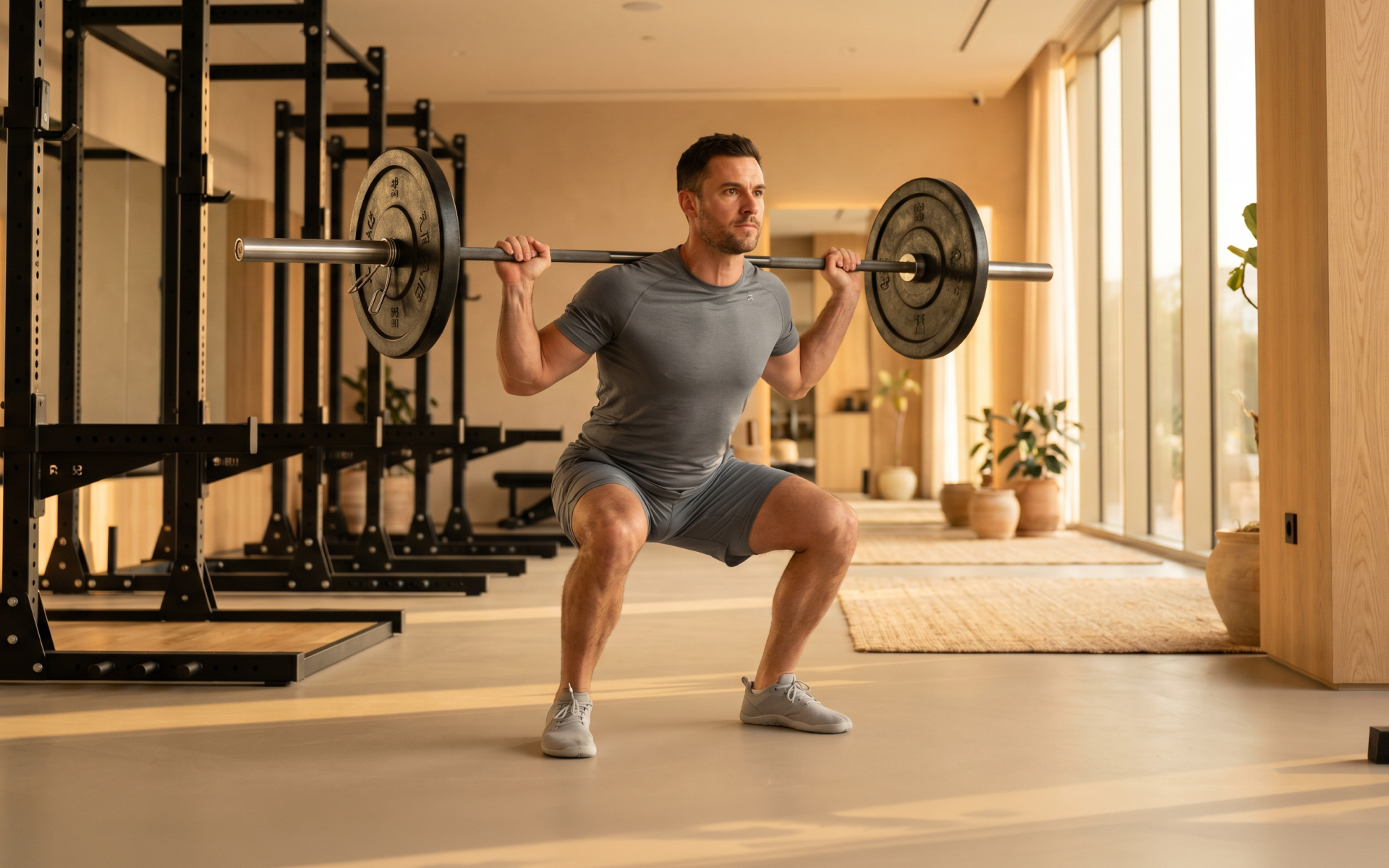
- Back squats and front squats: a common choice for multi-joint lower-body training. Front squats place more emphasis on the front thigh muscles due to the upright torso 2.
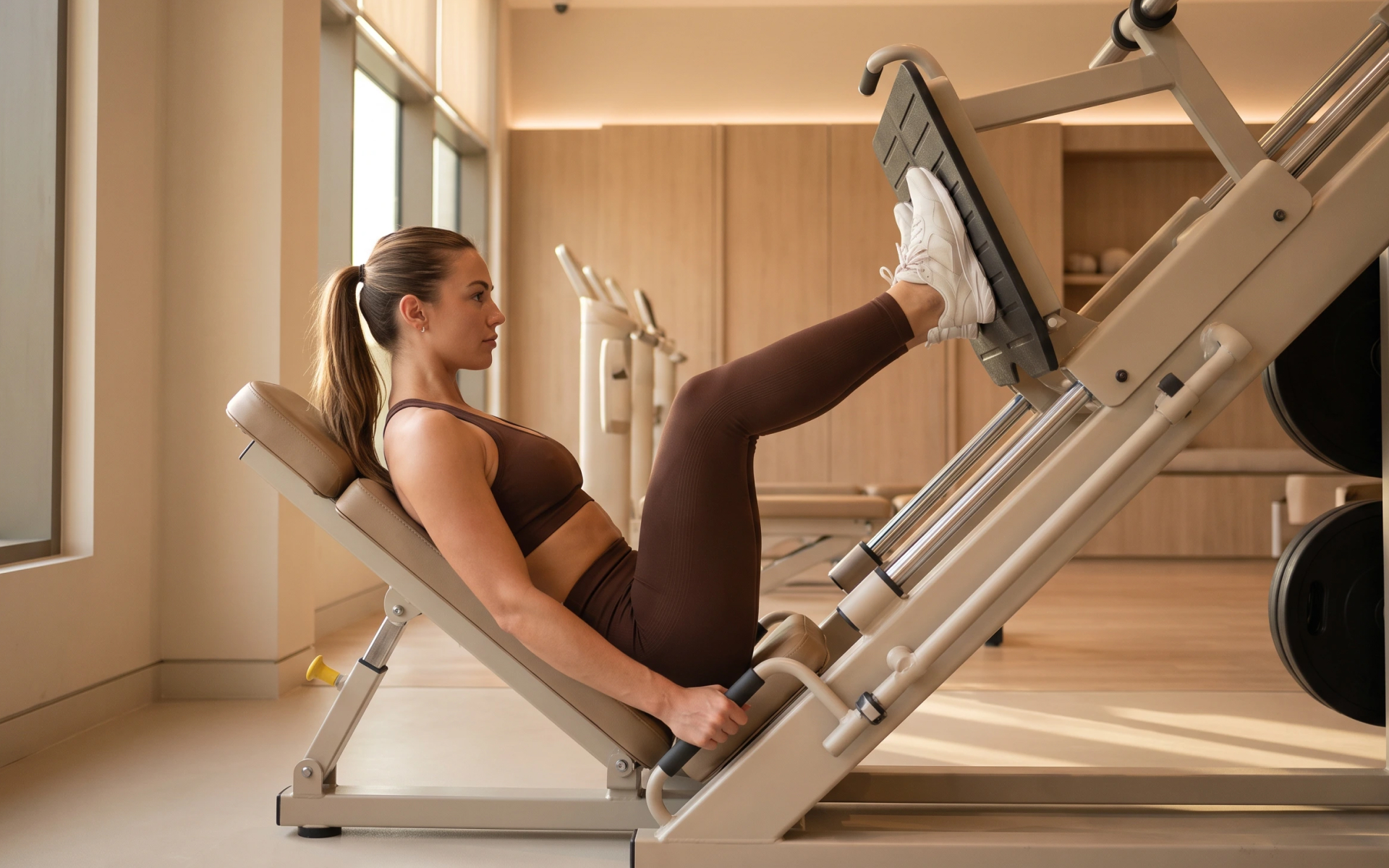
- Leg presses: a seated machine move that extends the hips and knees.
- Step-ups and goblet squats: functional options that train one-leg control and an upright squat position 11.
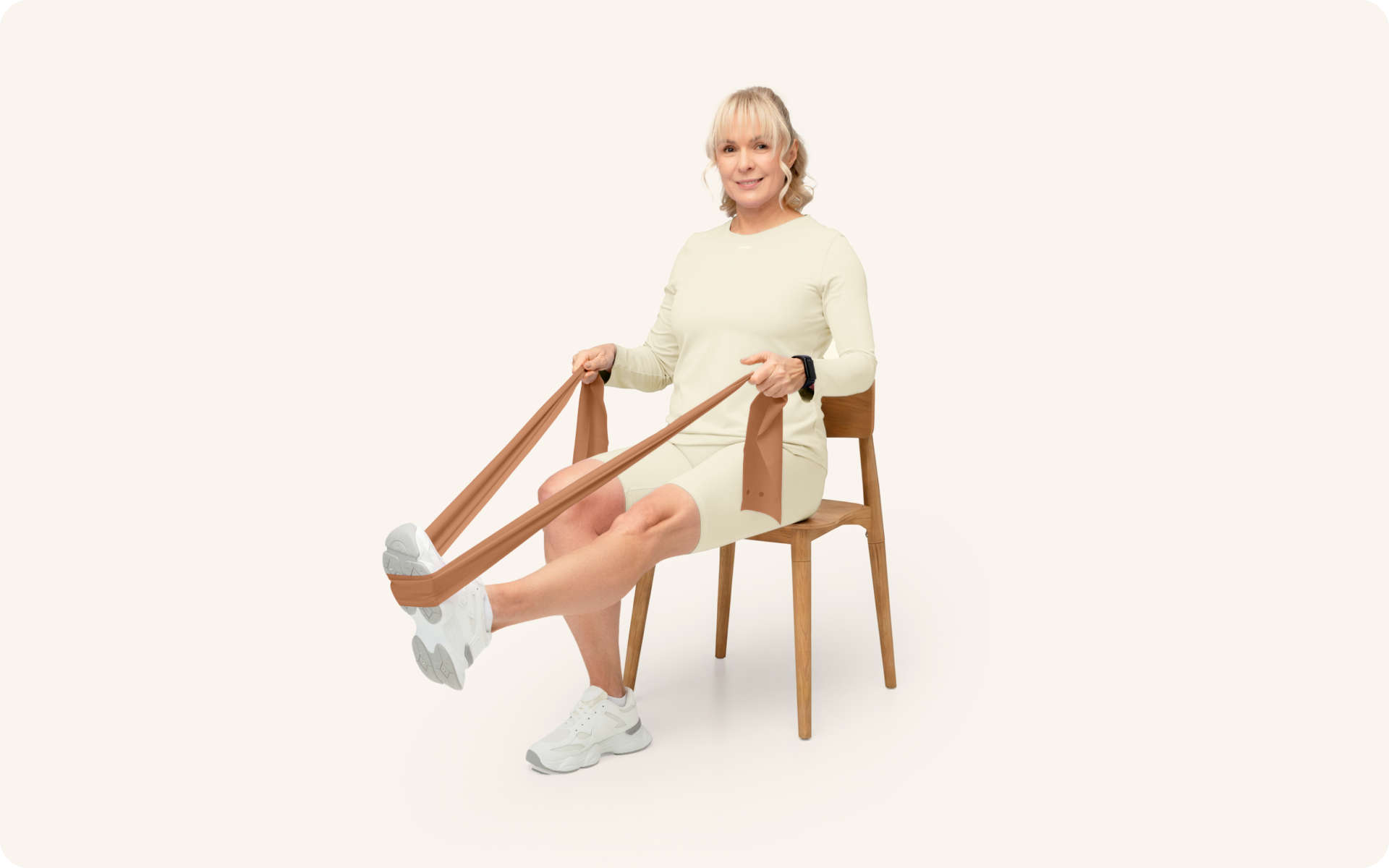
- Knee extensions: a machine or band move that isolates the quad muscle.
Which hip-dominant exercises strengthen the glutes and hamstrings?
Hip-dominant moves such as Romanian deadlifts (RDLs), hip thrusts, good mornings, and kettlebell swings strengthen the glute muscles and hamstrings, because they rely on bending at the hips with a mostly fixed knee.
- RDLs: hinge at the hips with a slight knee bend to place the hamstrings and glute muscles under high tension, particularly during the lowering phase 3. Newer lifters can start with a dumbbell or kettlebell and a short range.
- Barbell hip thrusts: load hip extension with the upper back supported on a bench. Squeeze the buttock muscles at the top, choose a manageable load, and stop if the move causes discomfort.
- Good mornings: performed with a bar across the upper back, this hinge can strengthen the posterior chain while training hip mobility 12.
- Kettlebell swings: a faster hip hinge that can help develop lower-body power and endurance 13.
Workouts, weight management tools, and recipe ideas come together in the BetterMe: Health Coaching app, giving you practical support for building a more consistent wellness routine.
Which single-leg exercises help build balanced strength?
Bulgarian split squats, walking lunges, step-ups, and one-leg RDLs are useful one-leg moves, because each one makes one leg work on its own while you control your balance.
- Bulgarian split squats: rest the rear foot on a bench while the front leg carries most of your body weight. This challenges the front thigh muscles and glute muscles and asks the hip and ankle stabilizers to hold the position 14.
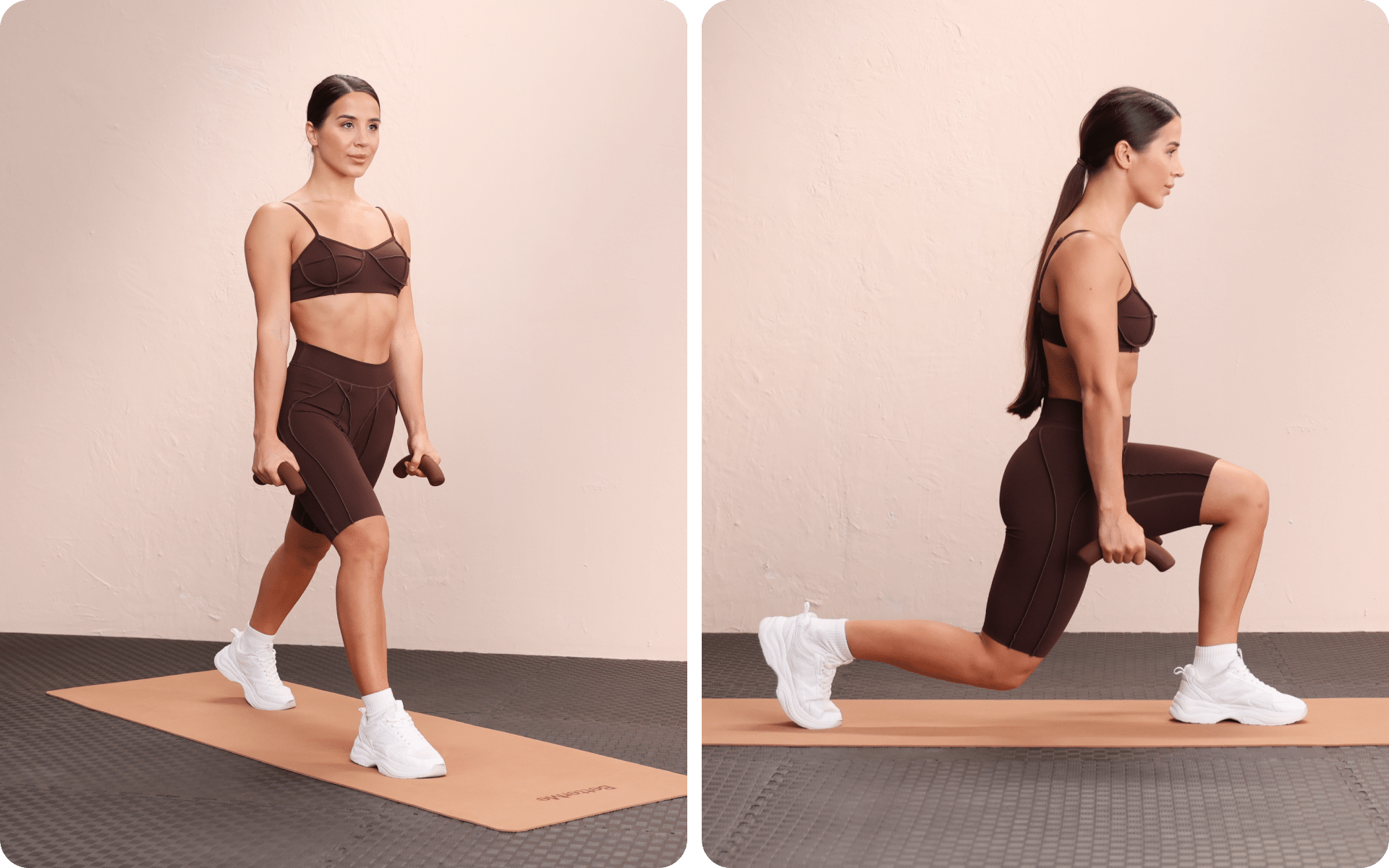
- Walking lunges: a dynamic pattern that moves your weight from one foot to the other with every step.
- Lateral lunges: step out to the side and sit back into one hip to train the inner thigh and glute muscles in a different direction.
- Reverse lunges: step one leg behind you and lower the back knee.
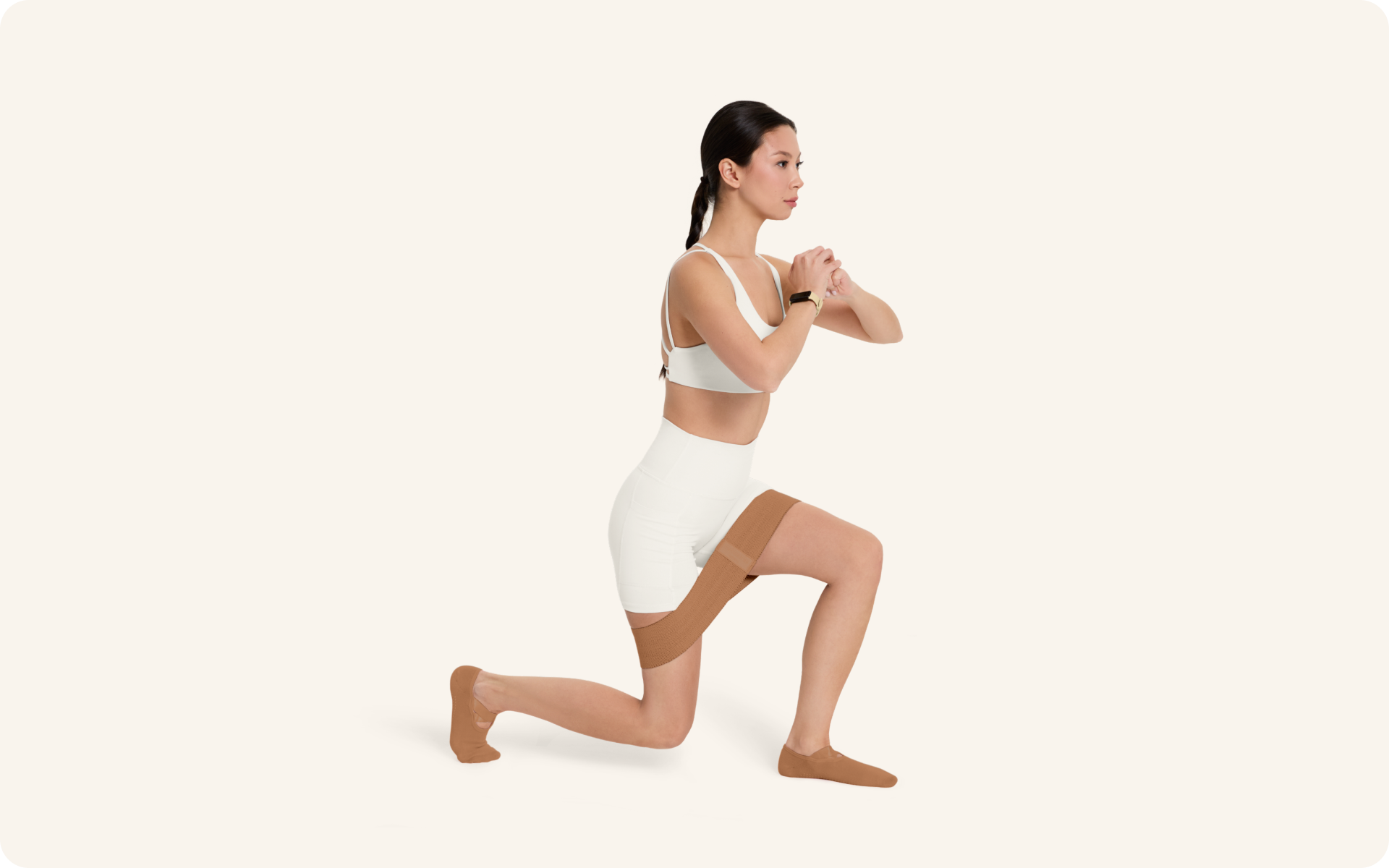
To scale one-leg moves, hold a wall or rail, shorten the range, or start with split squats before walking lunges.
How can you strengthen your calves and lower legs?
You can train your calves and lower legs with standing calf raises, seated calf raises, and ankle pumps, which train the calf muscles, shins, and small muscles in the feet.
Standing calf raises
Standing heel raises train the larger calf muscle used in walking, climbing stairs, and jumping. Newer lifters can do them on flat ground and hold a wall before moving to a step.
- Stand with the balls of your feet on the edge of a stable step and let your heels hang off.
- Slowly lower your heels until you feel a stretch in your calves.
- Push through your toes to lift your heels as high as you can, pause, and lower again.
Seated calf raises
Seated heel raises focus on the soleus, a deeper calf muscle that supports foot and lower-leg stability and endurance 4.
- Sit with your knees at 90 degrees and the balls of your feet on a raised surface.
- Rest a weight across your thighs if you like.
- Lower your heels slowly, then press through your toes to lift without bouncing.
Pilates ankle pumps
Ankle pumps are a low-impact drill that works the calves and shins while training ankle control.
- Lie on your back with your knees bent and your feet lifted into a tabletop position.
- Flex your feet to pull your toes toward your shins, then point them away.
- Repeat slowly for 15 to 20 repetitions, keeping the ankles aligned.
Read more: Knee-friendly leg exercises for home and gym workouts
What are some beginner-friendly leg strengthening exercises to do at home?
Beginner-friendly leg routines to do at home include chair squats, glute bridges, wall sits, step-ups on a low stair, and standing leg raises, and none of them need equipment.
- Chair squats: bend your knees and sit back until you lightly touch a chair, then stand up.
- Glute bridges: lie on your back and lift the hips to train hip extension without arching the lower back.
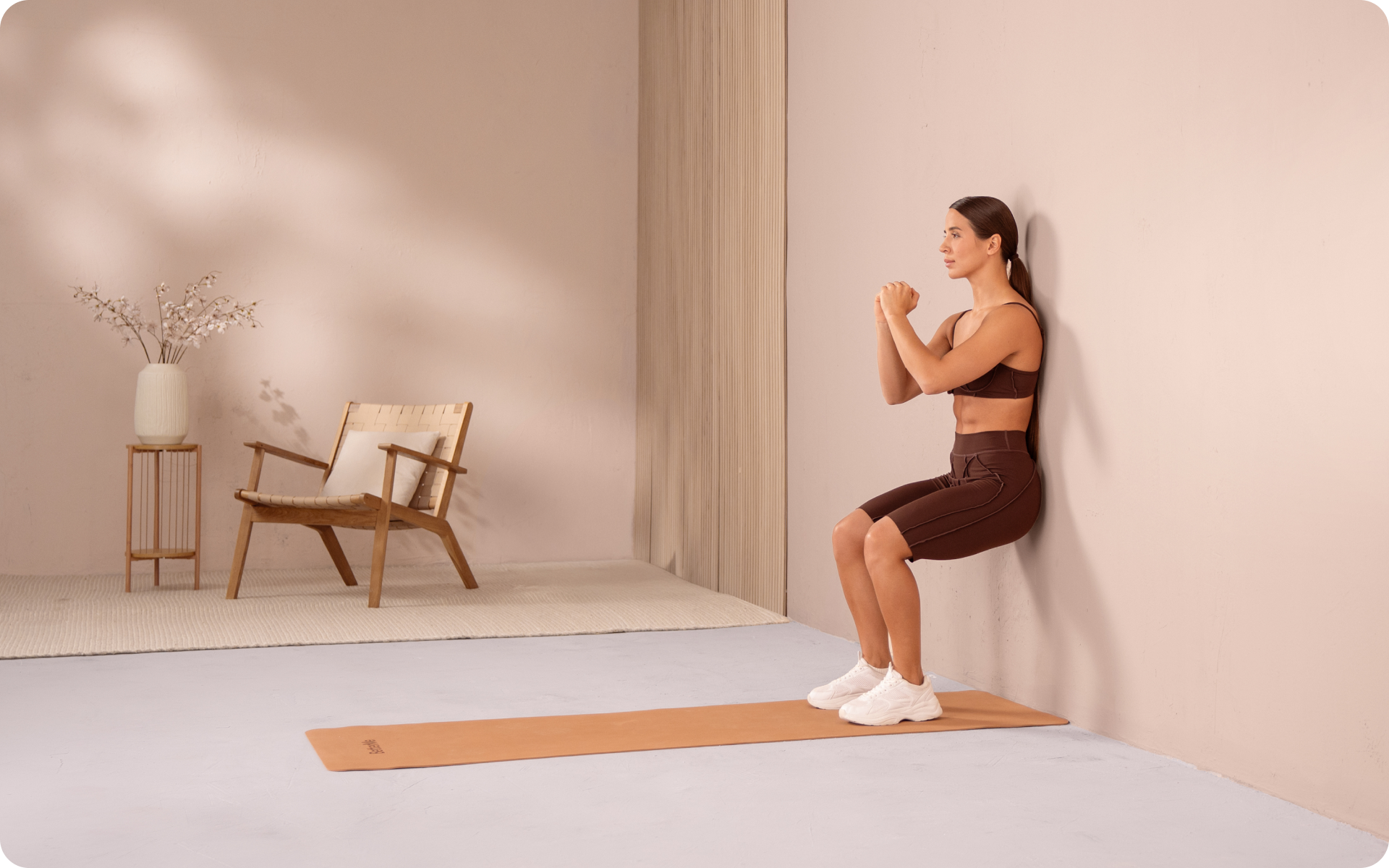
- Wall sits: hold a partial squat with your back against a wall for 15 to 30 seconds.
- Step-ups: use the bottom stair and hold the rail if needed.
- Standing side leg raises: hold a chair, lift your right leg out to the side, lower it, and repeat on the left.
How can older adults strengthen their legs and improve balance?
Older adults can train their legs and improve balance by combining muscle-strengthening work on at least 2 days a week with regular balance practice, as public health guidelines advise for adults 65 and older 15.
One large review of 108 trials in people aged 60 and over living in the community found that exercise reduced the rate of falls by 23%. Programs that mainly used balance and functional moves reduced the rate of falls by 24%, and programs that combined several types, usually balance and functional moves plus resistance work, probably reduced it by 34% 5.
- Start with sit-to-stand from a chair, supported heel raises, and step-ups on a low stair.
- Add balance drills such as standing on one leg next to a counter or heel-to-toe walking.
- Keep a stable support within reach and progress slowly.
How do you choose the right exercise variation for your level?
Choose the variation you can do for all the planned reps with controlled technique: newer lifters use bodyweight, intermediate lifters add dumbbells or kettlebells, and advanced lifters use barbells and deficits.
Beginner level: master the bodyweight foundation
At the beginner level, the goal is to learn the patterns and build tolerance with bodyweight moves.
- Knee-dominant: bodyweight squats or box squats to a bench.
- Hip-dominant: glute bridges on a mat.
- Unilateral: assisted reverse lunges, holding a wall or sturdy pole.
Intermediate level: add loads and stability challenges
At the intermediate level, add external load once you can complete your target reps with controlled technique.
- Knee-dominant: goblet squats (holding a dumbbell at your chest) or leg presses.
- Hip-dominant: kettlebell RDLs or dumbbell hip thrusts.
- Unilateral: bodyweight Bulgarian split squats or weighted walking lunges.
Advanced level: heavier loads and power
At the advanced level, use barbell lifts and explosive hinges, with load chosen so technique stays the same on every rep.
- Knee-dominant: barbell back squats, front squats, or deficit squats.
- Hip-dominant: barbell RDLs or explosive kettlebell swings.
- Unilateral: front-foot-elevated split squats or one-leg RDLs.
Keep your range of motion and back position as you add weight. If your knees cave inward or your lower back rounds, drop back one variation.
How often should you do leg strengthening exercises?
Many adults can do leg routines 2 or 3 times a week on non-consecutive days, which meets public health advice of muscle-strengthening activity on at least 2 days a week 1.
Leave about 48 hours between hard leg sessions so you can repeat your sets with good form.
What does a balanced two-day leg-strengthening plan look like?
A balanced two-day plan uses Day 1 for heavier squats and hip bends and Day 2 for hip thrusts and one-leg work, with 3 to 4 working sets per move and about 1 to 2 minutes of rest between sets.
Day 1: strength and power focus
This leg workout day builds strength with a squat, a hip bend, and a one-leg move.
| Movement | Sample move | Sets and reps |
|---|---|---|
| Knee-dominant | Back squats or goblet squats | 3 to 4 sets of 8 to 10 |
| Hip-dominant | RDLs | 3 to 4 sets of 8 to 10 |
| Unilateral | Step-ups or walking lunges | 3 sets of 10 per leg |
| Lower leg (optional) | Standing heel raises | 3 sets of 12 to 15 |
| Core (optional) | Planks or dead bugs | 3 rounds |
Day 2: stability and muscle-building focus
Day 2 works the glute muscles and one-leg control, with slightly higher reps on most moves.
| Movement | Sample move | Sets and reps |
|---|---|---|
| Hip-dominant | Hip thrusts | 3 to 4 sets of 10 to 12 |
| Knee-dominant | Leg presses or split squats | 3 sets of 10 to 12 |
| Unilateral | Bulgarian split squats | 3 sets of 8 to 10 per leg |
| Posterior chain (optional) | Kettlebell swings or good mornings | 3 sets of 12 to 15 |
| Mobility (optional) | Pilates leg drills or ankle mobility | 10 to 15 minutes |
These sets and reps are a sample, not a prescription. Increase the weight, reps, or difficulty gradually as your strength improves.
When should you add weights or more resistance?
Add a small amount of resistance once you reach the top of your rep range on every set with controlled form and feel rested before the next session.
| Training style | When to increase resistance |
|---|---|
| Heavy compound lifts (squats, RDLs) | You finish the top of your rep range and feel you could do about 3 more good reps. |
| Unilateral patterns (split squats, lunges) | Your weaker side matches your stronger side without the hips shifting. |
| Isolation and Pilates moves | You complete the full range of motion without losing core or pelvic position. |
If your knees collapse inward or your lower back takes over, the load is too heavy.
BetterMe offers a variety of workouts, recipes, challenges, and support tools to help you stay more consistent with your wellness routine. Explore the app to find features that fit your goals, preferences, and schedule.
FAQs
Which exercise is most helpful for strengthening weak legs?
For weak legs, the sit-to-stand from a chair is a practical first move, because it trains the quads and glute muscles in a pattern you use every day. Progress to bodyweight squats and step-ups as it gets easier.
What should older adults eat to help strengthen weak legs?
Older adults who do strength work may benefit from enough protein: an expert group recommended at least 1.0 to 1.2 g of protein per kg of body weight a day for people over 65, and at least 1.2 g/kg for those who exercise 16. If a doctor has advised you to limit protein, check with them or a registered dietitian first.
How do older people regain strength in their legs?
Older people usually regain leg strength through regular resistance work such as sit-to-stands, step-ups, and heel raises on at least 2 days a week, combined with balance practice and enough protein 15 16. Start with 1 or 2 sets and progress slowly.
Are squats alone enough to strengthen the legs?
No, squats alone do not cover every pattern. Add a hip hinge and a one-leg move to build more complete muscle strength.
Can walking build meaningful leg strength?
Walking can improve endurance and basic conditioning, especially for newer lifters, but it usually does not give enough resistance to build much leg strength or muscle size.
How many leg exercises should you do in one session?
Many people do well with 3 to 6 moves per session that target different muscles rather than several similar moves.
Can resistance bands provide enough resistance for stronger legs?
Yes, for many newer lifters bands provide enough resistance, especially when you progress the band tension over time.
Can you combine leg strengthening with running or cycling?
Yes. Schedule hard leg sessions and intense running or cycling workouts on different days, or do the strength work first when they fall on the same day.
The Bottom Line
Train the squat, hip bend, and one-leg patterns twice a week, start at the level that matches your experience, and add load in small steps.
DISCLAIMER:
This article is intended for general informational purposes only and does not serve to address individual circumstances. It is not a substitute for professional advice or help and should not be relied on for making any kind of decision-making. Any action taken as a direct or indirect result of the information in this article is entirely at your own risk and is your sole responsibility.
BetterMe, its content staff, and its medical advisors accept no responsibility for inaccuracies, errors, misstatements, inconsistencies, or omissions and specifically disclaim any liability, loss or risk, personal, professional or otherwise, which may be incurred as a consequence, directly or indirectly, of the use and/or application of any content.
You should always seek the advice of your physician or other qualified health provider with any questions you may have regarding a medical condition or your specific situation. Never disregard professional medical advice or delay seeking it because of BetterMe content. If you suspect or think you may have a medical emergency, call your doctor.
SOURCES:
These are the studies, reviews, and public health guidelines cited above, listed in order of first mention. Each number in the text links to its source.
-
- Adult Activity: An Overview (2023, cdc.gov)
- The effects of squat variations on strength and quadriceps hypertrophy adaptations in recreationally trained females (2024, onlinelibrary.wiley.com)
- The effect of the conventional deadlift and Romanian deadlift on muscle activation and joint angles at submaximal intensity (2024, researchgate.net)
- The forgotten powerhouse: Variations of the soleus muscle and their clinical relevance (2025, sciencedirect.com)
- Exercise for preventing falls in older people living in the community (2019, pubmed.ncbi.nlm.nih.gov)
- Efficacy of hip strengthening on balance and function outcomes in chronic ankle instability: a systematic review and meta-analysis (2026, link.springer.com)
- A Biomechanical Review of the Squat Exercise: Implications for Clinical Practice (2024, ijspt.scholasticahq.com)
- Influence of hip and knee positions on gluteus maximus and hamstrings contributions to hip extension torque production (2021, researchgate.net)
- Single-Leg Balance and Lower Limb Strength: Quantitative Analysis with the Balance Master System (2024, mdpi.com)
- Effect of complex training on lower limb strength and running economy in adolescent distance runners (2025, researchgate.net)
- COMPARISON OF MUSCLE ACTIVITY DURING STEP UPS AND SINGLE LEG SQUATS (n.d., scispace.com)
- The Good Morning, Exercise Technique and Exercise Selection Principles (2023, researchgate.net)
- BIOMECHANICAL EFFECTS ON LOWER-BODY EXTREMITIES DURING A MAXIMUM EFFORT KETTLEBELL SWING PROTOCOL (2022, twu-ir.tdl.org)
- Targeted muscle activation in Bulgarian split squat variations: effects of trunk position and suspension-based execution (2025, researchgate.net)
- Older Adult Activity: An Overview (2023, cdc.gov)
- Evidence-based recommendations for optimal dietary protein intake in older people: a position paper from the PROT-AGE Study Group (2013, pubmed.ncbi.nlm.nih.gov)
 Reviewed by