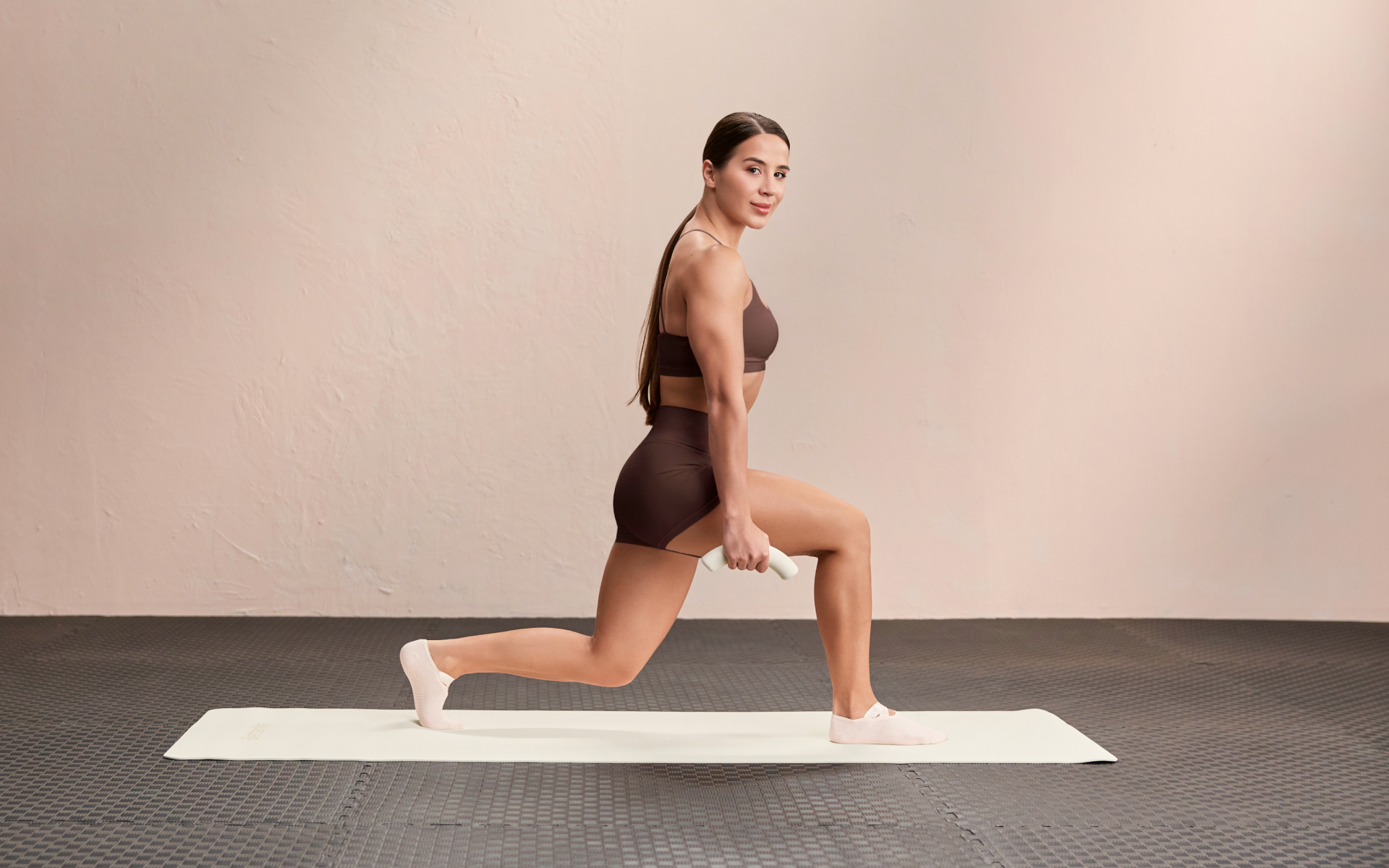
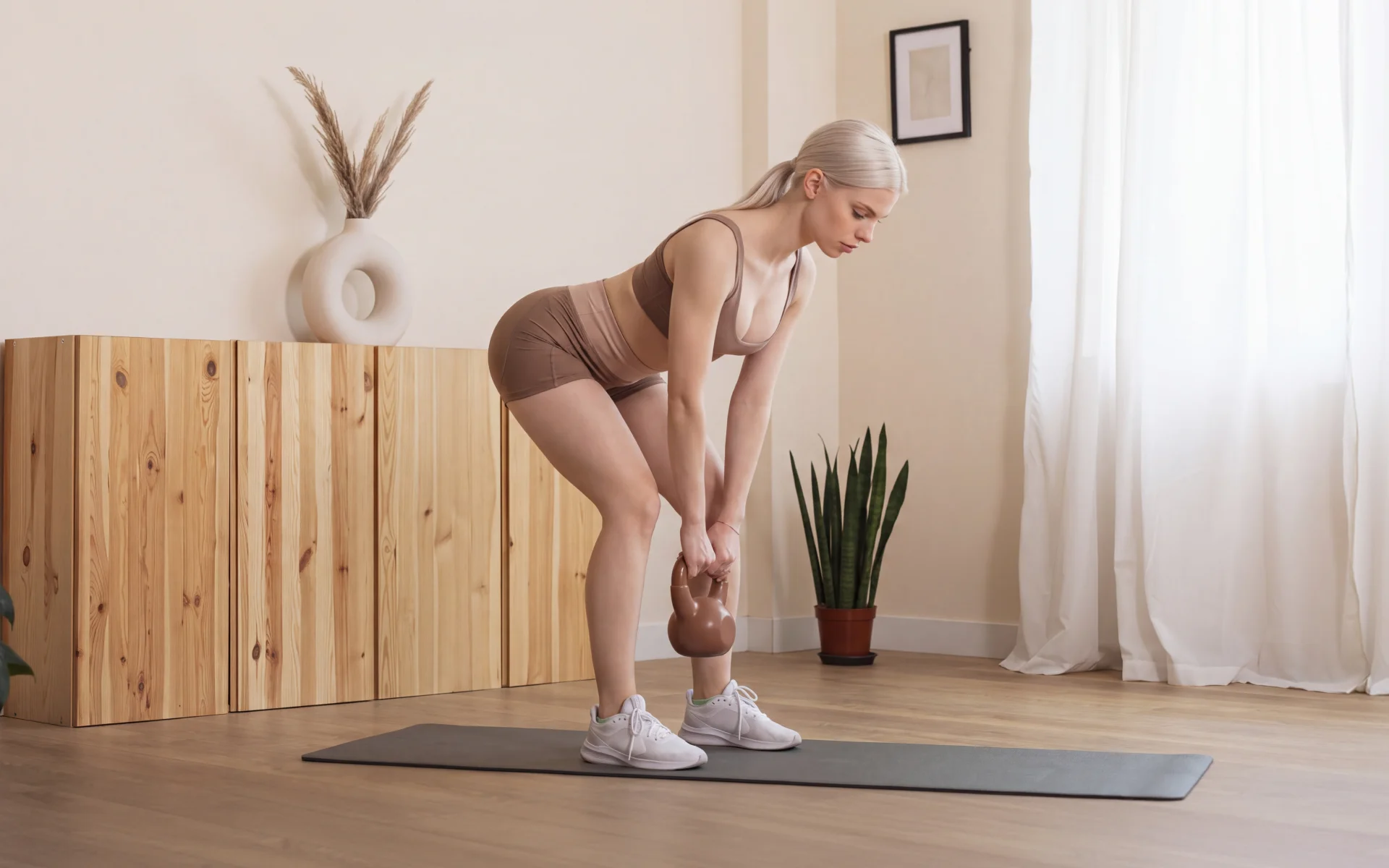
Knee-friendly leg exercises can include glute bridges, seated hamstring curls, calf raises, and supported step-ups, depending on your comfort and abilities. Choose movements and resistance you can control. This guide offers sample options for home and gym training; our low-impact leg workout guide provides more exercise ideas.
If you have joint, muscle, or spine-related concerns, please consult your physician before starting this workout.
The examples below are general exercise ideas, not a rehabilitation plan or a promise of pain-free movement.
Key takeaways
- Progressive resistance training can improve strength in healthy adults; this does not establish that an exercise suits a painful knee (1).
- Glute bridges, seated curls, and supported step-ups are options to adapt to your ability.
- Isometric holds still load the knee and should not be presented as pain treatment.
- Chair-based programs improved chair-stand performance in research involving older adults (2).
- Use the sample workout as a menu, choosing a manageable selection rather than completing every exercise.
- Stop movements that cause knee pain and seek advice for persistent symptoms.
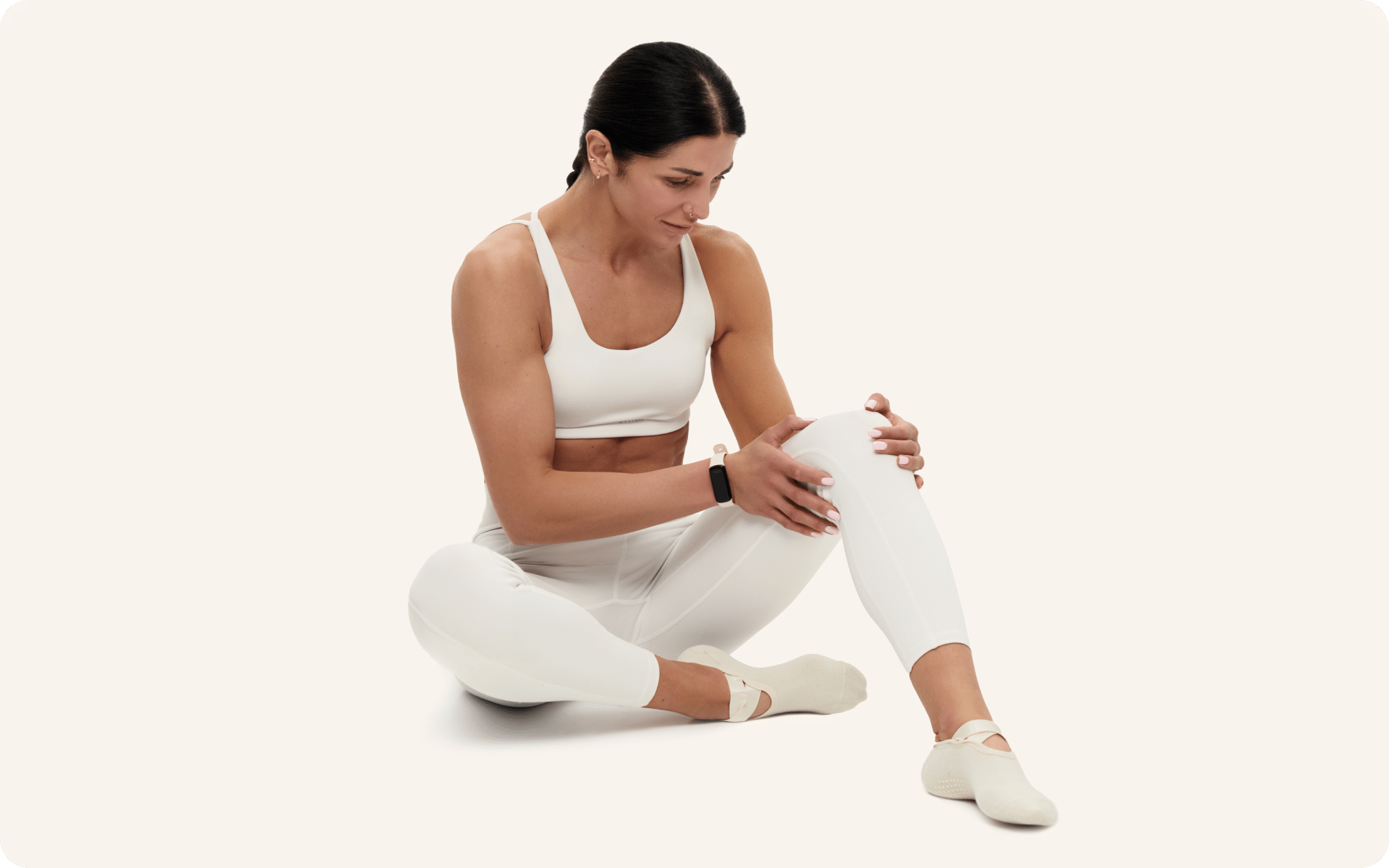
How can you make lower-body workouts more joint-friendly?
Leg strength supports everyday activities such as getting up from a chair and climbing stairs (3). Exercise selection should account for your current ability and any symptoms.
Start with a manageable load and range of motion. Change one variable at a time so you can judge how a movement feels.
Progressive resistance training can improve strength in healthy adults (1). That finding does not establish that a particular exercise is suitable for a painful knee.
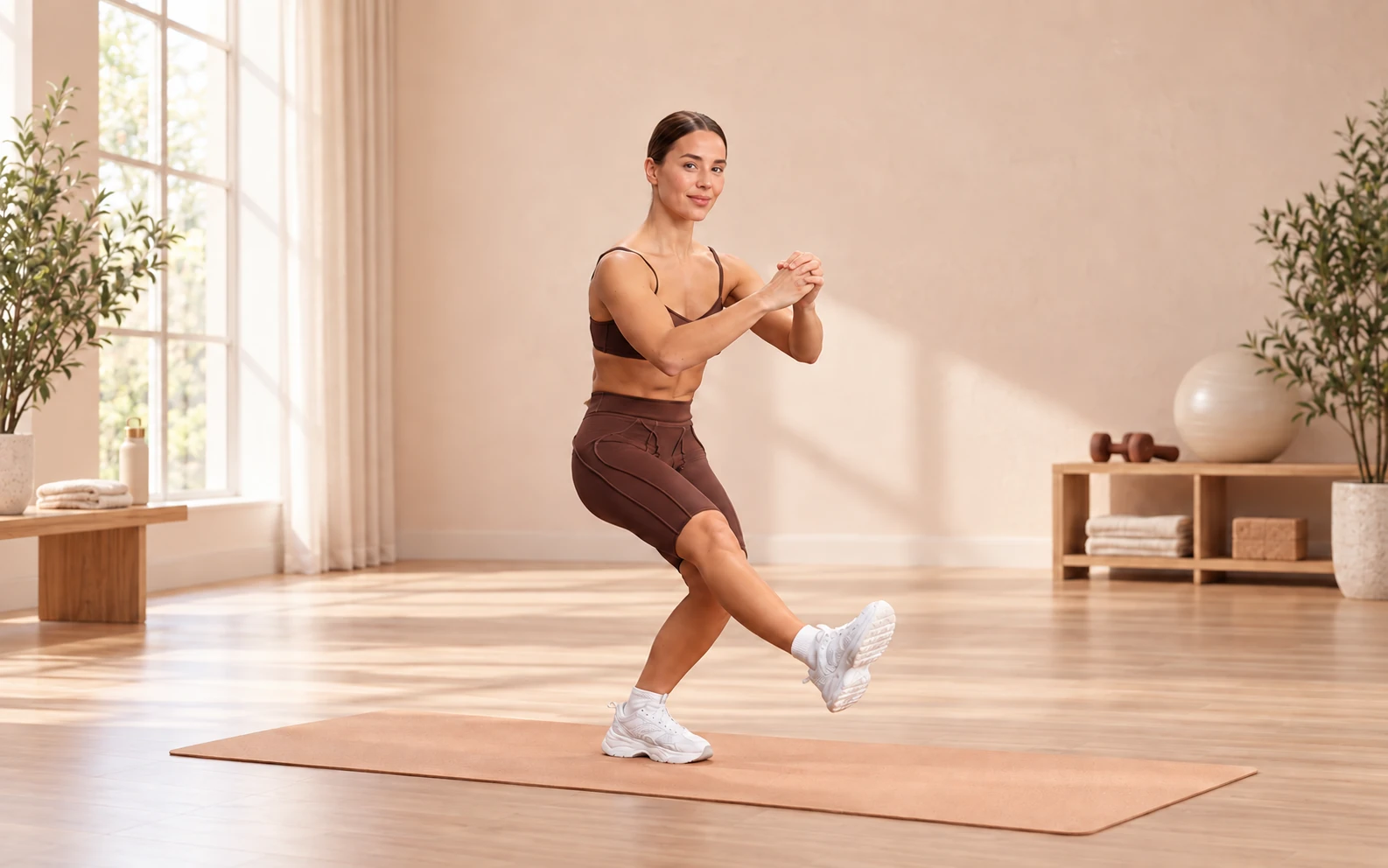
Consider supported single-leg exercises
A single-leg exercise trains one side at a time. A supported step-up is one example; a two-leg exercise such as a glute bridge is another way to organize a session.
Single-leg movements also require balance. Use a stable handrail or support, and choose a low step when learning the movement.
Choose the version you can perform with control. There is no need to replace a comfortable two-leg movement with a more demanding single-leg exercise.
Consider an optional isometric hold
An isometric exercise involves holding a position without visible joint movement. A shallow wall sit is one example, but holding still can still place substantial load on the knee.
If wall sits are comfortable, try a brief hold and stop before your form changes. The sample workout below includes an optional hold; it is not a treatment for knee pain.
Read more: Squat workout plan for controlled lower-body training
Slow down your reps and avoid using momentum
Move at a pace that lets you control the weight and stop the repetition when needed.
The following 3-1-1 tempo is an optional practice example, rather than a research-based prescription for knee symptoms:
- Lower the weight slowly for 3 seconds
- Pause for 1 second at the bottom
- Lift the weight in 1 second
- Start the next rep right away
Use a shorter repetition or a lighter load if the slow tempo becomes difficult to control.
Use support when learning a movement
A handrail, stable bench, or machine can help you set up an exercise. Support does not remove the load on your knees.
For a step-up, place your whole foot on a low platform, use a handrail as needed, and control both the ascent and descent.
If that movement is uncomfortable, choose another exercise rather than forcing the repetition.
Choose a comfortable stance
Stance width and foot angle depend on the exercise, equipment, and your individual movement.
For squats or a leg press, begin with a comfortable position and follow the equipment instructions. Avoid forcing your toes inward or outward to copy a general knee-protection tip.
Ask a qualified trainer to check your setup if you are unsure. Persistent symptoms need individual clinical advice.
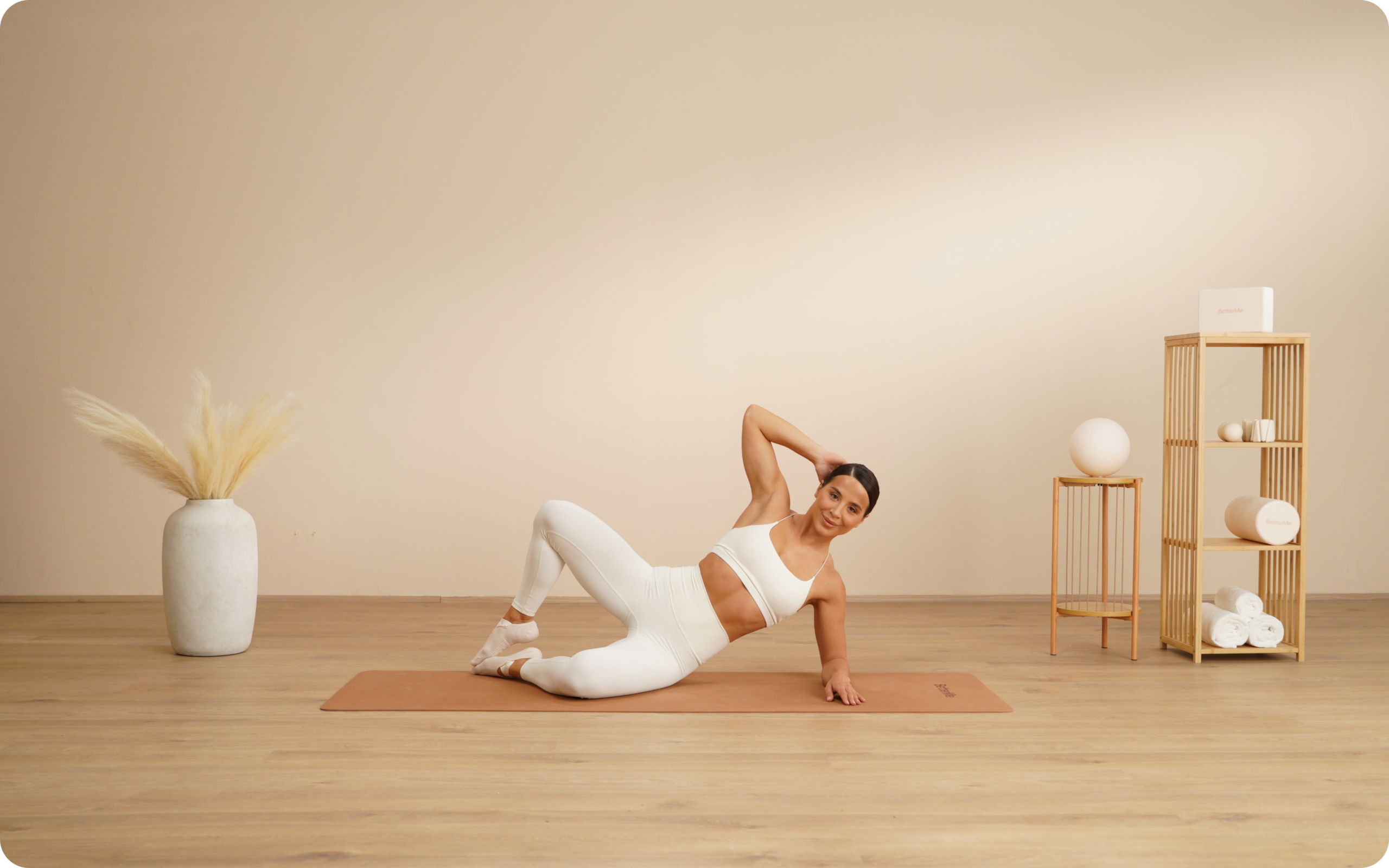
Which leg exercises can you adapt to your comfort?
Glute bridges, seated curls, calf raises, and supported step-ups are options to consider. An exercise name alone cannot tell you how your knee will respond.
Adjust the resistance, range, and support to your abilities. The following list is a menu of movements, not a knee-recovery prescription:
- Dumbbell hip hinges
- Romanian deadlifts
- Leg press with an individually comfortable setup
- Box squats
- Supported standing hip extensions
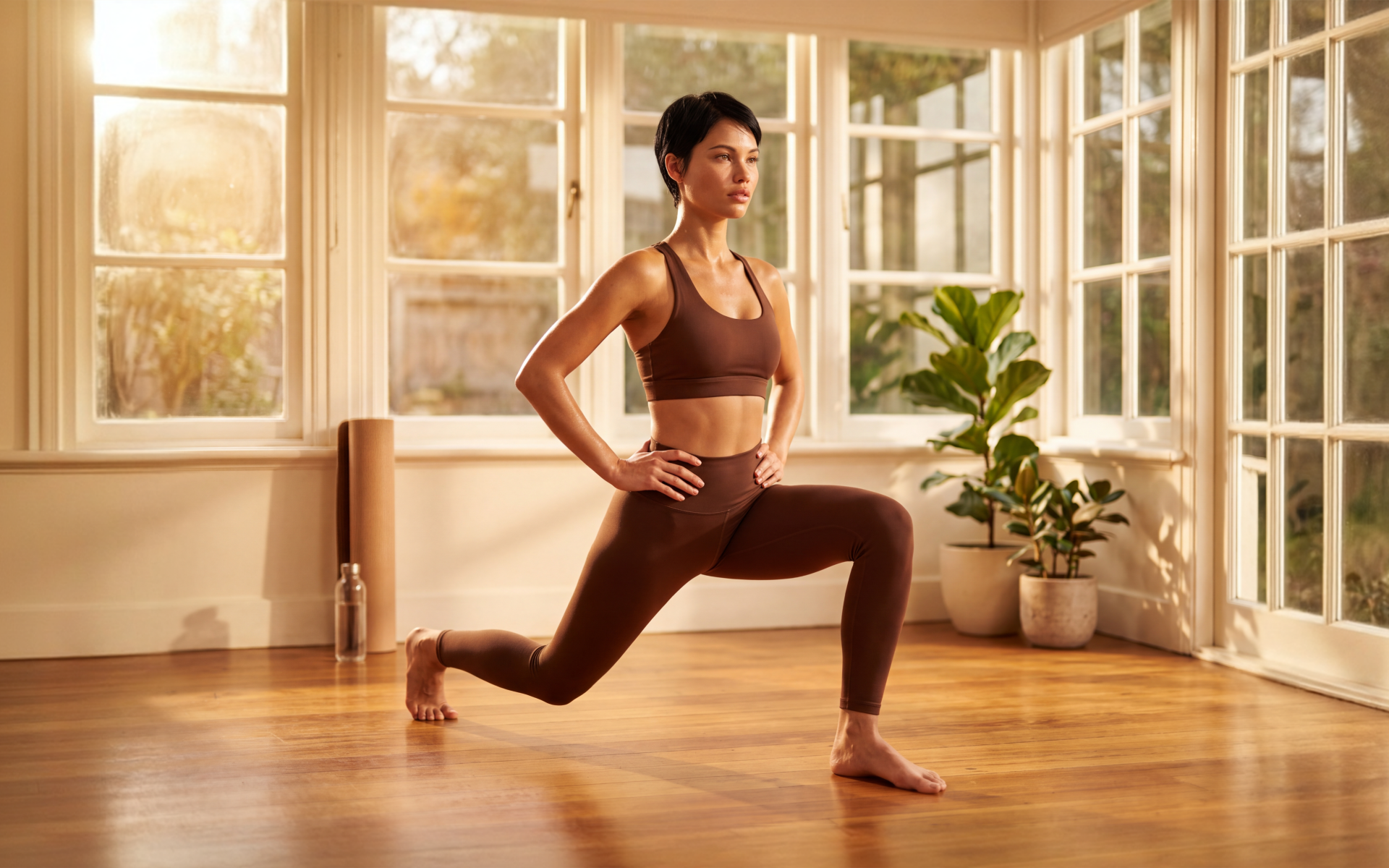
- Supported split squats, if comfortable
- Step-ups
- Glute bridges
- Low-impact cycling or stationary biking
- Wall sits
- Seated hamstring curls
- Calf raises
- Resistance band sidewalks
- Clamshells
- Straight leg raises
For machine-based exercises, check the setup with a gym instructor before adding resistance. Skip any movement that causes knee pain.
The list includes exercises for the thighs, hips, and calves. Choose a few that fit your goals and available equipment.
Workouts, weight management tools, and recipe ideas come together in the BetterMe: Health Coaching app, giving you practical support for building a more consistent wellness routine.
Can knee-friendly leg exercises build strength?
Yes. Progressive resistance training can improve muscle strength, and evidence in healthy adults does not identify one equipment type as consistently superior (1). Comfort and exercise suitability still need to be assessed individually.
Train the major leg muscles
A leg session can include movements for the quadriceps, hamstrings, glutes, and calves.
- Quadriceps exercises: A seated knee extension or a supported sit-to-stand involves the muscles at the front of the thigh. Both load the knee, so adjust or stop if they cause pain.
- Hamstring exercises: Seated and lying leg curls train the back of the thigh. A training study found hamstring growth with both versions, with greater whole-hamstring growth after seated curls; it did not establish that either version treats knee symptoms (4).
Include different movement patterns
Choose exercises that cover the areas you want to train, rather than repeatedly adding variations of the same movement.
Record the exercises, resistance, and how the session felt before deciding whether to progress.
Can you train legs without squats or lunges?
Yes, you can absolutely train your legs without squats or lunges. These exercises are primarily popular as they effectively build lower-body strength, but they’re not the only option.
If you prefer to omit squats and lunges, there are other ways to organize your leg session. Your choice does not need to depend on a claim that these movements are harmful.
Our no-squat leg workout guide provides further alternatives. Select movements you can control and adapt them to your equipment.
Listed below are some effective alternatives:
- Romanian Deadlifts: Hold a barbell or dumbbells and hinge at the hips while maintaining a slight bend in the knees. This exercise emphasizes the posterior chain and minimizes knee movement.
- Clamshells: Lie on your side with knees bent and feet together. Lift the top knee while keeping your pelvis steady, then lower it.
- Seated leg curls: Set up the machine as instructed and bend your knees to move the pad, then return slowly.
- Standing hip extensions: Hold a stable support and move one leg a short distance backward without arching your lower back.
- Step-Ups: Step onto a low platform or stair with one foot, bring the other foot up, then step back down slowly.
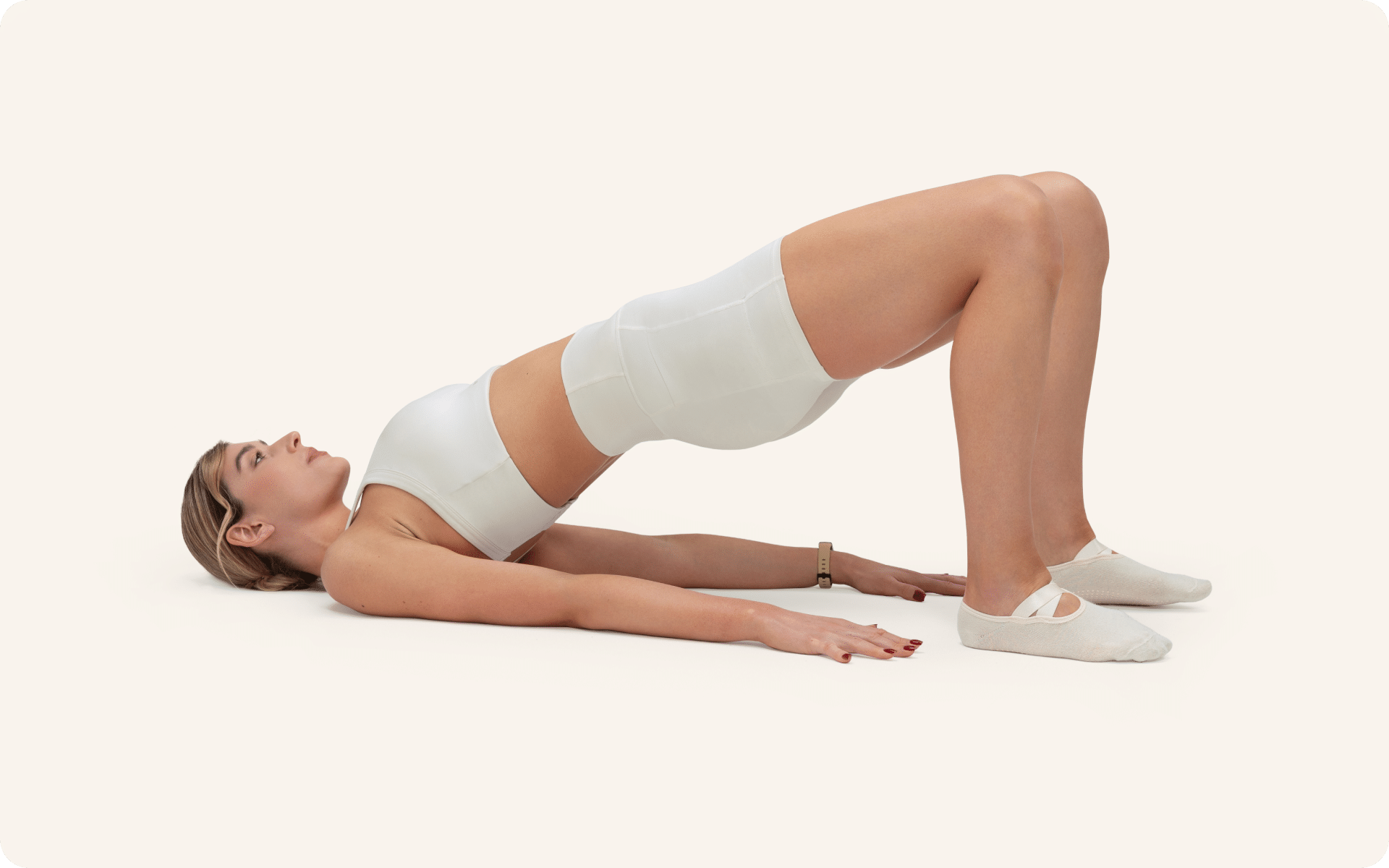
- Glute Bridges: Lie on your back with knees bent and feet flat on the floor. Lift your hips upward, squeeze your glutes, then lower slowly.
- Wall Sits: Stand against a wall and slide down until your knees are slightly bent. Hold the position for 20-30 seconds.
- Seated hamstring curls: Use a leg-curl machine or securely anchored resistance band to bend your knees against resistance. Return slowly.
- Calf Raises: Stand with feet hip-width apart and slowly raise your heels off the ground, then lower them back down.
- Stationary Cycling: Cycle at a comfortable pace with smooth, controlled motion.
These are exercise options rather than a complete session to perform all at once. Choose a manageable selection and leave out any movement that causes symptoms.
Read more: 30-day calf challenge explained: structure, tips, and FAQs
What is a simple knee-friendly leg workout?
This is a sample menu, not a clinical prescription. Choose 3 or 4 comfortable strength exercises and begin with fewer sets if needed; cycling is optional. The listed sets and repetitions are examples to adjust, not a proven dose for knee symptoms.
| Exercises | Reps/duration | Sets |
|---|---|---|
| Glute bridges | 12-15 reps | 2-3 sets |
| Wall sits | Brief comfortable hold, up to 20-30 seconds | 2-3 sets |
| Step-ups | 10-12 reps per leg | 2 sets |
| Straight leg raises | 12-15 reps per leg | 2-3 sets |
| Seated hamstring curls | 12-15 reps | 2 sets |
| Calf raises | 15-20 reps | 2-3 sets |
| Resistance band sidewalks | 10-15 steps on each side | 2 sets |
| Stationary cycling | 10-15 minutes | 1 optional bout |
Start with light resistance. Stop an exercise if it causes knee pain, and seek professional advice for persistent or worsening symptoms.
What equipment works well for knee-friendly leg training?
Choose equipment that allows a comfortable setup and manageable resistance. Options include:
- Leg Press: The leg press offers a wide range of foot placement. This allows a lifter to adjust it for greater comfort.
- Stationary Bike: Adjust the seat so your knees stay slightly bent while pedaling. Start with low resistance and pedal smoothly.
- Recumbent Bike: Sit back against the support pad and pedal at a comfortable pace with controlled movement.
- Elliptical Machine: Keep your feet flat on the pedals and move slowly without locking your knees.
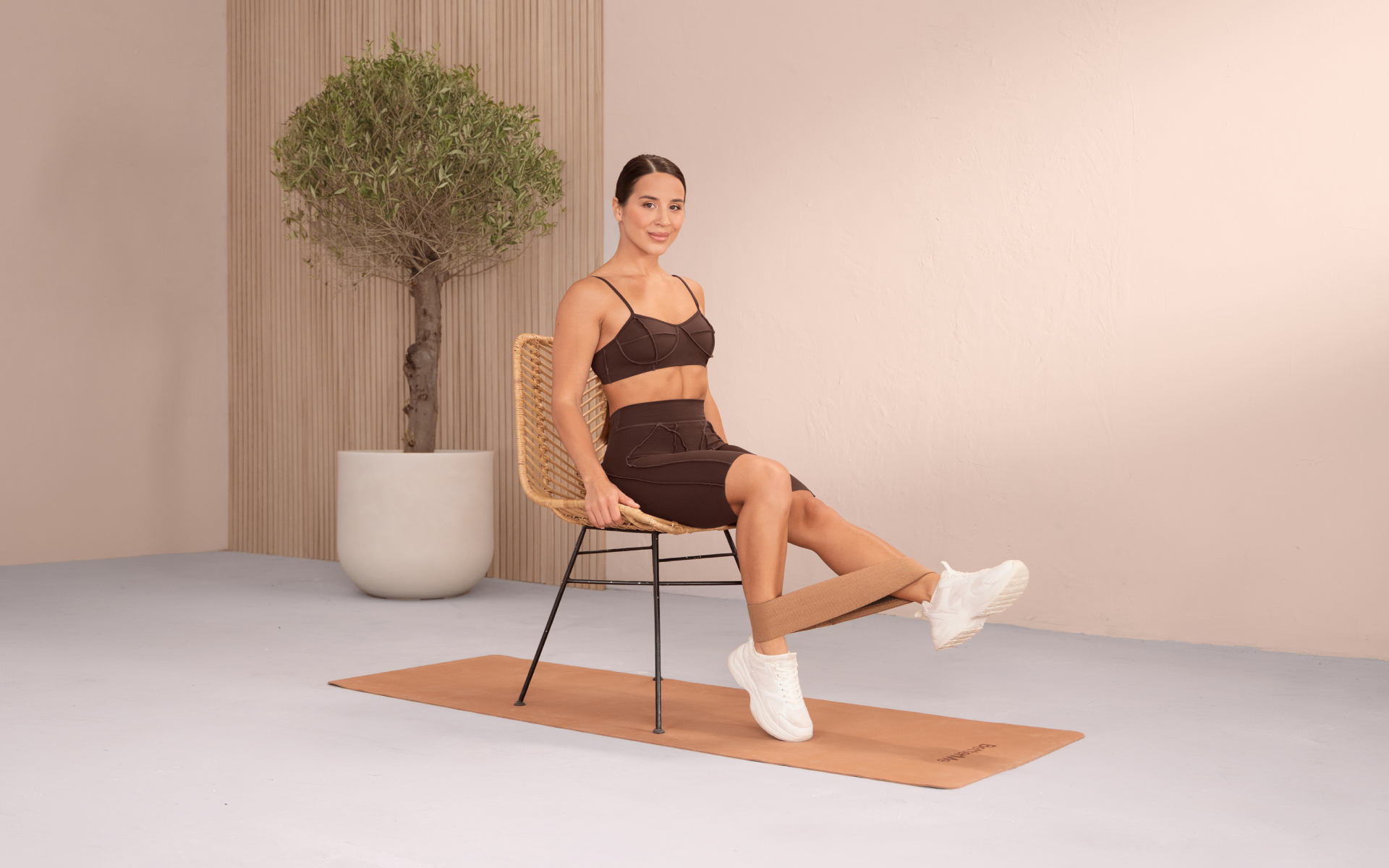
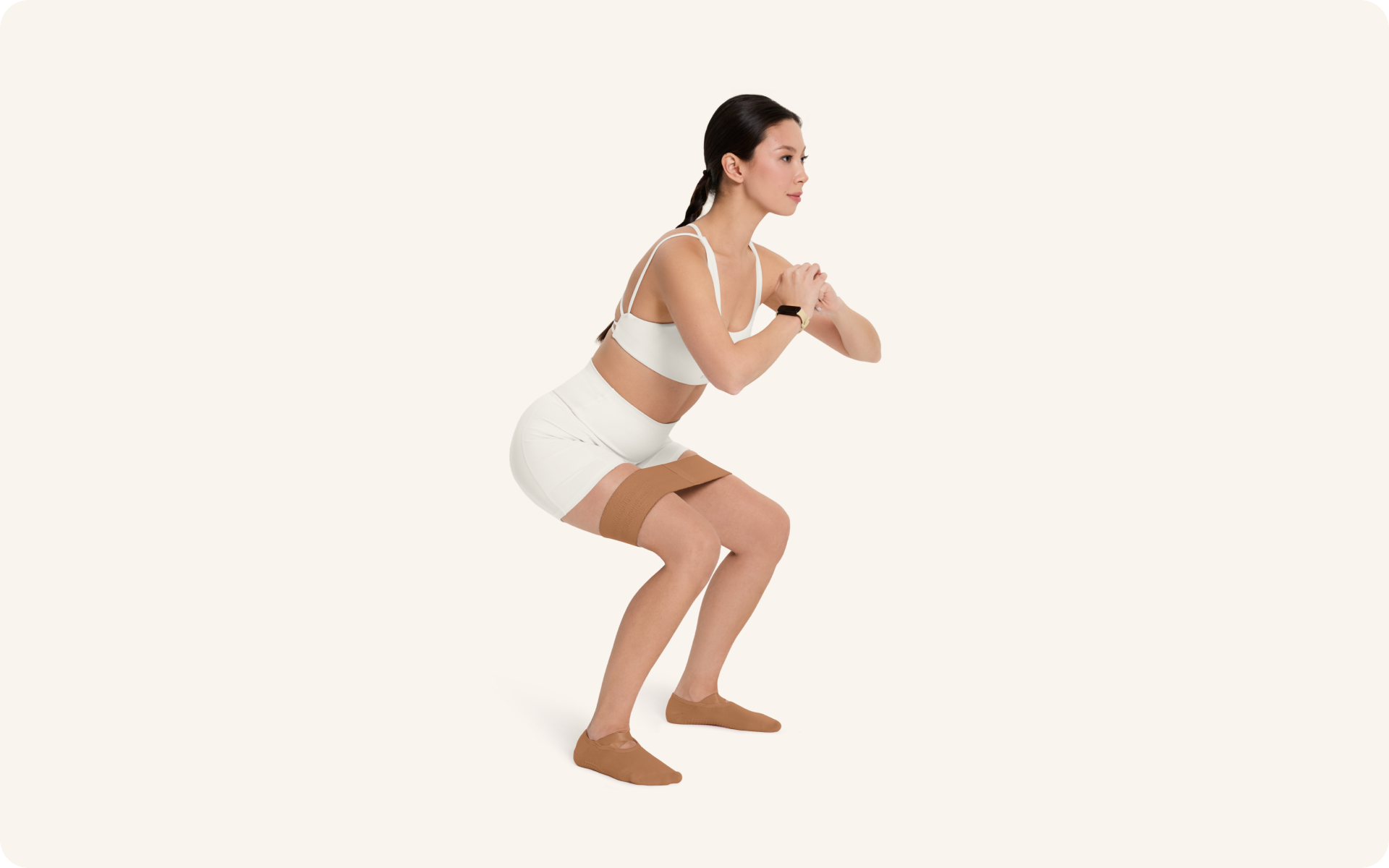
- Resistance Bands: Loop the band around your legs or feet for exercises such as side walks, leg extensions, or glute kickbacks.
- Dumbbells: Use light to moderate dumbbells for knee-friendly leg exercises. These may include step-ups, Romanian deadlifts, or calf raises, all performed slowly and under control.
- Leg Curl Machine: Sit or lie on the machine and slowly curl the weight without jerking.
- Exercise mat: Use a mat for floor movements such as glute bridges or clamshells.
Equipment does not guarantee comfort or prevent injury. For broader planning considerations, see our guide to exercising with knee concerns and weight-management goals.
How often should you do low-impact leg exercises?
Frequency depends on your current training, recovery, and symptoms. Here is an illustrative week with two strength sessions; it is not a rehabilitation schedule. Adjust it with a clinician if you have a knee condition.
| Day | Sample activity | Example duration |
|---|---|---|
| Monday | Selected strength exercises | 20-30 minutes |
| Tuesday | Optional easy walk or cycle | 10-20 minutes |
| Wednesday | Rest from leg training | No session planned |
| Thursday | Selected strength exercises | 20-30 minutes |
| Friday to Sunday | Rest or optional comfortable activity | Adjust to how you feel |
Leave a recovery day between the sample strength sessions. Progress only when the current exercise feels manageable and you can maintain control.
Are chair-based leg exercises effective for beginners?
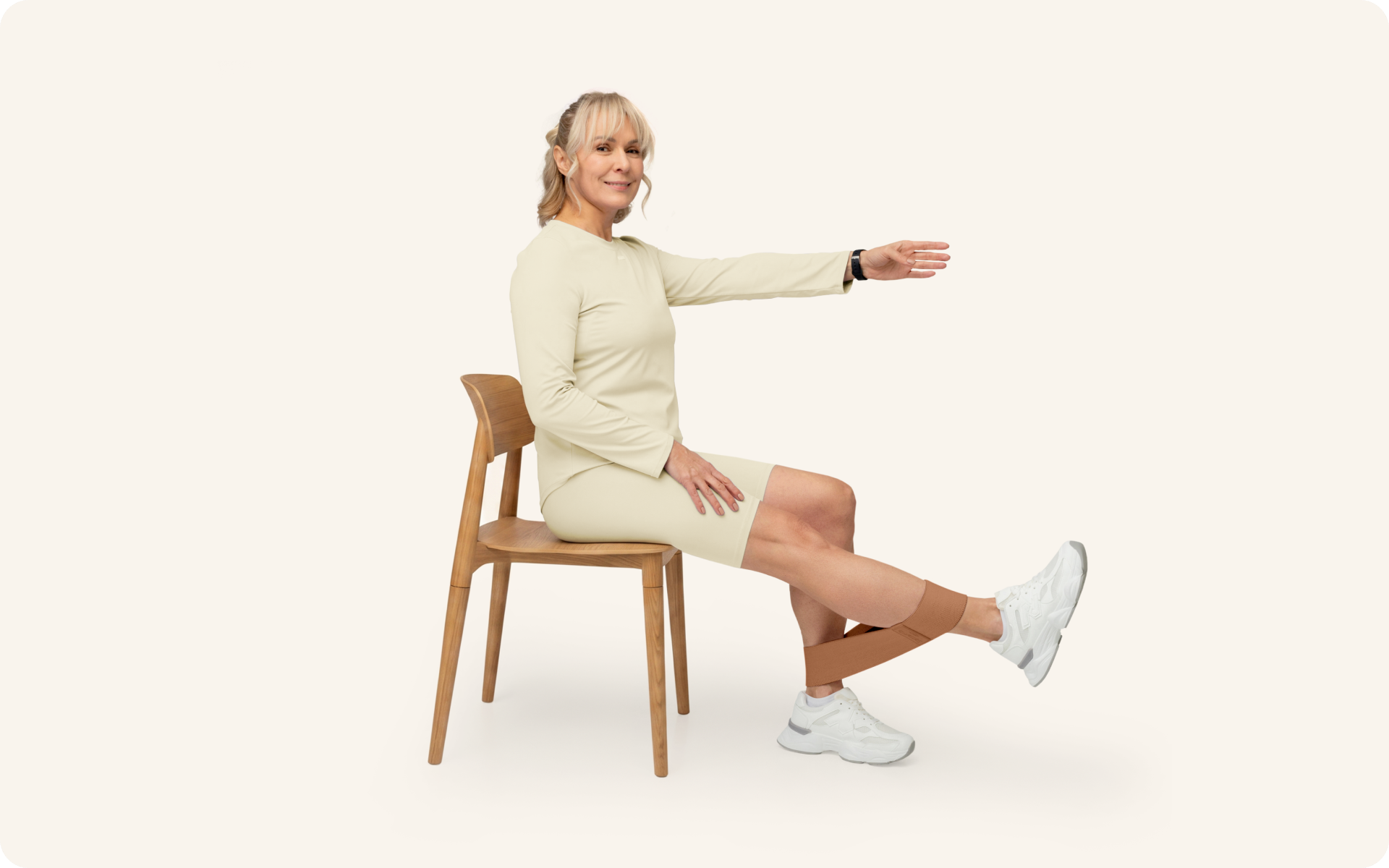
Chair-based exercises can provide a supported starting point for some beginners. Use a stable chair that cannot slide, and choose movements appropriate to your ability.
A systematic review in older adults found improvements in the 30-second chair-stand test, as well as some upper-body measures (2). These results do not establish that every chair exercise improves balance or is suitable for every beginner.
Chair-based exercises are also easy to modify to suit fitness levels. Beginners can start with simple seated movements and gradually increase repetitions or resistance over time. Some common chair exercises include:
- Seated leg extensions
- Chair-assisted squats
- Seated marches
- Heel and toe raises
- Seated knee lifts
- Seated resistance band leg presses
Standing support or seated movement can make setup more manageable. Ask a qualified professional for help if you have difficulty getting into position.
What form mistakes can increase knee discomfort during leg exercises?
A workout described as knee-friendly can still cause discomfort. Watch for a load, range, or pace that exceeds what you can control.
A few common form mistakes to avoid are:
- Knees collapsing inward during movement
- Moving too fast instead of controlled reps
- Using weights that are too heavy
- Locking the knees at the top of an exercise
- Forcing a foot position that feels uncomfortable
- Bouncing or using momentum during reps
- Losing control of your trunk position
- Skipping warm-up before training
- Ignoring knee pain signals during workouts
- Going too deep in the range of motion without control
Slow down or reduce the load when technique changes. Stop for knee pain rather than continuing to meet a repetition target.
BetterMe can help you add more structure to your daily wellness routine with workouts, meal planning tools, and habit-building features. Explore the app and take a practical step toward a routine that feels more manageable for you.

FAQs
Can cycling strengthen the knees?
Cycling involves the leg muscles, but it should not be described as strengthening the knee joint itself. Start with an easy resistance and a comfortable bike setup; stop if pedaling causes knee pain.
Does climbing stairs strengthen the knees?
Stair climbing uses the leg muscles. A biomechanics study in young men measured how stair-walking patterns changed muscle activity and joint loading, but it did not measure long-term strength gains (5). Use a handrail and avoid forcing stairs through pain.
Can a particular food lubricate the knees?
This article does not establish that a particular food lubricates a knee or treats joint symptoms. Choose regular, varied meals and discuss ongoing knee concerns with a healthcare professional rather than relying on a food remedy.
Can you build leg strength without squats?
Yes. A leg routine can use hip hinges, glute bridges, hamstring curls, and calf raises. Choose suitable resistance and progress gradually; none of these movements guarantees pain-free training.
Should you stop exercising if your knees feel uncomfortable?
Mild muscle soreness can be normal, but sharp or persistent knee discomfort shouldn’t be ignored. If it increases during exercise, stop the movement, check your form, or consult a healthcare professional if it continues.
The bottom line
Choose leg exercises you can control and adapt the load, range, and support to your abilities. Use the sample plans as starting examples rather than knee-treatment instructions.
Persistent knee pain calls for individual assessment before progressing your routine.
DISCLAIMER:
This article is intended for general informational purposes only and does not serve to address individual circumstances. It is not a substitute for professional advice or help and should not be relied on for making any kind of decision-making. Any action taken as a direct or indirect result of the information in this article is entirely at your own risk and is your sole responsibility.
BetterMe, its content staff, and its medical advisors accept no responsibility for inaccuracies, errors, misstatements, inconsistencies, or omissions and specifically disclaim any liability, loss or risk, personal, professional or otherwise, which may be incurred as a consequence, directly or indirectly, of the use and/or application of any content.
You should always seek the advice of your physician or other qualified health provider with any questions you may have regarding a medical condition or your specific situation. Never disregard professional medical advice or delay seeking it because of BetterMe content. If you suspect or think you may have a medical emergency, call your doctor.
SOURCES:
- American College of Sports Medicine Position Stand. Resistance Training Prescription for Muscle Function, Hypertrophy, and Physical Performance in Healthy Adults: An Overview of Reviews (2026, pubmed.ncbi.nlm.nih.gov)
- The Effect of Chair-Based Exercise on Physical Function in Older Adults: A Systematic Review and Meta-Analysis (2021, pubmed.ncbi.nlm.nih.gov)
- Building stronger legs (2025, health.harvard.edu)
- Greater Hamstrings Muscle Hypertrophy but Similar Damage Protection after Training at Long versus Short Muscle Lengths (2021, pubmed.ncbi.nlm.nih.gov)
- Biomechanical analysis of stair walking patterns and their implications for knee health in young males (2026, frontiersin.org)
 Reviewed by