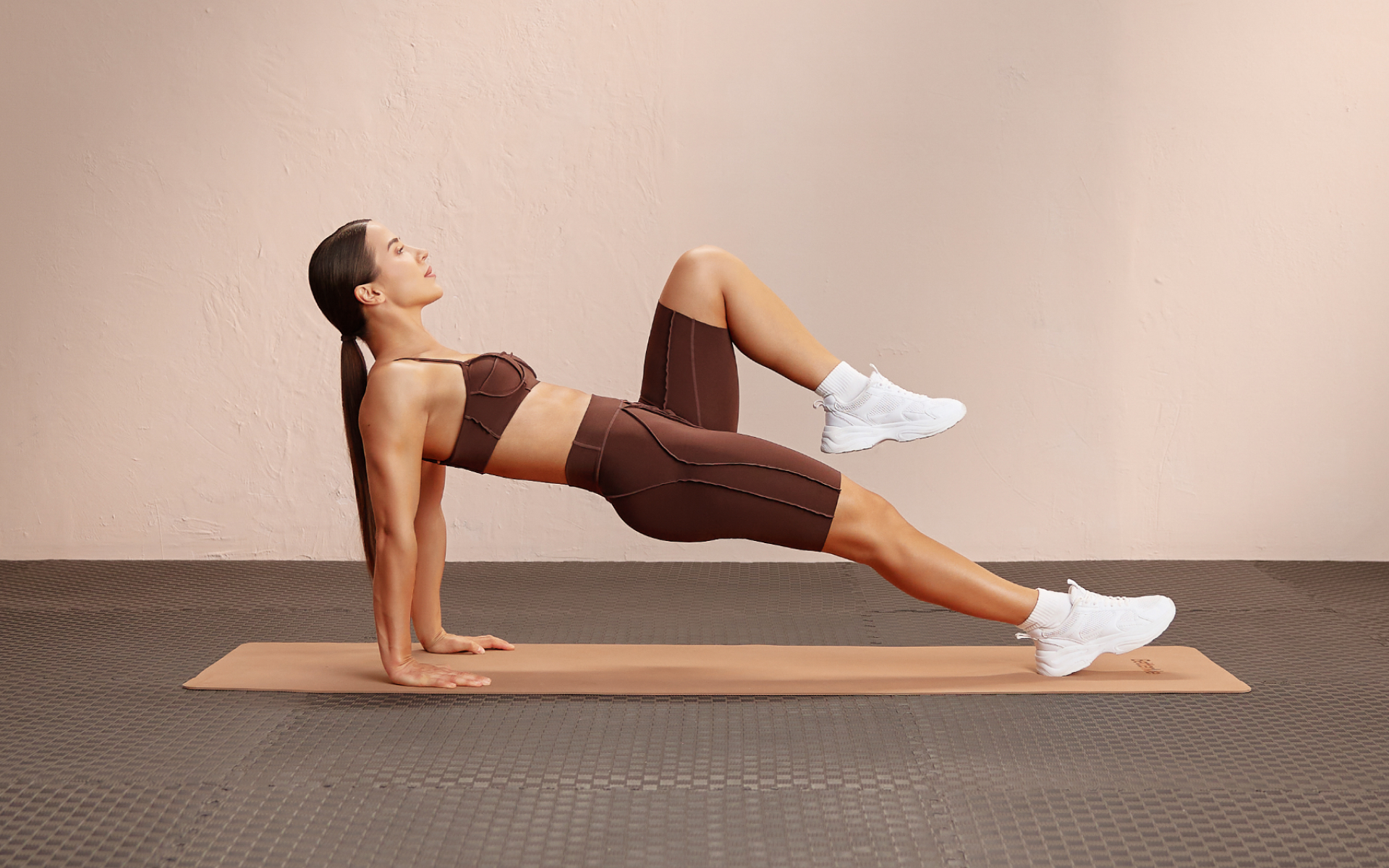
So much has been written about lifting heavy weights to build muscle, and for good reason. But what if you don’t have access to a gym, or you simply prefer using your own body as resistance? This raises a common question: Can you effectively build muscle mass with calisthenics? Fortunately, you can, but it requires a smart, structured approach. It’s not enough to just do push-ups and squats randomly – you need a plan rooted in the principles of exercise science.
This guide will break down exactly how to build muscle with calisthenics at home. We’ll explore the science behind bodyweight training, provide a structured workout plan, and detail the nutritional strategies you need to support muscle growth. By the end, you’ll have a clear roadmap for transforming your physique using only your body weight.
Is It Possible to Build Muscle with Calisthenics?
Yes, it’s entirely possible to build significant muscle using calisthenics (1). The fundamental principle of muscle growth, or hypertrophy, is progressive overload (2). This means you must consistently challenge your muscles to do more than they’re accustomed to. In a gym setting, this is straightforward: you add more weight to the bar. With calisthenics, you achieve progressive overload by manipulating leverage, stability, and volume.
A 2017 study published in Isokinetics and Exercise Science investigated the effects of an 8-week calisthenics program on untrained men. The results were compelling. Participants saw a 16.4% increase in their push-up strength, a 39.2% increase in their pull-up strength, and a significant reduction in body fat (3). This demonstrates that a structured muscle-building calisthenics workout is a feasible and effective training solution.
Another study from the Journal of Strength and Conditioning Research compared progressive push-up training to traditional bench pressing over four weeks. It found that both groups experienced similar strength gains (4). The calisthenics group achieved this by moving to more difficult push-up variations, which confirms that bodyweight progression is a valid method for increasing upper-body strength. This highlights the ongoing debate of building muscle with calisthenics vs weights, showing that both can be effective when the right principles are applied.
BetterMe: Health Coaching app helps you achieve your body goals with ease and efficiency by helping to choose proper meal plans and effective workouts. Start using our app and you will see good results in a short time.
How Calisthenics Builds Muscle
To understand how this works, let’s look at the three primary mechanisms of muscle hypertrophy (5, 6):
- Mechanical Tension: This is the force that is placed on a muscle when it’s stretched and contracted under load. For calisthenics, this is achieved through challenging exercises that put your muscles under significant strain, such as a one-arm push-up or pistol squat.
- Muscle Damage: This refers to the microscopic tears that occur in muscle fibers during intense exercise. The body repairs these fibers, making them stronger and larger. You create this damage by performing exercises to, or close to, muscular failure.
- Metabolic Stress: This is the “pump” you feel from high-repetition sets. It’s the buildup of metabolic byproducts such as lactate in the muscle, which signals it to grow. You can achieve this with calisthenics by performing exercises for higher reps with short rest periods.
By structuring your calisthenics routine to target these mechanisms, you can stimulate significant muscle growth, which proves that you can indeed build muscle mass with calisthenics.
Read more: 30 Day Fitness Challenge For Beginners
How to Build Muscle with Calisthenics as a Beginner
As a beginner, your primary focus should be on laying a solid foundation of strength and mastering proper form. You don’t need complex movements to start. The key is consistency and gradual progression.
Focus on Foundational Movements
Start with the basics. These compound exercises work multiple muscle groups at once and are the cornerstone of any effective calisthenics program.
- Push-ups: Target the chest, shoulders, and triceps.
- Pull-ups/Chin-ups: Build the back and biceps. If you can’t do one yet, start with inverted rows or use resistance bands for assistance.
- Squats: Develop the quads, glutes, and hamstrings.
- Dips: Focus on the chest, shoulders, and triceps.
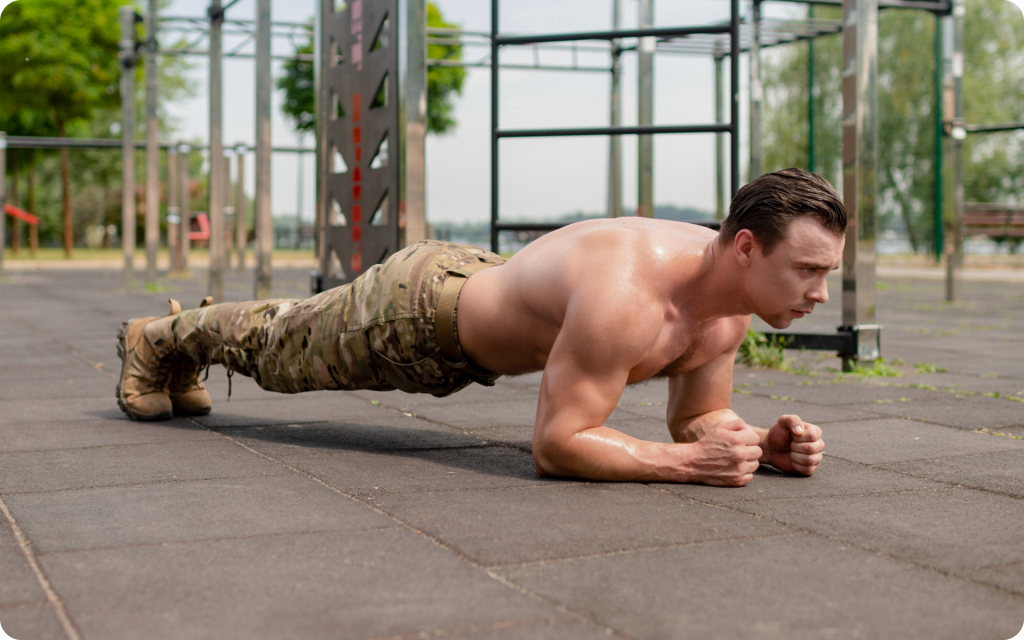
- Planks: Strengthen the entire core.

The Principle of Progressive Overload for Beginners
To build muscle, you must make your workouts progressively harder. As a beginner, this can be achieved in several ways without needing to jump to advanced exercises (7, 8):
- Increase Repetitions: Start by aiming for a target rep range, such as 8-12 reps. Once you can comfortably complete 12 reps with good form, you’re ready to make the exercise more difficult.
- Increase Sets: If you’re doing 3 sets of an exercise, try adding a fourth set to increase the total workout volume.
- Decrease Rest Time: Reducing your rest periods between sets from 90 seconds to 60 seconds increases metabolic stress and makes the workout more challenging.
- Improve Form and Tempo: Slow down the movement. For example, take three seconds to lower yourself into a squat or three seconds to lower the dumbbell when doing a bicep curl. This increases the time your muscles are under tension, a powerful stimulus for growth.
An Example Beginner Progression for Push-ups
Let’s say your goal is to do 3 sets of 10 standard push-ups, but you can only do 5. Here’s a simple progression plan:
- Week 1: Perform 3 sets of 5 push-ups. Focus on perfect form.
- Week 2: Aim for 3 sets of 6 push-ups.
- Week 3: Push for 3 sets of 7-8 push-ups.
- Week 4: You should be close to or at 3 sets of 10 push-ups.
Once you hit this goal, you can progress to a more difficult variation, such as decline push-ups, to continue challenging your muscles.
Find more guidance on where to start with our guide to beginner calisthenics exercises.
What Is a Powerful Calisthenics Routine to Build Muscle?
A powerful routine is one that’s structured, balanced, and allows for consistent progression. This program is designed for intermediate trainees who have mastered the basic movements and are ready to increase the intensity. It follows a push/pull/legs split to ensure that each muscle group gets adequate work and recovery.
Program Notes
- Terms:
- AMRAP: As many reps as possible. Perform the exercise until you reach muscular failure with good form.
- Tempo (e.g, 3-1-1-1): The speed of the movement. The first number is the eccentric (lowering) phase, the second is the pause at the bottom, the third is the concentric (lifting) phase, and the fourth is the pause at the top (9). All are in seconds.
- Progressive Overload: The act of making exercises harder over time. For this program, focus on adding one rep to each set every week. Once you reach the top of the rep range, move to a harder exercise variation.
- Equipment Needed: A pull-up bar is essential. Dip bars are recommended, but can be substituted with two sturdy chairs.
- Split Structure: This program uses a push/pull/legs split, performed twice a week with one rest day. For example: Monday (push), Tuesday (pull), Wednesday (legs), Thursday (rest), Friday (push), Saturday (pull), Sunday (legs).
- Optimal Reps and Sets: Aim for 3-4 sets per exercise in the 8-15 rep range. This range is effective for stimulating hypertrophy.
- Rest Schemes: Rest for 60-90 seconds between sets to allow for sufficient recovery while maintaining metabolic stress (10).
The Intermediate Muscle-Building Calisthenics Workout
| Exercise | Sets | Reps | Tempo | Rest |
|---|---|---|---|---|
| Pike push-ups | 4 | 8-12 | 3-1-1-1 | 90s |
| Dips | 4 | 10-15 | 2-1-1-0 | 90s |
| Diamond push-ups | 3 | AMRAP | 2-0-1-0 | 60s |
| Tricep extensions (on floor) | 3 | 10-15 | 3-0-1-0 | 60s |
| Plank | 3 | 60s Hold | N/A | 60s |
| Exercise | Sets | Reps | Tempo | Rest |
|---|---|---|---|---|
| Pull-ups | 4 | 8-12 | 3-1-1-1 | 90s |
| Inverted rows | 4 | 10-15 | 2-1-1-0 | 90s |
| Chin-ups | 3 | AMRAP | 2-0-1-0 | 60s |
| Hanging leg raises | 3 | 10-15 | 3-0-1-0 | 60s |
| Superman holds | 3 | 60s Hold | N/A | 60s |
| Exercise | Sets | Reps | Tempo | Rest |
|---|---|---|---|---|
| Pistol squat negatives | 4 | 8-12 (per leg) | 4-1-1-0 | 90s |
| Nordic curls | 4 | 8-12 | 5-0-1-0 | 90s |
| Bulgarian split squats | 3 | 10-15 (per leg) | 2-0-1-0 | 60s |
| Calf raises (on a step) | 3 | AMRAP | 2-1-1-1 | 60s |
| Glute bridges | 3 | 15-20 | 2-1-1-1 | 60s |
How to Perform the Exercises
Pike Push-ups
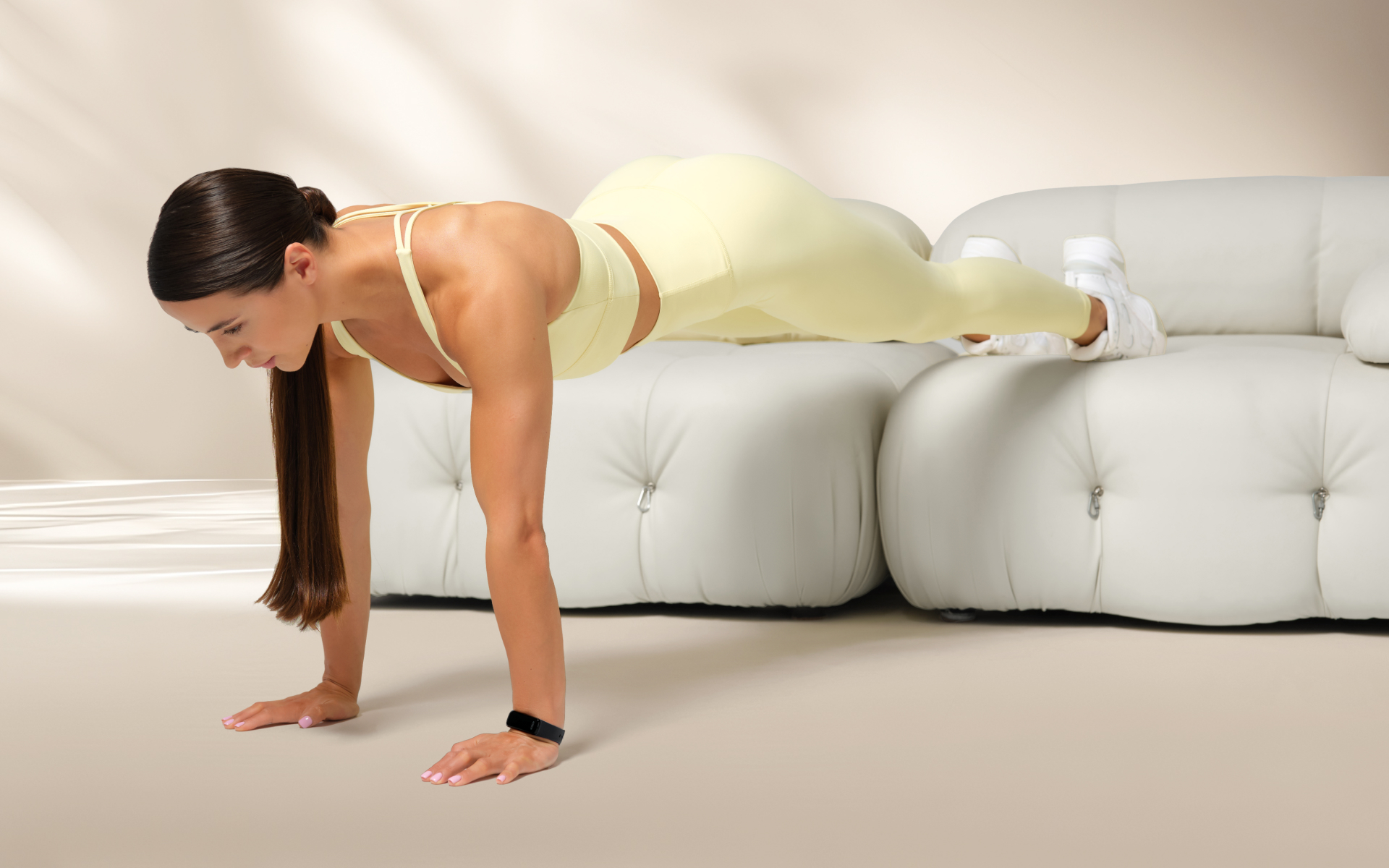
- Start in a standard push-up position, then walk your feet forward until your body forms an inverted ‘V’ shape. Keep your hips high.
- Keeping your legs straight, bend your elbows to lower the top of your head toward the floor.
- Press back up to the starting position, focusing on engaging your shoulders.
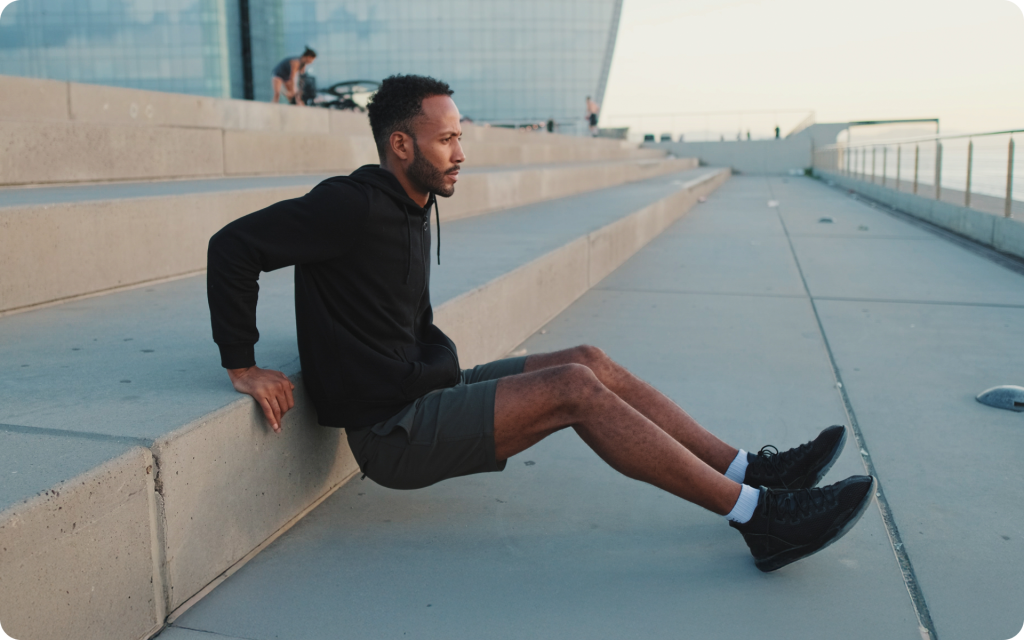
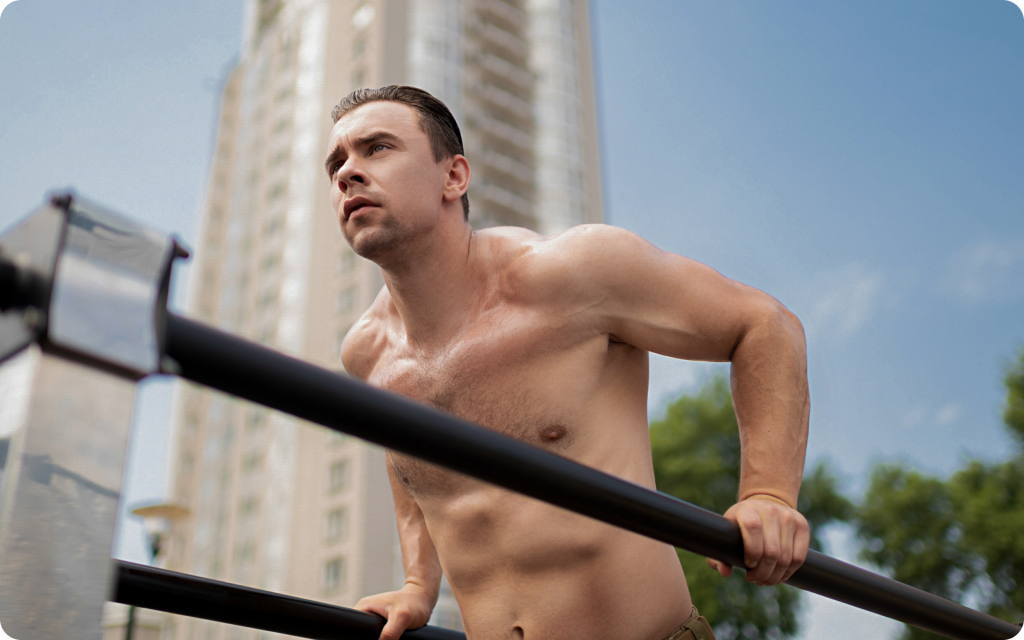
Dips
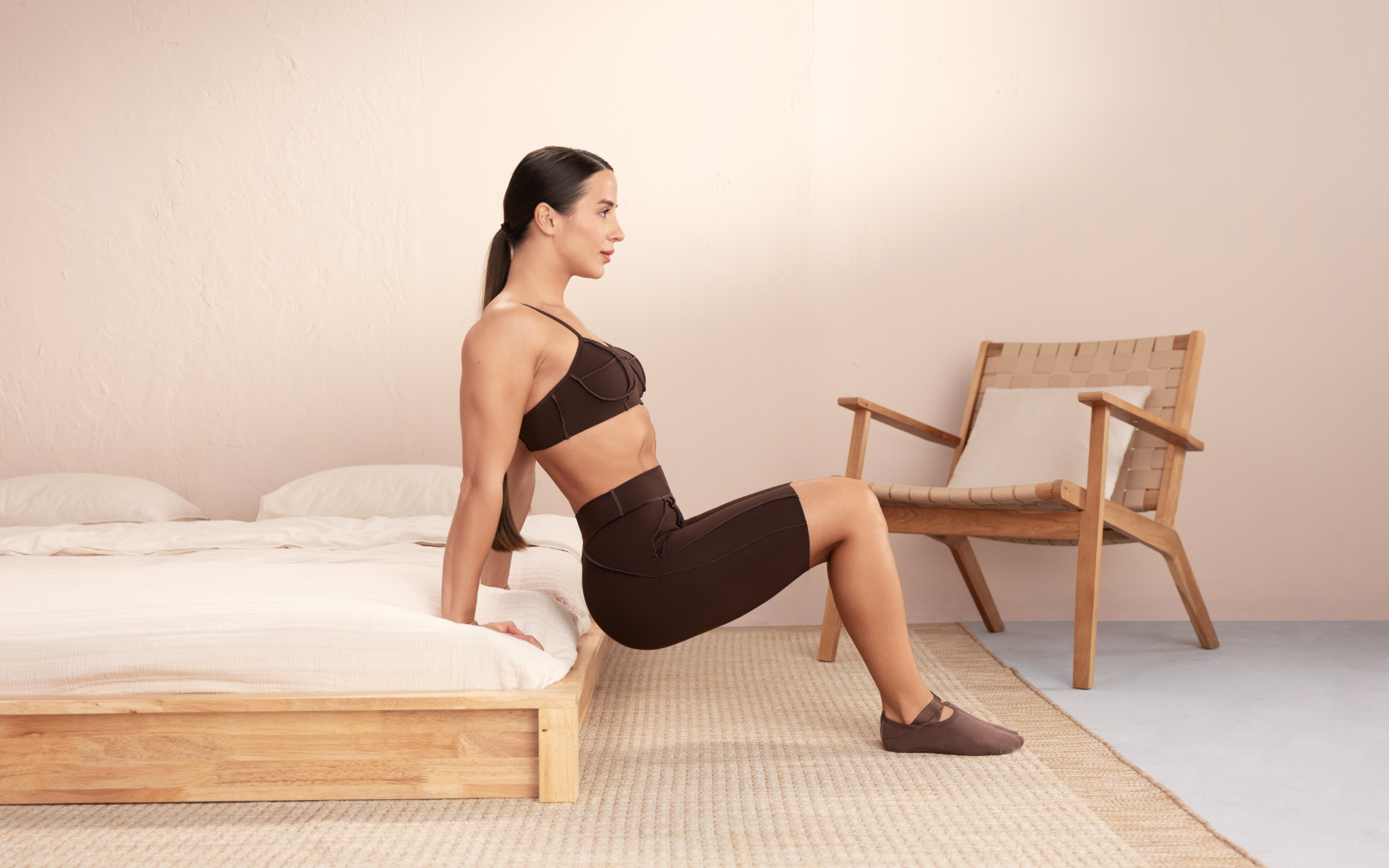
- Grip parallel bars (or sturdy chairs) with your palms facing inward and your arms straight.
- Lower your body by bending your elbows until your shoulders drop just below elbow height. Lean forward slightly to target your chest.
- Push back up until your arms are straight again.
Diamond Push-ups
- Assume a push-up position and place your hands together under your chest, forming a diamond shape with your thumbs and index fingers.
- Lower your chest to your hands, keeping your elbows close to your sides.
- Push up to the starting position.
Tricep Extensions (on floor)
- Kneel or lie prone with your palms flat on the floor and your hands shoulder-width apart.
- Keeping your elbows close to your torso, bend your arms to bring your forearms and elbows to the floor.
- Press through your palms to extend your arms and lift your body back up.
Plank
- Position your forearms on the ground with your elbows under your shoulders and your legs extended behind you.
- Keep your body in a straight line from your head to your heels and your core tight.
- Hold this position for the prescribed time, avoiding hip sagging or piking.
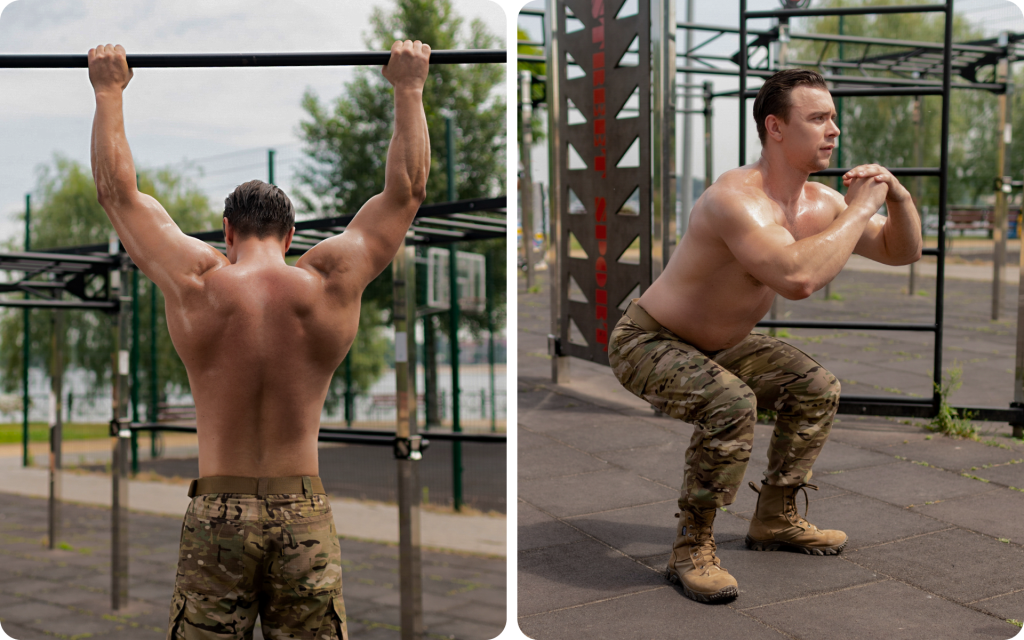
Pull-ups
- Grip a pull-up bar with your hands slightly wider than shoulder-width apart, your palms forward.
- Hang fully extended with your core braced.
- Pull your chest up toward the bar until your chin clears it.
- Lower with control.
Inverted Rows
- Lie underneath a low bar with your heels on the ground and a straight body.
- Grasp the bar with an overhand grip, your arms extended.
- Pull your chest to the bar, keeping your elbows close to your body.
- Lower down under control.
Chin-ups
- Grip the pull-up bar with your palms shoulder-width apart and facing you (underhand grip).
- Start from a dead hang.
- Pull yourself up until your chin is above the bar, squeezing your biceps.
- Lower to the dead hang position with control.
Hanging Leg Raises
- Hang from a pull-up bar with your arms straight and your legs together.
- Engage your core and raise your legs up toward your chest, keeping them straight.
- Lower your legs back down with control, avoiding swinging.
Superman Holds
- Lie face down on the floor with your arms extended overhead and your legs straight.
- Simultaneously lift your arms, chest, and legs off the ground by engaging your posterior chain.
- Hold this position, squeezing your glutes and back muscles.
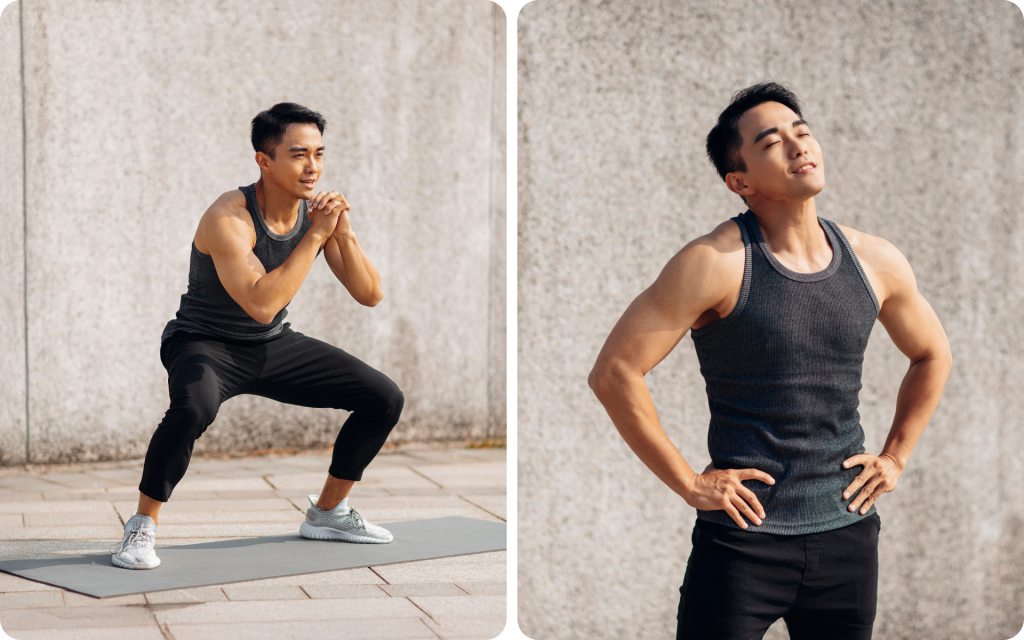
Pistol Squat Negatives
- Stand on one leg with the other leg extended straight in front of you.
- Slowly lower into a squat on the standing leg, controlling the descent for at least 4 seconds.
- At the bottom, use your other foot as assistance to return to standing.
- Repeat for all reps on one side, then switch legs.
Nordic Curls
- Kneel on a soft surface, anchoring your ankles under a partner or heavy object.
- With your torso upright and hips extended, lean forward at the knees as slowly as possible.
- Use your hamstrings to resist the descent. Once you can’t control it, use your hands to catch yourself and push back up.
Bulgarian Split Squats
- Stand facing away from a bench or chair. Place one foot on the bench behind you.
- Lower your hips straight down by bending your front knee, keeping your torso upright.
- Lower until your front thigh is parallel to the floor.
- Push through your front heel to return to standing. Complete all reps, then switch legs.
Calf Raises (on a step)
- Stand on the edge of a step or sturdy platform with the balls of your feet and your heels hanging off.
- Lower your heels slowly below the step to feel a stretch.
- Press through the balls of your feet to raise your body as high as possible.
- Pause at the top, then repeat.
Glute Bridges
- Lie on your back with your knees bent and your feet flat on the floor, hip-width apart.
- Press through your heels to lift your hips off the ground until your body forms a straight line from your shoulders to your knees.
- Squeeze your glutes at the top.
- Lower your hips back down with control.
For more structured workouts, explore our full calisthenics training program.
How Long does It Take to Gain Muscle with Calisthenics?
The timeline for muscle gain will depend on several factors, including your training experience, genetics, diet, and consistency. However, research provides some general guidelines.
Beginners often experience “newbie gains”, where muscle and strength improvements come relatively quickly. A 2020 study protocol for a habit-based calisthenics program noted that significant strength gains can be seen in as little as 4-6 weeks for untrained individuals (11).
Visible muscle growth typically takes a bit longer, with most people noticing changes in their physique after 8-12 weeks of consistent training and proper nutrition (12).
Progress will be slower for intermediate and advanced trainees. Building new muscle tissue is a metabolically demanding process, and the closer you get to your genetic potential, the harder it becomes to make gains. For this group, noticeable changes might take 3-6 months of dedicated training. The key is to remain patient and focus on consistent, incremental progress.
Whether you’re a workout beast or just a beginner making your first foray into the world of fitness and dieting – BetterMe has a lot to offer to both newbies and experts! Install the app and experience the versatility first-hand!
What Should I Eat During Calisthenics to Build Muscle?
You can’t out-train a bad diet. Nutrition is just as important as your training when it comes to building muscle. Your body needs the right fuel to perform, recover, and grow. Thinking about how to build muscle with calisthenics without equipment is only half the battle – the other half is what you do in the kitchen.
Prioritize Protein
Protein provides the amino acids that are the building blocks of muscle tissue (13). Without enough protein, your body cannot repair the damage caused by your workouts (14).
- How much? A large body of research supports a daily intake of 1.6 to 2.0 grams of protein per kilogram of body weight (or about 0.7 to 1.0 grams per pound) for optimal muscle growth (15).
- Good sources: Lean meats (chicken, turkey, beef), fish, eggs, dairy (Greek yogurt, cottage cheese), legumes, tofu, and protein powder.

Don’t Fear Carbohydrates
Carbohydrates are your body’s primary energy source. They fuel your workouts and replenish glycogen stores in your muscles, which is essential for recovery and performance (16).
- How much? Aim for 3 to 5 grams of carbs per kilogram of body weight on training days (17).
- Good sources: Complex carbs such as oats, brown rice, quinoa, sweet potatoes, and whole-wheat bread provide sustained energy.
Healthy Fats are Essential
Fats play a vital role in hormone production, including hormones such as testosterone that are essential for muscle building (18).
- How much? Fats should make up about 20-35% of your total daily calories (17).
- Good sources: Avocados, nuts, seeds, olive oil, and fatty fish such as salmon.
Read more: Calisthenics Equipment BetterMe Overview: Kits, Parallettes, and Rings
How to Build an Effective Muscle-Building Meal and Workout Plan
Combining your training and nutrition into a cohesive plan is the final step. Here’s a sample one-day plan to give you an idea of how to structure your day.
Sample Meal Plan (for an 80kg/176lb person):
- Breakfast (7 am): Scrambled eggs (4 whole) with spinach and a side of oatmeal (1 cup cooked) with berries.
- Morning Snack (10 am): Greek yogurt (1 cup) with a handful of almonds.
- Lunch (1 pm): Grilled chicken breast (200g) with quinoa (1 cup cooked) and a large mixed green salad with olive oil dressing.
- Pre-Workout (4 pm): A banana and a scoop of whey protein mixed with water.
- Workout (5-6 pm): Follow the intermediate calisthenics routine.
- Post-Workout (6:30 pm) A meal containing lean protein and fast-digesting carbs, such as grilled fish (200g) with a large sweet potato.
- Dinner (8:30 pm): Lean ground beef (200g) with brown rice and steamed broccoli.
This plan provides a framework. Adjust the portion sizes based on your specific caloric needs, which you can estimate using an online calculator. The goal is to be in a slight caloric surplus – consuming approximately 250-500 calories more than you burn each day – to provide your body with the extra energy it needs to build new muscle tissue (19).
If you’re ready to master more difficult movements, check out our guide to advanced calisthenics.
For muscle hypertrophy, the general recommendation is to train in a rep range of 6-20 reps per set, taken close to muscular failure. A study in the Journal of Strength and Conditioning Research found that both low-load (25-35 reps) and high-load (8-12 reps) training can produce similar muscle growth, as long as sets are performed to failure (20). With calisthenics, you can adjust the exercise difficulty to stay within this effective range. Absolutely. As demonstrated by multiple studies and the principles of hypertrophy, you can build significant muscle with only bodyweight exercises (4, 21). The key is to apply progressive overload by manipulating exercise variations, range of motion, volume, and intensity (7, 22). The primary limitation is the difficulty in isolating small muscle groups (such as the biceps or calves) and in progressively overloading the lower body once you become very strong. While pistol squats and Nordic curls are incredibly challenging, they may not provide the same stimulus as heavy barbell squats for a highly advanced athlete. This is a key difference when considering building muscle with calisthenics vs weights. Yes. Rest is when your muscles repair and grow, and training the same muscle groups on consecutive days can lead to overtraining and hinder progress. It’s recommended to have at least one full rest day per week and to allow at least 48 hours of recovery for a specific muscle group before you train it again (24).Frequently Asked Questions
How many reps are needed for muscle growth with calisthenics?
Can I build muscle with only body weight?
What are the limitations of calisthenics?
Do you need rest days with calisthenics?
The Bottom Line
Building muscle with calisthenics offers a practical, accessible, and highly effective way to achieve your fitness goals. By understanding and applying the core principle of progressive overload, focusing on mastering foundational movements, and supporting your training with smart nutrition, you can build a strong, functional, and aesthetic physique. The journey requires patience and consistency, but the results are well worth the effort.
DISCLAIMER:
This article is intended for general informational purposes only and does not serve to address individual circumstances. It is not a substitute for professional advice or help and should not be relied on for making any kind of decision-making. Any action taken as a direct or indirect result of the information in this article is entirely at your own risk and is your sole responsibility.
BetterMe, its content staff, and its medical advisors accept no responsibility for inaccuracies, errors, misstatements, inconsistencies, or omissions and specifically disclaim any liability, loss or risk, personal, professional or otherwise, which may be incurred as a consequence, directly or indirectly, of the use and/or application of any content.
You should always seek the advice of your physician or other qualified health provider with any questions you may have regarding a medical condition or your specific situation. Never disregard professional medical advice or delay seeking it because of BetterMe content. If you suspect or think you may have a medical emergency, call your doctor.
SOURCES:
- Calisthenics (2022, ebsco.com)
- Progressive Overload Explained: Grow Muscle & Strength Today (n.d., blog.nasm.org)
- The effects of a calisthenics training intervention on posture, strength and body composition (2017, journals.sagepub.com)
- Effect of Progressive Calisthenic Push-up Training on Muscle Strength and Thickness (2018, journals.lww.com)
- The Mechanisms of Muscle Hypertrophy and Their Application to Resistance Training (2010, journals.lww.com)
- Anabolic signals and muscle hypertrophy – Significance for strength training in sports medicine (2025, sciencedirect.com)
- Exercise progression and regression (n.d., us.humankinetics.com)
- Complexity: A Novel Load Progression Strategy in Strength Training (2019, frontiersin.org)
- Effect of different eccentric tempos on hypertrophy and strength of the lower limbs (2021, pmc.ncbi.nlm.nih.gov)
- Give it a rest: a systematic review with Bayesian meta-analysis on the effect of inter-set rest interval duration on muscle hypertrophy (2024, frontiersin.org)
- Protocol for Minute Calisthenics: a randomized controlled study of a daily, habit-based, bodyweight resistance training program (2020, bmcpublichealth.biomedcentral.com)
- Adaptations to Endurance and Strength Training (2018, pmc.ncbi.nlm.nih.gov)
- Role of Essential Amino Acids in Protein Synthesis and Muscle Growth (2023, openaccessjournals.com)
- Skeletal muscle and resistance exercise training; the role of protein synthesis in recovery and remodeling (2016, journals.physiology.org)
- International Society of Sports Nutrition Position Stand: protein and exercise (2017, jissn.biomedcentral.com)
- Exercise and Regulation of Carbohydrate Metabolism (2015, pmc.ncbi.nlm.nih.gov)
- Current knowledge about sports nutrition (2011, pmc.ncbi.nlm.nih.gov)
- Athletes’ nutritional demands: a narrative review of nutritional requirements (2024, frontiersin.org)
- Is an Energy Surplus Required to Maximize Skeletal Muscle Hypertrophy Associated With Resistance Training (2019, frontiersin.org)
- Effects of Low- vs. High-Load Resistance Training on Muscle Strength and Hypertrophy in Well-Trained Men (2015, journals.lww.com)
- Bodyweight Training for Muscular Strength & Endurance (2022, researchgate.net)
- Bodyweight Training: A Return To Basics (2020, journals.lww.com)
- Overtraining Syndrome as a Complex Systems Phenomenon (2022, frontiersin.org
- Exploring the Science of Recovery (n.d., blog.nasm.org)