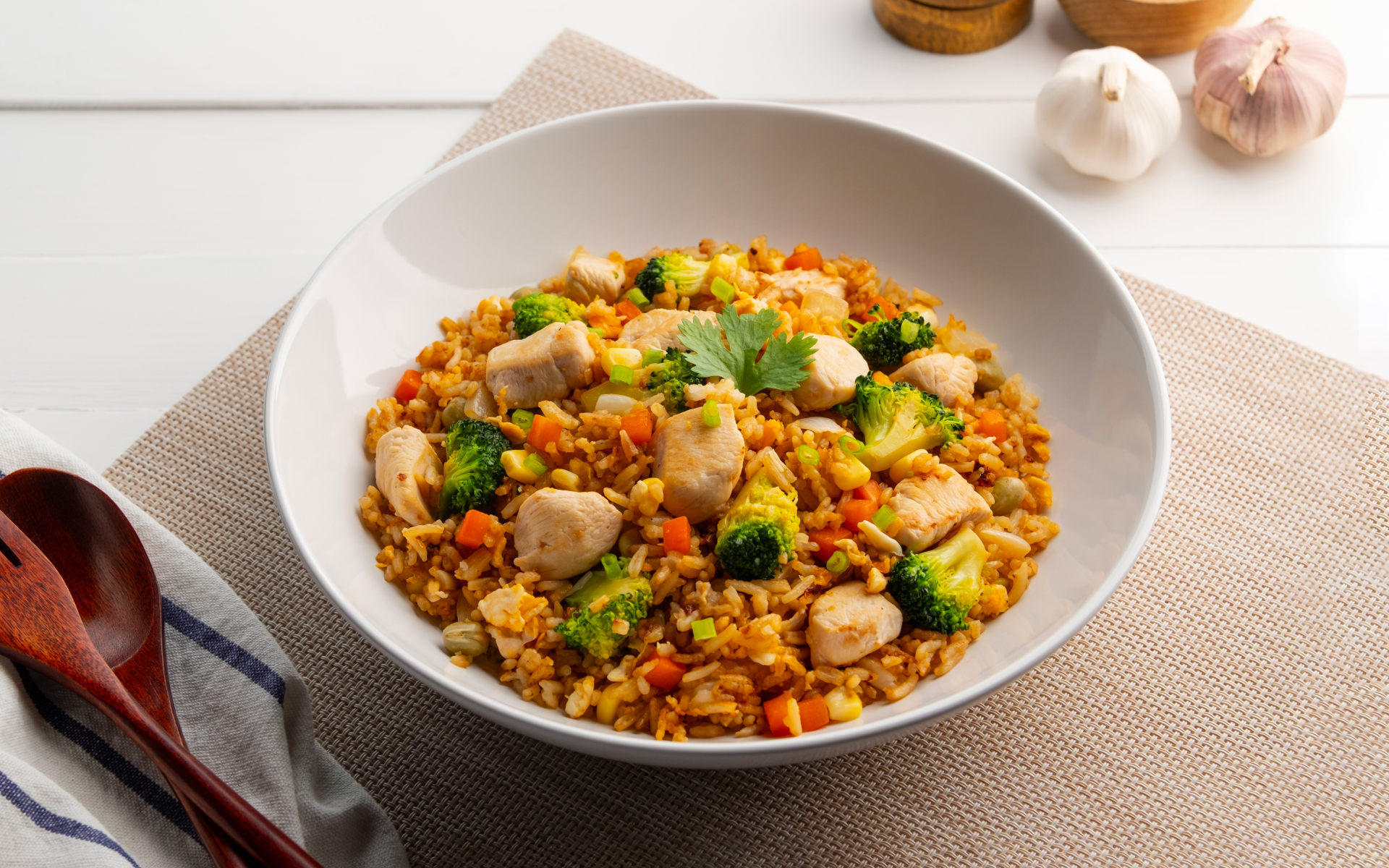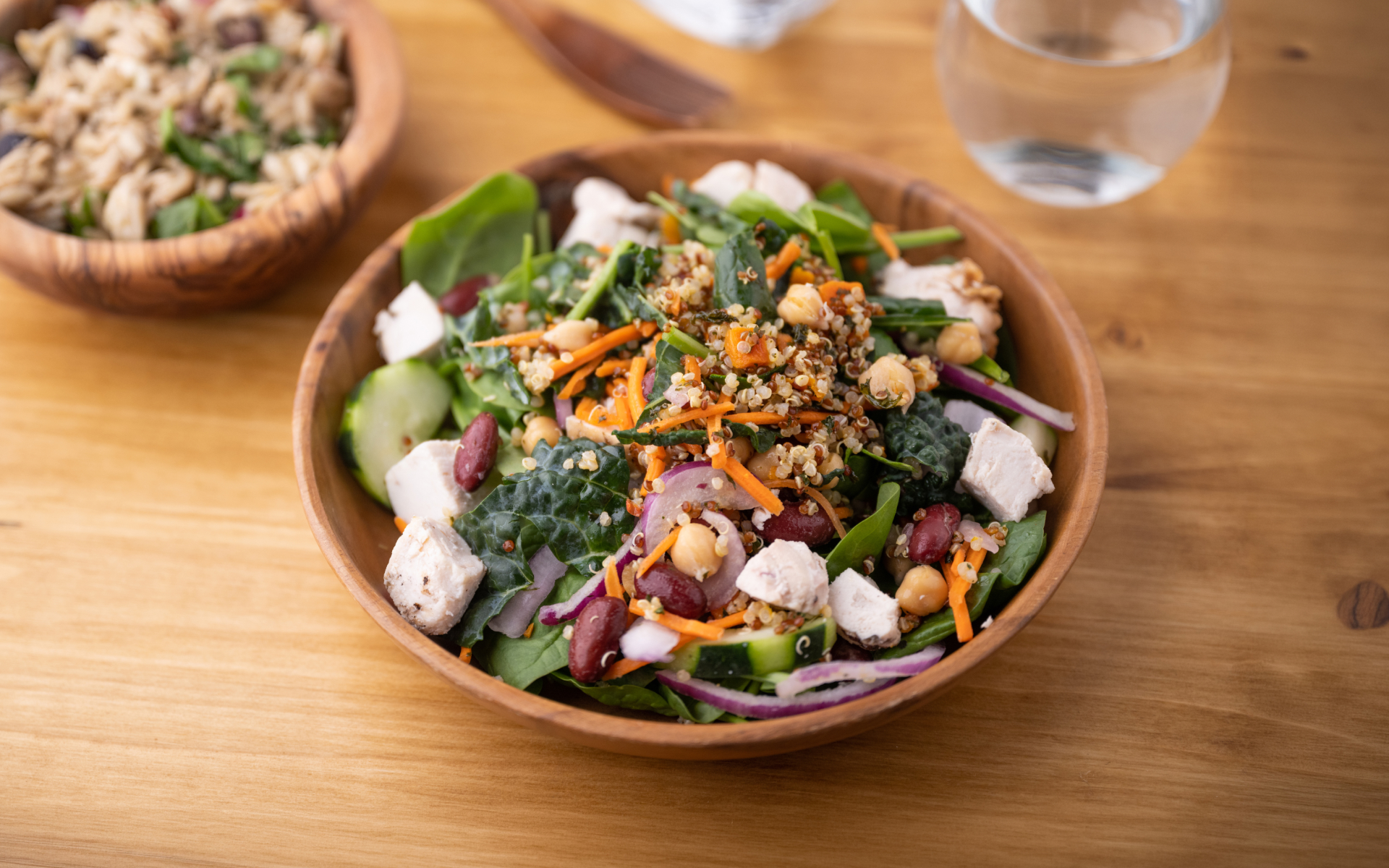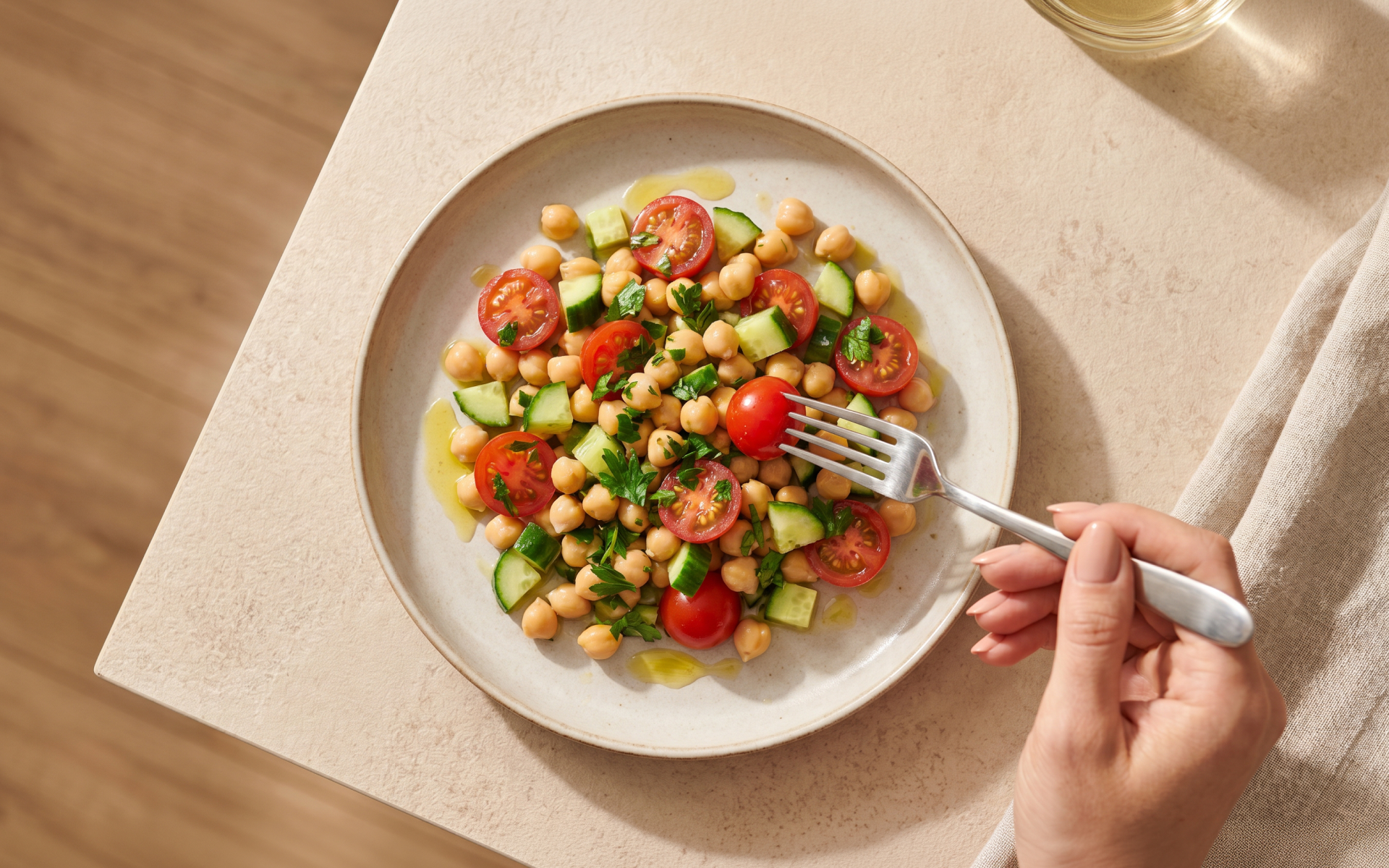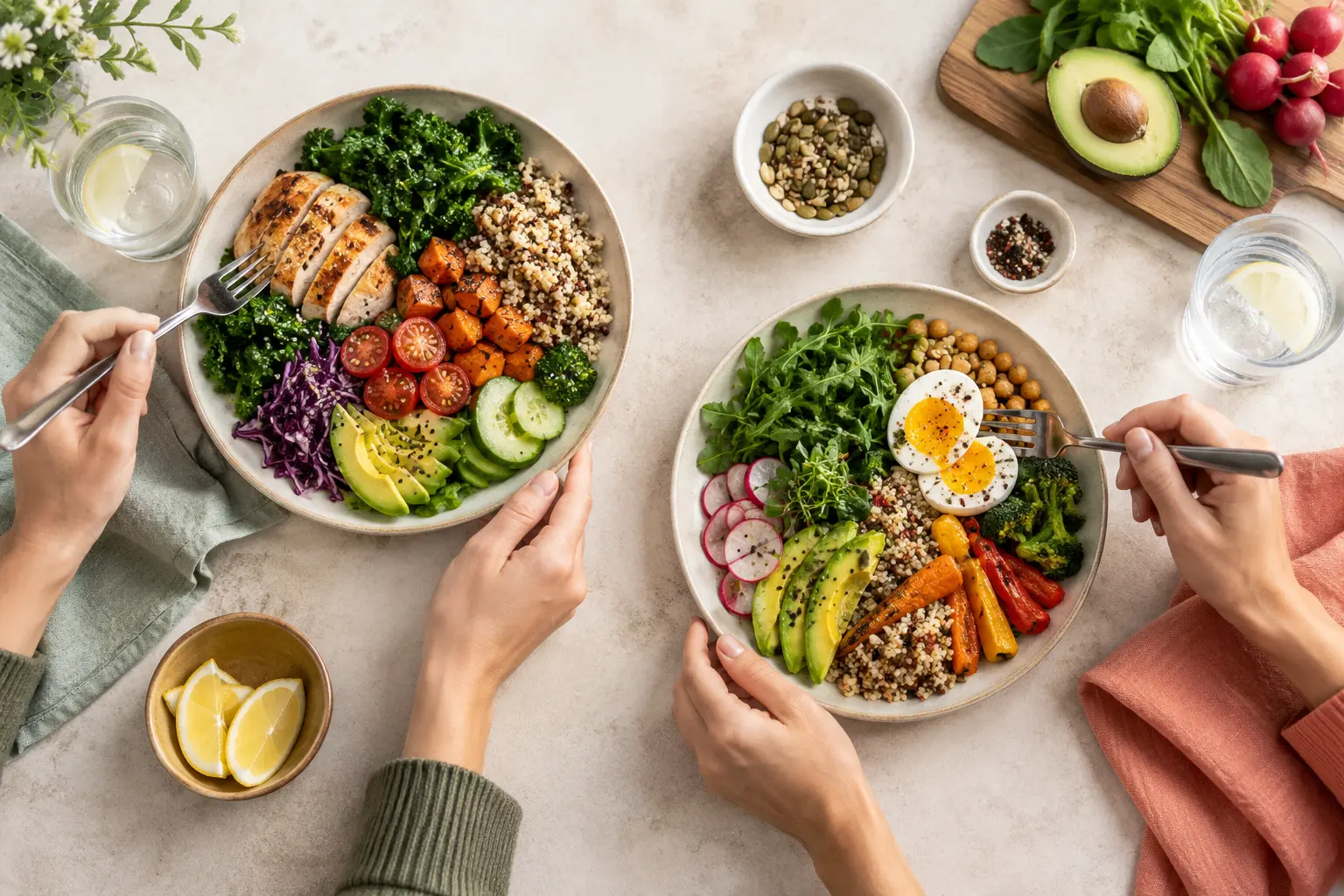
To build a healthy plate, combine colorful vegetables, a protein source, a carbohydrate-rich food, and a source of unsaturated fat in proportions that fit your appetite, activity, and goals. Focus on variety and minimally processed foods most often, while leaving room for foods you enjoy without labeling them as good or bad. (1)
Key Takeaways
- A balanced plate can include vegetables, protein, carbohydrates, and fats rather than removing an entire food group.
- Whole grains, vegetables, fruit, beans, and lentils are useful carbohydrate choices for everyday meals. (1)
- Nuts, seeds, avocado, fish, and liquid plant oils provide unsaturated fats that can replace foods higher in saturated fat. (3)
- “Eat more, eat some, eat less” works better as a flexible frequency guide than as a list of foods you are or are not allowed to eat.
- Your plate can change with your appetite, activity, food preferences, schedule, and goals.
What Does a Healthy Plate Consist Of?
A healthy plate usually combines several food groups rather than relying heavily on one nutrient or ingredient. Current guidance emphasizes varied, nutrient-dense foods such as vegetables, fruits, whole grains, protein foods, and unsaturated fats. (1, 2)
BetterMe’s healthy plate framework uses four practical food areas:
- Vegetables
- Protein
- Carbohydrates
- Fats
It also organizes food choices into three flexible frequency tiers:
- Eat more: foods you may choose frequently as the foundation of meals.
- Eat some: foods that can fit regularly depending on your overall eating pattern.
- Eat less: foods you may choose less frequently, often because they contain more added sugar, saturated fat, sodium, or heavy processing.
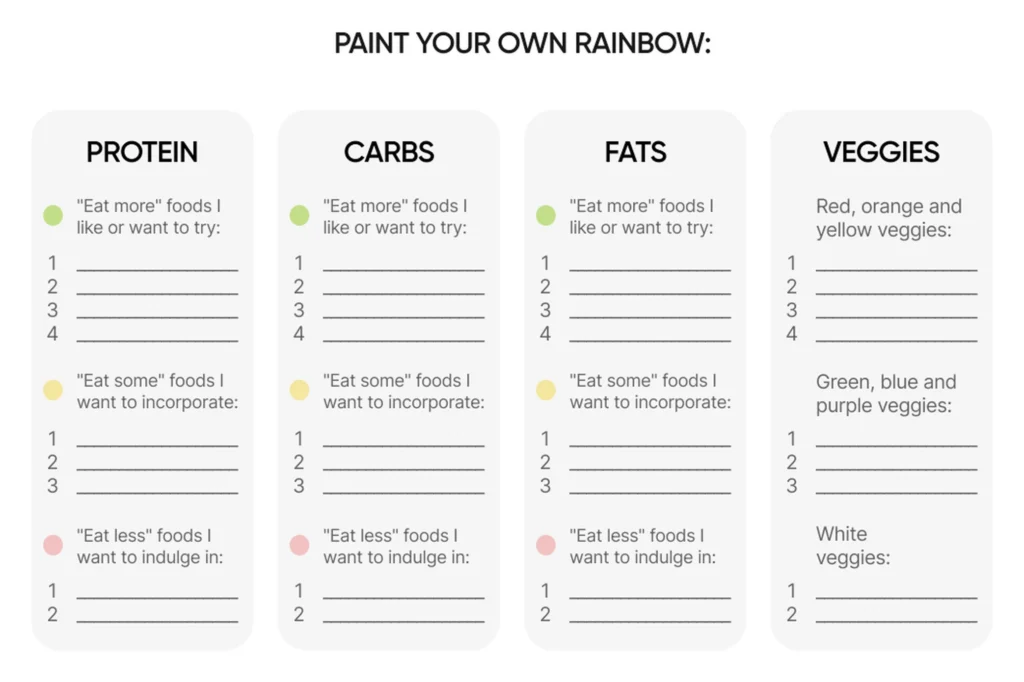
BetterMe framework figure: The framework combines 4 food areas with 3 frequency tiers, giving you a simple way to think about what goes on your plate.
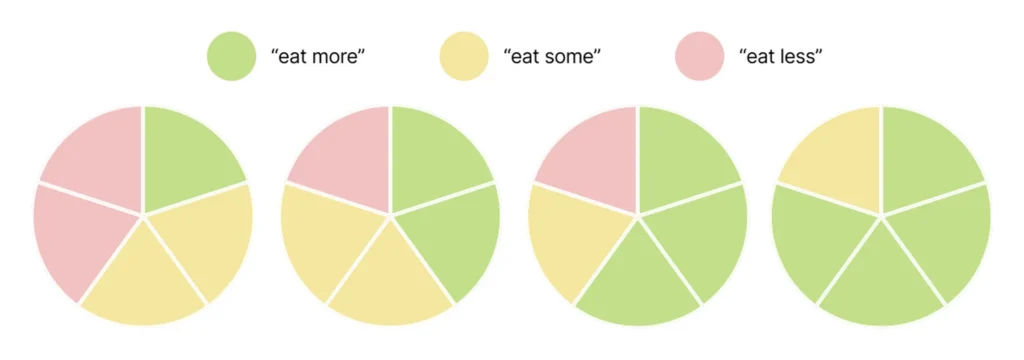
Think of these tiers as a spectrum, not a pass-or-fail system:
| Plate area | Eat more often | Eat some | Eat less often |
|---|---|---|---|
| Vegetables | Leafy greens, broccoli, peppers, carrots, tomatoes, mushrooms | Vegetable juices or more processed vegetable products | Vegetables prepared with substantial added sugar, salt, or saturated fat |
| Protein | Fish, poultry, eggs, beans, lentils, tofu, tempeh, plain Greek yogurt | Medium-fat meats, some deli meats, protein powders | Fried meats and heavily processed meats |
| Carbohydrates | Oats, brown or wild rice, quinoa, barley, beans, lentils, potatoes, whole fruit | White rice, granola, flavored oats, pancakes, crackers | Sugary cereal, soda, candy, pastries, cookies |
| Fats | Olive, canola, avocado, and other liquid plant oils, nuts, seeds, avocado | Cheese, nut butters, dark chocolate, coconut products | Foods that combine large amounts of saturated fat, added sugar, or heavy processing |
These categories are not rules about whether you are allowed to eat a particular food. They are a way to consider your overall pattern.
Food groups can overlap. Beans provide carbohydrates and protein. Nuts provide fat, protein, and some carbohydrate. Yogurt may contribute protein, carbohydrates, and fat depending on the type.
The goal is to assemble a satisfying meal, not force every ingredient into one permanent box.
If you want to understand these nutrients in more detail, BetterMe’s macro food list explains how carbohydrates, proteins, and fats fit into everyday meals.
Protein
Protein can come from both animal and plant foods. Rotating protein sources can add variety and help you build meals around different flavors, textures, and dietary preferences.
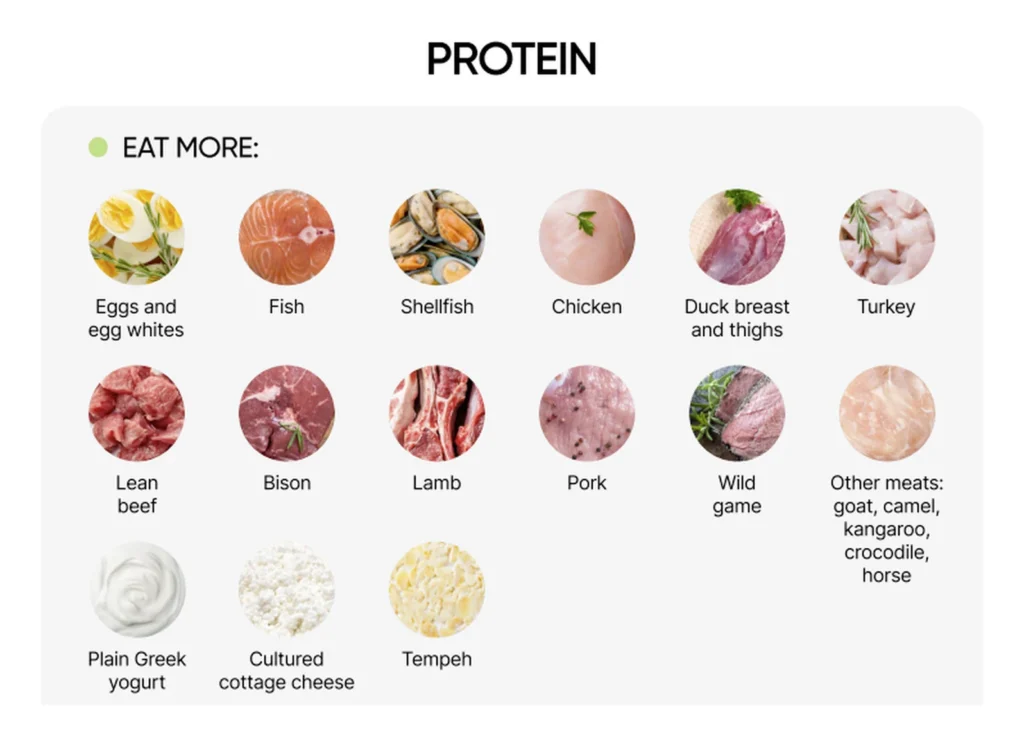
Foods you might include more frequently include:
- Eggs and egg whites
- Fish
- Shellfish
- Chicken
- Turkey
- Lean beef
- Bison
- Lamb
- Pork
- Duck breast and thighs
- Wild game
- Plain Greek yogurt
- Cultured cottage cheese
- Tempeh
- Beans
- Lentils
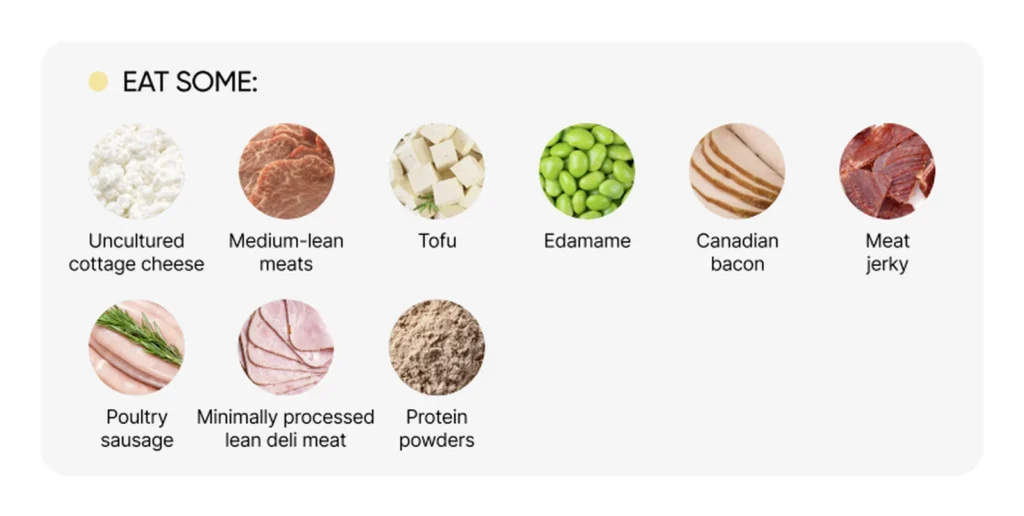
Other protein foods that can fit include:
- Tofu
- Edamame
- Medium-lean meats
- Canadian bacon
- Meat jerky
- Minimally processed lean deli meat
- Poultry sausage
- Protein powders
- Cottage cheese
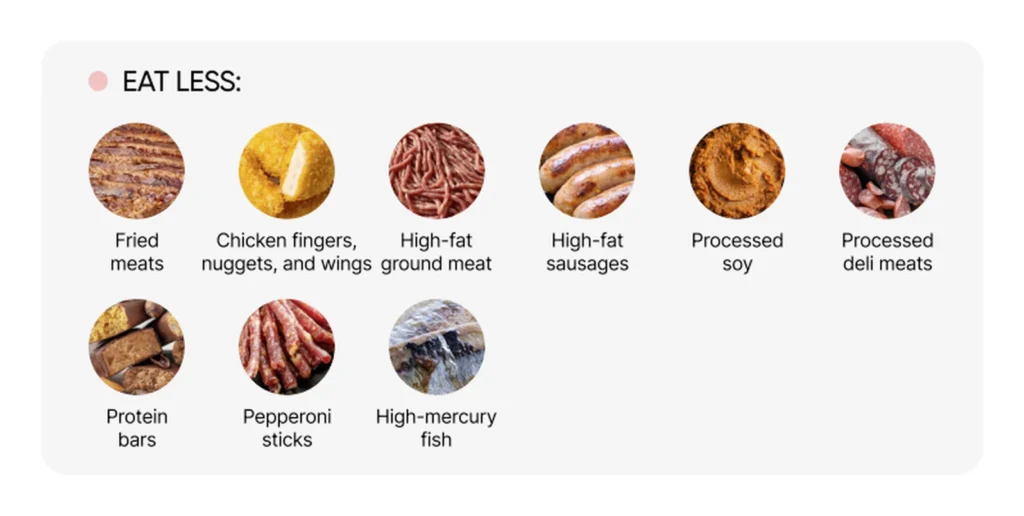
Foods you may want less frequently include:
- Fried meats
- Chicken fingers
- Chicken nuggets
- Fried chicken wings
- High-fat ground meats
- High-fat sausages
- Heavily processed deli meats
- Pepperoni sticks
- Protein bars
- Heavily processed soy products
If you prefer plant-focused meals, beans, lentils, tofu, tempeh, and edamame can provide much of the protein on your plate.
You can also rotate protein throughout the day. For example, you might have eggs or Greek yogurt for breakfast, lentils or tofu for lunch, and fish, beans, poultry, or tempeh for dinner.
You do not need to make every meal unusually high in protein. The goal is simply to include a meaningful source on the overall plate.
BetterMe: Health Coaching app can help you build a more structured approach to your wellness routine with meal plans, workouts, and habit-tracking tools. Start using the app to explore options that may support your personal fitness and nutrition goals.
Carbohydrates
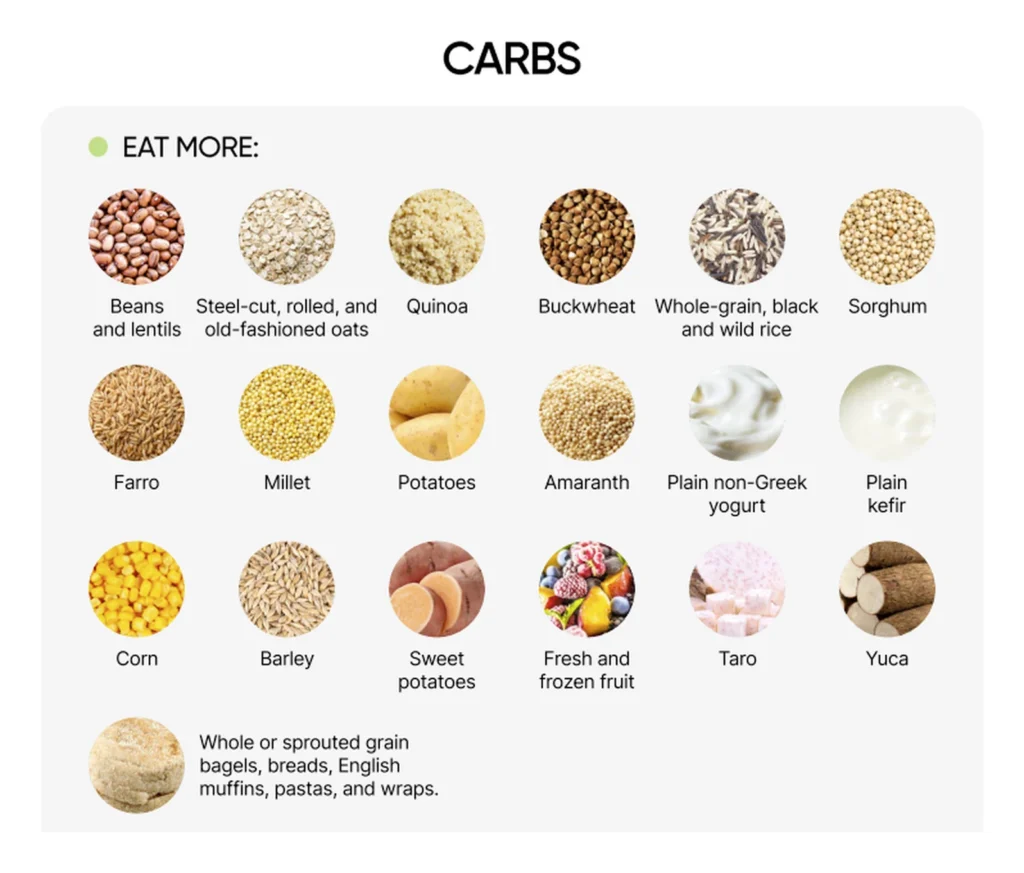
Carbohydrates are a major source of energy. Current guidance recommends getting much of your carbohydrate intake from whole grains, vegetables, fruits, and pulses such as beans and lentils. (1)
Carbohydrate foods you may choose more frequently include:
- Whole-grain, black, and wild rice
- Beans and lentils
- Steel-cut oats
- Rolled oats
- Old-fashioned oats
- Quinoa
- Buckwheat
- Sorghum
- Millet
- Potatoes
- Sweet potatoes
- Amaranth
- Farro
- Corn
- Barley
- Taro
- Yuca
- Fresh fruit
- Frozen fruit
- Whole-grain breads
- Sprouted-grain breads
- Whole-grain bagels
- Whole-grain English muffins
- Whole-grain pasta
- Whole-grain wraps
- Plain yogurt
- Plain kefir
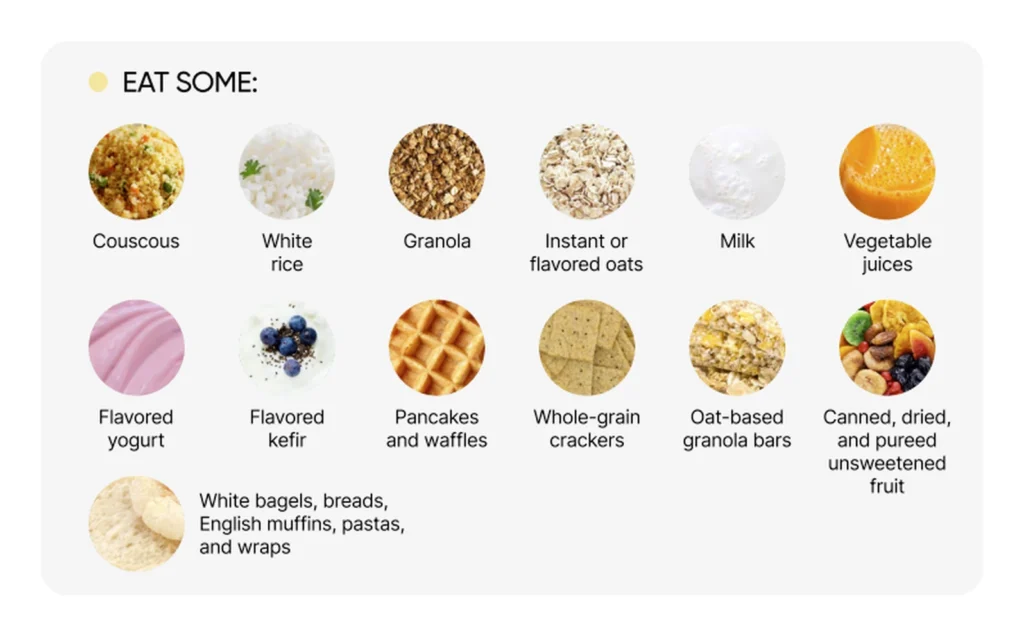
Other carbohydrate foods can still fit, including:
- Milk
- Couscous
- White rice
- Granola
- Instant oats
- Flavored oats
- Whole-grain crackers
- Vegetable juice
- Unsweetened canned fruit
- Unsweetened dried fruit
- Unsweetened pureed fruit
- Flavored kefir
- Pancakes
- Waffles
- Flavored yogurt
- White bread
- White bagels
- White English muffins
- White pasta
- White wraps
- Oat-based granola bars
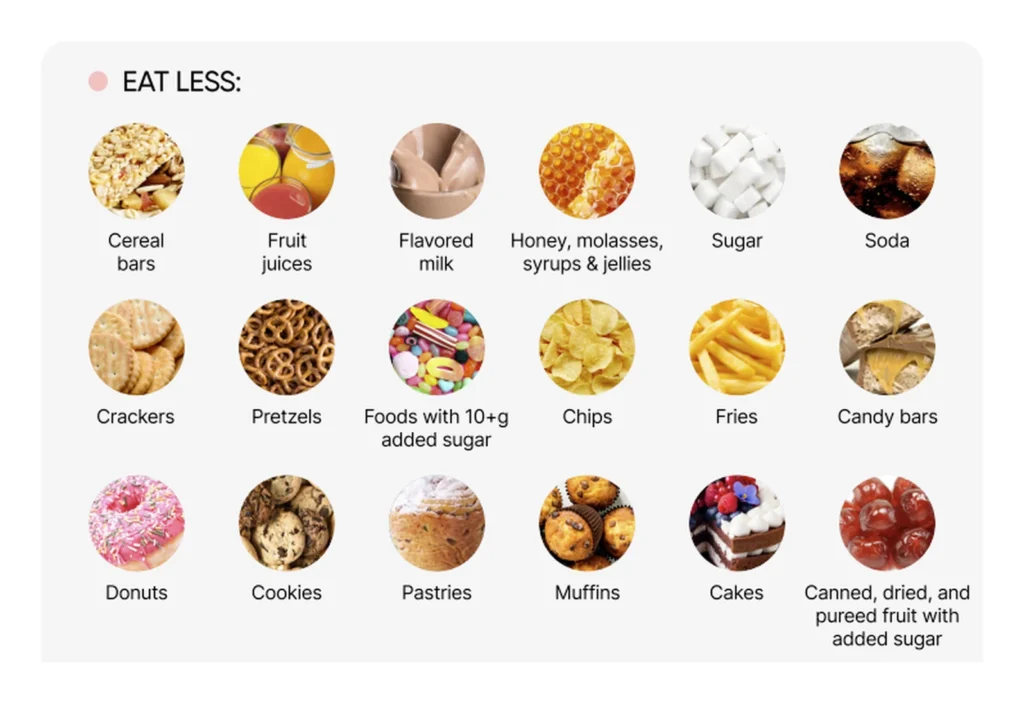
Carbohydrate foods you may choose less frequently include:
- Sugary cereal
- Cereal bars with substantial added sugar
- Fruit juice
- Flavored milk
- Soda
- Candy bars
- Donuts
- Cookies
- Cakes
- Pastries
- Muffins
- Chips
- Fries
- Pretzels
- Refined crackers
- Fruit products with added sugar
- Honey, syrups, jellies, and similar concentrated sweeteners
- Foods containing substantial amounts of added sugar
“Eat less” does not mean “never.”
A cookie, pastry, or serving of fries can still fit into an overall varied eating pattern. The frequency and overall balance of your meals matter more than any single food.
There is also a meaningful difference between oatmeal with fruit and yogurt and a heavily sweetened breakfast cereal. Both contain carbohydrates, but they provide different combinations of fiber, protein, added sugar, and other nutrients.
Fats
Fat belongs on a balanced plate too.
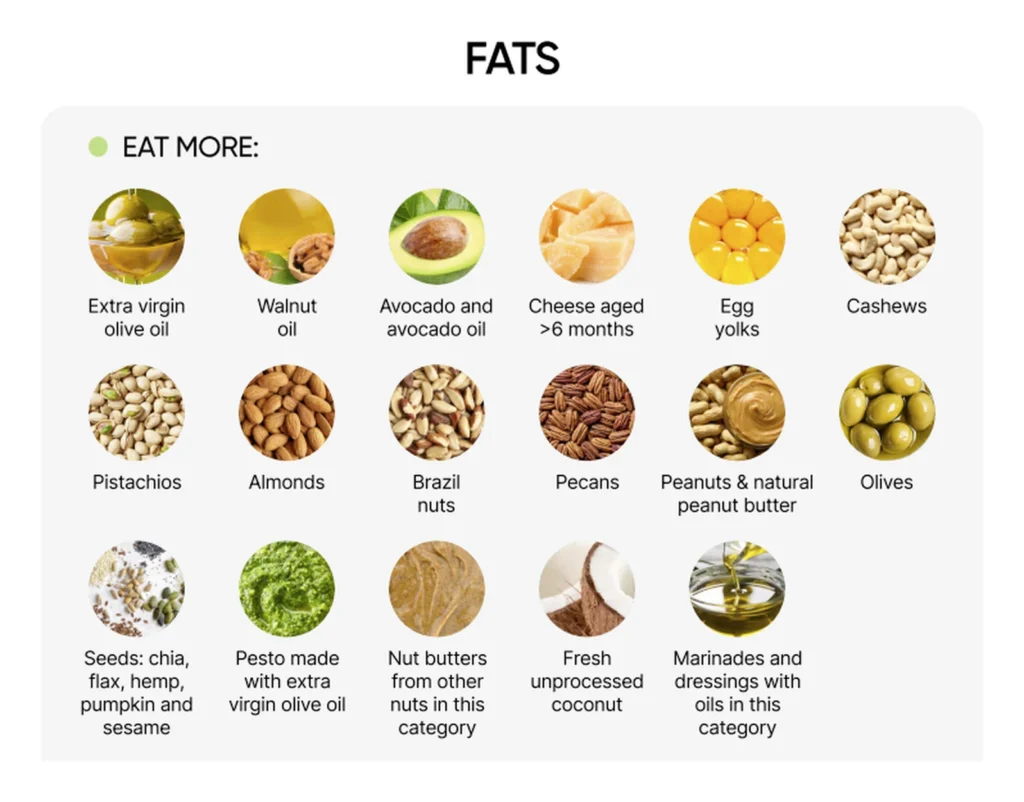
Unsaturated fats can come from nuts, seeds, avocado, fish, and liquid plant oils. Replacing some saturated fat with unsaturated fat is generally encouraged in current dietary guidance. (3)
Foods that can contribute unsaturated fats include:
- Extra virgin olive oil
- Avocado
- Avocado oil
- Walnut oil
- Cashews
- Almonds
- Brazil nuts
- Pecans
- Peanuts
- Natural peanut butter
- Pistachios
- Olives
- Chia seeds
- Flax seeds
- Hemp seeds
- Pumpkin seeds
- Sesame seeds
- Other nut butters
- Pesto made with olive oil
- Marinades made with liquid plant oils
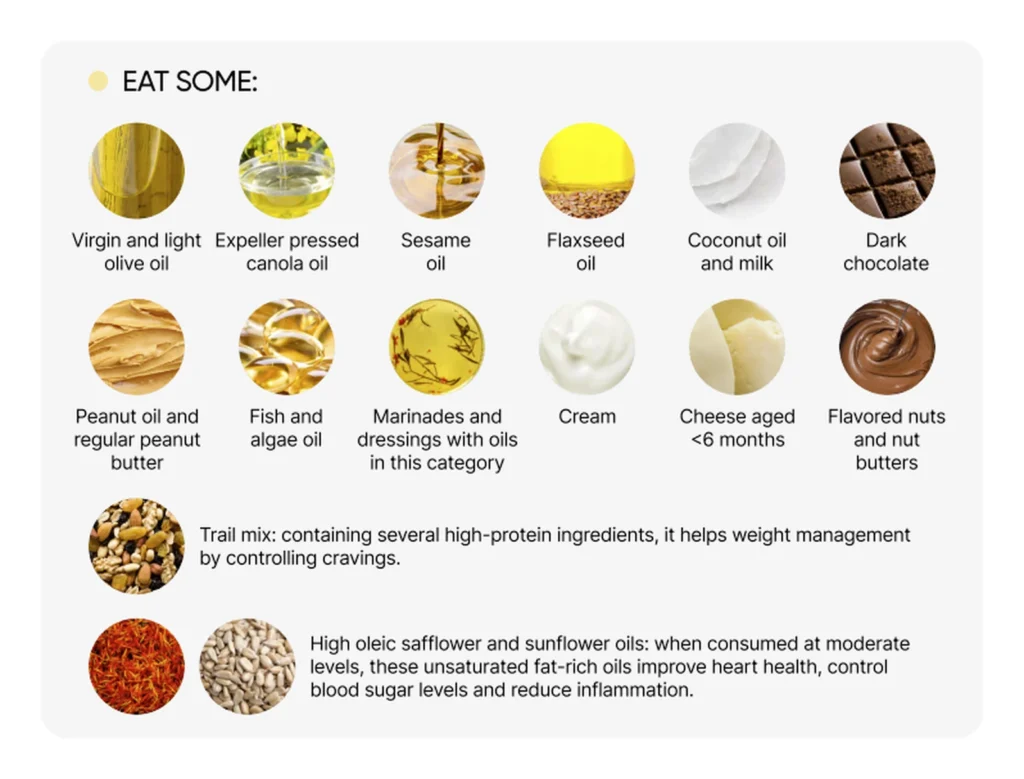
Other fat-rich foods that can fit include:
- Coconut and coconut milk
- Dark chocolate
- Cheese
- Peanut butter
- Flavored nuts
- Flavored nut butters
- Trail mix
- Sesame oil
- Flaxseed oil
- Fish and algae oils
Foods higher in saturated fat, added sugar, or heavy processing may be better chosen less often. Examples include:
- Butter-heavy foods
- Some processed cheeses
- Margarine products high in saturated fat
- Fat-rich foods with substantial added sugar
- Heavily processed meat products
- Dressings or sauces that add large amounts of saturated fat, sugar, or sodium
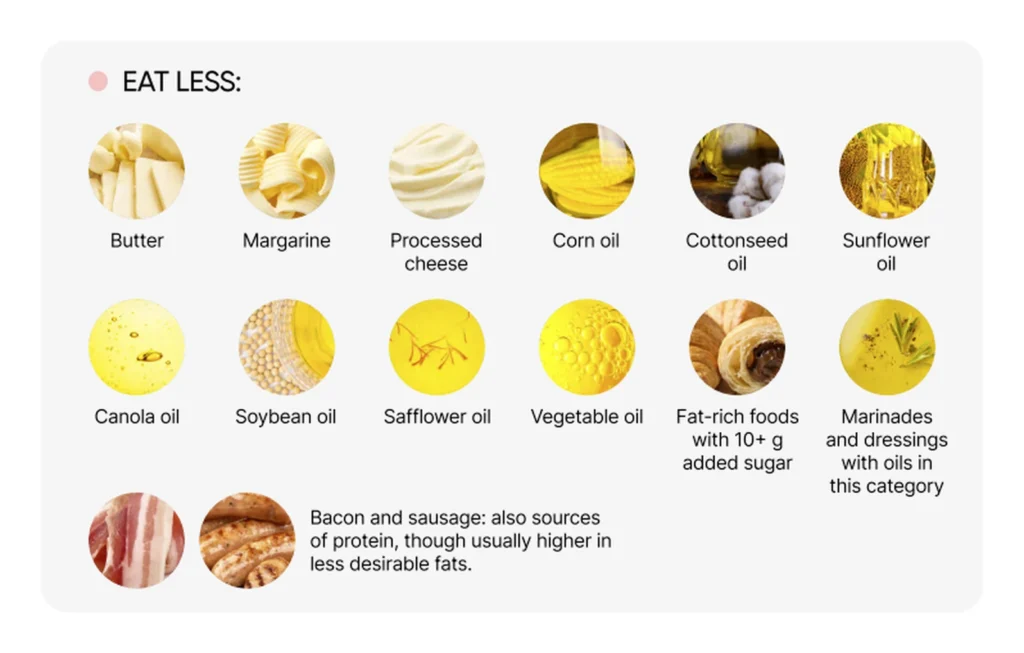
Common liquid plant oils such as olive, canola, corn, peanut, safflower, soybean, and sunflower oils provide unsaturated fats. (3)
That means there is no need to place an oil in a lower-frequency category simply because it is an oil. Consider its fat profile, serving size, and how it fits into the meal.
Vegetables
Vegetables provide an easy way to add variety to a plate.
One practical approach is to eat the rainbow. Different vegetables provide different combinations of vitamins, minerals, fiber, and naturally occurring plant compounds.
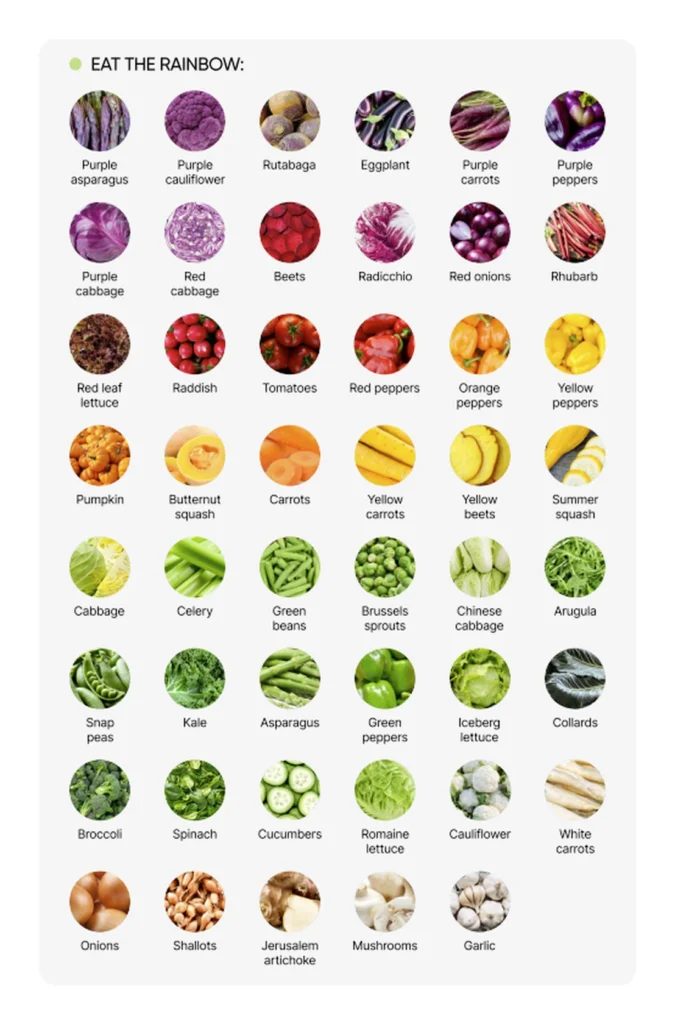
You do not need every color at every meal. Instead, aim for variety across several days.
Purple and Deep Red Vegetables
Examples include:
- Purple carrots
- Beets
- Purple asparagus
- Radicchio
- Purple cauliflower
- Rhubarb
- Red cabbage
- Eggplant
- Purple cabbage
- Purple peppers
- Red onions
Red Vegetables
Examples include:
- Red peppers
- Tomatoes
- Radishes
- Red leaf lettuce
Orange and Yellow Vegetables
Examples include:
- Orange peppers
- Yellow peppers
- Pumpkin
- Butternut squash
- Yellow beets
- Summer squash
- Carrots
- Yellow carrots
Green Vegetables
Examples include:
- Brussels sprouts
- Green beans
- Celery
- Chinese cabbage
- Cabbage
- Arugula
- Snap peas
- Broccoli
- Kale
- Spinach
- Collards
- Asparagus
- Cucumbers
- Green peppers
- Romaine lettuce
- Iceberg lettuce
White and Pale Vegetables
Examples include:
- Cauliflower
- Onions
- Shallots
- Garlic
- White carrots
- Jerusalem artichoke
- Mushrooms
Current guidance likewise encourages variety among vegetables and fruits rather than relying on a very narrow selection. (1)
Not enthusiastic about plain vegetables? Flavor still counts.
Try adding:
- Garlic
- Fresh herbs
- Dried herbs
- Spices
- Lemon
- Lime
- Vinegar
- Pesto
- Olive-oil-based dressing
- Yogurt-based sauces
Frozen vegetables can also be useful when fresh options are inconvenient or expensive.
The goal is not to create the most colorful plate imaginable every time you eat. It is to make variety realistic enough to repeat.
Read more: Plant-Based Intermittent Fasting: How to Fill Your Eating Window with Food That Truly Counts
How to Make a Healthy Plate Model?
You can make a healthy plate model in 3 steps: choose the main food groups, decide which options you want more often, and adjust portions to your appetite and routine.
The framework is intentionally flexible rather than turning every meal into a nutrition calculation.
1. Choose What Goes on the Plate
Start with four areas:
- Vegetables or fruit
- Protein
- A carbohydrate-rich food
- A source of fat
Not every meal needs four separate foods.
Some foods cover more than one category.
Lentils provide protein and carbohydrates. Nuts provide fat and protein. Yogurt may provide protein, carbohydrates, and fat.
A lentil bowl with quinoa, vegetables, and olive oil may already contain every component.
2. Make Mindful Food Choices
Consider what you enjoy eating as well as its nutritional role.
A useful eating pattern includes:
- Foods and flavors you enjoy
- Meals you know how to prepare
- Portions that feel comfortable to you
- Enough variety to help you cover different food groups over time
Notice how you feel after eating.
Did the meal satisfy your hunger?
Did you enjoy it?
Would you choose the same portion again on a similar day?
Those observations can help you adjust future meals without turning eating into a rigid calculation.
3. Make the Pattern Repeatable
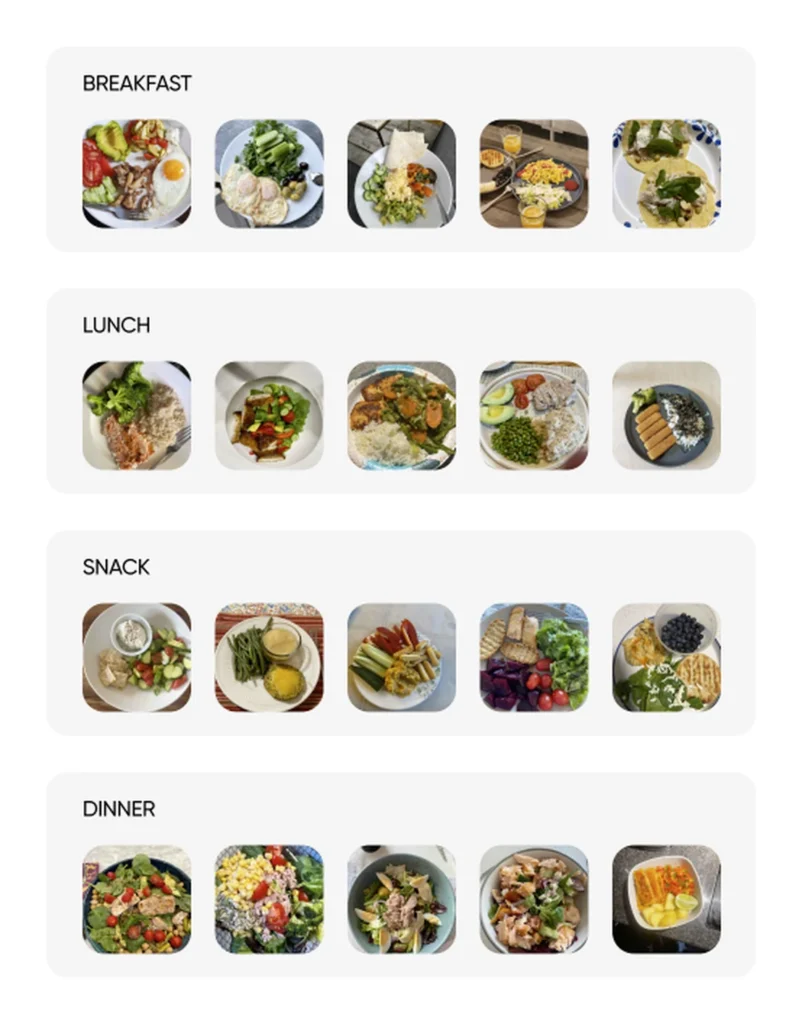
Healthy eating becomes easier when you have a few familiar meals you can assemble without much thought.
For example:
Breakfast: oatmeal + plain Greek yogurt + berries + nuts
Lunch: quinoa + lentils + spinach + peppers + olive oil dressing
Dinner: salmon + potatoes + broccoli + avocado
Snack: fruit + natural peanut butter
These combinations are examples rather than required menus. Swap ingredients based on taste, budget, availability, and dietary preferences.
How Do You Decide Where a Food Fits?
Start by identifying what the food primarily contributes to the meal, then consider your eating pattern, how it is prepared, and how processed it is.
Three questions can make the decision easier.
Which Macronutrient Does the Food Mainly Contribute?
Ask whether the food mainly functions as:
- Protein
- Carbohydrate
- Fat
- Vegetable or fruit
The answer will not always be perfect.
Peanut butter contains protein but often functions mainly as a fat source within a meal.
Beans provide both protein and carbohydrates.
This categorization is simply a planning tool.
What Kind of Eating Pattern Do You Follow?
The same food can play a different role depending on the rest of your diet.
For example, butternut squash may simply count as a vegetable in an everyday balanced meal.
Someone intentionally following a lower-carbohydrate eating pattern might pay more attention to its carbohydrate contribution.
The food has not changed. The context has.
How Do You Normally Prepare the Food?
Preparation also changes the finished meal.
Consider potatoes:
- Boiled potatoes
- Roasted potatoes with olive oil
- Mashed potatoes
- French fries
They begin with the same food but differ in preparation and overall composition.
Ask what you add to the food and how you normally eat it.
Whether you want to refresh your fitness routine, explore lower-calorie recipe ideas, or bring more structure to your wellness habits, BetterMe: Health Coaching app offers tools that can support your next step. Explore the app and find an approach that works for your lifestyle.
How Processed Is the Food?
Processing can be one clue when deciding where a food fits on your plate, but it should not be the only one.
A useful example is:
Apple -> applesauce -> apple juice
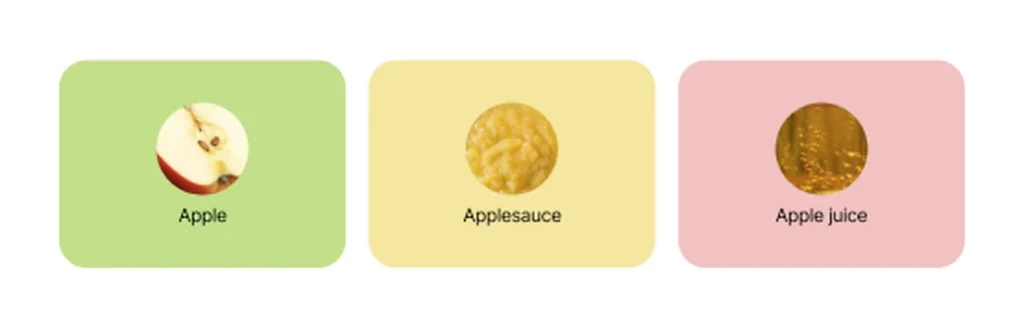
Each starts with the same fruit.
The whole apple retains its original structure and fiber. Applesauce is more processed but can still be an ordinary fruit option, particularly when unsweetened. Juice removes much of the fruit’s intact structure and fiber.
Current guidance generally favors whole fruit over fruit juice. (1)
You can apply the same idea to other foods:
Oats -> flavored instant oats -> oat-based snack bar
Potato -> roasted potato -> fries
Peanuts -> natural peanut butter -> heavily sweetened peanut spread
Processing does not automatically make a food unsuitable.
Frozen vegetables, canned beans, yogurt, tofu, whole-grain bread, and canned fish are all processed to some degree.
A more useful question is:
What changed during processing?
Check whether the product gained:
- A substantial amount of added sugar
- A large amount of sodium
- More saturated fat
- Ingredients that make the food substantially more calorie-dense
Also consider whether much of the original fiber or food structure was removed.
For packaged foods, the Nutrition Facts label can help you compare products. Added sugars are listed separately. A 5% Daily Value or less is considered low, while 20% or more is considered high. (4)
What Should a Normal Plate Look Like?
A normal plate does not need one universal ratio because individual appetites, activity levels, food preferences, and goals differ.
Your plate may also change from meal to meal.
A person eating before a long endurance session may choose more carbohydrate.
Someone having a light lunch may want less total food.
A vegetarian plate may use beans, lentils, tofu, or tempeh where another meal uses chicken or fish.
A simple template is:
Something colorful + a protein source + a satisfying carbohydrate + some fat
Then adjust it based on the meal.
For example:
Plate 1
- Chicken
- Brown rice
- Broccoli
- Olive oil dressing
Plate 2
- Lentils
- Quinoa
- Spinach and roasted peppers
- Avocado
Plate 3
- Salmon
- Potatoes
- Green beans
- Olive oil
Plate 4
- Tofu
- Rice
- Mixed vegetables
- Sesame seeds
For dinner-specific ideas, BetterMe also has a guide to building a healthy dinner plate.
How Can You Make Healthy Eating Easier to Maintain?
Build a small collection of meals you enjoy and know how to prepare instead of trying to invent something completely different every day.
Focus on:
- Foods and flavors you enjoy
- Meals you know how to cook
- Portions that feel comfortable
- Ingredients you can realistically keep at home
- Options that fit your schedule
You can repeat meals.
You can use frozen vegetables.
You can keep canned beans available.
You can eat the same breakfast several days in a row.
You can buy pre-cut produce if it makes vegetables easier to use.
Convenience does not automatically make a meal less nutritious.
The more realistic your routine is, the easier it can be to repeat.
Read more: Long-Term Effects of Intermittent Fasting
How to Build a Healthy Plate for Weight Loss?
For weight management, start with the same balanced plate rather than removing carbohydrates, fats, or another entire food group.
A varied eating pattern built around nutrient-dense foods can support weight-management goals, but no plate formula guarantees weight loss.
Overall food intake, activity, sleep, appetite, and individual factors also matter.
The “eat more, eat some, eat less” framework can be useful because it focuses on frequency rather than forbidden foods.
You might choose more frequently:
- Vegetables
- Whole fruit
- Beans
- Lentils
- Whole grains
- Fish
- Eggs
- Poultry
- Tofu
- Tempeh
- Nuts
- Seeds
- Plain yogurt
You might choose less frequently:
- Sugar-sweetened drinks
- Candy
- Pastries
- Heavily processed snack foods
- Foods containing substantial amounts of added sugar
Current dietary guidance similarly prioritizes nutrient-dense foods while recommending less reliance on foods high in refined carbohydrates, added sugars, excess sodium, or saturated fat. (2)
The useful distinction is “less often,” not “never.”
An eating pattern that only works when every enjoyable food is excluded may be difficult to maintain.
FAQs
What is the 3-3-3 rule for meals?
There is no single established nutrition standard called the 3-3-3 rule for meals in the sources used for this article. Different online versions use the phrase differently. For a clearer approach, build meals around vegetables, protein, carbohydrates, and fats, then adjust amounts to your needs.
What should a balanced meal consist of?
A balanced meal can combine vegetables or fruit, a protein source, a carbohydrate-rich food, and some fat. The exact foods and proportions can vary according to appetite, activity, preferences, and the rest of your day’s meals.
Can you lose weight with the balanced plate method?
A balanced plate can support a weight-management eating pattern, but it does not guarantee weight loss. Your overall energy intake, activity, eating habits, sleep, and other individual factors also contribute to changes in body weight.
What should a normal plate look like?
There is no single plate that every person needs to copy. Use the plate as a flexible framework and include foods from several groups instead of trying to achieve a visually perfect ratio at every meal.
What does a healthy plate consist of?
A healthy plate can contain vegetables or fruit, protein, carbohydrate-rich foods, and a source of unsaturated fat. Variety matters across meals and days, so you do not need to fit every nutritious food into one plate. (1)
The Bottom Line
Learning how to build a healthy plate can be simpler than tracking every ingredient separately. Start with vegetables, protein, carbohydrates, and fats, then choose foods you enjoy and portions that match your appetite and routine.
The BetterMe “eat more, eat some, eat less” framework can help you think about frequency without turning food into a strict set of rules. Build meals you know how to make, vary your produce, favor minimally processed options most often, and leave room for flexibility.
DISCLAIMER:
This article is intended for general informational purposes only and does not serve to address individual circumstances. It is not a substitute for professional advice or help and should not be relied on for making any kind of decision-making. Any action taken as a direct or indirect result of the information in this article is entirely at your own risk and is your sole responsibility.
BetterMe, its content staff, and its medical advisors accept no responsibility for inaccuracies, errors, misstatements, inconsistencies, or omissions and specifically disclaim any liability, loss or risk, personal, professional or otherwise, which may be incurred as a consequence, directly or indirectly, of the use and/or application of any content.
You should always seek the advice of your physician or other qualified health provider with any questions you may have regarding a medical condition or your specific situation. Never disregard professional medical advice or delay seeking it because of BetterMe content. If you suspect or think you may have a medical emergency, call your doctor.
SOURCES:
- Healthy diet (2026, who.int)
- Current Dietary Guidelines (2026, odphp.health.gov)
- Fats in Foods (2026, heart.org)
- Added Sugars on the Nutrition Facts Label (2026, fda.gov)

 Reviewed by