

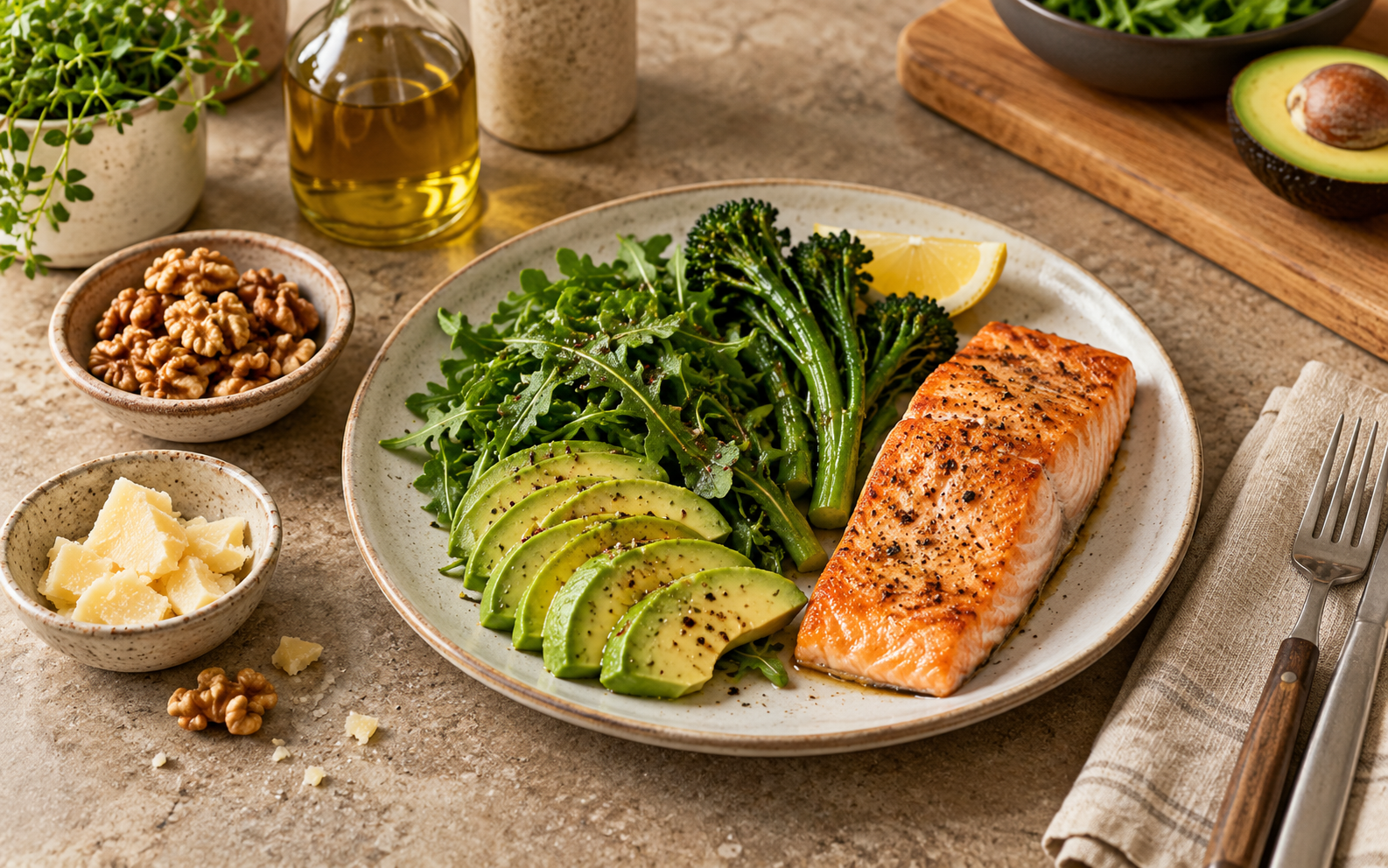
A 70-year-old considering weight loss should first discuss whether losing weight is appropriate. Rapid loss can compromise nutrition and muscle, and unintentional loss needs assessment. Start with a review of health, medicines, and eating habits. These low-effort meal ideas can help organize food while that plan takes shape (1).
If you have joint, muscle, or spine-related concerns, please consult your physician before starting this workout.
Following exercise and diet plans is the key in your fitness journey and greatly impacts results. In 4 weeks users can typically expect to lose not more than 1-2 lbs per week. Individual results may vary.
Key takeaways
The first decision is whether weight loss would help, followed by how to preserve nutrition and function.
- Weight-reducing diets are not appropriate for every older adult (1).
- Unintentional weight loss needs clinical assessment, even when someone previously wanted to lose weight (2).
- A fixed calorie target cannot be determined from age and sex alone (3).
- Older-adult protein guidance uses grams per kilogram, not the same number per pound (1).
- In one supervised trial, resistance exercise limited lean-mass loss during weight reduction but did not eliminate it (4).
- For adults aged 65 and older, activity guidance includes aerobic, strength, and balance work (5).
Should a 70-year-old try to lose weight fast?
Rapid weight loss is not usually advised at 70. A clinician can first consider nutritional status, muscle strength, medical conditions, and the likely benefits of changing weight (1).
Clinical nutrition guidance advises against routine dietary restrictions in older adults. It reserves weight-reducing diets for people with obesity and weight-related health problems, alongside exercise (1).
That guidance is more specific than choosing a diet because a scale reading seems high. Someone with poor appetite or recent illness may need help eating enough. Someone else may benefit from a monitored weight-management program.
Avoid using another person’s weekly result as a target. A fast drop can include changes in fluid, food in the digestive tract, and lean tissue. The scale alone cannot show whether a plan is meeting its intended goals.
Instead, ask what outcome matters: easier daily activities, better nutritional intake, or management of a weight-related condition. Agree on follow-up measures before changing meals.

When does weight loss need medical attention?
Weight loss that happens without trying should prompt a medical review. Difficulty eating, medication effects, illness, and social circumstances can all contribute (2).
A common clinical threshold is unintended loss of at least 5% of body weight over six to twelve months. That finding warrants evaluation in older adults (2). You do not need to wait for that threshold when a change is concerning.
For illustration, 5% of 160 pounds is 8 pounds. This calculation describes the threshold; it is not a suggested weight-loss goal.
Tell the clinician whether the change was planned, how quickly it happened, and whether appetite changed. Mention any changes in eating, digestion, or access to food.
Sudden or severe changes need prompt medical care. Routine diet advice cannot assess an urgent illness.
A larger body size does not exclude malnutrition. Nutritional assessment looks beyond body weight and considers intake and function (1).
Reasons why BetterMe is a safe bet: a wide range of calorie-blasting workouts, finger-licking recipes, 24/7 support, challenges that’ll keep you on your best game, and that just scratches the surface! Start using our app and watch the magic happen.
What should you discuss before changing your diet?
Discuss the purpose of weight loss, the risks of restriction, and the support available. A useful appointment produces specific decisions instead of a generic instruction to eat less.
|
Topic |
Information to bring |
Decision to discuss |
|---|---|---|
|
Recent weight change |
Available measurements and timing |
Whether the change needs assessment |
|
Appetite and meals |
A typical day’s food and drinks |
Whether intake is adequate |
|
Medicines |
Current prescription and supplement list |
Whether timing or side effects affect eating |
|
Daily function |
Changes in walking or chair rises |
Whether strength assessment is needed |
|
Food access |
Shopping, cooking, and budget barriers |
What practical support could help |
|
Follow-up |
Your preferences and concerns |
Which measures to monitor |
These questions reflect the broad nutrition assessment recommended for older adults (1). They are not a diagnostic checklist.
You can also ask whether weight maintenance is a reasonable goal. Improving meal quality and activity does not always require pursuing a smaller body.
If you use an app or calculator, bring its suggestions to the appointment. Automated estimates cannot account for every condition or medication.

How many calories should a 70-year-old eat?
Calorie needs depend on body size, activity, health, and the intended weight goal. Age alone cannot identify the appropriate intake (3).
A widely shared number such as 1,200 calories should not become a default prescription. Restriction can leave less room for protein, vitamins, and minerals. Older-adult nutrition guidance emphasizes adequate intake and cautions against unnecessary restrictions (1).
A dietitian can review usual intake before recommending changes. The plan may involve portions, food choices, meal access, or a prescribed intake. The approach should also consider appetite and the effort needed to prepare meals.
Avoid subtracting a large amount from an online estimate without review. Estimates are starting points, and actual needs can differ. Follow-up helps show whether the plan is practical and nutritionally adequate.
The broader guide to weight management after 70 explains how everyday function fits the discussion. Treat calorie calculations as one part of that assessment.

How much protein matters during weight loss?
Adequate protein and sufficient overall food intake are both important when planning nutrition for older adults. A target should be adjusted for health and clinical circumstances (1).
Expert guidance commonly discusses 1.0 to 1.2 grams of protein per kilogram daily for healthy older adults. Some medical circumstances require different advice (1). These figures are background information, not a personal prescription.
For a 68-kilogram person, that range calculates to approximately 68 to 82 grams daily. Kilograms and pounds are not interchangeable. Using the same number per pound would produce a substantially larger amount.
Kidney disease and other conditions can change the appropriate target. Ask your clinician before adopting a high-protein diet.
Include a protein-containing food at meals when it fits your plan. Examples include eggs, fish, yogurt, tofu, beans, or poultry (6). Choosing several options across the week adds variety.
Protein powders are optional products, not a requirement for weight management. A dietitian can help assess whether food intake is adequate before adding one.
What could a balanced day of meals look like?
A balanced day can include familiar foods across ordinary meals and snacks. The following menu is a sample, with no calculated calorie deficit or promised weight outcome.
Portions depend on your needs, appetite, allergies, and any prescribed restrictions. The menu illustrates combinations rather than a complete clinical diet.
|
Meal |
Sample combination |
Adaptation idea |
|---|---|---|
|
Breakfast |
Oatmeal, plain yogurt, and berries |
Use a suitable fortified alternative |
|
Lunch |
Chicken or chickpeas, rice, and vegetables |
Choose soft cooked vegetables if preferred |
|
Snack |
Fruit with nut butter |
Choose a texture that fits chewing ability |
|
Dinner |
Fish or tofu, potatoes, and green beans |
Use frozen vegetables for convenience |
|
Optional snack |
Yogurt or another familiar protein food |
Include when it fits appetite and needs |
Protein foods, grains, produce, and dairy or appropriate alternatives contribute different nutrients (6). A smaller plate alone cannot establish adequate nutrition.
Convenience foods can help when cooking is difficult. Frozen vegetables, canned beans, and ready-to-eat yogurt may reduce preparation. Compare labels and follow any sodium or other restrictions prescribed for you.
Plan around actual eating habits. If breakfast is usually small, discuss a practical way to add food rather than designing an unfamiliar elaborate meal.
Keep fluids available across the day unless you have a specific restriction. Fluid needs and restrictions require individual consideration (1). A universal number of glasses may not fit your situation.
BetterMe is your fast-track ticket to long-lasting weight loss! Tailor your fitness journey and maximize your results with just a couple of swipes!
Which activity helps preserve function?
A combination of aerobic, muscle-strengthening, and balance activities can form part of an older adult’s routine. The starting level should fit current ability and relevant health conditions (5).
General guidance for adults aged 65 and older includes at least 150 minutes of moderate aerobic activity weekly. It also includes muscle strengthening on at least two days and balance activities (5).
These are general targets, not a requirement to begin at that volume. If you cannot meet them, be active as your abilities allow. A clinician or qualified exercise professional can help adapt the plan.
A trial involving 160 older adults with obesity compared exercise approaches during a supervised weight-management program. Combined aerobic and resistance exercise improved function more than either exercise approach alone (4).
Resistance-containing groups lost less lean mass than the aerobic-only group. However, lean mass still decreased, and some participants had exercise-related problems (4). The findings do not justify promising that a home routine prevents muscle loss.
Use the result to ask about an appropriate exercise plan. A research program usually needs adapting and supervision before home use.

Can you target belly fat after 70?
A meal plan cannot determine where body fat changes. Abdominal appearance also does not reveal whether someone is losing fat, muscle, or fluid.
Avoid diets that promise a flatter stomach or other quick body changes. Focus the review on overall nutrition, function, and health goals. Weight-management guidance for older adults considers more than a single measurement (3).
Any new change in the abdomen alongside unplanned weight loss is worth raising with a doctor. It is not a reason for stronger calorie restriction.
A clothing-size goal can be emotionally meaningful, but it is not a medical assessment. Ask which measures are useful for your situation.

How can you monitor a plan without chasing daily changes?
Agree on a manageable review routine with your care team. Include food intake, activity, and everyday function alongside weight when appropriate.
A simple weekly note can record missed meals, appetite, and whether usual activities feel harder. Record relevant symptoms and changes to medicines. Bring the notes to follow-up.
If weighing is useful, use similar conditions for comparisons. Avoid changing your food plan in response to each isolated reading. Your clinician can interpret the pattern alongside other information.
Review sleep difficulties too. Older adults generally need seven to nine hours of sleep, although sleep patterns may change (7). Persistent sleep problems deserve attention without assuming they explain every weight change.
Frequently Asked Questions
Do men and women need completely different plans?
No. Both need adequate nutrition and an activity plan that fits their circumstances. Body size, health, preferences, and medicines can matter more than a sex-based template (1).
Are eggs required for protein?
No. Eggs are one option alongside fish, dairy, beans, tofu, and other foods (6). Choose a combination that fits your preferences and any prescribed restrictions.
Should I start fasting to speed up weight loss?
No. Fasting to speed up weight loss can make adequate intake harder after 70 (1). Discuss the fasting considerations after 70 with your clinician.
Can supplements replace meals?
Vitamin pills cannot replace the energy and protein in meals. Clinical nutrition drinks have specific uses, but their role should be assessed when intake is inadequate (1).
The bottom line
At 70, begin by deciding whether weight loss is appropriate with your clinician. Build the plan around adequate meals, suitable activity, and follow-up. Treat unexplained weight loss as a reason for assessment, not as a successful diet.
DISCLAIMER:
This article is intended for general informational purposes only and does not serve to address individual circumstances. It is not a substitute for professional advice or help and should not be relied on for making any kind of decision-making. Any action taken as a direct or indirect result of the information in this article is entirely at your own risk and is your sole responsibility.
BetterMe, its content staff, and its medical advisors accept no responsibility for inaccuracies, errors, misstatements, inconsistencies, or omissions and specifically disclaim any liability, loss or risk, personal, professional or otherwise, which may be incurred as a consequence, directly or indirectly, of the use and/or application of any content.
You should always seek the advice of your physician or other qualified health provider with any questions you may have regarding a medical condition or your specific situation. Never disregard professional medical advice or delay seeking it because of BetterMe content. If you suspect or think you may have a medical emergency, call your doctor.
SOURCES:
- ESPEN practical guideline: Clinical nutrition and hydration in geriatrics (2022, espen.org)
- Unintentional Weight Loss in Older Adults (2021, aafp.org)
- Maintaining a Healthy Weight (2022, nia.nih.gov)
- Aerobic or Resistance Exercise, or Both, in Dieting Obese Older Adults (2017, pubmed.ncbi.nlm.nih.gov)
- Older Adult Activity: An Overview (2025, cdc.gov)
- Healthy Eating As You Age: Know Your Food Groups (2022, nia.nih.gov)
- Sleep and Older Adults (2025, nia.nih.gov)

 Reviewed by

 Reviewed by

 By