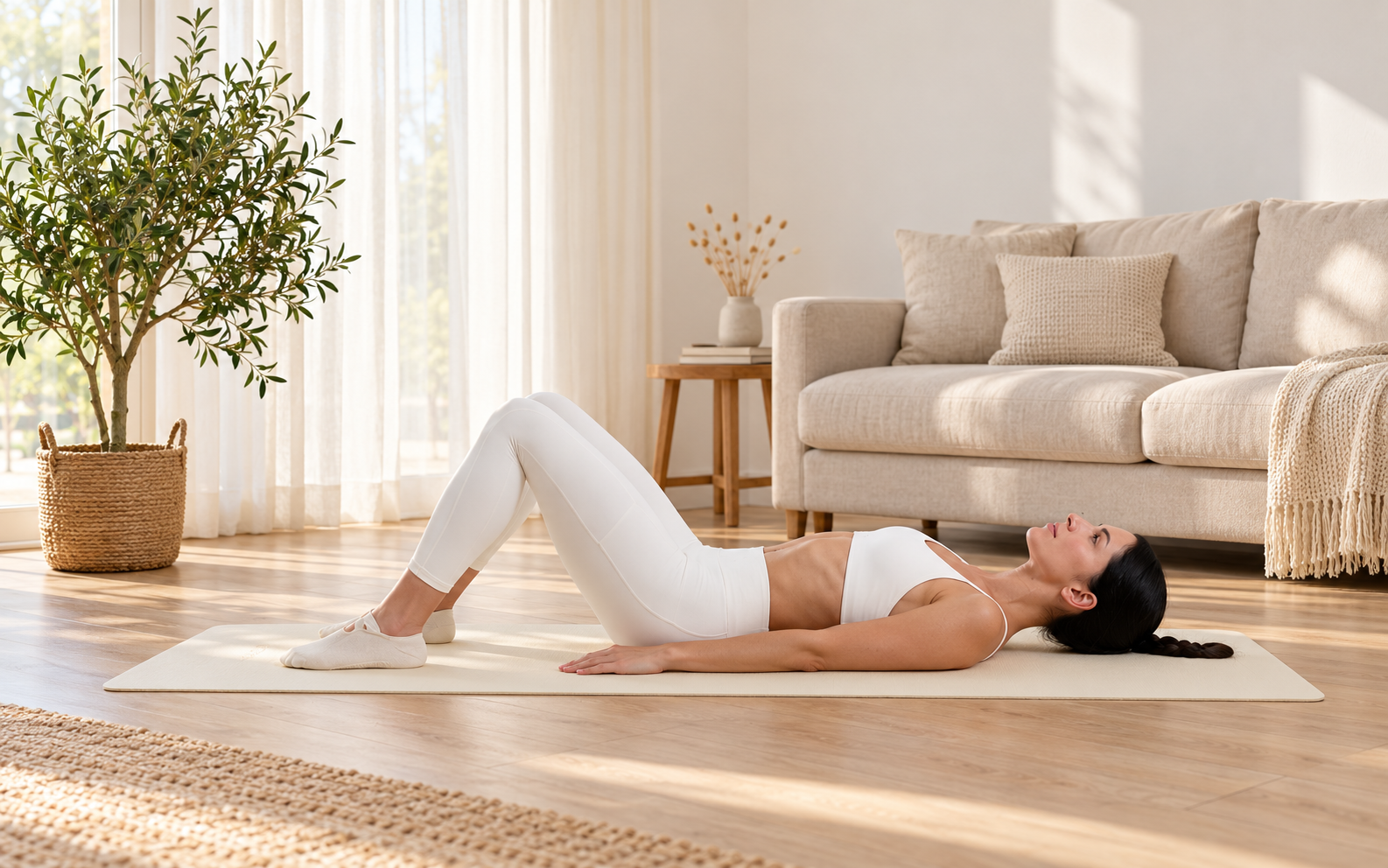
This home Pilates workout guide gives you a 20-minute beginner routine you can do on a mat. You need no specialized equipment, and each move includes a simple way to modify it. Start 2 to 3 times a week and build from there.
Pilates is a low-impact method built on controlled movement, steady breathing, and core control (1). Joseph Pilates developed the method in the early 20th century. Today you can practice it in a Pilates studio, in an online Pilates class, or in your living room. If you want more routines, see this Pilates workout at home.
Following exercise and diet plans is the key in your fitness journey and greatly impacts results. In 4 weeks users can typically expect to lose not more than 1-2 lbs per week. Individual results may vary.
Key takeaways
Here is what to know before you start practicing Pilates.
- Mat work needs only a mat and a small clear space, and each move has a simple modification.
- Adults are advised to do muscle-strengthening activity on at least 2 days a week (2).
- A beginner home Pilates routine can include a short warm-up, 5 to 6 basic moves, and a cooldown.
- One meta-analysis of 11 trials linked the method with lower weight and body fat in adults with excess weight (4).
- Another meta-analysis found mat Pilates was not better than other exercise for body composition (5).
- Beginners can start with 5 basic moves: the hundred, pelvic curl, single leg stretch, side-lying leg lifts, and swan prep.
- Good form matters more than speed, so modify or skip any move that does not feel right.
Do at-home Pilates workouts actually work?
Yes, at-home sessions can work well for building core strength and control. Mat work uses your own bodyweight, so the core moves are the same at home as in a studio. Feedback varies with solo practice, a recorded Pilates class, or a session with a Pilates instructor.
Research on this method and weight is mixed. One meta-analysis of 11 trials found lower body weight, BMI, and body fat in adults with excess weight (4). Another review found mat Pilates was no better than other training for body composition (5). For more detail, read can you lose weight doing Pilates every day.
Some people like an in-person class or a Pilates video when they start. A teacher can spot mistakes you might miss alone. Online classes are a middle ground between a studio and solo practice.
What equipment do you need for a home Pilates workout?
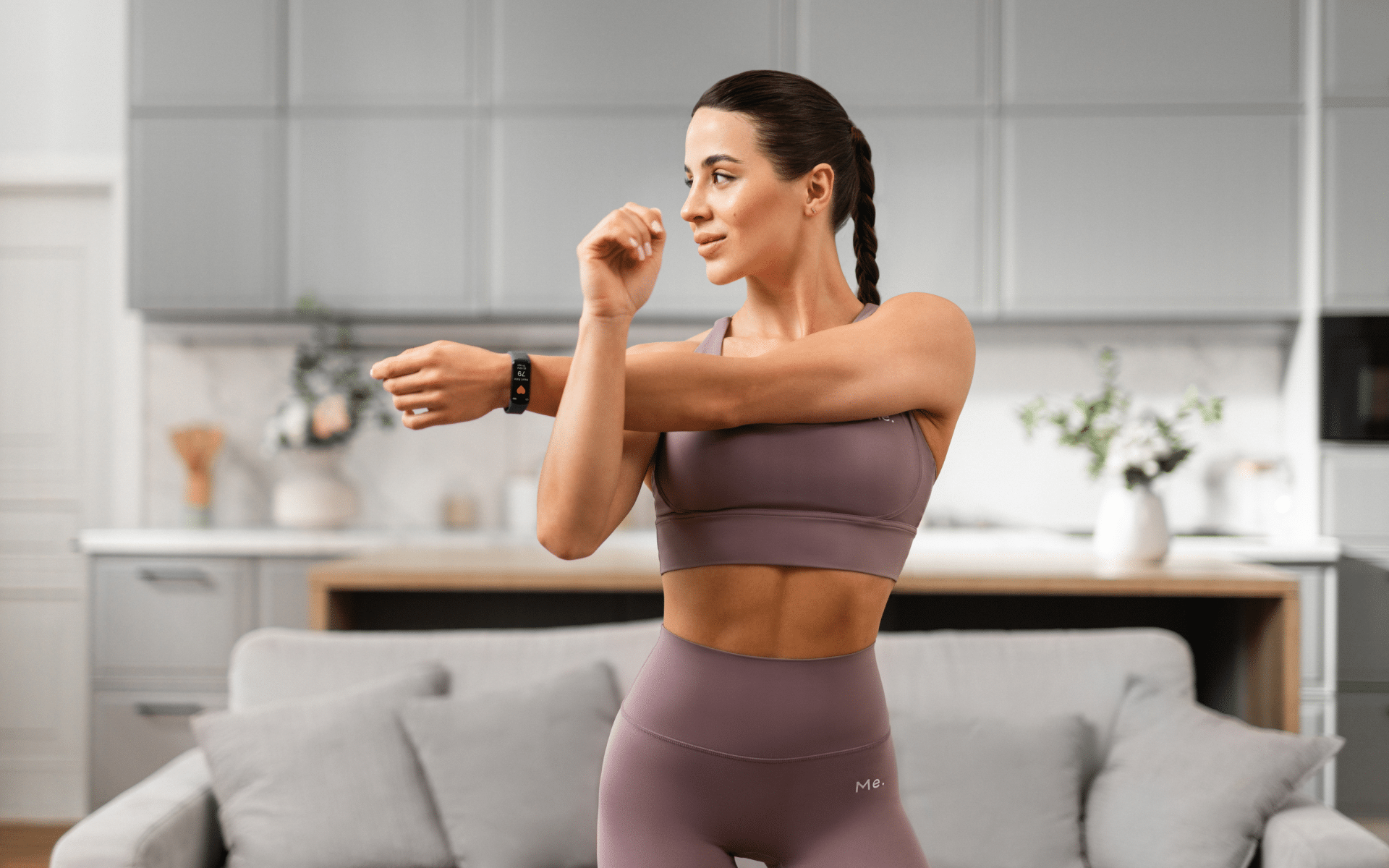
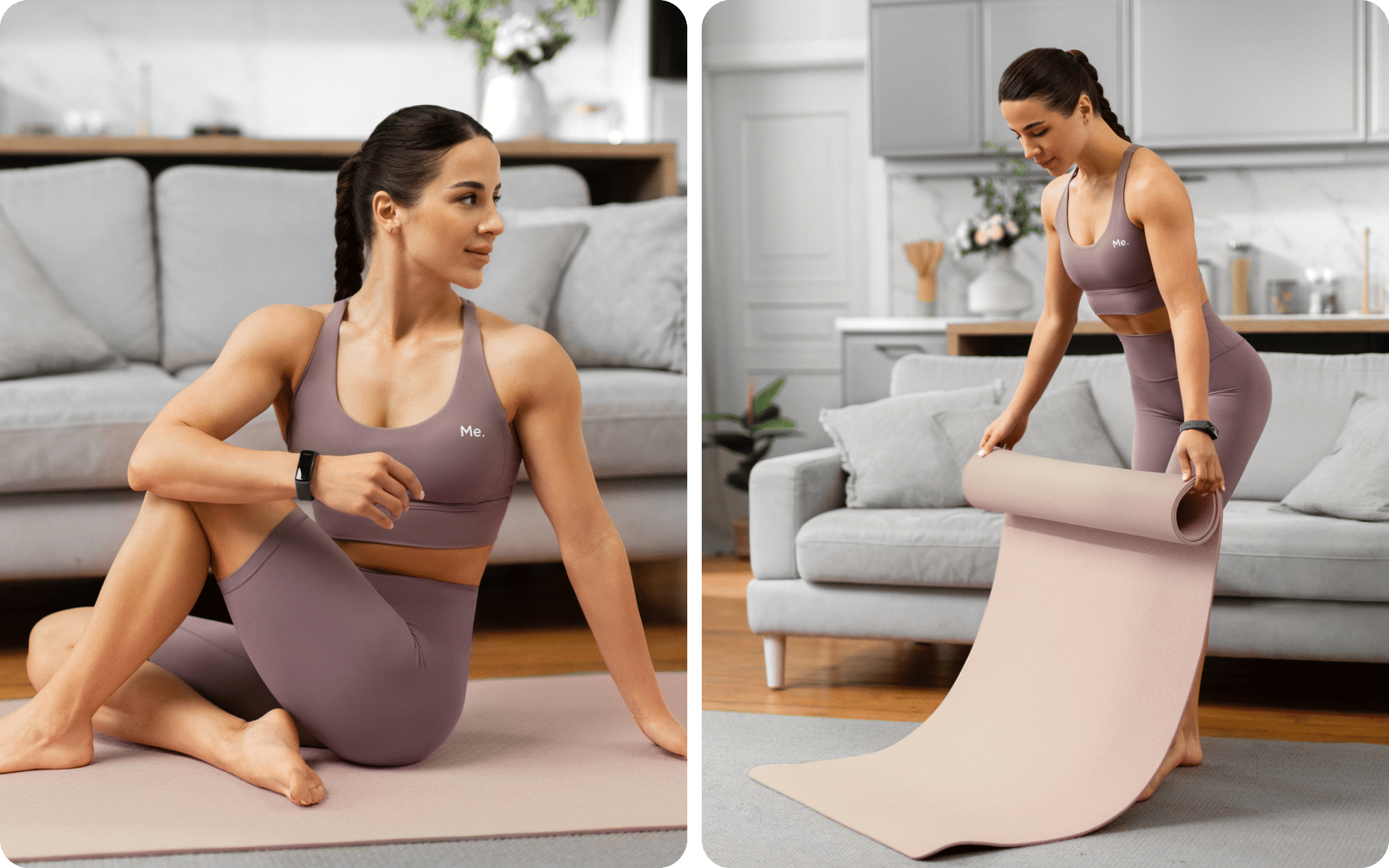
You need only a mat for a home Pilates workout. A thick mat can cushion your back on hard floors, and a yoga mat works for most moves. Wear fitted clothes that let you move freely.
|
Item |
Needed? |
What it adds |
|---|---|---|
|
Mat or yoga mat |
Yes |
Grip and padding for your back |
|
Small towel |
Optional |
Support under your head or hips |
|
Pilates ball |
Optional |
Extra support or challenge for core moves |
|
Resistance band |
Optional |
Added load for legs and arms |
|
Reformer |
No |
Spring resistance, used in reformer Pilates at a studio |
A reformer is a large machine with springs and a sliding carriage. Studios often use them. Mat work at home does not need one.
Reasons why BetterMe is a safe bet: a wide range of calorie-blasting workouts, finger-licking recipes, 24/7 support, challenges that’ll keep you on your best game, and that just scratches the surface! Start using our app and watch the magic happen.
Can you do Pilates at home without equipment?
Yes, you can do Pilates at home without equipment because mat work relies on bodyweight. Most classic moves, like the hundred and the pelvic curl, need only the floor. You can add a band or ball later to challenge your core.
What are some beginner-friendly Pilates exercises to do at home?
The hundred, pelvic curl, single leg stretch, side-lying leg lifts, and swan prep are beginner-friendly moves. Each one teaches you to engage your core while you breathe steadily. Start lying on your back for most of them.
The hundred
The hundred warms up your body and trains breathing with core control. Start lying on your back with knees bent in a tabletop position. Lift your head and shoulders, then pump your arms up and down. Inhale for 5 counts and exhale for 5 counts, for 10 rounds.
Pelvic curl
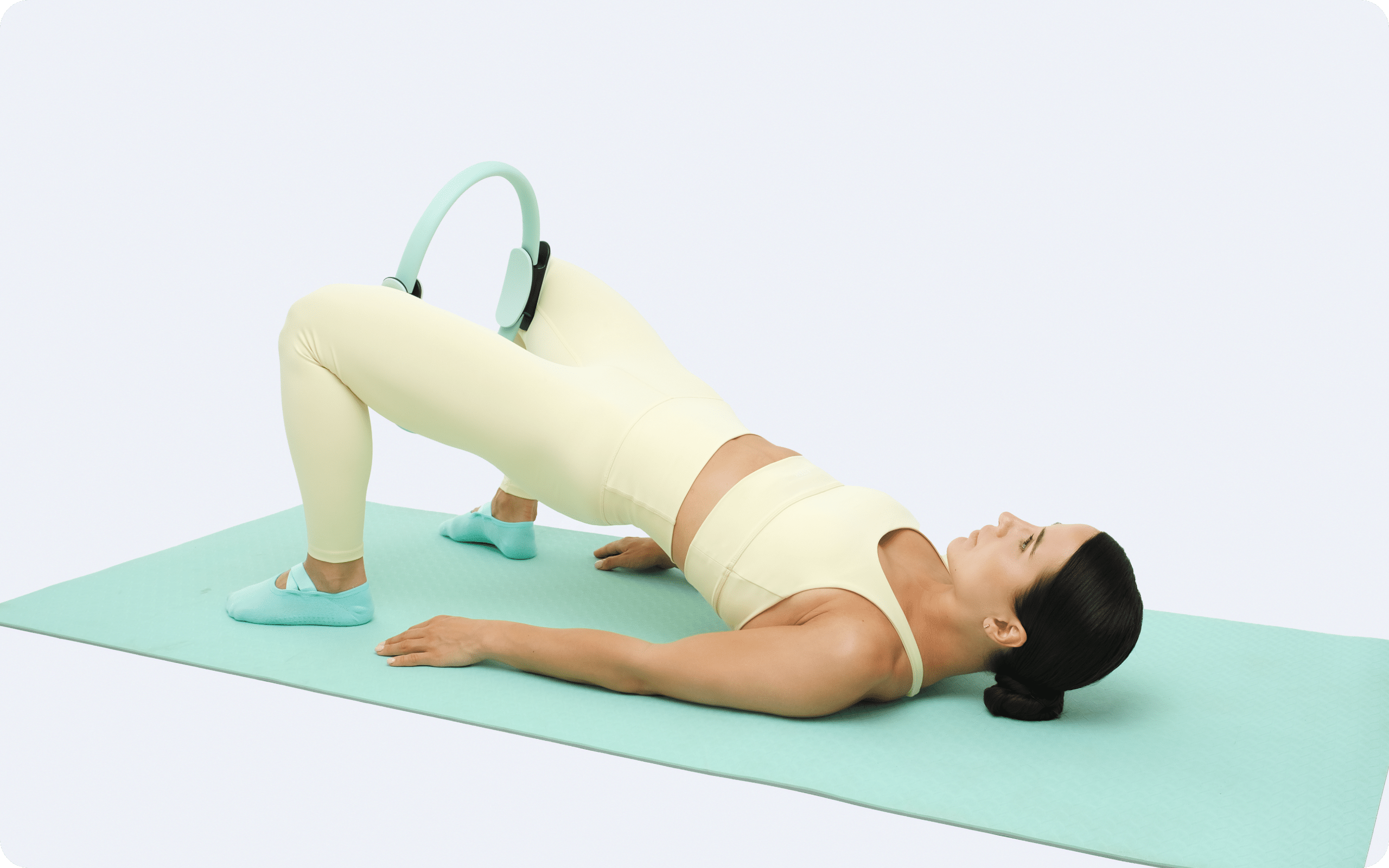
The pelvic curl trains your glutes and spine control. Lie on your back with knees bent and feet flat. Tilt your pelvis, then raise your hips one vertebra at a time. Lower slowly the same way, for 8 to 10 reps.
Single leg stretch
The single leg stretch works your lower abdominal muscles and coordination. Lift your head and shoulders, hug one knee in, and extend the other leg. Switch legs with control for 8 to 10 reps per side.
Side-lying leg lifts
Side-lying leg lifts target the glute muscles on the side of your hip. Lie on your side with your forearm on the mat or your head resting on your arm. Lift your top leg to hip height and lower it, for 10 to 15 reps per side.
Swan prep
Swan prep strengthens the muscles along your back. Lie face down with your hands under your shoulders. Press gently to lift your chest, keeping your lower ribs down. Lower with control for 6 to 8 reps.
How do you build a full-body Pilates workout at home?
A beginner home Pilates routine needs a short warm-up, 5 to 6 basic moves, and a cooldown. Keep the same order each time so the moves feel familiar. This sample beginner Pilates workout is planned for about 20 minutes. Adjust the duration for your pace and rest.
|
Block |
Exercise |
Reps or time |
|---|---|---|
|
Warm-up |
Breathing, pelvic tilts, shoulder rolls |
3 minutes |
|
Core |
The hundred |
10 breaths |
|
Hips and back |
Pelvic curl |
8 to 10 reps |
|
Core |
Single leg stretch |
8 to 10 per side |
|
Hips |
Side-lying leg lifts |
10 to 15 per side |
|
Back |
Swan prep |
6 to 8 reps |
|
Full body |
Modified plank on forearms |
3 holds of 15 to 20 seconds |
|
Cooldown |
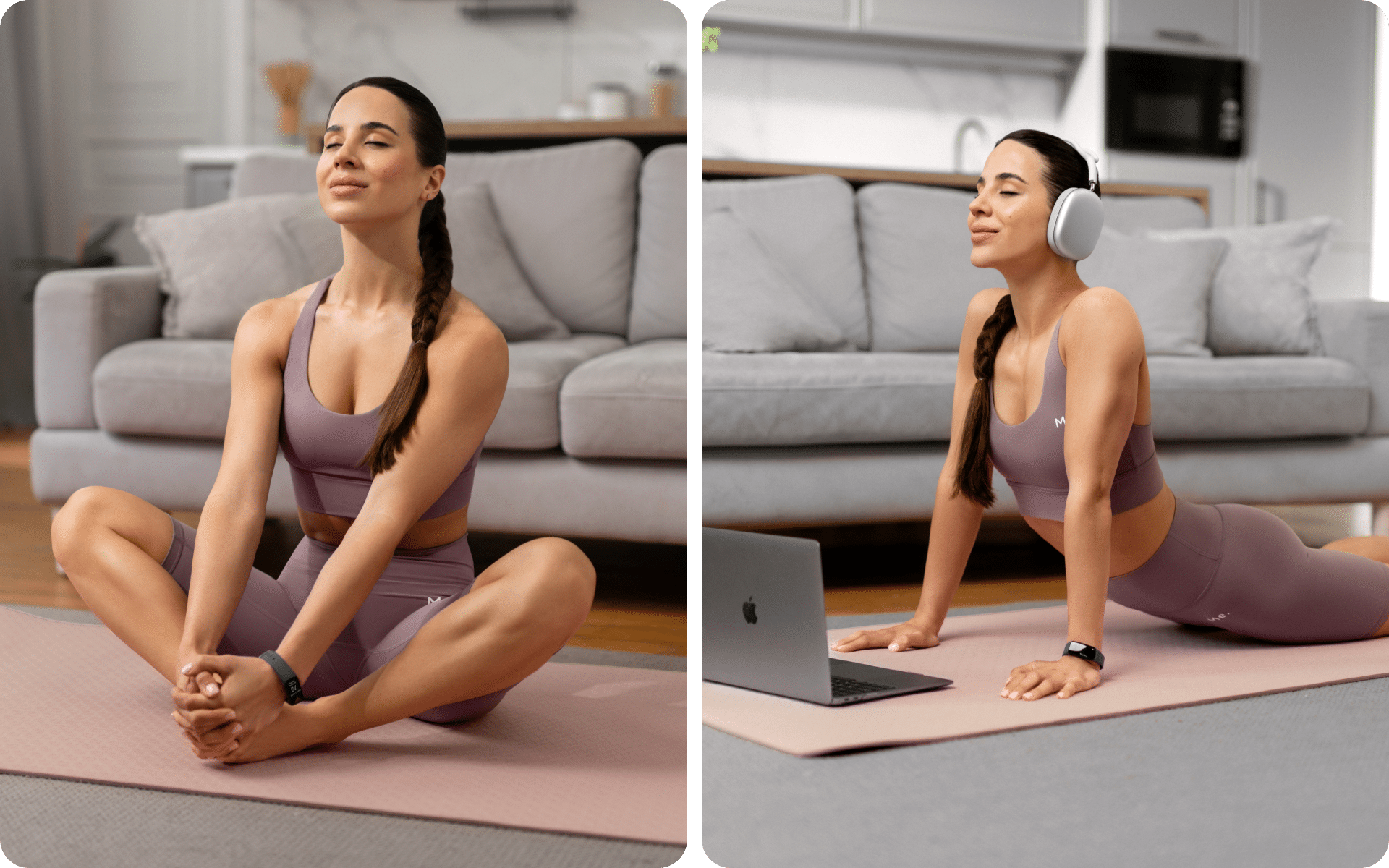
Spine twist and mermaid stretch |
3 minutes |
This sample plan is for general guidance only. Repeat the main block for a longer session. Rest between exercises as needed and do fewer repetitions when control becomes difficult.
Is 20 minutes of Pilates a day enough to see results?
Twenty minutes a day is enough time to practice the 5 beginner moves with control. Progress depends on the exercises, workload, frequency, rest, and starting point.
Mat work alone may not meet all activity needs. Adults are also advised to get 150 minutes of moderate aerobic activity each week (2). Pair your Pilates sessions with walking or other home workouts. To learn more, see how long it takes to see results from Pilates.

How many times a week should you do Pilates at home?
Two to three times a week is a good starting point for Pilates at home. That matches the advice to do muscle-strengthening activity on at least 2 days a week (2). Give yourself time to rest between sessions, especially at first.
As your body adapts, you can add a fourth session or try different exercises. Listen to your body, and take a rest day if you feel sore or tired.
When it comes to weight loss, progress is made by inches, not miles, so it’s much harder to track and a lot easier to give up. The BetterMe Well-Being Coach app is your personal trainer, nutritionist, and support system all in one. Start using our app to stay on track and hold yourself accountable!
What is the 10/20/30 rule in Pilates?
The 10/20/30 rule is a popular Pilates saying that links steady practice with gradual change over 30 sessions. It is not a scientific rule, and results vary from person to person. Track how long you can hold each position and how many controlled reps you can do.
Your progress depends on frequency, effort, sleep, and diet. A steady practice of 2 to 3 weekly sessions matters more than any session count.
What changes can you expect from doing Pilates at home?
Regular home practice may help you build strength, control, and body awareness. Many people notice they can hold positions longer and move with more control. The method also uses focused breathing, which some people find calming (6).
Changes in body weight or body composition vary from person to person (4, 5). For a broader look, read what Pilates helps with.

How can beginners modify Pilates exercises and avoid common mistakes?
Beginners can modify moves by shortening the range, bending the knees, or keeping the head down. Small changes keep the focus on control. These are the most common Pilates mistakes and their fixes.
|
Mistake |
Fix |
|---|---|
|
Holding your breath |
Exhale on the effort and inhale to prepare |
|
Arching the lower back |
Try pressing your lower back gently toward the mat |
|
Straining the neck |
Keep your head down, or rest it on a towel |
|
Rushing the reps |
Slow down and count each movement |
|
Legs too low too soon |
Keep your knees bent in tabletop |
Modify or skip any move that causes discomfort. If you have lower back discomfort, ask a physical therapist or doctor before trying Pilates. For class basics, read Pilates 101.
No, mat work is mainly a strength and control workout, not cardio. Faster flows can raise your heart rate, though. Read more in is Pilates cardio. A 30-minute Pilates workout may be too long for some beginners. It depends on the exercises, effort, rest, and your starting ability. Choose a shorter session or fewer movements when needed. Yes, gentle practice every day is possible for many people. Alternate harder and easier sessions so your muscles can rest.Frequently Asked Questions
Is Pilates cardio?
Is a 30-minute Pilates workout too long for a beginner?
Can you do Pilates every day?
The bottom line
A home Pilates workout needs only a mat, a small space, and about 20 minutes. Start with the 5 beginner moves 2 to 3 times a week. Focus on form and breathing, then add reps or time as you build strength.
DISCLAIMER:
This article is intended for general informational purposes only and does not serve to address individual circumstances. It is not a substitute for professional advice or help and should not be relied on for making any kind of decision-making. Any action taken as a direct or indirect result of the information in this article is entirely at your own risk and is your sole responsibility.
BetterMe, its content staff, and its medical advisors accept no responsibility for inaccuracies, errors, misstatements, inconsistencies, or omissions and specifically disclaim any liability, loss or risk, personal, professional or otherwise, which may be incurred as a consequence, directly or indirectly, of the use and/or application of any content.
You should always seek the advice of your physician or other qualified health provider with any questions you may have regarding a medical condition or your specific situation. Never disregard professional medical advice or delay seeking it because of BetterMe content. If you suspect or think you may have a medical emergency, call your doctor.
SOURCES:
- Pilates (2011, ncbi.nlm.nih.gov)
- Adult activity: an overview (2023, cdc.gov)
- Pilates to improve core muscle activation in chronic low back pain: a systematic review (2023, ncbi.nlm.nih.gov)
- Pilates for overweight or obesity: a meta-analysis (2021, pubmed.ncbi.nlm.nih.gov)
- Effects of the mat Pilates method on body composition: systematic review with meta-analysis (2020, pubmed.ncbi.nlm.nih.gov)
- Pilates, mindfulness and somatic education (2013, ncbi.nlm.nih.gov)
 Reviewed by
 Reviewed by