
5-minute Pilates can build a habit, get you moving, and add up toward your weekly activity. Short sessions usually do not replace longer training on their own. Below are four timed routines and a plan for stacking short sessions. New to the method? Read how to start Pilates first.
A short session suits a busy morning, a work break, or the minutes before school pickup. The trick is to repeat it often and to know its limits.
Key takeaways
These points summarize what 5-minute Pilates can do and how short sessions add up.
- Short exercise bouts seem to bring similar health benefits to one continuous session of equal total time (1).
- Guidelines suggest 150 to 300 moderate aerobic minutes a week, plus muscle strengthening on 2 or more days (2).
- In 60 sedentary young women, 75 minutes a week of short resistance bouts improved strength measures over 8 weeks (3).
- Exercise snacks improved peak power and aerobic fitness in a review of 21 trials (4).
- Pilates calorie estimates come from limited, varied studies and cannot predict the energy used in this five-minute routine (5).
- The routines here are sample schedules; the cited short-bout trials studied other forms of exercise.
- Three 5-minute sessions on 5 weekdays add up to 75 minutes of Pilates a week.
Is 5-minute Pilates effective?
Yes, 5-minute Pilates can be effective for building a habit and breaking up long sitting. Its effect on fitness depends on how often you repeat it.
Research on accumulated exercise supports the idea. A review of 19 studies with 1,080 adults compared one long bout with shorter bouts of equal time (1). Cardiorespiratory fitness changed similarly with both patterns.
Activity guidelines add that the least active people gain the most from modest increases in activity (2). Global activity guidelines also state that some physical activity is better than none (6).
A trial of resistance exercise snacks provides context for short-bout training, although its intervention was not Pilates. In one trial, 60 sedentary young women did 75 minutes a week of short resistance bouts (3). After 8 weeks, peak torque, jump distance, and squat repetitions improved more than in the control group.
A review of 21 trials found that exercise snacks improved aerobic fitness and peak power (4). More bouts per day and 4 to 5 training days a week were linked with larger fitness gains.
Read more: Lower-body Pilates exercises: eight moves for your legs and hips
What can’t 5 minutes of Pilates do?
Five minutes of Pilates cannot use many calories, target belly fat, or match the load of a longer strength session. Many exercise snack studies also used harder exercise than Pilates.
For example, one trial in 27 women with overweight used three 1-minute bouts of stair climbing, jump squats, and high knees (7). The bouts reached 77% to 95% of maximum heart rate. Pilates intensity estimates vary, and the available evidence does not establish equivalent fitness effects from these different activities (5).
In 22 studies of sedentary people, exercise snacks did not clearly change body fat, muscle mass, or strength (8). The aerobic fitness gain also lost significance after adjusting for publication bias.
How many calories does 5 minutes of Pilates use?
There is no single calorie figure for five minutes of Pilates. A review of six studies reported a sensitivity-analysis estimate of about 2.9 kcal per minute, with low to very low certainty (5). Multiplying that rate by five gives about 15 kcal as an illustration, not a measurement of this routine or a personal calorie forecast.
Can 5-minute Pilates target belly fat?
No, 5-minute Pilates cannot target belly fat. Since spot reduction is a myth, you can’t choose where to lose fat. Core moves train the muscles under the fat, while fat loss depends on your overall habits.
How do you build a 5-minute Pilates routine?
Build a 5-minute Pilates routine from four or five moves, about 1 minute each. Start with breathing, move the back, work the core or legs, and finish with a stretch.
- Pick a position. Choose mat, standing, or chair moves based on where you are.
- Start with breath. Spend 30 seconds on slow breathing to set your rhythm.
- Work one focus. Use two or three moves for the core, hips, or upper back.
- Keep moving. Move from one exercise to the next within the minute.
- End with a stretch. Use the last minute to slow your breathing.
Control rather than speed is the goal. If a move feels too hard, use the easier version and keep the timing.
BetterMe offers a variety of workouts, recipes, challenges, and support tools to help you stay more consistent with your wellness routine. Explore the app to find features that fit your goals, preferences, and schedule.
What are some 5-minute Pilates routines to try?
The four routines below are editorial examples. Each adds up to exactly 5 minutes. For step-by-step technique, see these Pilates exercises for beginners.
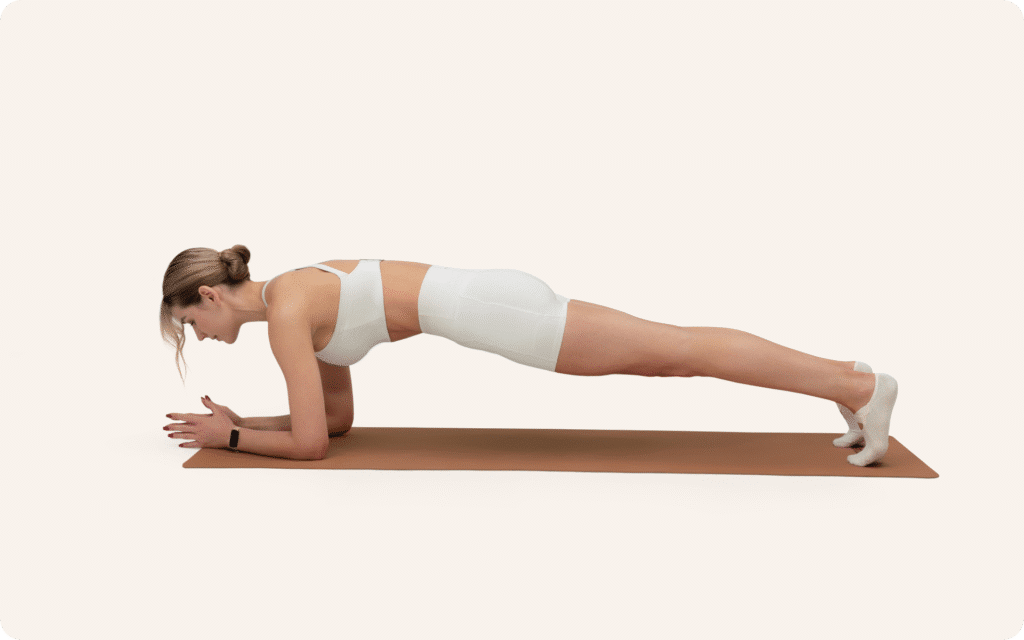
5-minute core routine on the mat
|
Time |
Move |
Cue |
|---|---|---|
|
0:00 to 0:30 |
Breathing in tabletop |
Ribs soft, lower back relaxed |
|
0:30 to 1:30 |
The hundred |
Keep your head down if your neck tires |
|
1:30 to 2:30 |
Single-leg stretch |
Switch legs slowly with each exhale |
|
2:30 to 3:30 |
Double-leg stretch |
Reach only the arms for an easier version |
|
3:30 to 4:30 |
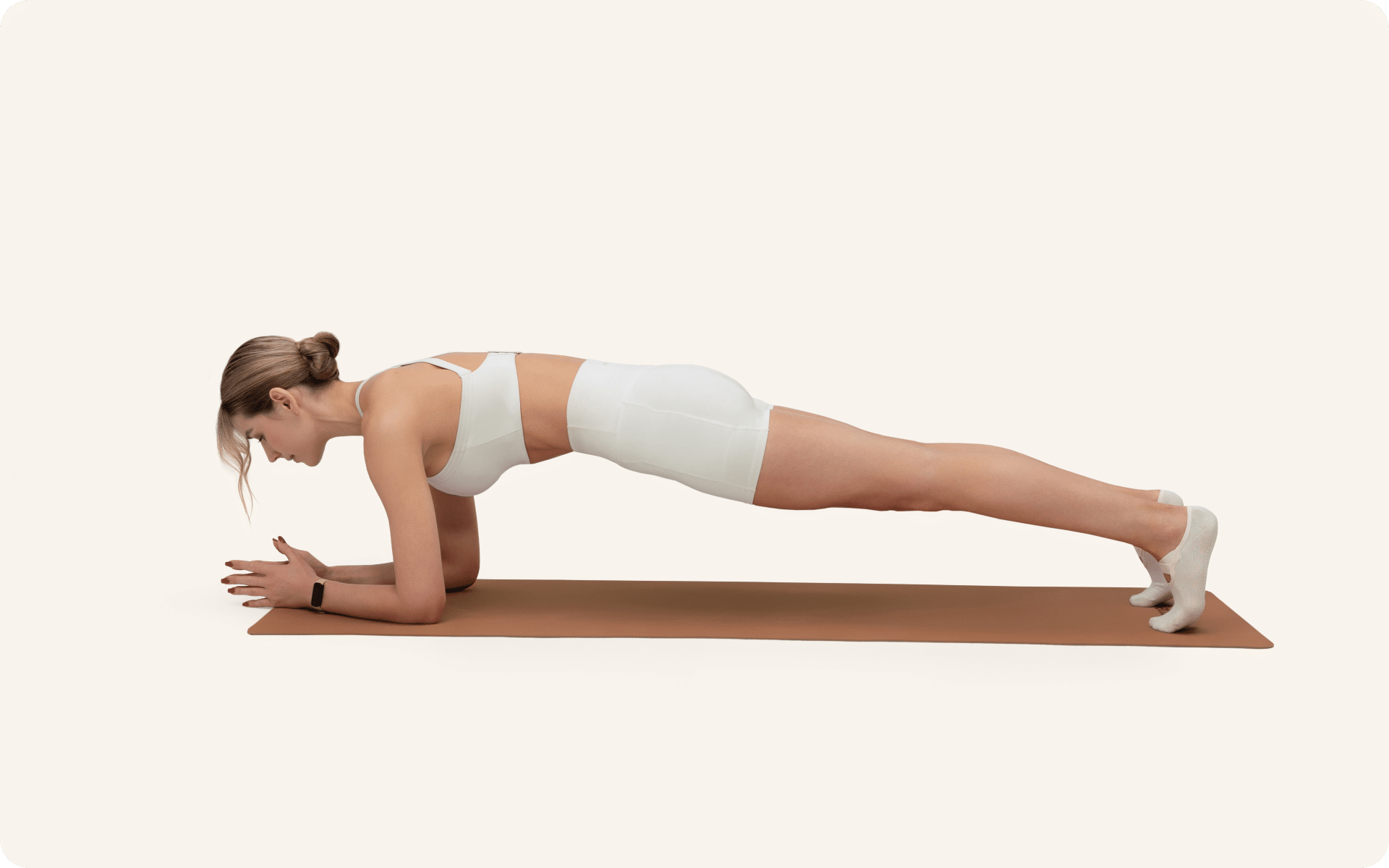
Forearm plank |
Hold 20 seconds, rest 10, repeat |
|
4:30 to 5:00 |
Spine stretch forward |
Sit on a towel if your hamstrings feel tight |
|
Total |
5 minutes |
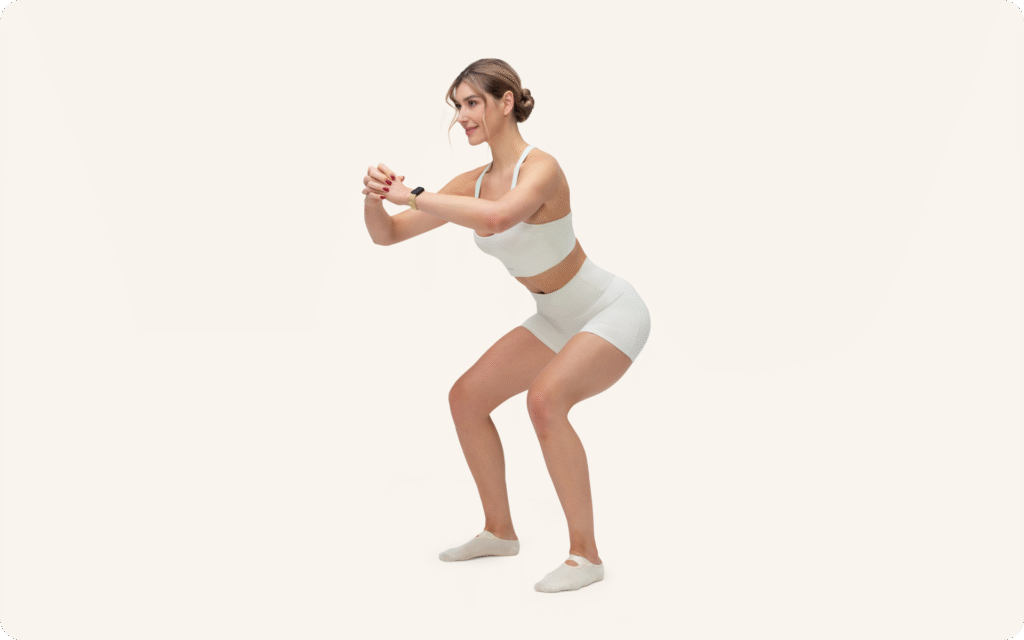
5-minute standing routine
|
Time |
Move |
Cue |
|---|---|---|
|
0:00 to 1:00 |
Standing roll down |
Curl down slowly, then restack your back |
|
1:00 to 2:00 |
Standing side leg lift |
30 seconds per side, hips level |
|
2:00 to 3:00 |
Standing oblique crunch |
30 seconds per side, elbow toward knee |
|
3:00 to 4:00 |
Arm circles with core engaged |
Small circles, ribs drawn in |
|
4:00 to 5:00 |
Standing knee lift balance |
30 seconds per side, hold a chair if needed |
|
Total |
5 minutes |
5-minute chair routine for a work break
|
Time |
Move |
Cue |
|---|---|---|
|
0:00 to 1:00 |
Seated spinal twist |
30 seconds per side, sit tall |
|
1:00 to 2:00 |
Seated knee tucks |
Hold the chair edge and lift both knees |
|
2:00 to 3:00 |
Seated leg lifts |
30 seconds per leg, straighten and lower slowly |
|
3:00 to 4:00 |
Desk push-ups |
Hands on a stable desk, body in one line |
|
4:00 to 5:00 |
Seated arm circles with breathing |
Slow circles, long exhales |
|
Total |
5 minutes |
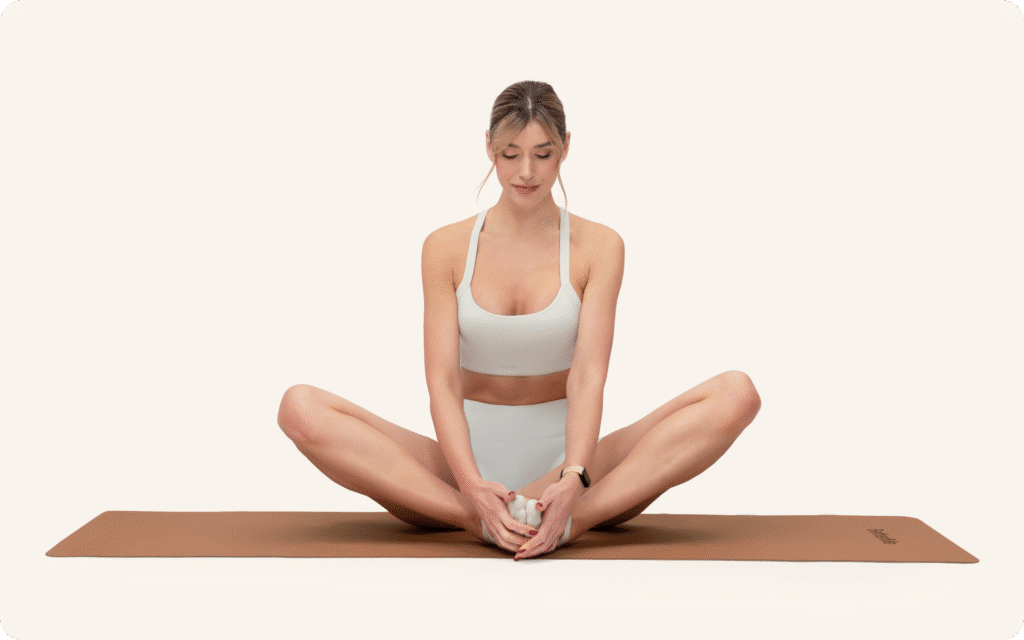
5-minute wind-down stretch
|
Time |
Move |
Cue |
|---|---|---|
|
0:00 to 1:00 |
Cat-cow |
Move with your breath |
|
1:00 to 2:00 |
Spine stretch forward |
Reach forward, then roll up tall |
|
2:00 to 3:00 |
Low lunge stretch |
30 seconds per side, back knee down |
|
3:00 to 4:00 |
Lying spinal twist |
30 seconds per side, shoulders down |
|
4:00 to 5:00 |
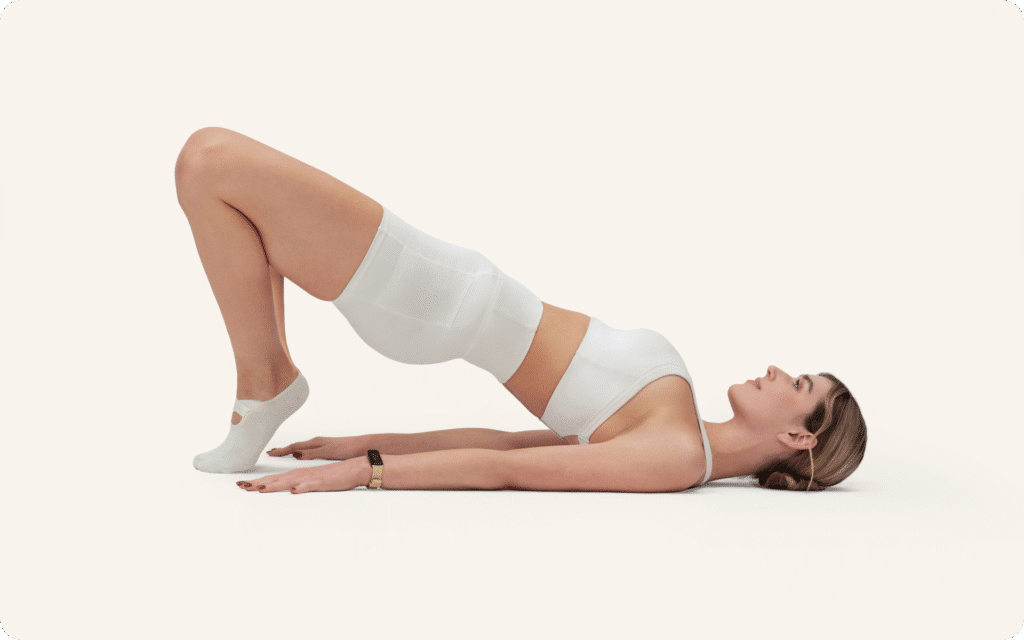
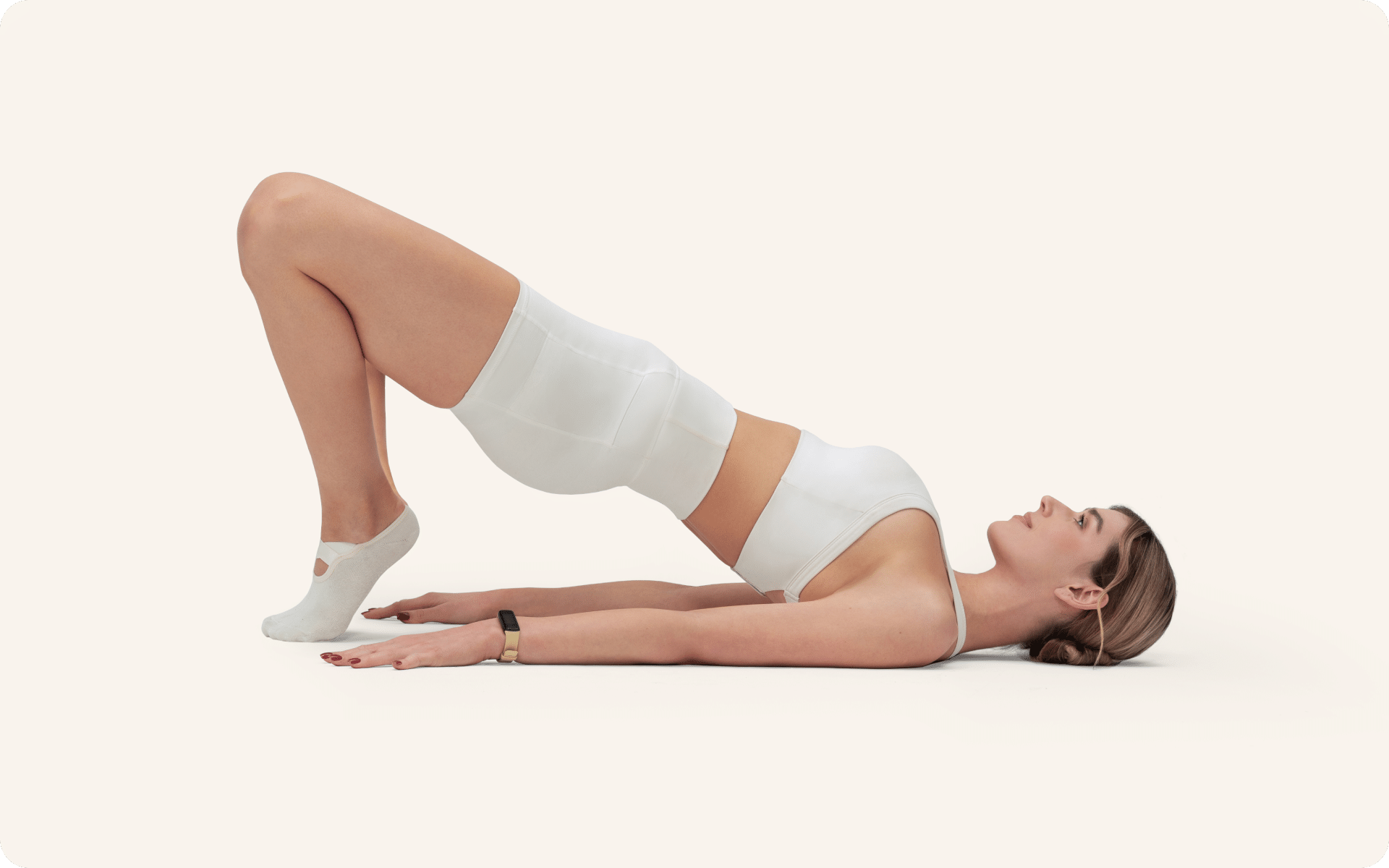
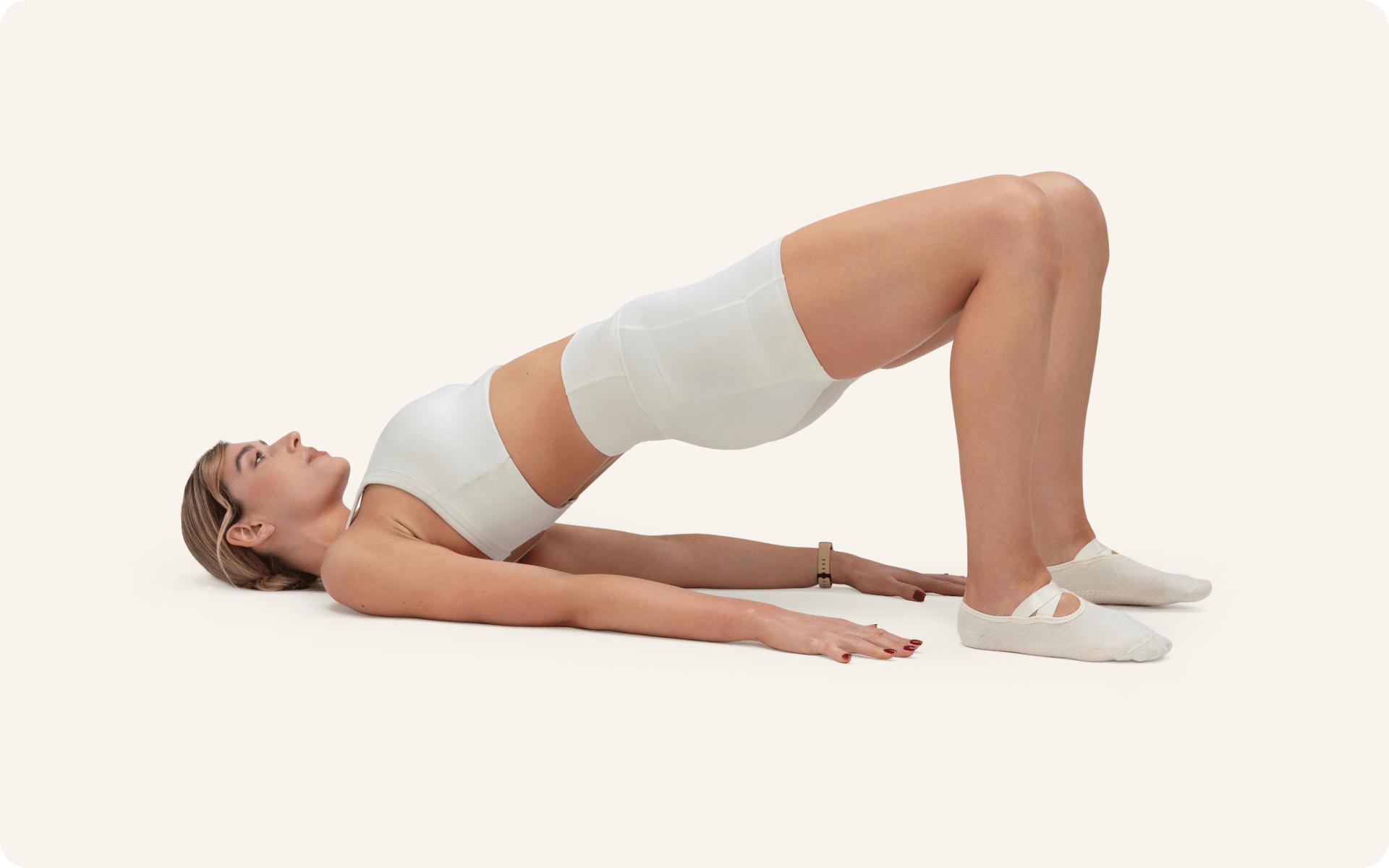
Slow bridge |
Lift and lower one vertebra at a time |
|
Total |
5 minutes |
When does a 5-minute session make the most sense?
A 5-minute session makes the most sense when the choice is between a short session and none. Common moments include the following.
- Mornings: A short mat routine before breakfast wakes up the back. For a longer version, try this morning Pilates routine.
- Work breaks: The chair routine breaks up long periods of sitting.
- Before a walk: The standing routine works as a gentle warm-up.
- Evenings: The wind-down stretch helps you slow your breathing before bed.
- Busy weeks: Short sessions keep the habit alive when longer workouts do not fit.
Set a cue for each session, such as after coffee or after lunch. Linking a routine to an existing habit makes it easier to repeat.
Read more: Home Pilates workout guide: a beginner routine with no equipment
How do short sessions add up to weekly activity guidelines?
Short sessions add up when you repeat them several times a day and pair them with aerobic activity. Pilates alone usually does not cover the aerobic target.
Guidelines suggest adults aim for 150 to 300 minutes of moderate aerobic activity weekly (2). They also suggest muscle-strengthening work on 2 or more days. The week below is an editorial example that combines both.
|
Day |
Pilates (min) |
Brisk walking (min) |
Daily total (min) |
|---|---|---|---|
|
Monday |
15 (3 x 5) |
20 |
35 |
|
Tuesday |
15 (3 x 5) |
30 |
45 |
|
Wednesday |
15 (3 x 5) |
20 |
35 |
|
Thursday |
15 (3 x 5) |
30 |
45 |
|
Friday |
15 (3 x 5) |
20 |
35 |
|
Saturday |
0 |
30 |
30 |
|
Sunday |
Rest |
0 |
0 |
|
Weekly total |
75 |
150 |
225 |
The sample includes 150 minutes of walking, which contributes to the aerobic target when performed at moderate intensity (2). The 75 minutes of Pilates are an illustrative schedule. Include muscle-strengthening activity that challenges all major muscle groups on at least 2 days; matching a study’s minutes alone does not establish an adequate training load.
When you have more time, swap one day of short sessions for a longer Pilates mat workout. For a full calendar, see this Pilates weekly workout plan.
How do you progress from 5 minutes to longer sessions?
Progress by adding sessions first, then harder moves, then longer blocks. Longer Pilates programs have the most research behind them.
In a review of 12 studies with about 540 adult women, Pilates programs improved sit-and-reach flexibility (9). The review covered structured programs, so the results may not carry over to 5-minute sessions. A review of 32 trials linked Pilates with better quality of life and self-esteem (10). Even once-weekly programs were associated with improvements.
The plan below is an editorial example for the first month.
|
Week |
Sessions per day |
Days per week |
Weekly Pilates minutes |
|---|---|---|---|
|
1 |
1 x 5 min |
5 |
25 |
|
2 |
2 x 5 min |
5 |
50 |
|
3 |
3 x 5 min |
5 |
75 |
|
4 |
3 x 5 min, plus one 20-minute session |
5 + 1 |
95 |
Once the core routine feels easy, swap in harder versions. Straighten your legs in the hundred, or lift your head in the single-leg stretch. Add a second plank hold before you add more time.
Frequently Asked Questions
What can 5 minutes of Pilates do for your core?
Five minutes of Pilates trains your core, but it cannot remove fat from your stomach on its own. Core work trains the deep abdominal muscles, but belly fat changes with overall activity, sleep, and eating habits. Every body looks different, and a strong core can come in any shape.
What are the 5 most important Pilates exercises?
The hundred, the roll-up, single-leg stretch, double-leg stretch, and spine stretch forward are a common core five. All five come from the classical mat order. No official ranking exists, so pick moves you can do with control.
Can you do 5-minute Pilates every day?
Yes, you can do 5-minute Pilates every day if you vary the focus. Alternate core, standing, and stretch routines. Listen to your body and gradually increase the frequency as your fitness improves.
Can you overdo Pilates?
Yes, it is possible to overdo Pilates, just as with any form of exercise. Too much can lead to strain and fatigue. Take at least one rest day a week.
Is Pilates better than walking?
No, neither Pilates nor walking is better for every goal. Pilates trains core control and mobility, while brisk walking adds aerobic activity. Many people combine both, as in the example week above.
Can parents with little time use 5-minute Pilates?
Yes, 5-minute sessions fit around naps, school runs, and work calls. For a structured plan, try this busy mom Pilates challenge.
The bottom line
5-minute Pilates works as a habit builder and a way to break up sitting. Its value grows when you repeat it several times a day and add brisk walks. For bigger strength and fitness changes, include longer sessions each week. Prefer to follow a plan? The BetterMe quiz can help you set up a Pilates routine that fits your schedule.
DISCLAIMER:
This article is intended for general informational purposes only and does not serve to address individual circumstances. It is not a substitute for professional advice or help and should not be relied on for making any kind of decision-making. Any action taken as a direct or indirect result of the information in this article is entirely at your own risk and is your sole responsibility.
BetterMe, its content staff, and its medical advisors accept no responsibility for inaccuracies, errors, misstatements, inconsistencies, or omissions and specifically disclaim any liability, loss or risk, personal, professional or otherwise, which may be incurred as a consequence, directly or indirectly, of the use and/or application of any content.
You should always seek the advice of your physician or other qualified health provider with any questions you may have regarding a medical condition or your specific situation. Never disregard professional medical advice or delay seeking it because of BetterMe content. If you suspect or think you may have a medical emergency, call your doctor.
SOURCES:
- The Effects of Continuous Compared to Accumulated Exercise on Health: A Meta-Analytic Review (2019, nih.gov)
- The Physical Activity Guidelines for Americans (2018, nih.gov)
- The effects of resistance exercise snacks via a mobile health app on musculoskeletal strength in sedentary young women: a randomized controlled trial (2026, nih.gov)
- Effects of exercise snacks on cardiorespiratory fitness, body composition, and blood lipids in adults across different age groups: a systematic review and meta-analysis (2026, nih.gov)
- Metabolic intensity and energy cost of Pilates exercises: an exploratory systematic review and meta-analysis of limited and heterogeneous evidence (2026, nih.gov)
- World Health Organization 2020 guidelines on physical activity and sedentary behaviour (2020, nih.gov)
- Feasibility and Effects of Exercise Snacks on Fitness and Body Composition in Women With Overweight or Obesity: A Randomized Controlled Trial (2026, nih.gov)
- The effect of exercise snacks on cardiorespiratory fitness, body composition, metabolic health, and muscle strength in sedentary individuals: a systematic review and meta-analysis (2026, nih.gov)
- Effects of Pilates Programs on Body Composition, Flexibility, Muscular Strength, Balance, Functional Performance and Respiratory Function in Adult Women: A Systematic Review and Meta-Analysis (2026, nih.gov)
- Effects of Pilates-Based Exercise on Mental Health, Psychological Well-Being, and Quality of Life: A Systematic Review and Meta-Analysis (2026, nih.gov)

 By
 Reviewed by

 Reviewed by