People who are trying to manage their blood sugar levels are often encouraged to make lifestyle and dietary changes. One way to support that is by making several adjustments to daily habits and food choices. Certain dietary changes may help keep blood sugar levels within a more stable range. This does not mean that any single food can protect you from developing health conditions. Instead, your overall eating pattern can support steadier blood sugar levels over time. Here are some foods people often choose when their blood sugar levels feel higher than usual.
What Is The Normal Blood Sugar Level?
Before we delve into the foods people often choose to support steadier blood sugar levels, it is helpful to understand commonly referenced ranges. Some sources note that blood sugar levels are typically less than 100 mg/dL after not eating for at least 8 hours (3). Likewise, they are often noted as less than 140 mg/dL about 2 hours after eating (3).
When blood sugar levels stay higher than usual over time, it can affect how you feel and how your body functions day to day (3). If your blood sugar levels are higher than usual, some people choose to focus on balanced meals and foods that support more stable levels
What Foods Can Support More Stable Blood Sugar Levels?
Some sources note that many foods commonly recommended for people focusing on blood sugar management tend to have a low glycemic index (GI). The body absorbs the carbohydrates in such foods more slowly, which may help reduce sudden spikes and dips in blood sugar (1). People looking to support steadier blood sugar levels often choose foods with low or medium GI scores.
It’s also worth noting that there is no single food that can lower blood sugar immediately. Blood sugar levels are influenced by several factors, including overall health and, for some people, medications (4). Diet can influence blood sugar levels, and dietary changes may support more stable levels over time, but they won’t necessarily cause an instant change.
It’s a good idea to consult a qualified healthcare professional for guidance if your levels are consistently higher than usual. In addition to dietary changes, regular physical activity (when appropriate for you) may support more stable blood sugar levels over time. Some people also use medications under medical supervision to manage blood sugar.
Different medications work in different ways and can vary in how quickly they take effect and how long their effects last (4). A healthcare professional can help determine what’s appropriate for an individual situation.
Read More: 7-Day Low Glycemic Diet Plan: Keep Your Blood Sugar Steady With These Meals
Foods That Help Support More Stable Blood Sugar/Glucose Levels
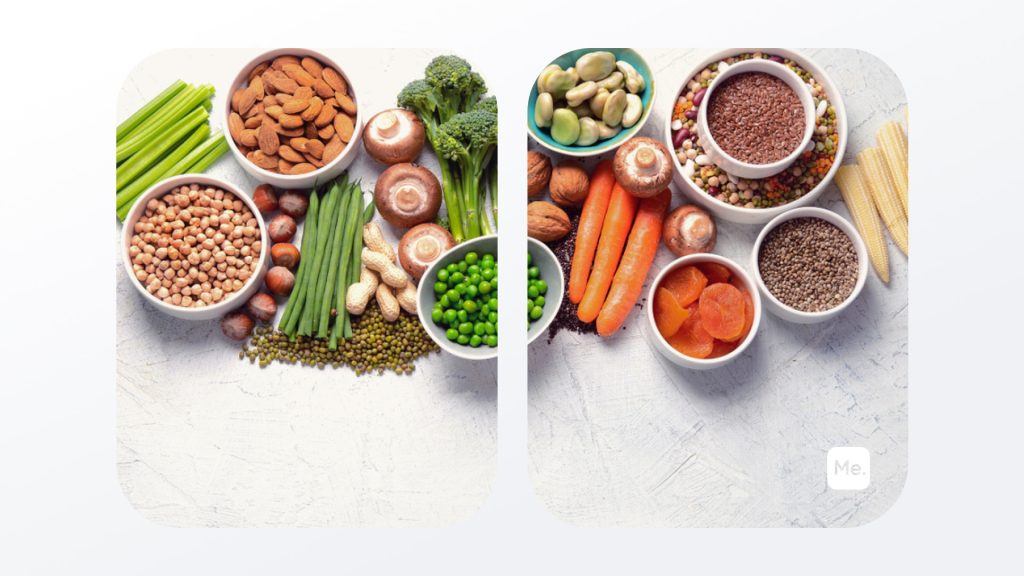
As noted above, there are no foods that lower blood sugar instantly. With that in mind, some people choose to limit high-GI foods and focus on low- or medium-GI options, because this approach may support more stable blood sugar levels over time. If you’re wondering what some of these foods are, here are a few examples:
Pumpernickel Bread Or Stone-Ground Whole Wheat
Some people who are focusing on blood sugar management choose to limit refined grain products, since these often have higher GI scores. Instead, they may opt for whole grains, which tend to be higher in fiber (1).
Two whole-grain options to consider are pumpernickel bread and 100% stone-ground whole wheat bread. Some sources list these foods as having GI values around 55 or below, compared with regular white bread (1).
Other whole-grain food options are rye and spelt. You can also choose bread made with ancient grains like emmer and einkorn, or other whole grains (1).
Berries
Recent evidence suggests that berries contain several nutrients and phytochemicals that may support overall health markers (2). In addition, a 2020 review mentioned that commonly consumed berries, especially blueberries, cranberries, raspberries, and strawberries, may help limit the after-meal rise in blood sugar in some people.
According to the review, some longer-term studies suggest that berries may support markers related to blood sugar and blood fats, as well as other markers of cardiovascular health (2). However, while the evidence is still limited, some research suggests berries may play a role in dietary strategies that support steadier blood sugar levels and overall metabolic health in adults. (2). Nevertheless, berries can be a helpful addition to a healthy, balanced eating pattern for people focusing on blood sugar management.
If you want to feel more toned through your waist, arms, and core, our fitness app is designed to help you stay consistent with workouts, meal plans, and guidance that support your goals! BetterMe makes it easier to build healthier routines — progress looks different for everyone.
Sweet Potatoes
Sweet potatoes are often listed with a glycemic index around 55 or lower, and their fiber content may lead to a less immediate impact on blood glucose levels for some people (7). It is worth noting that GI values can vary depending on the cooking method.
Boiling is often considered a lower-GI cooking option for sweet potatoes, while baking, roasting, and frying may result in a higher GI (6).
Quinoa
Quinoa may support more stable blood sugar levels when added to a balanced meal plan. This is because it has a low glycemic index of 53 (5). Additionally, it contains fiber, which can help support steadier blood sugar levels over time.
Some sources note that 100 g of quinoa contains about 2.1 g of fiber, while the same serving of white rice may contain little to no fiber (5). For people focusing on more balanced meals and steadier blood sugar levels, quinoa can be a helpful alternative to white rice.
Read More: 1800-Calorie Diabetic Diet: Keeping Your Blood Sugar In Check And Your Diet On Track

Nuts
Nuts may be a helpful addition to a balanced meal plan for people focusing on steadier blood sugar levels. They’re often considered a low-GI option and are relatively low in carbohydrates, which may result in a smaller impact on blood glucose for some people.
Nuts also contain healthy fats, which can support heart health and may help you feel full and satisfied.
Pumpkin Seeds
Pumpkin seeds are rich in nutrients that may support more stable blood sugar levels, including magnesium, fiber, and healthy fatty acids. Additionally, some research suggests that components in these seeds may be linked to steadier blood sugar levels over time (8).
BetterMe makes it easy to stay consistent with your wellness goals over time! Tailor your fitness journey and stay on track with your goals with just a couple of swipes!
The Bottom Line
Get your personalized
meal plan!
DISCLAIMER:
This article is intended for general informational purposes only and does not serve to address individual circumstances. It is not a substitute for professional advice or help and should not be relied on for making any kind of decision-making. Any action taken as a direct or indirect result of the information in this article is entirely at your own risk and is your sole responsibility.
BetterMe, its content staff, and its medical advisors accept no responsibility for inaccuracies, errors, misstatements, inconsistencies, or omissions and specifically disclaim any liability, loss or risk, personal, professional or otherwise, which may be incurred as a consequence, directly or indirectly, of the use and/or application of any content.
You should always seek the advice of your physician or other qualified health provider with any questions you may have regarding a medical condition or your specific situation. Never disregard professional medical advice or delay seeking it because of BetterMe content. If you suspect or think you may have a medical emergency, call your doctor.
SOURCES:
- Best foods that help lower and control blood sugar (2021, medicalnewstoday.com)
- Dietary berries, insulin resistance and type 2 diabetes: an overview of human feeding trials (2020, ncbi.nlm.nih.gov)
- High Blood Sugar, Diabetes, and Your Body (2020, webmd.com)
- How can you lower your blood sugar levels? (2022, medicalnewstoday.com)
- Is quinoa good for diabetes? (2021, medicalnewstoday.com)
- Relationship between Processing Method and the Glycemic Indices of Ten Sweet Potato (Ipomoea batatas) Cultivars Commonly Consumed in Jamaica (2011, ncbi.nlm.nih.gov)
- Sweet potato for type 2 diabetes mellitus (2013, ncbi.nlm.nih.gov)
- Ten diabetes superfoods (2019, medicalnewstoday.com)
- What are the best nuts for diabetes? (2019, medicalnewstoday.com)