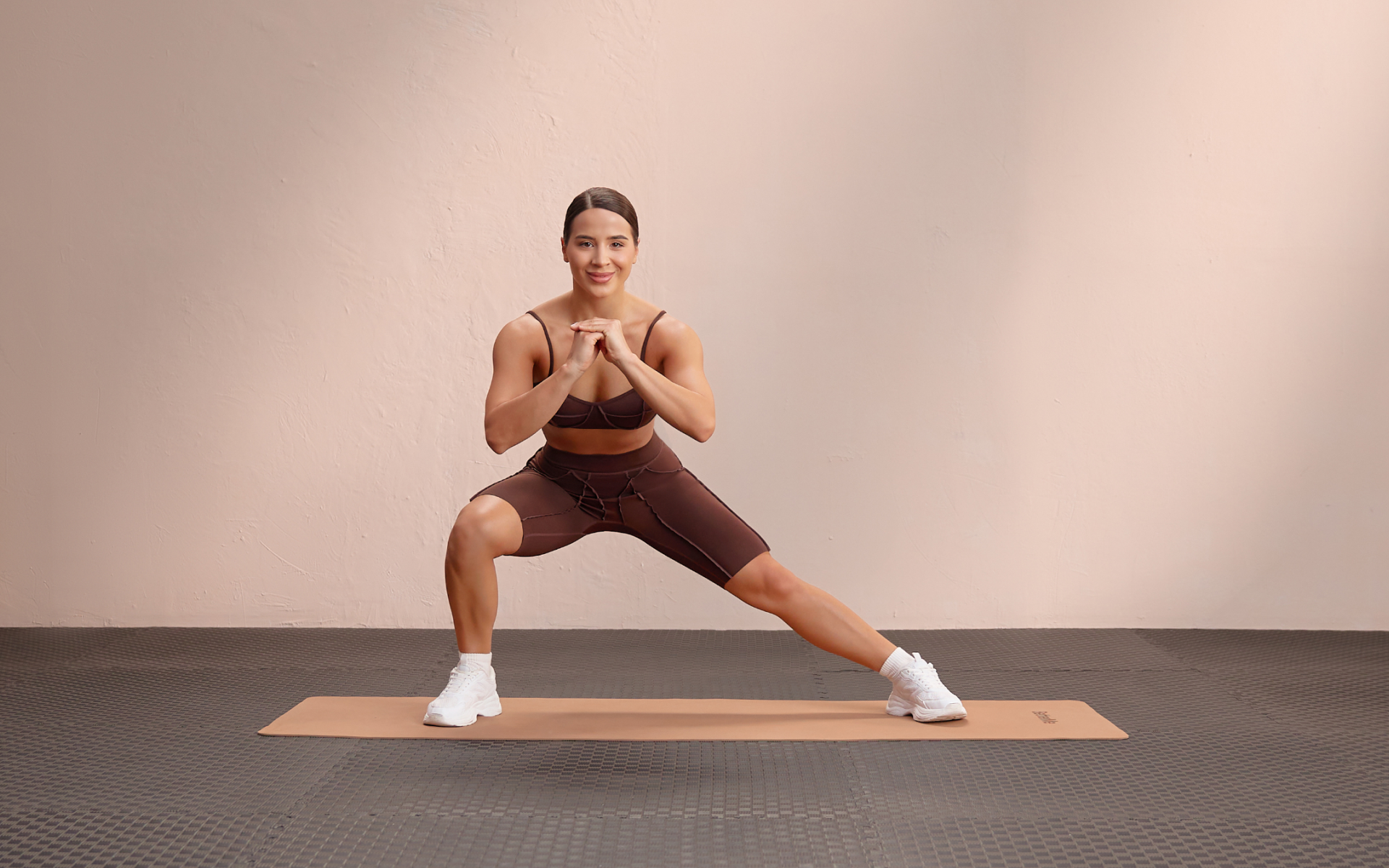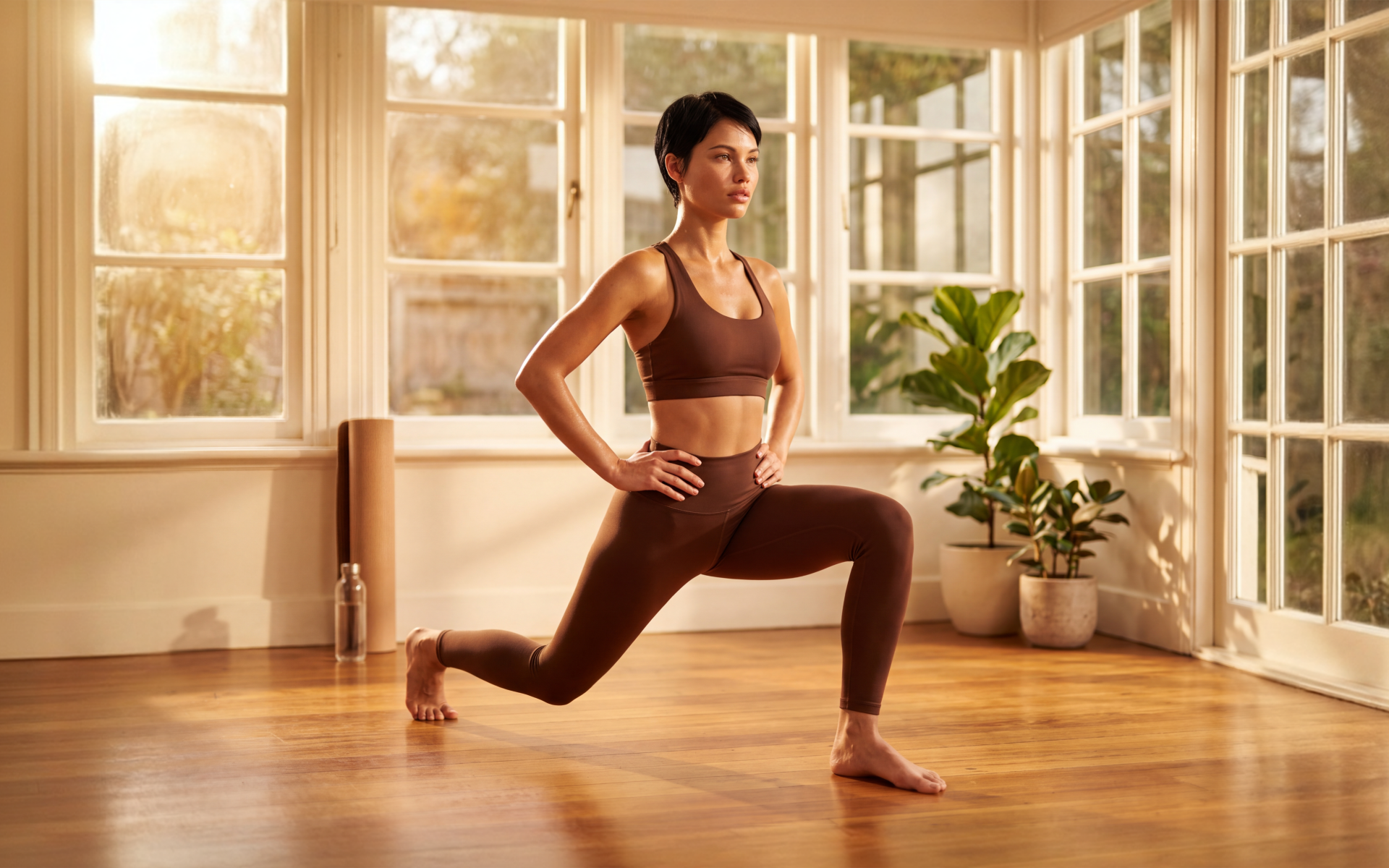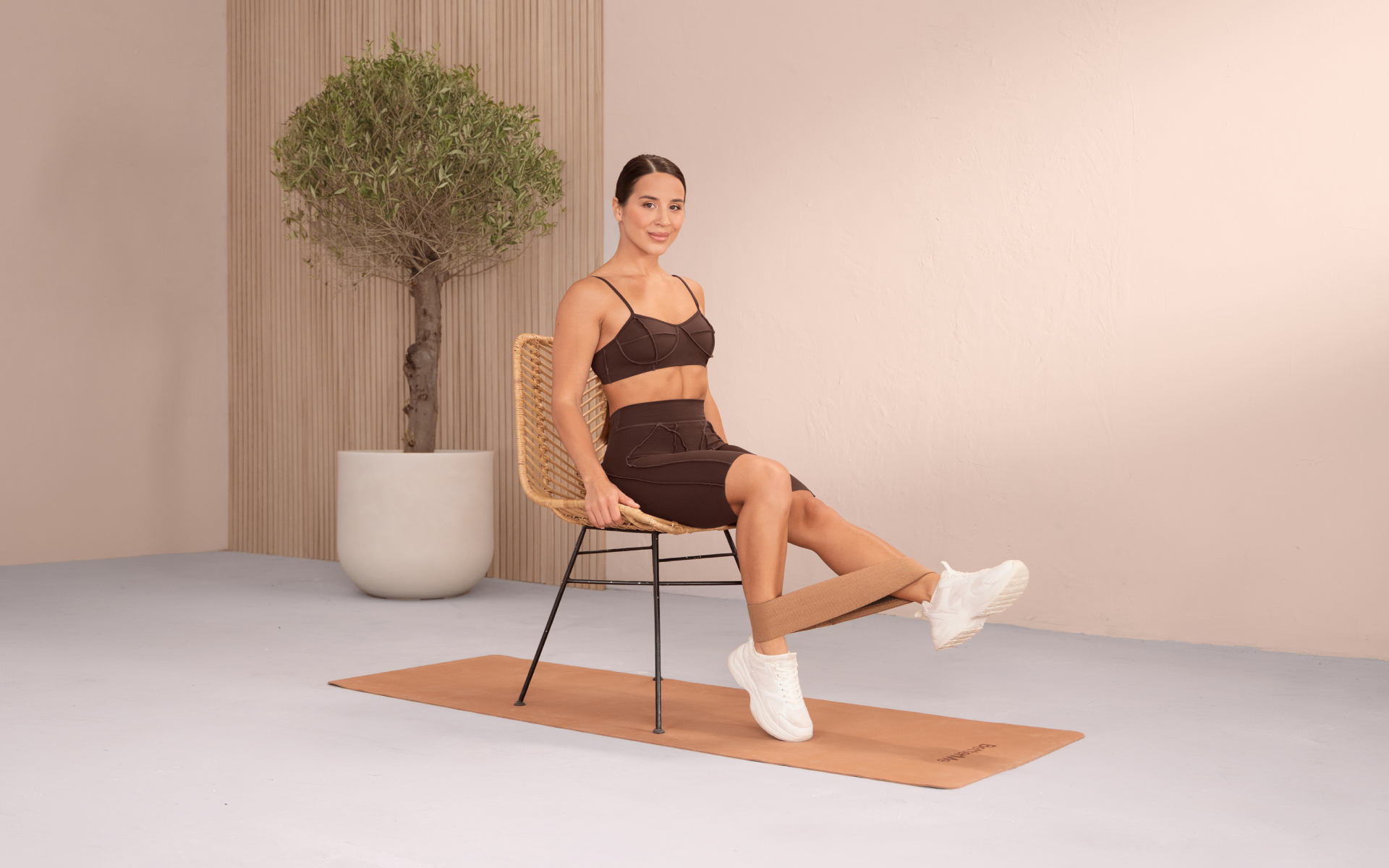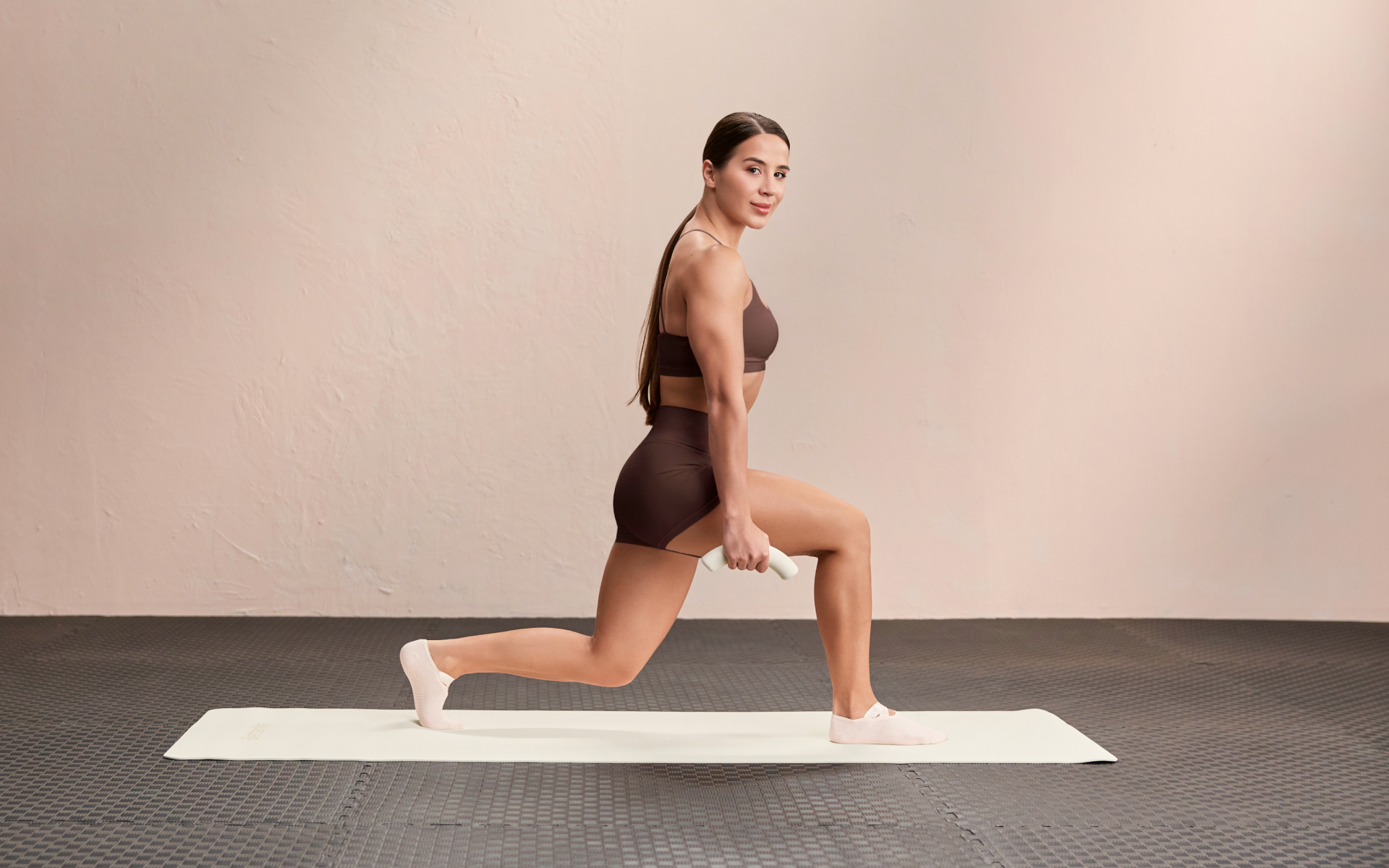
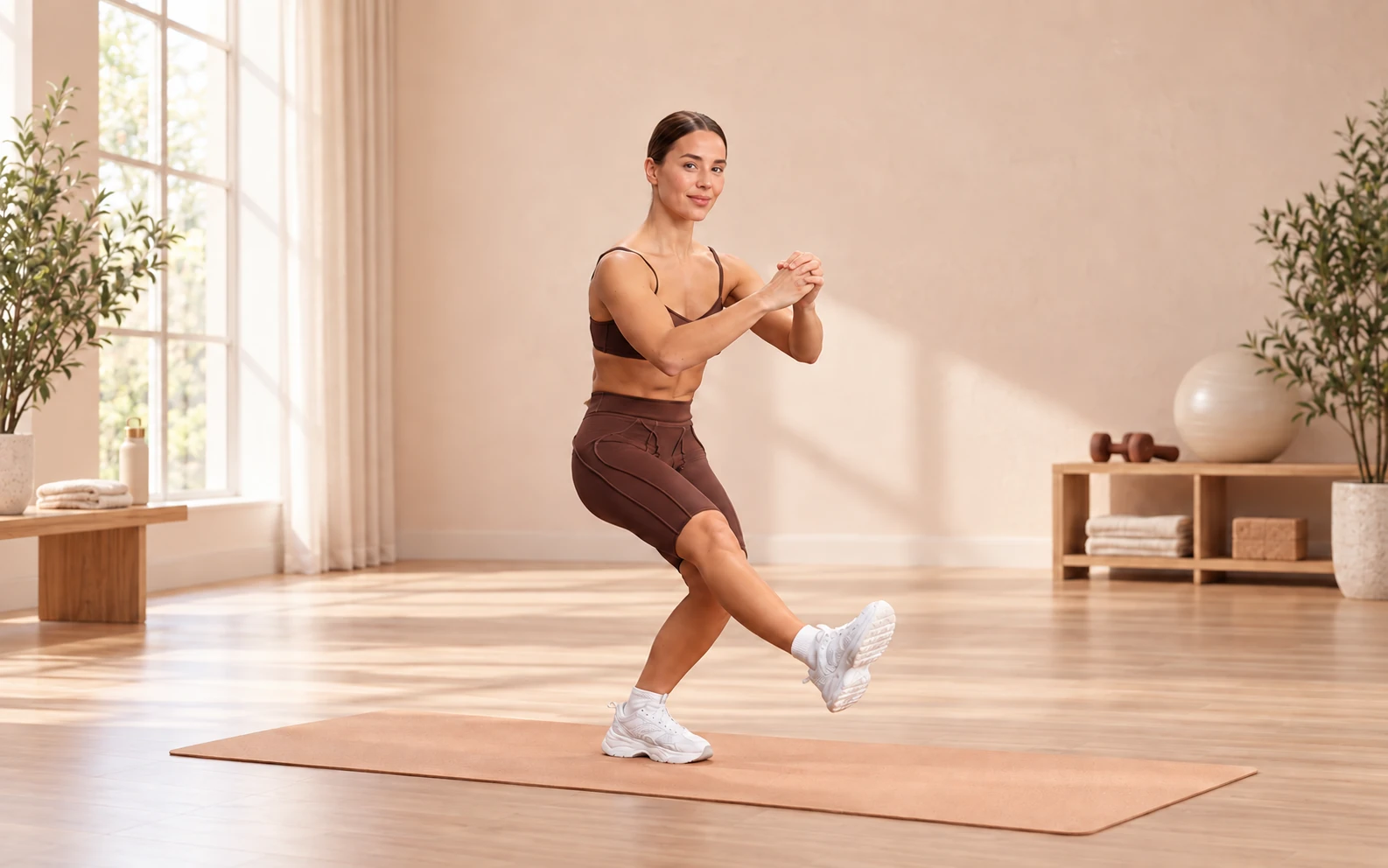
A good leg workout for women includes a squat or press movement, a hinge movement, a glute-focused move, a single-leg exercise, a hamstring move, and a calf move. Train your lower body around twice a week, use multiple sets, and add weight or reps over time. For many people, this simple mix may support stronger, more capable legs with a straightforward routine.
Legs carry you through every single day, but lower-body training often feels confusing. Should you go heavy? Do endless squats? Only chase glutes? A leg workout is simply a session that trains the major muscles below your hips, using a mix of moves that push and pull, bend and straighten.
This guide is for women who want practical, no-nonsense direction, whether you’re brand new or returning after a break. Here, you’ll find exercise options, sample routines, set and rep ranges, and answers to common questions. If you need a gentler introduction to the movements, explore our beginner leg workout.
Are you ready to build a plan you can actually stick with? Let’s walk through it together.
Key takeaways
- Include knee-dominant, hip-dominant, glute-focused, single-leg, hamstring, and calf work across your week.
- Session size: The sample full session contains 6 exercises. Beginners can reduce the exercise count or sets.
- This sample uses 2 lower-body sessions weekly. Adjust the schedule based on recovery.
- Choose a comfortable, controlled range of motion rather than forcing depth.
- Progression: Add reps within a target range before increasing the weight. The weekly progression is illustrative.
- Stop or modify movements that cause sharp or worsening discomfort, and seek qualified guidance if it persists.
What should a leg workout for women include?
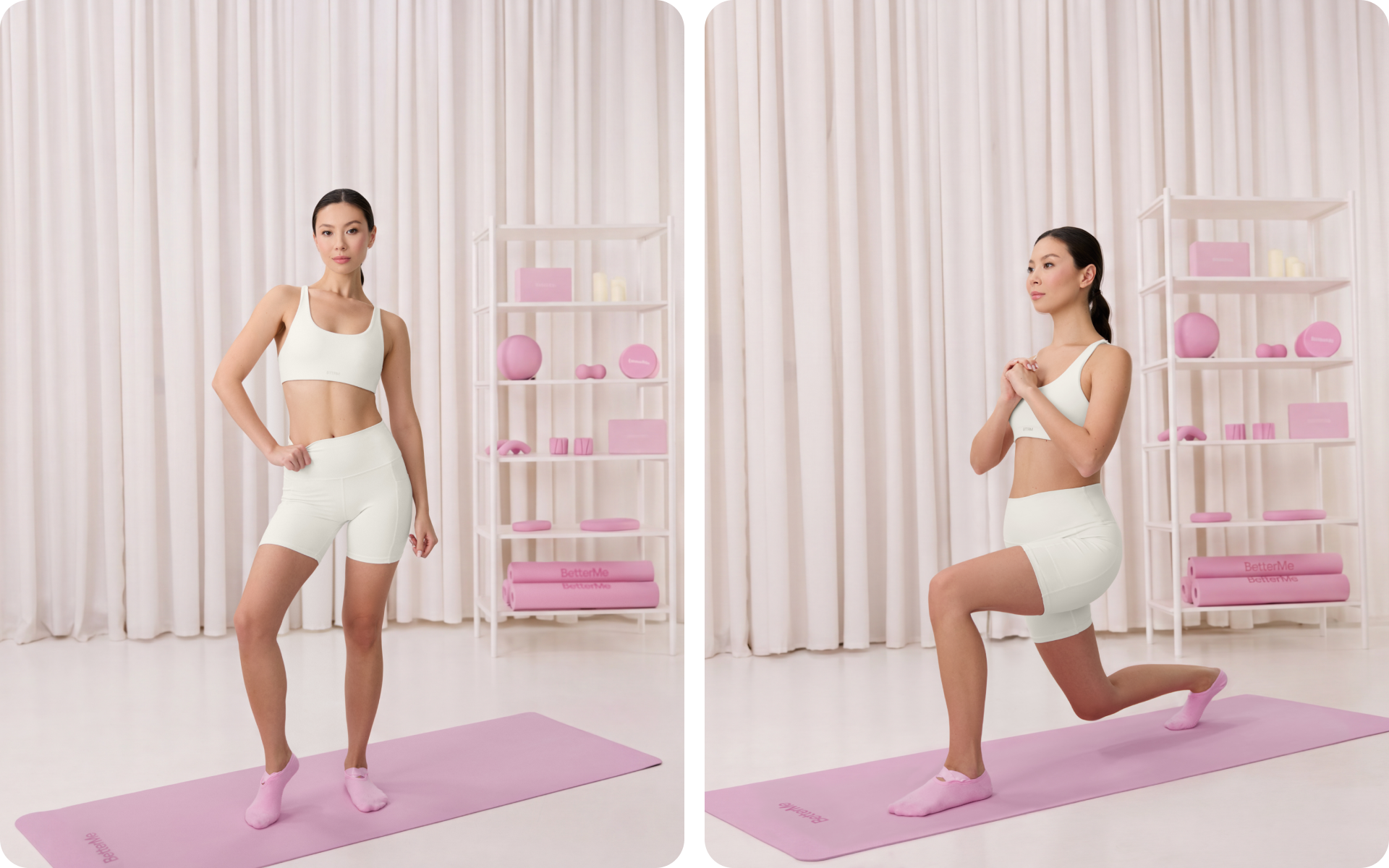
A leg workout for women should include six movement types: a knee-dominant lift, a hip-dominant lift, a glute-focused move, a single-leg exercise, a hamstring move, and a calf move. This mix covers your lower body through complementary movements.
Here are the terms in plain language:
- Knee-dominant: movements where your knees bend a lot, such as squats. These focus mostly on the front of your thighs.
- Hip-dominant: movements where your hips move back and forward, such as deadlifts. These focus on the back of your body.
Covering both keeps your training balanced. Include hip-dominant work alongside squats to cover complementary movements.
One study focused on untrained young women found that adding a hip thrust to a lower-body program led to more glute growth than a program without it (1). Its findings apply to that study population and program, rather than guaranteeing the same result for everyone.
The table below breaks down each category.
| Exercise category | Main target muscles | Beginner example | Why it matters |
|---|---|---|---|
| Knee-dominant | Quads, glutes | Goblet squat | Builds front-thigh strength for daily movement |
| Hip-dominant | Glutes, hamstrings | Romanian deadlift | Adds complementary work for the back of the legs |
| Glute-focused | Gluteus maximus | Hip thrust | Adds direct work for glute shape and strength |
| Single-leg | Quads, glutes, stabilizers | Reverse lunge | Helps you notice differences between sides |
| Hamstring | Hamstrings | Leg curl | Adds direct knee-flexion work for the hamstrings |
| Calf | Calves | Standing calf raise | Rounds out the whole lower body |
You don’t need every category in every session. Rotating these across your week works well.
If you enjoy lower-impact options, you can also check out our mat Pilates leg workout to add variety to your routine.
What muscles do lower-body workouts for women target?
Lower-body workouts for women target six main muscle groups: the quads, glutes, hamstrings, adductors, abductors, and calves. Each plays a role in how you move, balance, and feel strong.
Here’s what each group does:
- Quadriceps: The front of your thighs (2). Active in squats, lunges, and leg presses.
- Gluteus maximus: Your largest glute muscle (3). Active in squats, deadlifts, and hip thrusts.
- Hamstrings: The back of your thighs (4). Active in deadlifts and leg curls.
- Adductors: Your inner thighs (5). Active in squats, lunges, and wide-stance moves.
- Abductors: Muscles around the outer hip, including the gluteus medius, help move your thigh outward and stabilize the pelvis (6).
- Calves: Your lower legs (7). Active in calf raises and most standing exercises.
A common myth is that leg exercises for women should only target glutes and quads. In reality, your hamstrings, calves, and hip stabilizers deserve attention too. Skipping them tends to leave your training lopsided.
Some research on women’s lower-body training has suggested that relative strength and muscle gains follow the same principles that apply to most people (8). In other words, you don’t need a fundamentally different rulebook. You need consistent effort across all these muscles.
Think of your lower body as a team practicing before their games. When every player gets training time, everyday movements such as climbing stairs, carrying groceries, and standing up may feel easier as strength and coordination improve.
Read more: 30-Minute Bodyweight Leg Workout to Build Strength
How do you build a balanced lower-body workout for women?
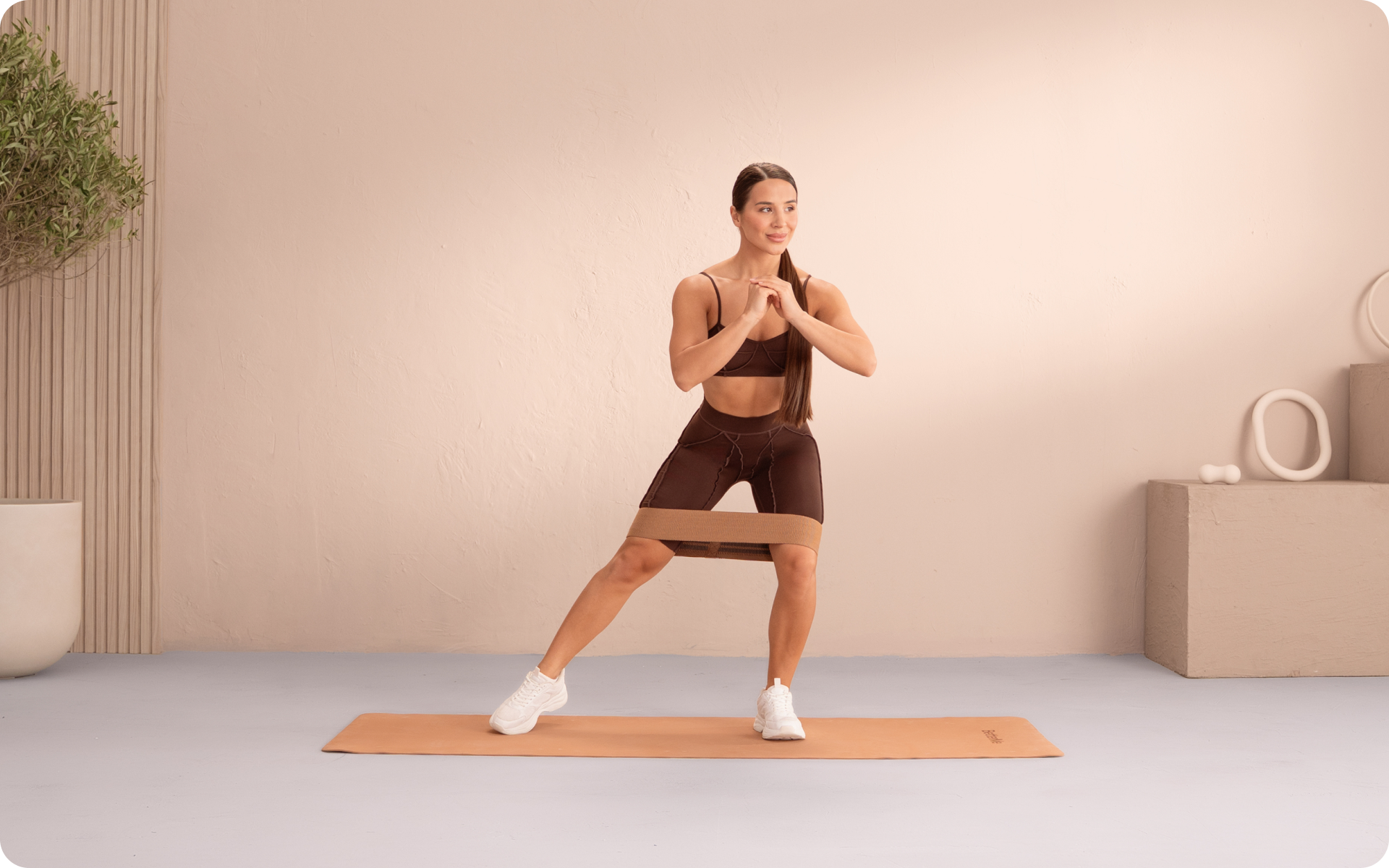
You build a balanced lower-body workout for women by pairing opposite movement patterns and mixing exercise styles. Balance comes from covering both directions of movement, not from chasing one body part.
You should aim to include both sides of these three pairs:
- Knee-dominant and hip-dominant: Squats for the front, hinges for the back.
- Bilateral and unilateral: Two-leg moves and single-leg moves.
- Compound and isolation: Multi-muscle lifts and single-muscle lifts.
Two more terms to keep handy:
- Bilateral: Using both legs at once, as in a barbell squat.
- Unilateral: Using one leg at a time, as in a split squat. Single-leg work often reveals a weaker side to monitor as you train.
Here’s a simple two-day structure many people use.
Workout A
- Squat or leg press
- Romanian deadlift
- Walking lunge
- Leg curl
- Calf raise
Workout B
- Hip thrust
- Goblet squat
- Step-up
- Leg extension
- Hip abduction
This layout spreads work across your quads, glutes, hamstrings, and calves. It also mixes bilateral and unilateral moves, which supports both strength and coordination.
You can adjust based on your setup. A gym female legs workout might lean on machines and barbells, while a home version can use dumbbells, bands, or bodyweight. The pattern matters more than the equipment.
Individual responses vary, so treat this as a starting template. If one workout feels too long, trim it to four exercises. If you have more time, add a sixth.
For home-based alternatives, take a look at our lower body calisthenics to explore movements using minimal equipment.
Workouts, weight management tools, and recipe ideas come together in the BetterMe: Health Coaching app, giving you practical support for building a more consistent wellness routine.
What is a full lower-body workout for women?
A full lower-body workout for women is one session that trains all the major lower-body muscles in a single sitting. If it’s done well, it covers your quads, glutes, hamstrings, and calves in one go.
Below is a sample full leg workout for women that you can adapt. Rest means the pause between sets.
| Exercise | Sets | Reps | Rest | Main focus |
|---|---|---|---|---|
| Goblet squat | 3 | 6-8 | 90-120 secs | Quads, glutes |
| Romanian deadlift | 3 | 8-10 | 90 secs | Glutes, hamstrings |
| Hip thrust | 3 | 10-12 | 60-90 secs | Glutes |
| Reverse lunge | 2 | 10 per leg | 60 secs | Quads, stabilizers |
| Leg curl | 2 | 10-15 | 60 secs | Hamstrings |
| Standing calf raise | 2 | 12-20 | 45 secs | Calves |
If you’re new to this type of workout, four to five exercises is plenty. This is a solid beginners’ leg workout for women. More seasoned lifters may enjoy five to seven.
Here is how to perform each move.
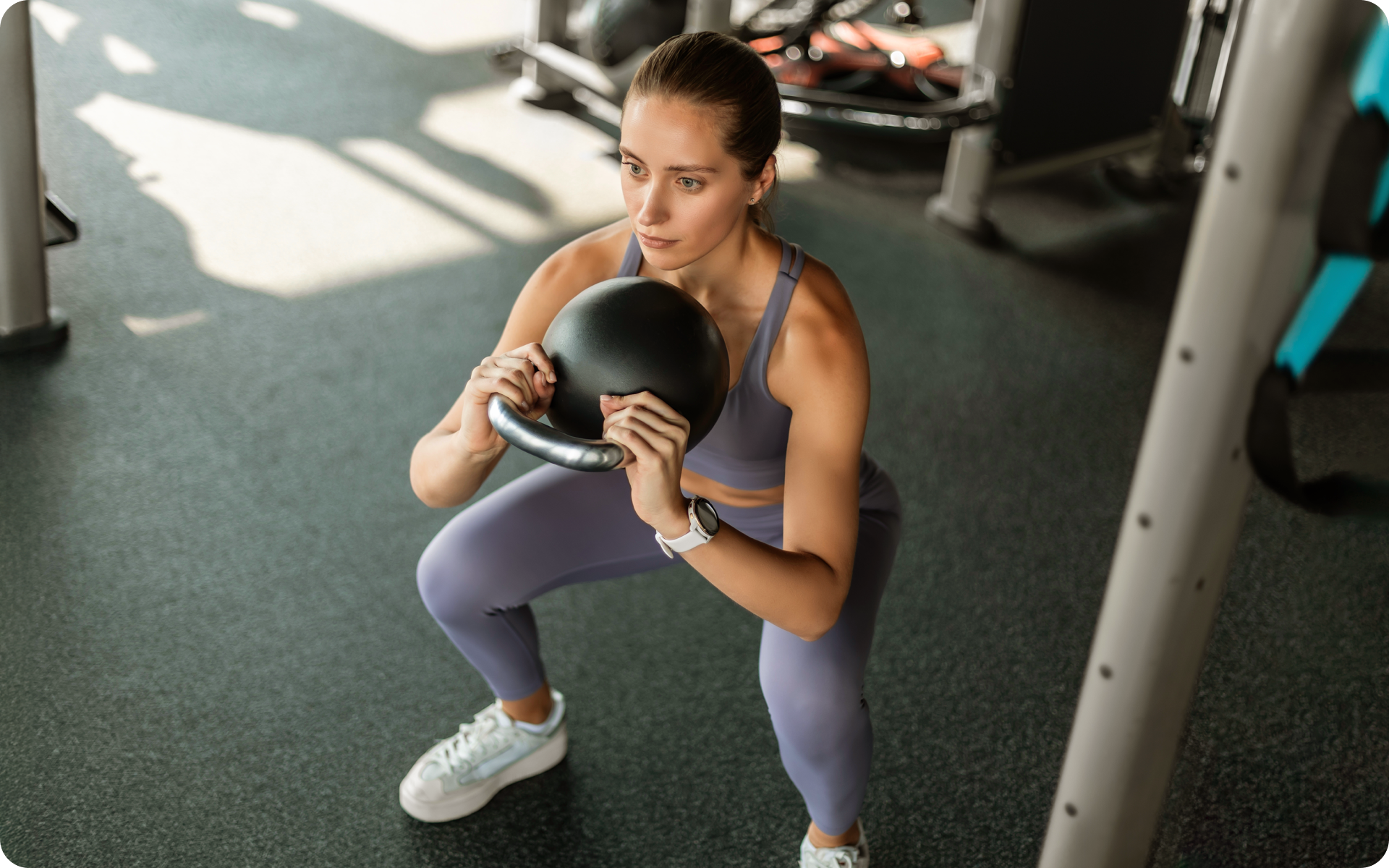
How do you perform a goblet squat?
- Hold a dumbbell or kettlebell close to your chest.
- Stand with your feet shoulder-width apart.
- Bend your knees and lower your hips down.
- Go as low as feels controlled, then stand back up.
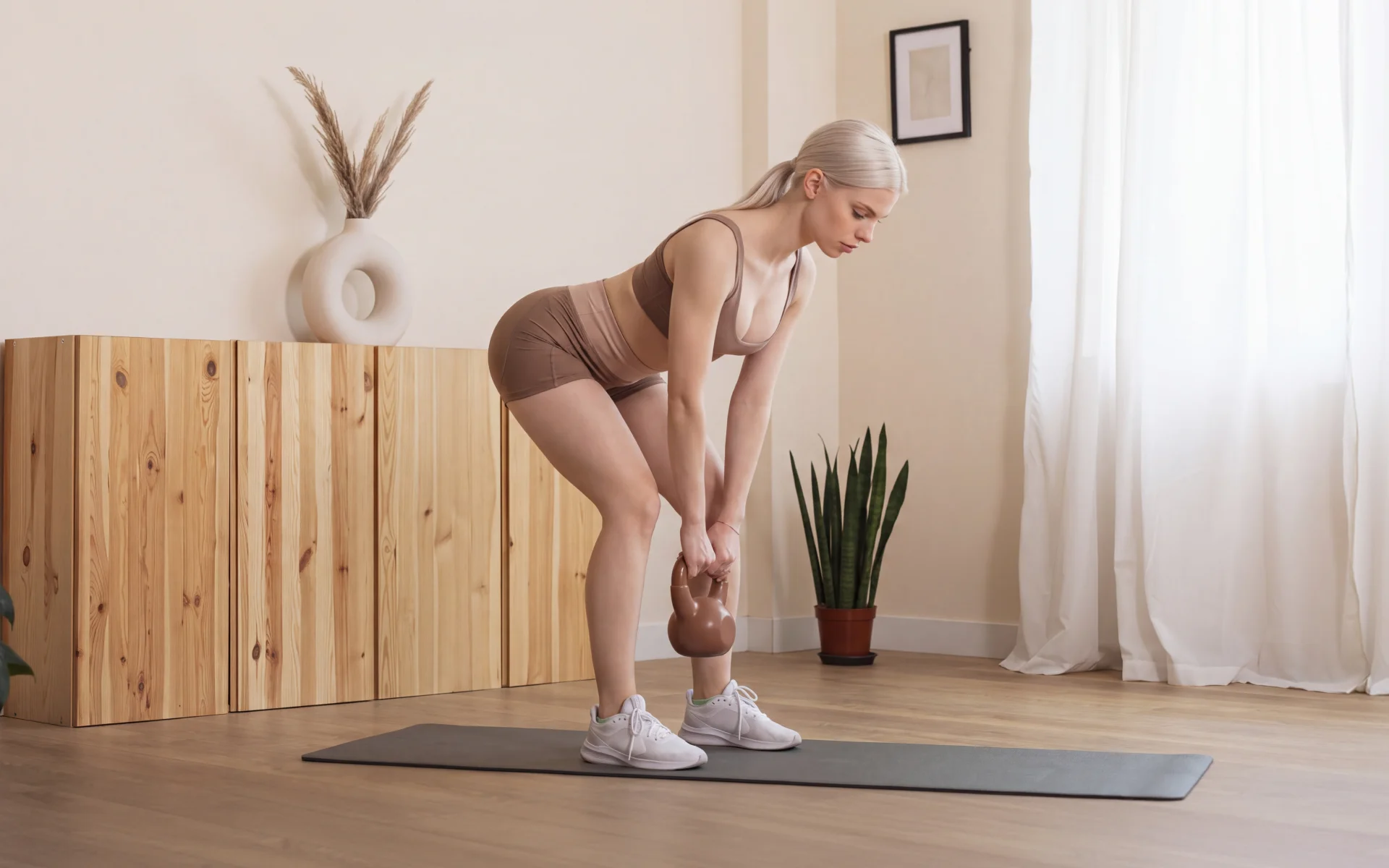
How do you perform a Romanian deadlift?
- Hold weights in front of your thighs.
- Keep a slight bend in your knees.
- Push your hips back as the weights lower.
- Stop when you feel a hamstring stretch while maintaining your back position, then stand with control.
How do you perform a hip thrust?
- Rest your upper back on a bench.
- Place a weight across your hips.
- Drive through your heels and lift your hips up.
- Lower with control and repeat.
How do you perform a reverse lunge?
- Stand tall with your feet together.
- Step one foot back and lower your knee toward the floor.
- Push through your front heel to return.
- Alternate legs each rep.
How do you perform a leg curl?
- Set up on the machine with the pads at your ankles.
- Curl your heels toward your glutes.
- Pause briefly at the top.
- Lower slowly to the start.
How do you perform a standing calf raise?
- Stand with the balls of your feet on a step.
- Rise onto your toes as high as you can.
- Hold for a second at the top.
- Lower your heels through a comfortable range of motion while keeping your ankles controlled.
Range of motion means how far a joint moves during an exercise. Use a range you can control without forcing depth or stretching into discomfort.
BetterMe can help you add more structure to your daily wellness routine with workouts, meal planning tools, and habit-building features. Explore the app and take a practical step toward a routine that feels more manageable for you.
How many sets and reps should you do in a women’s leg day workout?
A women’s leg day workout usually works well with 2-4 sets of 6-15 reps per exercise, adjusted to your goal (9). A set is a group of reps done back to back. A rep is one full movement.
Your goal shapes the numbers (10):
- Strength: Heavier loads and lower reps, like 3-6 reps.
- Hypertrophy: Muscle growth. A moderate range, like 8-12 reps, works well here.
Some research has suggested that heavier loading tends to favor strength, while a range of loads can support muscle growth as long as effort stays high (10). One review also found that multiple sets matter more for muscle growth than single sets (11).
The table below compares common approaches.
| Goal | Sets | Reps | Weekly frequency | Practical notes |
|---|---|---|---|---|
| Strength | 3-5 | 3-6 | 2x per week | Use on main lifts such as squats |
| Muscle growth | 3-4 | 8-15 | 2x per week | Rest long enough to repeat controlled reps; compounds may need 2-3 mins |
| General fitness | 2-3 | 10-15 | 2x per week | Great for a beginners' leg day workout for women |
Weekly set needs vary with experience, exercise selection, and recovery. Reviews generally support multiple sets and adjusting volume rather than one universal target (12), (13). Training the lower body around twice weekly is a practical starting option represented in research on women (14).
A “toned” look really means muscle plus a body-fat level that lets it show. Your leg workout may support muscle development, with individual responses varying. Individual outcomes vary, so give your plan several weeks before judging it.
Read more: Ankle Resistance Band Exercises: 5 Exercises to Try at Home
How can you progress your leg workout over time?
You progress your leg workout over time through progressive overload, which means gradually asking your body to do a little more. Gradual increases may provide a continued training challenge when recovery and technique remain steady (15).
You can progress in several ways:
- Add weight: Move from a 20-lb to a 25-lb dumbbell.
- Add reps: Turn 3 sets of 8 into 3 sets of 10.
- Add sets: Go from 3 sets to 4 sets.
- Improve range of motion: Increase depth only while the movement remains comfortable and controlled.
- Upgrade the exercise: Shift from a goblet squat to a front squat.
A simple method is double progression. Pick a rep range, such as 6-8. Work up until you hit the top number on every set. Then add weight and drop back to the lower end.
Here is an illustrative progression. Adjust the pace to your response:
| Week | Sample progression |
|---|---|
| 1 | 3 sets of 6 reps |
| 2 | 3 sets of 7 reps |
| 3 | 3 sets of 8 reps |
| 4 | Add weight and return to 3 sets of 6 reps |
Early progress often comes quickly, then slows. This slowdown is normal, not a sign that you’re doing anything wrong.
Over 6-12 weeks, signs of progress may include lifting more, doing more reps at the same weight, or feeling steadier on single-leg moves. Any of these count as a win.
This approach works whether you’re following a gym leg workout for women or an at-home leg workout for women. The principle remains the same across setups. Stop or modify an exercise if it causes sharp or worsening discomfort or you cannot control the movement. Consider checking with a qualified professional if discomfort persists.
If you prefer using just your bodyweight, our calisthenic leg workout shows how to keep progressing without any equipment.
FAQs
What are good leg exercises for women?
Good leg exercises for women include squats, Romanian deadlifts, hip thrusts, lunges, leg curls, and calf raises. Together, these provide complementary work for the quads, glutes, hamstrings, and calves. Choose variations that fit your equipment and current ability.
Can women train legs every day?
Demanding leg workouts every day may be difficult to recover from. Start with around 2 lower-body sessions weekly and adjust to your response. If you enjoy daily movement, alternate hard sessions with light activity or mobility work.
Should women train glutes and legs together?
Yes, women can train glutes and legs together because the glutes are part of the lower body. Squats, deadlifts, and hip thrusts involve the glutes (3). Choose a manageable mix of movements rather than adding every glute exercise to one session.
Should I do squats on every leg day?
No, you don’t need squats on every leg day. Leg presses, lunges, and step-ups can provide knee-dominant alternatives. Choose variations you can perform comfortably and track consistently.
What should I eat after a leg workout?
A meal or snack containing protein and carbohydrates can support recovery. Options include yogurt with fruit, chicken and rice, or a shake with a banana. Choose foods that fit your preferences and overall daily intake rather than treating one meal as required.
The bottom line
A balanced leg workout for women covers complementary lower-body movements with a workload you can manage. Start with controlled technique, progress gradually, and allow enough recovery between demanding sessions. Individual results vary, so adjust the sample routines to your experience and response.
DISCLAIMER:
This article is intended for general informational purposes only and does not serve to address individual circumstances. It is not a substitute for professional advice or help and should not be relied on for making any kind of decision-making. Any action taken as a direct or indirect result of the information in this article is entirely at your own risk and is your sole responsibility.
BetterMe, its content staff, and its medical advisors accept no responsibility for inaccuracies, errors, misstatements, inconsistencies, or omissions and specifically disclaim any liability, loss or risk, personal, professional or otherwise, which may be incurred as a consequence, directly or indirectly, of the use and/or application of any content.
You should always seek the advice of your physician or other qualified health provider with any questions you may have regarding a medical condition or your specific situation. Never disregard professional medical advice or delay seeking it because of BetterMe content. If you suspect or think you may have a medical emergency, call your doctor.
SOURCES:
- Addition of The Barbell Hip Thrust Elicits Greater Increases in Gluteus Maximus Muscle Thickness in Untrained Young Women (2024, journal.iusca.org)
- Anatomy, Bony Pelvis and Lower Limb: Thigh Quadriceps Muscle (2023, ncbi.nlm.nih.gov)
- Training the Glutes (2020, researchgate.net)
- Anatomy, Bony Pelvis and Lower Limb, Hamstring Muscle (2026, ncbi.nlm.nih.gov)
- Muscles in the Medial Compartment of the Thigh (2024, teachmeanatomy.info)
- The functional anatomy of hip abductors (2009, pubmed.ncbi.nlm.nih.gov)
- Anatomy, Bony Pelvis and Lower Limb: Calf (2026, ncbi.nlm.nih.gov)
- Resistance training induces similar adaptations of upper and lower-body muscles between sexes (2021, nature.com)
- No Time to Lift? Designing Time-Efficient Training Programs for Strength and Hypertrophy: A Narrative Review (2021, link.springer.com)
- Loading Recommendations for Muscle Strength, Hypertrophy, and Local Endurance: A Re-Examination of the Repetition Continuum (2021, mdpi.com)
- Resistance training prescription for muscle strength and hypertrophy in healthy adults: a systematic review and Bayesian network meta-analysis (2023, bmj.com)
- Resistance Training Variables for Optimization of Muscle Hypertrophy: An Umbrella Review (2022, frontiersin.org)
- A Systematic Review of The Effects of Different Resistance Training Volumes on Muscle Hypertrophy (2022, pmc.ncbi.nlm.nih.gov)
- Muscle strength gains per week are higher in the lower-body than the upper-body in resistance training experienced healthy young women: A systematic review with meta-analysis (2023, journals.plos.org)
- Attention to Progression Principles and Variables of Exercise Prescription in Workplace-Related Resistance Training Interventions: A Systematic Review of Controlled Trials (2022, frontiersin.org)
 Reviewed by