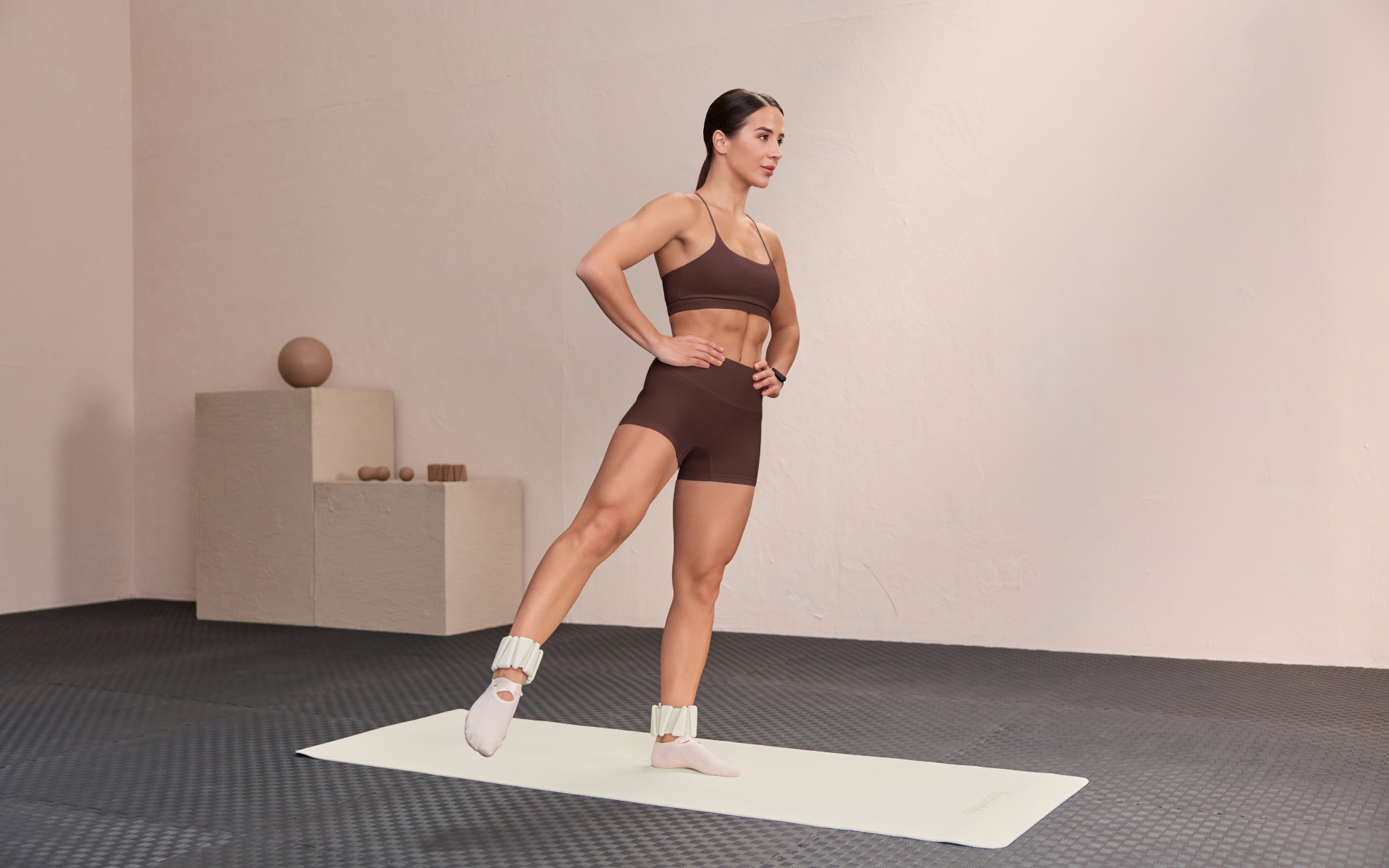
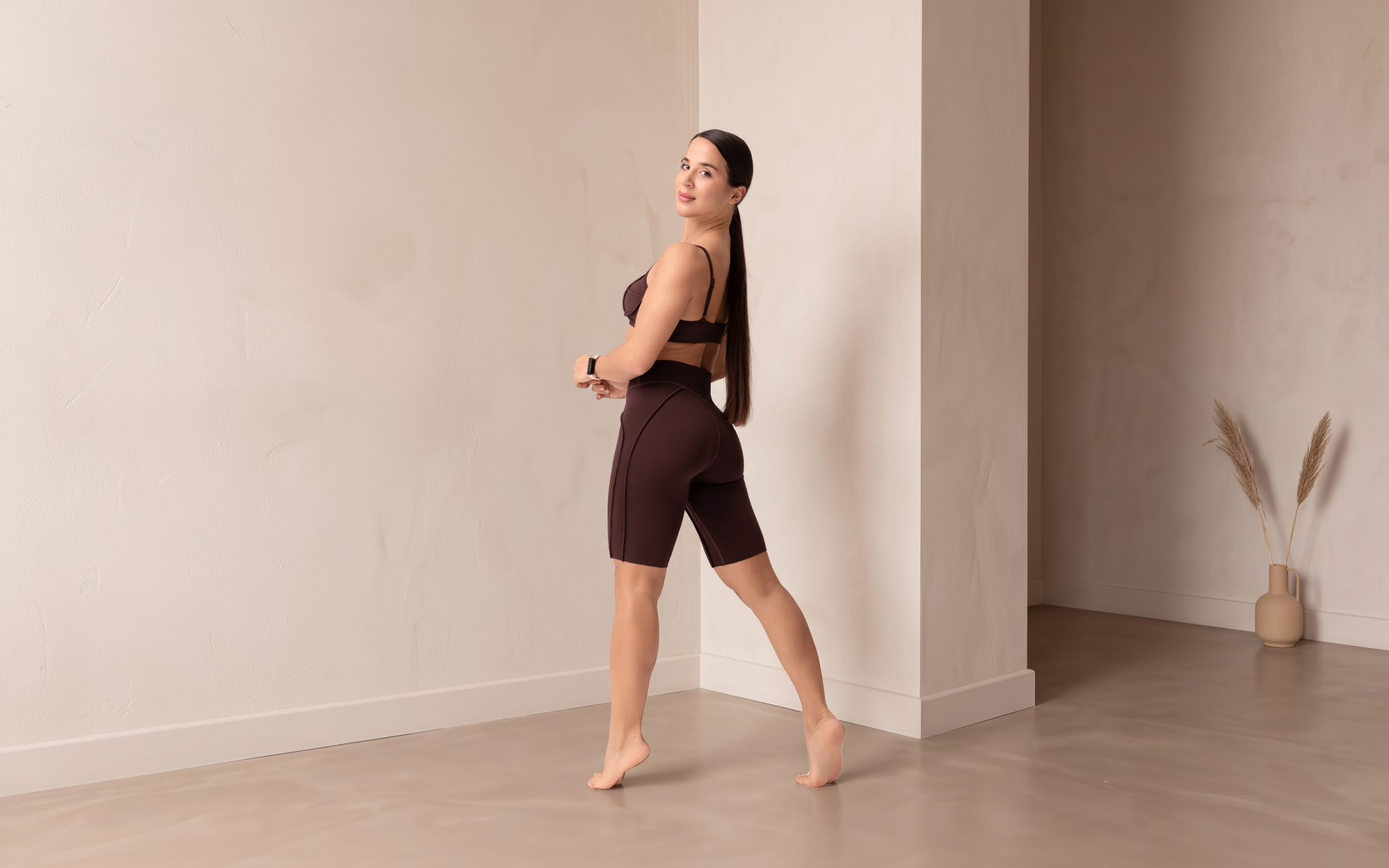
A 30-day calf challenge is a month-long plan built around calf raises and rest days. The sample schedule here uses three short sessions each week, followed by a final practice and review. It provides a repeatable way to track repetitions and resistance without promising visible changes within a month.
You can use this beginner calf workout at home or in a gym. For other calf strengthening exercises, see our guide to calf muscle exercises.
This 30-day calf workout covers the muscles worked, starting checks, exercise technique, and ways to adjust the workload.
Key takeaways
- The sample plan uses three calf sessions on nonconsecutive days each week.
- Start with 2 calf sets per leg each session, for 6 weekly calf sets per leg; optional tibialis sets are additional.
- The calf muscle group includes the gastrocnemius and soleus (1).
- A small 12-week study found greater gastrocnemius growth with standing raises and similar soleus growth with standing and seated raises (2).
- Keep a wall or rail available for support while practicing single-leg raises.
- Use Day 29 for a comfortable repeat of your starting checks and Day 30 for rest and review.
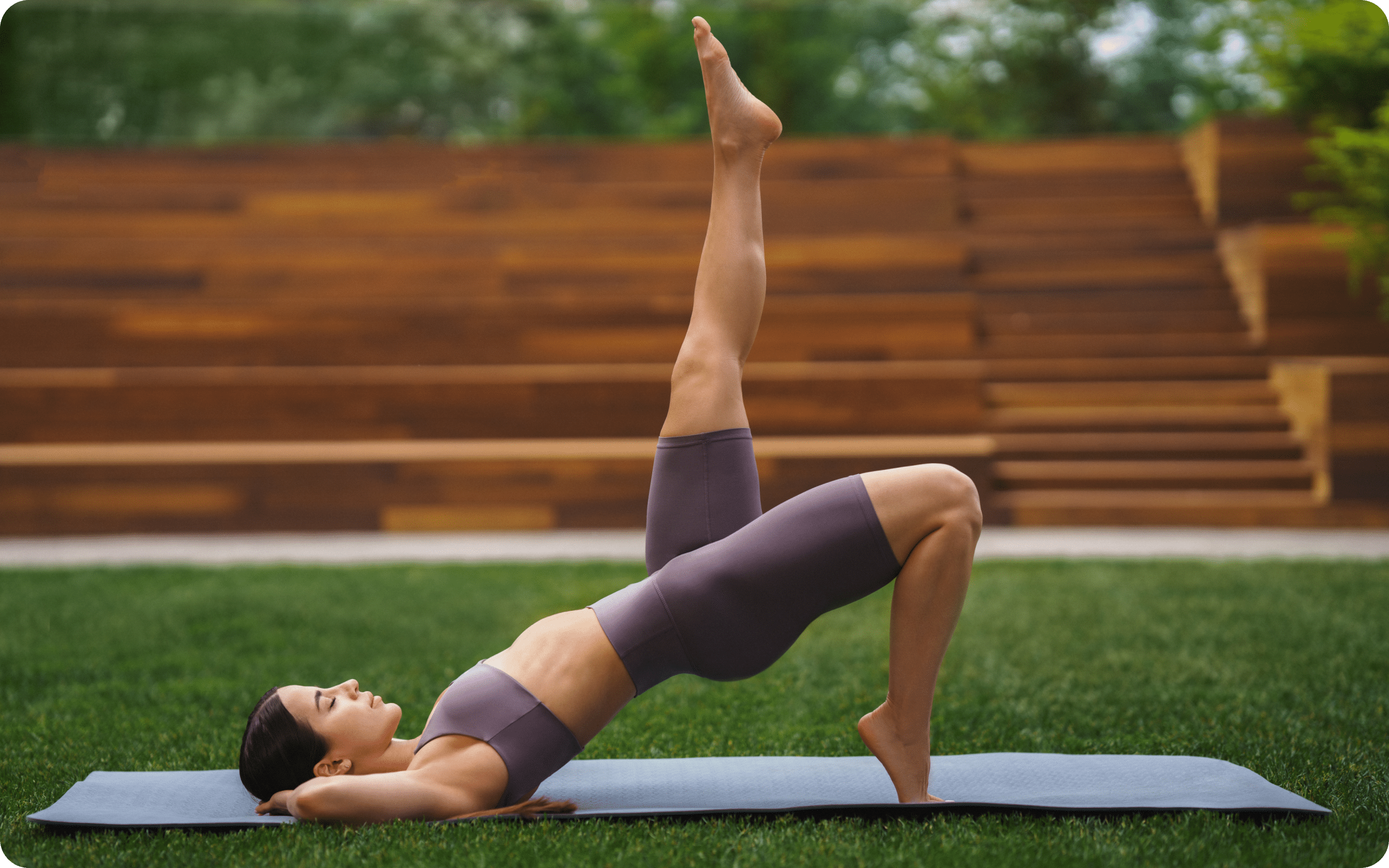
Which muscles work during calf-raise exercises?
Calf raises mainly work the triceps surae at the back of your lower leg. This group consists of two muscles: the gastrocnemius, with two heads, and the soleus (1):
- Gastrocnemius: the larger, visible muscle with a medial (inner) and lateral (outer) head
- Soleus: the flatter muscle that sits underneath the gastrocnemius
Smaller helpers also join in, such as muscles that support your ankle and toes.
The gastrocnemius crosses both the knee and ankle. The soleus crosses the ankle, which helps explain why knee position changes the contribution of each muscle (3).
Bending the knee shortens the gastrocnemius. Seated raises therefore change how the calf muscles contribute, but this does not establish greater soleus growth than standing raises (3, 2).
This means gastrocnemius and soleus exercises aren’t identical. To train both, you may want straight-knee and bent-knee moves in your plan.
Read more: Skinny Legs Big Upper Body: Here’s The Fix You’ve Been Looking For
How can you check your starting level before day 1?
Before Day 1, record a few comfortable practice sets so you can compare your technique and workload later. These are informal starting checks, not diagnostic tests.
Try these:
- Single-leg calf raise check: Stand near a wall for balance. Count controlled repetitions on each side, stopping before your form changes.
- Weighted calf raise check: Use both legs and a light dumbbell you can control. Record the load and repetitions; this does not isolate or measure soleus endurance.
- Ankle movement check: With your heel down, gently move your knee toward a wall. Record a comfortable foot position without forcing the movement.
You may also record:
- Reps for each leg, plus the side-to-side difference
- The load used for each exercise
- Any setup changes needed for comfortable movement
Stop if you feel discomfort. Check with a qualified professional if you are unsure whether a movement suits you; do not push through discomfort to meet a target.
How should you warm up before calf training?
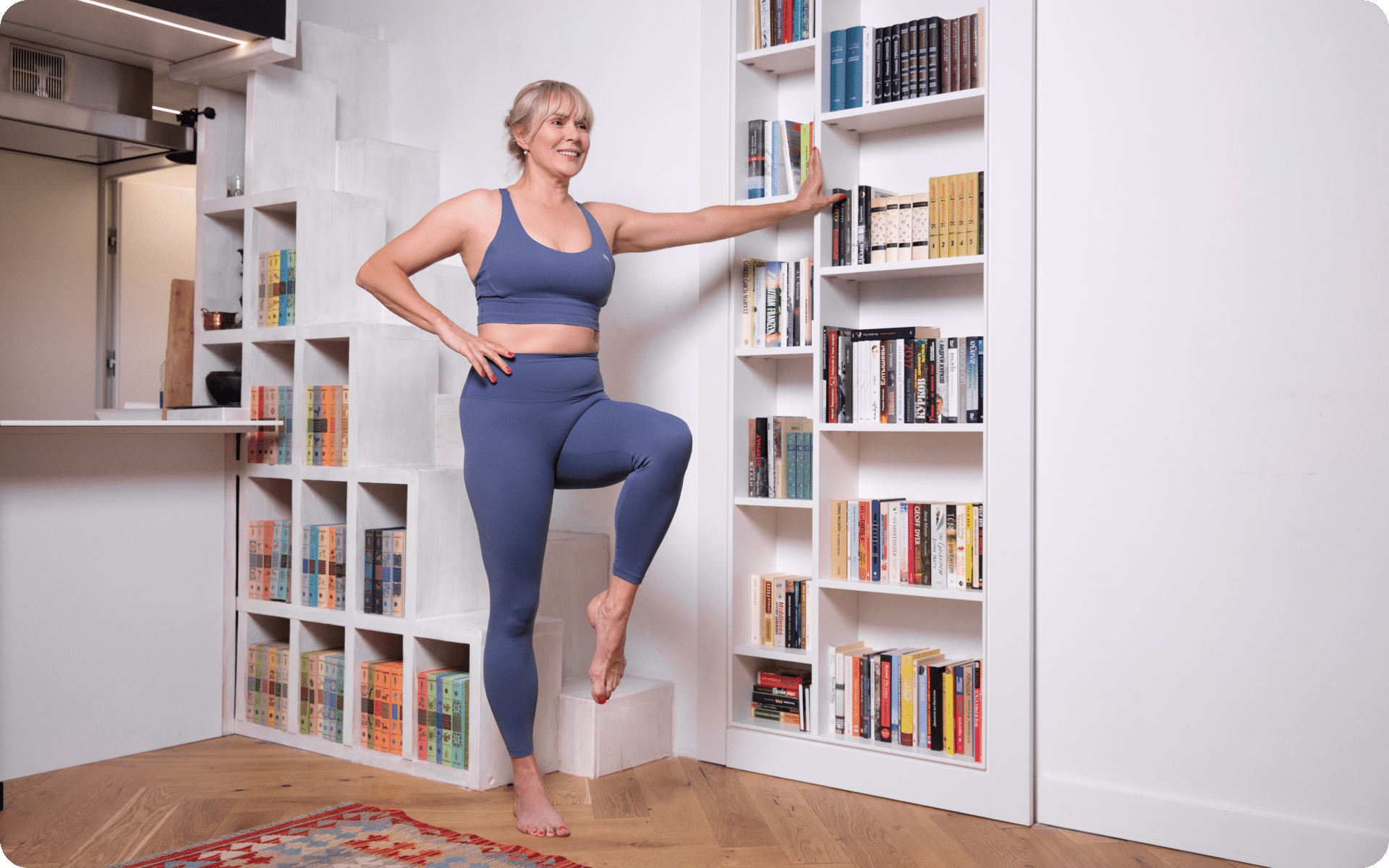
Use a gradual warm-up before calf training. The following 7-10 minute example combines easy movement, ankle preparation, and lighter practice sets; adjust it to your comfort (4).
A dynamic warm-up uses movement through a comfortable range (4). Try this sample sequence:
General warm-up (3 minutes):
- Easy walking or cycling
Ankle preparation (2-3 minutes):
- Ankle circles: 10 each direction
- Knee-to-wall ankle rocks: 8-10 each side
- Slow bodyweight calf raises: 10-15 reps
Lighter practice sets (2-4 minutes):
- 1 easy set of 10 reps
- 1 moderate set of 5 reps
Keep the warm-up easy enough that it does not tire you before the main work.
Workouts, weight management tools, and recipe ideas come together in the BetterMe: Health Coaching app, giving you practical support for building a more consistent wellness routine.
What does the complete 30-day calf schedule include?
This sample calf raise challenge uses Session A, B, and C on nonconsecutive days each week. The table lists one calf exercise per session and a separate optional tibialis exercise for Session C.
Use days 1, 3, and 5 for A, B, and C, then repeat on days 8, 10, and 12; 15, 17, and 19; and 22, 24, and 26. Treat the remaining days as calf workout rest days, without hard calf training. Rest longer or skip a session if needed.
Start with 2 sets per session, giving 6 calf sets per leg each week. In Session C, do 2 sets on each side. Optional tibialis raises add 2 sets of 10 to 20 repetitions for the front of the lower leg. The table gives sample targets, not a tested 30-day prescription.
| Session | Focus | Exercises | Sets | Reps | Rest | Purpose |
|---|---|---|---|---|---|---|
| Session A | Straight knee | Standing calf raise | 2 | 8-12 | 60-90 sec | Straight-knee practice |
| Session B | Bent knee | Seated bent-knee calf raise | 2 | 12 to 20 | 60-90 sec | Bent-knee practice |
| Session C | Single leg | Supported calf raise | 2 per leg | 8-12 per leg | 60-90 sec | Controlled repetitions |
| C optional | Shin work | Tibialis raise | 2 | 10-20 | 60-90 sec | Toe-lift practice |
Across the month, change one variable at a time:
- Week 1: Follow the table and finish each set with about 3 controlled repetitions still possible.
- Week 2: Keep 2 sets and add repetitions within the listed ranges if form stays steady.
- Week 3: At the top of a repetition range, try a small increase in load and return to the lower end.
- Week 4: Keep the same set count and practice the new workload. Leave 1-3 controlled repetitions in reserve.
Day 29: Repeat the comfortable starting checks using the same setup and load. Day 30: Rest and review your training log before deciding what to continue. This completes the sample 30-day schedule.
Read more: 30-Minute Bodyweight Leg Workout to Build Strength
Standing calf raise
- Stand tall with your feet hip-width apart near a wall for balance.
- Keep your knees straight, but not locked.
- Lift your heels slowly until you’re high on the balls of your feet.
- Lower with control, feeling a gentle stretch at the bottom.
- Repeat for your target reps.
Seated bent-knee calf raise
- Sit on a stable chair with your knees bent about 90 degrees and your feet flat.
- Keep your toes and the balls of your feet planted.
- Raise your heels as high as you feel comfortable.
- Lower slowly and pause briefly at the bottom.
- Repeat, keeping the movement smooth.
Single-leg calf raise
- Stand on one foot near a wall for light support.
- Keep that knee straight, but soft.
- Raise your heel to a comfortable height.
- Lower your heel through a comfortable range.
- Finish your reps.
- Switch sides.
Tibialis raise
- Stand with your back near a wall, your heels a step forward.
- Keep your legs mostly straight.
- Lift your toes toward your shins.
- Lower slowly with control.
- Repeat for your target reps.
For a running-focused perspective on calf training, read our guide to sprinter calves. Keep its workload separate from this sample schedule.

What is the difference between straight-knee and bent-knee calf raises?
A straight-leg calf raise and a seated bent-knee calf raise place the gastrocnemius at different lengths. Both train the calves; bending the knee reduces the gastrocnemius contribution (3).
In a 12-week study of 14 untrained adults, standing calf raises produced greater gastrocnemius growth than seated raises. Soleus growth was similar between conditions. This small study does not promise the same outcome from a 30-day plan (2).
Here’s a simple comparison.
| Feature | Straight knee (standing) | Bent knee (seated) |
|---|---|---|
| Muscles trained | Gastrocnemius and soleus | Soleus with less gastrocnemius contribution |
| Knee position | Straight, soft | Bent at about 90 degrees |
| Examples | Standing or supported single-leg calf raise | Seated calf raise |
| Use it for | Straight-knee calf training | Bent-knee calf training |
Include both positions if they suit you, without assuming that a seated raise produces greater soleus growth (2).
Whether you want to refresh your fitness routine, explore lower-calorie recipe ideas, or bring more structure to your wellness habits, BetterMe: Health Coaching app offers tools that can support your next step. Explore the app and find an approach that works for your lifestyle.
How many sets and repetitions should you complete?
The sample plan uses 2 sets of one calf exercise per session, three times per week. For single-leg raises, complete 2 sets on each side. Keep the set count steady while you learn how you respond.
Research does not support rigid repetition boundaries for muscle growth; load, effort, and goals all matter (5). For this sample plan, use:
- 8-12 repetitions for standing and supported single-leg raises
- 12-20 repetitions for seated calf raises
Repetitions in reserve means your estimate of how many more controlled repetitions you could complete (6). For this sample, stop with about 1-3 remaining; you do not need to convert this to a general exertion score.
Choose weight by how challenging the controlled repetitions feel. You can follow this sample without testing the heaviest weight you can lift once.
As a practical cue, take about 2-3 seconds to lower your heels. Reduce the load if you cannot control the descent.
How can you progress without performing hundreds of daily repetitions?
Progressive overload means gradually increasing the training challenge. In a resistance-training study, progressing load or repetitions both improved strength and muscle size; it did not test this calf challenge (7).
Try these calf raise progression methods:
- Add load: Use a dumbbell, machine, or backpack.
- Use a comfortable range: Lower your heels with control without forcing a deeper stretch.
- Slow the tempo: Take 2-3 seconds to lower.
- Keep support: Hold a wall or rail so balance does not limit your calf work.
- Go single-leg: Progress to single-leg calf raises for more challenge.
- Adjust gradually: Keep the sample set count steady while you first build repetitions or load.
Record one change at a time so you can judge whether it suits you.
Where should calf training fit into a running or leg-workout schedule?
Place calf work around your existing running and leg training, leaving time to rest between demanding sessions. Our full leg workout at the gym offers a broader session to compare. The table below gives sample timing options; reduce calf work if it interferes with other activity.
A hard run can leave your calves fatigued, so avoid automatically adding a full calf session afterward.
| Your day | Sample calf timing | Try to avoid |
|---|---|---|
| Leg strength day | After squats or leg press | Before heavy compound lifts |
| Easy run day | After the run | Right before the run |
| Speed or hill day | Separate day if possible | Hard calf work just before |
| Rest day | Light mobility only | Back-to-back hard sessions |
If soreness changes your stride, ease off and allow more rest. Do not force the calendar when your movement is affected.
What should you do after completing the 30 days?
After Day 30, review your log and decide whether the workload remains manageable.
You have a few options:
- Continue gradually: Repeat a manageable schedule and increase the challenge only when your repetitions stay controlled.
- Reduce the workload: Keep fewer sessions or sets if the plan competes with other training.
- Keep useful variations: Retain standing or seated raises according to your comfort and goals.
A calf endurance workout does not require hundreds of repetitions every day. Continue with controlled sets and gradual changes beyond the month. Individual results vary, and the calendar does not set a deadline for visible growth.
FAQs
Can you complete the 30-day calf challenge without equipment?
You can start with bodyweight standing and supported single-leg raises. If seated raises feel too easy without added load, choose a standing variation you can control.
Can you divide the repetitions into shorter sessions?
You can split a planned session into shorter blocks if that suits your day. Keep the same total sets and rest days; dividing a session is not a reason to add extra work.
Why is one calf stronger than the other?
A difference in repetitions does not establish its cause. Check that your setup and movement range match on both sides, and record each side separately.
Ask a qualified professional about a new or marked difference rather than automatically adding extra sets to one side.
Do calf raises need to be performed on a step?
No, you can start on flat ground. A step allows your heel to lower farther, so use a stable support and only a range you can control.
Can you perform calf raises barefoot?
Choose footwear or bare feet according to the surface, equipment rules, and your comfort. Keep your footing secure; barefoot calf raises do not guarantee better balance.
The bottom line
A 30-day calf challenge can help you organize regular calf practice. Follow the sample sessions, leave rest days between them, and use the final check to compare your technique and workload. Continue at a pace you can manage without expecting a fixed appearance change.
DISCLAIMER:
This article is intended for general informational purposes only and does not serve to address individual circumstances. It is not a substitute for professional advice or help and should not be relied on for making any kind of decision-making. Any action taken as a direct or indirect result of the information in this article is entirely at your own risk and is your sole responsibility.
BetterMe, its content staff, and its medical advisors accept no responsibility for inaccuracies, errors, misstatements, inconsistencies, or omissions and specifically disclaim any liability, loss or risk, personal, professional or otherwise, which may be incurred as a consequence, directly or indirectly, of the use and/or application of any content.
You should always seek the advice of your physician or other qualified health provider with any questions you may have regarding a medical condition or your specific situation. Never disregard professional medical advice or delay seeking it because of BetterMe content. If you suspect or think you may have a medical emergency, call your doctor.
SOURCES:
- Anatomy, Bony Pelvis and Lower Limb: Calf (2026, ncbi.nlm.nih.gov)
- Triceps surae muscle hypertrophy is greater after standing versus seated calf-raise training (2023, frontiersin.org)
- Anatomy, Bony Pelvis and Lower Limb: Gastrocnemius Muscle (2026, ncbi.nlm.nih.gov)
- Dynamic Warm-ups Play Pivotal Role in Athletic Performance and Injury Prevention (2024, pmc.ncbi.nlm.nih.gov)
- Loading Recommendations for Muscle Strength, Hypertrophy, and Local Endurance: A Re-Examination of the Repetition Continuum (2021, pmc.ncbi.nlm.nih.gov)
- Modeling the repetitions‐in‐reserve‐velocity relationship: a valid method for resistance training monitoring and prescription, and fatigue management (2024, pmc.ncbi.nlm.nih.gov)
- Effects of Resistance Training Overload Progression Protocols on Strength and Muscle Mass (2024, pubmed.ncbi.nlm.nih.gov)
 Reviewed by