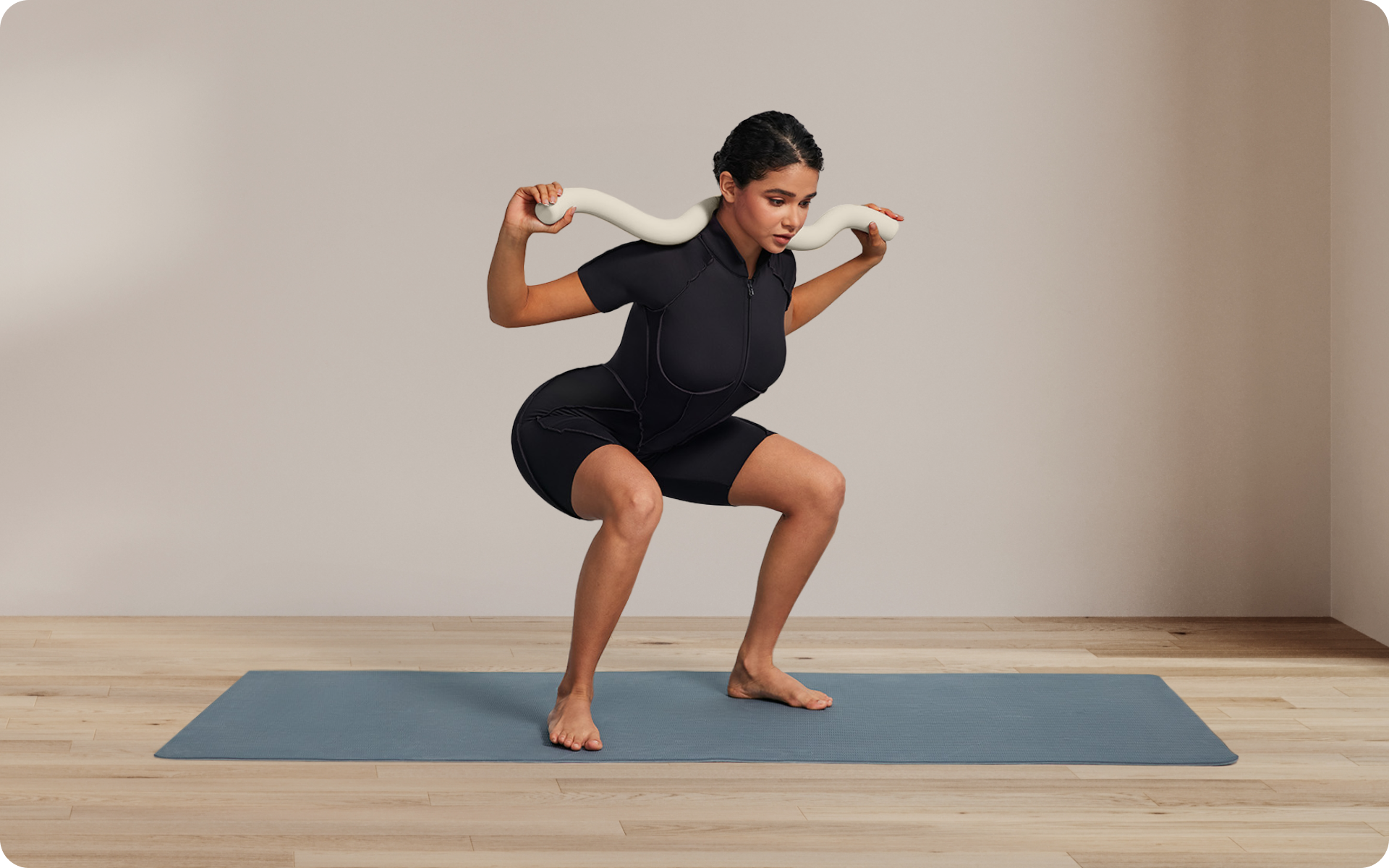

The Brazilian butt squat challenge is a four-week plan that slowly increases squat practice. The rules are simple: use controlled reps, choose a comfortable depth, take rest days, and reduce the reps when needed. Most fitness levels can follow it with changes such as chair support, fewer squats, or no added weight. The likely outcome is better squat practice and a steady challenge for the hips and legs—not a guaranteed body shape or fast change.
This type of plan may feel useful in today’s economy as it requires little or no equipment. Many people can do it at home without paying for a gym, buying machines, or spending time on travel. This makes it easier to fit movement into a busy week.
However, the name shouldn’t create false expectations. Squats cannot promise a certain look or control where body fat changes. The Brazilian butt squat challenge is best treated as a simple strength routine that supports regular practice, gradual progress, and better awareness of squat form.
Which Muscles Are Involved in Common Squat Variations?
Common squat variations work the butt muscles, front and back of the thighs, inner thighs, calves, and core. The main muscles are the glutes, quadriceps, hamstrings, and adductors. Your stomach and back muscles also help keep your body steady. Research has shown that changing foot position, load, depth, or stance can shift how hard certain muscles work, but no squat targets only one area (1, 2, 3).
| Squat variation | Main muscles and purpose |
|---|---|
| Bodyweight squat | Trains the glutes and thighs while helping you learn the basic movement |
| Goblet squat | Holding one weight near the chest adds resistance and asks the core and upper back to stay firm |
| Split squat | Places more work on one leg at a time, with the glutes and front thigh doing much of the effort |
| Lateral squat | Adds side-to-side movement and brings more attention to the inner thighs and side glutes |
| Narrow squat | Keeps the feet closer together and may place more focus on the front thighs, though body shape and squat depth affect the movement |
These changes don’t make one version “best”. Each option simply gives the lower body a slightly different task. During the Brazilian butt squat challenge, choose the version that lets you stay balanced, move with control, and finish each rep without forcing extra depth.
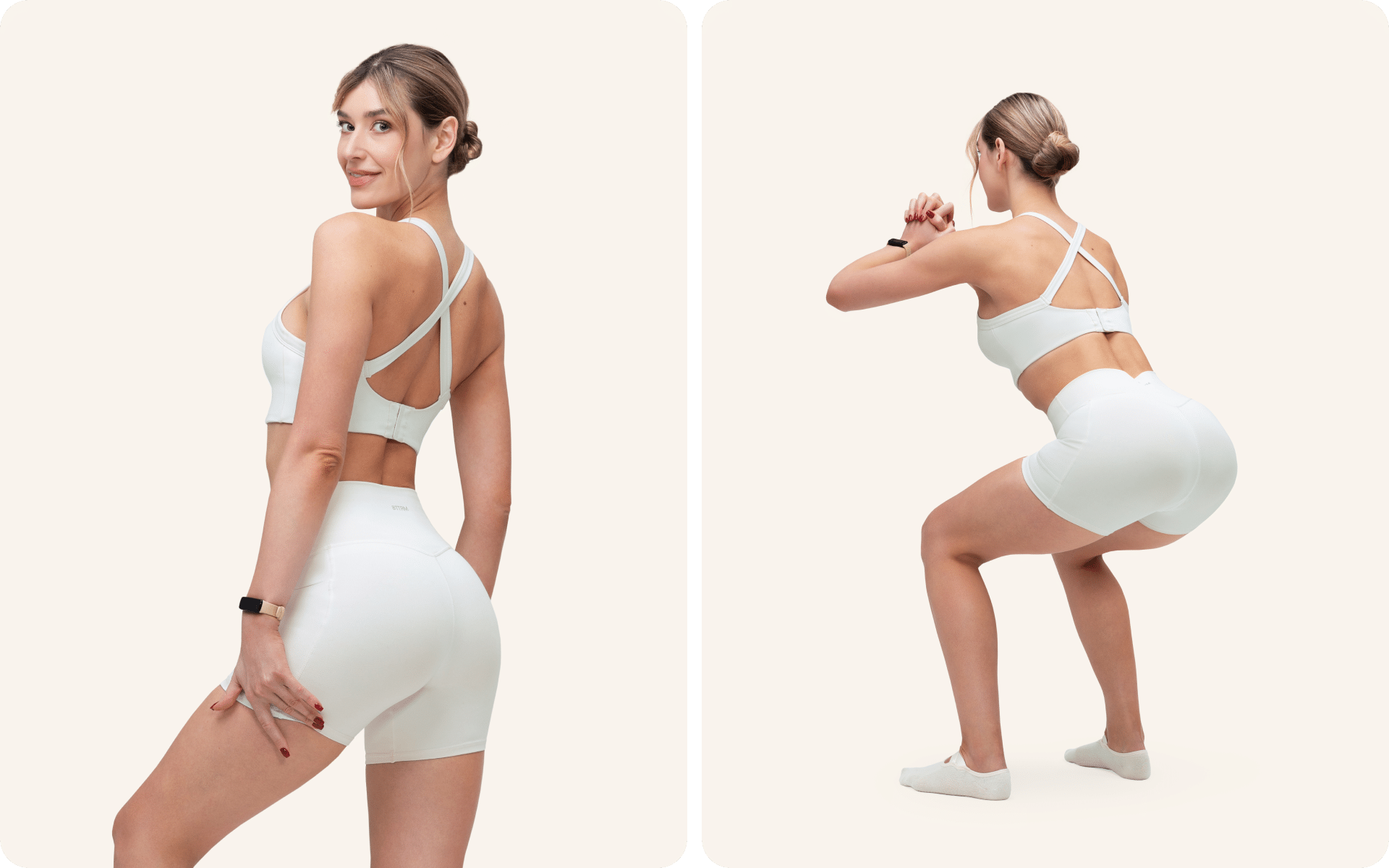
What Do You Need Before Starting This Squat Routine?
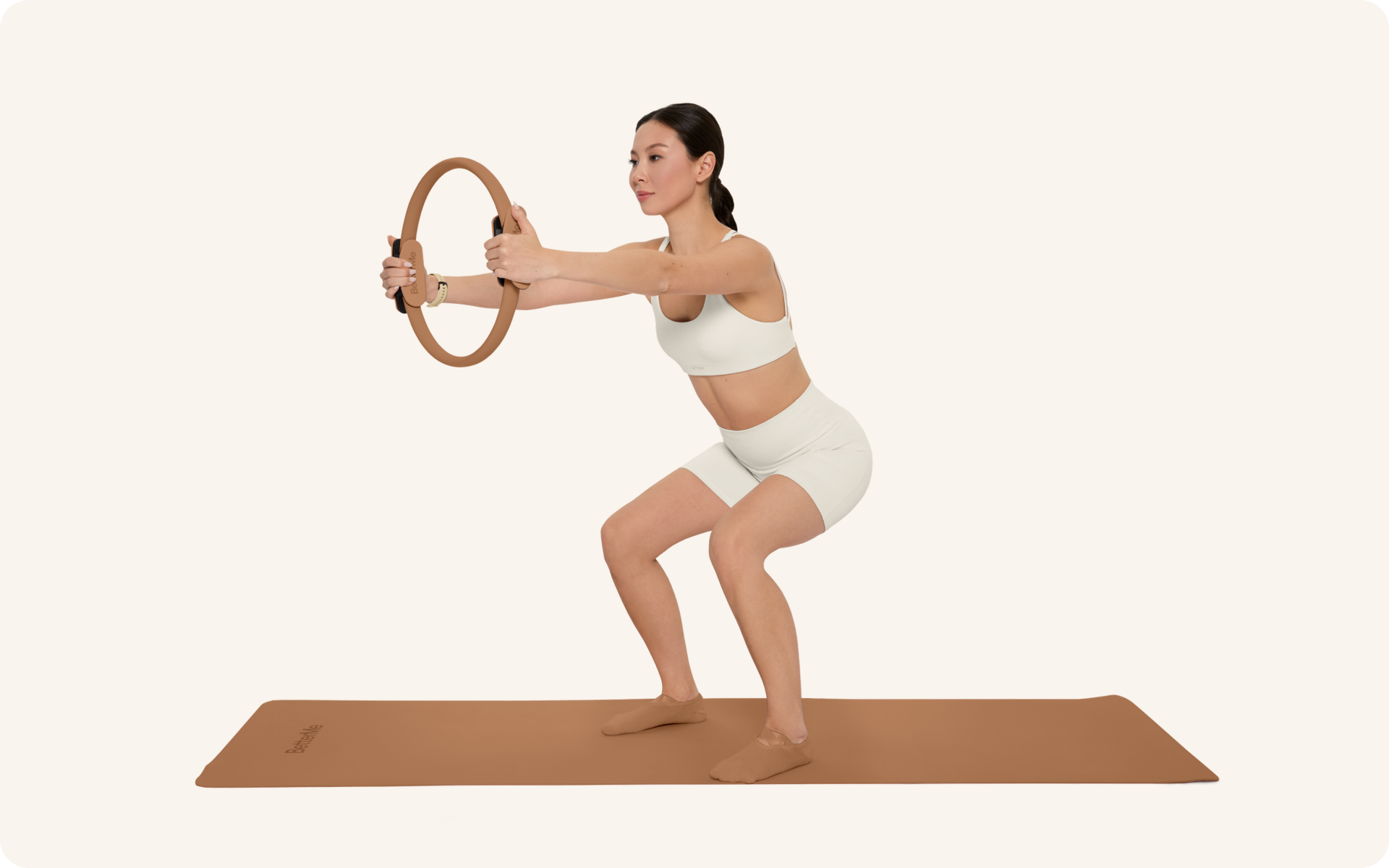
Remember that gym equipment is optional—this beginner squat routine can begin with body weight alone.
Before starting, you need to do the following:
- Clear some floor space: Make sure you can sit back, stand up, and step sideways without hitting any furniture.
- Keep support nearby: A sturdy chair, wall, or counter can help with balance. A stable chair is often enough.
- Wear suitable clothing: Choose clothes that allow your knees and hips to move freely. Supportive shoes may help on a hard or slippery floor.
- Prepare optional weight: Start without added resistance. A light dumbbell can be introduced later if each rep stays controlled.
- Choose your training days: Add the sessions to your weekly calendar, including rest days. The setup doesn’t need to be costly or complex.
Try a few slow practice squats before the first full session.
BetterMe can help you add more structure to your daily wellness routine with workouts, meal planning tools, and habit-building features. Explore the app and take a practical step toward a routine that feels more manageable for you.
What Does the Four-Week Brazilian Butt Squat Challenge Schedule Look Like?
The Brazilian butt squat challenge uses three squat sessions per week, with rest or light activity between them. The schedule uses small weekly increases, instead of asking you to squat every day (4). Unlike some 30-day squat challenge plans, it doesn’t rely on one large daily rep count.
| Week | Suggested schedule |
|---|---|
| Week 1: Learn | Complete 2 sets of 8-10 bodyweight or chair-supported squats on three nonconsecutive days. Rest for 60-90 seconds between sets. |
| Week 2: Build | Complete 2 sets of 10-12 squats on three days. Use the same version, or try one easy variation. |
| Week 3: Add work | Complete 3 sets of 8-10 squats on three days. Add a light weight only when the bodyweight version feels controlled. |
| Week 4: Practice control | Complete 3 sets of 10-12 squats on three days. You may use a bodyweight squat, supported split squat, or light goblet squat. |
Rest days are part of the plan, not a missed workout. Light walking or gentle daily movement can still be included. Research recommends muscle-strengthening work on at least two days each week and advises inactive adults to begin with small amounts before building up (5).
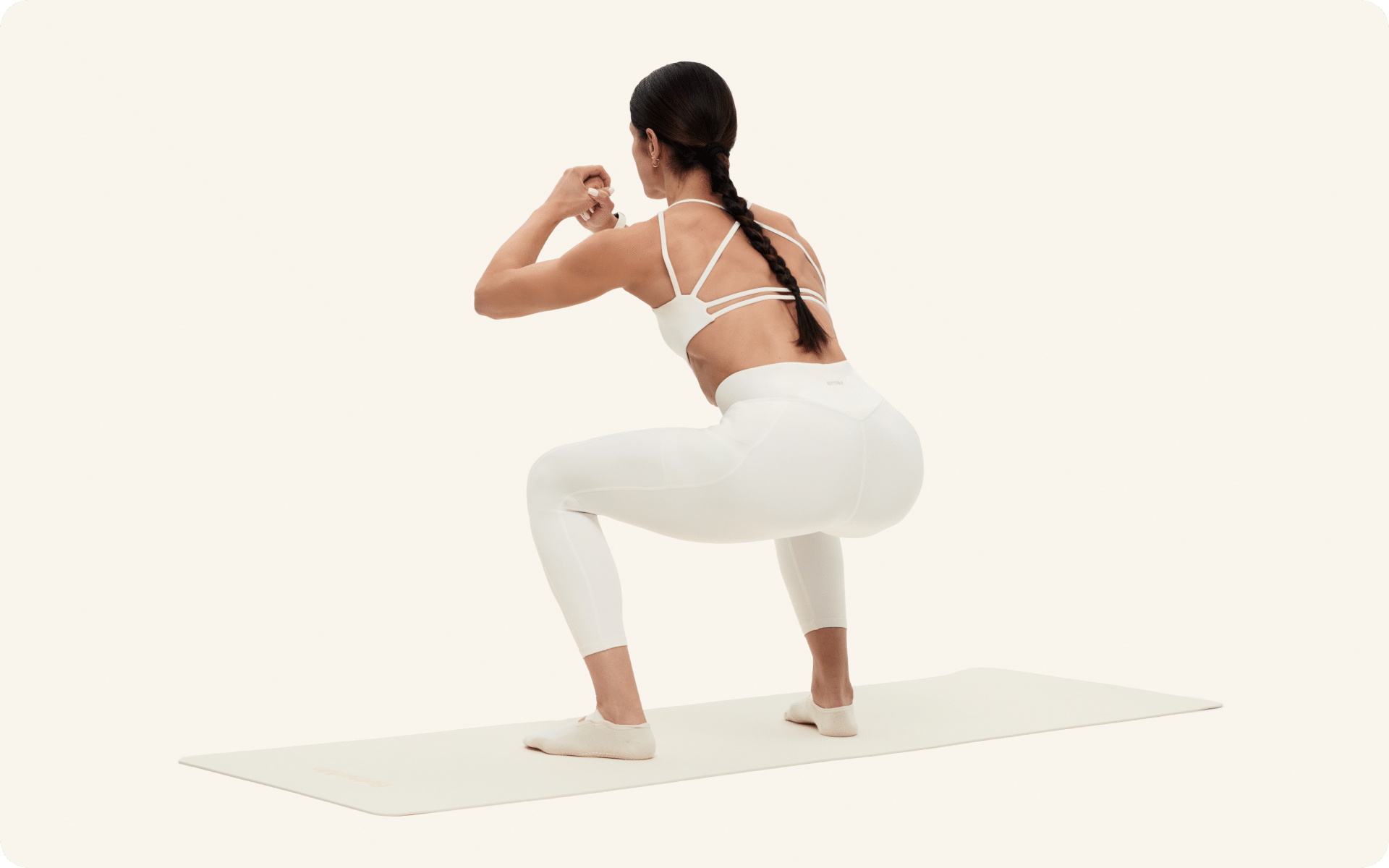
How Can You Adjust Squat Depth, Support, and Resistance?
Here are some tips:
- Adjust the squat by shortening the movement, holding a stable surface, or using less weight. The best adjustments are the ones that let you stay balanced and move with control. You shouldn’t sacrifice your form in order to lift a heavier weight.
- Change the depth: Lower only as far as you can while keeping your feet down and standing back up smoothly. A shallow squat still trains the lower body. Research has shown that changing squat depth can alter joint movement and how strongly some muscles work (6).
- Add support: Hold a wall, firm counter, or heavy chair. A chair or counter will give you extra balance, but it shouldn’t slide or tip. You can also squat toward a chair and lightly touch the seat before standing.
- Increase hold time: Try pausing your squat when your thighs are parallel to the ground. Holding a squat position like this is known as an isometric contraction and can be an ideal way to challenge the lower body.
- Adjust resistance: Begin without weights. When the reps feel steady, hold one light weight at your chest for a goblet squat. Added load changes the demand placed on the working muscles, so increase it in small steps.
During an at-home squat workout, change only one part at a time. For example, add a little depth before adding weight. This makes it easier to notice how your body responds and avoid turning the challenge into a race.
How Can You Progress the Challenge From Week to Week?
Progress the challenge gradually by changing one variable at a time, such as repetitions, sets, movement control, squat variation, or resistance. Each week doesn’t need to feel harder than the last, but you should aim to increase the training challenge over time. This principle, which is known as progressive overload, helps keep the muscles sufficiently challenged as you become stronger.
Try this order:
- Add repetitions: Begin near the lower end of the suggested range. Add one or two reps per set when the current number feels controlled.
- Add a set: Move from two sets to three instead of completing one very long set.
- Slow the lowering phase: Take about two or three seconds to lower, then stand up at a comfortable speed.
- Use a harder variation: For example, move from a chair-supported squat to an unsupported squat.
- Add light resistance: Only turn a bodyweight squat challenge into a light dumbbell squat workout after you can complete the planned reps steadily.
In a study of resistance-trained adults, increasing repetitions and increasing weight both supported muscular adaptations over eight weeks, with few notable differences between the approaches (7).
However, if control becomes worse, keep the same level for another week or step back. Current guidance also stresses consistency and personal adjustment over a needlessly complex plan.
Why Are Rest Days Included in This Squat Routine?
Rest days give the lower body a break from repeated squat sessions. They may also help you return with better control and less muscle soreness. Rest days are part of the plan, rather than a sign that you’ve fallen behind.
A 2021 study found that trained adults had a larger drop in squat strength 24 hours after training to failure than after stopping before failure (8). Recovery needs still vary by person, effort, and training experience.
Unlike a 50 squats a day challenge, this plan spreads the work across three nonconsecutive days. Normal daily movement or an easy walk can still fit between sessions. They give your legs time away from planned squat sets.
Read more: How Many Squats A Day Will Give You That Peach Booty Look?
How Can You Fit This Challenge Into a Balanced Lower-Body Week?
Use the challenge as your main lower-body work for four weeks. Don’t place several hard leg workouts around it. A balanced week includes full-body strength work, light movement, and days with no planned squat training.
This squat workout routine can follow a simple pattern:
- Monday: Challenge session
- Tuesday: Easy walk or upper-body exercise
- Wednesday: Challenge session
- Thursday: Rest or gentle movement
- Friday: Challenge session
- Weekend: Light activity and recovery
A lower-body squat workout may be paired with one light hip-hinge, calf, or side-step exercise. Keep it short. The extra exercises don’t need to leave your legs exhausted.
As previously mentioned, guidance recommends strengthening all major muscle groups on at least two days each week. This lower-body strength routine covers part of that goal, but upper-body and core work can be added on separate days.
What Signs Suggest You Should Pause or Choose an Easier Option?
Pause when you feel sharp pain, dizziness, extreme shortness of breath, chest discomfort, or a sudden loss of balance. Signs that suggest the exercise is too hard also include shaking, rushed reps, or being unable to stand up smoothly.
Try an easier option when:
- Your knees, hips, or back feel painful during the movement
- Your heels keep lifting from the floor
- Your knees repeatedly move inward
- You must drop quickly into the squat
- Your form gets worse before the set is finished
Reduce the depth first, then lower the reps, use chair support, or remove added weight. General muscle soreness is common when your body is getting used to a new workout program, but sharp pain that stays weeks after the session is likely a reason to pause and consider speaking with a qualified health professional.
Don’t use a stretches for squats routine to push through pain. Stretching may feel pleasant, but it doesn’t make every movement suitable for every person. Stop exercising and seek help when pain, extreme shortness of breath, or dizziness occurs.
Workouts, weight management tools, and recipe ideas come together in the BetterMe Well-Being Coach app, giving you practical support for building a more consistent wellness routine.
FAQs
Can beginners use a chair or other stable support for squats?
Yes. A sturdy chair, counter, or wall can provide balance support and help beginners use a smaller, more manageable range of motion. Check that the surface cannot slide or tip before you start.
Do I need dumbbells for a squat challenge?
No. Bodyweight squats can provide resistance, particularly for beginners—dumbbells are an optional way to raise the difficulty later.
Can I combine this routine with walking or cardio?
Yes. Walking and other cardio can fit around the squat sessions, as current guidance recommends a mix of aerobic and muscle-strengthening activity. Reduce the effort if your legs feel unusually tired.
Can I make the challenge shorter on busy days?
Yes. Complete fewer sets or reps while keeping each squat controlled—a short session still helps you maintain the routine. Federal guidance notes that some activity is better than none.
Can I use a resistance band with squat variations?
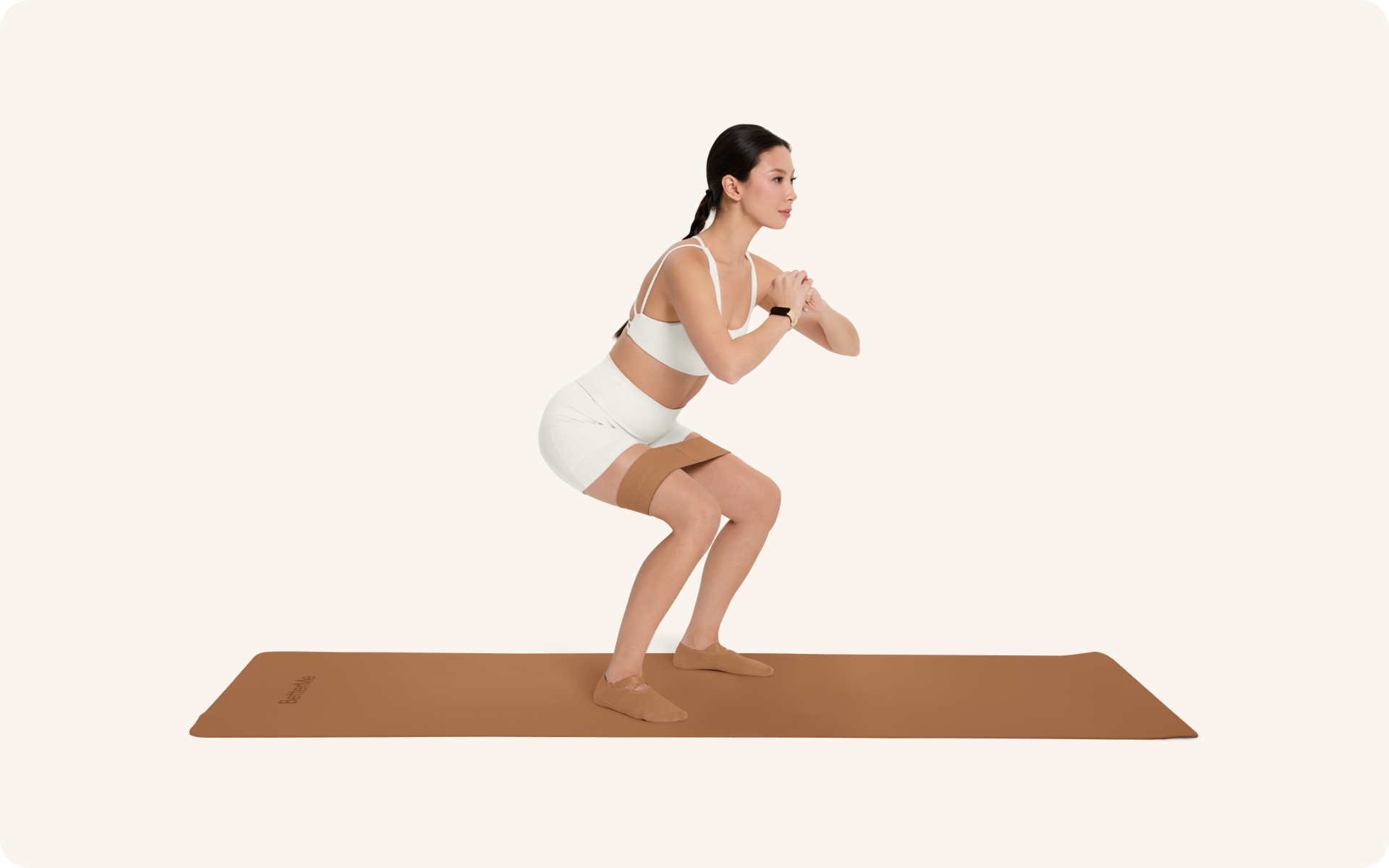
Yes. A resistance band can add difficulty to certain squat variations, but it should stay secure and allow smooth, controlled movement. Elastic bands are a recognized form of resistance training.
The Bottom Line
The Brazilian butt squat challenge offers a clear way to practice squats over four weeks. This plan uses three weekly sessions, gradual progress, and regular rest, rather than a large number of daily reps. Start with a movement depth you can control. Use a chair when your balance feels uncertain, and only add resistance once the basic version feels steady.
Results will depend on your starting level, routine, sleep, food habits, and other healthy lifestyle decisions. A squat challenge cannot promise a certain body shape. However, it can provide structure for practicing lower-body strength exercises at home.
Keep the routine flexible. Repeat a week, reduce the reps, or choose an easier variation when needed. Start with small amounts of activity and build it up over time.
DISCLAIMER:
This article is intended for general informational purposes only and does not serve to address individual circumstances. It is not a substitute for professional advice or help and should not be relied on for making any kind of decision-making. Any action taken as a direct or indirect result of the information in this article is entirely at your own risk and is your sole responsibility.
BetterMe, its content staff, and its medical advisors accept no responsibility for inaccuracies, errors, misstatements, inconsistencies, or omissions and specifically disclaim any liability, loss or risk, personal, professional or otherwise, which may be incurred as a consequence, directly or indirectly, of the use and/or application of any content.
You should always seek the advice of your physician or other qualified health provider with any questions you may have regarding a medical condition or your specific situation. Never disregard professional medical advice or delay seeking it because of BetterMe content. If you suspect or think you may have a medical emergency, call your doctor.
SOURCES:
- Muscle Activation during the Squat Performed in Different Ranges of Motion by Women (2023, pmc.ncbi.nlm.nih.gov)
- Differences in the muscle activities of the quadriceps femoris and hamstrings while performing various squat exercises (2022, link.springer.com)
- The Activation of Gluteal, Thigh, and Lower Back Muscles in Different Squat Variations Performed by Competitive Bodybuilders: Implications for Resistance Training (2021, mdpi.com)
- Brazilian Butt Squat Challenge For A Perky Behind (2024, betterme.world)
- Physical Activity Guidelines Questions & Answers (n.d., odphp.health.gov)
- The relationship between the deep squat movement and the hip, knee and ankle range of motion and muscle strength (2020, pmc.ncbi.nlm.nih.gov)
- Progressive overload without progressing load? The effects of load or repetition progression on muscular adaptations (2022, pubmed.ncbi.nlm.nih.gov)
- Effects of resistance training intensity on sleep quality and strength recovery in trained men: a randomized cross-over study (2021, pubmed.ncbi.nlm.nih.gov)
 By
By 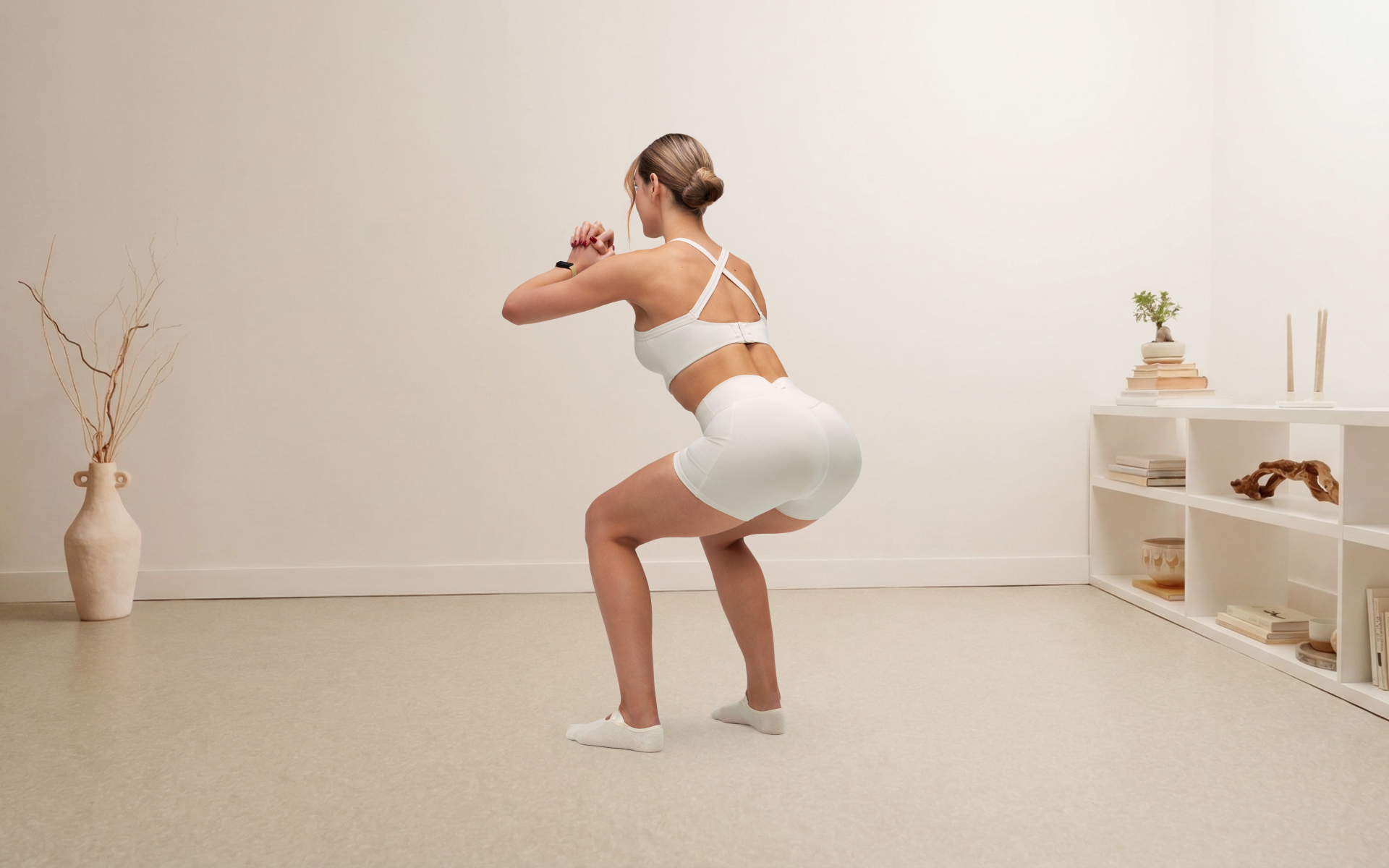
 Reviewed by
 Reviewed by