Deadlifts are one of the most effective exercises for building full-body strength. They primarily train your glutes, hamstrings, and back while also challenging your core and grip. And while deadlifts may look intimidating, the basic movement is simple: pick a weight up from the ground and put it back down with control.
The benefits of deadlifts are particularly relevant today, when many people want workouts that make good use of limited time and money. One movement can train several large muscle groups, which may help keep a strength routine simple and focused. This makes deadlifts practical for people who don’t want a long list of exercises to do.
Deadlifts can be used to build strength, develop the posterior chain, and improve your ability to produce force through the hips. However, getting those benefits starts with learning proper technique and choosing the right deadlift variation for your experience and goals.
What Muscles Do Deadlifts Work?
Deadlifts work the glutes, hamstrings, quadriceps, back muscles, core, forearms, and upper back. The exact amount of work each muscle does can change with the deadlift style, load, and technique (1).
Key muscles that are involved include:
- Glutes: Help drive the hips forward as you stand up.
- Hamstrings: Support hip movement and help control the lift.
- Quadriceps: Help straighten the knees, especially when lifting from the floor.
- Back muscles: Help keep the back and torso steady during the movement.
- Core muscles: Help keep the trunk firm while the weight moves.
- Forearms and grip muscles: Work to keep the weight secure in your hands.
- Upper back: Supports shoulder and upper-body position throughout the lift.
These muscles work together rather than taking turns. This shared effort is one of the benefits of deadlifts, as one exercise can train several large areas of the body at the same time.
How to Perform the Deadlift
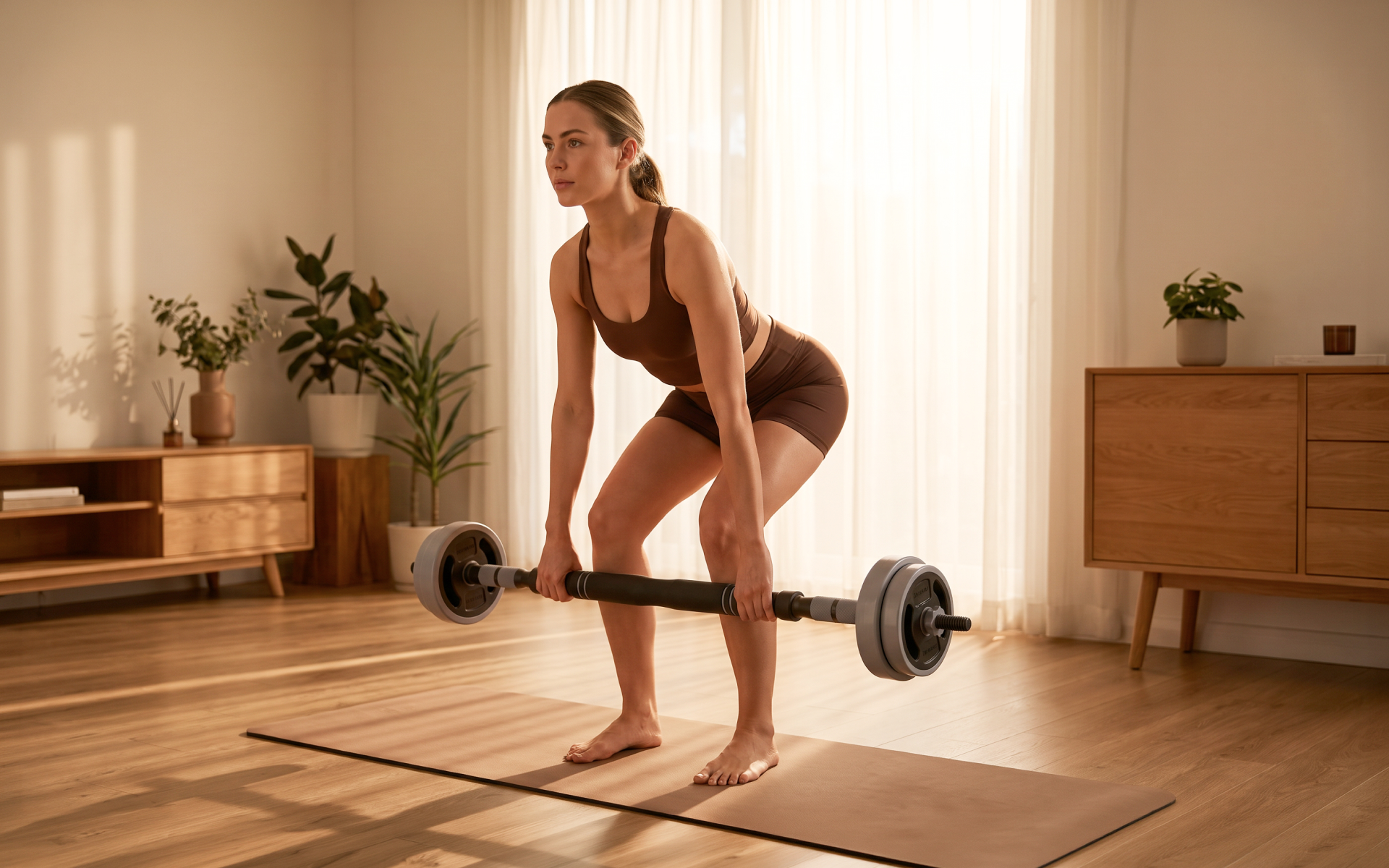
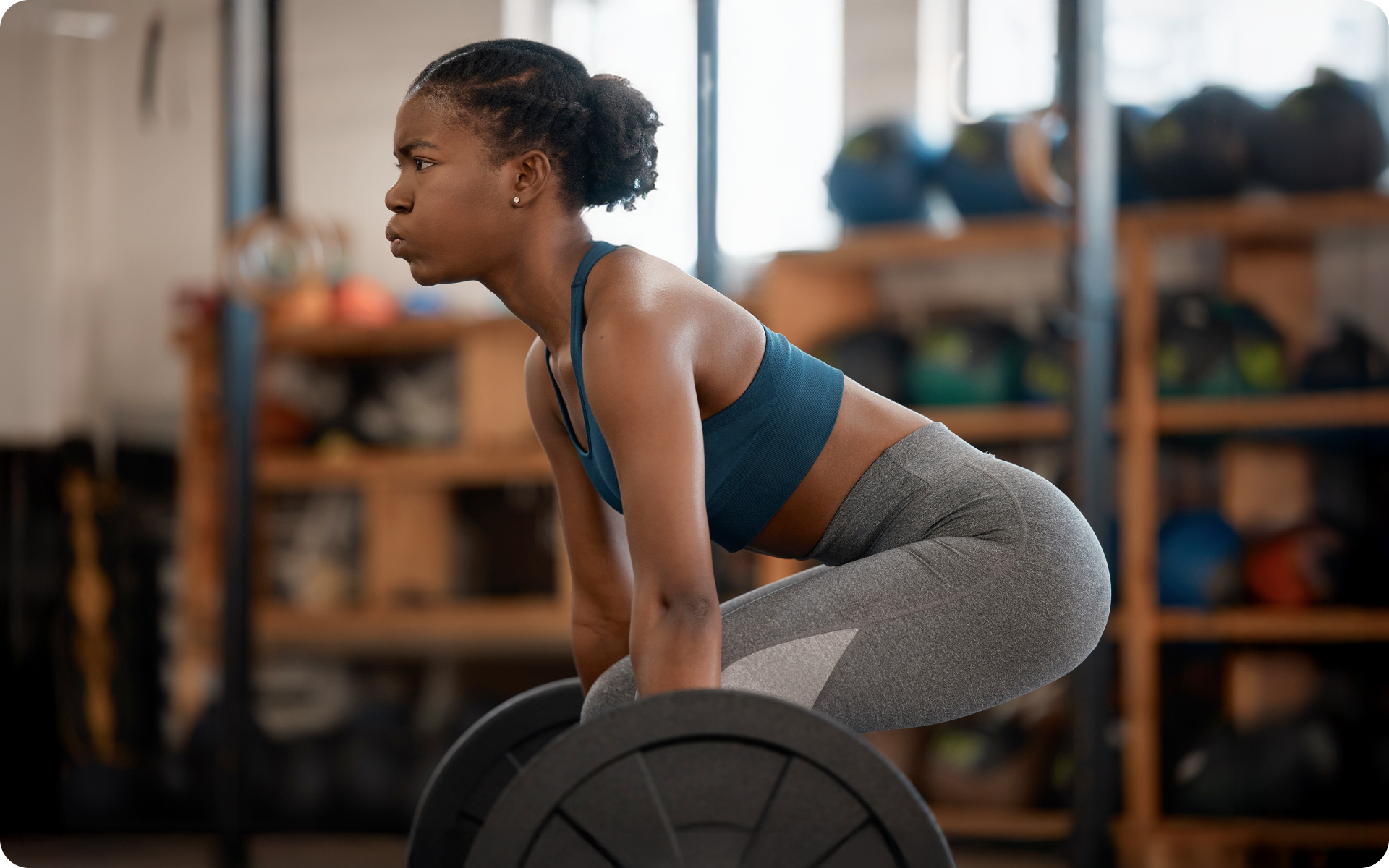
To perform a deadlift, stand close to the weight, set your grip, brace your core, and stand up by driving through your feet while keeping the weight close to your body.
- Set your stance: Place your feet about hip-width apart. Your feet stay firmly planted in this spot.
- Grip the weight: Bend at the hips and knees and hold the bar just outside your legs.
- Brace your core: Keep your torso firm and your back in a comfortable, steady position.
- Lift smoothly: Push through your feet and extend your hips and knees together.
- Lower with control: Send your hips back, then bend your knees as the weight returns down. Your movements should stay controlled.
Read more: Deadlift On Leg Day: Does It Help To Pack On Muscle
What Are the Main Benefits of Deadlifts?
The main benefits of deadlifts are building strength, developing force, and making a strength workout more efficient. When they’re done with suitable technique and gradual increases in load, deadlifts can be adapted as strength improves.
Some key benefits include:
- Building strength: Regular deadlift training can increase how much force a person can produce and how much weight they can lift (2).
- Developing power: Research in novice lifters found that 10 weeks of deadlift training improved how quickly the legs produced force and also improved vertical jump height (3).
- Allowing steady progress: The weight, repetitions, and sets can be adjusted over time, which makes the exercise useful across different stages of strength training.
- Keeping training focused: One lift can challenge several parts of the body in the same movement. This can help keep a workout simple without making it less demanding.
- Building functional capacity: One of the deadlift’s greatest benefits is it directly correlates to everyday movements, such as picking objects off the ground.
These benefits depend on factors such as training experience, technique, recovery, and the load used. Deadlifts are a useful option, not a requirement for building strength.
How Can Deadlifts Support Full-Body Strength Training?
Deadlifts can support full-body strength training by serving as one major lift in a wider routine. They can be paired with movements such as presses, rows, squats, and carries so the workout covers different movement patterns, rather than relying on one exercise alone.
Here’s where deadlifts can fit:
- As a main lift: Deadlifts are often placed early in a workout, when you have more energy for a demanding movement.
- As part of a balanced plan: A deadlift covers the hip-hinge pattern, while other exercises can focus on pushing, pulling, squatting, or single-leg work.
- With gradual loading: Resistance can be increased over time as strength and technique improve. Research has suggested that moderate and heavier resistance loads can support strength gains when used appropriately (4).
- Alongside other lower-body lifts: Deadlift and squat training can both improve lower-body strength, but gains tend to be strongest in the exercise being trained (5). This makes variety useful when the goal is broader strength.
The key isn’t to make deadlifts do every job—a well-rounded routine uses them as one piece of the plan. These choices help spread training across different movement skills instead of placing all the focus on a single lift.
Why Are Deadlifts Useful for Training the Posterior Chain?
Deadlifts train the posterior chain by loading the muscles along the back of your body in a hip-hinge movement pattern. The posterior chain mainly refers to muscles that help control and extend the hips and support the trunk.
- Erector spinae
- Glutes
- Hamstrings
- Upper back
This matters during two parts of the lift:
- On the way up: The hips extend as you return to standing, so the muscles must produce force against the weight.
- On the way down: The hips move back while the weight is lowered under control. This gives the rear thigh and hip muscles work while they are lengthening.
- With different variations: A 2022 study found that Romanian, step Romanian, and stiff-leg deadlifts produced different patterns of muscle activity across the back of the body. A larger movement range also increased overall posterior-chain muscle activity in that study (5).
This means that the deadlift can be adjusted depending on where a person wants more training focus. However, deadlift variations aren’t interchangeable, as changes in range and body position can change how the load is shared.
How Do Deadlifts Challenge Grip and Core Control?
Deadlifts challenge grip by making you hold a loaded bar throughout the lift, while the core works to keep the trunk steady as the weight moves.
The two demands are slightly different:
- Grip: Your hands and forearms must keep the bar from slipping. Research has found that grip style can change how strongly the forearm muscles are activated during deadlifts. A double-overhand or hook grip produced more forearm activity than a mixed grip in trained lifters (6). Grip demands change as the weight gets heavier.
- Core control: The muscles around the middle of the body help limit unwanted trunk movement while force is transferred between the lower and upper body. Research on core muscle activity has shown that free-weight exercises can create meaningful demands on muscles that help control the trunk (7). These muscles work to hold position rather than create the main lifting motion.
Grip may also become a limiting factor with heavier deadlifts, which means the hands can tire before other areas involved in the lift(6). This is why grip choice deserves attention rather than being treated as a small detail.
BetterMe offers a variety of workouts, recipes, challenges, and support tools to help you stay more consistent with your wellness routine. Explore the app to find features that fit your goals, preferences, and schedule.
Can Deadlifts Help Improve Your Performance in Other Strength Exercises?
Yes, deadlifts may help performance in some other strength exercises, but the carryover is usually partial rather than equal across every lift.
A 2024 trial gave a useful example. Women trained either the trap-bar deadlift or the half squat twice a week for eight weeks. The deadlift group improved its half-squat strength by about 13%, even though the half squat wasn’t its main training exercise. However, people tended to make bigger gains in the movement they actually practiced (8)
What does that mean in the gym?
- Some strength can carry over: Getting stronger through one loaded movement may support another exercise with similar demands.
- Practice still matters: If your goal is a stronger squat, you still need to squat—a deadlift cannot fully replace it.
- Transfer depends on the exercise: The carryover is likely to be greater when two movements have more in common.
So, one of the benefits of deadlifts is possible support for related strength work. These gains don’t mean every exercise will improve at the same rate.
What Is the Difference Between Conventional, Romanian, and Sumo Deadlifts?
Conventional, Romanian, and sumo deadlifts mainly differ in terms of stance, starting position, knee bend, and how the hips move (9, 10)
| Feature | Conventional deadlift | Romanian deadlift | Sumo deadlift |
|---|---|---|---|
| Starting position | Bar starts on the floor | Usually starts from standing, with the weight already in the hands | Bar starts on the floor |
| Foot position | Feet are roughly hip-to-shoulder-width apart | Usually similar to a narrow conventional stance | Feet are set much wider and turned outward |
| Hand position | Hands stay outside the legs | Hands stay outside the legs | Hands stay inside the legs |
| Knee bend | Knees bend as you set up and straighten during the lift | Knees stay slightly bent while most movement comes from the hips | Knees bend, but the wide stance changes how the hips and knees move |
| Hip movement | Hips and knees work together to lift the bar from the floor | Hips travel backward as the weight is lowered | Hips start closer to the bar because of the wide stance |
| Torso position | More forward lean at the start | Torso tips forward as the hips move back | Usually more upright than in a conventional deadlift (9) |
| Bar travel | Travels from the floor to standing | Usually lowers only as far as good control allows, then returns upward | Often has a shorter vertical bar path than the conventional style (9) |
Recent research has confirmed that conventional and sumo deadlifts create different hip and knee movement patterns (9). However, Romanian deadlifts place greater focus on the hip-hinge motion, and changing their range of motion can also change muscle activity (10).
These differences matter because the three lifts aren’t just different names for the same movement. The setup also changes how the body handles the load.
Read more: HIIT Workouts With Weights: This Hardcore Strength-Boosting Routine Is Sure To Leave You Sore
Which Deadlift Variation Fits Different Training Goals?
The right deadlift variation will depend on what you want to practice. Conventional deadlifts may suit floor-based strength work, Romanian deadlifts fit hip-hinge training, and sumo deadlifts offer a wider-stance way to pull from the floor (9, 10)
| Training goal | Variation that may fit | Why it may fit |
|---|---|---|
| Practice lifting from the floor | Conventional deadlift | The bar begins on the ground, so you practice producing force from a stopped position. |
| Focus on the hip hinge | Romanian deadlift | The hips move farther backward while the knees stay slightly bent—this makes hip control a key part of the exercise (10) |
| Train with a wider stance | Sumo deadlift | The feet are placed wider and the hands stay inside the legs, creating a different hip and knee movement pattern (9) |
| Use greater hip-extension demands | Conventional deadlift | Recent research found greater hip-extension moments with the conventional style compared with sumo (9) |
| Use more knee involvement during the first part of the pull | Sumo deadlift | Sumo showed greater knee-extension movement and higher peak activity in one quadriceps muscle during the first phase of the lift (9) |
| Practice lowering a weight with control | Romanian deadlift | The exercise usually begins from standing, so the lowering phase becomes a clear part of each repetition (9) |
The best choice will depend on your training goal, experience, body position, and which movement you can perform with good control. These goals don’t mean that one variation is better overall—each just places the body in a different position and changes the demands of the lift.
How Much Weight Should You Use for Deadlifts?
Use a deadlift weight that lets you complete your planned reps with steady control and consistent technique. There’s no single starting weight that suits everyone because strength, training history, equipment, and deadlift style all affect what feels manageable.
A simple way to choose your load is:
- If you’re learning the movement: Start light enough to practice each rep without rushing or losing your setup.
- If the last reps feel incredibly easy: A small increase may be appropriate at a future session.
- If your technique changes to finish the set: Reduce the weight or end the set. The right starting weight will depend on what you can control that day.
- If strength is your main goal: Heavier loads can have an advantage for improving maximum strength. Current research suggests loads at or above about 80% of a one-rep maximum can be effective for this purpose (11)
- You do not need to reach complete muscle failure: A 2022 review found that training to failure was not required for strength gains (12). These findings help support a more measured approach to loading.
Beginners don’t need to test their heaviest possible single rep to find a useful starting point. Choosing a manageable load first and then adding weight gradually as the movement becomes more familiar is a far better approach.
How Often Can You Include Deadlifts in Your Workout Routine?
For many people, deadlifting once or twice per week can be a practical starting point, but there’s no single schedule that works for everyone. How often you train the lift should depend on your experience, the difficulty of each session, and how well you recover between workouts. Research has suggested that higher resistance-training frequency can support strength gains, but the extra benefit becomes smaller as frequency rises (13)
A simple way to plan it is:
- Once per week: May work well if deadlifts are challenging, you’re new to the movement, or if your routine already includes other demanding lower-body exercises.
- Twice per week: Can give you more chances to practice the movement and spread your training across the week. Current evidence supports training major muscle groups at least twice weekly if strength is a goal (11)
- More than twice per week: This may suit some experienced lifters, particularly when sessions differ in difficulty. More sessions doesn’t automatically mean better.
- Adjust when needed: Ongoing soreness, falling performance, or trouble keeping your usual technique can be signs that the current schedule is too demanding. Your weekly plan needs to leave room for rest.
- Adjust intensity: Training frequency and volume should change depending on the loads and intensity you use.
One of the most practical benefits of deadlifts is that frequency can be adjusted rather than fixed. The goal is to train often enough to make progress without turning every session into a hard test.
Workouts, weight management tools, and recipe ideas come together in the BetterMe Well-Being Coach app, giving you practical support for building a more consistent wellness routine.
FAQs
Are deadlifts a full-body exercise?
Yes, deadlifts involve the legs, hips, back, core, grip, and upper body working together during one movement.
Do deadlifts work your legs or back more?
Both areas work, but the exact demand depends on the deadlift variation and your technique. The hips and legs produce much of the lifting force, while the back helps keep the torso stable.
Are deadlifts suitable for beginners?
Yes, beginners can do deadlifts with suitable modifications, light loads, and controlled technique. Starting with simpler variations or lighter equipment can make learning easier.
What is the difference between deadlifts and squats?
Deadlifts are mainly built around a hip-hinge pattern, while squats involve more knee bending and lowering the hips toward the floor. Both train the lower body, but they place different demands on the muscles and joints.
Are Romanian deadlifts the same as conventional deadlifts?
No. Romanian deadlifts usually start from standing and focus more on pushing the hips back, while conventional deadlifts typically start with the weight on the floor.
The Bottom Line
Deadlifts can be a useful part of a balanced strength routine when the variation, load, and training schedule match your needs. The benefits of deadlifts include building strength, challenging grip and core control, and training the hip-hinge pattern with control.
Conventional, Romanian, and sumo deadlifts each place the body differently, so the best choice will depend on your goals and comfort. Progress should stay gradual, with technique and recovery guiding how much and how often you train. Deadlifts aren’t essential for everyone, but they can offer a flexible and powerful option. Your routine needs to fit you, not the other way around.
DISCLAIMER:
This article is intended for general informational purposes only and does not serve to address individual circumstances. It is not a substitute for professional advice or help and should not be relied on for making any kind of decision-making. Any action taken as a direct or indirect result of the information in this article is entirely at your own risk and is your sole responsibility.
BetterMe, its content staff, and its medical advisors accept no responsibility for inaccuracies, errors, misstatements, inconsistencies, or omissions and specifically disclaim any liability, loss or risk, personal, professional or otherwise, which may be incurred as a consequence, directly or indirectly, of the use and/or application of any content.
You should always seek the advice of your physician or other qualified health provider with any questions you may have regarding a medical condition or your specific situation. Never disregard professional medical advice or delay seeking it because of BetterMe content. If you suspect or think you may have a medical emergency, call your doctor.
SOURCES:
- Electromyographic activity in deadlift exercise and its variants. A systematic review (2020, pubmed.ncbi.nlm.nih.gov)
- Sex comparisons of strength and coactivation following ten weeks of deadlift training (2014, pubmed.ncbi.nlm.nih.gov)
- Barbell Deadlift Training Increases the Rate of Torque Development and Vertical Jump Performance in Novices (2015, ovid.com)
- Resistance Training Load Effects on Muscle Hypertrophy and Strength Gain: Systematic Review and Network Meta-analysis (2021, pubmed.ncbi.nlm.nih.gov)
- An Electromyographic Analysis of Romanian, Step-Romanian, and Stiff-Leg Deadlift: Implication for Resistance Training (2022, pmc.ncbi.nlm.nih.gov)
- Forearm electromyographic activity during the deadlift exercise is affected by grip type and sex (2020, sciencedirect.com)
- Core Muscle Activity during Physical Fitness Exercises: A Systematic Review (2020, pmc.ncbi.nlm.nih.gov)
- Comparison of resistance training using barbell half squats and trap bar deadlifts on maximal strength, power performance, and lean mass in recreationally active females: an eight-week randomised trial (2024, researchgate.net)
- Biomechanical analysis of conventional and sumo deadlift (2025, pmc.ncbi.nlm.nih.gov)
- An Electromyographic Analysis of Romanian, Step-Romanian, and Stiff-Leg Deadlift: Implication for Resistance Training (2022, researchgate.net)
- American College of Sports Medicine Position Stand. Resistance Training Prescription for Muscle Function, Hypertrophy, and Physical Performance in Healthy Adults: An Overview of Reviews (2026, researchgate.net)
- Effects of resistance training performed to repetition failure or non-failure on muscular strength and hypertrophy: A systematic review and meta-analysis (2022, sciencedirect.com)
- The Resistance Training Dose Response: Meta-Regressions Exploring the Effects of Weekly Volume and Frequency on Muscle Hypertrophy and Strength Gains (2026, researchgate.net)
 Reviewed by
 Reviewed by