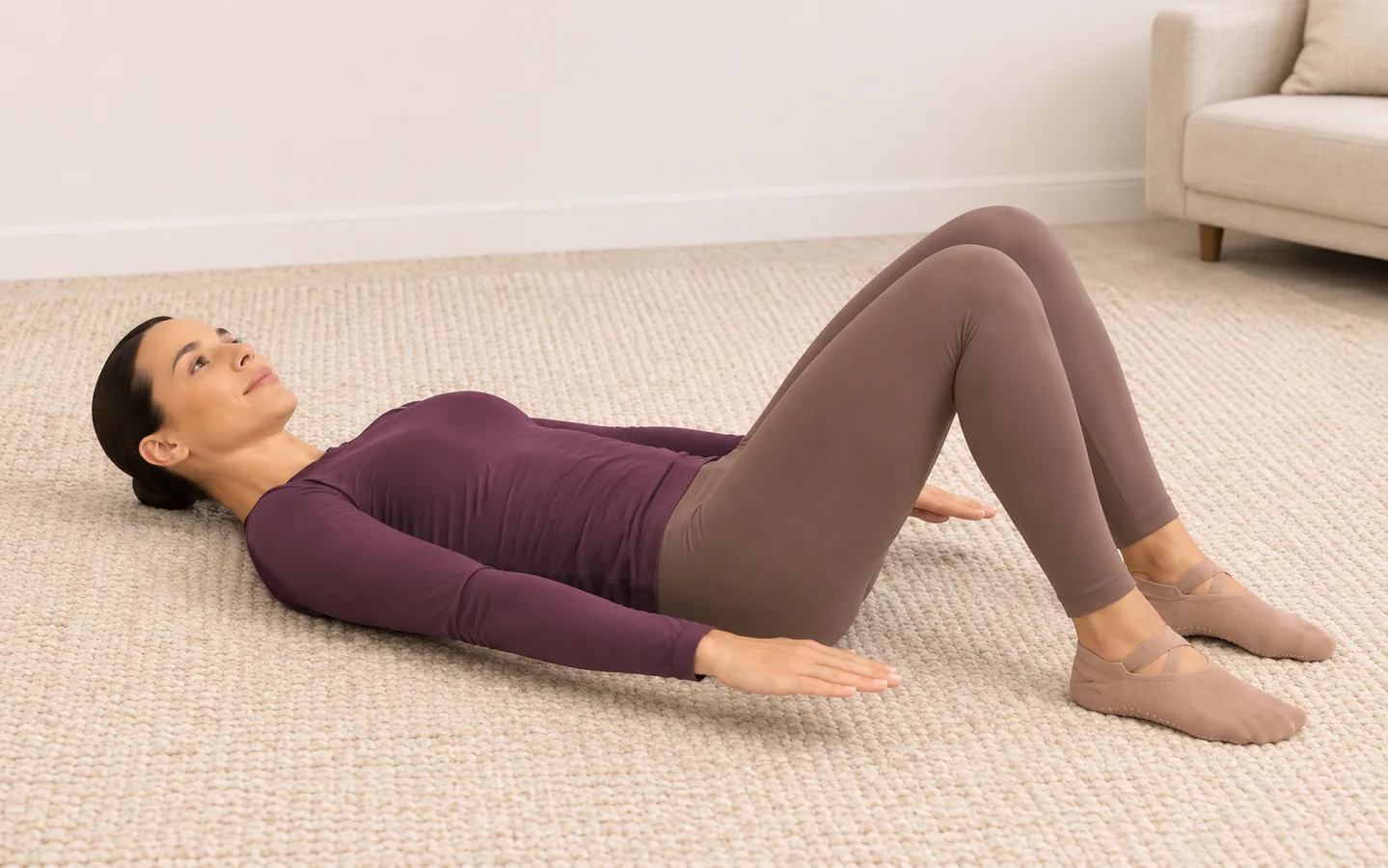
A home Pilates workout routine can mix mat, no-equipment, short, and wall sessions across your week. Below, you’ll find what research supports, how to set up your space, and how to progress over 3 months. For a ready-made session with easier and harder options, try this 9-move Pilates session at home*.*
Pilates emphasizes controlled movements and mindfulness. Whether you’re new to Pilates or returning to it, a simple plan makes home practice easier to keep. The focus here is planning, so full workouts are linked instead of repeated.
Following exercise and diet plans is the key in your fitness journey and greatly impacts results. In 4 weeks users can typically expect to lose not more than 1-2 lbs per week. Individual results may vary.
Key takeaways
These points summarize what a home Pilates workout guide covers and what research supports.
- Research describes Pilates as mind-body exercise for strength, core stability, flexibility, muscle control, posture, and breathing (1).
- In healthy people, a review found strong evidence for flexibility and dynamic balance and moderate evidence for muscular endurance (2).
- A 12-week mat program improved abdominal endurance and flexibility in active adults, with no change in posture or balance (3).
- Mat Pilates was no better than other training or control conditions for body composition in a 2020 review (4).
- Adults are advised to get 150 to 300 minutes of moderate aerobic activity a week, plus muscle strengthening (5).
- A home plan can combine mat, no-equipment, short, and wall sessions on 2 to 4 days a week.
- The weekly plans and 3-month progression here are editorial examples, so adjust them to your schedule and level.
What is Pilates?
This low-impact workout method was formulated by Joseph Pilates in the 20th century. A review of 119 papers found broad agreement on how to define it (1). Most papers described a mind-body exercise focused on strength, core stability, flexibility, muscle control, posture, and breathing.
Traditional principles include centering, concentration, control, precision, flow, and breathing. Only about 23% of the reviewed papers discussed them. Exercises can be mat-based or use specialized equipment such as a reformer.
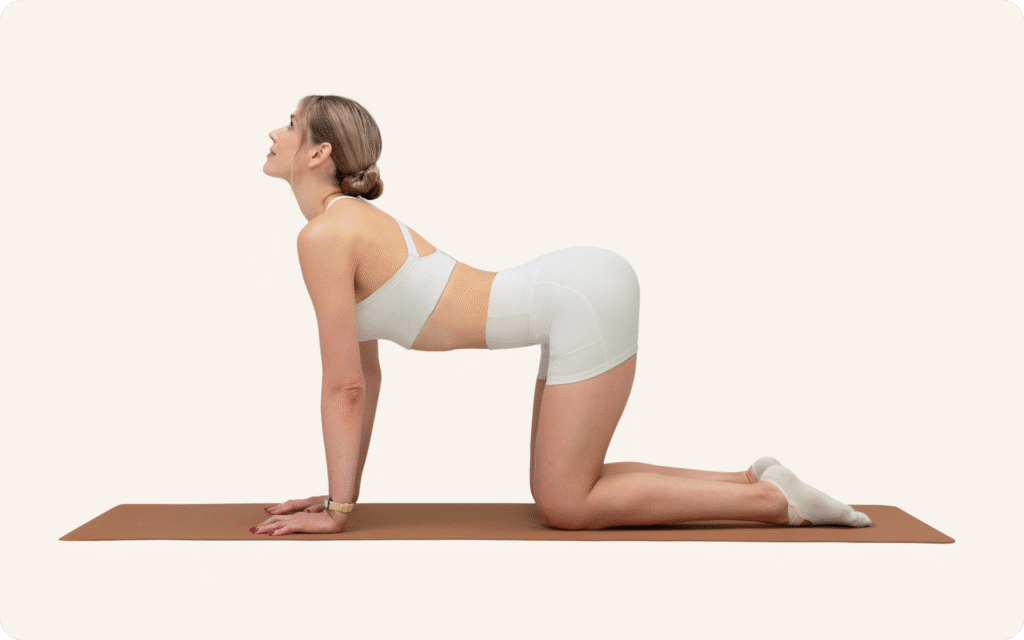
At home, Pilates usually means mat work, wall work, or moves with small props. Whether you’re a beginner or want a more intense full-body routine, the planning steps are the same.
What can home Pilates do, and what can it not do?
Home Pilates can improve some fitness measures, and the research also has clear limits. In one 12-week trial, 50 active middle-aged adults did a basic mat routine twice a week (3). Each class lasted 60 minutes and needed no equipment.
Abdominal endurance, hamstring flexibility, and upper-body endurance improved compared with a control group. Posture and balance did not change compared with the controls. A wider review of 16 studies in healthy people found similar patterns (2). Its authors rated most of those studies as low quality.
Pilates has also been studied in people with back conditions (6). One review found no clear advantage over other forms of exercise. If you have back discomfort, talk to a clinician before starting.
Body composition results are mixed. A 2020 review found mat Pilates no better than other training or controls for body fat or waist size (4). A 2026 review in about 540 adult women found lower body weight and better flexibility after Pilates (7). The same review found no clear change in body fat percentage or waist circumference.
Balance findings in older adults look more promising. A 2026 analysis of trials in adults aged 60 and older ranked Pilates highly for dynamic balance (8). The authors noted these estimates do not show it is superior to other exercise.
|
Outcome |
What studies found |
Who was studied |
|---|---|---|
|
Flexibility |
Healthy adults and adult women |
|
|
Core endurance |
Improved after 12 weeks of mat classes (3) |
Active middle-aged adults |
|
Posture |
No change compared with controls in one trial (3) |
Active middle-aged adults |
|
Body fat and waist size |
No clear advantage over other training (4) |
Healthy adults, older adults, and adults with overweight |
|
Dynamic balance |
Ranked highly, with low certainty (8) |
Adults aged 60 and older |
Read more: Lower-body Pilates exercises: eight moves for your legs and hips
How do you set up a home Pilates space?
You can do Pilates almost anywhere, and no machines are required. Clear a space about the length of your mat plus an arm’s reach on each side. Move sharp furniture away from where your hands and feet land.
Here’s a quick list of what to have on hand:
- A mat: A good-quality mat cushions your back and joints on hard floors. A thick, non-slip mat works well for rolling and kneeling moves.
- Comfortable clothing: Wear fitted, stretchy clothes that allow for a full range of motion. Avoid loose clothing, such as baggy sweats, that can get in the way of your movements.
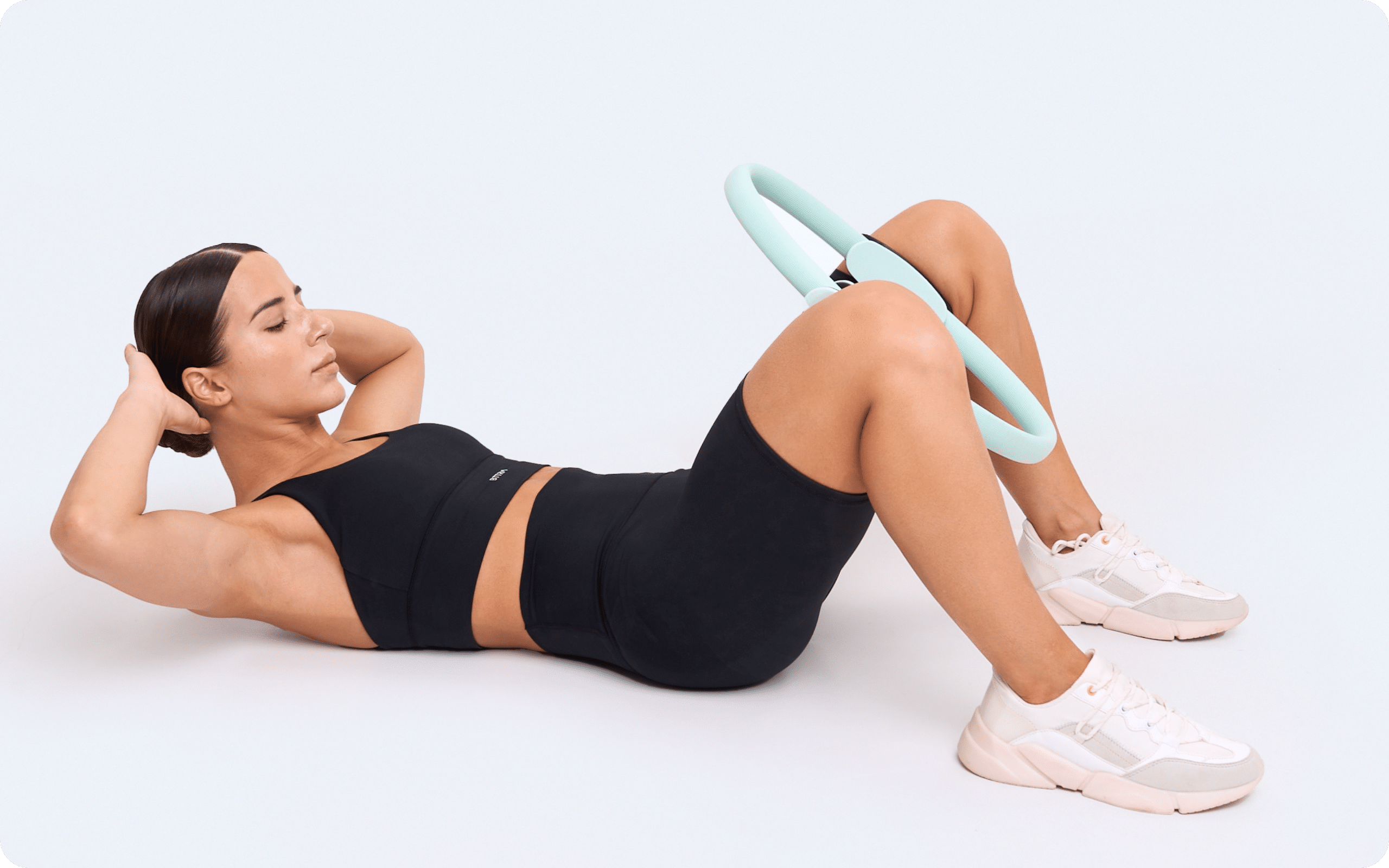
- Optional props: You can train with no equipment at all. Resistance bands, a Pilates ring, or small hand weights can add resistance later.
For wall Pilates, pick a clear, sturdy wall with no shelves or frames above you. Keep water and a towel nearby. A regular time slot, such as before breakfast or after work, makes the habit easier to keep.
Which home Pilates session types fit your week?
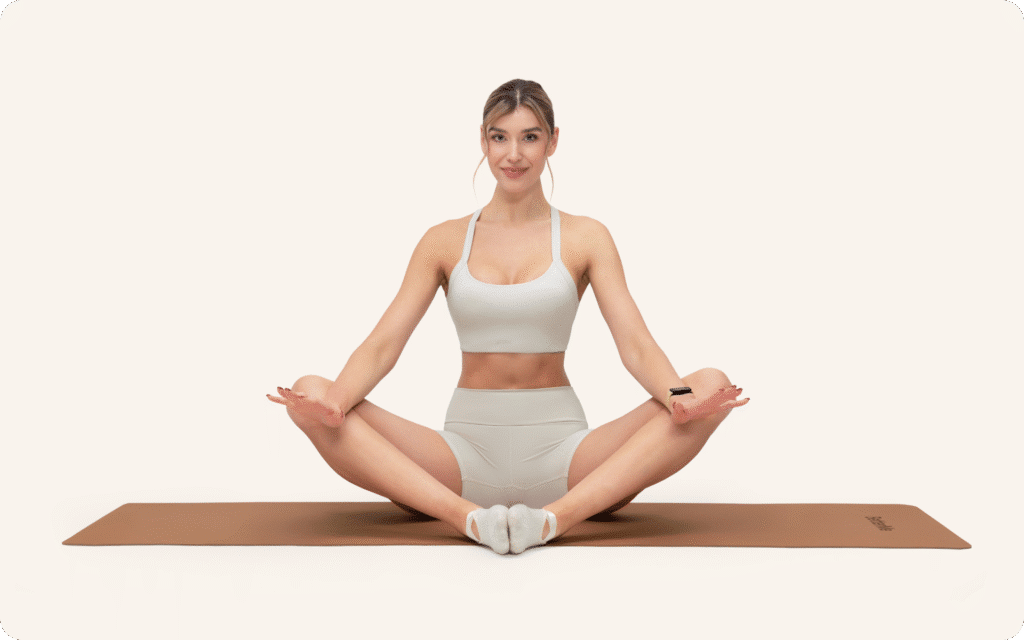
Most home plans use four or five session types. Each one suits a different day, energy level, or amount of time.
|
Session type |
Typical length |
When it fits |
Where to start |
|---|---|---|---|
|
Mat session |
20 to 45 min |
Main sessions, 2 to 3 times a week |
|
|
No-equipment full body |
20 to 30 min |
Small spaces or travel days |
|
|
Short session |
5 to 10 min |
Busy days, warm-ups, or work breaks |
|
|
Wall session |
15 to 30 min |
Days when you want the wall as an alignment guide |
|
|
Core-focused session |
About 26 min |
A 9-move session with easier and harder options |
Pick one main session type and one backup type. The backup covers days when time or energy runs short.
Whether you’re just starting your fitness journey or looking to add more structure to your routine, BetterMe offers tools that can support different wellness goals. Explore the app and see how its workout, nutrition, and habit-building features can fit into your lifestyle.
How should you structure each home session?
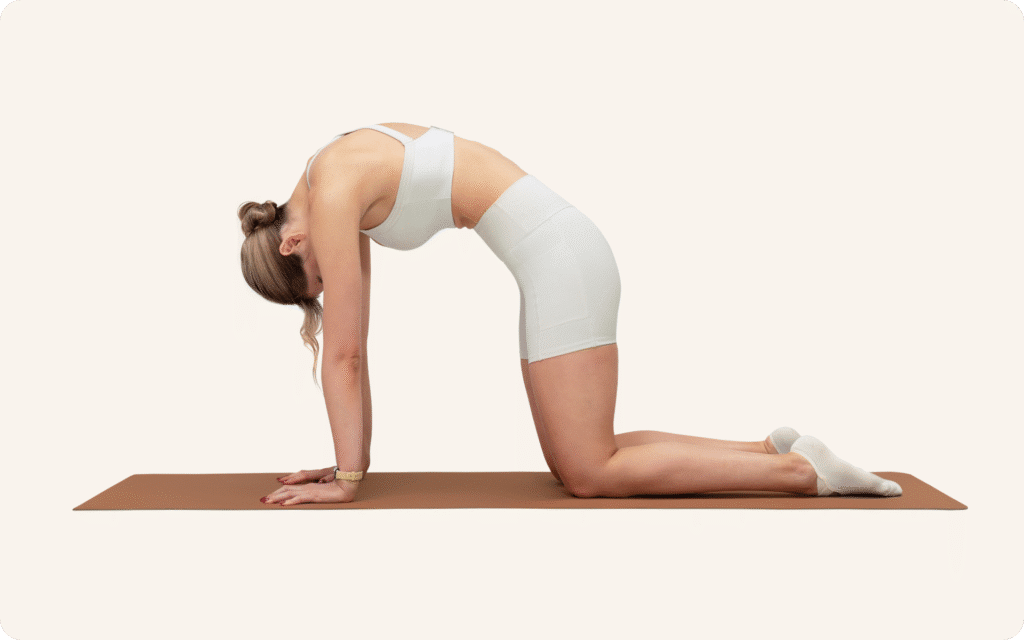
Most home sessions follow the same three-part shape. The split below is an editorial example for a 30-minute session.
|
Part |
Time |
What it includes |
|---|---|---|
|
Warm-up |
5 min |
Breathing, gentle back movement, and easy leg moves |
|
Main block |
20 min |
6 to 9 moves from one session type |
|
Cool-down |
5 min |
Slow stretches and relaxed breathing |
|
Total |
30 min |
For a 20-minute session, keep the warm-up and cool-down and cut the main block to 10 minutes. Order moves from easier to harder within the main block. Save new or difficult moves for days when you feel fresh.
How many days a week should you do Pilates at home?
Two to four days a week works for many people. Adults are advised to get 150 to 300 minutes of moderate aerobic activity weekly (5). The same guidelines advise regular muscle-strengthening activity, and they note that some activity is better than none.
Pilates can cover much of the strengthening side. Walking, cycling, or dancing can cover the aerobic side. Leave at least one easy day between harder sessions when you start.
The weekly plans below are editorial examples.
|
Days per week |
Example plan |
|---|---|
|
2 days |
Monday mat session and Thursday no-equipment full body, plus walks on 3 other days |
|
3 days |
Monday mat session, Wednesday wall session, and Saturday core-focused session |
|
4 days |
Monday mat, Tuesday short session, Thursday wall, and Saturday no-equipment full body |
For a day-by-day calendar, use this Pilates weekly workout plan. If you prefer a set daily goal, try the 30-day Pilates at home challenge.
Read more: Pilates resistance bands workout: 7 moves at home
How do you progress home Pilates over 3 months?
Progress comes from small, steady changes. Change one thing at a time, such as reps, hold time, or the harder option of a move.
|
Phase |
Focus |
Example changes |
|---|---|---|
|
Weeks 1 to 4 |
Learn form and breathing |
2 to 3 sessions of 15 to 20 minutes, using easier options |
|
Weeks 5 to 8 |
Build endurance |
3 sessions of 20 to 30 minutes, adding reps or hold time |
|
Weeks 9 to 12 |
Add challenge |
3 to 4 sessions, with harder options, wall work, or light props |
You may be ready to progress when these three signs line up:
- You finish every set with steady breathing.
- Your form stays clean on the last rep.
- You feel rested by the next day.
Results differ from person to person. Read more about how long it takes to see results from Pilates.
What planning mistakes should you avoid?
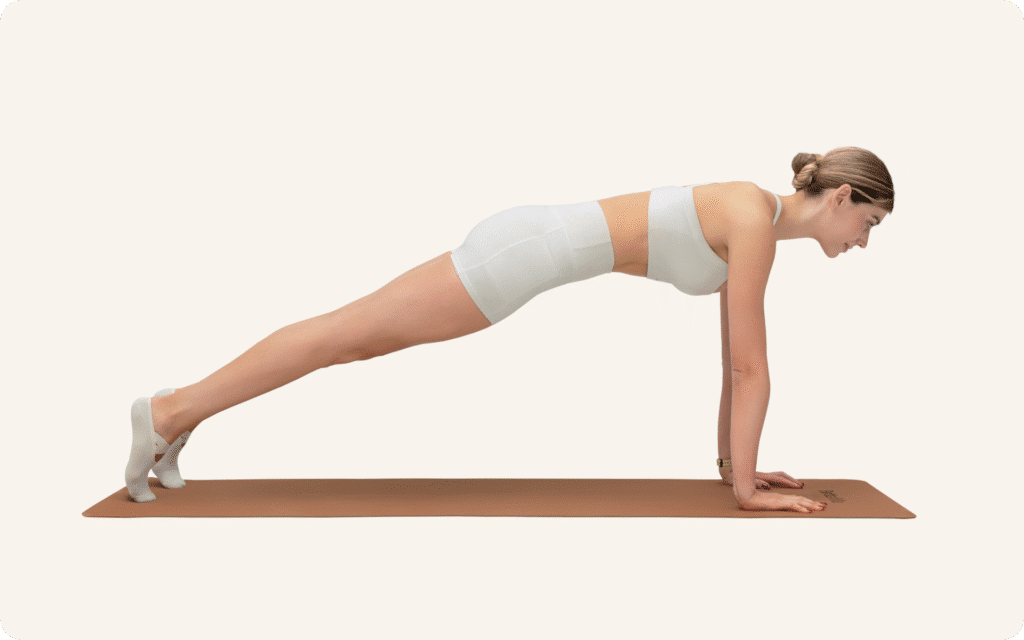
- Training hard every day at first: Start with 2 or 3 days and build up from there.
- Changing the plan every week: Repeat a plan for 3 to 4 weeks before you adjust it.
- Chasing reps over control: Fewer clean reps teach the pattern better than many rushed ones.
- Skipping aerobic activity: Pilates fits well alongside walking, cycling, or other cardio.
- Training through sharp discomfort: Stop the move, and choose an easier option or rest.
How do you stay consistent with home Pilates?
- Be consistent: Make it a habit. A fixed time slot helps more than a long session.
- Master your form: Put quality before quantity. Prioritize form and alignment over the number of reps.
- Breathe: Deep, mindful breathing is key. Inhale to prepare and exhale to execute each movement.
- Mix it up: Combine Pilates with aerobic activities such as walking, running, or cycling.
- Fuel right: Pair your routine with a balanced diet of whole foods, lean proteins, healthy fats, and complex carbohydrates.
If you are pregnant, postpartum, or managing a health condition, get clearance from your doctor or midwife first.
Frequently Asked Questions
Is Pilates at home as effective as a studio class?
Yes, Pilates at home can work well for many fitness goals if you keep good form. A mat program with no equipment improved endurance and flexibility in one trial (3). Studio classes add instructor feedback and equipment such as reformers.
Can you lose weight doing Pilates at home?
Pilates is not a reliable weight-loss method on its own, and the research is mixed. One review found mat Pilates no better than other training for body composition (4). Overall activity and eating habits matter more than any single workout type.
Do you need a reformer for home Pilates?
No, you can build a full home practice on a mat. Your body weight, a wall, and a few optional props cover most needs.
Should beginners take a class before starting at home?
No, you can start at home with basic moves and easier options. A few instructor-led sessions can help you check your form. Our guide to starting Pilates covers your first steps.
The bottom line
Pick 2 to 4 days a week and mix mat, no-equipment, short, and wall sessions. Progress one variable at a time over about 3 months. Remember, consistency is key, so keep showing up for yourself, even if it’s just for 15 minutes a day. Prefer to follow a plan? The BetterMe quiz can help you set up a Pilates routine that fits your schedule.
DISCLAIMER:
This article is intended for general informational purposes only and does not serve to address individual circumstances. It is not a substitute for professional advice or help and should not be relied on for making any kind of decision-making. Any action taken as a direct or indirect result of the information in this article is entirely at your own risk and is your sole responsibility.
BetterMe, its content staff, and its medical advisors accept no responsibility for inaccuracies, errors, misstatements, inconsistencies, or omissions and specifically disclaim any liability, loss or risk, personal, professional or otherwise, which may be incurred as a consequence, directly or indirectly, of the use and/or application of any content.
You should always seek the advice of your physician or other qualified health provider with any questions you may have regarding a medical condition or your specific situation. Never disregard professional medical advice or delay seeking it because of BetterMe content. If you suspect or think you may have a medical emergency, call your doctor.
SOURCES:
- Defining Pilates exercise: a systematic review (2012, nih.gov)
- A systematic review of the effects of pilates method of exercise in healthy people (2011, nih.gov)
- Pilates for improvement of muscle endurance, flexibility, balance, and posture (2010, nih.gov)
- Effects of the Mat Pilates Method on Body Composition: Systematic Review With Meta-Analysis (2020, nih.gov)
- World Health Organization 2020 guidelines on physical activity and sedentary behaviour (2020, nih.gov)
- Pilates for low back pain (2015, nih.gov)
- Effects of Pilates Programs on Body Composition, Flexibility, Muscular Strength, Balance, Functional Performance and Respiratory Function in Adult Women: A Systematic Review and Meta-Analysis (2026, nih.gov)
- Exercise modalities for overall and domain-specific balance performance in older adults: A systematic review and Bayesian network meta-analysis (2026, nih.gov)
 Reviewed by
 Reviewed by
 Reviewed by