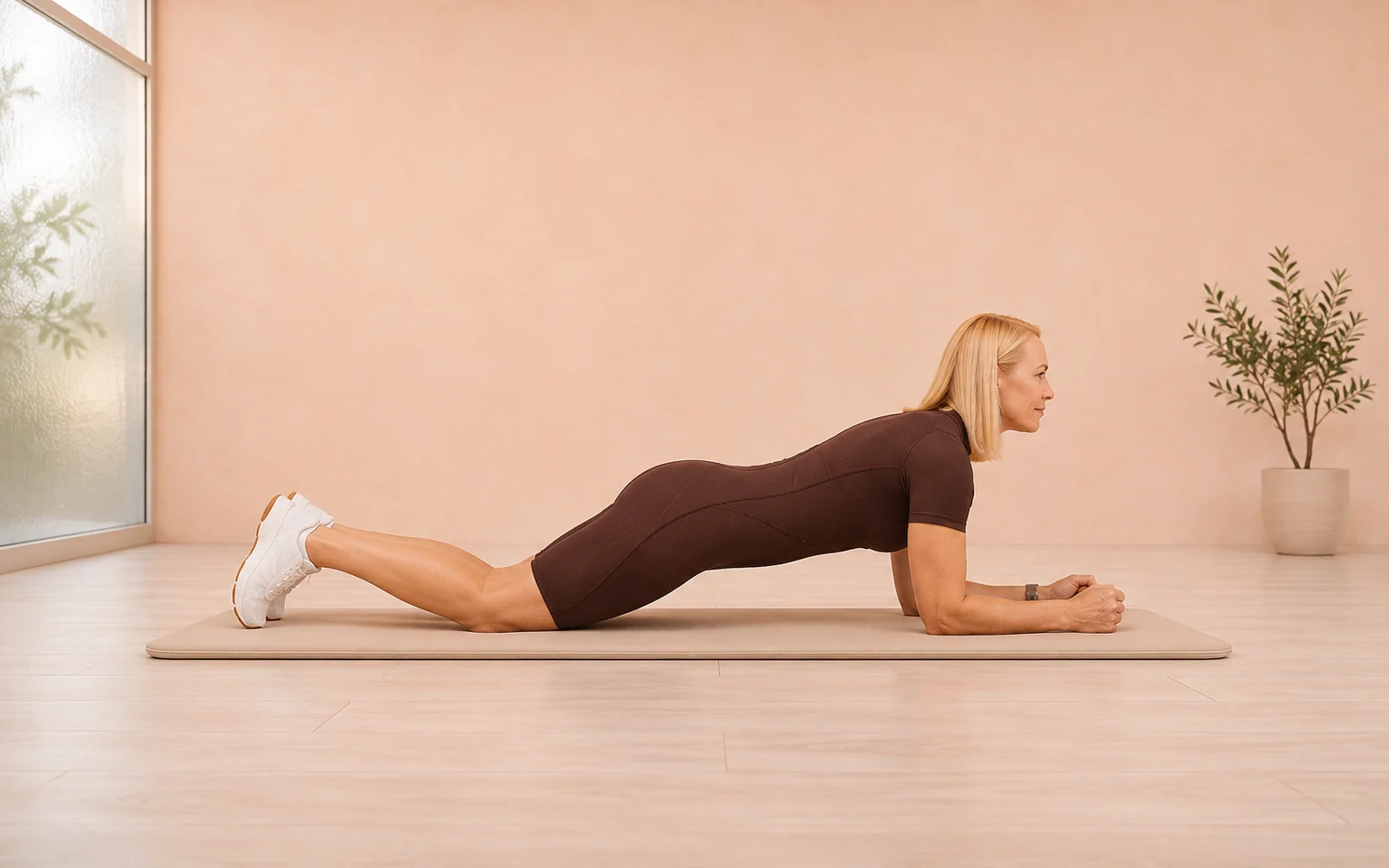
A 6-month calisthenics transformation can involve changes in strength, exercise skill, and training consistency. Visible body changes vary, and six months does not promise a particular physique. A calisthenics weekly routine gives you repeatable practice. A simple training record helps distinguish measurable progress from expectations shaped by before-and-after images.
Key takeaways
These points summarize how to set useful goals for six months of calisthenics.
- Six months provides a useful review period, without promising a specific appearance or advanced skill.
- Bodyweight resistance training can develop strength, with the exercise challenge adjusted to current ability (1).
- A small trial in sedentary young women found increased muscle thickness after progressive bodyweight training (2).
- Compare the same exercise setup, assistance, and movement range when reviewing performance.
- Split and full-body routines produced similar results when weekly training volume was matched in a research review (3).
- Food, fluids, and rest belong in the training plan; a supplement cannot replace adequate nutrition (4).
What can change over six months of calisthenics?
Calisthenics can change how you perform bodyweight movements and how regularly you practice them. You might complete more controlled repetitions or use less assistance. Muscle size can also change, although the amount and visibility vary.
Current resistance-training guidance includes bodyweight exercise among useful training options (1). A suitable program needs enough challenge to remain useful as your ability develops. That challenge can come from exercise variations, repetitions, or resistance.
Avoid setting a required six-month outcome such as a handstand, muscle-up, or fixed number of pull-ups. Those movements depend on specific practice and starting ability. Some people may prefer to continue improving basic exercises.
Women do not need a separate appearance standard to judge success. Stronger performance can matter without a particular waist, shoulder shape, or visible abdominal definition. Choose the abilities you want to develop before choosing a comparison photo.

Can bodyweight training increase muscle size?
Yes, bodyweight training can provide enough resistance to stimulate muscle growth when the exercise challenge is appropriate. The amount of change differs between people. Bodyweight training also needs progression as familiar movements become manageable.
One small study compared progressive bodyweight training with barbell squats in 13 sedentary young women. Participants trained twice weekly for six weeks. Both groups increased measured muscle thickness (2).
The study supports the possibility of muscle development with bodyweight exercise. Its short duration and small sample limit individual predictions. The results do not establish a six-month muscle-gain target.
Muscle thickness measured during research is also different from visible definition in a photograph. Appearance depends on several factors beyond one measurement. Lighting, camera position, and posing can alter the comparison further.
Use the female calisthenics body guide to separate training effects from a promised body shape. Keep physical measurements optional. You can review progress using performance and attendance alone.
Want a structured routine? Take the BetterMe quiz to get a customized calisthenics workout plan.
How can you organize six months without fixed milestones?
Organize six months around review questions rather than compulsory skills. The sample below assigns a practical focus to each period. Repeat a period when the current work still requires practice.
|
Period |
Practice focus |
Review question |
|---|---|---|
|
Month 1 |
Learn manageable setups |
Can I repeat the planned sessions comfortably? |
|
Month 2 |
Record stable exercise versions |
Are my comparisons using the same movement range? |
|
Month 3 |
Review repetitions and assistance |
Which movement has become more manageable? |
|
Month 4 |
Make one purposeful adjustment |
Does the change fit my current capacity? |
|
Month 5 |
Practice the adjusted routine |
Can I maintain the workload alongside daily responsibilities? |
|
Month 6 |
Compare records and choose the next goal |
What should I keep, simplify, or practice next? |
The table describes planning tasks, not predicted biological stages. Strength and muscle changes do not begin on identical calendar dates for everyone. A missed week can shift the practical schedule without invalidating previous work.
Use a familiar movement as an anchor throughout the review period. Keep its setup documented even when other exercises change. That record can reveal whether your technique, assistance, or repetition capacity has changed.
Which measurements make progress easier to understand?
Use measurements that describe a repeatable task and a goal you care about. A count means more when the conditions are clear. Record what happened before deciding what the number means.
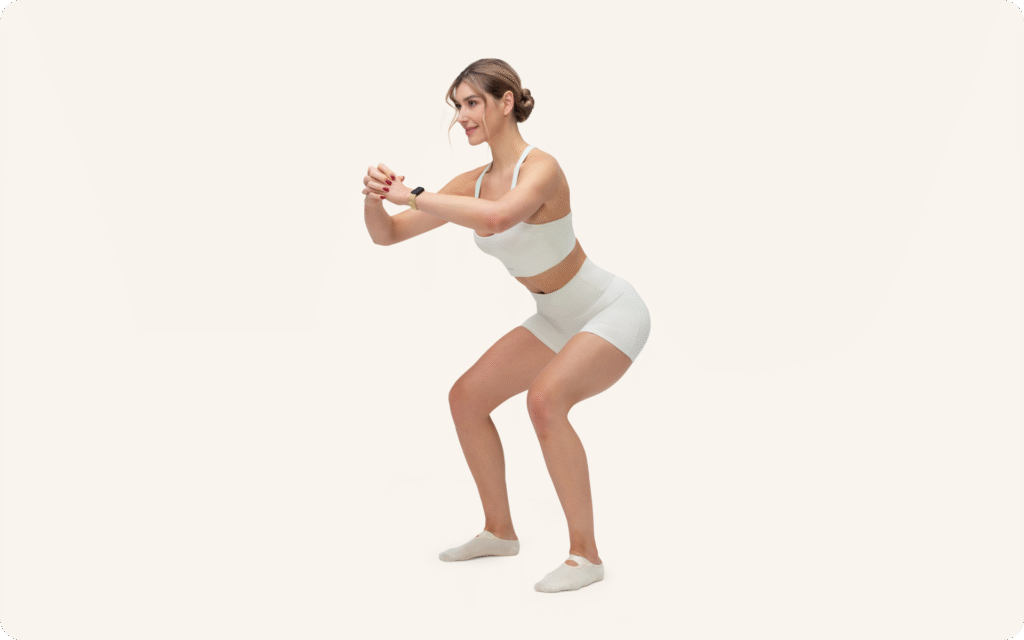
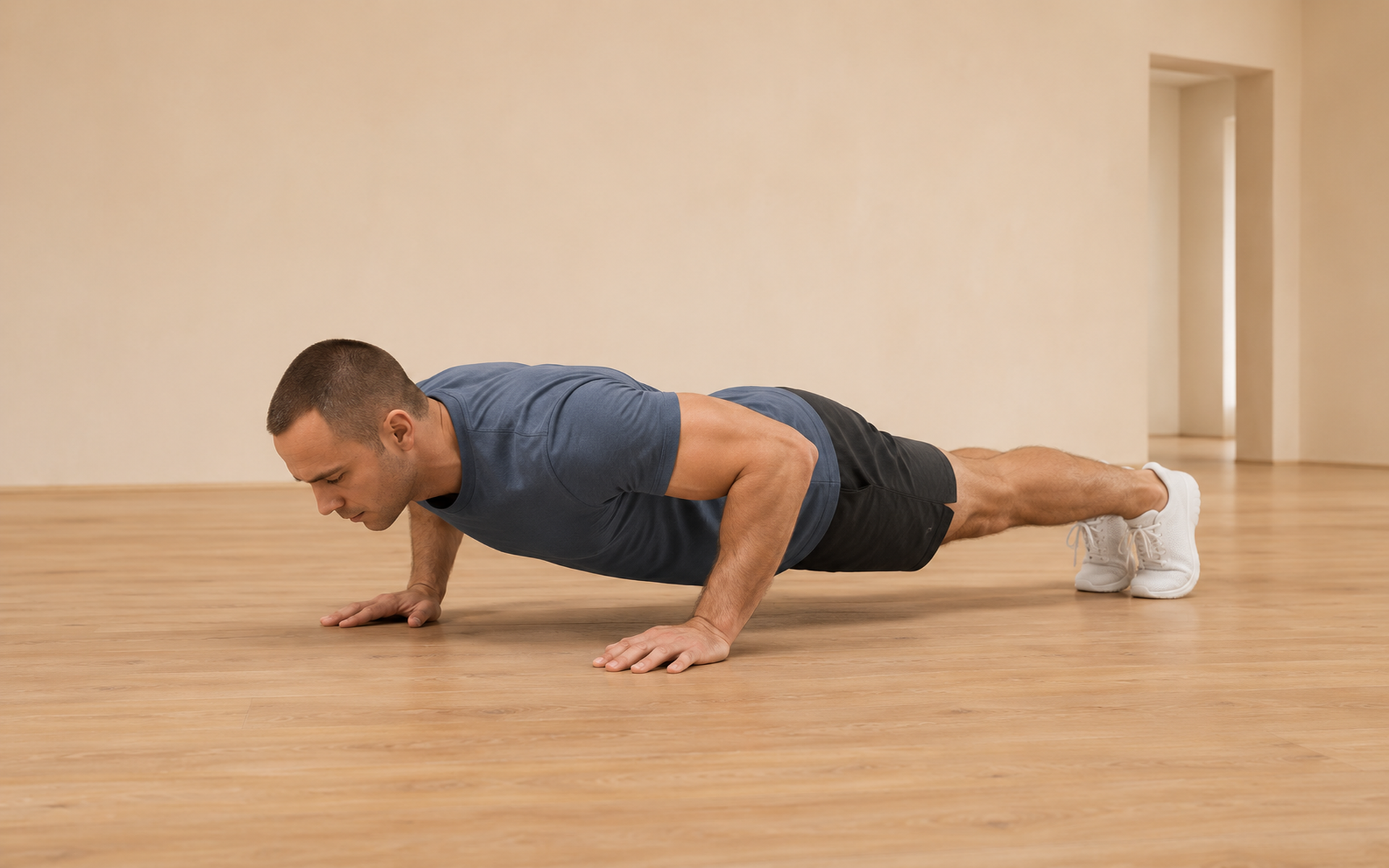
For push-ups, note the support height and hand position. For rows, record the equipment and body angle. For squats, note whether you used a chair or hand support.
|
Measure |
Useful record |
Common comparison problem |
|---|---|---|
|
Repetitions |
Same exercise version and range |
Counting shorter repetitions as equal |
|
Assistance |
Band, support, or hand assistance used |
Omitting a change in assistance |
|
Hold duration |
Same body position and stopping rule |
Extending time after position changes |
|
Attendance |
Sessions completed within the period |
Ignoring long interruptions |
|
Optional photographs |
Similar lighting, distance, and pose |
Comparing different presentation conditions |
You do not need to test maximum repetitions every week. A familiar working set can provide enough information. Stop the comparison when fatigue changes the movement.
Keep photographs private unless you actively choose to share them. A photograph is not a clinical assessment. Avoid interpreting a change in lighting or posture as a precise change in body composition.
Should you use full-body sessions or a split?
Use the arrangement that fits your available time and lets you distribute the planned work sensibly. Full-body sessions cover several muscle groups together. A split spreads that work across different days.
A research review found similar strength and muscle-growth outcomes when split and full-body training volume was matched (3). Neither arrangement promises faster progress. More training days can simply divide the same work into shorter appointments.
Two or three full-body sessions may be practical when your week is busy. A split may suit someone who prefers more frequent, shorter sessions. Compare the entire week’s exercise selection before changing formats.
For example, moving all pushing work to one day can make a missed session more consequential. A full-body structure spreads that category across several appointments. Choose according to how reliably you can attend.
A 12-week calisthenics program can serve as an initial block within six months. Review the first block before planning the next. You do not need to double the workload simply because another three months are available.
How do you progress beyond the starting exercises?
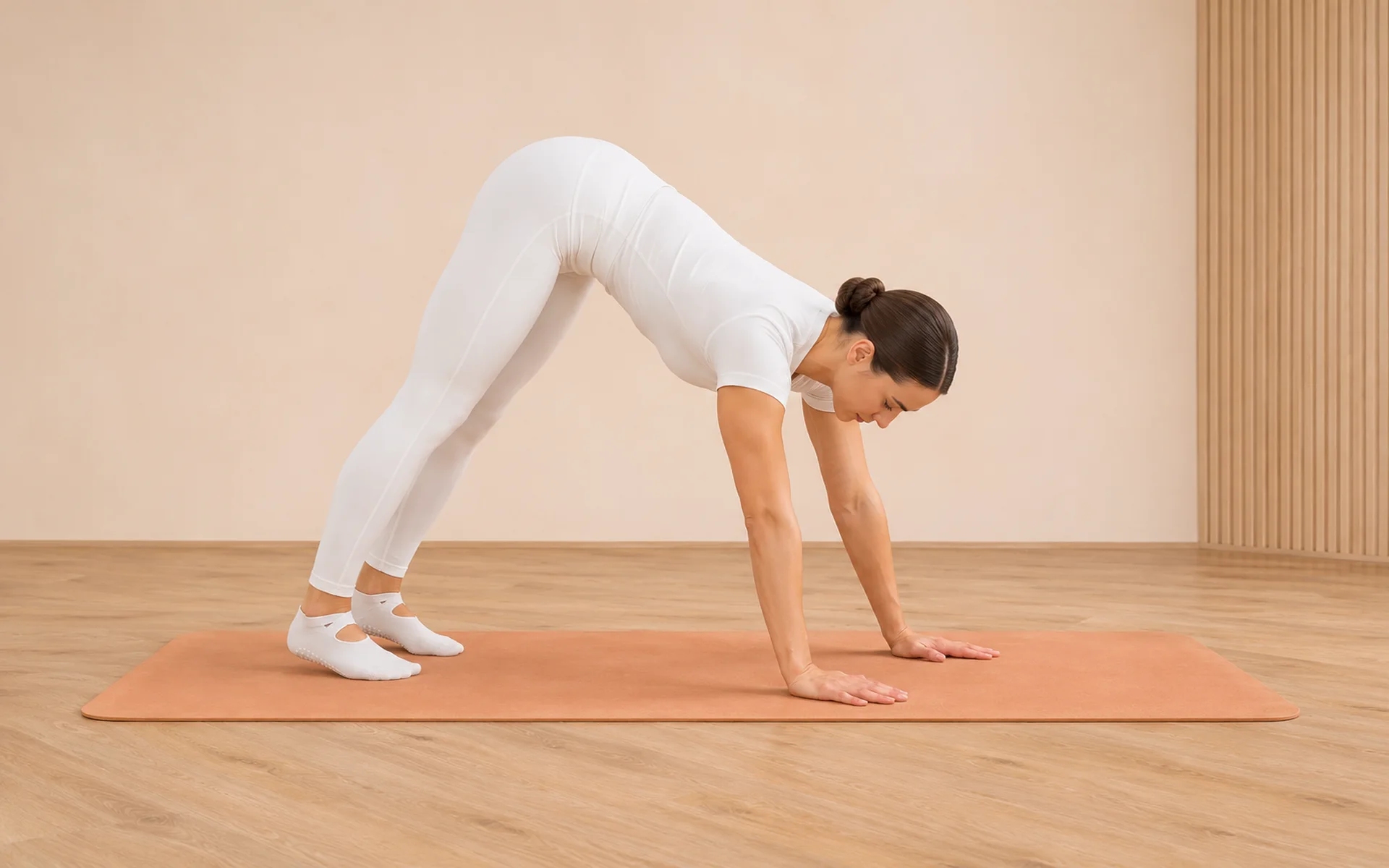
Progress by changing one training variable after the current work becomes controlled and repeatable. You can add repetitions or adjust leverage. Extra resistance is another option when suitable equipment and technique are available.
- Choose one movement that has become consistently manageable.
- Record the current setup and completed amount.
- Select one modest change to that movement.
- Reduce the repetition target if the new version requires it.
- Review the response across subsequent sessions.
A lower push-up incline changes the task even if your repetition count decreases. A supported single-leg movement also differs from a two-legged squat. Keep the previous result in your log rather than treating the new count as regression.
Avoid adding slow lowering phases, extra sets, harder leverage, and more training days together. Several simultaneous changes make it difficult to identify the source of fatigue. A simpler adjustment is easier to evaluate.
Advanced skills deserve separate preparation. A muscle-up combines pulling, transition, and pressing demands. Ask a qualified coach to assess prerequisites and equipment before attempting unfamiliar skills.
How do food and sleep affect the training plan?
Food and sleep help make regular training possible and should be planned alongside the sessions. Adequate nutrition and fluid intake underpin exercise performance (4). A longer training period does not create an automatic need for supplements.
Prepare familiar meals that include a protein-containing food and enough overall food for your activity. Carbohydrate foods also provide exercise fuel (4). A registered dietitian can help when goals, appetite, or dietary restrictions complicate planning.
Avoid adopting a fixed calorie surplus simply because you read about bulking. Individual energy needs differ. Increasing body weight can also change the difficulty of moving your body during calisthenics.
Adults aged 18 to 60 are advised to get at least seven hours of sleep nightly (5). Keep sleep opportunity visible when scheduling early or late workouts. Persistent sleep problems warrant professional advice.
General adult activity guidance includes aerobic exercise alongside muscle strengthening (6). Include walking or another aerobic activity you enjoy. Strength-session duration alone does not establish that the aerobic recommendation has been met.
What should you do when progress slows?
Review the training record before changing the entire routine. First check whether you are comparing the same movement and completing the planned sessions. Then consider whether the exercise remains appropriately challenging.
If your schedule became busier, simplify the plan to preserve repeatable practice. If the movement became easier, choose one modest progression. If fatigue increased, reduce demanding work and reassess.
Stop an exercise that causes discomfort beyond normal effort. Ongoing problems or unexplained declining performance call for individual advice. Adding more training should not replace a needed clinical assessment.
Use a calisthenics results review to separate what your records show from what you expected. A period of stable performance can still help you learn a repeatable routine. Decide the next adjustment from the actual problem.
Prefer to follow a plan? The BetterMe quiz can help you set up a calisthenics routine that fits your schedule.
What belongs in your six-month training summary?
Your summary should connect each chosen goal with the record used to assess it. Include the starting exercise version, the recent version, and any substantial interruptions. Write down uncertainties when the setups were different.
For example, a change in row equipment may prevent a direct repetition comparison. Record the equipment change as useful information rather than inventing a percentage improvement. Choose one measurement to keep consistent during the next block.
Frequently Asked Questions
Do I need a body-fat measurement every month?
No, monthly body-fat measurements are optional. Use performance and attendance records if those better match your goals. Different measurement methods can also produce results that are difficult to compare directly.
Does a missed month erase all progress?
No, a missed month does not make your earlier records meaningless. Return with manageable movements and reassess your current capacity. Avoid assuming that your previous workload remains appropriate immediately.
Can I change my main goal halfway through?
Yes, you can change your goal when your interests or circumstances change. Record the new priority so later comparisons remain fair. A shift toward skill practice may change the exercises and measurements you use.
The bottom line
Use six months to build repeatable practice and gather useful records about your own progress. Choose a few clear measurements, review them under comparable conditions, and adjust one training variable at a time. Let the final review guide your next goal without requiring a particular physique.
DISCLAIMER:
This article is intended for general informational purposes only and does not serve to address individual circumstances. It is not a substitute for professional advice or help and should not be relied on for making any kind of decision-making. Any action taken as a direct or indirect result of the information in this article is entirely at your own risk and is your sole responsibility.
BetterMe, its content staff, and its medical advisors accept no responsibility for inaccuracies, errors, misstatements, inconsistencies, or omissions and specifically disclaim any liability, loss or risk, personal, professional or otherwise, which may be incurred as a consequence, directly or indirectly, of the use and/or application of any content.
You should always seek the advice of your physician or other qualified health provider with any questions you may have regarding a medical condition or your specific situation. Never disregard professional medical advice or delay seeking it because of BetterMe content. If you suspect or think you may have a medical emergency, call your doctor.
SOURCES:
- ACSM Unveils Landmark 2026 Resistance Training Guidelines: First Update in 17 Years (2026, acsm.org)
- Effects of progressive body-weight versus barbell back squat training on strength, hypertrophy and body fat among sedentary young women (2023, nature.com)
- Efficacy of Split Versus Full-Body Resistance Training on Strength and Muscle Growth: A Systematic Review With Meta-Analysis (2024, pubmed.ncbi.nlm.nih.gov)
- Dietary Supplements for Exercise and Athletic Performance (2024, ods.od.nih.gov)
- About Sleep (2024, cdc.gov)
- Adult Activity: An Overview (2023, cdc.gov)
 Reviewed by
 Reviewed by
 By

 By