Achieving a lean physique is a common goal, but the path to get there is often clouded by conflicting advice and gender-specific myths. The desire to reduce body fat while building or maintaining muscle requires a structured, science-backed approach. It’s not about endless cardio or resorting to extremely light weights; it’s about intelligent training and consistent effort.
This guide provides a clear, evidence-based workout plan for women who want to get lean. We will explore the most effective exercises, explain the science behind fat loss, and provide a structured program to help you achieve your goals. We’ll break down complex principles into actionable steps, ensuring you have the knowledge to train effectively and sustainably.
How to Get Leaner as a Female?
Getting leaner involves two primary components: reducing body fat and preserving or building lean muscle mass (1). For women, several physiological factors influence this process.
Here’s what the science says about getting lean:
- Caloric Deficit: The fundamental principle of fat loss is consuming fewer calories than your body expends (3). This is your total daily energy expenditure (TDEE). Exercise increases TDEE (4), but your diet is the primary driver of a caloric deficit (5).
- Prioritize Protein: A higher protein intake is crucial when you’re in a caloric deficit. Protein helps preserve lean muscle mass, which is metabolically active tissue (6). For active women, a protein intake of around 1 – 1.6 gram per pound (or 2 to 4 grams per kilogram) of body weight is often recommended to support muscle maintenance and growth (7).
- Lift Heavy Weights: One of the biggest misconceptions is that women should avoid heavy lifting to prevent “bulking up.” The hormone testosterone is the primary driver of significant muscle growth, and women have only a fraction of the testosterone levels men do (8). Lifting heavy, challenging weights is essential for building the lean muscle that creates a toned, sculpted physique (9).
- Strategic Cardio: While important for cardiovascular health and calorie expenditure, cardio is a supplement to, not a replacement for, strength training. High-intensity interval training (HIIT) has proven particularly effective for fat loss (10).
Understanding these principles is the first step. The key is to combine them into a cohesive plan that fits your lifestyle and helps you progress consistently.
What Exercise Is Best for Getting Lean?
The best exercise for getting lean is a combination of resistance training and cardiovascular exercise. This dual approach addresses both sides of the “get lean” equation: building muscle and burning fat.
Resistance Training
Resistance training is non-negotiable for anyone wanting to achieve a lean physique. Its benefits extend far beyond just building strength (11, 12).
- Increases Lean Body Mass: Muscle is more metabolically active than fat, meaning it burns more calories at rest (13). Building and maintaining muscle helps elevate your resting metabolic rate (RMR), making it easier to lose fat and keep it off (14).
- Improves Body Composition: Resistance training helps you lose fat while preserving muscle (15, 16), which is crucial for achieving a lean, defined look rather than just becoming a smaller version of your current self.
- Enhances Functional Strength: Lifting weights makes daily activities easier and improves your performance in other sports and physical pursuits (17).
One study that examined obese women on a weight-loss regimen found that while diet alone caused fat loss, adding resistance training significantly increased muscular strength and preserved fat-free mass, even during caloric restriction (18). This highlights the unique advantage of strength work.
Cardiovascular Exercise
Cardiovascular exercise plays a supporting role by increasing your total daily calorie burn and improving heart health (19). There are three main types to consider:
- Low-Intensity Steady-State (LISS): This involves maintaining a consistent, low-to-moderate pace for an extended period, like a 30–45 minute jog or session on the elliptical (20).
- Moderate-Intensity Continuous Training (MICT): MICT is performed at a steady, moderate pace—typically around 64–76% of your maximum heart rate—without intervals (21). An example would be 30–60 minutes of brisk walking, steady cycling, or swimming where you can converse but still feel challenged.
- High-Intensity Interval Training (HIIT): This involves short bursts of all-out effort followed by brief recovery periods (10). For example, 30 seconds of sprinting followed by 60 seconds of walking.
While both are effective, HIIT is often praised for its time efficiency and its impact on post-exercise metabolism (22).
By combining heavy, compound-focused resistance training with strategic cardio sessions, you create an optimal environment for fat loss and muscle preservation. This comprehensive approach is central to an effective lean body workout plan female.
Ready to dive deeper into strength training? Our guide to a 3-day workout plan provides another great option for structuring your week.
Read more: Calisthenics Beginner Exercises: A Complete Overview of the Age-Old Workout Regime
What Is a Moderate Workout Plan For Females to Get Lean?
For beginners or those with limited time, a moderate, full-body workout plan is an excellent starting point. A full-body routine allows you to stimulate all major muscle groups multiple times per week, which is highly effective for both muscle growth and fat loss (23).
Experts recommend that for novice lifters, training the entire body two to three times per week on non-consecutive days provides enough stimulus for progress while allowing for adequate recovery (24).
This gym workout plan for female beginners is designed to be challenging but manageable. It focuses on compound movements that recruit multiple muscle groups, maximizing your efficiency in the gym.
Program Notes
- Key Terms:
- Reps: Repetitions, or the number of times you perform an exercise.
- Sets: A group of repetitions.
- RPE (Rate of Perceived Exertion): A scale of 1-10 to measure how hard you feel you’re working. An RPE of 8 means you feel you could have done two more reps.
- 1-RM (One-Rep Max): The maximum amount of weight you can lift for a single repetition.
- Equipment: Barbell, dumbbells, pull-up bar (or lat pulldown machine), leg press machine.
- Split Structure: Full body workouts, 3 times per week on non-consecutive days (e.g., Monday, Wednesday, Friday).
- Reps and Sets: Aim for 3-4 sets of 8-12 reps per exercise. This range is ideal for hypertrophy (muscle growth).
- Rest: Rest for 60-90 seconds between sets. This allows for partial recovery without letting your heart rate drop completely (25).
- Progression: The key to getting stronger is progressive overload (26). Aim to increase the weight you lift, the reps you perform, or the number of sets each week.
Reasons why BetterMe is a safe bet: a wide range of calorie-blasting workouts, finger-licking recipes, 24/7 support, challenges that’ll keep you on your best game, and that just scratches the surface! Start using our app and watch the magic happen.
Full Body Workout Plan to Get Lean Female
Perform this workout 3 times per week on non-consecutive days.
| Exercise | Sets | Reps | Rest (seconds) |
|---|---|---|---|
| Workout A | |||
| Goblet Squats | 4 | 8-12 | 60-90 |
| Romanian Deadlifts | 4 | 8-12 | 60-90 |
| Dumbbell Bench Press | 3 | 8-12 | 60 |
| Lat Pulldowns | 3 | 10-15 | 60 |
| Dumbbell Shoulder Press | 3 | 10-15 | 60 |
| Plank | 3 | Hold for 30-60 sec | 60 |
| Workout B | |||
| Leg Press | 4 | 10-15 | 60-90 |
| Dumbbell Lunges | 3 | 10-12 per leg | 60 |
| Incline Dumbbell Press | 3 | 8-12 | 60 |
| Seated Cable Rows | 3 | 10-15 | 60 |
| Lateral Raises | 3 | 12-15 | 45 |
| Hanging Knee Raises | 3 | 10-15 | 60 |
Exercise Instructions
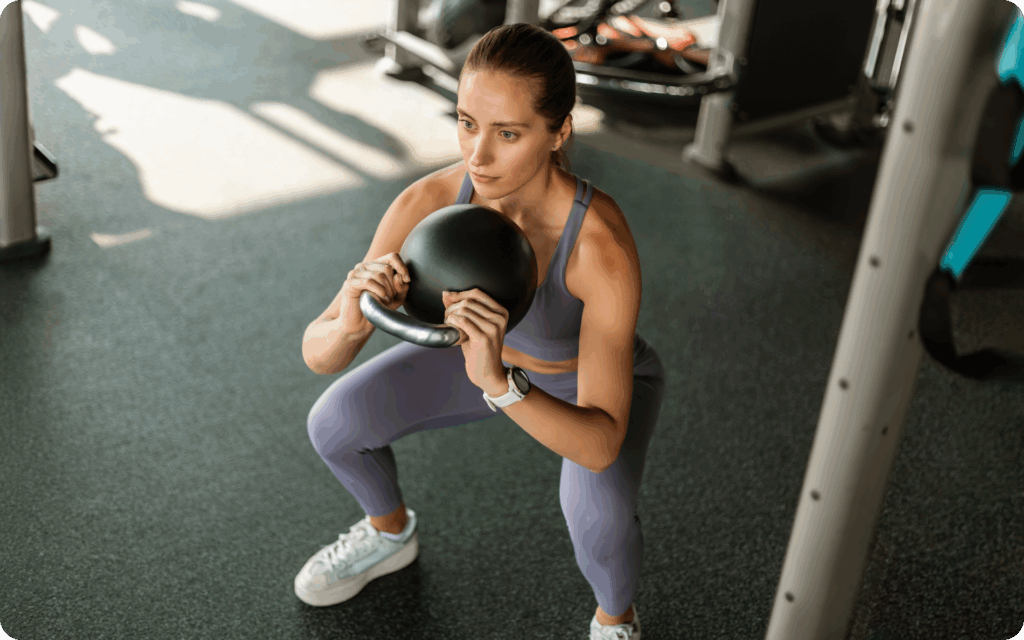
Goblet Squats
- Stand with your feet slightly wider than shoulder-width apart, with your toes pointed slightly out.
- Hold a dumbbell vertically against your chest with both hands.
- Keeping your chest up and your back straight, lower your hips down and back as if sitting in a chair.
- Descend until your thighs are parallel to the floor or lower, then drive through your heels to return to the starting position.
Romanian Deadlifts (RDLs)
- Stand with your feet hip-width apart, holding a barbell or dumbbells in front of your thighs with an overhand grip.
- Keeping your legs almost straight (a slight bend in the knees is okay), hinge at your hips, pushing your glutes back.
- Lower the weight towards the floor, keeping it close to your legs. Your back should remain straight.
- Lower until you feel a deep stretch in your hamstrings, then squeeze your glutes to pull yourself back to the starting position.
Dumbbell Bench Press
- Lie on a flat bench with a dumbbell in each hand, positioned at the sides of your chest. Your feet should be flat on the floor.
- Press the dumbbells straight up until your arms are fully extended but not locked.
- Slowly lower the dumbbells back to the starting position.
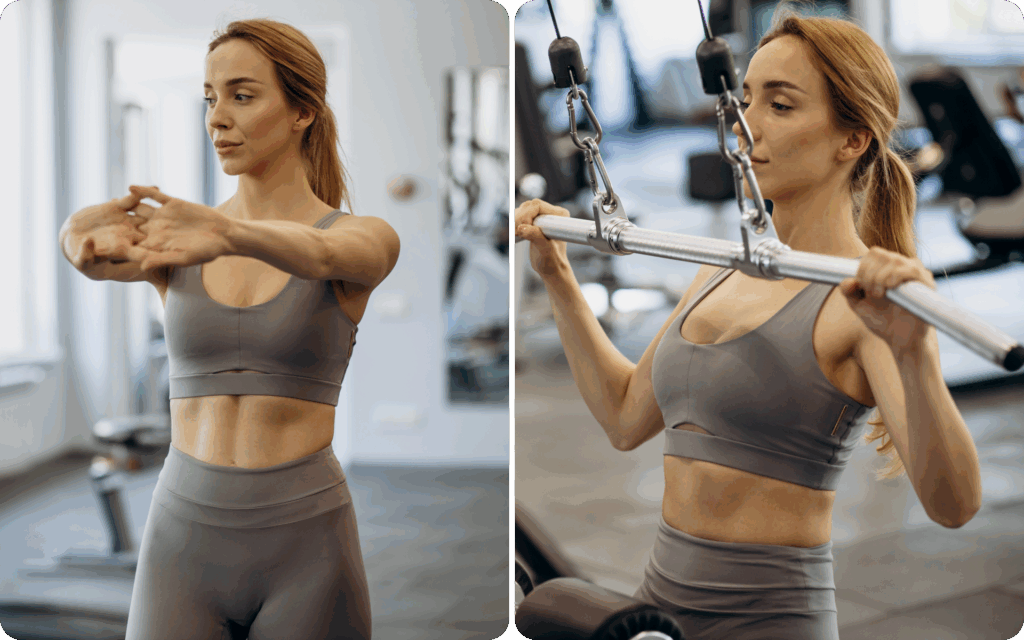
Lat Pulldowns
- Sit at a lat pulldown machine and adjust the knee pad to secure your legs.
- Grasp the bar with a wide, overhand grip.
- Lean back slightly and pull the bar down to your upper chest, squeezing your shoulder blades together.
- Slowly control the bar as it returns to the starting position.
Dumbbell Shoulder Press
- Sit on a bench with back support, holding a dumbbell in each hand at shoulder height, palms facing forward.
- Press the dumbbells overhead until your arms are fully extended.
- Slowly lower the dumbbells back to shoulder height.
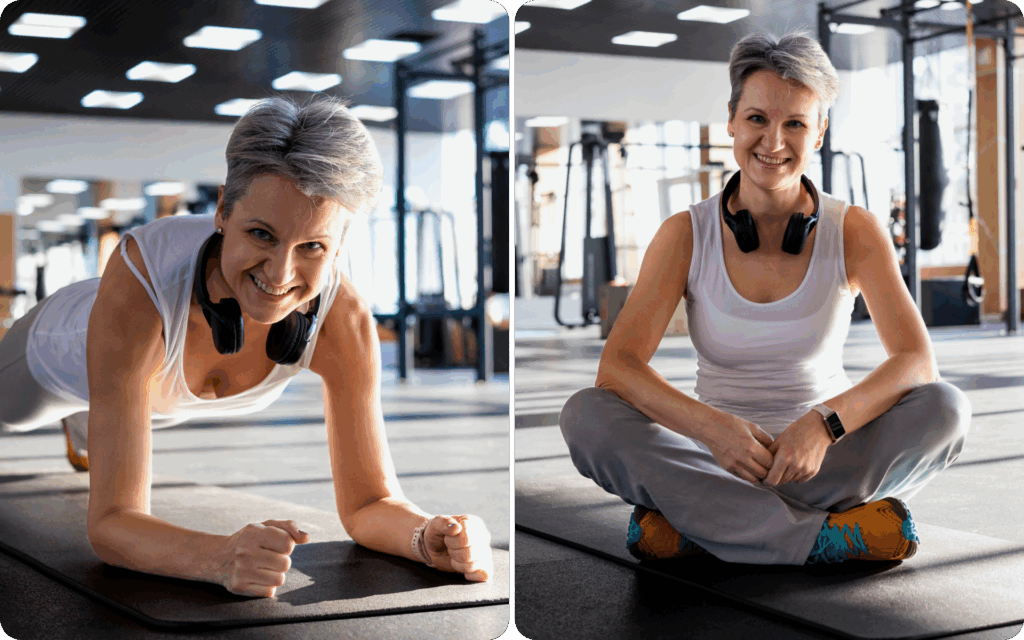
Plank
- Position yourself on the floor on your forearms and toes, with your body in a straight line from head to heels.
- Engage your core and glutes to prevent your hips from sagging.
- Hold this position for the prescribed time.
Leg Press
- Sit on a leg press machine with your feet shoulder-width apart on the platform.
- Press the platform away until your legs are extended, but do not lock your knees.
- Slowly lower the weight until your knees are at a 90-degree angle, then press back up.
Dumbbell Lunges
- Stand with your feet together, holding a dumbbell in each hand.
- Take a large step forward with one leg and lower your hips until both knees are bent at a 90-degree angle.
- Your front knee should be directly above your ankle, and your back knee should be hovering just above the floor.
- Push off your front foot to return to the starting position and repeat with the other leg.
Incline Dumbbell Press
- Set a bench to a 30-45 degree incline. Lie back with a dumbbell in each hand at your chest.
- Press the dumbbells up and slightly inward until your arms are fully extended.
- Slowly lower the weights back to the starting position.
Whether you’re a workout beast or just a beginner making your first foray into the world of fitness and dieting – BetterMe has a lot to offer to both newbies and experts! Install the app and experience the versatility first-hand!
Seated Cable Rows
- Sit at a cable row machine with your feet on the platform and knees slightly bent.
- Grasp the handle with a neutral grip (palms facing each other).
- Keeping your back straight, pull the handle towards your lower abdomen, squeezing your shoulder blades.
- Slowly extend your arms to return to the start.
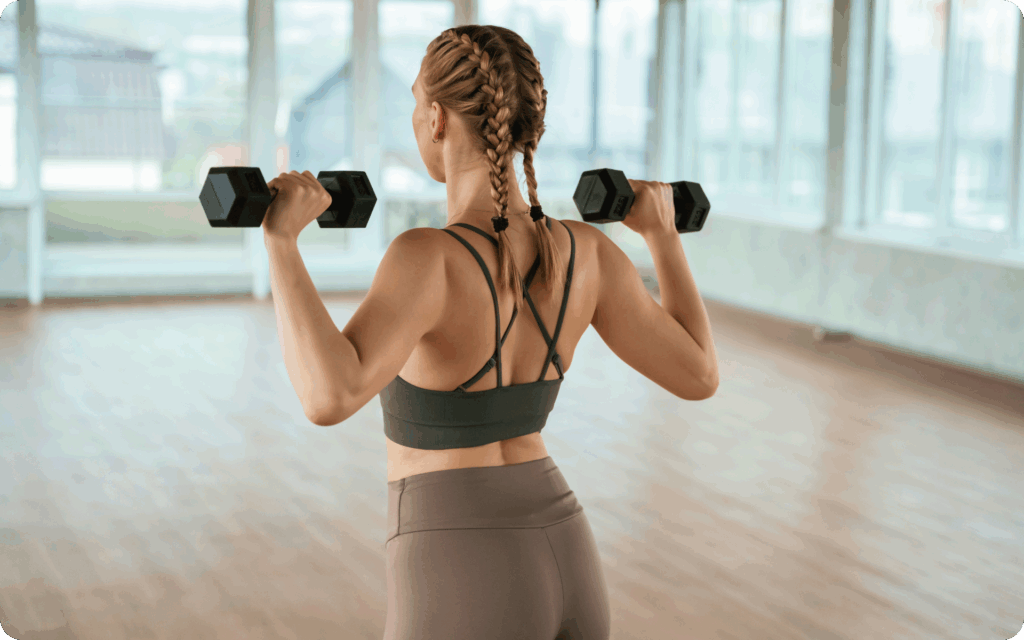
Lateral Raises
- Stand with a dumbbell in each hand at your sides, palms facing in.
- Keeping a slight bend in your elbows, raise the dumbbells out to your sides until they are at shoulder level.
- Slowly lower the dumbbells back to the starting position.
Hanging Knee Raises
- Hang from a pull-up bar with your arms fully extended.
- Engage your core and raise your knees towards your chest.
- Slowly lower your legs back to the starting position, avoiding any swinging.
What Exercise Burns the Most Fat for Females?
No single exercise magically burns fat from a specific area (27). Fat loss is a systemic process that occurs when you’re in a sustained caloric deficit (5). However, some exercises are more effective at burning calories and stimulating metabolic changes that promote fat loss.
For women, running-based Sprint Interval Training (SIT) stands out. A study published in Applied Physiology, Nutrition, and Metabolism investigated the effects of running SIT on recreationally active women. The protocol involved;
- three sessions per week for six weeks
- each session consisted of 4-6, cycles
- Each cycle consisted of “all-out” 30-second sprints on a treadmill separated by 4 minutes of rest (28).
The results were impressive (28):
- 8.0% decrease in body fat mass.
- 3.5% reduction in waist circumference.
- 1.3% increase in fat-free (lean) mass.
These findings suggest that running SIT is a highly time-efficient strategy for reducing body fat while simultaneously building muscle and improving aerobic capacity. The intensity of the sprints creates a significant metabolic disturbance, leading to a higher calorie burn both during and after the workout–a phenomenon known as excess post-exercise oxygen consumption (EPOC) (29). This makes it a powerful tool in any gym workout routine for women.
A Note About Intensity
However, it’s important to recognize that sprint interval training (SIT) places significant stress on the body and isn’t universally ideal for all situations (30). Because SIT demands near-maximal effort, it requires excellent recovery strategies—ample rest between sessions, adequate sleep, and proper nutrition—to avoid overtraining and burnout.
For beginners, individuals recovering from injury, or those currently experiencing high overall life stress, SIT might not be the best option right away. In these cases, steady-state cardiovascular exercise (like brisk walking, cycling, or moderate-intensity jogging) provides a lower-intensity, sustainable way to improve fitness and burn calories while supporting recovery and long-term consistency.
Even for advanced trainees, SIT is often best used sparingly (such as 1–2 times per week) and programmed alongside lighter cardio days to allow muscles and the nervous system time to recover.
Overall Best Cardio Plan For Women
The best comprehensive routines alternate SIT with other aerobic options—like low-intensity steady-state (LISS) or moderate-intensity continuous training (MICT)—to balance high-intensity benefits with the need for recovery.
By mixing these modalities, you maximize fat loss, support cardiovascular health, and maintain consistency without risking fatigue or injury.
Read more: 7 Types of Gym Workouts for Total Beginners and When to Use Them
How Long Does It Take a Woman to Get Lean?
The time it takes to get lean varies greatly from person to person and depends on several factors:
- Starting Body Composition: Someone with a lower starting body fat percentage will see visible changes faster than someone starting at a higher percentage.
- Consistency: Adherence to both your training program and nutrition plan is the single most important factor. Missing workouts or deviating from your diet will slow progress.
- Genetics: Some individuals are genetically predisposed to storing fat in certain areas and may find it harder to lean out. For example, women often store stubborn fat on the thighs and glutes due to a higher density of alpha-2 receptors, which inhibit fat breakdown (31).
- Rate of Weight Loss: A safe and sustainable rate of fat loss is generally considered to be 1 to 2 pounds of your body weight per week (32). Losing weight faster often leads to muscle loss, which is counterproductive to getting lean.
For a woman who is consistent with a well-designed training and nutrition plan, noticeable changes can often be seen within 4-8 weeks. Significant transformation typically takes 12 weeks or more. It’s a marathon, not a sprint, and patience is key.
Looking for a shorter-term challenge to kickstart your journey? A 4-week workout plan for weight loss female can provide the structure you need to build momentum.
How To Avoid Bulky Legs when Working out As a Female?
The fear of developing “bulky” legs is a common concern among women who start lifting weights, but it’s largely unfounded. As mentioned earlier, women do not have the hormonal profile to build large, bulky muscles easily. The lean, toned look most women desire is the result of having well-developed muscles with a low level of body fat covering them.
Here’s how to train your legs for a lean, athletic look without adding unwanted size:
- Focus on Strength, Not Just Volume: Instead of endless reps with light weights, focus on getting stronger in moderate rep ranges (e.g., 6-12 reps). This builds dense, strong muscles rather than just pumping them full of fluid.
- Incorporate Unilateral Work: Exercises like lunges, split squats, and single-leg RDLs are excellent for shaping the legs and glutes without necessarily requiring extremely heavy loads.
- Watch Your Caloric Intake: Muscle growth requires a caloric surplus. If you are eating at maintenance or in a slight deficit to lose fat, you shouldn’t be gaining significant muscle size.
- Understand Body Fat: Often, what is perceived as “bulky” is simply a layer of body fat over the muscle. As you lower your body fat percentage, your legs will appear leaner and more defined.
If you prefer training with your own bodyweight, you can still achieve impressive results. Explore our guide on how to build a lean calisthenics body.
Fat loss patterns are largely determined by genetics (33). For many women, fat is lost first from the upper body–such as the face, arms, and chest–while the hips, thighs, and buttocks tend to be the last to lean out. This is due to the higher concentration of alpha-2 adrenergic receptors in these areas, which resist fat mobilization (34). You cannot spot-reduce fat. No amount of crunches will burn belly fat specifically. The most effective way to reduce belly fat is to lower your overall body fat percentage through a consistent caloric deficit. This is achieved via a combination of diet, resistance training, and high-intensity cardio. Visceral fat, the type stored around the organs in the abdominal cavity, is particularly responsive to exercise and diet improvements. For a balanced approach, aim for 2-3 full-body resistance training sessions per week (23). Supplement this with 2-3 cardio sessions. This frequency allows for adequate stimulus and recovery. The primary factor in determining training frequency is your training status; beginners need more rest between sessions than advanced lifters. High-intensity interval training (HIIT) is often considered superior for fat loss due to its time efficiency and its effect on EPOC, which keeps your metabolism elevated for hours after the workout (10). However, a combination of HIIT and low-intensity steady-state (LISS) cardio can be an effective and sustainable strategy. HIIT is more physically demanding, so LISS can be used on recovery days to burn extra calories without adding significant stress.Frequently Asked Questions
Where do females lose body fat first?
What burns the most belly fat in a female?
How often should females do fat-burning workouts?
What cardio is best for fat loss?
The Bottom Line
Creating a lean, strong physique is an achievable goal for any woman willing to put in the work. It requires moving beyond outdated fitness myths and embracing a science-backed approach. The foundation of your success will be built on consistent, heavy resistance training to build muscle, strategic cardio to enhance fat loss, and a nutrition plan that supports your goals.
Remember that progress is not always linear, and consistency will always triumph over short-term intensity. Trust the process, stay patient, and focus on building sustainable habits that will serve you for a lifetime.
DISCLAIMER:
This article is intended for general informational purposes only and does not serve to address individual circumstances. It is not a substitute for professional advice or help and should not be relied on for making any kind of decision-making. Any action taken as a direct or indirect result of the information in this article is entirely at your own risk and is your sole responsibility.
BetterMe, its content staff, and its medical advisors accept no responsibility for inaccuracies, errors, misstatements, inconsistencies, or omissions and specifically disclaim any liability, loss or risk, personal, professional or otherwise, which may be incurred as a consequence, directly or indirectly, of the use and/or application of any content.
You should always seek the advice of your physician or other qualified health provider with any questions you may have regarding a medical condition or your specific situation. Never disregard professional medical advice or delay seeking it because of BetterMe content. If you suspect or think you may have a medical emergency, call your doctor.
SOURCES:
- New insights and advances in body recomposition (2024, frontiersin.org)
- Gender Differences in Carbohydrate Metabolism and Carbohydrate Loading (2022, tandfonline.com)
- “Calories in, calories out” and macronutrient intake: the hope, hype, and science of calories (2017, journals.physiology.org)
- The Effect of Exercise Training on Total Daily Energy Expenditure and Body Composition in Weight-Stable Adults: A Randomized, Controlled Trial (2020, journals.humankinetics.com)
- Optimal Diet Strategies for Weight Loss and Weight Loss Maintenance (2020, pmc.ncbi.nlm.nih.gov)
- Preserving Healthy Muscle during Weight Loss (2017, sciencedirect.com)
- Dietary protein intake and human health (2016, pubs.rsc.org)
- Testosterone Physiology in Resistance Exercise and Training (2010, link.springer.com)
- Proven muscle-building training principles (n.d., us.humankinetics.com)
- Evidence-Based Effects of High-Intensity Interval Training on Exercise Capacity and Health: A Review with Historical Perspective (2021, pmc.ncbi.nlm.nih.gov)
- Strength training: Get stronger, leaner, healthier (2023, mayoclinic.org)
- Resistance Training is Medicine: Stay Active and Reap the Reward, Live in your Life! (2023, intechopen.com)
- Muscle cells vs. fat cells: MedlinePlus Medical Encyclopedia Image (2022, medlineplus.gov)
- Increasing muscle mass to improve metabolism (2013, pmc.ncbi.nlm.nih.gov)
- Resistance training effectiveness on body composition and body weight outcomes in individuals with overweight and obesity across the lifespan: A systematic review and meta‐analysis (2022, onlinelibrary.wiley.com)
- Body Recomposition: Can Trained Individuals Build Muscle and Lose Fat at the Same Time? (2020, journals.lww.com)
- What are the benefits of lifting weights? (n.d., us.humankinetics.com)
- Impact of resistance training with or without caloric restriction on physical capacity in obese older women (2009, pubmed.ncbi.nlm.nih.gov)
- The (Many) Benefits of a Cardio Workout (2023, health.clevelandclinic.org)
- LISS vs. HIIT Training Sessions – Can both lead to Weight Loss? (2017, sites.udel.edu)
- ACSM’s Guidelines for Exercise Testing and Prescription (2017, books.google.com)
- Effect of High-Intensity Interval Training vs. Moderate-Intensity Continuous Training on Fat Loss and Cardiorespiratory Fitness in the Young and Middle-Aged a Systematic Review and Meta-Analysis (2023, pmc.ncbi.nlm.nih.gov)
- Progression Models in Resistance Training for Healthy Adults (2009, journals.lww.com)
- Determination of Resistance Training Frequency (2017, nsca.com)
- Give it a rest: a systematic review with Bayesian meta-analysis on the effect of inter-set rest interval duration on muscle hypertrophy (2024, frontiersin.org)
- Progressive Overload Explained: Grow Muscle & Strength Today (n.d.. blog.nasm.org)
- A proposed model to test the hypothesis of exercise-induced localized fat reduction (spot reduction), including a systematic review with meta-analysis (2022, hummov.awf.wroc.pl)
- Running sprint interval training induces fat loss in women (2014, pubmed.ncbi.nlm.nih.gov)
- Excess Post-Exercise Oxygen Consumption and Substrate Oxidation Following High-Intensity Interval Training: Effects of Recovery Manipulation (2021, pmc.ncbi.nlm.nih.gov
- Customizing intense interval exercise training prescription using the “frequency, intensity, time, and type of exercise” (FITT) principle (2025, frontiersin.org)
- The genetics of fat distribution (2014, link.springer.com)
- Steps for Losing Weight (2025, cdc.gov)
- Genetic predictors of weight loss in overweight and obese subjects (2019, nature.com)
- Estrogen controls lipolysis by up-regulating alpha2A-adrenergic receptors directly in human adipose tissue through the estrogen receptor alpha. Implications for the female fat distribution (2004, pubmed.ncbi.nlm.nih.gov)
 Reviewed by
 Reviewed by