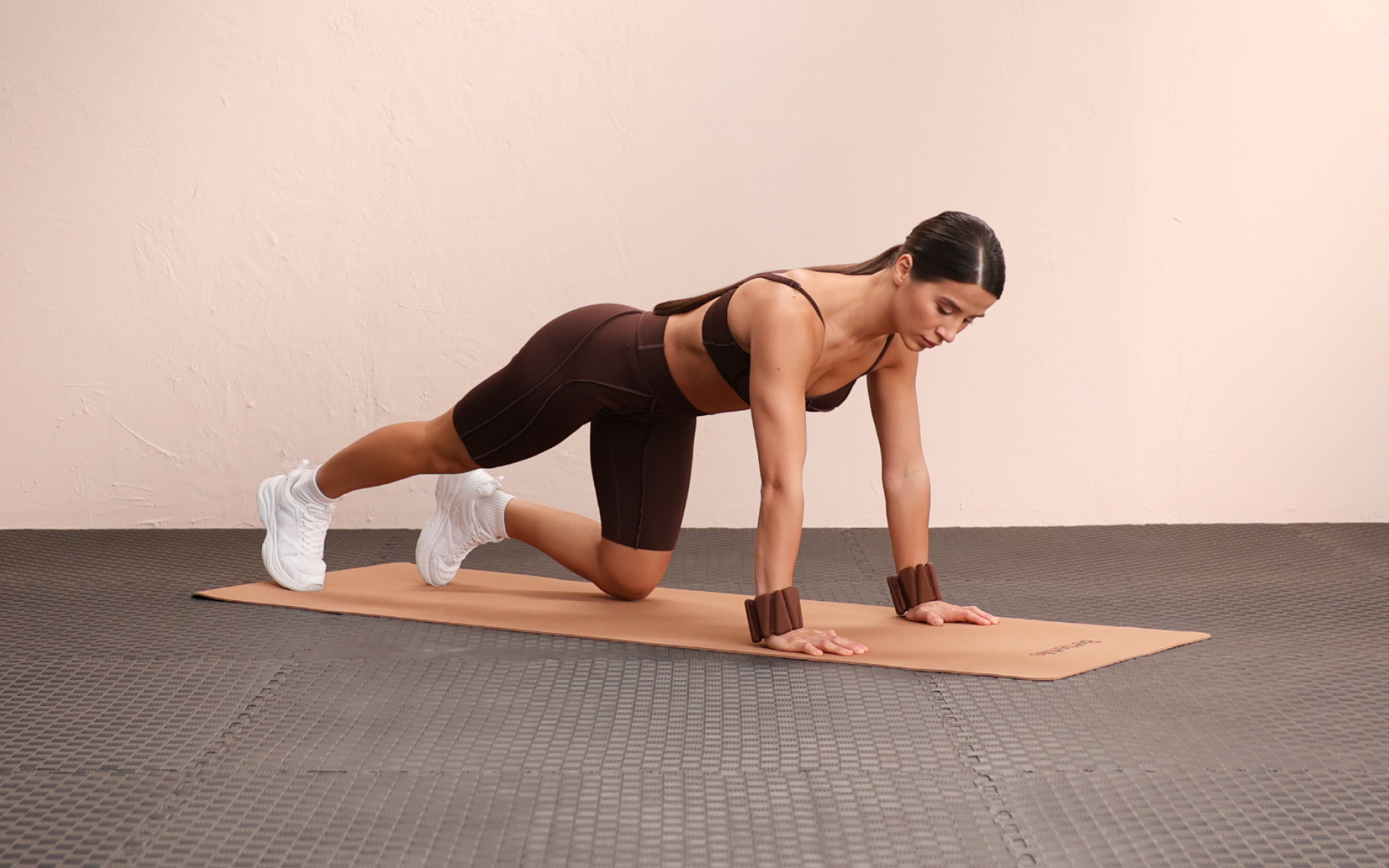

A 4-week workout plan for weight loss can support your goals by mixing cardio, strength work, and regular walking across the week. Four weeks is often enough to build momentum and start noticing changes, but it rarely delivers dramatic results on its own. Think of it as a strong, encouraging start, rather than a finish line.
Weight loss can feel confusing when every plan promises something different. A 4-week workout plan is a short, structured routine—usually four weeks of scheduled cardio, strength sessions, and walking—that’s designed to help you build a repeatable habit. For many people, this combination may support fat loss over time.
This guide is for beginners and anyone returning to movement who wants clear, practical steps. You will find a week-by-week schedule, exercise instructions, home swaps, and simple tips for effort levels.
Read on to build a routine you can actually stick with.
Please note: In 4 weeks users can typically expect to lose not more than 1-2 lbs per week. Individual results may vary.
Can a 4-Week Workout Plan Support Weight Loss?
Yes, a 4-week workout plan can support weight loss, mainly by increasing your activity and helping you stay consistent. For many people, the early wins show up as improved fitness, a slightly smaller waist, and a stronger routine.
Some research has suggested that regular aerobic movement is associated with reductions in body weight, waist size, and body fat (1). The effects tend to grow with more weekly activity.
Here is the honest part. Four weeks is a great starting block, but it rarely brings dramatic scale changes from exercise alone.
Early on, the number on the scale can be noisy. Several factors may affect it (2):
- Water shifts from new training
- Normal daily fluctuations
- Muscle retention as you move more
So, if the scale barely moves, that doesn’t mean your effort failed. Individual outcomes vary, and progress often shows in how your clothes fit or how you feel.
Read more: Realistic Weight Loss Goals: A Reality Check You Need
What Should a Weight-Loss Workout Plan Include?
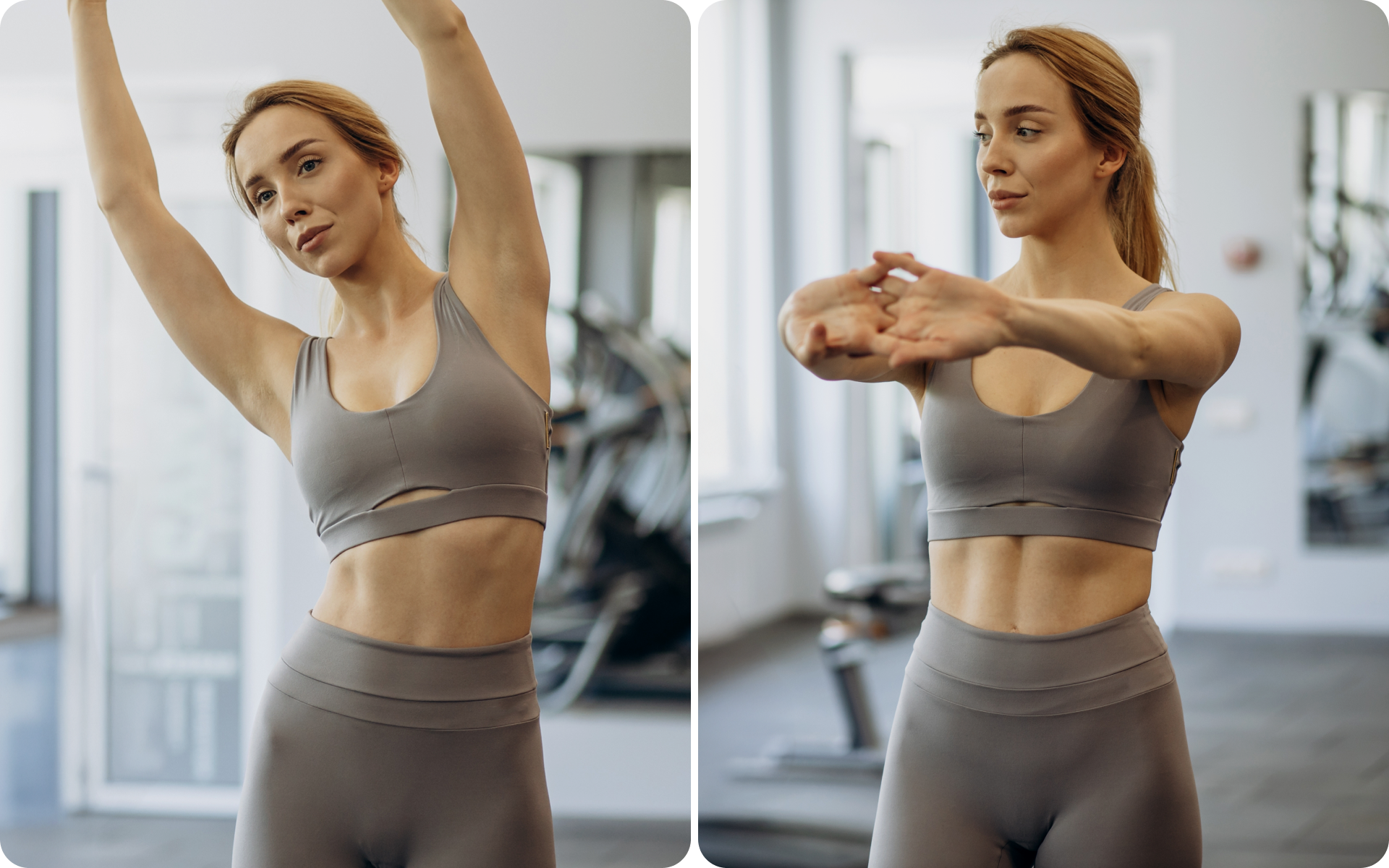
A weight-loss workout routine should include three parts: cardio, strength training, and daily walking. Together, they support energy use, muscle retention, and long-term consistency.
Let’s define the key terms in plain language:
- Cardio means rhythmic activity that raises your heart rate, such as brisk walking or cycling (3).
- Strength training means using resistance—body weight, bands, or weights—to challenge your muscles (4).
- Moderate intensity feels like a 5-6 out of 10 effort, where you can talk in short sentences (5).
- Vigorous intensity feels like a 7-8 out of 10 effort, where talking gets harder (5).
Current guidance generally supports at least around 150 minutes per week of moderate aerobic activity, plus at least 2 days per week of muscle-strengthening work (6).
Please note: If you have joint, muscle, or spine-related concerns, please consult your physician before starting this workout.
Some research has suggested that resistance work mainly helps retain lean mass during weight loss (7), while cardio supports increased energy expenditure (8). A balanced strength and cardio workout plan may offer the best of both.
Here’s a simple program to build your sessions around.
| Component | Weekly target | Example | Why it helps |
|---|---|---|---|
| Cardio | 150+ minutes | Brisk walking, cycling | Supports energy use |
| Strength | 2 sessions | Full-body routine | Supports muscle retention |
| Walking | Most days | 20-45 minute walks | Adds gentle daily movement |
| Rest | 1 day | Sleep, light stretching | Supports rest |
BetterMe offers a variety of workouts, recipes, challenges, and support tools to help you stay more consistent with your wellness routine. Explore the app to find features that fit your goals, preferences, and schedule.

What Does the Full 4-Week Workout Schedule Look Like?
The full 4-week weight loss workout plan follows a weekly workout schedule of two strength days, three cardio days, daily walking, and one active rest day. Each week builds gently on the last.
This approach uses progressive overload, which means slowly increasing your effort over time (9). For example, you might add 1-2 reps, add 5 minutes of cardio, or add one extra set each week.
Below is a sample weekly workout schedule for weight loss. Adjust it to suit your life.
| Day | Week 1 | Week 2 | Week 3 | Week 4 |
|---|---|---|---|---|
| Monday | Strength (30 mins) | Strength | Strength | Strength |
| Tuesday | Walk (30 mins) | Cardio (35 mins) | Cardio (40 mins) | Cardio (40 mins) |
| Wednesday | Walk (30 mins) | Walk (40 mins) | Walk (40 mins) | Walk (45 mins) |
| Thursday | Strength (30 mins) | Strength | Strength | Strength |
| Friday | Cardio (30 mins) | Cardio (35 mins) | Cardio intervals | Cardio (40 mins) |
| Saturday | Walk (45 mins) | Long walk (50 mins) | Long walk (60 mins) | Long walk (60 mins) |
| Sunday | Active rest | Active rest | Active rest | Active rest |
Here’s the full-body workout plan used on your strength days. Aim for 1-3 sets of 8-12 reps per exercise
| Exercise | Sets | Reps | Target area |
|---|---|---|---|
| Hip hinge | 1-3 | 8-12 | Back of legs |
| Goblet squat | 1-3 | 8-12 | Legs, glutes |
| Push-up variation | 1-3 | 8-12 | Chest, arms |
| Row | 1-3 | 8-12 | Upper back |
| Split squat | 1-3 | 8-12 per side | Legs |
| Plank | 1-3 | 20-40 secs | Core |
Goblet Squat
- Hold a weight close to your chest with both hands.
- Stand with your feet shoulder-width apart.
- Lower your hips down and back, as if sitting in a chair.
- Keep your chest tall and your heels grounded.
- Push through your feet to stand back up.

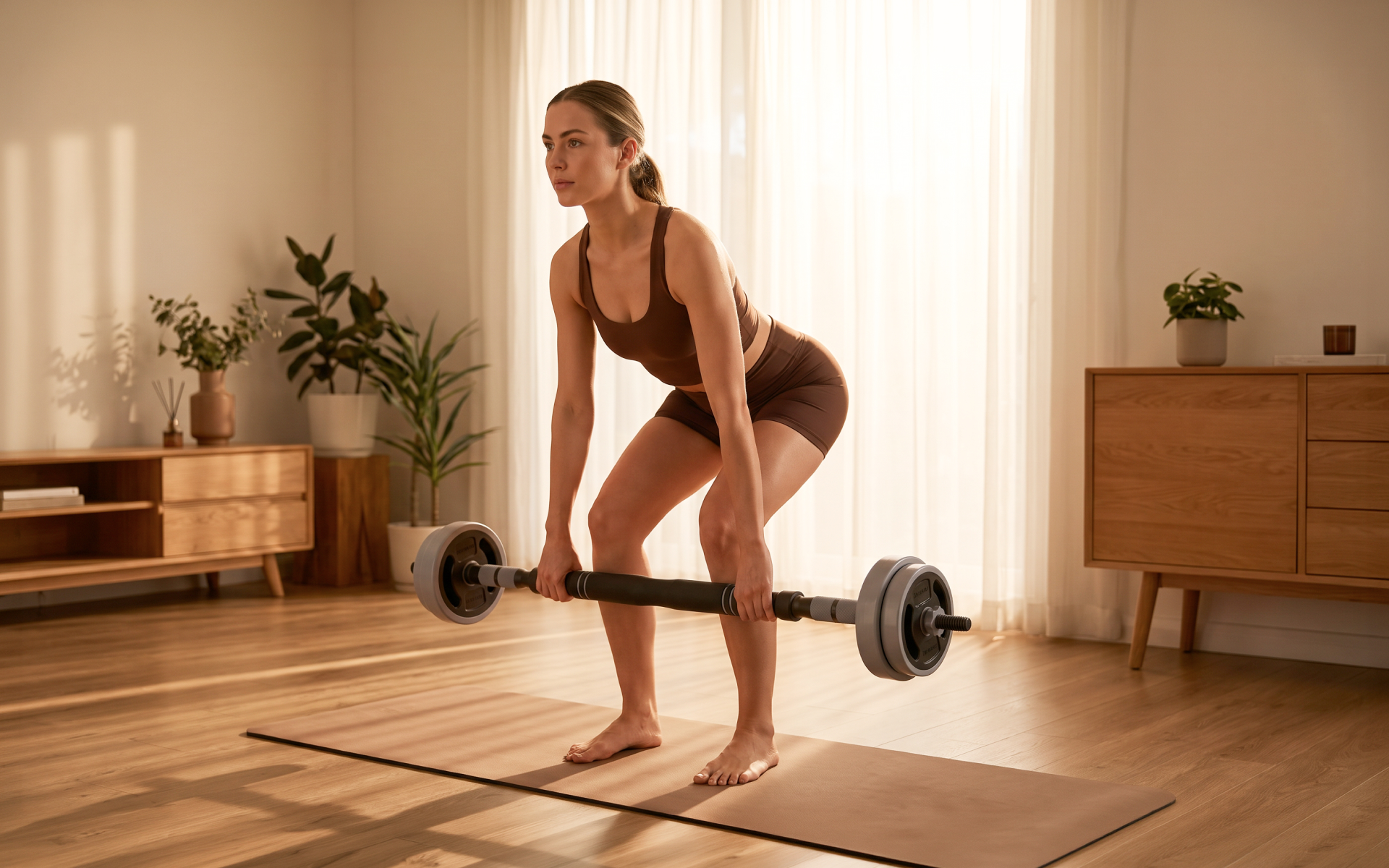
Hip Hinge
- Stand with your feet hip-width apart, holding a weight.
- Keep a soft bend in your knees.
- Push your hips back as you lower the weight.
- Feel a gentle stretch in the back of your legs.
- Squeeze your glutes to return upright.
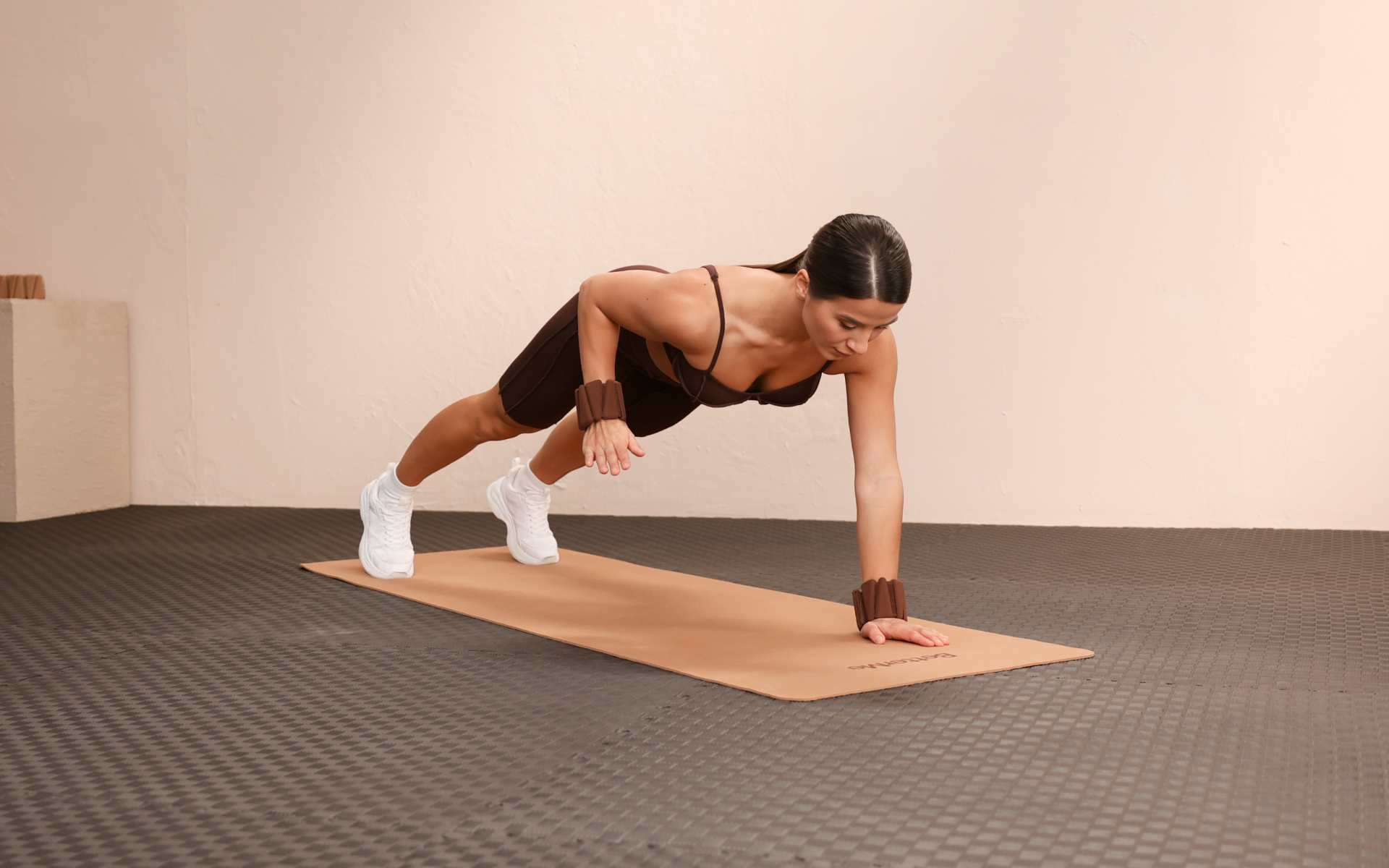
Push-Up Variation
- Place hands on a wall, counter, or floor.
- Keep your body in a straight line.
- Lower your chest toward the surface.
- Keep your elbows at a comfortable angle.
- Press back to the start.
Row
- Hold a band, dumbbell, or backpack.
- Hinge slightly forward at the hips.
- Pull your elbows back toward your ribs.
- Squeeze your shoulder blades together.
- Lower with control.
Split Squat
- Step one foot forward and one back.
- Lower your back knee toward the floor.
- Keep your front knee over your ankle.
- Push through your front foot to rise.
- Complete your reps, then switch sides.
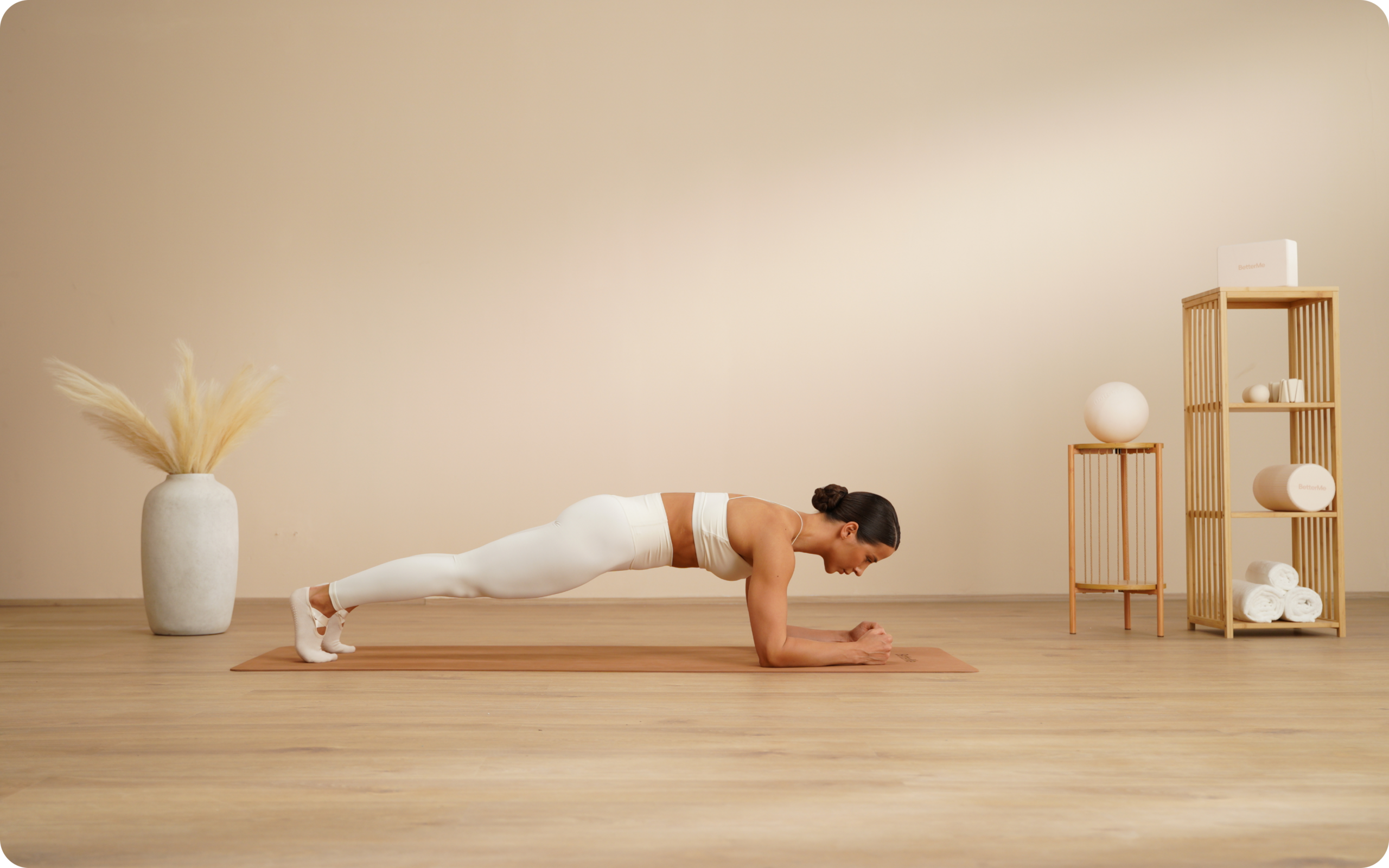
Plank
- Rest on your forearms and toes.
- Keep your body in a straight line.
- Gently brace your core.
- Avoid letting your hips sag.
- Hold for your set time, then rest.
If you want a longer runway after this, you might enjoy our Simple 12-Week Weight Loss Workout Plan for steady, extended progress.
How Can You Combine Strength Training, Cardio, and Walking?
You can combine strength training, cardio, and walking by scheduling two strength days, three cardio days, and daily walks across the week. This cardio and strength training plan spreads effort so nothing feels overwhelming.
Each piece plays a role:
- Cardio supports calorie burn and fitness (7).
- Strength supports muscle retention and function (8).
- Walking adds gentle movement with easy rest (10).
If your time is limited, prioritize in this order:
- Walk most days.
- Fit in two strength sessions.
- Add cardio to reach around 150 minutes weekly.
This exercise plan for weight loss works because it stays flexible. You can change days around based on energy, schedule, and how your body feels.
Read more: 2-Day Full Body Workout: Hit All Of Your Major Muscle Groups In One Sweat Sesh
How Hard Should Your Workouts Feel?
Your workouts should feel challenging but manageable, not punishing. For most sessions, aim for moderate effort, with one slightly harder cardio session by week 3 or 4.
Use reps in reserve to gauge strength effort. This means stopping with about 2 reps left in the tank—challenging, but with control (11).
Here’s a simple effort guide.
| Type | Effort level | How it feels | Example |
|---|---|---|---|
| Moderate cardio | 5-6/10 | Talk in short sentences | Brisk walk |
| Vigorous cardio | 7-8/10 | Talking gets harder | Fast cycling |
| Strength | 7-8/10 | Last 2 reps are tough | Goblet squat |
In your first few weeks, avoid pushing to exhaustion. A strong start is repeatable, not extreme.
For a shorter, spirited option to test your effort levels, you might explore our 2-Week Weight Loss Challenge.

What Can You Do on Rest and Active Rest Days?
On rest and active rest days, you can fully rest or add gentle, low-impact movement. Active rest means light activity that keeps you moving without adding fatigue (12).
Good active rest options include:
- Easy walking
- Gentle stretching
- Light cycling
- Mobility work
Rest days matter for this 4-week fitness plan. They support rest and help you return feeling refreshed.
What active rest isn’t for:
- Sneaking in a hard workout
- “Making up” for food
- Pushing through soreness
Give yourself permission to rest. It is part of the process, not a setback. Rest is when the body is able to repair itself and grow stronger. (15)
How Can You Modify the Plan for Home Workouts?
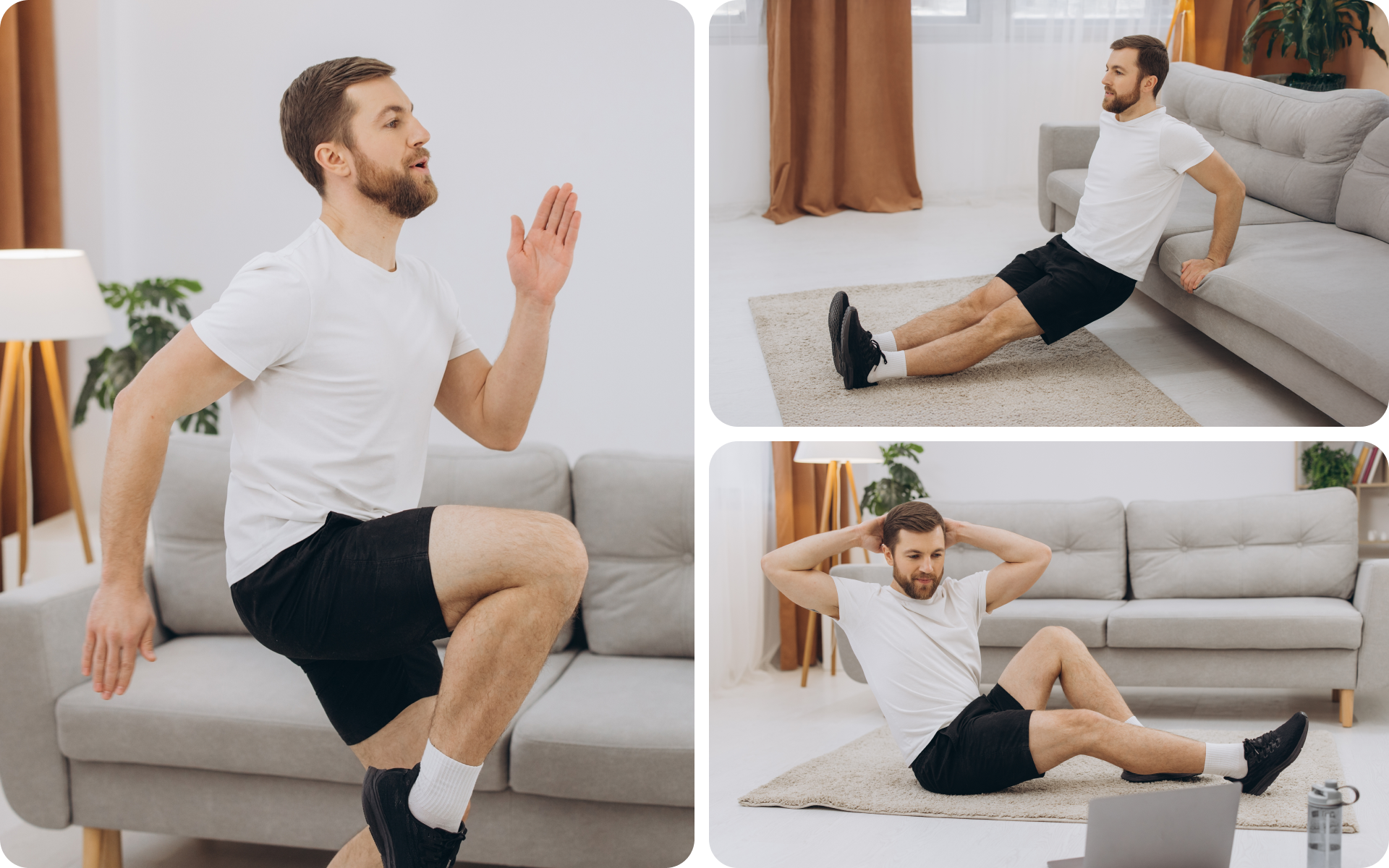
You can modify this plan for home by swapping gym equipment for body weight, bands, or household items. A home workout plan for weight loss can be just as practical with a little creativity.
For home cardio, try:
- Brisk outdoor walks
- Stair climbing
- Marching in place
- Step-ups
For home strength, use:
- Body weight for squats and push-ups
- A backpack filled with books
- Resistance bands
To keep this beginner weight loss workout challenging at home, adjust these variables:
- Slow your tempo
- Add more reps
- Add another set
- Shorten your rest
You don’t need fancy gear—progressive challenge matters more than equipment.
What Should You Do If You Miss a Workout?
If you miss a workout, simply resume your routine without punishing yourself. One missed session has almost no real impact on your progress.
Here are gentle ways to handle a missed day:
- Do it the next day if you have energy
- Replace it with a shorter walk
- Skip it and continue as planned
If you miss several days, restart from your current week rather than from zero.
Consistency over weeks matters far more than a perfect record. For this plan, “consistent” may mean completing 4-5 sessions most weeks. Missing one workout is normal—quitting the entire plan because you missed one is the only real setback.
Workouts, weight management tools, and recipe ideas come together in the BetterMe Well-Being Coach app, giving you practical support for building a more consistent wellness routine.
How Can You Continue Exercising After the 4 Weeks?
You can continue after the 4 weeks by focusing on this plan as a starting block, then progressing one variable at a time. This 4-week fitness challenge is a foundation, not a final destination.
After four weeks, choose one thing to build:
- More weekly cardio minutes
- A slightly harder cardio session
- An extra strength set
- More daily walking
A sensible next step might look like this:
- Keep strength at 2 days, maybe 3 if you feel ready
- Move cardio from 150 toward 180-240 minutes weekly
- Keep one longer walk each week
This workout routine for weight management stays effective when you grow it gradually. If you enjoy higher-effort sessions, you might like our HIIT Workout Plan for Weight Loss for variety down the road.

FAQs
How many days a week should you exercise when trying to lose weight?
You should aim to exercise around 4-5 days a week when trying to lose weight. For many people, this may include two strength sessions and three cardio sessions, plus walking on most days. This spread supports consistency without feeling overwhelming. Individual outcomes vary, so adjust the number of days to match your energy, schedule, and how your body feels.
Is strength training or cardio better for weight management?
Strength training and cardio each support weight management in different ways, so combining them often works best (13, 14). Cardio supports energy expenditure (8), while some research has suggested that strength work may help retain muscle during weight loss (7). For many people, a plan with both offers more balanced, lasting results than choosing only one. The right mix depends on your goals and preferences.
Do you need to exercise every day to lose weight?
You don’t need to exercise every day to lose weight. For many people, 4-5 structured sessions each week, plus daily walking, may be enough to support their goals. Rest days matter too, as they support rest. Daily movement such as walking is gentle and helpful, but intense workouts every single day aren’t required and may lead to burnout.
How long should each workout be?
Each workout should last around 30-60 minutes, depending on the type and your fitness level. Strength sessions may take 30-40 minutes, while cardio can range from 30-60 minutes. Walks can be shorter or longer based on your day. Shorter, consistent sessions often work better than long, occasional ones. Individual outcomes vary, so choose durations you can realistically maintain.
Can beginners follow a 4-week workout plan?
Beginners can absolutely follow a 4-week workout plan, particularly one that starts gently and builds gradually. This plan uses bodyweight moves, moderate effort, and flexible scheduling, which makes it beginner-friendly. Start with lighter loads and fewer sets, then add small challenges each week. If anything feels uncomfortable, adjust as needed and consider checking with a qualified professional.
The Bottom Line
A 4-week workout plan for weight loss gives you a clear, flexible starting point that’s built around cardio, strength, and walking. Individual outcomes vary, but this routine can help you build momentum and confidence. Pick your first session, add it to your calendar, and let each week carry you forward with steady, encouraging progress.
DISCLAIMER:
This article is intended for general informational purposes only and does not serve to address individual circumstances. It is not a substitute for professional advice or help and should not be relied on for making any kind of decision-making. Any action taken as a direct or indirect result of the information in this article is entirely at your own risk and is your sole responsibility.
BetterMe, its content staff, and its medical advisors accept no responsibility for inaccuracies, errors, misstatements, inconsistencies, or omissions and specifically disclaim any liability, loss or risk, personal, professional or otherwise, which may be incurred as a consequence, directly or indirectly, of the use and/or application of any content.
You should always seek the advice of your physician or other qualified health provider with any questions you may have regarding a medical condition or your specific situation. Never disregard professional medical advice or delay seeking it because of BetterMe content. If you suspect or think you may have a medical emergency, call your doctor.
SOURCES:
- Aerobic Exercise and Weight Loss in Adults: A Systematic Review and Dose-Response Meta-Analysis (2024, jamanetwork.com)
- Weight Fluctuation (2020, nhsgrampian.org)
- Cardiovascular exercise (2025, healthdirect.gov.au)
- American College of Sports Medicine Position Stand. Resistance Training Prescription for Muscle Function, Hypertrophy, and Physical Performance in Healthy Adults: An Overview of Reviews (2026, ovid.com)
- How to Measure Physical Activity Intensity (2025, cdc.gov)
- RECOMMENDATIONS – WHO Guidelines on Physical Activity and Sedentary Behaviour (2020, ncbi.nlm.nih.gov)
- Effect of resistance exercise on body composition, muscle strength and cardiometabolic health during dietary weight loss in people living with overweight or obesity: a systematic review and meta-analysis (2023, bmjopensem.bmj.com)
- Effect of Aerobic Exercise Intensity on Energy Expenditure and Weight Loss in Severe Obesity—A Randomized Controlled Trial (2021, onlinelibrary.wiley.com)
- Exercise progressions and regressions in sports training and rehabilitation (2024, sciencedirect.com)
- The multifaceted benefits of walking for healthy aging: from Blue Zones to molecular mechanisms (2023, link.springer.com)
- Repetitions in Reserve: An Emerging Method for Strength Exercise Prescription in Special Populations (2024, researchgate.net)
- Effectiveness of Recovery Strategies After Training and Competition in Endurance Athletes: An Umbrella Review (2024, link.springer.com)
- The Effects of Combining Aerobic and Heavy Resistance Training on Body Composition, Muscle Hypertrophy, and Exercise Satisfaction in Physically Active Adults (2023, mdpi.com)
- Full article: Comparison of concurrent, resistance, or aerobic training on body fat loss: a systematic review and meta-analysis (2025, tandfonline.com)
- Rest and recovery are critical for athletes of all ages from students to pros to older adults (2025, UCHealth.org)
 Reviewed by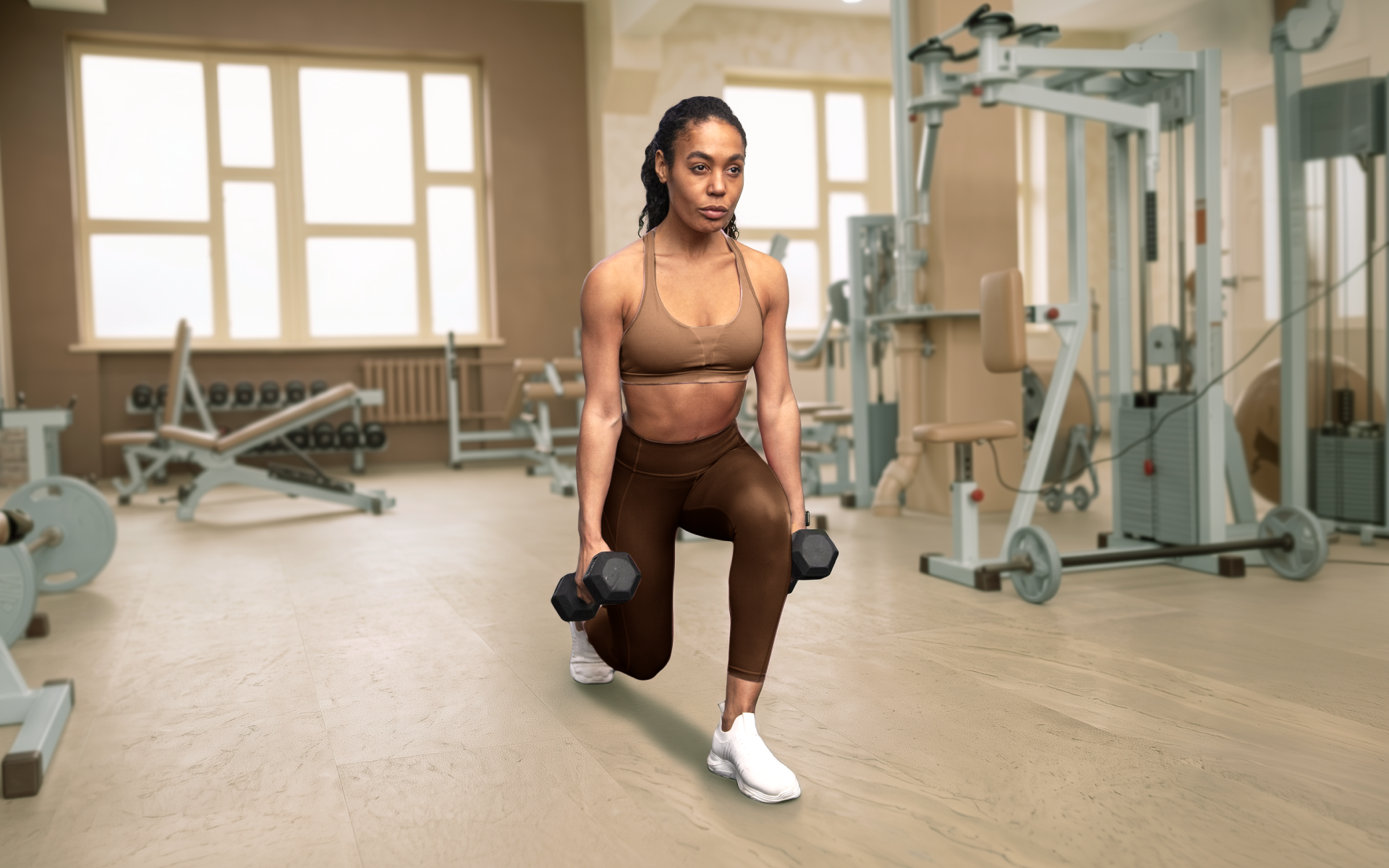
 Reviewed by