Wall sitting benefits center on practicing a stationary lower-body hold. A wall sit uses muscle tension without repeated joint movement, and it can be one part of a strength routine. It does not replace training through a range of motion. (1)
Use the beginner’s calisthenics workout guide to place wall sits alongside other movements. This article explains adjustable positions and sample holds without promising joint comfort, posture changes, or medical effects.
Key takeaways
- A wall sit is a stationary isometric hold, with no repeated joint movement. (1)
- Isometric strength gains are specific to the position trained. (1)
- Laboratory fatigue measurements do not establish long-term wall-sit posture benefits. (2)
- Choose a depth and duration you can control, and end the hold when your position deteriorates.
- Use the hold and set tables as examples, not required progression levels.
- General adult guidance includes muscle-strengthening work for all major muscle groups on at least two days per week. (3)
What is a wall sit?
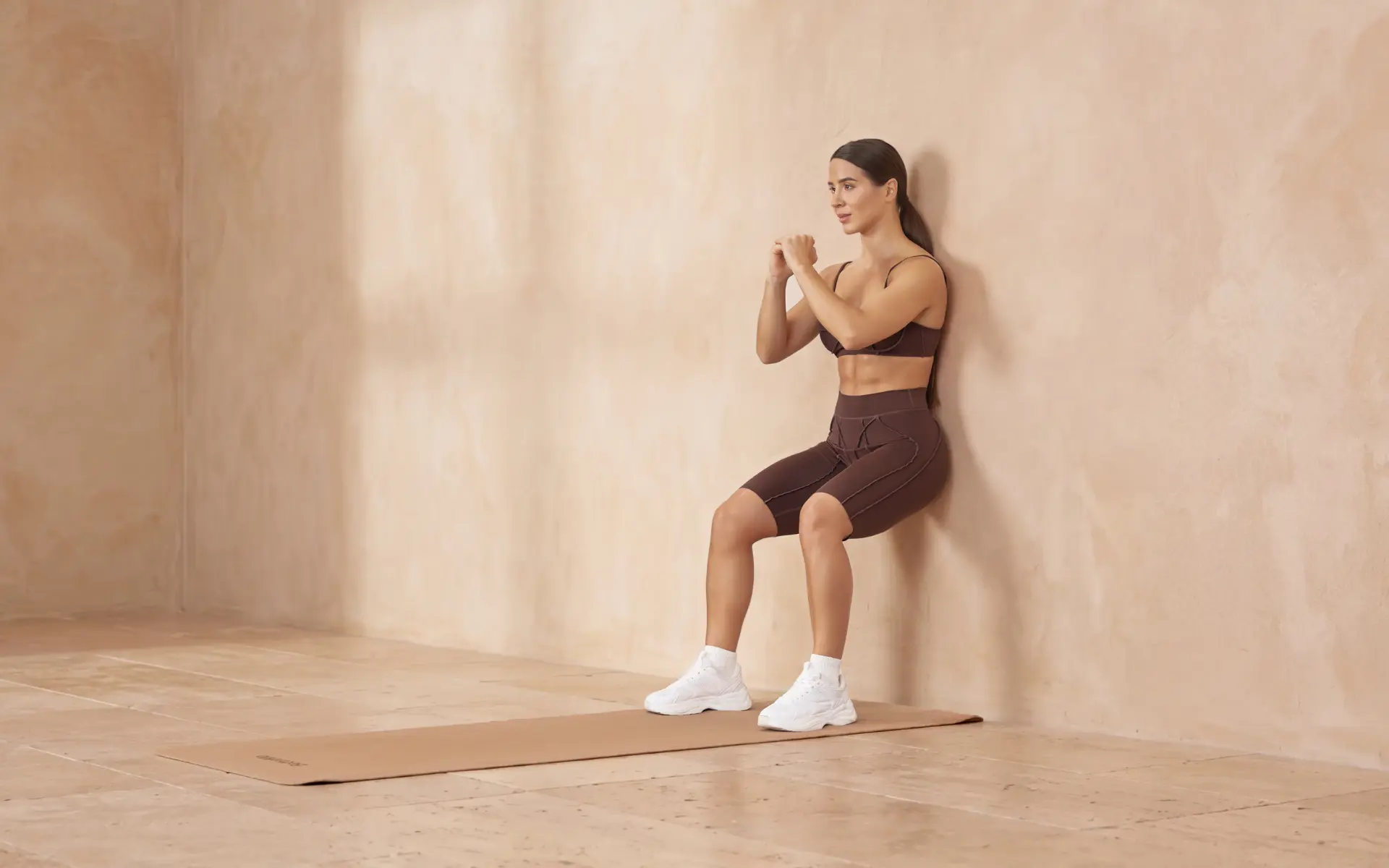
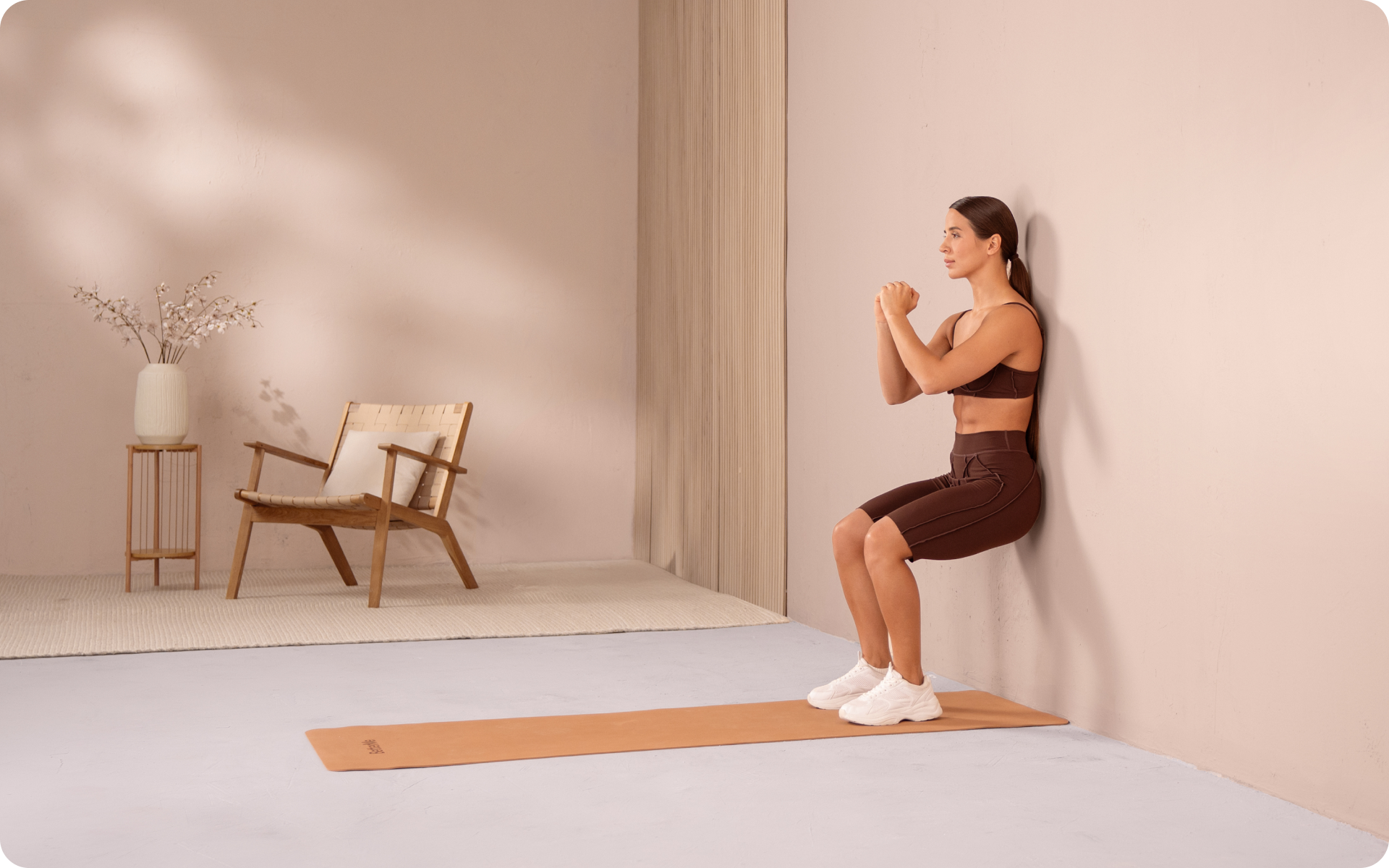
A wall sit is a bodyweight isometric exercise: you hold a position with your back against a wall while your muscles remain under tension. Choose a knee bend you can control; a 90-degree bend is not required for every starting attempt. (1)
The steps to do a wall sit are:
- Stand with your back against a flat wall.
- Move your feet forward enough to lower into a controlled, shallow seated position.
- Hold the position while breathing normally. Avoid breath-holding or straining. (1)
Start higher on the wall if a deeper position feels too demanding. End the hold before your position deteriorates.
- Practice a short hold at the same depth.
- Rest before repeating.
- Change one part of the exercise when the current version becomes manageable.
A change in depth or duration is enough to alter the exercise. Add external resistance only when you can control the unloaded version.
Read more: How To Start Losing Weight For Beginne. rs: All Facts, No Fluff

How is a wall sit different from a wall squat?
In this article, “wall sit” means a stationary hold and “wall squat” means moving up and down with wall support. Some research uses “wall squat” for an isometric hold, so check the actual movement before comparing results.
| Feature | Wall sit | Wall squat |
|---|---|---|
| Movement | Static hold | Repeated squatting motion |
| Main focus | Maintaining a fixed position | Moving through a chosen range |
| Difficulty | Varies with depth and hold time | Varies with depth, load, and repetitions |
| Primary muscles | Quads, glutes and core | Quads, glutes, hamstrings and core |
Choose the movement that fits the rest of your workout. You do not have to include both in every session.
Which muscles work during a wall sit?
The wall sit places sustained demands on the thigh and hip muscles while you maintain the seated position. A laboratory study of static exercises measured hip-muscle fatigue during wall-sit variations; it did not establish long-term posture or strength improvements. (2)
Workouts, weight management tools, and recipe ideas come together in the BetterMe: Health Coaching app, giving you practical support for building a more consistent wellness routine.
Which wall sitting benefits are realistic?
- Isometric work can help maintain strength and may build strength in the position trained. Its effects do not automatically transfer to every joint angle or to dynamic tasks. (1)
- A wall provides a fixed surface for practicing a hold. It does not guarantee that your knees or hips will remain comfortable; reduce the depth or stop if the movement causes pain.
- Keep the exercise within a broader routine that includes different movement patterns. The basic calisthenics guide offers examples to compare.

How long should you hold a wall sit?
Choose a duration you can complete without losing position. The table below gives illustrative options, not validated targets. A small study of maximum wall-sit holds in 10 young adults compared endurance between participants; it did not test training gains or establish a universal starting duration. (4)
| Fitness level | Example hold |
|---|---|
| Beginner | 20-30 seconds |
| Intermediate | 30-60 seconds |
| Advanced | 60-120 seconds |
Keep your back in contact with the wall and your feet planted. Choose a shallower bend if needed. Stop for sharp pain, dizziness, or loss of control.
As one possible progression, add 5 to 10 seconds only when the current hold feels manageable. Keep the same depth and number of sets while assessing that change.
How many sets should you complete?
Begin with a small amount of work and allow enough rest to repeat it with control. These sample set and rest ranges are options, not levels you must complete.
| Fitness level | Sets | Example rest |
|---|---|---|
| Beginner | 2 sets | 60 to 90 seconds or longer as needed |
| Intermediate | 2-3 sets | 60 to 90 seconds or longer as needed |
| Advanced | 3-4 sets | 60 to 90 seconds or longer as needed |
Add a set only if you can repeat the exercise without deteriorating technique. A shorter rest interval is not a required progression.
Read more: Wall Pilates workout plan: a 30-minute beginner session
Which wall sit variations are suitable for beginners?
Try a higher position or use a sturdy support while learning the movement. Choose a setup that lets you enter and leave the hold with control.
High wall sit
How to do it:
- Stand with your back against a wall and your feet about hip-width apart.
- Slowly slide your back down the wall.
- Stop when your knees are slightly bent rather than lowering into a deep squat.
- Hold briefly at a depth you can control.
- Return to standing.
Wall sit with a chair
How to do it:
- Place a sturdy, non-wheeled chair within reach.
- Stand with your back against the wall.
- Use the chair for balance as you lower into a shallow hold.
- Breathe normally while holding the position.
- Return to standing.
For a moving alternative, a supported half squat uses a chair or wall for balance while you lower and return to standing. This is a different exercise from the stationary hold, and clinical conditioning instructions should be adapted with professional advice when relevant. (5)
How can you progress a wall sit gradually?
Change one variable at a time, such as duration, depth, or the number of sets. Keep the other parts of the exercise consistent so you can assess the change.
| Progression | How to increase the challenge |
|---|---|
| Increase hold time | Add 5 to 10 seconds if manageable |
| Add more sets | Progress from 2 to 3 sets |
| Lower your position | Try a slightly deeper position if comfortable |
| Keep adequate rest | Rest until you can repeat the hold with control |
| Add a variation | Seek instruction before adding load or single-leg variations |
For example, a manageable 30-second hold could become 35 seconds on a later attempt. This is an illustration, not a required progression. Keep your feet planted and end the hold if control deteriorates.
How can wall sits fit into a lower-body workout?
Wall sits can be an optional part of a lower-body session. General activity guidance includes muscle-strengthening work for all major muscle groups on at least two days each week, alongside aerobic activity. A wall sit alone does not cover that full recommendation. (3)
A lower-body session might combine the movements below. Choose the amount of work according to your experience and the rest of your routine.
- Squats: a moving knee-and-hip exercise.
- Reverse lunges: a single-leg-focused movement.
- Glute bridges: a floor-based hip movement.
- Wall sits: an optional stationary hold.
Use a calisthenics weekly routine to plan where lower-body work fits. Track the depth and duration you use rather than expecting a particular appearance change from a wall sit.
If wall sits are a finisher, shorten or skip them when earlier exercises have already fatigued your legs.
BetterMe offers a variety of workouts, recipes, challenges, and support tools to help you stay more consistent with your wellness routine. Explore the app to find features that fit your goals, preferences, and schedule.

FAQs
Is it normal to shake during a wall sit?
Your legs may tremble as the hold becomes demanding. End the set if you lose control, and stop for sharp pain or dizziness.
Should you place your hands on your thighs?
It’s better to keep your hands off your thighs. Rest them by your sides or extend them forward. Pushing on your thighs can provide extra support and reduce the challenge for your legs.
Does changing your arm position affect the difficulty?
Changing arm position changes how you perform the hold, but there is no universal difficulty ranking for everyone. Keep arm position consistent when comparing your own hold times.
Can you use an exercise ball for wall sits?
A ball between the back and wall changes the setup and can move as you lower. Ask for a demonstration if you are unfamiliar with it, and follow the ball’s instructions.
Can wall sits replace regular squats?
They train different tasks: wall sits use a fixed hold, while squats use movement. Choose exercises that match your goals rather than treating one as a complete substitute for the other. (1)
The bottom line
Wall sits offer a simple way to practice a stationary lower-body hold. Adjust the depth and duration to what you can control.
Record your setup, keep breathing, and end the set when your position deteriorates. Use other exercises to cover the rest of your routine.
DISCLAIMER:
This article is intended for general informational purposes only and does not serve to address individual circumstances. It is not a substitute for professional advice or help and should not be relied on for making any kind of decision-making. Any action taken as a direct or indirect result of the information in this article is entirely at your own risk and is your sole responsibility.
BetterMe, its content staff, and its medical advisors accept no responsibility for inaccuracies, errors, misstatements, inconsistencies, or omissions and specifically disclaim any liability, loss or risk, personal, professional or otherwise, which may be incurred as a consequence, directly or indirectly, of the use and/or application of any content.
You should always seek the advice of your physician or other qualified health provider with any questions you may have regarding a medical condition or your specific situation. Never disregard professional medical advice or delay seeking it because of BetterMe content. If you suspect or think you may have a medical emergency, call your doctor.
SOURCES:
- Isometric exercises: Good for strength training? (2023, mayoclinic.org)
- Effects of static exercises on hip muscle fatigue and knee wobble assessed by surface electromyography and inertial measurement unit data (2024, nature.com)
- Adult Activity: An Overview (2023, cdc.gov)
- Wall Sit Endurance Between Males and Females (2024, digitalcommons.wku.edu)
- Knee Conditioning Program (n.d., orthoinfo.org)
 Medically reviewed by
 Reviewed by
 Reviewed by