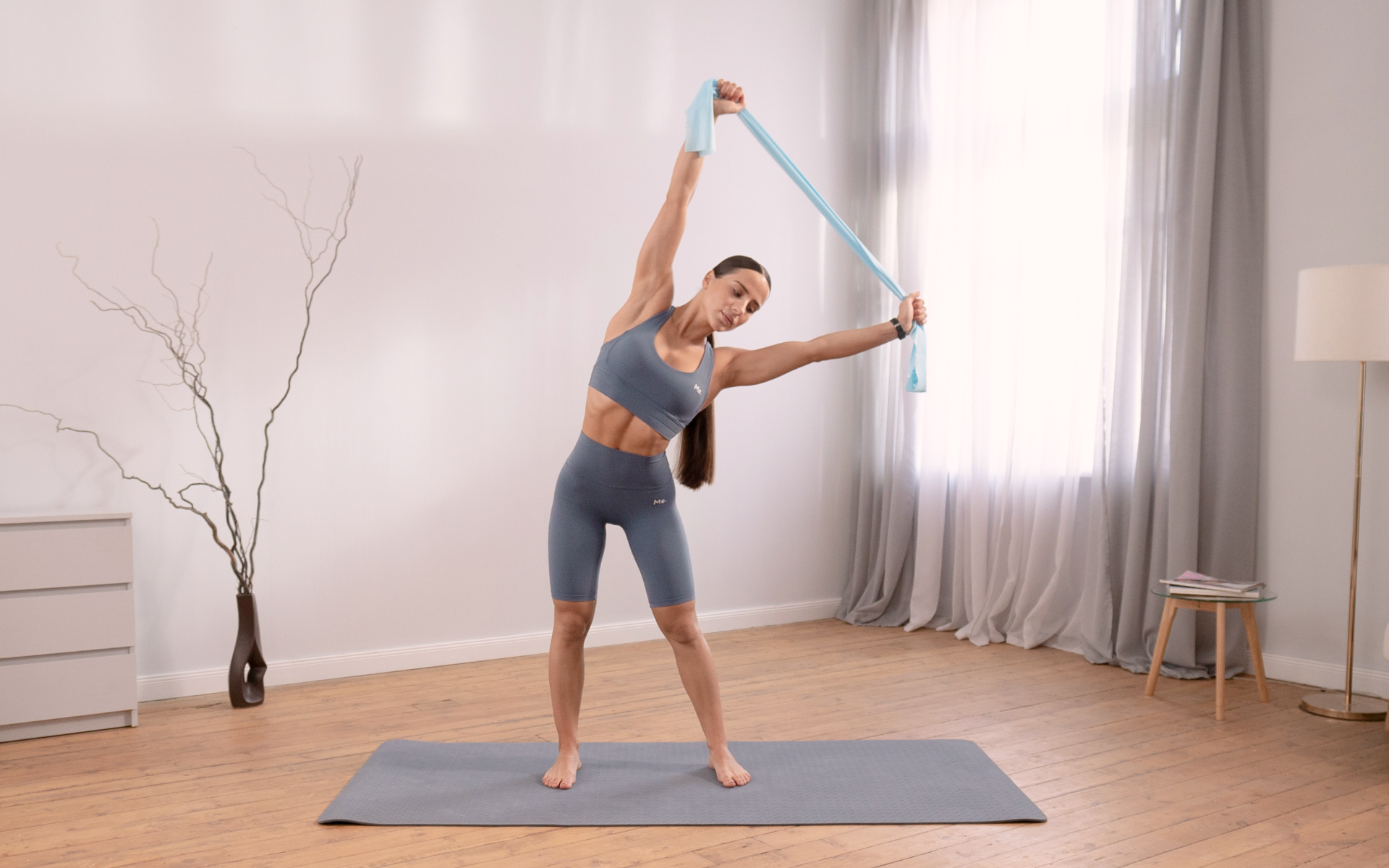
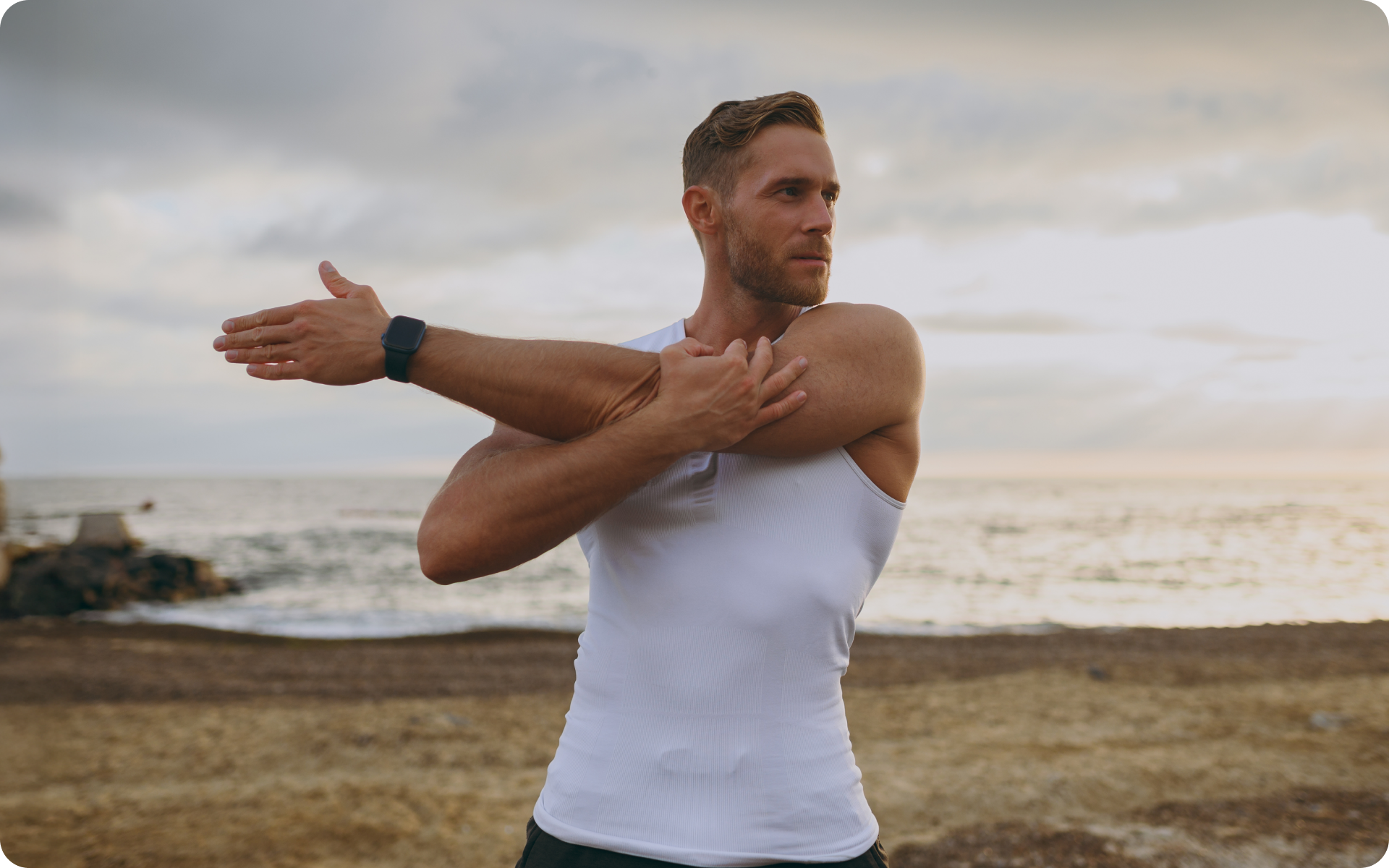
Workouts at home for men can combine pushing, leg, trunk, and aerobic movements. Push-ups, squats, and bridges need little space, while pulling movements usually need suitable equipment. Choose a variation you can control and progress one element at a time. For simple kit ideas, see our calisthenics equipment for home guide. This calisthenics pull workout shows options.
Key takeaways
Bodyweight training at home can build strength when you keep progressing the exercises.
- In a 4-week trial, progressive push-up training raised bench press strength in trained men (1).
- Their gains were similar to a group that did the bench press (1).
- In an 8-week trial, push-ups gave chest and triceps growth similar to light bench pressing (2).
- A meta-analysis found similar muscle growth with light and heavy loads when all sets reached momentary muscular failure (3).
- In a review of healthy adults, training frequency made little difference to muscle growth when weekly training volume was equal (4).
- Adults are advised to do muscle-strengthening activities on 2 or more days a week (5).
- Resistance training guidance recommends making exercises harder over time (6).
What are the advantages of bodyweight exercises?
Bodyweight exercises are low cost, flexible, and effective when you progress them.
They are cheap
You need no gym membership and little or no equipment.
You can do them anywhere
Train in your living room, a hotel room, or a park, at any time.
They build strength
In a 4-week trial, progressive push-up training raised upper-body strength as much as bench pressing (1).
They train movement and balance
Moves like lunges and pistol squats train control, balance, and range of motion. Our benefits of squats for men guide covers squats in more detail.
Can you build muscle with home workouts?
Yes, you can build muscle at home if your sets are hard and you progress them. A meta-analysis found similar muscle growth with light and heavy loads when all sets reached momentary muscular failure (3). To add load at home, see weighted calisthenics.
Push-ups gave chest and triceps growth similar to light bench pressing over 8 weeks (2). Harder versions, slower reps, and more sets keep the challenge rising. Our workouts for men over 40 guide covers training as you get older.
What equipment helps at home?
You can start with no equipment. A few low-cost items add more options.
- An exercise mat
- A doorway pull-up bar for pulling moves
- Resistance bands for rows and presses
- A stable exercise bench designed for the planned supported movements
Use equipment rated for the exercise and follow the manufacturer’s installation and load instructions.
How do you warm up for a home workout?
Warm up for 5 minutes before each session.
- Jog or march in place for 1 minute.
- Do 10 arm circles each way.
- Do 10 hip circles each way.
- Do 10 bodyweight squats.
- Do 5 slow push-ups.
Which pushing, hip, and whole-body movements can you do at home?
These three examples serve different purposes. The push-up emphasizes pushing, the bridge uses the hips, and a burpee links several movements.
Push-up
The push-up trains your chest, shoulders, and triceps.
- Start in a high plank with hands slightly wider than your shoulders.
- Lower your chest toward the floor with your body straight.
- Push back up.
- Do 3 sets of 8 to 15 reps.
Bridge
The bridge trains your glutes and the back of your thighs.
- Lie on your back with knees bent and feet flat.
- Lift your hips until your body forms a line from shoulders to knees.
- Squeeze your glutes for 2 seconds and lower.
- Do 3 sets of 12 to 15 reps.
Burpees
The burpee links a squat, a plank, and a stand into one move.
- Squat and place your hands on the floor.
- Jump or step your feet back into a plank.
- Jump or step back in and stand up.
- Do 3 sets of 8 to 10 reps.
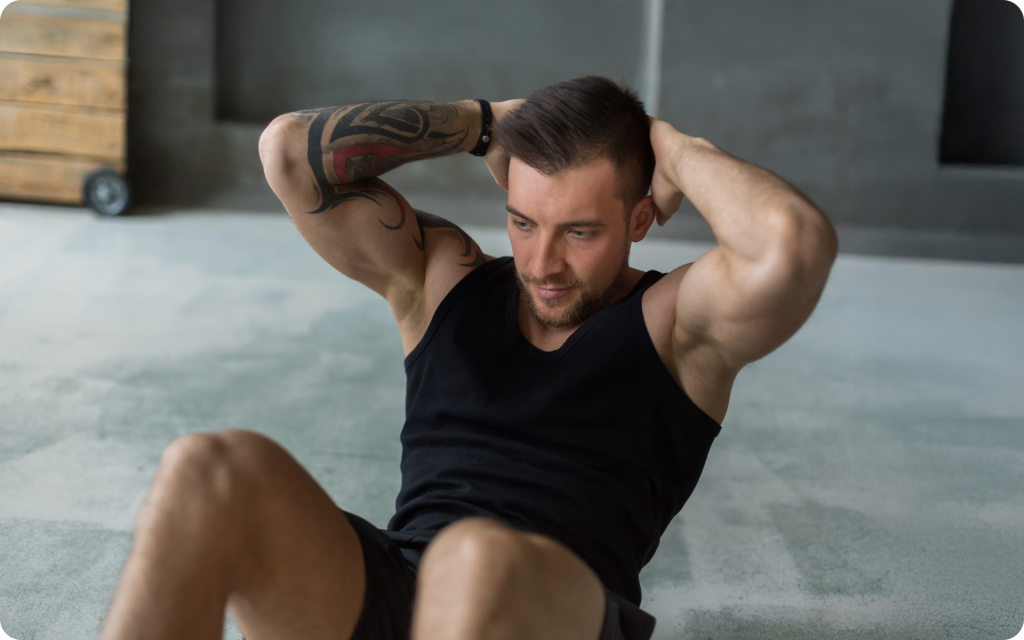
Which ab workouts can men do at home?
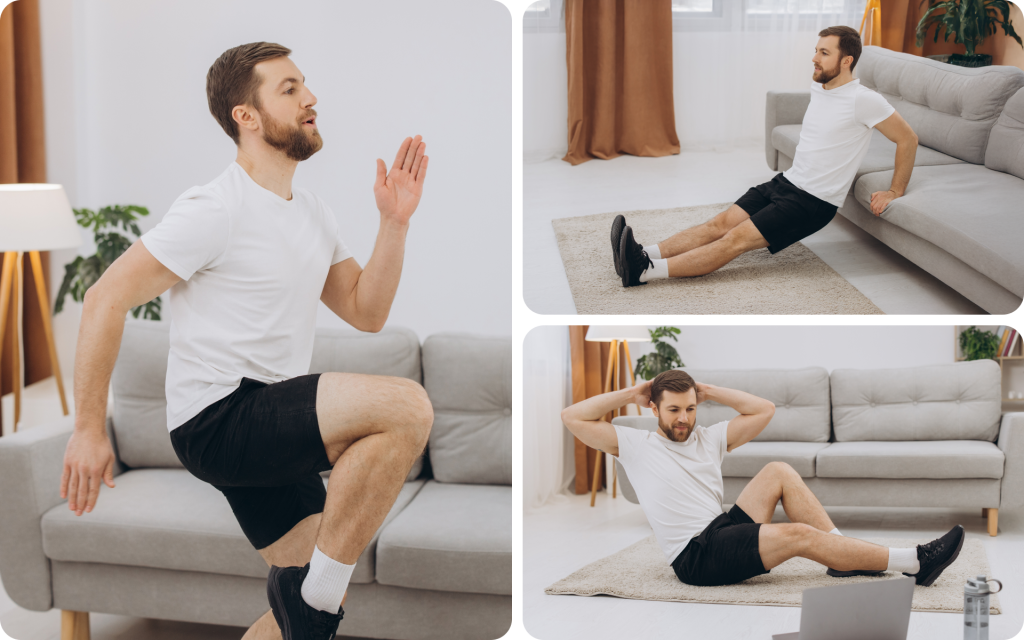
These 5 moves train your abs and core. Do 2 to 3 sets of each.
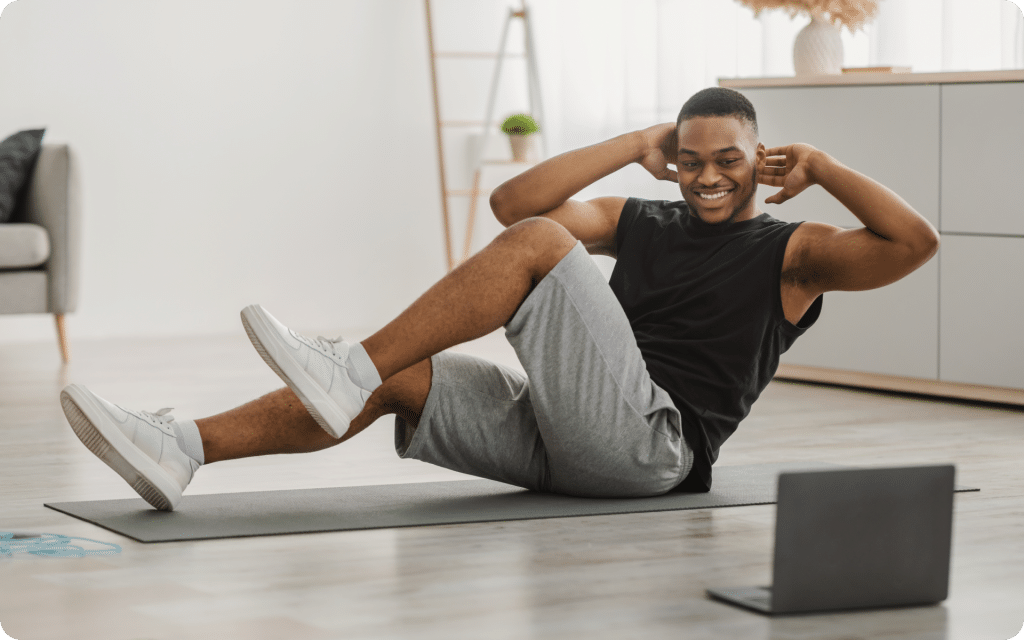
Bicycle crunches
Lie on your back with hands by your head. Bring one elbow toward the opposite knee, then switch. Do 10 to 15 per side.
Cross-body mountain climbers
Start in a high plank. Drive one knee toward the opposite elbow, then switch. Do 20 to 30 seconds.
Plank
Rest on your forearms and toes with your body straight. Hold for 30 to 60 seconds.
Sit-up
Lie on your back with knees bent. Curl up until your chest nears your thighs, then lower slowly. Do 10 to 15 reps.
Crunch
Lie on your back with knees bent. Lift your shoulders off the floor and lower slowly. Do 15 to 20 reps.
Read more: Calisthenics pull workout: 8 exercises and how to program them
Which home workouts build lower-body strength?
Squats and their variations train your thighs, glutes, and calves.
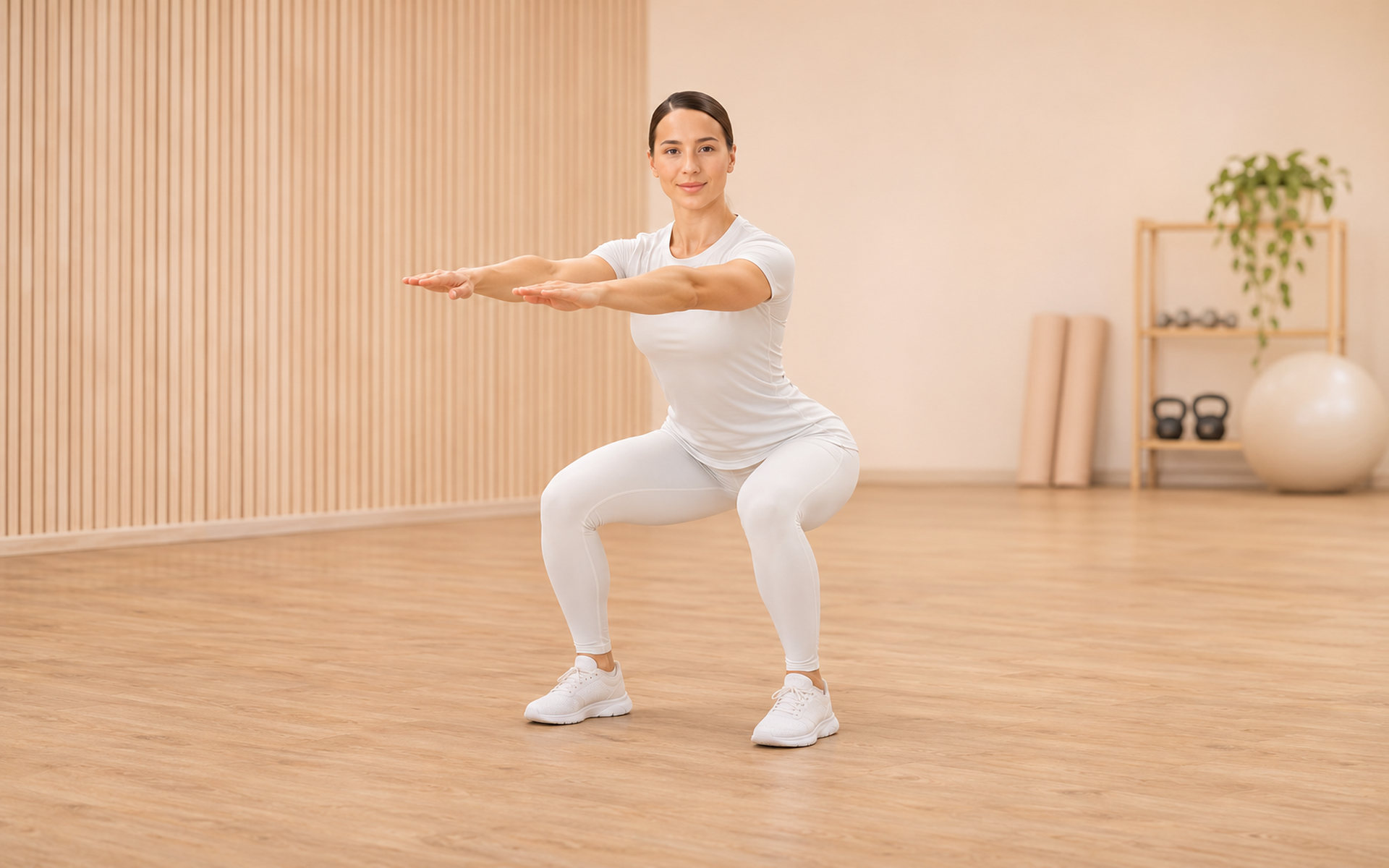
Squats
The squat is the base lower-body move for home training.
- Stand with feet shoulder-width apart.
- Push your hips back and bend your knees.
- Lower until your thighs are about parallel to the floor.
- Stand back up and do 3 sets of 15 to 20 reps.
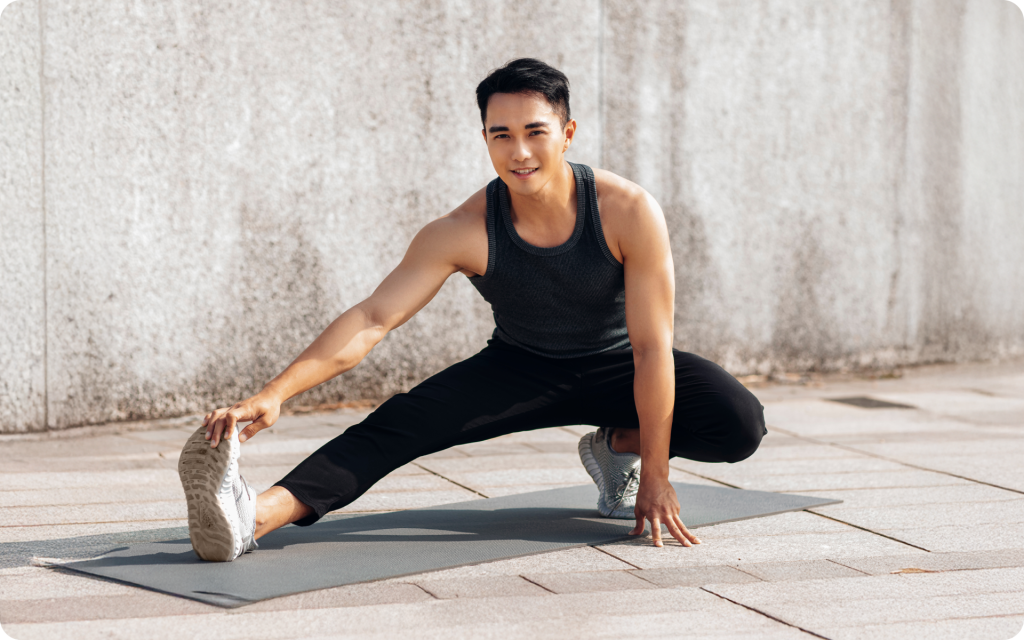
Split squats
The split squat loads one leg at a time.
- Stand in a long stance with one foot forward.
- Lower your back knee toward the floor.
- Push back up and do 3 sets of 10 per leg.
Which advanced moves can you try at home?
These advanced moves train several muscle groups at once.
Pistol squat
The pistol squat is a single-leg squat that needs strength and balance.
- Stand on one leg with the other leg straight in front.
- Lower as far as you can with control.
- Stand back up and do 3 to 5 reps per leg.
Use a box or bench behind you to make it easier.
Side plank
The side plank trains the muscles along the side of your trunk.
- Lie on your side with your elbow under your shoulder.
- Lift your hips into a straight line.
- Hold for 20 to 40 seconds per side.
How many sets and reps should you do?
Three sets per move is a common starting point. Use a version that feels hard by the last few reps.
| Goal | Reps per set | Rest |
|---|---|---|
| Strength | 5 to 10 with a hard version | 1 to 3 minutes |
| Muscle growth | 8 to 15, close to failure | 1 to 2 minutes |
| Endurance | 15 or more | 30 to 60 seconds |
A meta-analysis found similar muscle growth across loads when all sets reached momentary muscular failure (3).
Whether you’re just starting your fitness journey or looking to add more structure to your routine, BetterMe offers tools that can support different wellness goals. Explore the app and see how its workout, nutrition, and habit-building features can fit into your lifestyle.
How do you progress home workouts?
Progress by making moves harder, not only by adding reps (6).
| Move | Easier | Harder |
|---|---|---|
| Push-up | Incline push-up | Feet-elevated or archer push-up |
| Squat | Box squat | Split squat, then pistol squat |
| Bridge | Two-leg bridge | Single-leg bridge |
| Plank | Knee plank | Plank with shoulder taps |
| Burpee | Step-back burpee | Burpee with a push-up |
What does a 7-day home workout plan look like?
A 7-day plan can include 4 strength days, 2 active days, and 1 rest day. On an active day, a chair workout for men is one low-effort option.
Day one
Upper body: push-ups, burpees, and plank, 3 rounds.
Day two
Lower body: squats, split squats, and bridges, 3 rounds.
Day three
Brisk walk or bike ride, 30 minutes.
Day four
Core: bicycle crunches, mountain climbers, side plank, and crunches, 3 rounds.
Day five
Full body: pistol squat practice, push-ups, burpees, and bridges, 3 rounds.
Day six
Walk, run, or play a sport, 30 to 45 minutes.
Day seven
Rest or gentle stretching.
In a review of healthy adults, training frequency made little difference to muscle growth when weekly training volume was equal (4).
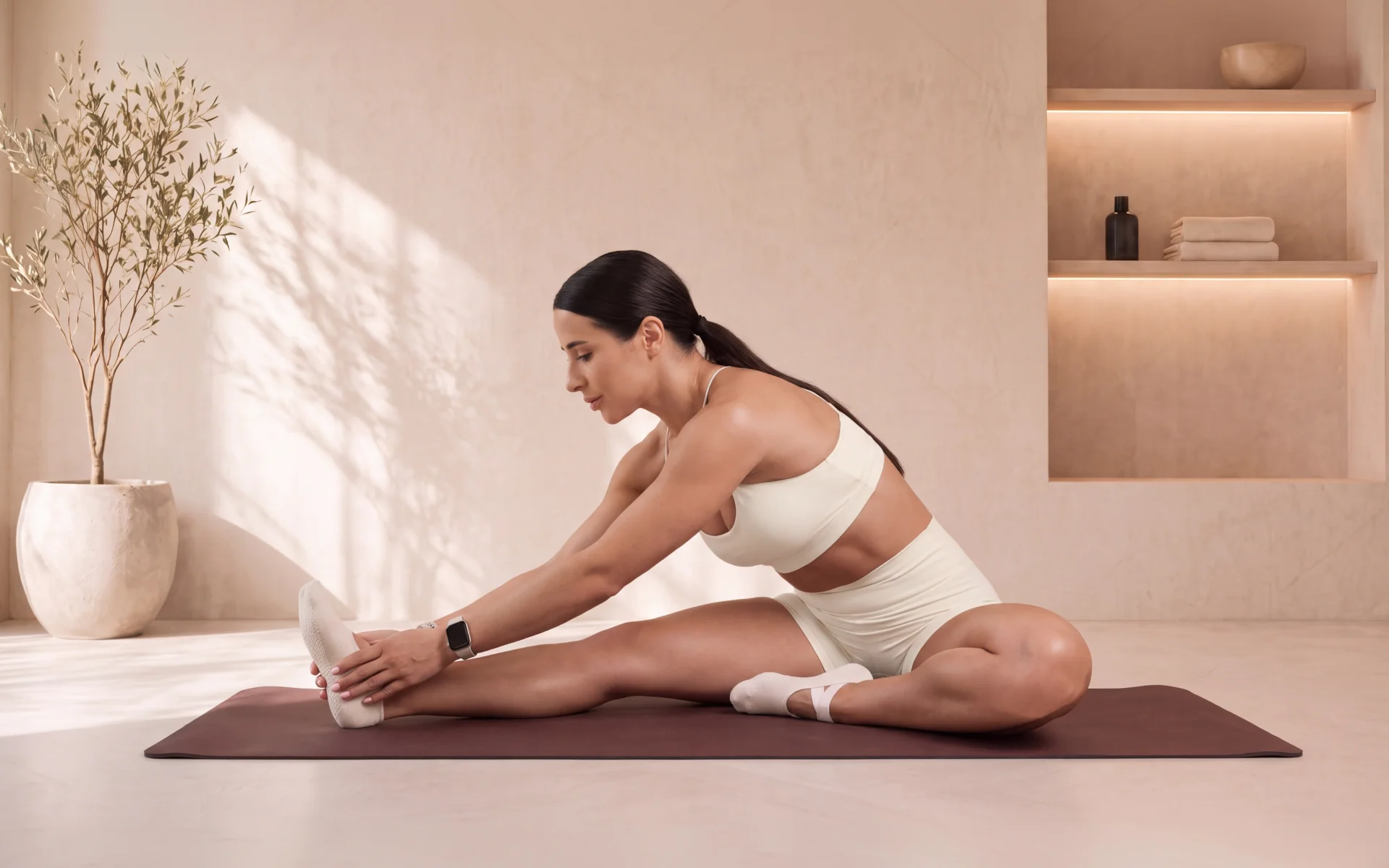
How do you cool down?
Cool down for 3 to 5 minutes.
- Walk slowly for 1 minute.
- Stretch your chest in a doorway for 20 seconds.
- Stretch each hip flexor for 20 seconds.
- Stretch each hamstring for 20 seconds.
How do you stay consistent at home?
Small habits make home training easier to keep.
- Set fixed workout days and times.
- Keep your mat and bands in sight.
- Write down your reps and versions.
- Train before distractions start, such as early in the day.
- Retest your push-ups and squats every 2 weeks.
What are the benefits and pitfalls of home workouts?
Home workouts save time and money, while gyms make it easier to add load.
Home workouts: pros and cons
The table sums up the main trade-offs of training at home.
| Pros | Cons |
|---|---|
| No travel time or membership | Harder to add heavy load |
| Train at any time | Distractions at home |
| Private and flexible | Less equipment variety |
Gym workouts: pros and cons
The table sums up the main trade-offs of training at a gym.
| Pros | Cons |
|---|---|
| Wide range of equipment | Membership costs |
| Easy to add small amounts of weight | Travel time and set opening hours |
| Coaches and classes available | Can feel crowded |
Read more: Weighted calisthenics: how to add load to bodyweight moves
Which home workout mistakes should you avoid?
Avoid easy reps, rushed form, and skipping rest.
- Doing many easy reps instead of moving to harder versions
- Letting your hips sag in push-ups and planks
- Training the same muscles hard every day
- Skipping the warm-up
Who should be careful with home workouts?
Some men should get advice before starting.
- Men with a heart or circulation concern
- Men with shoulder, knee, or back concerns
- Men returning to exercise after surgery or a recent strain
BetterMe can help you add more structure to your daily wellness routine with workouts, meal planning tools, and habit-building features. Explore the app and take a practical step toward a routine that feels more manageable for you.
Frequently Asked Questions
Can you get fit without a gym?
Yes, bodyweight training and aerobic activity at home can build strength and fitness. Adults are advised to do strength work on 2 or more days a week (5).
Can you build muscle with at-home workouts?
Yes, push-ups gave chest and triceps growth similar to light bench pressing over 8 weeks (2).
Is 1 hour of home workout enough?
Session length depends on the movements, effort, rests, and time available. Choose a manageable session and track what you can complete with control.
Will working out for 10 minutes a day make a difference?
Ten minutes a day adds up to 70 minutes a week. Pair short strength sessions with walking to reach weekly targets (5).
What equipment is worth buying?
A rated pull-up bar, compatible resistance bands, and a mat add options. Follow the equipment instructions for setup and load limits.
How long until you see results?
Progress varies. Track your exercise performance and how comfortably you move across sessions.
The bottom line
Workouts at home for men can build strength and muscle with push-ups, squats, bridges, planks, and burpees. Train 3 to 4 times a week, progress to harder versions, and add walking or other aerobic activity. Leave rest days between hard sessions for the same muscles.
DISCLAIMER:
This article is intended for general informational purposes only and does not serve to address individual circumstances. It is not a substitute for professional advice or help and should not be relied on for making any kind of decision-making. Any action taken as a direct or indirect result of the information in this article is entirely at your own risk and is your sole responsibility.
BetterMe, its content staff, and its medical advisors accept no responsibility for inaccuracies, errors, misstatements, inconsistencies, or omissions and specifically disclaim any liability, loss or risk, personal, professional or otherwise, which may be incurred as a consequence, directly or indirectly, of the use and/or application of any content.
You should always seek the advice of your physician or other qualified health provider with any questions you may have regarding a medical condition or your specific situation. Never disregard professional medical advice or delay seeking it because of BetterMe content. If you suspect or think you may have a medical emergency, call your doctor.
Some visuals may be AI-generated.
SOURCES:
- Effect of progressive calisthenic push-up training on muscle strength and thickness (2018, doi.org)
- Low-load bench press and push-up induce similar muscle hypertrophy and strength gain (2017, doi.org)
- Strength and hypertrophy adaptations between low- vs. high-load resistance training: a systematic review and meta-analysis (2017, doi.org)
- American College of Sports Medicine Position Stand. Resistance Training Prescription for Muscle Function, Hypertrophy, and Physical Performance in Healthy Adults: An Overview of Reviews (2026, pmc.ncbi.nlm.nih.gov)
- Physical activity fact sheet (2026, who.int)
- American College of Sports Medicine position stand: progression models in resistance training for healthy adults (2009, doi.org)
 Reviewed by
 Reviewed by
 Reviewed by