A toned physique describes visible muscle definition, not a separate type of muscle. Appearance depends partly on muscle size and body fat, and varies between people. Resistance training can develop muscle (1). Use this guide and our article on muscle groups to work out together to plan manageable sessions.
Following exercise and diet plans is the key in your fitness journey and greatly impacts results. In 4 weeks users can typically expect to lose not more than 1-2 lbs per week. Individual results may vary.
Key takeaways
- Resistance training can increase muscle size and strength; it does not guarantee a particular appearance (1).
- In science and medicine, “muscle tone” means the small amount of tension muscles hold at rest (2).
- Current resistance-training guidance emphasizes working all major muscle groups at least twice weekly (1).
- A review found small additional gains in lean mass from higher protein intake alongside resistance training in healthy adults (3).
- Weekly training volume should match your experience and recovery; more sets are not automatically better (4).
- General activity guidance points to 150-300 minutes of moderate movement weekly, plus muscle-strengthening work on at least 2 days (5).
- The sample routines can be adjusted by changing repetitions, exercise difficulty, or the number of sets.
What does a toned physique mean?
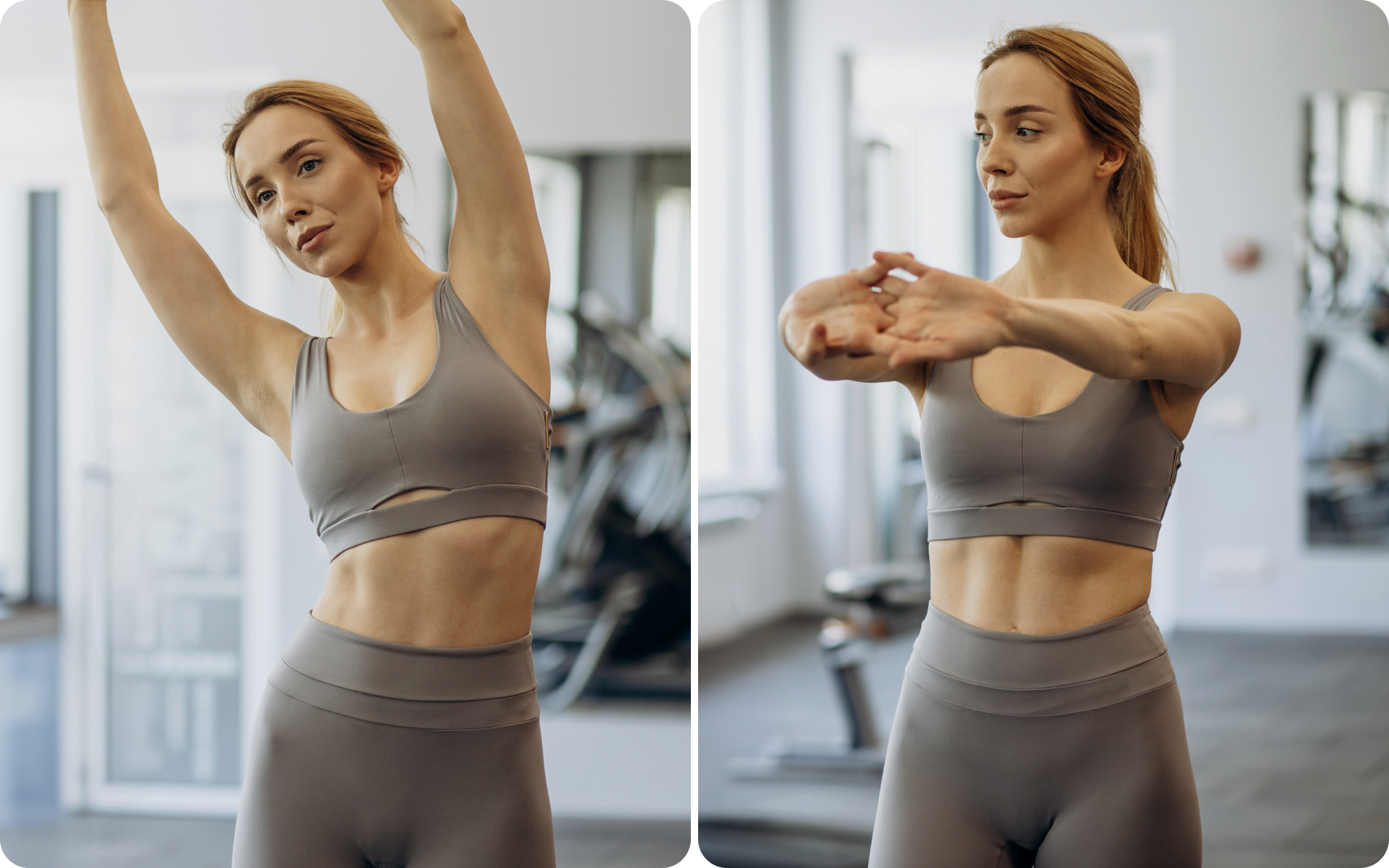
A toned physique is an informal description of visible muscle definition. Muscle size and the fat covering it contribute to that appearance. It is not a fitness measurement or a standard that everyone needs to pursue.
Body composition describes the different tissues and substances that make up your body, including fat, muscle, bone, and water. Muscle definition describes how visible the contours of your muscles are.
So the “toned” look usually comes down to:
- Having enough muscle to create shape.
- Carrying less fat over that muscle.
In physiology, resting muscle tone means the tension present when you are relaxed and supported (2). This differs from the everyday use of “toned” to describe appearance.
There’s also no exact cutoff where you officially become “toned”. How defined you look can shift with your fat level, muscle size, genetics, hydration, and even lighting.
A few things worth knowing:
- No single workout “lengthens” or “tones” a muscle in a special way.
- Muscles mainly adapt by getting stronger, larger, or more efficient.
- The look you’re after reflects your overall body composition, not one magic move.
Our guide to the athletic body type discusses another common way people describe body shape.
How do you get a toned physique?
Build a routine around resistance training, adequate food, and regular activity. Resistance training can increase muscle size (1); changes in appearance vary between people.
- Resistance training. Challenge your muscles with weights, bands, or bodyweight exercises. Current guidance emphasizes training all major muscle groups at least twice weekly (1).
- Protein and nutrition. Include protein-containing foods in your meals. A review of healthy adults found small additional lean-mass gains when higher protein intake accompanied resistance training (3). A registered dietitian can help you choose an intake that fits your needs.
Energy intake matters for weight change, but the same calorie target will not suit everyone. A review of weight-management diets found that maintaining an energy deficit was central to weight loss and that the approach should account for individual needs and preferences (6).
The other two macronutrients matter too:
- Carbohydrates provide fuel for training. Oats, rice, fruit, and bread are examples of carbohydrate-containing foods. More carbohydrate does not consistently improve performance in every resistance-training session (7).
- Dietary fats supply essential fatty acids and help with absorption of fat-soluble vitamins (8). Nuts, seeds, avocado, and olive oil are examples of foods containing unsaturated fats.
No single ratio works for everyone, so the mix of carbohydrates, protein, and fat can be adjusted to your goals, preferences, and how your body responds.
- Daily movement and cardio. Aerobic exercise can contribute to weight management. A review of trials in adults with overweight or obesity found reductions in body weight, waist circumference, and body fat with aerobic training (9).
General adult activity guidance includes 150-300 minutes of moderate-intensity aerobic activity weekly, or an equivalent amount of vigorous activity, plus muscle-strengthening work on at least 2 days (5). Build toward an amount that fits your current capacity.
Strength work and aerobic activity serve different training goals. Plan time for both, and adjust the workload when recovery becomes difficult.
Workouts, weight management tools, and recipe ideas come together in the BetterMe: Health Coaching app, giving you practical support for building a more consistent wellness routine.
Which workouts help build a toned body?
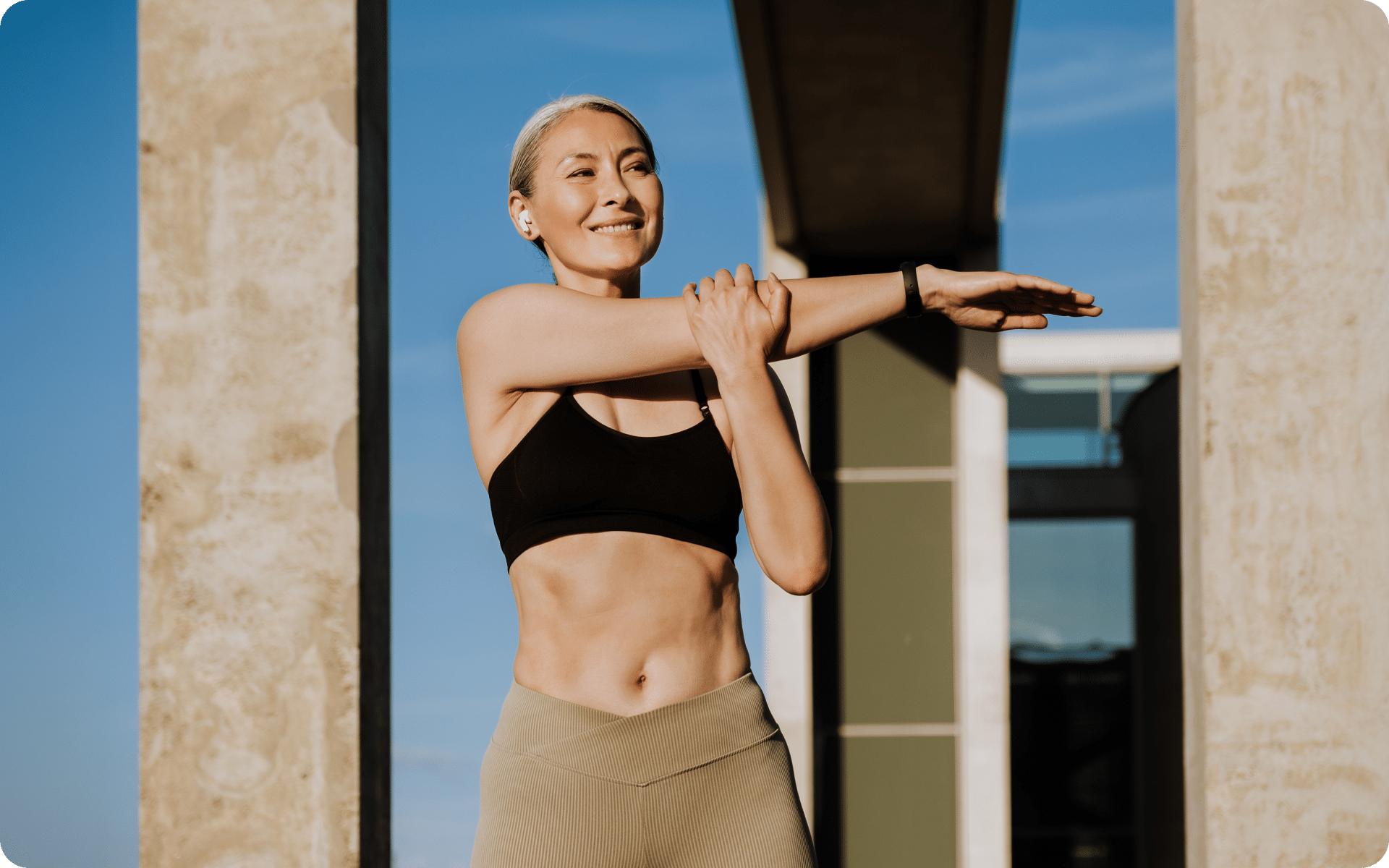
Resistance training develops strength and can increase muscle size (1). Add aerobic activities you enjoy to make the week more varied. No exercise type guarantees a particular body shape.
The table compares practical features of several workout options.
| Workout type | Who it may suit | What it helps with | Example |
|---|---|---|---|
| Free weights (dumbbells, barbells) | People who want progress they can track and load easily | Adding resistance to strength exercises | Goblet squat, dumbbell row |
| Machines and cables | Beginners or anyone who wants guided movement paths | Targeted muscle work with steady control | Lat pulldown, leg press |
| Bodyweight exercises | Home trainers or those with little equipment | Practicing strength exercises with bodyweight resistance | Push-up, lunge, plank |
| Cardio (steady or intervals) | People who enjoy sustained movement | Extra calorie burn and work capacity | Brisk walk, cycling, rowing |
Read more: Strength-training workout plan for women: load progression
A well-rounded plan often includes a few core movement patterns. Below is a sample full-body strength session.
| Exercise | Sets | Reps | Rest |
|---|---|---|---|
| Goblet squat | 3 | 8-12 | 60-90 secs |
| Push-up | 3 | 8-12 | 60 secs |
| Dumbbell row | 3 | 10-12 | 60 secs |
| Romanian deadlift | 3 | 8-12 | 60-90 secs |
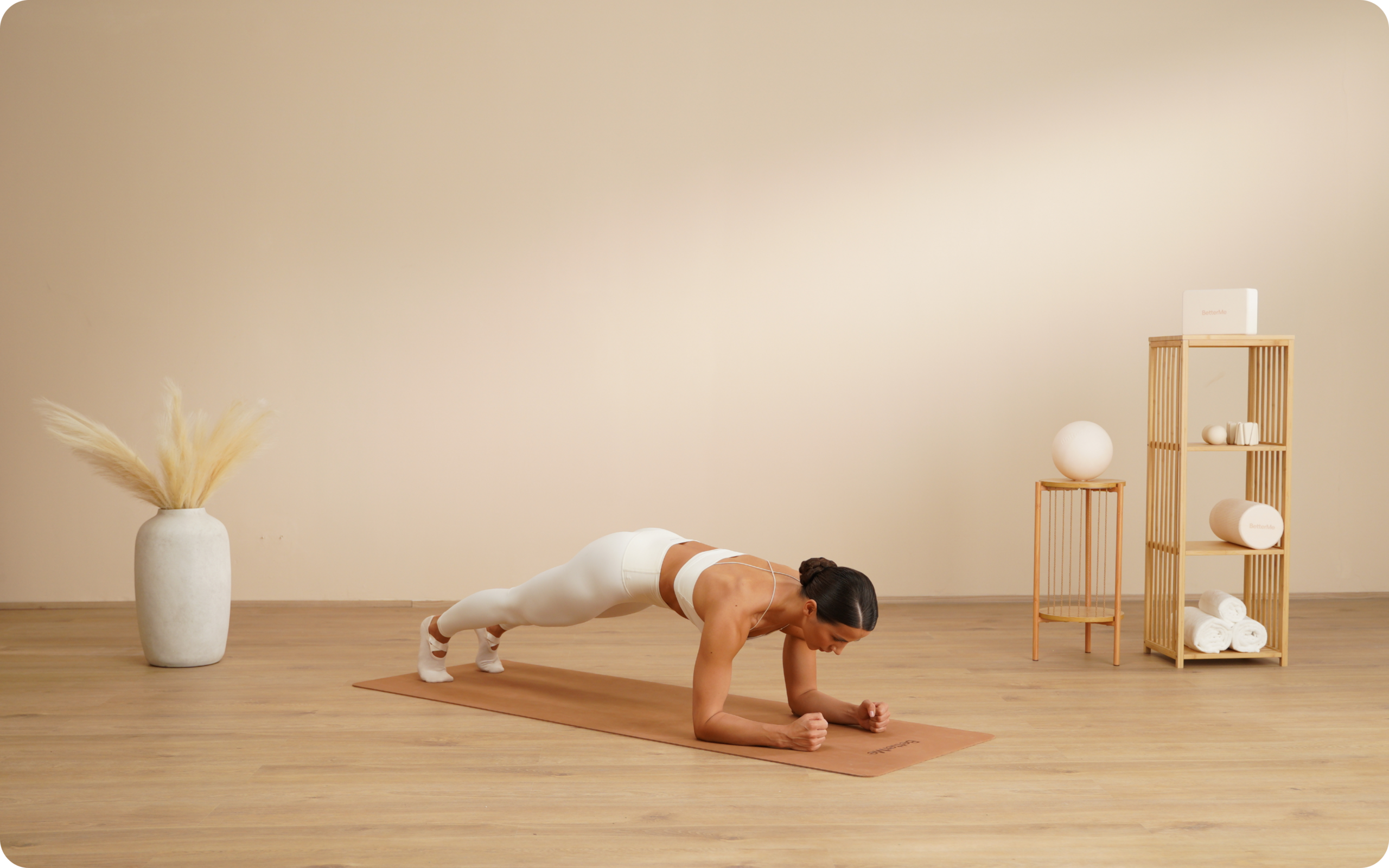
| Plank | 3 | 20-40-sec hold | 45 secs |
Exercise instructions
Goblet squat
- Hold one dumbbell close to your chest with both hands.
- Stand with your feet shoulder-width apart.
- Lower your hips down and back until your thighs are almost parallel.
- Push through your feet to stand tall.
Push-up
- Start in a high plank with your hands under your shoulders.
- Keep your body in a straight line.
- Bend your elbows to lower your chest toward the floor.
- Press back up to the top.
Dumbbell row
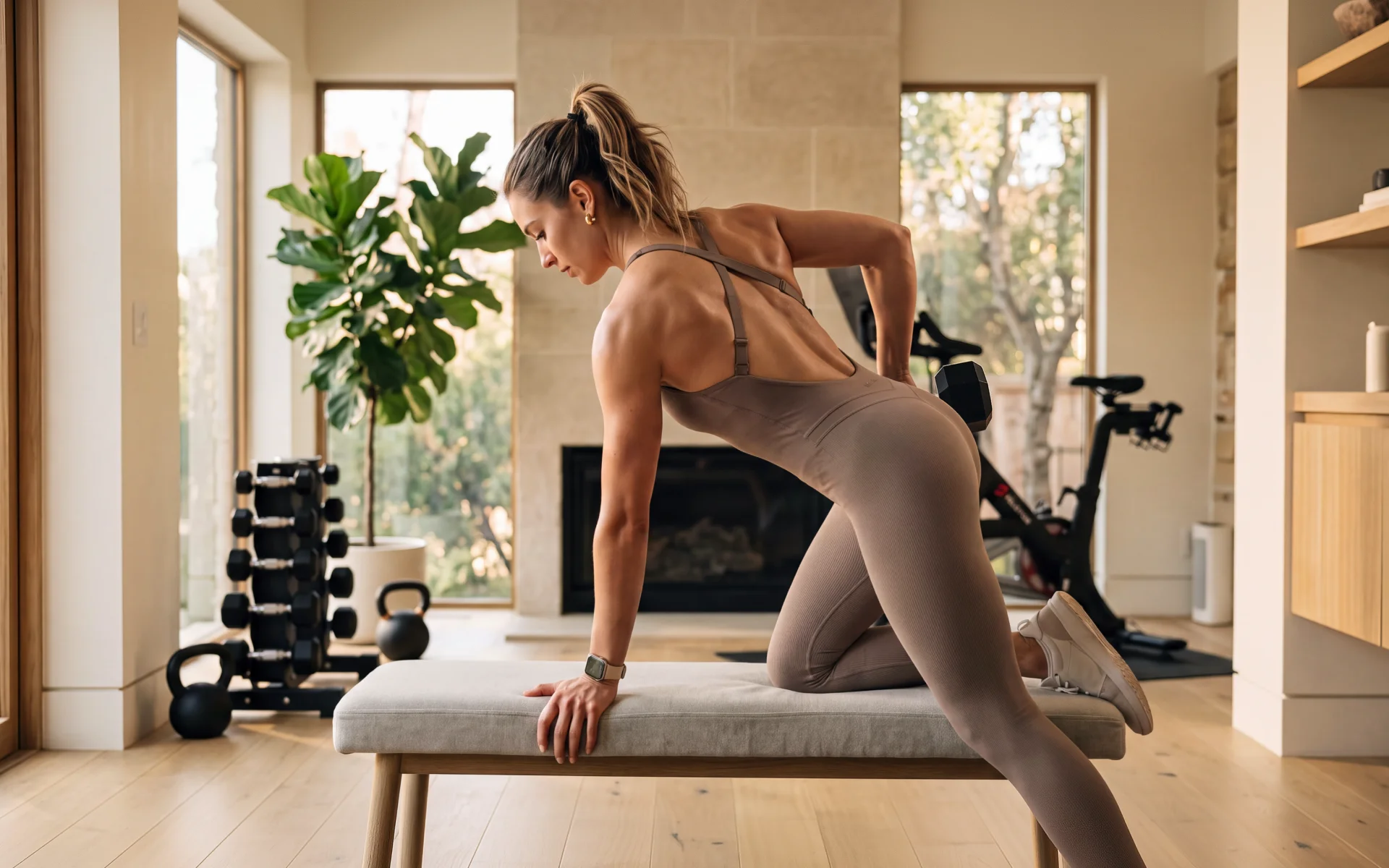
- Hold a dumbbell in one hand, hinge forward, and brace on a bench.
- Let the weight hang toward the floor.
- Pull the dumbbell toward your hip.
- Lower it slowly and repeat, then switch sides.
Romanian deadlift
- Hold a dumbbell in each hand in front of your thighs.
- Keep a soft bend in your knees.
- Push your hips back and lower the weights along your legs.
- Squeeze your glutes to return to standing.
Plank
- Rest on your forearms and toes.
- Keep your body in a straight line from your head to your heels.
- Squeeze your core and hold.
- Breathe steadily for the set time.
For the sample strength session, choose loads and movement versions you can control. Reduce the sets or repetitions if the listed amounts are too demanding.
How often should you work out for a toned physique?
General adult guidance includes strength work on at least 2 days weekly and 150-300 minutes of moderate aerobic activity (5). The sample schedules below show ways to organize sessions; the appropriate workload depends on your experience and recovery.
These schedules are examples, not ranked prescriptions.
| Schedule | Weekly frequency | Who it may suit | Tradeoffs |
|---|---|---|---|
| Minimalist | 2 strength days | Very busy people or beginners | Fewer sessions to schedule; each needs time for the major muscle groups |
| Balanced | 3 strength + 2 cardio days | People who prefer separate strength and cardio sessions | Good mix, needs some planning |
| Higher volume | 4-5 mixed days | Experienced trainees with more time | Allows more weekly work to be spread across sessions, more recovery demand |
In a trial of trained participants, two and four weekly sessions produced similar strength and muscle-size changes when weekly training volume was matched (10). Frequency is one way to distribute the work.
An umbrella review found that weekly set volume influences muscle growth, with gains also possible at lower volumes (4). Start with a manageable workload and increase it only when you can recover from it.
The sample plans place a rest or lighter-activity day between full-body strength sessions. Recovery needs vary with the workload and the individual.
Keep it realistic. A plan you repeat for months beats a packed schedule you drop in two weeks.
Read more: Big upper body, small legs: how to build balance
Can you build a toned physique without weights?
Yes. Bodyweight exercises can develop strength and muscle without added weights (1). Squats, push-ups, and lunges offer starting points, and their difficulty can be adjusted.
Progression means increasing the training challenge as your current routine becomes easier. You can change one variable at a time and keep track of how you respond.
You can progress bodyweight training by adjusting:
- Reps (for example, 10 reps this week, 12 next).
- Sets (add a fourth set once three feels manageable).
- Tempo (lower for a 3-second count).
- Leverage (feet elevated push-ups instead of flat).
- Range of motion, provided you can maintain control.
Here is a sample bodyweight routine. An incline push-up uses a stable raised surface; choose knee push-ups if you have no suitable surface.
| Exercise | Sets | Reps | Rest |
|---|---|---|---|
| Bodyweight squat | 3 | 12-15 | 45-60 secs |
| Incline or knee push-up | 3 | 8-12 | 60 secs |
| Reverse lunge | 3 | 10 per leg | 60 secs |
| Glute bridge | 3 | 12-15 | 45 secs |
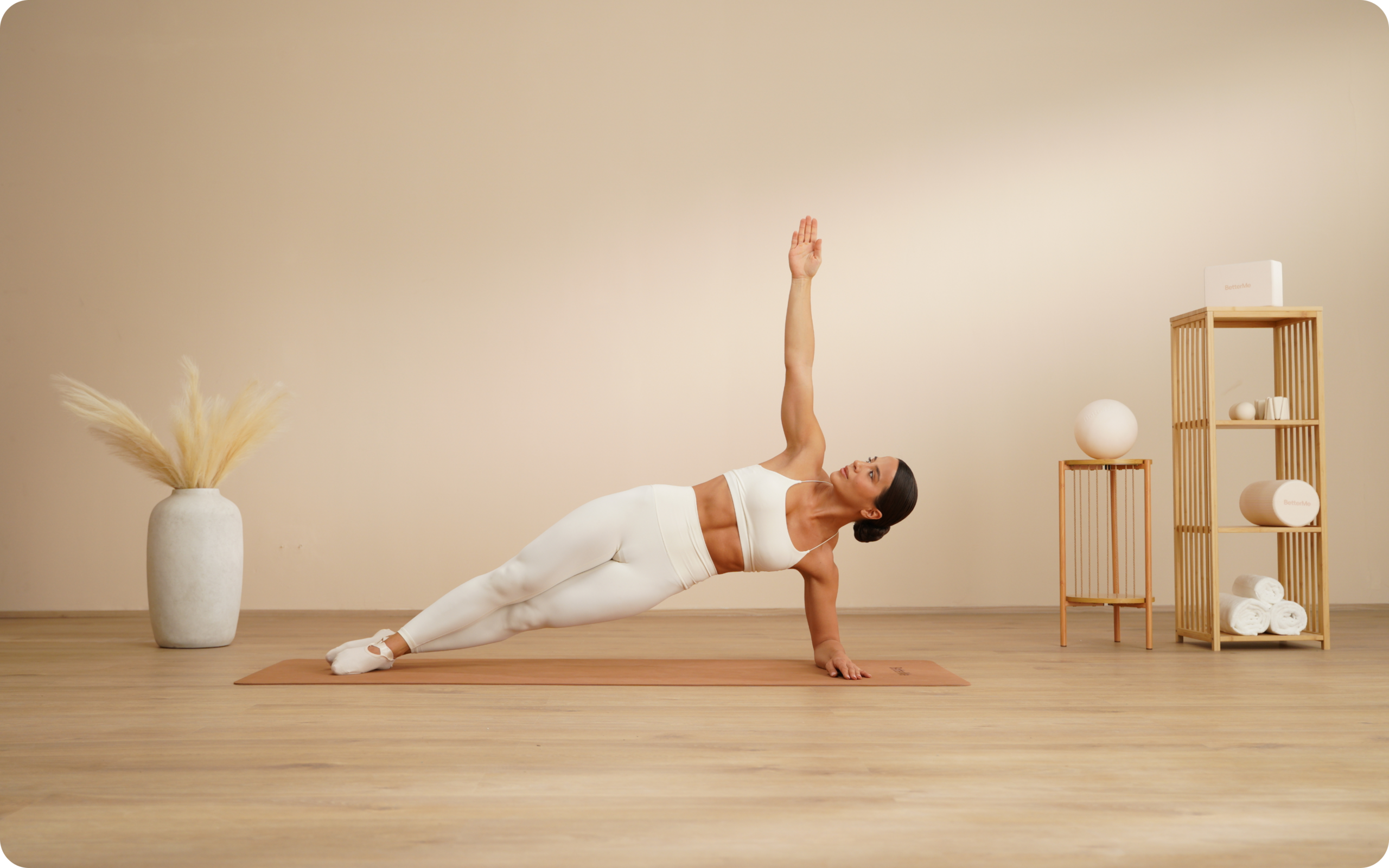
| Side plank | 2 | 20-30 secs per side | 45 secs |
Exercise instructions
Bodyweight squat
- Stand with your feet shoulder-width apart.
- Push your hips back and bend your knees.
- Lower until your thighs are near parallel.
- Stand back up and squeeze your glutes.
Incline or knee push-up
- Place your hands on a stable raised surface, or use the floor with your knees down.
- Keep your body in a straight line.
- Lower your chest toward the surface.
- Press back to the start.
Reverse lunge
- Stand tall with your feet together.
- Step one foot back and lower your back knee.
- Keep your front knee over your ankle.
- Push through your front foot to return, then switch legs.
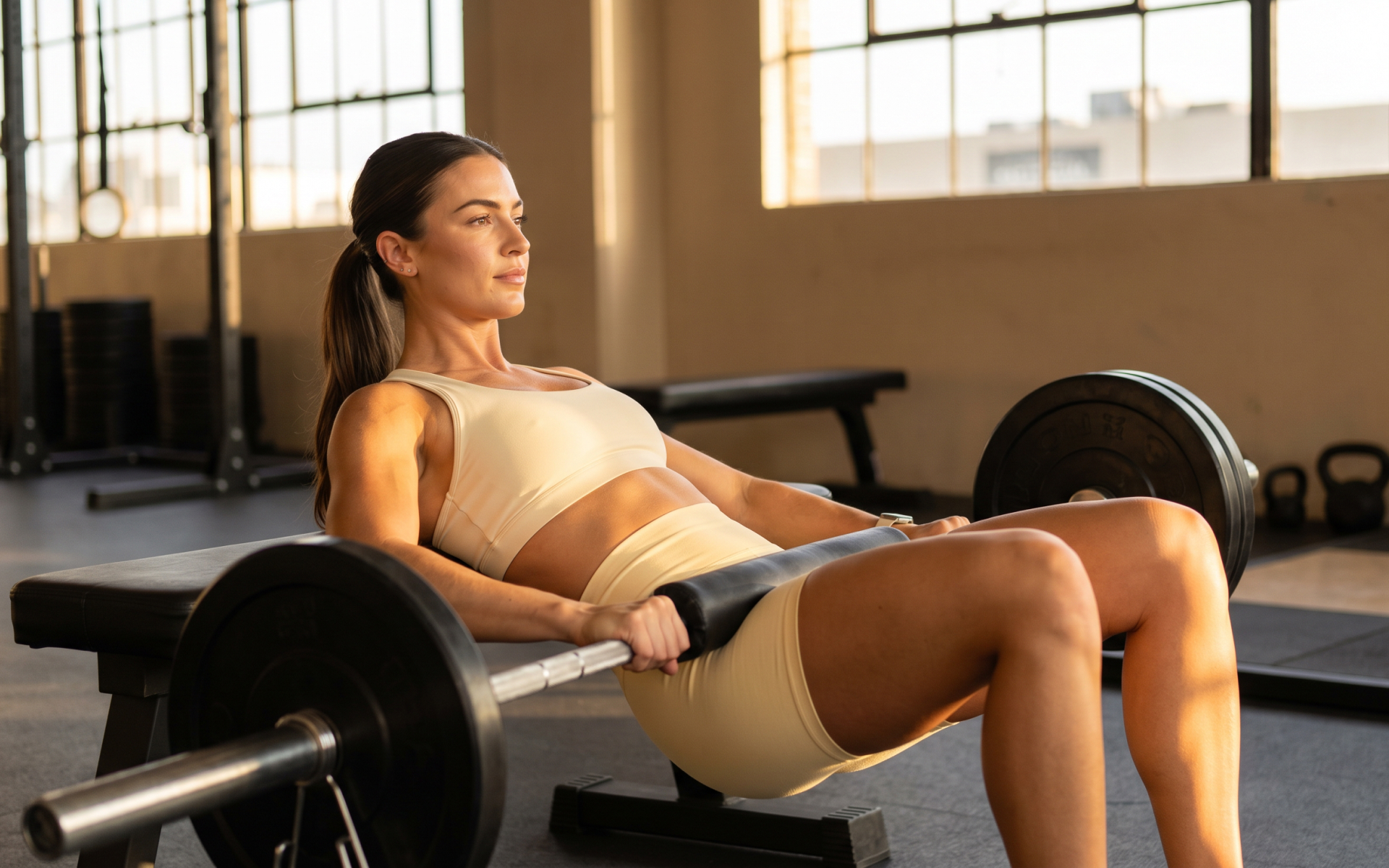
Glute bridge
- Lie on your back with your knees bent and your feet flat.
- Press through your heels.
- Lift your hips until your body forms a straight line.
- Lower slowly and repeat.
Side plank
- Lie on your side, resting on one forearm.
- Stack your feet and lift your hips.
- Keep your body in a straight line.
- Hold, then switch sides.
Choose a version you can control and record the repetitions or hold time so you can compare sessions.
What should a balanced workout routine look like?
A balanced routine includes strength exercises for the major muscle groups, aerobic activity, and recovery time. Adult activity guidance includes both aerobic and muscle-strengthening work (5).
A complete week often covers:
- All the major muscle groups (legs, back, chest, shoulders, arms, and core).
- Aerobic activities such as walking, cycling, or swimming can add movement to the week (11). Choose a pace and duration appropriate to your current ability.
- Mobility and rest for recovery. An easy walk, for example, can be part of an active rest day.
This sample week has three strength sessions and two scheduled cardio sessions. The two 30-minute cardio sessions alone do not reach the general 150-minute weekly guideline; other moderate activity would also count (5).
| Day | Focus |
|---|---|
| Monday | Full-body strength |
| Tuesday | Cardio (moderate intensity, 30 mins) + mobility |
| Wednesday | Full-body strength |
| Thursday | Easy walk for active recovery |
| Friday | Full-body strength |
| Saturday | Cardio (moderate intensity, 30 mins) |
| Sunday | Rest |
Each strength session can follow a simple shape:
- Warm-up for 5-10 minutes.
- Two to four compound lifts (multi-joint moves such as squats and presses).
- Two to four accessory moves for smaller muscles.
- One to two core exercises.
- A 5-minute cool-down.
Muscle growth can occur across a range of loads and repetitions (4). The following are sample rep ranges:
- 8-12 repetitions with a manageable load.
- 10-20 repetitions with a lighter load, adjusted to your ability.
Choose loads that let you complete controlled repetitions. Stop the set when you can no longer maintain the intended movement.
Our guide to heavy weight, low reps explains another approach to organizing strength work.
How long does it take to build a toned physique?
There is no reliable deadline for a particular muscle definition. Your starting point, training, nutrition, and individual response all affect the outcome.
Track changes you can measure without setting an appearance deadline:
- Repetitions completed with the same exercise version.
- The load you can move with control.
- How consistently you complete planned sessions.
- Whether you recover before the next demanding session.
Review your records over time and adjust one part of the routine when needed. A qualified trainer can help you choose a suitable progression.
Resistance training can improve strength and muscle size (1), but those changes do not predict exactly when or whether a particular look will appear.
Use performance and consistency as progress markers alongside any appearance goals.
How can you stay consistent with your fitness routine?
Keep the routine manageable and make it easy to start. Choose session times you can usually protect and a shorter alternative for busy days.
Try these practical steps:
- Pick a plan you can repeat. A 3-day routine you can finish beats a 6-day plan that you quit.
- Anchor workouts to fixed cues. For example, train right after work or walk after lunch.
- Track behaviors. Log workouts done, steps, protein, and sleep.
- Progress one thing at a time. Add 1 rep, a little load, or one set.
- Remove friction. Lay out clothes the night before or keep a short home backup workout.
A few mindset shifts also help:
- If you miss a session, resume with the next manageable workout.
- Choose activities you actually enjoy, as you’ll repeat them more.
- Aim for “good enough and repeatable” over “ideal but exhausting”.
When motivation dips, reduce the session to a manageable amount. Record what you completed and return to the routine when your schedule allows.
BetterMe can help you add more structure to your daily wellness routine with workouts, meal planning tools, and habit-building features. Explore the app and take a practical step toward a routine that feels more manageable for you.

“Toned” is a subjective appearance description, so there is no test or cutoff. Visible muscle contours can change with body fat, hydration, lighting, and posing; they do not by themselves measure strength or fitness. Record the exercise version, load, repetitions, and sets. Compare similar sessions and note whether the same work feels more controlled. This gives you information that photos or scale weight alone cannot provide. These are different goals. Scale weight measures total mass, while muscle definition describes appearance. Choose goals that also account for strength, energy, and a routine you can maintain. Diet can affect body weight, but resistance exercise provides a stimulus for muscle growth (4). If exercise is limited by your health or circumstances, seek advice about suitable activity instead of pursuing a particular appearance through food restriction alone. Start with a change you can maintain, such as a short walk during a break. Physical activity contributes to energy expenditure, while food intake also affects weight change (11). There is no single lowest-effort approach that works for everyone.FAQs
How can you tell if your body is toned?
How should I track strength progress?
Is toning better than losing weight?
Can I get toned without exercise?
What is the easiest way to support fat loss?
The bottom line
A toned physique is an appearance goal, and it has no fixed timeline. Build your routine around manageable strength sessions, regular activity, food that meets your needs, and recovery. Choose one of the sample plans, adjust the workload, and track what you can do over time.
DISCLAIMER:
This article is intended for general informational purposes only and does not serve to address individual circumstances. It is not a substitute for professional advice or help and should not be relied on for making any kind of decision-making. Any action taken as a direct or indirect result of the information in this article is entirely at your own risk and is your sole responsibility.
BetterMe, its content staff, and its medical advisors accept no responsibility for inaccuracies, errors, misstatements, inconsistencies, or omissions and specifically disclaim any liability, loss or risk, personal, professional or otherwise, which may be incurred as a consequence, directly or indirectly, of the use and/or application of any content.
You should always seek the advice of your physician or other qualified health provider with any questions you may have regarding a medical condition or your specific situation. Never disregard professional medical advice or delay seeking it because of BetterMe content. If you suspect or think you may have a medical emergency, call your doctor.
SOURCES:
- ACSM publishes updated resistance training guidelines (2026, acsm.org)
- Central mechanisms of muscle tone regulation: implications for pain and performance (2024, frontiersin.org)
- Systematic review and meta-analysis of protein intake to support muscle mass and function in healthy adults (2022, onlinelibrary.wiley.com)
- Resistance Training Variables for Optimization of Muscle Hypertrophy: An Umbrella Review (2022, frontiersin.org)
- WHO guidelines on physical activity and sedentary behaviour (2020, who.int)
- Optimal Diet Strategies for Weight Loss and Weight Loss Maintenance (2021, pubmed.ncbi.nlm.nih.gov)
- The Effect of Carbohydrate Intake on Strength and Resistance Training Performance: A Systematic Review (2022, mdpi.com)
- Dietary Fats, Human Nutrition and the Environment: Balance and Sustainability (2022, frontiersin.org)
- Aerobic Exercise and Weight Loss in Adults: A Systematic Review and Dose-Response Meta-Analysis (2024, jamanetwork.com)
- Equal-Volume Strength Training With Different Training Frequencies Induces Similar Muscle Hypertrophy and Strength Improvement in Trained Participants (2022, frontiersin.org)
- Physical Activity and Your Weight and Health | Healthy Weight and Growth (2026, cdc.gov)
 Reviewed by