

To incorporate cardio into weight training, pick your main goal first. Lift first if muscle is the priority, do cardio first if endurance is, and keep harder cardio for separate days when you can. This approach suits beginners and regular gym-goers who train 3 to 5 days a week. Knowing the benefits of a mix of cardio and strength work, session order, sample weekly schedules, and common mistakes makes planning easier. For related reading, see How to balance cardio and strength training for optimal results.
Key takeaways
You can combine cardio and strength training in one plan when the order and spacing match your main goal and leave time to rest.
- You can combine cardio and lifting in the same routine, so you do not need to choose between the two.
- Cardio helps improve heart health and stamina, while strength training can help build muscle and support bone strength (1).
- If muscle growth is your goal and you train both on the same day, start with weights and finish with cardio (2, 3).
- If better aerobic capacity is your goal, start with cardio and end with strength work.
- Low-to-moderate intensity cardio, like incline walking, light cycling, swimming, or the elliptical, pairs well with lifting.
- Choose the order according to the session’s priority rather than trying to deplete glycogen for extra fat loss.
- A weekly schedule can include 3 to 5 days of exercise, depending on your current level and lifestyle.

Can I combine cardio and weight training in the same workout?
Yes, you can combine cardio and weight training in the same workout, or spread them across the week. Both can be part of one fitness routine, so you do not need to choose between them. As a beginner, pace yourself: start with an amount that feels manageable and add more as you become comfortable.
A same-session workout might look like this: a 5-minute warm-up, 30 to 40 minutes of lifting for the major muscle groups (for example, squats, rows, and presses), then 15 to 20 minutes of easy cycling or incline walking on a treadmill, and a short cool-down. If you’re unsure about technique, a qualified trainer can show you how to perform exercises correctly, which may help you avoid strain.
What are the benefits of combining cardio and strength training?
The main advantages of combining cardio and strength training are broader health benefits, more variety, and a routine that may be easier to stick with. Each type of training brings something different.
Reduced likelihood of exercise boredom
Mixing in cardio adds a variety of exercises, which may help you stay interested. Exercise boredom is dissatisfaction or disinterest during physical activity. It may happen when a routine lacks variety, challenge, or personal meaning.
According to researchers, boredom with a workout often leads to a lower perceived value of physical activity. This can lead to low participation and, eventually, abandoning the routine altogether (4, 5, 6).
Adding cardio to a lifting program increases variety. This, in turn, may reduce disinterest and help you stick with your plan for longer.
Improved overall health and gains
The benefits of cardio and strength training overlap but are not the same. Research states that cardiovascular exercise helps improve heart health and stamina, while strength training can help build muscle and strengthen bones (1).
A 2024 trial suggests that choosing only one type may mean missing some benefits. In that trial, which included adults with overweight or obesity, aerobic and combined training lowered a cardiovascular risk score compared with no exercise, while resistance training alone did not (7).
Better muscle development and heart health together
Combining both may support muscle and heart fitness at the same time (1). Lifting works your muscles against resistance, using dumbbells, machines, or resistance bands, while cardio raises your heart rate for longer periods.
Workouts, weight management tools, and recipe ideas come together in the BetterMe: Health Coaching app, giving you practical support for building a more consistent wellness routine.

How to incorporate cardio into weight training effectively?
To incorporate cardio into weight training effectively, decide when to do cardio, how hard to work, and how much total training you can recover from, all based on your main goal. Balance matters more than any single rule.
When to do your cardio workouts
You can schedule cardio and lifting in four main ways. Your choice should match your current level, goals, and lifestyle:
- On the same day
- In the same session
- In a separate session on the same day
- On different days
How hard to push on your cardio exercises
Keep cardio easy to moderate on lifting days, and save harder sessions for separate days. Doing both on the same day comes with some challenges, so you may need to decide which one gets priority.
If strength is your priority, starting with weights may help you give that work your full attention before cardio. Adjust the overall workload to your ability.
Read more: How to balance cardio and strength training for optimal results
What is your overall fitness goal?
Your main goal decides the order and the weekly split. Do you want to grow your muscles (hypertrophy), improve your aerobic capacity, or improve general fitness and body composition? Each option needs a different approach.
Muscle hypertrophy
Lifting is the main tool for building muscle, so when adding cardio for this goal, it makes sense to prioritize resistance work.
If you do both on the same day, start with lifting and finish with cardio. This may help limit neuromuscular fatigue, which may limit muscular growth (2, 3).
If your lifestyle allows it, lifting and low-to-moderate cardio on separate days may be a better option, as it may help prevent overworking the muscles and allow more recovery between sessions (3).
A sample week for this goal:
- Monday, Wednesday, and Friday: full-body or split lifting sessions
- Tuesday and Thursday: cardio workouts
- Saturday and Sunday: rest
Better cardio fitness
If your goal is to improve how well your heart, lungs, and blood vessels supply oxygen during sustained activity, cardio should be your focus.
On the same day, start with cardio and end with strength work. On separate days, a sample week can look like this:
- Monday, Wednesday, and Friday: moderate-to-high intensity cardio
- Tuesday and Thursday: full-body strength training
- Saturday and Sunday: active recovery and a full rest day, respectively
Body recomposition and general fitness
If you want to lose fat while building muscle, combining both in the same session may be a reasonable option for some people. Results depend on your eating habits, sleep, and consistency, and they vary between individuals.
A lifting session uses some stored carbohydrate, but this short-term effect may not add up to more fat loss over time. Choose exercise order according to the activity you want to prioritize. Your weekly schedule can include 3 to 5 days of exercise, depending on your current level and lifestyle.

How should I balance cardio and weight training in my weekly routine?
Many people balance the two with 2 to 4 strength days and 2 to 3 cardio days a week, adjusted to their main goal and recovery. The guidelines for adults suggest at least 150 minutes of moderate aerobic activity a week plus muscle-strengthening activity on 2 or more days (8).
Your weekly mix depends on three factors:
Training experience
If you are new to exercise, start with a manageable amount of both types. This can help you build consistency without excessive fatigue. People with more training experience may be able to train more often, particularly when they vary the intensity.
Overall goal
Someone focused on building muscle may spend more time lifting, while someone working toward better aerobic endurance may include more frequent cardio.
Recovery
Rest and recovery matter at every level, especially when you combine demanding cardio with challenging lifting. Pay attention to how you feel between workouts. Persistent soreness, unusual fatigue, or declining performance may mean you need more recovery rather than more training.
Read more: Body composition exercises to build a balanced physique
How much cardio should I do each day?
About 30 minutes of moderate cardio on 5 days a week, or about 150 minutes a week in total, lines up with the adult guidelines (8). After a lifting session, 15 to 20 minutes of easy to moderate cardio is a common add-on. You don’t need cardio every day. If you train on fewer days, longer sessions can help you reach the same weekly total.
Which type of cardio pairs well with weights?
Low-to-moderate intensity cardio, like incline walking, light cycling or swimming, a stair climber, or the elliptical, pairs well with lifting. These options may limit interference with muscle growth and recovery.
If improved endurance is your goal, consider adding higher-intensity sessions. Sprints, hill repeats, and long-distance running, cycling, or swimming are common options. Start with cardio and finish with weights on days when endurance is your main focus.
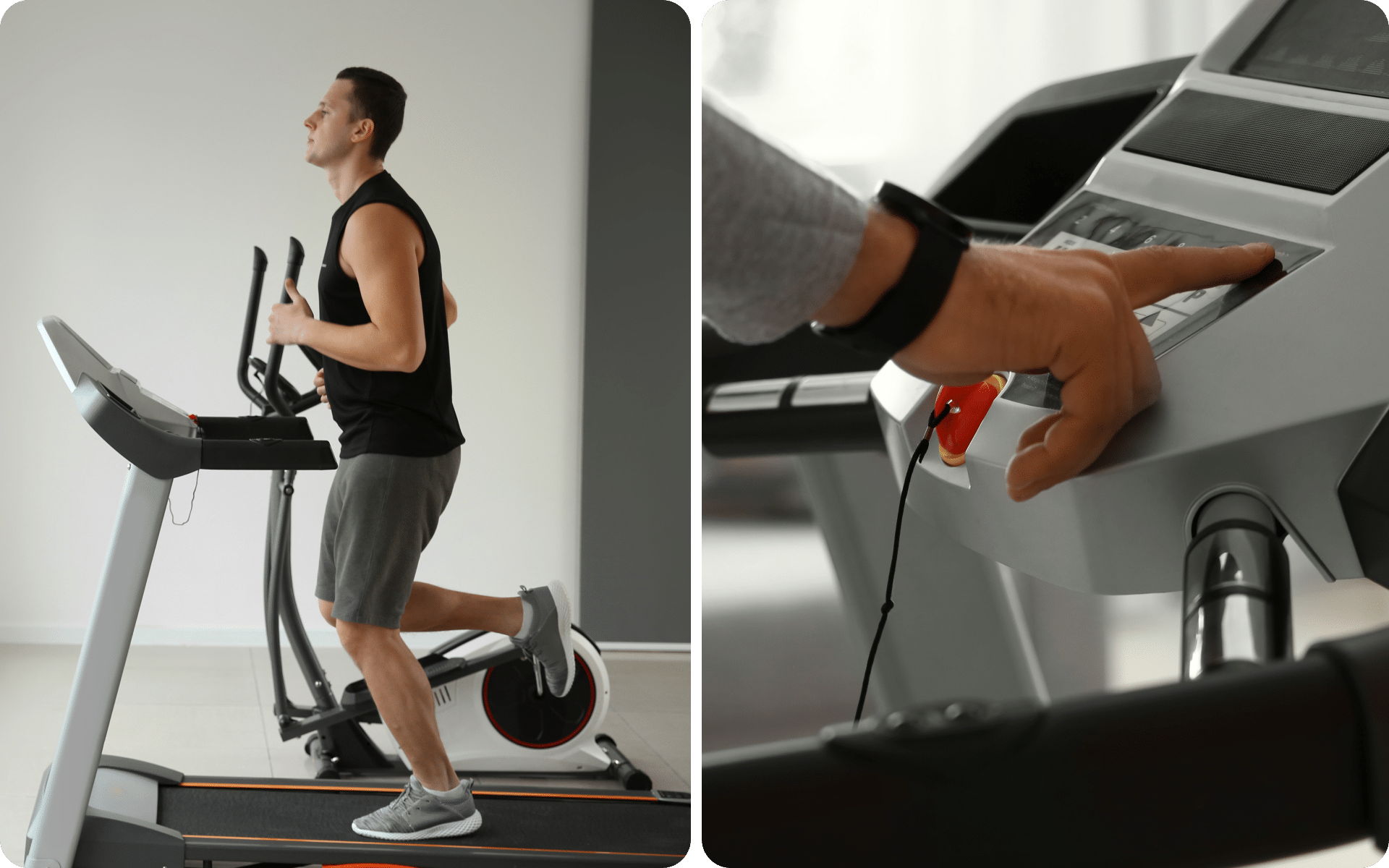
Does combining cardio and weights help you lose weight?
Combining cardio and strength workouts may help some people manage their weight, because both burn calories and regular activity supports weight management alongside eating habits (9). Cardio tends to burn more calories per session, while lifting helps you keep or build lean muscle mass. Individual results vary, and no exercise plan can promise a set amount of weight loss.
What mistakes should you avoid when combining cardio with weights?
The most common mistakes are doing too much, letting one type crowd out the other, and under-fueling. Here’s how to avoid each one.
Overtraining
Doing both cardio and lifting can be draining. Not resting enough can lead to overtraining (10). Planned rest days and lighter weeks may help you manage fatigue.
Imbalanced training
Give the priority activity more attention while keeping a manageable amount of the other. Adjust the balance as your goals change.
Not eating enough
Someone training for hypertrophy may prioritize protein for muscle repair, recovery, and function (11, 12), while endurance training relies more on carbohydrates for glycogen (13, 14). When you train for both muscle and endurance, it helps to fuel your body with both macronutrients without over- or undereating.
Skipping the warm-up and cool-down
A 5 to 10 minute warm-up of light cardio and dynamic stretching prepares your body for lifting, and a few minutes of easy movement afterward helps you cool down gradually.
BetterMe offers a variety of workouts, recipes, challenges, and support tools to help you stay more consistent with your wellness routine. Explore the app to find features that fit your goals, preferences, and schedule.

FAQs
Do I lift weights or do cardio first?
It depends on your main goal. If the goal is building muscle or strength, start with lifting. Lifting relies heavily on stored glycogen for quick energy (13). Starting with weights lets you lift before cardio adds fatigue. If endurance or heart health is your priority, start with cardio so you can reach higher intensities while you’re fresh.
Can beginners combine cardio and weights?
Yes, beginners can combine both. These steps may help:
- Start with the activity that matters most for that session.
- Keep cardio moderate to avoid overtiring.
- Separate cardio and lifting days if you want to do high-intensity cardio.
Is 20 minutes of cardio after weights enough?
For many people, 20 minutes of low-to-moderate cardio after a strength session can be enough, depending on goals. Lifting uses some of your glycogen stores, and some research suggests fat use may rise when glycogen is lower (15, 13). Effects on fat loss vary.
Are two rest days a week too much?
No, two rest days a week are not too much for many people. Rest days give your muscles time to recover, and one of them can be active recovery, such as an easy walk.
What is the 3-3-3 rule for strength training?
The 3-3-3 rule is an informal saying with no official definition. One common version is 3 exercises for 3 sets, 3 days a week. Treat it as a simple starting template, not a requirement.
Does adding cardio reduce muscle gain?
Not necessarily. Doing cardio after weights, with enough rest, recovery, and nutrition, may help you keep your muscle gains (3).
The Bottom Line
Pick your main goal first, then order and space cardio and weights around it. Understanding your body and your main goal can help you choose a schedule that fits. Prioritize nutrition and rest, and adjust as you go. If you have a heart condition, joint problems, or another health concern, check with your doctor before starting a new program.
DISCLAIMER:
This article is intended for general informational purposes only and does not serve to address individual circumstances. It is not a substitute for professional advice or help and should not be relied on for making any kind of decision-making. Any action taken as a direct or indirect result of the information in this article is entirely at your own risk and is your sole responsibility.
BetterMe, its content staff, and its medical advisors accept no responsibility for inaccuracies, errors, misstatements, inconsistencies, or omissions and specifically disclaim any liability, loss or risk, personal, professional or otherwise, which may be incurred as a consequence, directly or indirectly, of the use and/or application of any content.
You should always seek the advice of your physician or other qualified health provider with any questions you may have regarding a medical condition or your specific situation. Never disregard professional medical advice or delay seeking it because of BetterMe content. If you suspect or think you may have a medical emergency, call your doctor.
SOURCES:
The list covers reviews on training adaptations, concurrent training, and boredom in exercise, a randomized trial on combined training, papers on protein, glycogen, and overtraining, and the federal activity guideline and benefits pages. Each number in the article links to its source.
- Adaptations to Endurance and Strength Training (2018, pmc.ncbi.nlm.nih.gov)
- Anabolic signals and muscle hypertrophy – Significance for strength training in sports medicine (2025, sciencedirect.com)
- Optimizing concurrent training programs: A review on factors that enhance muscle strength (2024, ovid.com)
- Boredom in Sports and Exercise (2022, researchgate.net)
- An analysis of the associations between boredom, effort value, and exercise behavior (2025, researchgate.net)
- A Primer on the Role of Boredom in Self-Controlled Sports and Exercise Behavior (2021, pmc.ncbi.nlm.nih.gov)
- Aerobic, resistance, or combined exercise training and cardiovascular risk profile in overweight or obese adults: the CardioRACE trial (2024, academic.oup.com)
- Adult Activity: An Overview (2023, cdc.gov)
- Benefits of Physical Activity (2024, cdc.gov)
- Overtraining Syndrome (2012, pmc.ncbi.nlm.nih.gov)
- Protein Requirements for Strength Training (2012, ovid.com)
- The Role of Protein Intake and its Timing on Body Composition and Muscle Function in Healthy Adults: A Systematic Review and Meta-Analysis of Randomized Controlled Trials (2020, sciencedirect.com)
- Fundamentals of glycogen metabolism for coaches and athletes (2018, pmc.ncbi.nlm.nih.gov)
- Skeletal muscle energy metabolism during exercise (2020, nature.com)
- Exercising with low muscle glycogen content increases fat oxidation and decreases endogenous, but not exogenous carbohydrate oxidation (2019, sciencedirect.com)

 Reviewed by

 Reviewed by