A big upper body with small legs can reflect your natural build and training history. If your goal is stronger legs, give lower-body training a consistent place in your week while continuing upper-body work. This guide includes sample schedules and exercise instructions; our strength-training guide for men offers additional planning ideas.
This article shares general wellness information about body shape and weight management. It is not medical advice. Individual results vary, so consider speaking with a qualified professional before you start a new routine.
Following exercise and diet plans is the key in your fitness journey and greatly impacts results. In 4 weeks users can typically expect to lose not more than 1-2 lbs per week. Individual results may vary.
Key takeaways
- Resistance training can increase muscle size, with individual results varying (1).
- A meta-analysis found modest average body-fat reductions with resistance training, not a guaranteed body shape (2).
- Localized limb training did not produce targeted fat loss in the cited meta-analysis (3).
- The sample four-day plan allocates more exercise sets to the lower body.
- The second lower-body table is an alternative to the first plan, not additional work.
- Track exercise performance and adjust the workload without a fixed appearance deadline.
Read more: How to Workout Legs At Home, With or Without Weights
Why do I have a big upper body but small legs?
Body proportions reflect several factors, and appearance alone cannot identify their cause. Review your training history and goals before deciding what to change.
Factors to consider include:
- Natural build: Shoulder width, pelvis shape, and limb proportions vary between people.
- Fat distribution: A review of Asian populations describes both genetic and environmental contributions to abdominal fat patterns; it cannot explain an individual’s appearance from a photograph (4).
- Training history: If your focus has been on upper-body work, your legs may lag behind
- Bone structure: Wide shoulders and a narrow pelvis can emphasize the contrast.
Training can change muscle size. A broad review of resistance-training research in healthy adults found improvements in strength and muscle growth compared with no training (1).
Choose a goal based on what you want to do or train, without treating one set of proportions as a defect.
BetterMe can help you add more structure to your daily wellness routine with workouts, meal planning tools, and habit-building features. Explore the app and take a practical step toward a routine that feels more manageable for you.
Can you change the way your body proportions look through exercise?
Resistance training can increase muscle size (1). A separate meta-analysis in healthy adults found modest average reductions in body fat with resistance training compared with no exercise (2). Neither finding promises a particular appearance.
What you can influence:
- Muscle size in areas you train
- Overall body fat through activity and eating habits
- Posture and how you carry yourself
- Performance in the exercises you practice
Features that exercise does not reshape include:
- Shoulder width and bone frame
- Hip and pelvis structure
- Limb length
- The ability to choose where fat loss occurs
Spot reduction means attempting to lose fat specifically beside a muscle by training that muscle. A meta-analysis of localized limb training found no localized fat-loss advantage in the trained limb (3).
For a lower-body muscle goal, focus on progressive leg training. Weight loss is a separate goal and is not necessary for everyone with these proportions.
Keep a record of completed sessions and exercise performance so you can assess progress beyond appearance.
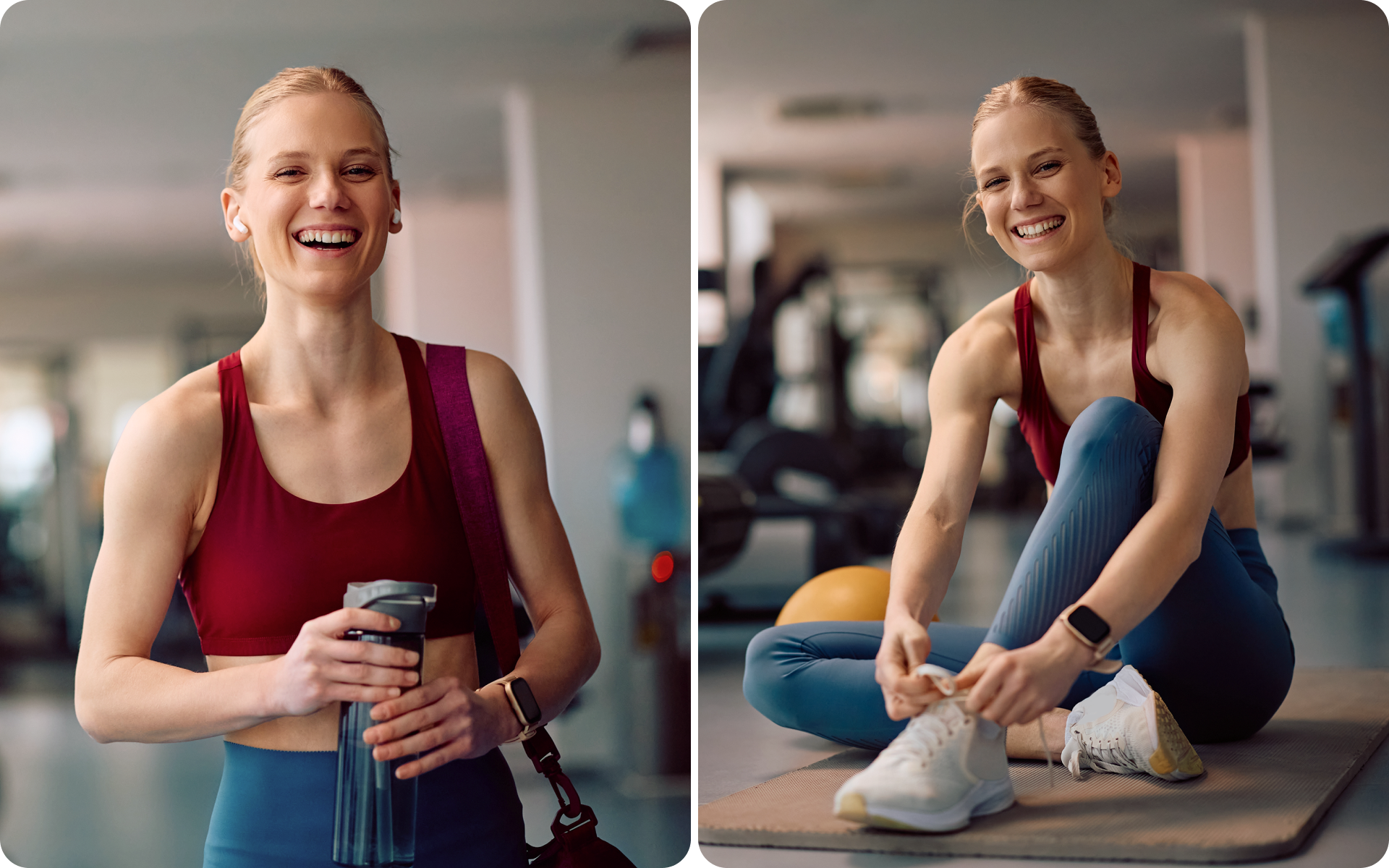
How can you prioritize legs while continuing upper-body training?
Give lower-body exercises a regular place in your schedule and allocate a manageable amount of work to them. Resistance training can support muscle growth, but it cannot guarantee a particular body ratio (1).
Here’s a simple framework:
- Use two lower-body sessions in the sample week below.
- Begin with the listed sample sets, reducing them if needed to maintain technique.
- Continue two upper-body sessions with fewer sets per exercise in this example.
- Use compound lifts first, then add isolation work.
- Add repetitions or a small amount of load when the current work feels controlled, rather than on a fixed deadline.
Lower-body areas covered by the sample:
- Quadriceps: Squat and lunge patterns
- Hamstrings: Hip hinges and leg curls
- Glutes: Hip thrusts, squats, and split squats
- Calves: Calf raises
Muscle growth, or hypertrophy, responds to resistance training. Reviews identify weekly volume as an important training variable, but they do not establish one maintenance dose for everyone (1, 5). Track:
- Weekly set volume
- Technique and effort during each set
- Progress over time
Adjust the program to your response. There is no guaranteed date by which your proportions will visibly change.
For optional core training, see our abdominal exercises without equipment. Core work does not selectively remove waist fat (3).
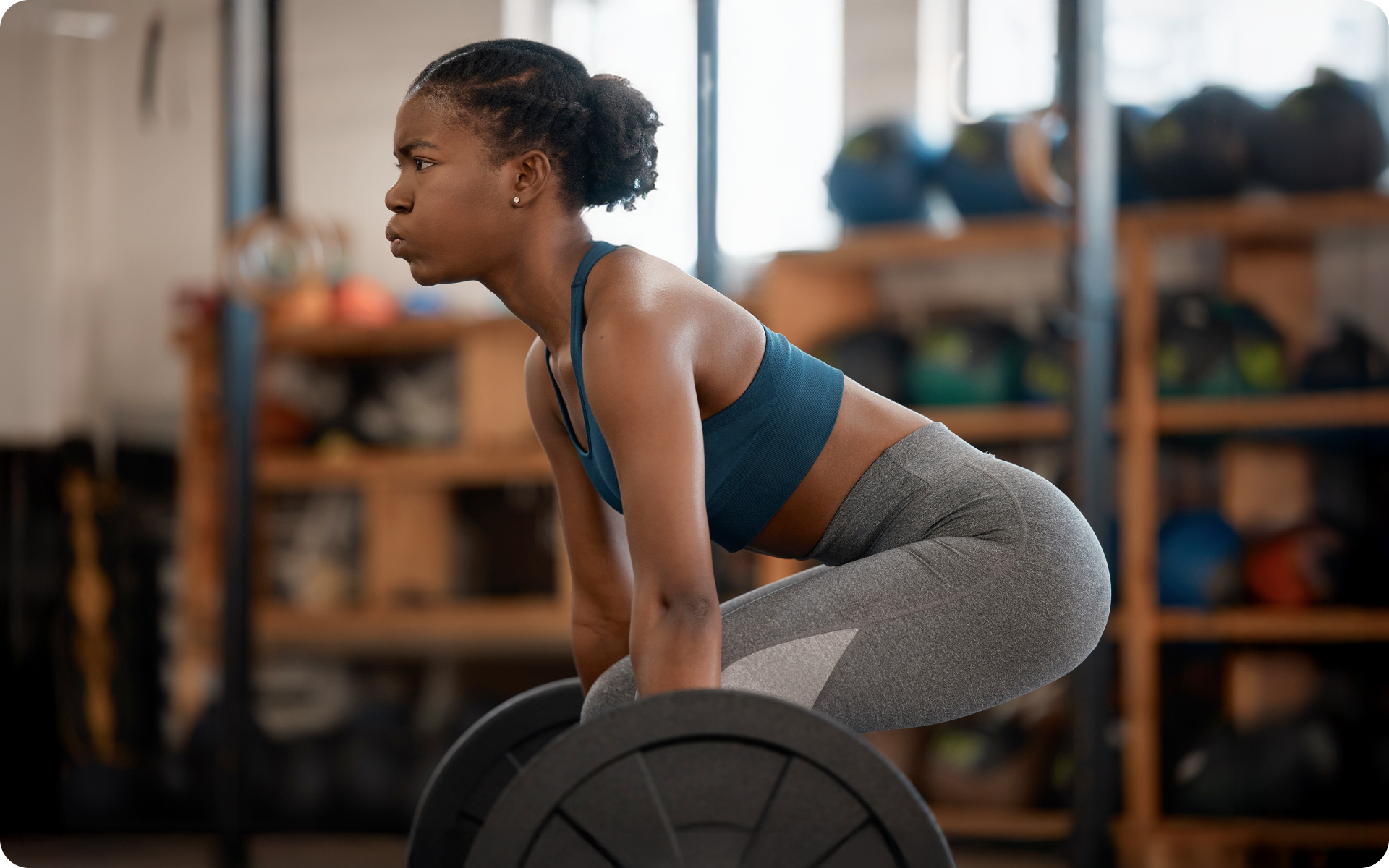
How can you train your upper body without adding too much bulk?
You can allocate fewer sets to upper-body exercises while prioritizing your legs. This is a programming choice, not a guarantee that your upper-body size will stay unchanged.
Review your exercise performance and preferences over time before increasing or reducing the amount of work.
Use these practical planning principles:
- Increase repetitions or resistance when the current work is controlled and manageable.
- Eat regular meals that suit your overall needs and training goals.
- Keep a schedule you can repeat and adjust when recovery is difficult.
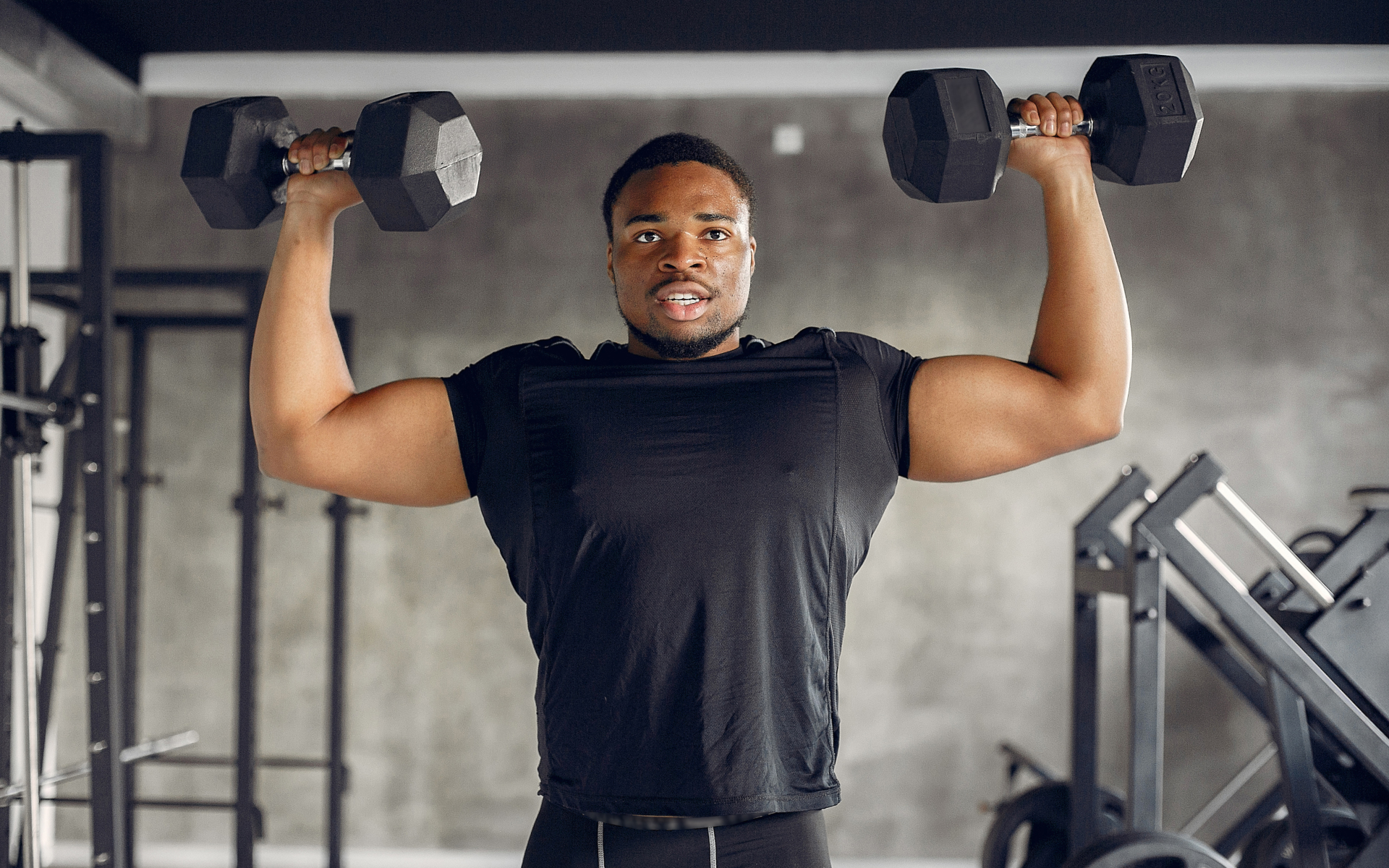
For the upper-body portion of this sample:
- Train two upper-body sessions each week.
- Use two sets per listed exercise as a sample starting amount, adjusting downward if needed.
- Finish each set while you can still perform the movement with control.
- Use presses and rows to cover different movement patterns. Push-ups need floor space; pull-ups require a suitable bar.
- Avoid adding extra upper-body sessions simply to fill the days between leg workouts.
For related body-composition questions, our waist-training and exercise guide discusses the limits of changing your shape through exercise.
What is an example of a balanced upper- and lower-body workout routine?
The sample uses two upper-body and two lower-body days. It is an upper/lower split, with fewer exercise sets allocated to upper-body work.
The table is an illustrative 4-day plan. Sets are per listed exercise, and reps are per set. It contains 18 upper-body and 24 lower-body exercise sets across the week; those are not per-muscle totals because exercises overlap. Rest longer than the example when needed to maintain control.
| Day | Focus | Exercises | Sets | Reps | Rest |
|---|---|---|---|---|---|
| Day 1 | Upper body | Bench press, one-arm row, overhead press, lat pulldown, lateral raise | 2 | 8-12 | 60-90 secs |
| Day 2 | Lower body | Goblet squat, Romanian deadlift, walking lunge, calf raise | 3 | 8-15 | 60-90 secs |
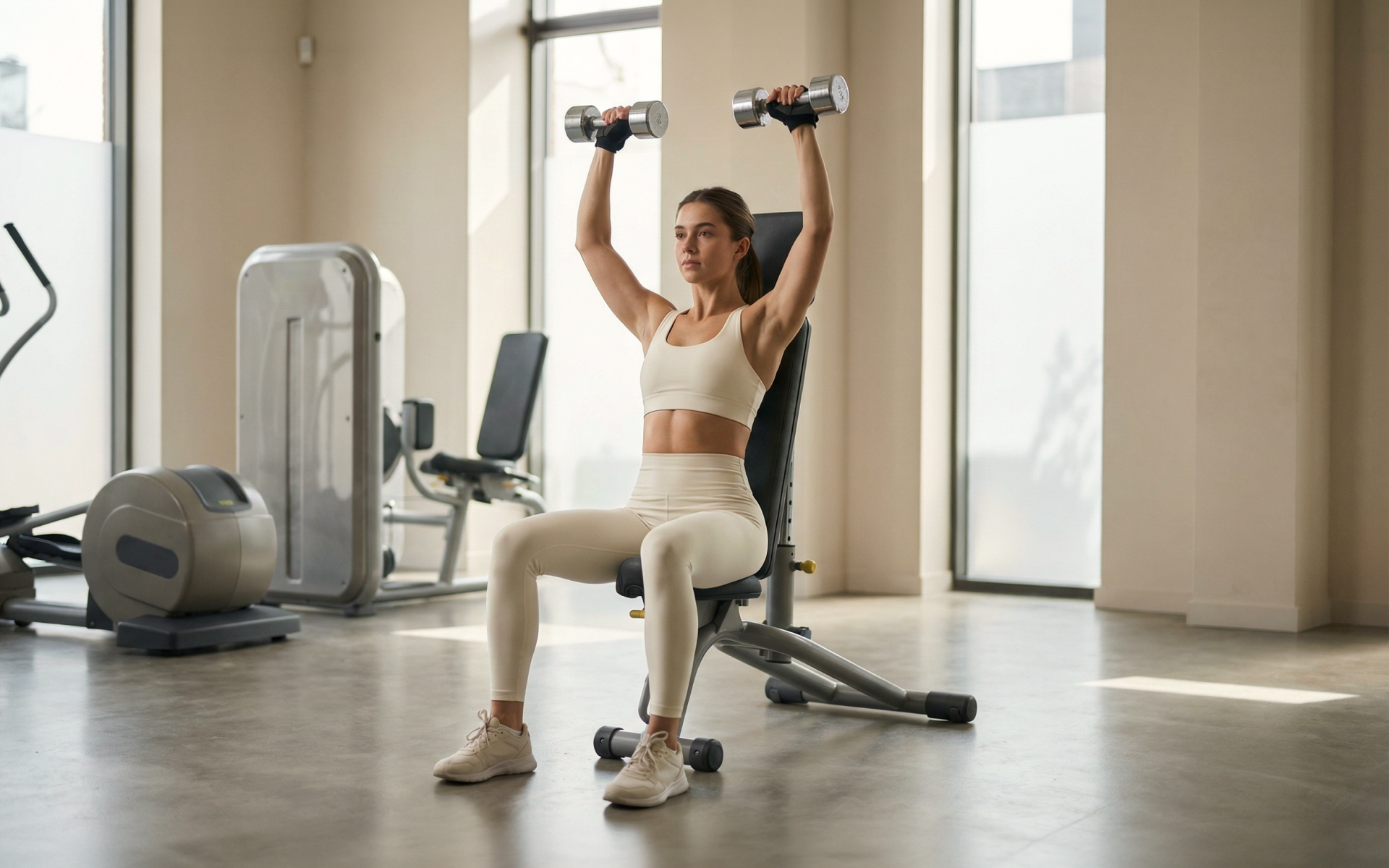
| Day 3 | Upper body | Incline press, seated cable row, dumbbell shoulder press, biceps curl | 2 | 8-12 | 60-90 secs |
| Day 4 | Lower body | Hip thrust, split squat, leg curl, calf raise | 3 | 8-15 | 60-90 secs |
Space out the sessions according to your recovery, with a day off as needed. Increase repetitions or load only when you can complete the current work comfortably with consistent technique.
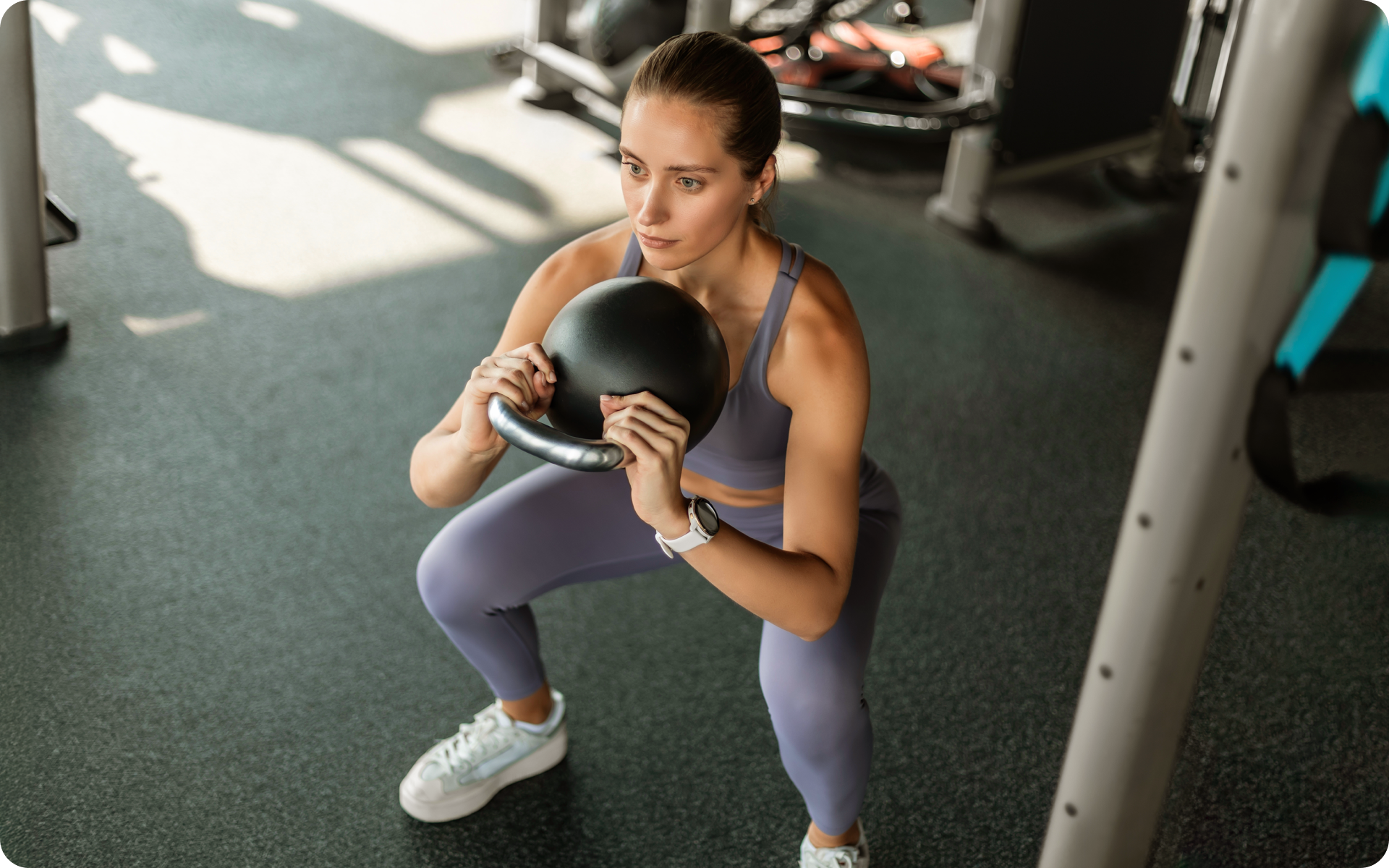
Exercise instructions
Goblet squat
- Hold one dumbbell close to your chest with both hands.
- Stand with your feet slightly wider than hip-width apart.
- Lower the goblet squat by bending your knees and hips.
- Lower only as far as you can maintain control and a comfortable position.
- Press through your feet to stand tall again.
Romanian deadlift
- Hold a barbell or dumbbells in front of your thighs.
- Keep a soft bend in your knees for the Romanian deadlift.
- Push your hips back and lower the weights along your legs.
- Stop when you feel a gentle stretch in your hamstrings.
- Drive your hips forward to return to the upright position.
Bench press
- Lie flat on a bench with your feet on the floor.
- Grip the bar with your hands slightly wider than shoulder-width apart.
- Lower the bench press bar to your mid-chest with control.
- Pause briefly when the bar touches your chest.
- Press the bar back up until your arms extend.
One-arm row
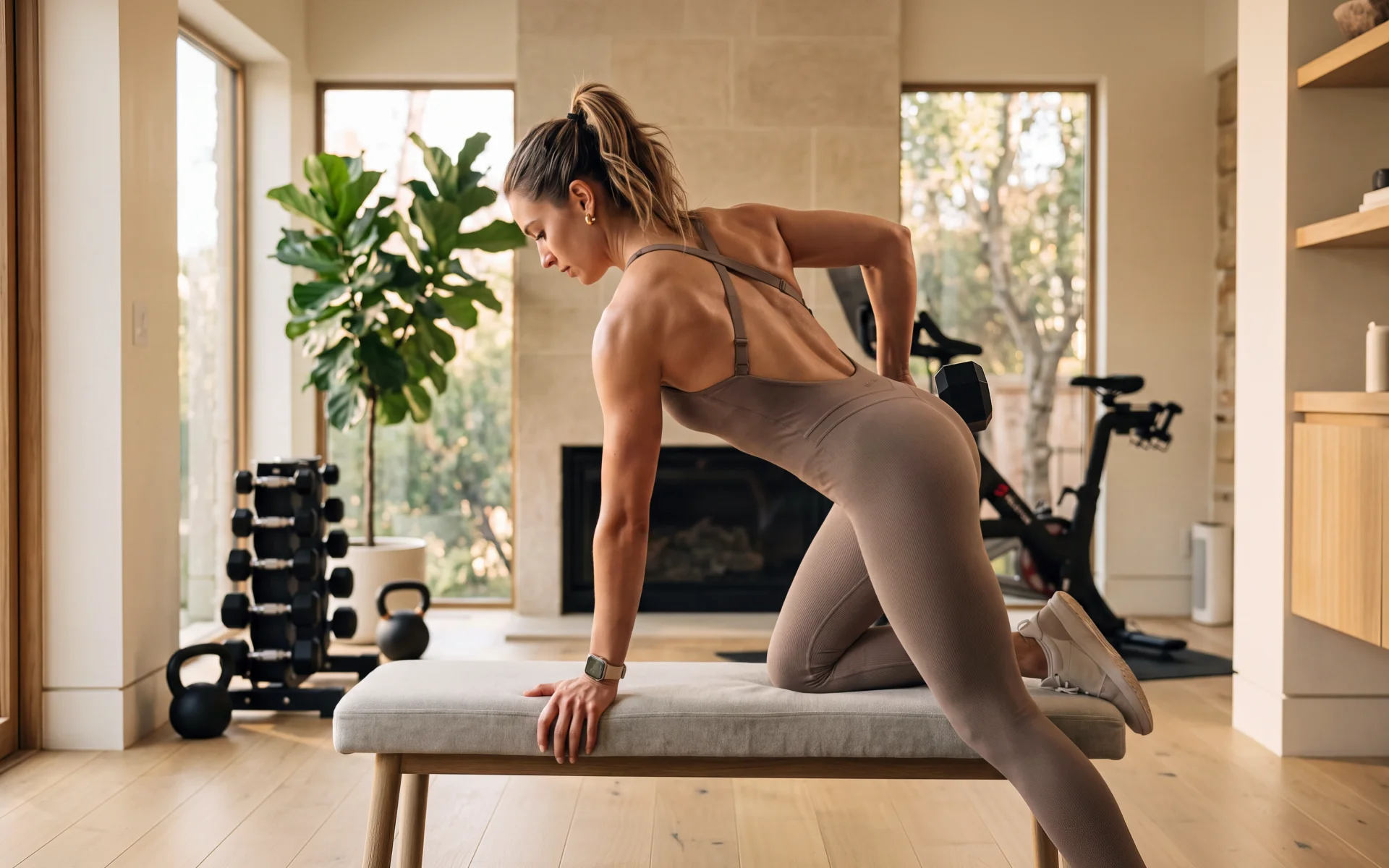
- Place one knee and hand on a bench for support.
- Hold a dumbbell in your free hand, your arm hanging down.
- Pull the one-arm row dumbbell toward your hip.
- Squeeze your back at the top of the pull.
- Lower the weight slowly to the starting position.
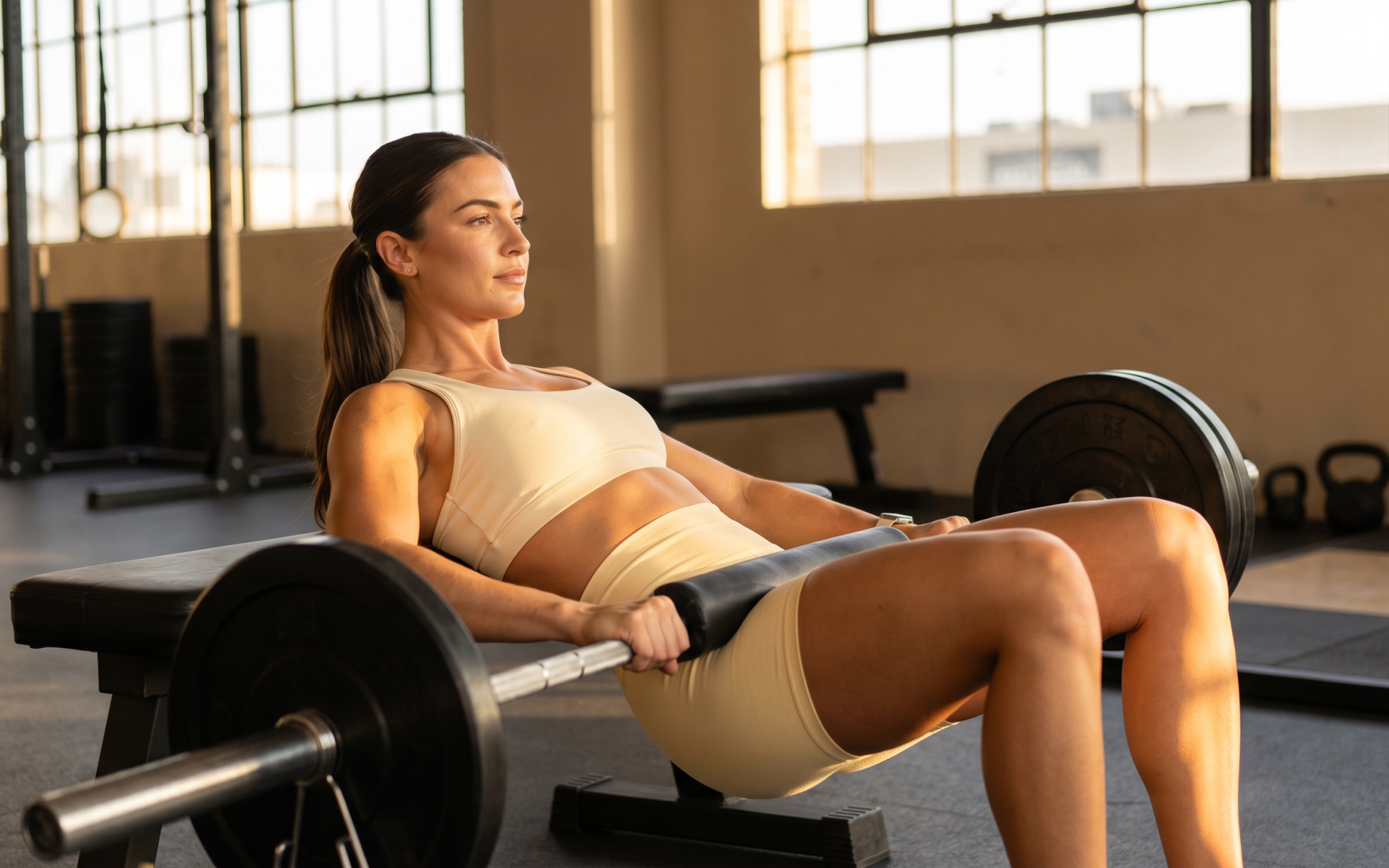
Hip thrust
- Sit on the floor with your upper back against a bench.
- Roll a loaded barbell or weight over your hips.
- Plant your feet flat, hip-width apart.
- Drive through your heels to lift into the hip thrust.
- Lower your hips with control until nearly seated.
Read more: Leg Exercises While Sitting: Tone Your Legs While Seated At Your Desk
How to adapt your workout routine if you have a big upper body and small legs
For a big upper body and small legs, a lower-body emphasis can mean allocating more exercise sets to legs while continuing upper-body training.
The alternative below spreads lower-body work over two sessions. Upper-body work can remain on two separate days, with the amount adjusted to your goals and recovery.
Use this alternative instead of the lower-body days above, not in addition to them. Split each weekly total evenly between two sessions; that gives 11 exercise sets per session. It is a sample plan, not an individual prescription.
| Movement pattern | Weekly sets | Rep range | Progression trigger |
|---|---|---|---|
| Squat (quads) | 6 | 6-12 | Increase load only after controlled repetitions at the top of the range |
| Hip hinge (hamstrings, glutes) | 6 | 8-12 | Add repetitions when the current work feels manageable |
| Lunge (glutes, quads) | 4 | 8-15 | Keep sets steady while learning the movement |
| Calf raise (calves) | 6 | 10-20 | Increase resistance only with consistent technique |
In a small study of trained adults, two and four weekly sessions produced similar changes in strength and muscle size when training volume was matched (6). This supports flexibility in scheduling, rather than one frequency for every person.
Track the load, repetitions, and quality of each session. Reassess the plan if you cannot recover between sessions or if an exercise repeatedly feels uncomfortable.
BetterMe offers a variety of workouts, recipes, challenges, and support tools to help you stay more consistent with your wellness routine. Explore the app to find features that fit your goals, preferences, and schedule.
FAQs
Can a skinny person get thick thighs?
Resistance training can increase thigh muscle size, although the amount varies (1). Choose leg exercises you can progress and eat enough to meet your needs. There is no guaranteed thigh measurement or timeline.
Which body part is hardest to lose fat?
There is no single hardest area for everyone. Appearance cannot predict an individual’s fat-loss pattern, and targeted limb exercises did not produce spot reduction in the cited meta-analysis (3).
Is thigh fat hard to lose?
Fat change varies between people, so it is not useful to promise that the thighs will change first or last. Decide whether your goal is muscle growth, overall weight management, or both before choosing a plan.
Does walking help slim thighs?
Walking is an option for general activity, but this article does not establish a walking dose that selectively slims thighs. Choose a manageable duration and judge it by comfort and consistency rather than a promised leg-size change.
Does running help slim legs?
Running should not be presented as a way to selectively slim legs. If you enjoy it, fit it around your strength sessions and recovery; change the duration or choose walking if the combined workload is difficult to manage.
The bottom line
If you want stronger legs, give lower-body training consistent attention while continuing upper-body work. Use one sample plan, track performance, and adjust the workload to your response. Changes in appearance vary, so avoid setting a guaranteed size or deadline.
DISCLAIMER:
This article is intended for general informational purposes only and does not serve to address individual circumstances. It is not a substitute for professional advice or help and should not be relied on for making any kind of decision-making. Any action taken as a direct or indirect result of the information in this article is entirely at your own risk and is your sole responsibility.
BetterMe, its content staff, and its medical advisors accept no responsibility for inaccuracies, errors, misstatements, inconsistencies, or omissions and specifically disclaim any liability, loss or risk, personal, professional or otherwise, which may be incurred as a consequence, directly or indirectly, of the use and/or application of any content.
You should always seek the advice of your physician or other qualified health provider with any questions you may have regarding a medical condition or your specific situation. Never disregard professional medical advice or delay seeking it because of BetterMe content. If you suspect or think you may have a medical emergency, call your doctor.
SOURCES:
- American College of Sports Medicine Position Stand. Resistance Training Prescription for Muscle Function, Hypertrophy, and Physical Performance in Healthy Adults: An Overview of Reviews (2026, pubmed.ncbi.nlm.nih.gov)
- The Effect of Resistance Training in Healthy Adults on Body Fat Percentage, Fat Mass and Visceral Fat: A Systematic Review and Meta-Analysis (2022, pubmed.ncbi.nlm.nih.gov)
- A proposed model to test the hypothesis of exercise-induced localized fat reduction (spot reduction), including a systematic review with meta-analysis (2022, hummov.awf.wroc.pl)
- Genetic and Environmental Factors Contributing to Visceral Adiposity in Asian Populations (2020, pmc.ncbi.nlm.nih.gov)
- Resistance Training Variables for Optimization of Muscle Hypertrophy: An Umbrella Review (2022, frontiersin.org)
- Equal-Volume Strength Training With Different Training Frequencies Induces Similar Muscle Hypertrophy and Strength Improvement in Trained Participants (2022, frontiersin.org)
 Reviewed by