
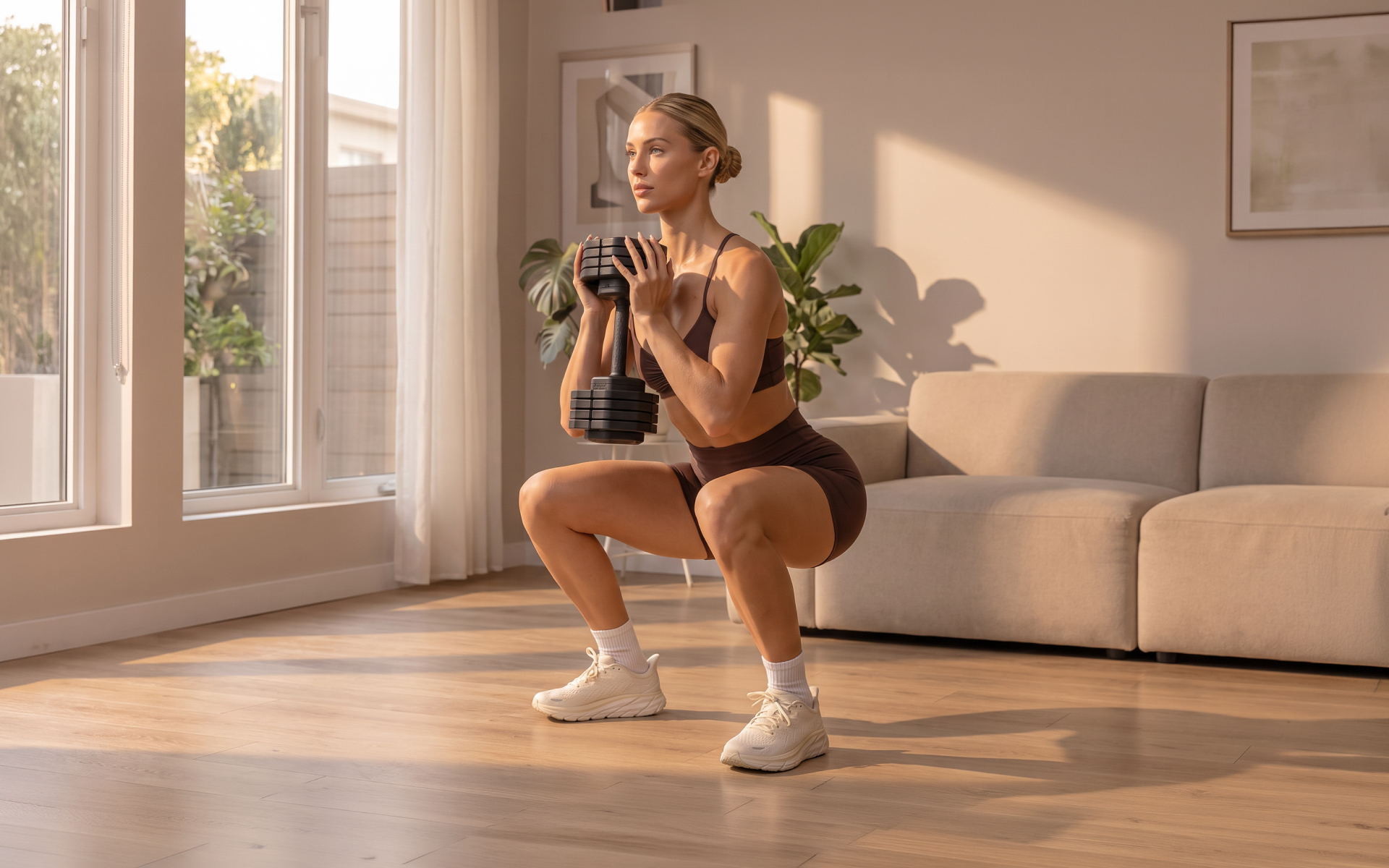
Heavy weight low reps means lifting a challenging load for a small number of repetitions, usually about 1-6 reps per set at roughly 80% or more of the most you can lift at once. This approach tends to be particularly useful for building strength. You pick a weight that feels hard, do fewer reps, rest well between sets, and focus on clean, controlled form rather than chasing a burn.
Many people spend months chasing high-rep “burn” sets and wondering why real strength feels stuck. The issue is often load, not effort. Heavier loads with fewer reps tend to build force in a way lighter sets struggle to match.
This guide breaks down what this style means, how to choose your weight, and how to fit it into your week without guesswork. Are you ready to lift with more purpose? Let’s walk through it together, step by step.
What Does Heavy Weight, Low Reps Mean?
Heavy weight, low reps means using a load you can only lift for a few controlled repetitions, often 1-6 per set. In practice, “heavy” usually refers to around 80% or more of your one-repetition maximum (1RM). Your 1RM is the most weight you can lift once with good form (1).
You don’t need to test a true 1RM to use this idea. You can estimate how a weight feels.
Here’s the simple version:
- Low reps = roughly 1-6 reps per set
- Heavy load = a weight that makes those few reps genuinely challenging
- Goal = building strength, meaning your ability to produce force
This differs from higher-rep work. Lighter weights for 12-20+ reps lean toward muscular endurance. Heavier loads for fewer reps lean toward strength (1).
One helpful point from recent research is that muscle growth can happen across a wide range of loads when effort is high enough (1, 2), so heavy, low-rep training isn’t the only path to bigger muscles—it’s simply the most direct tool for raw strength.
Think of it like this: if you want to get better at picking up a heavy suitcase, you practice with heavy suitcases, not feathers. The same logic applies to strength training. When you regularly lift heavier loads for a few controlled reps, you practice producing force against real resistance. Over time, your body adapts to that demand, and lifting heavy becomes more manageable.
How Do You Know if a Weight Is Heavy for You?
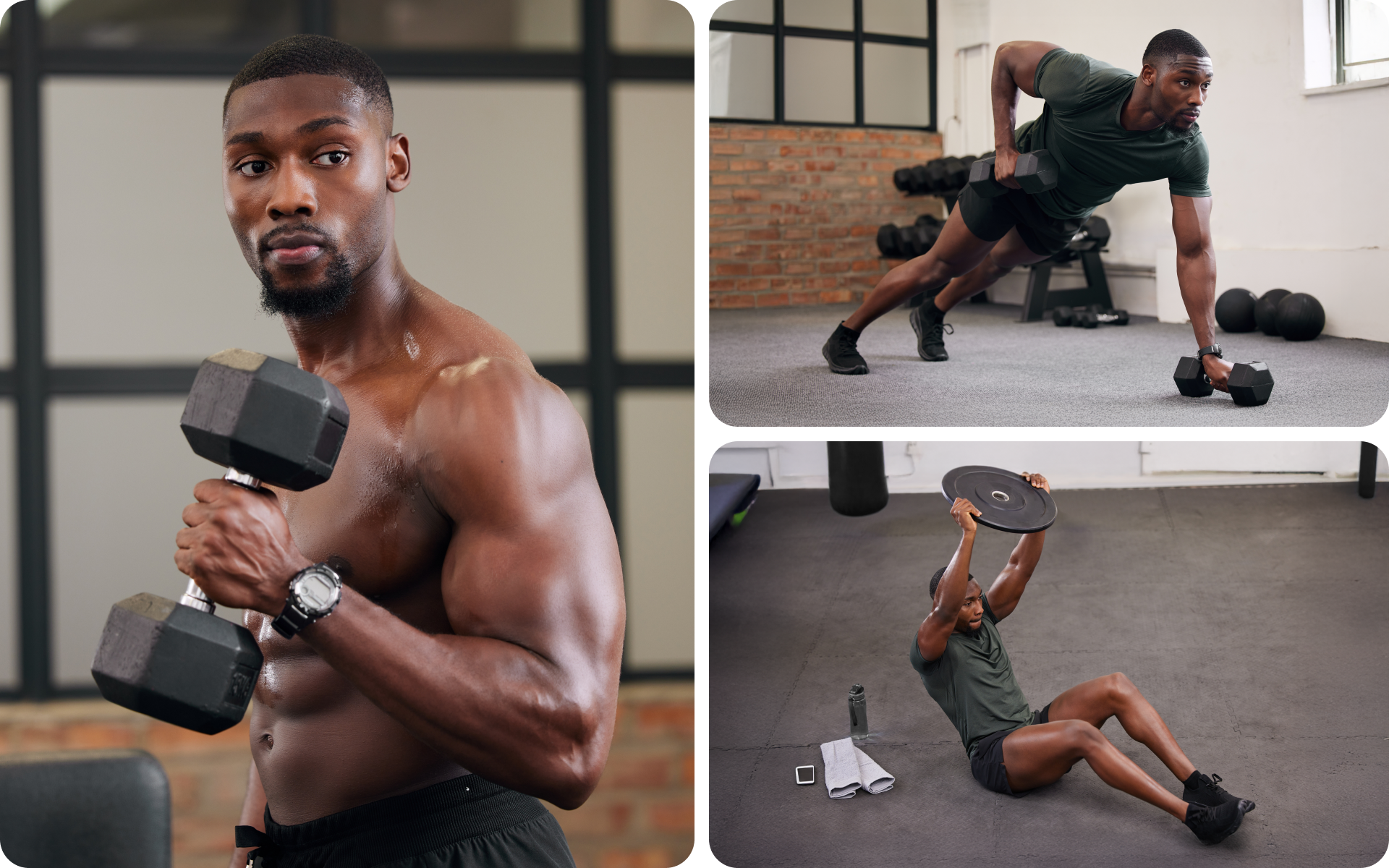
A weight is heavy for you when it limits you to a small number of clean reps and clearly slows your movement speed. “Heavy” is always relative. A load that challenges one person may feel light to another, and that’s completely normal.
Look for these signs that a weight is heavy for you:
- You can complete only about 3-6 controlled reps
- The bar or dumbbell moves slower than your warm-up sets
- You need real focus to keep your form steady
- You likely have only 0-4 reps left before form breaks
A quick self-check:
- If you could easily do 12+ reps, it’s probably too light for low-rep strength work.
- If you could manage 3-6 solid reps, you’re likely in a good range.
You can gauge this by feel rather than complex math. Many people find that trusting how a set feels works better than obsessing over exact percentages.
Remember, different bodies and experience levels land in different places. A beginner and a seasoned lifter can both train “heavy” using very different numbers on the bar.
How Many Sets and Reps Should You Do?
For heavy, low-rep strength training, a practical starting point is 3-5 sets of 3-5 reps per exercise. This gives enough intensity to build strength while keeping fatigue manageable so your form stays clean.
Here’s a simple framework many people find useful:
- Reps: 1-6 per set
- Sets: 2-5 working sets per exercise
- Frequency: work each main lift or muscle group at least 2 times per week
Recent reviews have suggested that strength tends to improve with heavier loads, multiple sets, and at least 2 sessions weekly (3). Placing your hardest lifts early in the session, when you’re fresh, also tends to help.
If you want a minimalist version, try this:
- 2-3 heavy working sets
- 3-5 reps each
- 2-3 times per week
The 5×5 workout is a well-known example of low-rep strength training. It uses 5 sets of 5 reps on big lifts. It sits at the higher end of the “low-rep” range, but it fits the spirit of heavy training well.
Individual results vary. Your ideal numbers depend on your recovery, experience, and goals. Start with a sensible range, then adjust based on how you feel and perform.
How Can RPE Help You Pick the Right Weight?
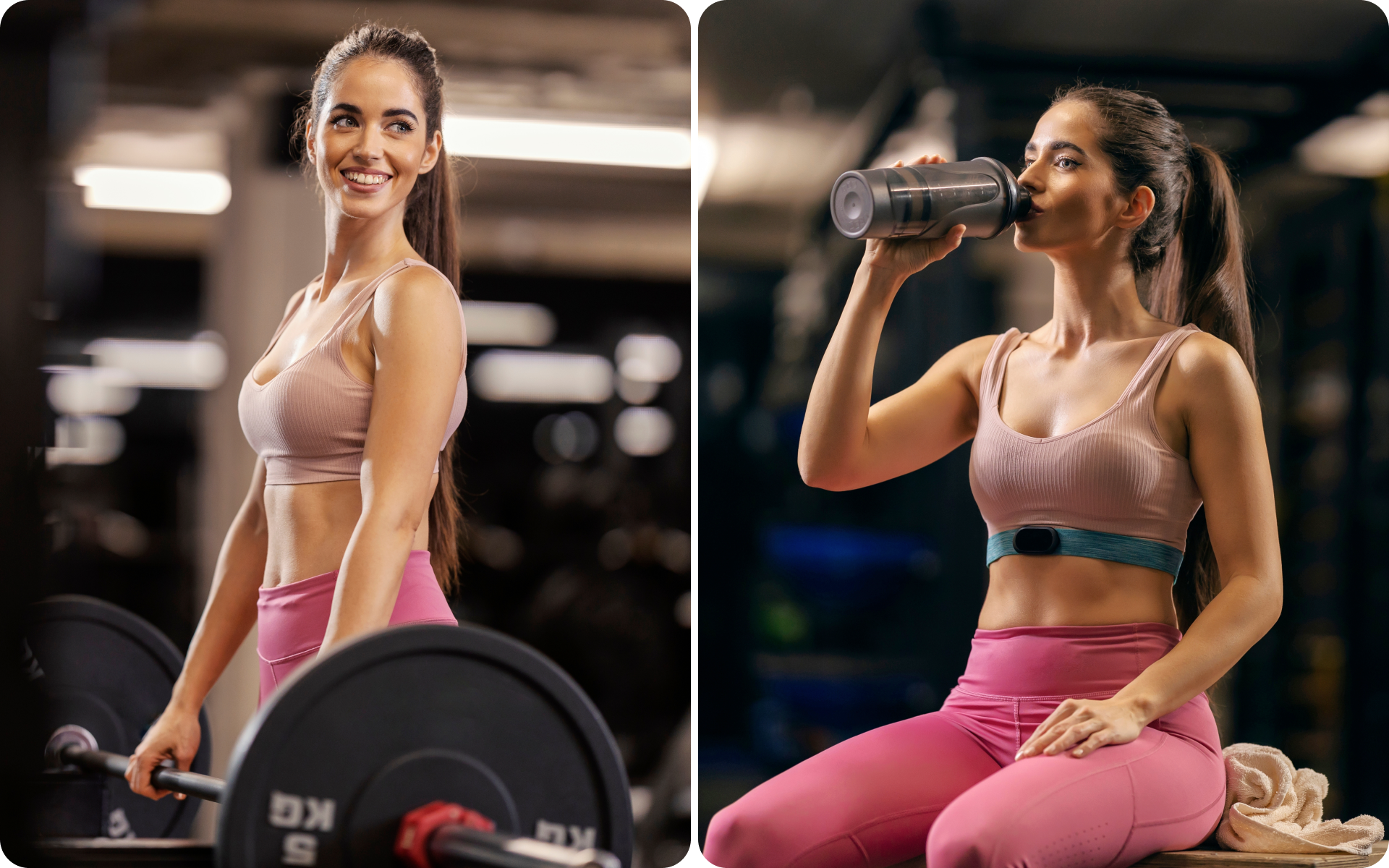
RPE can help you pick the right weight by matching your load to how hard a set actually feels on a given day. RPE stands for rate of perceived exertion, a 1-10 scale where 10 means you couldn’t do another rep. It’s a simple self-check that needs no equipment (4).
A closely related idea is reps in reserve (RIR), which is how many reps you have left before failure (5).
Here’s how they line up:
- RPE 10 = 0 reps left (RIR 0)
- RPE 9 = about 1 rep left (RIR 1)
- RPE 8 = about 2 reps left (RIR 2)
- RPE 7 = about 3 reps left (RIR 3)
Why does this matter? Your true capacity shifts day to day based on:
- Sleep
- Stress
- Nutrition
- Previous training
So a load that feels like a smooth triple one day might feel heavy the next. Using RPE strength training cues lets you adjust load to your readiness instead of forcing a fixed number.
For heavy, low-rep work, many people aim for:
- RPE 7-8 on most working sets
- RPE 8-9 on occasional top sets
Some research suggests that autoregulating with RPE and reps in reserve can keep loading more accurate and reduce accidental failure (6). That tends to protect your form and your energy for later sets.
Which Exercises Work Well with Lower Reps?
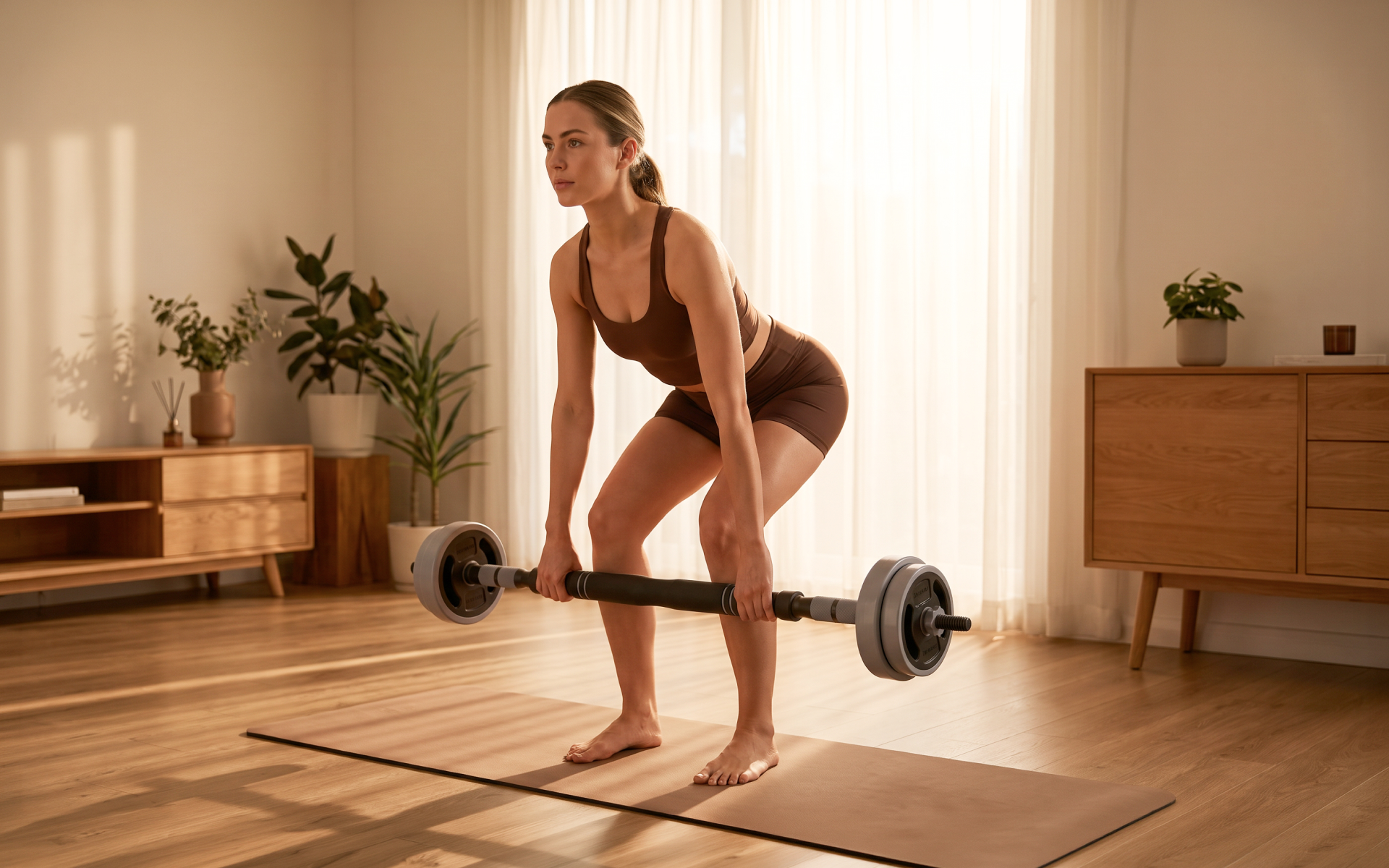
Exercises that work well with lower reps are stable, repeatable movements you can load heavily with confidence—big compound lifts fit this best. A compound lift is a movement that works several muscle groups at once, such as a squat (7).
Compound lifts are ideal for heavy loading because they let you move meaningful weight safely and progress over time.
The table below compares good and less-ideal choices for low reps high weight work.
| Movement type | Examples | Suits low reps? | Why |
|---|---|---|---|
| Lower-body compounds | Squat, deadlift, leg press | Yes | Stable and easy to load heavily |
| Upper-body pressing | Bench press, overhead press | Yes | Repeatable and easy to progress |
| Upper-body pulling | Rows, weighted pull-ups | Yes | Strong positions for heavy loads |
| Single-joint isolations | Lateral raises, curls, pushdowns | Less ideal | Awkward and less comfortable when very heavy |
| Balance-heavy moves | Single-leg reaches, unstable variations | Less ideal | Skill and stability limit safe loading |
A simple rule of thumb:
- Use low reps for big compound lifts and stable machine versions.
- Use moderate or higher reps (10-15+) for isolations and smaller muscles.
This will keep your heavy work productive and your joints comfortable.
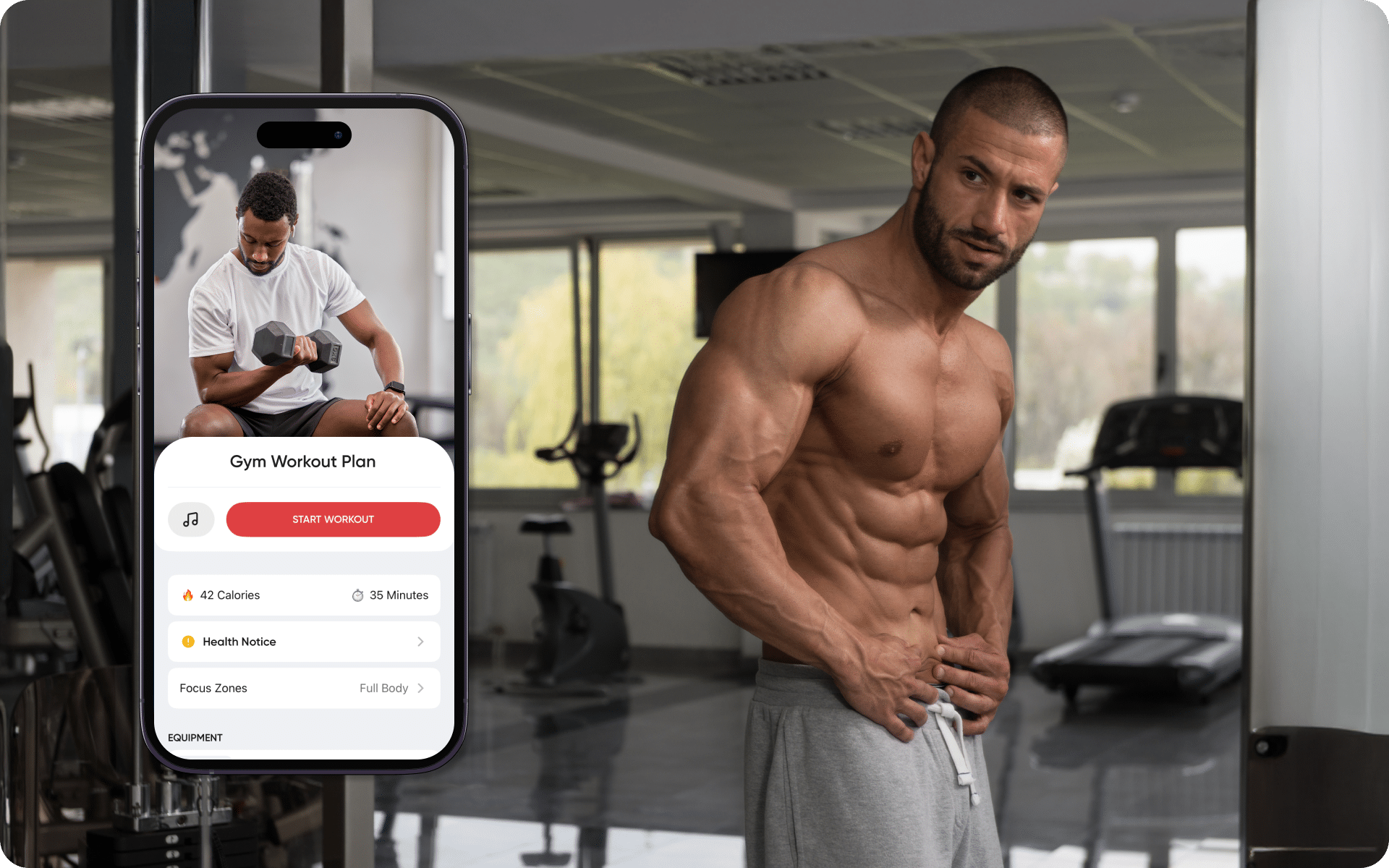
Workouts, weight management tools, and recipe ideas come together in the BetterMe Well-Being Coach app, giving you practical support for building a more consistent wellness routine.

How Should You Warm Up Before Heavy Sets?
You should warm up before heavy sets by gradually raising the load across a few short sets until you’re close to your working weight (8). This prepares your muscles and rehearses the movement without draining your energy.
A warm-up does three simple jobs (9):
- Raises your body temperature a little
- Grooves the movement pattern
- Primes you to lift well
Here’s a practical warm-up template for a heavy lift:
- Empty bar or light weight × 8-10 reps
- ~40-50% of working weight × 5 reps
- ~60-70% × 3 reps
- ~75-85% × 1-2 reps
- Then start your working sets
Keep the reps low as the weight climbs. The goal is readiness, not fatigue.
One interesting finding from recent research: warming up each exercise with a higher-load, lower-volume set—around 80% of your first working load—may support better performance in the session (8). Treat this as a helpful option to test, not a strict rule.
If you’re new to this, start lighter and add more warm-up steps. There’s no prize for rushing into your heaviest set cold.
Read more: HIIT Workouts With Weights: This Hardcore Strength-Boosting Routine Is Sure To Leave You Sore
How Long Should You Rest Between Sets?
You should rest longer between heavy sets than most people expect, usually for about 2-5 minutes. Heavier loads demand more recovery so you can keep your reps strong and your form clean on the next set.
Some research suggests that longer rest tends to support better performance across sets, particularly with heavy, low-rep training. Short rests can quietly turn later sets into lower-quality work (10).
Here’s a simple guide for rest between heavy sets:
- Upper-body compounds: 2-4 minutes
- Lower-body compounds: 3-5 minutes
- Very heavy singles or triples: 4-6 minutes if needed
How do you know if you rested enough? Signals include:
- Your breathing has settled
- You feel focused, not rushed
- The last set’s fatigue has eased
If your performance drops sharply from set to set, your rest may be too short. It’s fine to take your time here. Resting well is part of the work, not a break from it.
Individual needs vary. Larger lifts and heavier loads tend to need the longer end of these ranges.
How Can You Modify an Exercise?
You can modify an exercise by adjusting the range of motion, the equipment, or the setup so the movement fits your body and goals. Smart modifications keep tension high while staying comfortable and repeatable.
If a lift feels awkward or uncomfortable, try modifying it instead of forcing it. A modified lift you can progress beats a “perfect” lift that beats you up.
Here are common ways to modify:
- Change the range of motion
- Box squat instead of full squat
- Rack pull instead of floor deadlift
- Change the equipment
- Swap a barbell for dumbbells
- Move from free weights to a machine
- Change your stance or grip
- Try a closer or wider grip
- Adjust foot position for comfort
- Reduce stability demands
- Use a supported or seated version
You can also reduce the range of motion or pick an easier variation that still feels controlled. The aim is steady tension that you can manage with good form.
Modifying isn’t a step back. It’s a practical way to keep training productive while respecting how your body feels today.
When Should You Stop a Set or Switch Exercises?
You should stop a set when your form clearly breaks down or you reach your target RPE, and switch exercises when a movement repeatedly causes you discomfort or stalls your progress. With heavy work, ending a set a little early is often the wiser choice.
A helpful reminder from recent research: training all the way to failure isn’t required for strength gains (11), so you don’t need to grind ugly reps to make a set “count”. Form will always matter more than trying to hit a specific weight.
Stop a set when:
- Your technique noticeably slips
- A rep slows into an unplanned grind
- You feel sharp or joint discomfort, rather than muscle effort
- You’ve hit your planned RPE or reps in reserve
Consider switching exercises when:
- A movement keeps causing discomfort
- You can’t hold steady form across sets
- Progress has stalled despite sensible programming
- The fatigue cost feels too high for the benefit
The goal of heavy, low-rep lifting is quality force production, not proving toughness. Ending a set while it still looks clean protects your form and your next session.
If you’re in doubt, leave a rep in the tank. You can always add load next time.
Whether you’re just starting your fitness journey or looking to add more structure to your routine, BetterMe offers tools that can support different wellness goals. Explore the app and see how its workout, nutrition, and habit-building features can fit into your lifestyle.
How Can You Include Heavy Sets in Your Weekly Routine?
You can include heavy sets in your weekly routine by using them as your main strength focus 2-3 times per week, then adding moderate-load work around them. This keeps loading high while giving you enough volume to progress.
Think of heavy sets as your primary strength exposure (12), not the entire program.
The table below shows three simple ways to structure heavy weight training across a week.
| Option | Structure | Best for | Example |
|---|---|---|---|
| Two heavy exposures | Two main lifts trained heavy weekly | Beginners who want simplicity | Heavy squat day + heavy bench day |
| Heavy + backoff | 1 top set, then lighter backoff sets | Building volume with less strain | 1×3 at RPE 8, then 3×5 lighter |
| Heavy–light split | One heavy day, one moderate day | Balancing strength and size | Heavy triples early week, 5-8 reps later |
A sample beginner week might look like this:
- Day 1: Heavy squat 3-5 × 3-5, plus accessory rows
- Day 2: Heavy bench 3-5 × 3-5, plus moderate pulling
- Day 3: Lighter full-body work at 6-10 reps
The key to lasting results is gradually making training harder over time by adding a little weight, a rep, or a set—an idea that’s known as progressive overload (13). If you want a deeper walkthrough, explore our guide to progressive overload.
Tracking your sessions helps too. Keeping a simple strength-training log lets you see what you lifted and plan small increases.
Beginners can also compare tools and setups in our overview of barbell and dumbbell strength training.

FAQs
Do you need to test your one-rep maximum?
You don’t need to test your one-rep maximum to train with heavy weight and low reps. Many people estimate a good load simply by how challenging a set feels, using RPE or reps in reserve. Testing a true 1RM can be demanding and isn’t required for progress. If you’re curious, you can estimate it later once your form feels solid and consistent. That being said, if you’d like a more accurate estimate and have the help of a strong spotter, it may be worth testing your 1 rep max.
Is a 5×5 workout considered low-repetition training?
Yes, a 5×5 workout is generally considered low-repetition training. It uses 5 sets of 5 reps, which sits at the upper edge of the low-rep range. Because you lift a challenging load for relatively few reps, it fits the strength-focused style well. It’s a popular starting point for beginners who want a simple, structured way to build strength over time.
Can you use dumbbells for heavy, low-rep sets?
Yes, you can use dumbbells for heavy, low-rep sets. Dumbbells work well for presses, rows, squats, and many other movements. They let each side work independently, which some people find comfortable. The main limit is that very heavy dumbbells can be awkward to get into position. For the heaviest loading, barbells or machines may feel more manageable, but dumbbells remain a solid, flexible option.
Can you mix heavy and lighter sets in the same workout?
Yes, you can mix heavy and lighter sets in the same workout. A common approach is to lift heavy on your main compound movement first, then use lighter, higher-rep work for accessories. This blends strength focus with added training volume. Doing your heaviest lifts while fresh tends to help you maintain good form, then lighter work can round out the session more comfortably.
Is heavy, low-rep training the same as powerlifting?
Heavy, low-rep training isn’t exactly the same as powerlifting, but they overlap. Powerlifting is a sport focused on maximal strength in the squat, bench press, and deadlift (14). Heavy, low-rep training simply uses similar loading principles, which anyone can apply for general strength (1). You can enjoy the benefits of heavy lifting low reps without ever competing or testing a maximum lift.
The Bottom Line
Heavy weight low reps is a straightforward, practical tool for building strength. Choose loads that feel like RPE 7-9, do a few clean sets of 1-6 reps, rest long enough to lift well, and progress gradually over time. Individual outcomes vary, so listen to your body and adjust as you go. Give it a fair, consistent try, and you may be surprised by how capable you feel.
DISCLAIMER:
This article is intended for general informational purposes only and does not serve to address individual circumstances. It is not a substitute for professional advice or help and should not be relied on for making any kind of decision-making. Any action taken as a direct or indirect result of the information in this article is entirely at your own risk and is your sole responsibility.
BetterMe, its content staff, and its medical advisors accept no responsibility for inaccuracies, errors, misstatements, inconsistencies, or omissions and specifically disclaim any liability, loss or risk, personal, professional or otherwise, which may be incurred as a consequence, directly or indirectly, of the use and/or application of any content.
You should always seek the advice of your physician or other qualified health provider with any questions you may have regarding a medical condition or your specific situation. Never disregard professional medical advice or delay seeking it because of BetterMe content. If you suspect or think you may have a medical emergency, call your doctor.
SOURCES:
- Loading Recommendations for Muscle Strength, Hypertrophy, and Local Endurance: A Re-Examination of the Repetition Continuum (2021, mdpi.com)
- Load-induced human skeletal muscle hypertrophy: Mechanisms, myths, and misconceptions (2026, sciencedirect.com)
- Resistance training prescription for muscle strength and hypertrophy in healthy adults: a systematic review and Bayesian network meta-analysis (2023, bjsm.bmj.com)
- Perceived Exertion: Revisiting the History and Updating the Neurophysiology and the Practical Applications (2022, mdpi.com)
- Modeling the repetitions‐in‐reserve‐velocity relationship: a valid method for resistance training monitoring and prescription, and fatigue management (2024, physoc.onlinelibrary.wiley.com)
- The Effects of Percentage-Based, Rating of Perceived Exertion, Repetitions in Reserve, and Velocity-Based Training on Performance and Fatigue Responses (2025, ovid.com)
- No Time to Lift? Designing Time-Efficient Training Programs for Strength and Hypertrophy: A Narrative Review (2021, link.springer.com)
- High-load and low-volume warm-up increases performance in a resistance training session (2024, pubmed.ncbi.nlm.nih.gov)
- Dynamic Warm-ups Play Pivotal Role in Athletic Performance and Injury Prevention (2024, pmc.ncbi.nlm.nih.gov)
- The Effect of Rest Interval Length on Upper and Lower Body Exercises in Resistance-Trained Females (2021, pmc.ncbi.nlm.nih.gov)
- Effects of resistance training performed to repetition failure or non-failure on muscular strength and hypertrophy: A systematic review and meta-analysis (2022, sciencedirect.com)
- Resistance Training Load Effects on Muscle Hypertrophy and Strength Gain: Systematic Review and Network Meta-analysis (2021, ovid.com)
- Attention to Progression Principles and Variables of Exercise Prescription in Workplace-Related Resistance Training Interventions: A Systematic Review of Controlled Trials (2022, frontiersin.org)
- The Applied Sport Science and Medicine of Powerlifting and Para Powerlifting: A Systematic Scoping Review with Recommendations for Future Research (2025, link.springer.com)

 Reviewed by


 Reviewed by