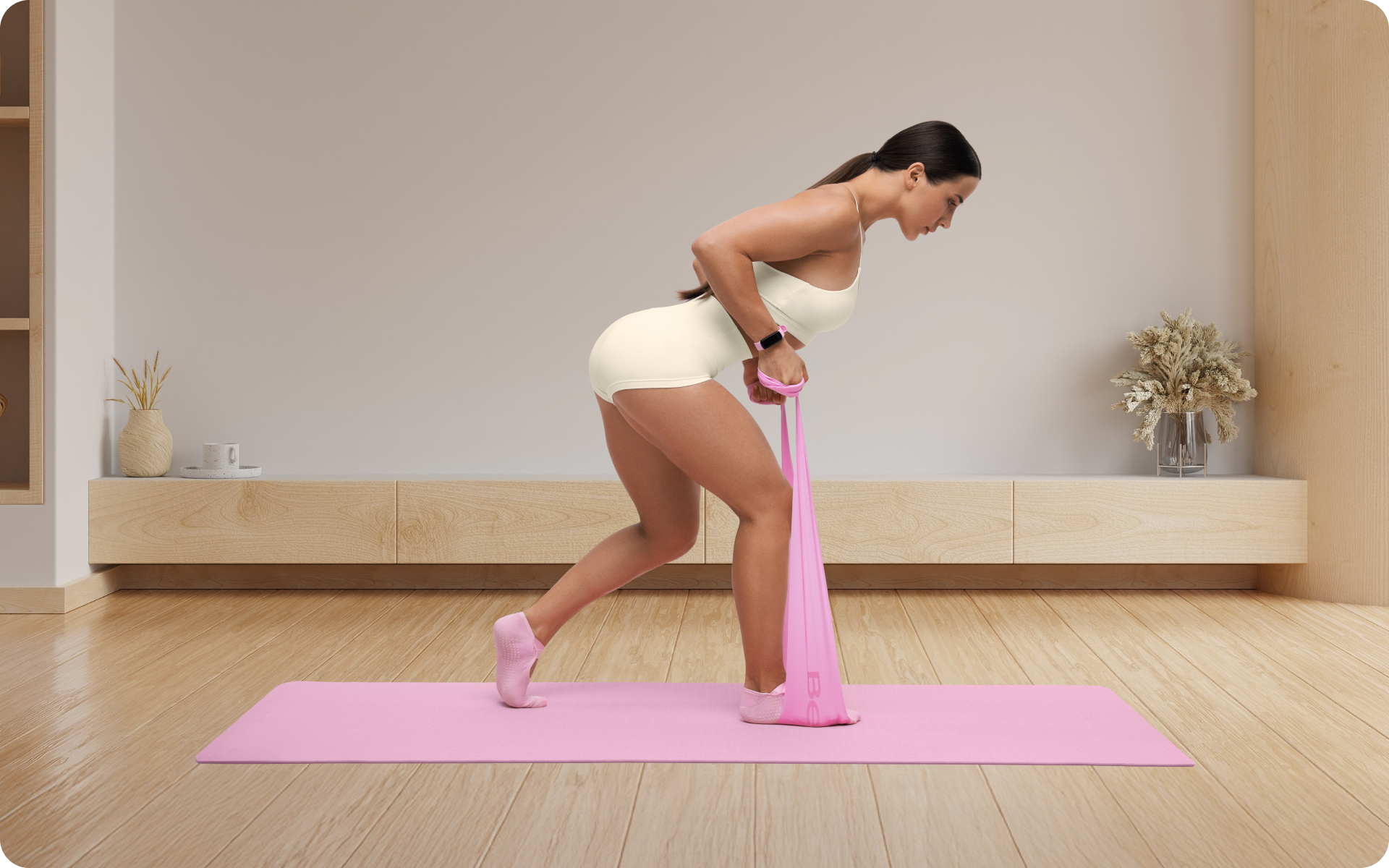
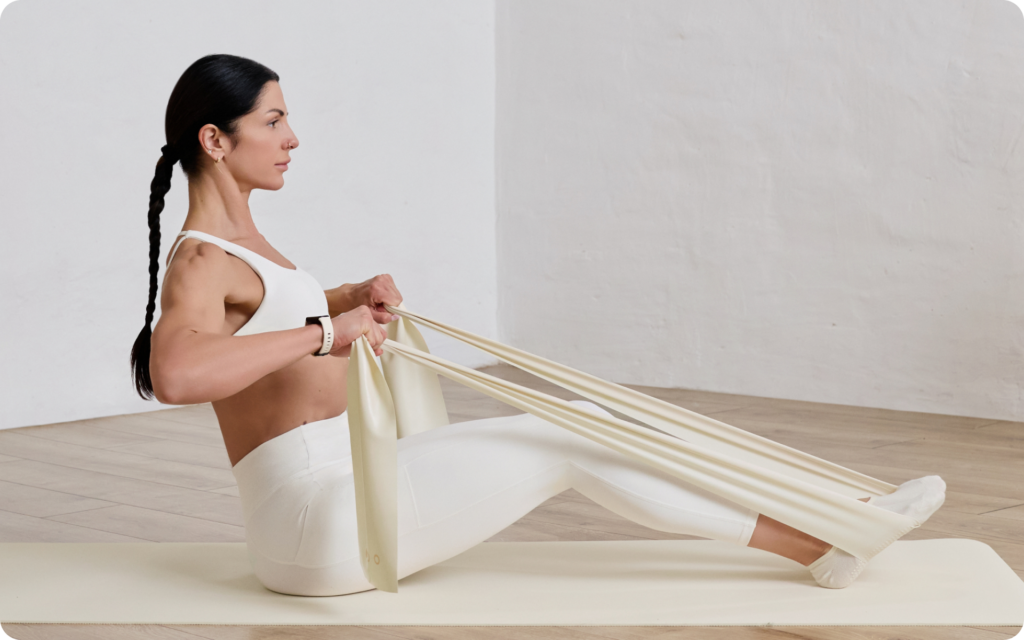
A resistance band workout plan can organize full-body strengthening around two nonconsecutive sessions. Start with manageable tension, repeat clear movement patterns, and record your progress. The sample below uses long bands and an optional short loop. Our Pilates equipment guide explains how elastic resistance differs from spring apparatus.
Following exercise and diet plans is the key in your fitness journey and greatly impacts results. In 4 weeks users can typically expect to lose not more than 1-2 lbs per week. Individual results may vary.
Explore the Resistance Pilates plan.
Key takeaways
These points summarize how to follow a resistance band workout plan and what to expect.
- The weekly schedule below is an editorial example you can adjust to your ability.
- Adults generally need muscle-strengthening activity on at least 2 days each week (1).
- Avoid working the same muscles hard on consecutive days (2).
- Band resistance increases as the material stretches; tension is not constant through every movement (3).
- Inspect bands and attachment points before exercise, replacing damaged equipment (3).
- Progress can mean better control or more manageable repetitions, without adding another workout day.
What does a useful band plan include?
A useful band plan names the exercises, equipment, weekly spacing, and method for adjusting difficulty. It should also make rest and setup clear.
Choose movements that cover the legs, hips, back, chest, shoulders, and arms. Include a trunk-control exercise. Those categories help you avoid a routine made entirely of similar glute or arm movements.
The plan below uses one full-body session repeated twice weekly. Repetition gives you time to learn the setup. You can change exercises later when there is a clear reason.
For a session-focused alternative, see our resistance bands full-body workout. Use one main routine at a time rather than stacking several full-body plans together.
Read more: 4-day gym split for women: upper/lower training
Which bands do you need?
A long flat band or suitable long loop can work for several standing exercises. A short loop is useful for lateral steps. Choose products whose instructions allow the positions described.
|
Band type |
Common use |
Selection check |
|---|---|---|
|
Long flat band |
Rows, curls, and presses |
Enough length for the intended movement |
|
Long loop |
Standing pulls and presses |
Manufacturer permits the selected foot or body contact |
|
Handled tube |
Handle-based pulling and pressing |
Handles and connections are secure |
|
Short loop |
Thigh-level lateral steps |
Fits without forcing an excessively wide stance |
Band colors and resistance labels differ across brands. A particular color does not provide a universal beginner load. Resistance also changes with stretch length (3).
Start with tension that allows controlled repetitions through the intended range. If you need to twist or jerk to finish, reduce the demand. A different band may be necessary for another exercise.
How should you check the setup?
Inspect the band, floor, and contact points before starting. Damaged elastic can fail under tension, so do not continue with visible tears or abrasion (3).
Follow the product’s stretch limit and eye-protection guidance. Keep the band away from sharp edges. Check the material if you have a latex allergy.
This sample avoids door anchors. Do not add one unless the band system specifically supports it and you follow its installation instructions. A door handle or loose furniture is not a substitute for an approved attachment.
For standing-on-band exercises, use the underfoot position permitted by the manufacturer. Keep the band secured beneath the middle of the feet, not the toes. Choose another exercise when the band slips or the setup is unsuitable.
Warm up with 5 to 10 minutes of easy walking or similar movement (2). Practice the squat and hip hinge without resistance. Set the unused band aside so it does not become a trip obstacle.
BetterMe can help you add more structure to your daily wellness routine with workouts, meal planning tools, and habit-building features. Explore the app and take a practical step toward a routine that feels more manageable for you.
What does the weekly schedule look like?
The sample uses two full-body sessions with rest time between them. Adjust the days to your schedule while preserving a nonconsecutive pattern.
|
Day |
Example activity |
Purpose |
|---|---|---|
|
Monday |
Full-body band session |
Practice the exercise sequence |
|
Tuesday |
Suitable walking or easy movement |
Aerobic activity or rest |
|
Wednesday |
Rest or another comfortable activity |
Avoid repeating hard full-body work |
|
Thursday |
Repeat the band session |
Practice consistent technique |
|
Friday to Sunday |
Suitable aerobic activity and rest |
Fit the rest of your activity week |
The table does not prescribe an aerobic duration for every day. Adults generally need 150 weekly minutes of moderate aerobic activity, or an equivalent vigorous combination (1). Build toward a suitable amount within your abilities.
At moderate effort, conversation is usually possible while singing becomes difficult (4). A band session’s setup and rest periods should not automatically count as moderate aerobic minutes.
Read more: Lower-body Pilates exercises: eight moves for your legs and hips
Which exercises should you perform?
Begin with one set of each exercise using the suggested range below. The numbers are editorial starting examples. Rest about a minute between sets or exercises, taking longer when needed for controlled technique (2).
Finish each set while you could still perform a few controlled repetitions. Do not force failure while learning. Stop exercising if you feel discomfort or become unwell (5).
1. Band squat
The squat provides a knee-and-hip bending movement. Use a bodyweight version first if band placement distracts you.
- Stand on the middle of a suitable long band with feet comfortably apart.
- Hold the ends beside your shoulders without crossing the band over your neck.
- Bend your knees and hips into a comfortable squat.
- Push through your feet to stand.
Try 8 to 12 repetitions. Keep the whole foot supported. Your knees can travel forward naturally; do not force them behind the toes. Use a shallower squat when needed.
2. Band hip hinge
The hip hinge emphasizes movement at the hips while the back remains controlled.
- Stand on the band with your feet comfortably apart.
- Hold the ends beside your legs.
- Soften your knees.
- Move your hips backward while tipping your torso forward.
- Press through your feet to stand tall.
Try 8 to 12 repetitions. Stop the downward movement before your back position changes. Avoid leaning backward at the top. Practice without the band if the movement feels unfamiliar.
3. Bent-over row
The row adds an upper-body pulling movement. Keep the range controlled rather than pulling the elbows as far back as possible.
- Stand on a suitable long band.
- Hinge forward with softly bent knees.
- Hold one end in each hand.
- Draw your elbows toward your hips.
- Lower your hands slowly.
Try 8 to 12 repetitions. Keep the neck comfortable and avoid shrugging. Use less tension if your torso swings. Skip the bent position if it conflicts with your movement advice.
4. Standing chest press
The chest press supplies an upper-body pushing movement without a door anchor. Use a long band suitable for contact behind the upper back.
- Place the band across your upper back, below the neck.
- Hold the ends beside your chest.
- Stand with one foot slightly ahead for balance.
- Press your hands forward through a comfortable range.
- Return your hands slowly.
Try 8 to 12 repetitions. Keep the band below the neck and check that it cannot slide upward. Use a wall push-up instead if the product or setup is unsuitable.
5. Band curl
The curl adds a simple arm movement that is easy to record consistently.
- Stand on the middle of the band.
- Hold the ends with arms beside your body.
- Bend your elbows to bring your hands upward.
- Lower your hands with control.
Try 8 to 12 repetitions. Keep your upper arms near your sides. Avoid leaning backward to finish. Use a lighter band if the last part becomes a whole-body pull.
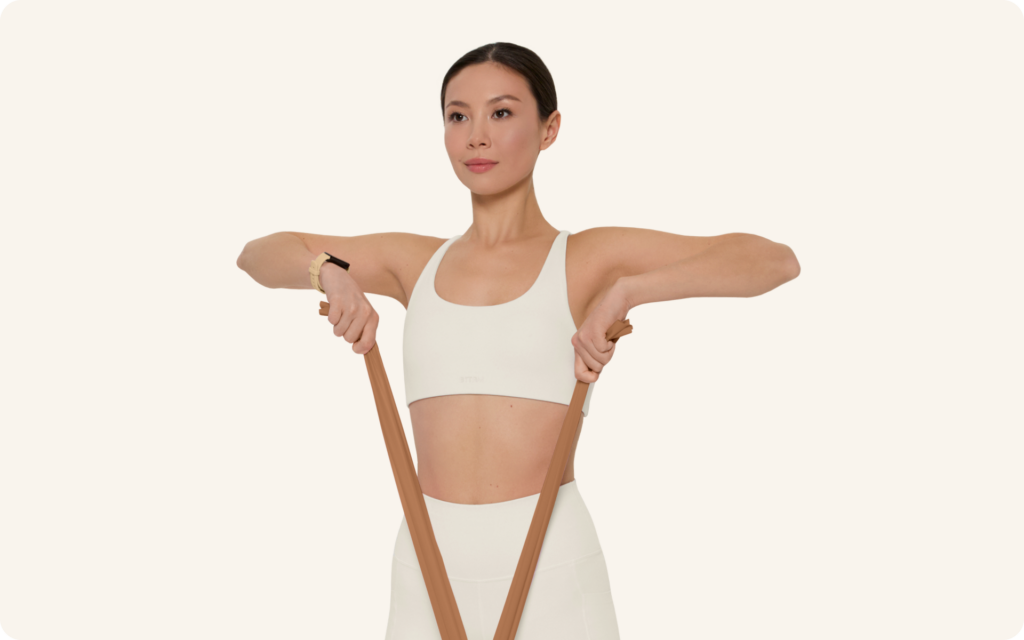
6. Low shoulder raise
The shoulder raise uses a modest range and a light band. Overhead movement is not required for this sample.
- Stand on the band with one end in each hand.
- Keep your elbows softly bent.
- Raise your arms forward only to a comfortable height below shoulder level.
- Lower your arms slowly.
Try 6 to 10 repetitions. Choose less tension than you use for rows when needed. Avoid shrugging or arching your back. Omit the movement if shoulder discomfort occurs.
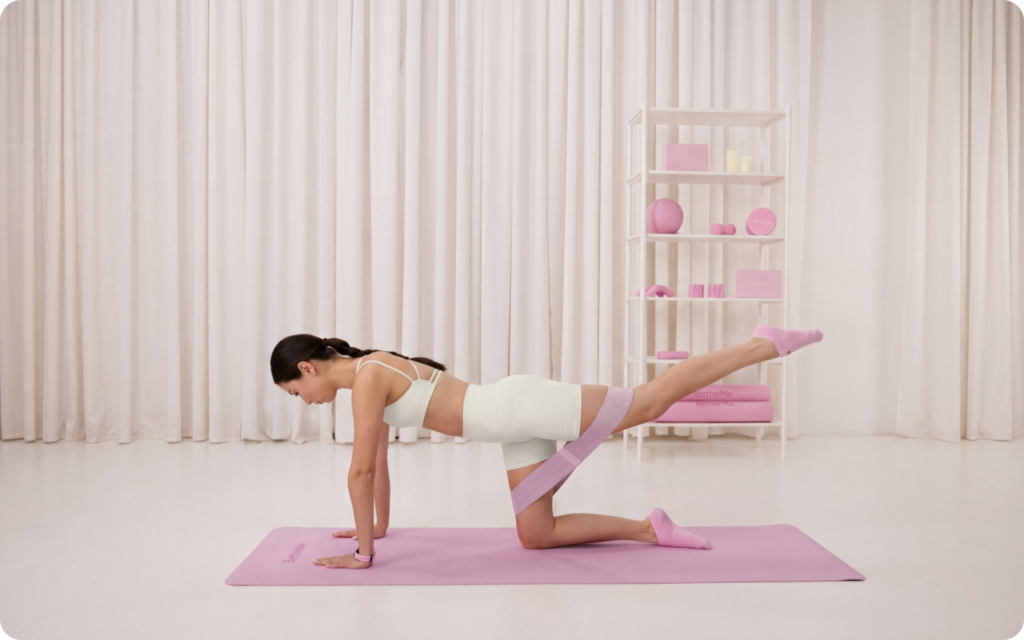
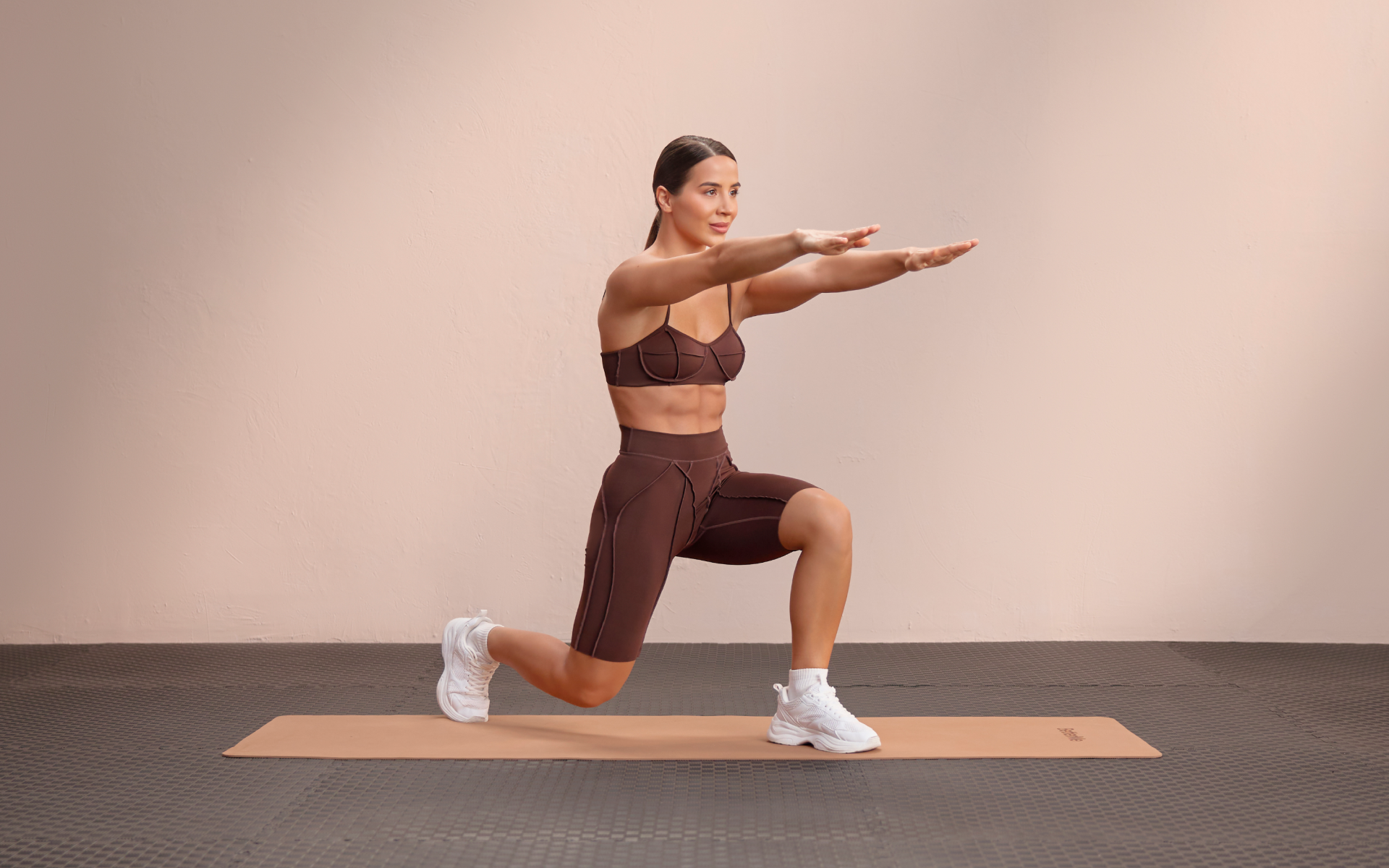
7. Lateral steps
Lateral steps use a short loop above the knees. They add sideward hip movement to the routine.
- Position the loop above your knees.
- Stand with feet apart and knees softly bent.
- Take a small step sideways.
- Bring the other foot inward without snapping the band loose.
- Repeat in the opposite direction.
Try 6 steps each way. Keep the trunk steady and steps small. Use no band if your knees collapse inward or balance becomes uncertain.
8. Supine heel slide
The heel slide gives the trunk a controlled task without adding band tension.
- Lie on your back with bent knees and feet flat.
- Slide one heel forward along the floor.
- Return the heel while keeping your pelvis steady.
- Alternate sides.
Try 6 slides per side. Shorten the slide if your back position changes. Keep breathing normally. The unbanded movement belongs in the plan because equipment is not required for every exercise.
How should you progress the plan?
Progress when the current exercise feels controlled across repeated sessions. Record the band, hand position, repetitions, and any setup changes. Those details make the next session easier to compare.
First, work toward the upper end of the suggested repetition range. Then consider a slightly stronger band or a second set. Change one variable at a time.
Do not shorten the band beyond its permitted stretch simply to increase tension. A stronger product may be more appropriate. Recheck technique whenever resistance changes.
Keep rest long enough to repeat the movement well. Reducing rest is not required for progress. A rushed circuit may make band handling less consistent.
For additional considerations about exercise selection and changing circumstances, read resistance band workouts for women. Use the guidance to adjust this plan rather than adding an entire second program.
Frequently Asked Questions
Can you use bands every day?
Daily use depends on the activity and effort. Avoid repeating hard work for the same muscles on consecutive days (2). This sample uses two nonconsecutive full-body sessions.
Can a band plan help with belly fat?
The plan does not promise targeted fat loss. Activity contributes to weight management alongside eating patterns and other factors (6). Track movement and training consistency rather than expecting a specific waist change.
Can bands replace all weights?
Bands can provide resistance for many movements, but they do not duplicate every weight exercise. Available tension and setup options may limit some goals. Choose equipment according to the task you need to train.
Explore the Resistance Pilates plan.
The bottom line
Begin with two nonconsecutive sessions and one controlled set of each movement. Record the setup before adding resistance or sets. Keep equipment checks, rest, and suitable aerobic activity within the same weekly plan.
DISCLAIMER:
This article is intended for general informational purposes only and does not serve to address individual circumstances. It is not a substitute for professional advice or help and should not be relied on for making any kind of decision-making. Any action taken as a direct or indirect result of the information in this article is entirely at your own risk and is your sole responsibility.
BetterMe, its content staff, and its medical advisors accept no responsibility for inaccuracies, errors, misstatements, inconsistencies, or omissions and specifically disclaim any liability, loss or risk, personal, professional or otherwise, which may be incurred as a consequence, directly or indirectly, of the use and/or application of any content.
You should always seek the advice of your physician or other qualified health provider with any questions you may have regarding a medical condition or your specific situation. Never disregard professional medical advice or delay seeking it because of BetterMe content. If you suspect or think you may have a medical emergency, call your doctor.
SOURCES:
- Adult Activity: An Overview (2023, cdc.gov).
- Weight training: Do’s and don’ts of proper technique (2025, mayoclinic.org).
- THERABAND Professional Latex Resistance Bands (2022, support.performancehealth.com).
- How to Measure Physical Activity Intensity (2025, cdc.gov).
- Pilates video for beginners (2025, nhs.uk).
- Physical Activity and Your Weight and Health (2026, cdc.gov).
 By
 Reviewed by