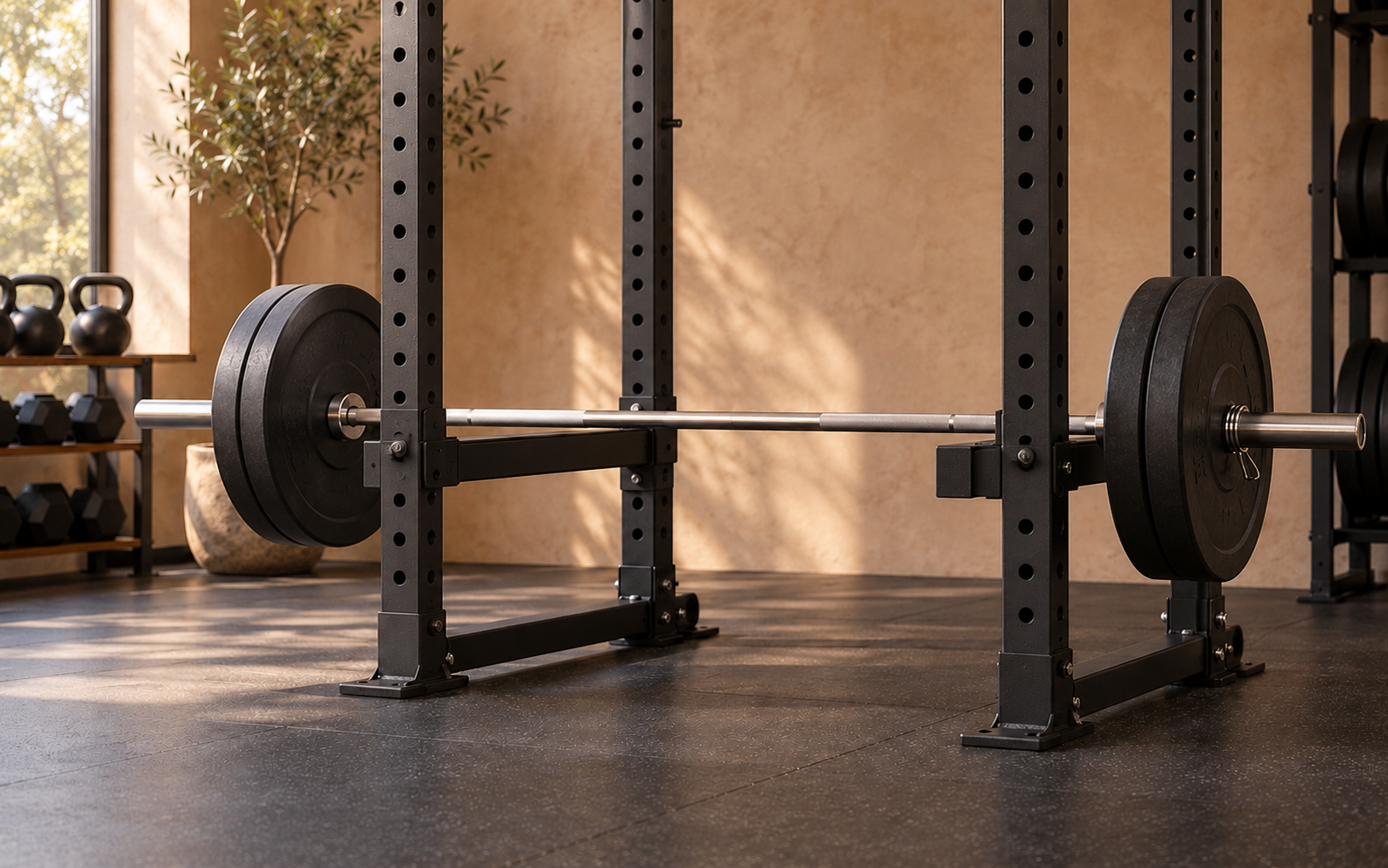
A rack pull is a partial deadlift that starts from bar rack pins set near knee height. It trains the top half of the pull, so a lifter can practice lockout and handle heavier weights. It suits people who can already deadlift with correct form. Beginners usually learn the full lift first.
This guide covers setup height, technique, muscles worked, and programming. Pair it with our guide to deadlift variations to compare similar lifts.
Key takeaways
These points summarize how the lift works and where it fits in a strength training routine.
- The rack pull exercise is a deadlift variation that starts with the bar on pins, usually around the knees (1).
- The shorter range of motion lets many lifters use more weight than in a full range deadlift.
- Hinge lifts in this family activate the glutes, hamstrings, and erector spinae muscles, with patterns that differ by lift (2).
- In a review, full range of motion generally matched or beat partial ranges for lower-body muscle growth (3).
- Pin height changes the lift: lower pins add range, while high rack pulls mainly train lockout.
- Most programs use the lift as an accessory exercise after heavier compound work, not as a daily movement.
- Current guidance suggests training all major muscle groups at least twice weekly (4).
What is a rack pull?
The rack pull is a variation of the deadlift that begins from safety pins or blocks instead of the floor. The lifter grips the bar, stands up to lockout, and lowers it back to the pins. The movement copies the top portion of a traditional deadlift (1).
Because the bar starts higher, the knees and hips begin less bent. That shorter path changes which part of the pull is hardest. It also makes the exercise easier to repeat for sets with heavy loads.
Coaches often call it a partial deadlift, block pull, or pin pull. The name changes, but the idea stays the same.

What are the benefits of rack pulls?
This lift offers practice at lockout, extra work for the traps and lats, and grip training with heavier loads. These benefits depend on technique, pin height, and how the lift fits your plan.
Practice for the top of the pull
Some lifters slow down near the knees or at lockout during a standard deadlift. Starting at that height lets them rehearse the finish with focused sets. Use it to practice driving the hips forward while the bar stays close.
Trap, lat, and posterior chain work
Holding a heavy weight asks the traps and lats to keep the shoulders and scapula in position. The glutes, hamstrings, and spinal erectors extend the hip and hold the trunk steady. This posterior chain work can add training volume without extra full-range sets.
Grip strength
A heavier bar is harder to hold. Pin pulls let you train your grip with loads you might not lift from the floor. Use chalk or a double overhand grip before switching to straps.
Strength for sport
Muscular strength is linked with sprinting, jumping, and change-of-direction performance in athletes (5). This exercise is one way to build pulling strength within a wider plan. It does not replace practice of the sport itself.
What muscles does a rack pull work?
A rack pull mainly works the glutes, hamstrings, erector spinae muscles, traps, and lats. It is a compound exercise, so several joints move together in each rep. Research on deadlift variations reports activity of the hip and back extensors, with differences between exercises (2). The table lists the primary muscles and their role in this lift.
|
Muscle |
Location |
Role in the lift |
|---|---|---|
|
Glutes |
Hip and buttocks |
Drive the hips forward to lockout |
|
Hamstrings |
Back of the thigh |
Help extend the hip |
|
Erector spinae muscles |
Along the spine |
Keep the trunk upright and stable |
|
Trapezius (traps) |
Upper back and neck |
Hold the shoulders as the load hangs |
|
Latissimus dorsi (lats) |
Sides of the back |
Keep the bar close to the body |
|
Forearm flexors |
Forearm, near the elbow |
Hold the grip |
|
Quadriceps |
Front of the thigh |
Assist at the start, especially from lower pins |
The traps and lats work mostly to hold position rather than to move the bar. The lower back muscles resist bending, so a braced trunk matters with every rep.
Looking for a way to break the vicious cycle of weight loss and tone up all the jiggly parts? Watch the extra pounds fly off and your muscles firm up with the BetterMe app!
Why do rack pulls instead of deadlifts?
People choose pin pulls to focus on lockout, add trap and lat work, or manage training fatigue. The lift does not replace a full pull, which trains the whole range from the floor. The comparison below shows the main differences.
|
Feature |
Rack pull |
Conventional deadlift |
|---|---|---|
|
Starting position |
Bar on pins, near the knees |
Bar on the floor |
|
Range of motion |
Shorter |
Full |
|
Typical load |
Often heavier |
Lighter than a high pin pull |
|
Main focus |
Lockout, traps, and grip |
Whole pull from the floor |
|
Common use |
Accessory or supplemental exercise |
Main lift |
A shorter range of motion is not automatically lower risk. Heavier loads still put strain on the lower back and hips, so technique and load selection matter. Some people with limited hip mobility prefer the higher start, but that choice is individual.

Is a rack pull the same as an RDL?
No. A rack pull starts from a dead stop on the pins. A Romanian deadlift starts standing and lowers the bar. The RDL keeps the knees softly bent and pushes the hips back to stretch the hamstrings. The pin pull begins at the bottom of the rep and finishes at lockout.
Both lifts share the hip hinge of the deadlift movement. Use the RDL for hamstring work through a longer stretch. Use pin pulls for heavier lockout practice and grip.
How low should a rack pull be?
For most people, set the pins just below or level with the kneecaps. That position trains the part of the regular deadlift where many people slow down. Choose the height that lets you keep a flat back and the bar close.
|
Pin height |
Range of motion |
Main purpose |
|---|---|---|
|
Below the knee |
Longest of the three |
Closer to a standard deadlift |
|
Level with the knees |
Medium |
Common starting point |
|
Mid-thigh position |
Shortest |
Lockout and grip; high rack pulls |
Higher pins shorten the movement and may allow heavier loads. Research has not measured how much each pin height carries over to the floor deadlift. A review of range-of-motion studies supports including full-range work for lower-body muscle growth (3). Keep full floor pulls in your plan if that range is your goal.

How do you perform a rack pull with proper form?
To perform the rack pull, set the pins first, then brace, pull, and lock out. Warm up with lighter sets before you perform the exercise with working weights. Many lifters use these sets to rehearse the pull. Evidence on warm-ups and injury in sport is mixed (6).
- Set the bar on the pins of a power rack, just below the kneecaps.
- Stand close to the bar with feet about hip-width apart.
- Push your hips back and grip the bar just outside your legs.
- Pull your shoulders back and down to tighten the lats.
- Take a breath and brace your midsection.
- Drive through the floor and push the hips forward to lift the barbell to standing.
- Pause briefly at lockout without leaning back.
- Lower the bar back to the pins under control.
Keep your back straight from neck to hips throughout each rep. Reset your brace before the next lift.
If you tend to let yourself off the hook, raise the white flag when things get tougher than you expected, send yourself on an unconscious binge-eating trip – BetterMe app is here to help you leave all of these sabotaging habits in the past!
What are common rack pull mistakes to avoid?
The most common mistakes are using too much weight, letting the bar drift forward, and leaning back at the top. Each one shifts the load away from the hips. Watch for these errors:
- Using an amount of weight you cannot lock out with a neutral spine.
- Starting with the bar away from the legs.
- Bending the elbows to yank the bar.
- Hyperextending the lower back at lockout.
- Dropping the bar onto the pins.
- Repeating heavy sets every single workout without recovery days.
Stop the set if your back rounds or the movement causes pain. Speak with a doctor or physical therapist if discomfort persists.

What rack pull variations can you try?
You can try snatch grip, trap bar, banded, and single-arm rack pulls. These variations change the grip, the equipment, or the pin height, which shifts the focus slightly.
Snatch grip rack pull
A wider grip places more demand on the upper back muscles and grip. Start lighter than your usual load.
Trap bar rack pull
A trap bar on low blocks lets you stand inside the frame. The handles keep the load closer to your center.
Banded rack pull
Bands attached to the bar add tension near lockout. They change resistance through the movement and require appropriate equipment, setup, and experience.
Single-arm rack pull
Hold one dumbbell or kettlebell on a low box beside you. Pull it to standing while keeping your hips level.
How should you program rack pulls into a workout?
Incorporate rack pulls into your workout routine after your first heavy lift, once or twice weekly, as an accessory exercise. Training each major muscle group at least twice a week fits current guidance (4). Adjust volume to your recovery and goals.
The table shows a sample plan, not a prescription.
|
Goal |
Sets |
Reps |
Rest |
|---|---|---|---|
|
Lockout strength |
3 to 5 |
3 to 5 |
2 to 3 minutes |
|
Grip and trap work |
3 to 4 |
6 to 8 |
90 to 120 seconds |
|
Muscle mass |
3 |
8 to 10 |
60 to 90 seconds |
For example, on deadlift day, finish your floor pulls first. Then add 3 sets of pin pulls from just below the knees. Our guide on how many reps to do explains rep ranges for floor pulls.
New lifters can follow a beginner strength program before adding partial pulls.

Frequently Asked Questions
Are rack pulls good for beginners?
Not as a first lift. This exercise suits people who can already hinge and brace well. Beginners usually learn the full hinge from the floor first. See our deadlift for beginners guide.
How heavy should rack pulls be?
Choose a load you can lock out with a flat back for all planned reps. Many people can pull more from the pins than from the floor, but technique sets the limit.
Can rack pulls replace deadlifts?
Not fully. Pin pulls can stand in when floor pulls are not possible. They skip the bottom range of the actual deadlift, so they are not a full replacement.
How often can you do rack pulls?
Once or twice a week is common. Many lifters leave about 48 hours between heavy pulling sessions. Adjust the gap to your fatigue, other training, and individual needs.
The bottom line
This partial pull trains lockout, upper back, and grip. Set the pins near the knees, keep the bar close, and use loads you control. Add it after your first heavy lift and keep floor pulls if that range matters to you.
DISCLAIMER:
This article is intended for general informational purposes only and does not serve to address individual circumstances. It is not a substitute for professional advice or help and should not be relied on for making any kind of decision-making. Any action taken as a direct or indirect result of the information in this article is entirely at your own risk and is your sole responsibility.
BetterMe, its content staff, and its medical advisors accept no responsibility for inaccuracies, errors, misstatements, inconsistencies, or omissions and specifically disclaim any liability, loss or risk, personal, professional or otherwise, which may be incurred as a consequence, directly or indirectly, of the use and/or application of any content.
You should always seek the advice of your physician or other qualified health provider with any questions you may have regarding a medical condition or your specific situation. Never disregard professional medical advice or delay seeking it because of BetterMe content. If you suspect or think you may have a medical emergency, call your doctor.
SOURCES:
- Understanding the deadlift and its variations (2020, journals.lww.com)
- Electromyographic activity in deadlift exercise and its variants. A systematic review (2020, journals.plos.org)
- Effects of range of motion on muscle development during resistance training interventions: A systematic review (2020, pubmed.ncbi.nlm.nih.gov)
- ACSM publishes updated resistance training guidelines (2026, acsm.org)
- The Importance of Muscular Strength in Athletic Performance (2016, pubmed.ncbi.nlm.nih.gov)
- Does warming up prevent injury in sport: the evidence from randomised controlled trials? (2006, ncbi.nlm.nih.gov)
 Reviewed by
 Reviewed by