
This Pilates moves list follows the 34 mat exercises in Joseph Pilates’ book, from the Hundred to the Push-Up. Use it to recognize names from class and see which exercises call for guidance. For a first session, choose a few adapted movements from the list or try a beginner’s weekly Pilates routine*.*
Key takeaways
Knowing the order helps you read a class plan and choose what to practice.
- Joseph Pilates published the 34 original mat exercises in his 1945 book, Return to Life Through Contrology (1).
- The classical sequence includes advanced inversions and rolling movements near the beginning as well as near the end.
- Common Pilates teaching principles include breathing, control, concentration, precision, centering, and flow (2).
- You can explore arm pumps, small leg circles, and seated turns without doing all 34 exercises in one sitting.
- A beginner class can use a mat and comfortable clothes. If a movement causes pain or makes you feel unwell, stop (3).
- If floor transfers are difficult, a standing or chair-based Pilates class gives you another starting point (4).
What are the 34 Pilates mat exercises?
Joseph Pilates introduced these exercises in Return to Life Through Contrology in 1945 (1). The table follows the published order, using familiar English names. Teachers sometimes shorten a title or use another name, such as “rolling like a ball” for Rolling Back.
People often search for “Pilates poses” to identify something they saw in a class. The photograph may show the top of a bridge or the balance point of a Teaser. In both cases, the movement into and out of that position is part of the exercise. Read the descriptions as an index. For advanced movements, learn the setup and transitions with a qualified instructor.
|
Order |
Mat exercise |
What happens in the classical movement |
|---|---|---|
|
1 |
Hundred |
Small arm pumps accompany a breathing rhythm while the trunk and legs hold position. |
|
2 |
Roll Up |
The body moves between lying on the back and reaching forward in sitting. |
|
3 |
Roll Over |
The legs travel overhead as the hips lift. This is an advanced inversion. |
|
4 |
One Leg Circle |
One leg draws a circle while the pelvis stays relatively still. |
|
5 |
Rolling Back |
A rounded, seated balance becomes a backward rock and a return to sitting. |
|
6 |
One Leg Stretch |
One knee draws in as the other leg reaches away. |
|
7 |
Double Leg Stretch |
Both arms and legs reach away together, then return toward the center. |
|
8 |
Spine Stretch |
A seated forward reach and return move the spine through a comfortable range. |
|
9 |
Rocker With Open Legs |
Balancing with the legs apart leads into a controlled rock and return. |
|
10 |
Corkscrew |
The legs move together in a circular pattern. Classical versions include a hip lift. |
|
11 |
Saw |
A seated turn combines with a forward reach toward the opposite foot. |
|
12 |
Swan Dive |
A prone back extension develops into rocking in the full version. |
|
13 |
One Leg Kick |
The knees bend in turn while the upper body is supported on the forearms. |
|
14 |
Double Kick |
Both heels move toward the hips, followed by an upper-body extension. |
|
15 |
Neck Pull |
A seated rise and return challenge trunk control. The name does not call for tugging the neck. |
|
16 |
Scissors |
The raised pelvis stays supported as the legs alternate in a split. This is an advanced inversion. |
|
17 |
Bicycle |
Alternating pedaling movements add coordination to an inverted, supported position. |
|
18 |
Shoulder Bridge |
The hips stay raised while a leg moves. A simpler version keeps both feet planted. |
|
19 |
Spine Twist |
The torso turns in sitting while the pelvis stays facing forward. |
|
20 |
Jack Knife |
The hips and legs rise into a demanding inversion. Seek individual instruction. |
|
21 |
Side Kick |
The upper leg travels forward and back from a side-lying position. |
|
22 |
Teaser |
The trunk and legs form a seated V, then lower with control. |
|
23 |
Hip Twist With Stretched Arms |
From supported sitting, both legs trace a circle together. |
|
24 |
Swimming |
Opposite arms and legs alternate while the body lies face down. |
|
25 |
Leg Pull Front |
A face-down plank adds a single-leg lift while the trunk stays steady. |
|
26 |
Leg Pull |
A face-up support position adds alternating leg lifts. |
|
27 |
Side Kick Kneeling |
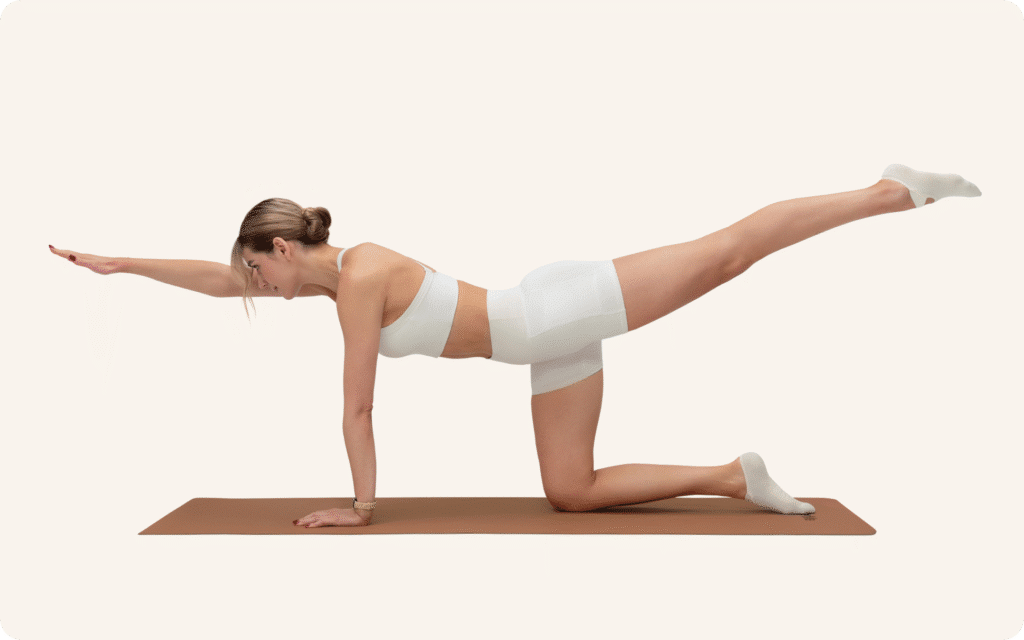
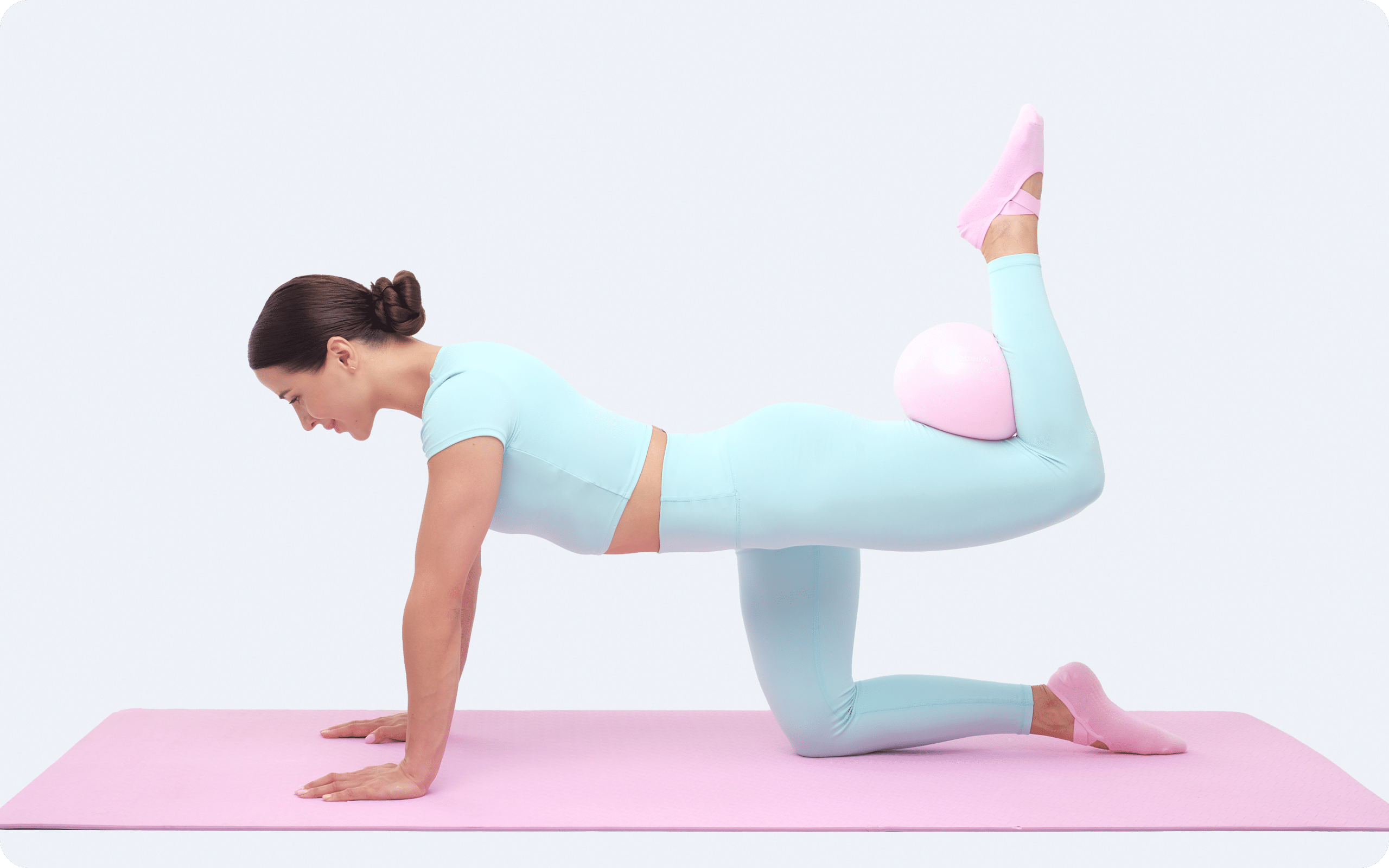
One hand and one knee support the body as the free leg moves. |
|
28 |
Side Bend |
The body lifts from side sitting into a supported side arc. |
|
29 |
Boomerang |
A roll overhead, leg change, and seated balance form a complex transition. |
|
30 |
Seal |
A seated balance and backward rock are combined with small foot claps. |
|
31 |
Crab |
Crossed legs and a forward roll create a demanding movement near the head and neck. |
|
32 |
Rocking |
A face-down back extension becomes a rock while the ankles are held. |
|
33 |
Control Balance |
The legs trade places in an advanced overhead balance. |
|
34 |
Push-Up |
A standing roll down leads to a walkout, push-up, and return to standing. |
You may hear “single leg stretch” for One Leg Stretch or “open leg rocker” for Rocker With Open Legs. A teacher may also use a classical name for a preparation. Check the starting position before following along. A supported inversion and a simple alternating leg reach both sometimes go by “scissors.”
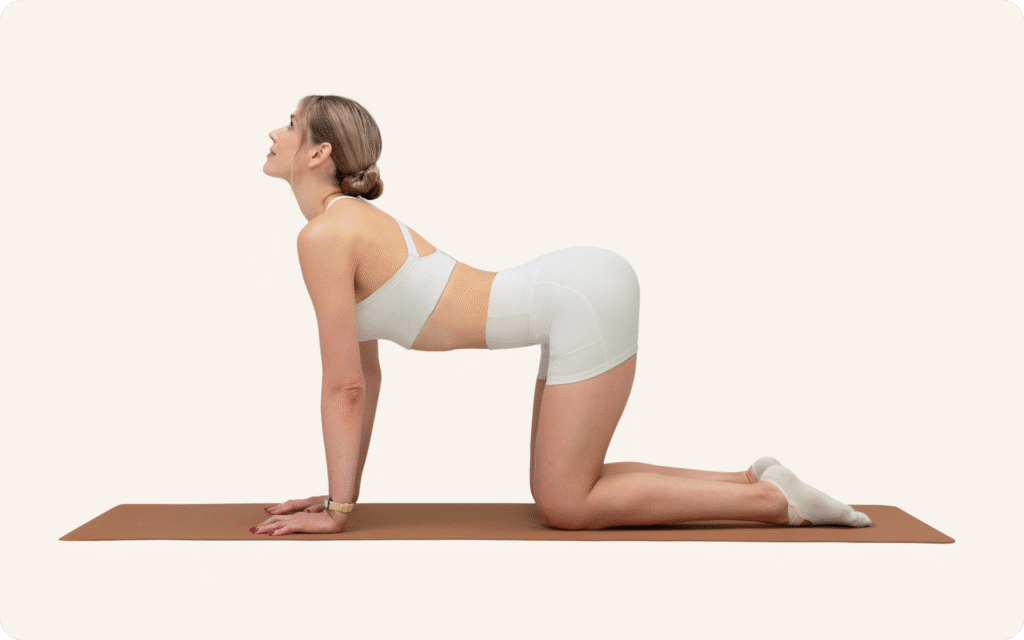
Read more: Lower-body Pilates exercises: eight moves for your legs and hips
Which Pilates moves can a beginner try first?
Start with one exercise you can set up easily and adjust without losing your place. Choose a position you can comfortably enter and leave. A folded towel can support your head in side lying. A mat can make floor work more comfortable, and a public health beginner class suggests wearing clothing you can move in (3).
How do you adapt the Hundred and One Leg Circle?
For the Hundred, lie on your back with knees bent, feet planted, and head resting. Reach both arms toward your feet. Lift your hands slightly and make small pumps while breathing easily. Pause after two breaths. You can practice the rhythm without lifting your head or counting to one hundred.
For One Leg Circle, keep one foot down and lift the other knee, bent, over its hip. Draw a small circle with that knee. Reverse after two or three circles and switch sides. If your hips follow the moving knee, shrink the circle. The lower-body Pilates exercise guide includes another way to practice leg circles.
How do you adapt Shoulder Bridge and Spine Twist?
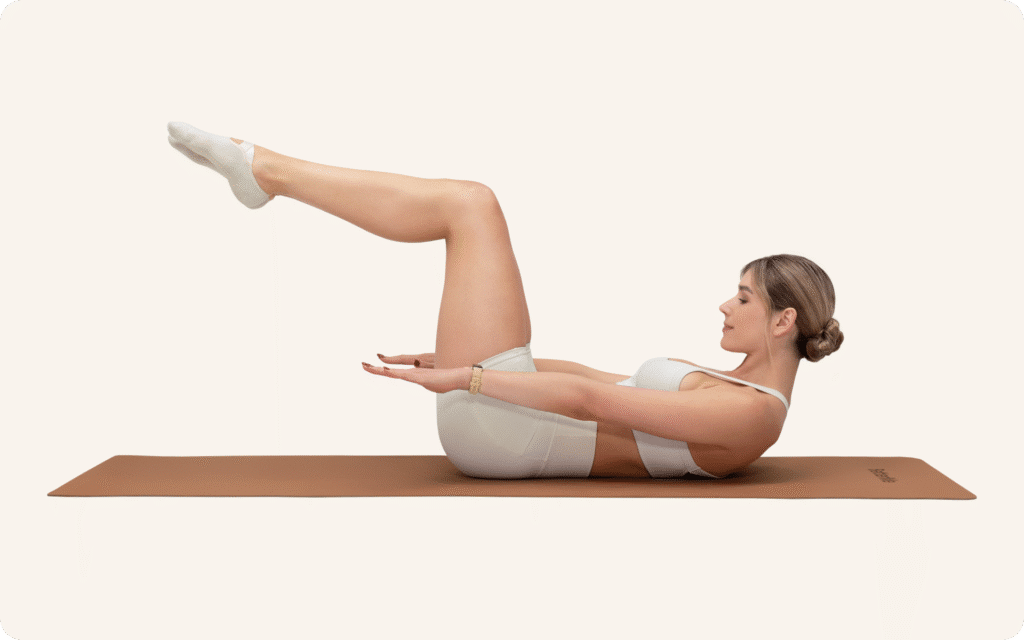
For Shoulder Bridge preparation, plant both feet and leave them down throughout. Press your feet into the mat and raise your hips a little. Pause for a comfortable breath, then lower. Keep your head resting and your gaze upward. Three repetitions give you time to notice whether one foot is doing more of the pushing.
For Spine Twist, sit tall with your knees comfortably bent. Cross your arms lightly over your chest. Turn your ribs a short distance toward one side, return, and try the other side. Your knees can help you notice when your hips move with your ribs. Practice seated on a firm chair if that position feels easier.
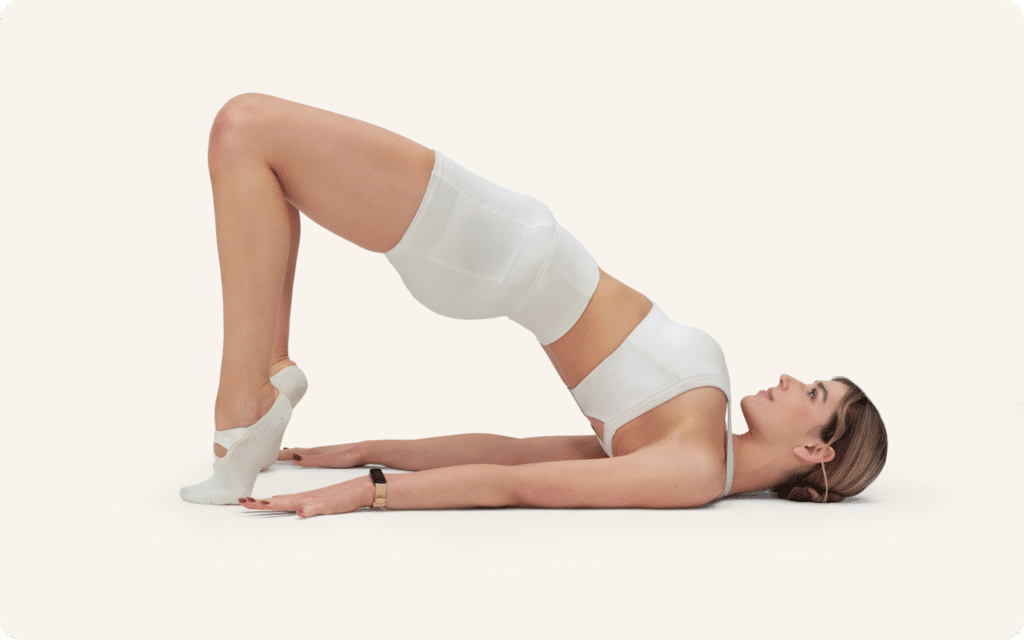
BetterMe offers a variety of workouts, recipes, challenges, and support tools to help you stay more consistent with your wellness routine. Explore the app to find features that fit your goals, preferences, and schedule.
What do the Pilates principles mean during a movement?
Pilates teaching commonly describes six principles, including centering, concentration, control, precision, breathing, and flow (2). Think about how those words apply to one small leg circle. Concentration might mean giving your attention to the planted foot for one repetition. Precision might mean making the second circle about the same size as the first.
Control shows up when you can slow down or reverse direction without a sudden swing. Centering can mean noticing what your trunk does while a leg moves. Breathing gives you a rhythm you can maintain. Flow might mean bringing the leg home smoothly before switching sides. Pick one cue at a time. Trying to remember all six often distracts from the movement itself.
Read more: Home Pilates workout guide: a beginner routine with no equipment
How do you choose a first mat sequence?
A short practice might start with easy walking, then include Hundred arm pumps, bent-knee circles, and a two-foot bridge. Sit up for a small Spine Twist and finish by standing at your own pace. Make a few repetitions of each exercise. On a second day, try the same order and change one detail you noticed.
If you have little room, choose movements whose reach stays within the mat. If floor transfers are difficult, choose a standing or chair-based practice. One chair-based class includes seated options and uses a firm seat and backrest (4). A guide to standing Pilates exercises can help you recognize the upright variations.
Think twice before copying a dramatic movement from a still image. An instructor can see whether you can control the entry, the movement itself, and the return. Ask for a preparation before learning inversions, forward rolls near the head, or the full Swan Dive. Stop if you feel pain or become unwell, and seek advice about symptoms that concern you or persist (3).
Frequently Asked Questions
Do I have to do all 34 moves in order?
No. The order tells you how the original series was organized (1). A contemporary beginner class may select a handful of movements and teach preparations for them. If a teacher calls a class “classical mat,” ask which level it assumes and whether the teacher offers alternatives during the session.
Are mat Pilates and reformer Pilates the same?
They share movement ideas, but the equipment changes the experience. A mat provides a fixed surface, while a reformer has a moving carriage and springs. A familiar exercise name can therefore involve a different setup or resistance. Read the introduction to Pilates equipment when choosing between a mat class and an equipment class.
Which original exercise is easiest to recognize?
The Hundred is often recognizable because the arms pump repeatedly. A smaller preparation keeps both feet down and the head resting. If you see someone making small circles with one leg while the other stays quiet, you may be looking at One Leg Circle instead.
What can regular mat practice help you work on?
A trial involving 50 active middle-aged adults tested twice-weekly, hour-long Pilates classes for 12 weeks. The Pilates group improved abdominal endurance, upper-body endurance, and hamstring flexibility compared with the control group (5). That study tested a broader program. It cannot tell you what one move or a short sequence will change for you.
The bottom line
Keep the list as a reference when a class name sounds unfamiliar. Try a few adapted movements you can enter and leave comfortably. Save the full rolling and inverted exercises for instruction, and let each practice teach you one concrete detail about how a movement feels.
DISCLAIMER:
This article is intended for general informational purposes only and does not serve to address individual circumstances. It is not a substitute for professional advice or help and should not be relied on for making any kind of decision-making. Any action taken as a direct or indirect result of the information in this article is entirely at your own risk and is your sole responsibility.
BetterMe, its content staff, and its medical advisors accept no responsibility for inaccuracies, errors, misstatements, inconsistencies, or omissions and specifically disclaim any liability, loss or risk, personal, professional or otherwise, which may be incurred as a consequence, directly or indirectly, of the use and/or application of any content.
You should always seek the advice of your physician or other qualified health provider with any questions you may have regarding a medical condition or your specific situation. Never disregard professional medical advice or delay seeking it because of BetterMe content. If you suspect or think you may have a medical emergency, call your doctor.
SOURCES:
- Return to Life Through Contrology, by Joseph H. Pilates and William J. Miller (1945, book)
- Defining](https://researchoutput.csu.edu.au/en/publications/defining-pilates-exercise-a-systematic-review/) Pilates exercise: a systematic review (20[12, researchoutput.csu.edu.au)
- Pilates](https://www.nhs.uk/live-well/exercise/pilates-and-yoga/pilates-for-beginners/) video for beginners [ (2025, nhs.uk)
- Chair-based pilates video workout (2025, nhs.uk)
- Pilates](https://pubmed.ncbi.nlm.nih.gov/20145572/) for improvement of muscle endurance, flexibility, balance, and posture (201[0, pubmed
 Reviewed by
 Reviewed by