
When you’re building a sustainable fitness routine, one of the most common questions is about frequency. How often do you need to practice an exercise to see real, lasting change? For Pilates, a system that is designed to unify mind, body, and spirit through precise movement, the answer is more nuanced than a simple number. It involves understanding the physiological adaptations your body undergoes.
This guide will break down the science behind Pilates frequency, specifically focusing on a twice-weekly schedule. We’ll explore what you can realistically achieve, how it fits into an active lifestyle, and when you might need to adjust your routine for specific goals such as athletic performance or rehabilitation.
Using insights from recent scientific studies and foundational Pilates principles, we’ll provide clear, actionable advice to help you optimize your training.
You’ll learn:
- The benefits training Pilates twice a week can deliver.
- How to structure your sessions for maximum effectiveness.
- The physiological reasons behind recommended rest days.
- How to align your practice with goals ranging from general wellness to performance enhancement.
Let’s examine what a commitment of two sessions per week can do for you.
What Is Pilates 2 Times a Week Effective for?
Committing to Pilates two times a week is a highly effective strategy for achieving significant and measurable improvements in:
- Strength
- Control
- Overall function
This isn’t just an arbitrary number, it aligns with the foundational principles of motor learning and neuromuscular adaptation.
Scientific research has consistently supported a twice-weekly schedule to be as powerful a dose for tangible results as other training frequencies (1).
Building Foundational Strength and Control
The core of the Pilates method is developing a “powerhouse” – the band of muscles that encircle your center, from the lower ribs to the pelvic floor. This includes deep abdominal muscles such as the transversus abdominis (TrA) and multifidus, which stabilize the spine (2).
Achieving control over these muscles is a skill that requires consistent practice.
- Neuromuscular Adaptation: Your brain and muscles learn to communicate more efficiently. With two sessions per week, you’ll reinforce these new neural pathways before they degrade, leading to quicker motor skill acquisition. Initial gains, felt as improved stability and coordination, often appear within 2 to 4 weeks (3).
- Muscular Endurance and Strength: A key study published in the International Journal of Environmental Research and Public Health examined post-menopausal women who participated in a supervised mat Pilates program twice a week for 12 weeks (4). The results were impressive:
- Abdominal Strength: Increased by 31.5%
- Lower-Body Strength: (Measured by a 30-second chair stand test) Increased by 13.5%
- Upper-Body Strength: (Measured by handgrip) There was a slight increase
These findings show that a twice-weekly frequency provides enough stimulus to trigger significant strength adaptations, particularly in the core and lower body. The training Pilates twice a week benefits aren’t just theoretical, they’re quantifiable.
Reducing Pain and Improving Function
Pilates is renowned for its therapeutic applications, particularly for musculoskeletal pain.
A 2025 systematic review published in the Annals of Physical and Rehabilitation Medicine synthesized data from 11 studies. They found that Pilates effectively lessens pain and disability for individuals with musculoskeletal conditions in their limbs when compared to no intervention (5).
The consistency of practicing twice a week is essential for this outcome. It helps with the management of pain through several mechanisms:
- Graded Exposure: Gently and progressively reintroducing movement to sensitive areas helps desensitize the nervous system (6).
- Improved Proprioception: Regular practice enhances your body’s awareness of its position in space, improving joint stability and reducing compensatory movements that can cause strain (7).
- Enhanced Movement Confidence: By building strength and control in a low-impact environment, you regain trust in your body’s ability to move without pain.
Clinical research comparing different frequencies often points to twice a week being superior to just once (8). A twice-weekly schedule provides a consistent therapeutic stimulus that drives adaptation without overloading sensitive tissues (9).
Read more: Pilates Push Ups – The Complete Guide To Form And Technique
Is 2 Times a Week of Pilates Enough for an Active Lifestyle?
For individuals who already lead an active lifestyle – whether through running, weightlifting, cycling, or other sports – integrating Pilates two times a week serves as a powerful complement. It addresses common gaps in traditional training, such as core stability, mobility, and movement efficiency, without causing overtraining.
The Role of Pilates in Cross-Training
Think of Pilates as the essential software update for your body’s operating system. It doesn’t just build raw strength, it also teaches your muscles to work together in a coordinated, efficient manner.
Here’s how a twice-weekly practice supports other athletic pursuits:
- Injury Prevention
Many athletic injuries stem from muscular imbalances, poor core control, or inefficient movement patterns. Pilates directly targets these issues by strengthening the powerhouse, improving hip and shoulder stability, and enhancing body awareness (10).
A twice-weekly session is enough to reinforce these patterns and make them automatic during your primary sport.
- Performance Enhancement
A stronger, more stable core allows for more efficient force transfer from your lower body to your upper body. Whether you’re swinging a tennis racket, running up a hill, or lifting a barbell, a stable center prevents energy leaks and allows you to generate more power (11).
- Improved Mobility and Flexibility
Unlike static stretching, Pilates builds “active” flexibility – strength through your full range of motion. This is far more functional for athletes. Two sessions per week can improve several variables that are crucial for athletic movement, including:
- Thoracic (upper back) rotation
- Hip mobility
- Spinal articulation (10)
A commitment to Pilates two times a week isn’t just “enough”, it’s an optimal dose for enhancing an already active lifestyle by building a more resilient, efficient, and injury-proof body.
It provides the necessary stimulus for neuromuscular adaptation without adding excessive fatigue that could hinder your primary training.
Are you ready to add a new challenge to your fitness? Explore our wall Pilates routine.
BetterMe: Health Coaching app helps you achieve your body goals with ease and efficiency by helping to choose proper meal plans and effective workouts. Start using our app and you will see good results in a short time.
How Often Should You Do Pilates to See Results?
The ideal frequency for Pilates depends on your:
- Specific goals
- Current fitness level
- Body’s capacity for recovery
While twice a week is a powerful baseline, different objectives may benefit from adjustments in frequency.
Defining Your Goal and Timeline
To determine your optimal frequency, first clarify what you want to achieve.
- For General Health, Improved Posture, and Core Strength:
- Frequency: 2-3 sessions per week.
- Timeline: You can expect to feel improvements in posture and core engagement within 4 weeks. Measurable strength gains, as documented in studies, are typically significant after 8-12 weeks (12). Two sessions provide a great foundation, while adding a third can accelerate motor learning and deepen your mind-body connection.
- For Rehabilitation or Managing Chronic Pain:
- Frequency: 2 sessions per week is the recommended starting point.
- Timeline: Focus on consistency over intensity. The goal is to calm the nervous system and rebuild functional movement patterns. Progress may feel slower initially, but a consistent twice-weekly practice for at least 12 weeks is often needed to establish lasting change. Once your symptoms improve, you can maintain results with 1-2 sessions per week.
- For Athletic Performance and Cross-Training:
- Frequency: 2 sessions per week is ideal.
- Timeline: This frequency is sufficient to enhance core stability, mobility, and movement efficiency without causing burnout or interfering with your primary sport. If you’re in an off-season or looking to break through a plateau, you could temporarily increase to 3 sessions per week for 4-6 weeks to focus on a specific weakness, such as hip control or anti-rotation strength.
- For Weight Loss:
- Frequency: 3-4 sessions per week, combined with other forms of exercise and a supportive nutrition plan.
- Timeline: Pilates on its own is not a primary driver of significant calorie expenditure. A commitment to Pilates twice a week for weight loss is a starting point, but it should be part of a larger strategy. The practice builds lean muscle mass, which increases your metabolic rate over time. Combining mat or reformer Pilates 2 times a week with 2-3 days of cardiovascular exercise will yield better results.
Are you curious about finding the perfect Pilates schedule for your goals? Read more on how often should you do Pilates.
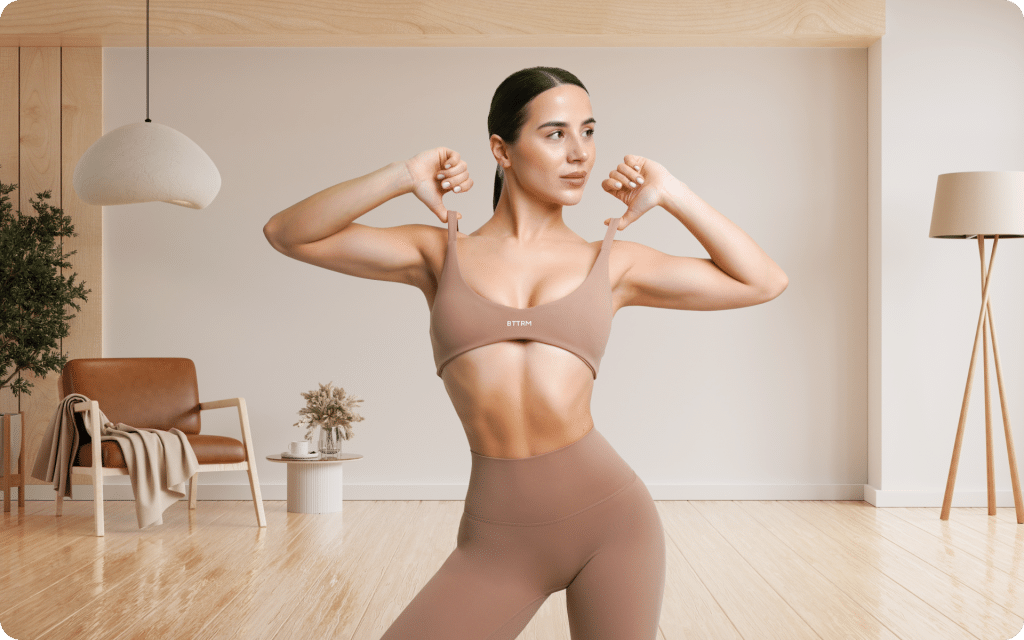
Do You Need Rest Days from Pilates?
Yes, rest days are a crucial component of any effective training program, including Pilates. While it’s a low-impact exercise, it’s still a form of resistance training that challenges your muscles and nervous system, especially when you’re a beginner.
Recovery is when your body adapts and becomes stronger (13). Ignoring the need for rest can lead to diminished returns, fatigue, and potential overuse injuries.
The Physiology of Recovery
When you practice Pilates, you create microscopic tears in your muscle fibers, particularly during the eccentric (lengthening) phases of movements.
You also tax your central nervous system, which is working hard to learn and refine complex motor patterns. Rest days allow for two crucial processes to occur:
- Muscle Repair and Growth: During rest, your body repairs these micro-tears, building the muscle back stronger and more resilient. This process, known as hypertrophy, is how you gain strength. Without adequate rest (typically 24-48 hours for a given muscle group), you interrupt this cycle and may even break down muscle tissue (14).
- Neurological Recovery: Your nervous system needs downtime to consolidate motor learning. Just like sleep helps solidify memories in your brain, rest days help solidify new movement patterns in your neuromuscular system (15). This is why you may find an exercise that feels easier after a day off.
A schedule of Pilates two times a week naturally builds in ample recovery time. Just make sure they are on non-consecutive days, i.e. Monday and Friday. It’s generally not recommended to do intense Pilates sessions on consecutive days, particularly if you’re a beginner or targeting the same muscle groups.
Listening to your body is key – if you feel sore, fatigued, or unmotivated, this is a sign that you may need an extra day of rest.
Is 20 Minutes of Pilates a Day Enough Physical Activity?
A 20-minute daily Pilates session can be a beneficial part of a physical activity routine. However, whether it’s “enough” will depend entirely on its intensity, what you’re expecting to get from it, and how it complements your overall activity level.
The general physical activity guidelines for adults recommend at least 150 minutes of moderate-intensity aerobic activity or 75 minutes of vigorous-intensity aerobic activity per week, plus muscle-strengthening activities on two or more days (16).
A 20-minute daily practice adds up to 140 minutes per week. If your sessions are focused and moderately intense, you’re very close to meeting the aerobic guidelines. You then only need to add in other activities such as brisk walking and you’ll be fine. It also easily satisfies the muscle-strengthening component.
Maximizing a 20-Minute Session
If you choose a shorter, more frequent approach, structure is key. A 20-minute session doesn’t allow for a long warm-up or an extensive series of exercises. To make it effective, focus on:
- Intensity and Flow: Move with precision and minimal rest between exercises to keep your heart rate elevated. Incorporate challenging movements that engage multiple muscle groups simultaneously.
- Full-Body Integration: Choose exercises that work the entire body, such as the hundred, roll up, and leg pull front. This ensures you are getting the most out of your limited time.
- Consistency: The main benefit of a 20-minute daily routine is consistency. It builds a habit and keeps the neuromuscular pathways active.
While a daily 20-minute session is excellent for maintaining consistency and reinforcing motor patterns, a 50-60 minute session done two or three times a week allows for greater depth. Longer sessions provide time for a proper warm-up, more complex exercises, and a focus on specific muscle groups or skills.
For most people who are aiming for significant changes in strength and function, two longer, well-structured sessions per week may yield more pronounced results than short daily sessions.
Read more: Mat Pilates Exercises List: 34 Foundational Exercises Explained
Is It Better to Do Pilates on an Empty Stomach?
There’s no universal rule about whether to practice Pilates on an empty stomach. The best approach depends on your personal digestion, the time of day, and the intensity of your session.
The guiding principle should be comfort and your ability to engage your core muscles fully without digestive distraction.
The Argument for an Empty Stomach
Many practitioners prefer doing Pilates on an empty stomach, particularly in the morning. Here’s why:
- Core Engagement: Pilates requires deep contraction of the abdominal muscles (17). A full stomach can make this physically uncomfortable and may even cause cramping or nausea. You might find it difficult to achieve the deep “scoop” of the abs necessary for many exercises.
- Breathing: The method emphasizes coordinated, deep breathing (18). A full stomach can press up against the diaphragm, restricting its movement and making full, efficient breaths more challenging.
If you practice in the morning, doing it before breakfast is often ideal. If your session is later in the day, waiting about 2-3 hours after a full meal is a good guideline.
Reasons why BetterMe is a safe bet: a wide range of calorie-blasting workouts, finger-licking recipes, 24/7 support, challenges that’ll keep you on your best game, and that just scratches the surface! Start using our app and watch the magic happen.
When to Have a Small Snack
Working out in a completely fasted state isn’t for everyone. Some people experience low blood sugar, dizziness, or a lack of energy.
If this sounds like you, a small, easily digestible snack about 30-60 minutes before your session can provide the energy that you need without causing any digestive discomfort.
Good pre-Pilates snack options include:
- A small banana
- A handful of almonds
- A piece of toast with a thin layer of nut butter
Ultimately, you should experiment to find what works best for your body. The goal is to feel energized and comfortable, allowing you to focus entirely on the precision and flow of the movements.
To understand how your effort translates to results, learn how many calories does Pilates burn.
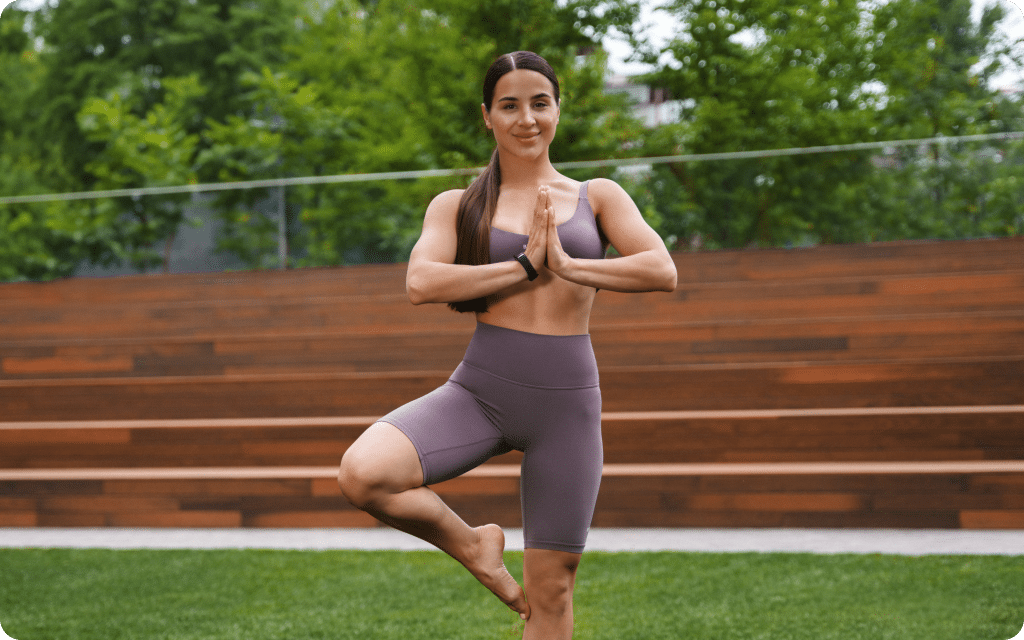
While classic Pilates isn’t considered a traditional cardiovascular workout, it can provide cardiovascular benefits, particularly in advanced or fast-paced classes. By moving continuously from one exercise to the next (maintaining “flow”), you can keep your heart rate elevated. However, for dedicated cardiovascular health, it’s best to supplement Pilates with activities such as brisk walking, running, or cycling. Neither is inherently “better”, they’re different disciplines with different goals. Pilates is a system of exercises focused on building core strength, stability, and control through precise movements. Yoga is a broader spiritual and physical practice that unites posture, breathing, and meditation, with a greater emphasis on flexibility and holding static poses. The best choice will depend on your personal goals. Pilates can help reduce the appearance of cellulite. Cellulite is caused by fat deposits pushing through the connective tissue beneath the skin. Pilates builds lean muscle mass and improves circulation (19). Increasing the muscle tone in areas such as the thighs and glutes can create a smoother, firmer appearance, making cellulite less noticeable. You can do Pilates two days in a row, but it’s generally recommended to vary the intensity and focus. For example, you could follow an intense full-body session with a lighter day focused on stretching and mobility. Listening to your body is crucial. If you’re sore, this is a sign that your muscles need more time to recover. For optimal results, most experts recommend a day of rest between intense sessions.Frequently Asked Questions
Is Pilates a good form of cardio?
Is Pilates better than yoga?
Can Pilates help with cellulite?
Can you do Pilates two days in a row?
The Bottom Line
In summary, a twice-weekly Pilates practice is a scientifically supported and highly effective frequency for achieving significant gains in strength, stability, and functional movement. It provides the ideal balance of stimulus and recovery, which makes it a sustainable and powerful component of any well-rounded fitness plan. By aligning your frequency with your goals and listening to your body, you can unlock the full potential of this transformative method.
DISCLAIMER:
This article is intended for general informational purposes only and does not serve to address individual circumstances. It is not a substitute for professional advice or help and should not be relied on for making any kind of decision-making. Any action taken as a direct or indirect result of the information in this article is entirely at your own risk and is your sole responsibility.
BetterMe, its content staff, and its medical advisors accept no responsibility for inaccuracies, errors, misstatements, inconsistencies, or omissions and specifically disclaim any liability, loss or risk, personal, professional or otherwise, which may be incurred as a consequence, directly or indirectly, of the use and/or application of any content.
You should always seek the advice of your physician or other qualified health provider with any questions you may have regarding a medical condition or your specific situation. Never disregard professional medical advice or delay seeking it because of BetterMe content. If you suspect or think you may have a medical emergency, call your doctor.
SOURCES:
- The Influence Weekly Resistance Training Frequency on Strength and Body Composition (2018, researchgate.net)
- Pilates and the “powerhouse”—I (2004, sciencedirect.com)
- Effect of Pilates Intervention on the Physical Conditioning of a Ballet Dancer: A Single Case Study (2024, sciencedirect.com)
- Effects of a 12-Week Pilates Program on Functional Physical Fitness and Basal Metabolic Rate in Community-Dwelling Middle-Aged Women: A Quasi-Experimental Study (2022, mdpi.com)
- Pilates lessens pain and disability and improves quality of life in people with musculoskeletal conditions in the extremities: A systematic review (2025, sciencedirect.com)
- Sensory Retraining: A Cognitive Behavioral Therapy for Altered Sensation (2012, pmc.ncbi.nlm.nih.gov)
- An online pilates exercise program is effective on proprioception and core muscle endurance in a randomized controlled trial (2022, pubmed.ncbi.nlm.nih.gov)
- Different weekly frequencies of Pilates did not accelerate pain improvement in patients with chronic low back pain (2020, pubmed.ncbi.nlm.nih.gov)
- Effects of a Pilates exercise program on muscle strength, postural control and body composition: results from a pilot study in a group of post-menopausal women (2015, pubmed.ncbi.nlm.nih.gov)
- HOW PILATES EXERCISES AFFECT SPORTS PERFORMANCE: A SYSTEMATIC REVIEW (2023, researchgate.net)
- The real-world benefits of strengthening your core (2012, harvard.edu)
- Pilates-mat training and detraining: Effects on body composition and physical fitness in pilates-trained women (2023, sciencedirect.com)
- EXPLORING THE SCIENCE OF RECOVERY (n.d., nasm.org)
- The Importance of Recovery in Resistance Training Microcycle Construction (2024, pmc.ncbi.nlm.nih.gov)
- Effects of physical exercise on central nervous system functions: a review of brain region specific adaptations (2015, pmc.ncbi.nlm.nih.gov)
- How much physical activity do you need? (2024, heart.org)
- Abdominal muscles activity and core stability in Pilates exercisers (2020, advrehab.org)
- The Pilates breathing technique increases the electromyographic amplitude level of the deep abdominal muscles in untrained people (2014, researchgate.net)
- Influence of the Pilates Method and Anti-cellulite Massage for Maintaining Healthy Body Composition Parameters (2022, researchgate.net)
 Reviewed by
 Reviewed by
 Reviewed by