A Wall Pilates routine can combine a few supported movements with time for preparation, rests, and a gentle finish. This guide offers nine movement options and a 20-minute sample session using four of them. Learn the setup, keep standing holds grounded, and choose easier versions before increasing the workload.
Use the Wall Pilates beginner guide if you want a shorter first practice. This article focuses on one repeatable session rather than a daily challenge calendar.
Key takeaways
- The editorial reference contains nine movement options, while the timed session uses four of them.
- The 20-minute session includes 5 minutes of preparation, 10 minutes of practice and rest, and a 5-minute finish.
- Standing wall planks and knee drives keep hands on the wall and feet on the floor.
- Start with two nonconsecutive practice days and adjust one movement target at a time.
- General activity guidance includes aerobic exercise beyond gentle wall practice (1).
- Pilates studies do not establish a guaranteed result for this exact wall routine (2).
What does this wall Pilates routine include?
This routine includes nine wall-supported movement options and a timed 20-minute session. It applies Pilates ideas such as control, precision, and coordinated breathing (3), without claiming that the wall reproduces apparatus resistance.
BetterMe’s editorial session has 5 minutes of preparation, a 10-minute practice block, and a 5-minute gentle finish. You choose a smaller selection from the nine-movement reference; all nine are not compulsory in every session.
Intense sweat sessions, working weight loss tips, lip-smacking recipes come in one package with the BetterMe app. And all of it is at your fingertips, start transforming your life now!
How do you prepare the wall and floor?
Use a solid wall and enough clear space to keep your movements controlled. Use a solid, unobstructed wall rather than a door, mirror, glass panel, or surface that could move. Clear pictures and furniture from the working area. Keep the floor dry, and use footwear or a mat that lets you maintain grip. Check that you have room to extend your arms and step back without hitting anything.
Keep both feet on the floor for standing wall planks and mountain climbers. A wall supports contact and balance; it does not provide a reformer’s moving carriage or spring resistance. If a movement causes discomfort, stop and choose a simpler option or seek qualified guidance.
If the bridge does not fit your setup, use a small floor bridge or omit it. For a first-session walkthrough, follow our Wall Pilates beginner setup guide.
Which nine movements can you choose?
Use the table to compare starting targets and easier options. The movement instructions follow the table, so you do not need to read a dense steps column while exercising.
| Exercise | Starting position | Initial target | Easier option |
|---|---|---|---|
| Gentle roll-down | Standing with back near wall | 3-4 slow reps | Small upper-back nod |
| Wall push-up | Hands on wall, feet on floor | 6-8 reps | Stand closer |
| Wall squat | Back at wall, feet slightly forward | 6-8 reps | Shallower slide |
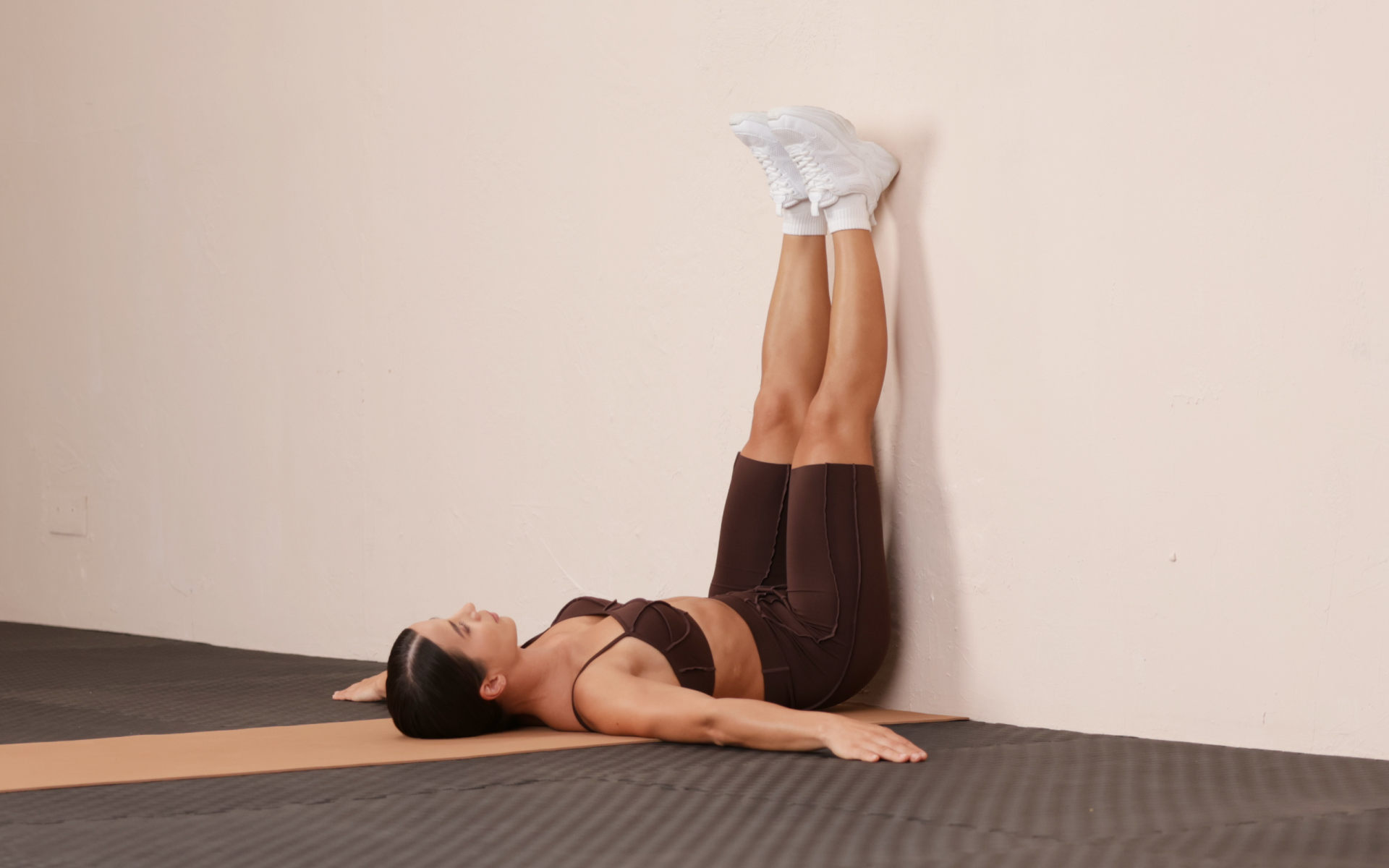
| Wall bridge | Lying down, both feet at wall | 6-8 reps | Small floor bridge |
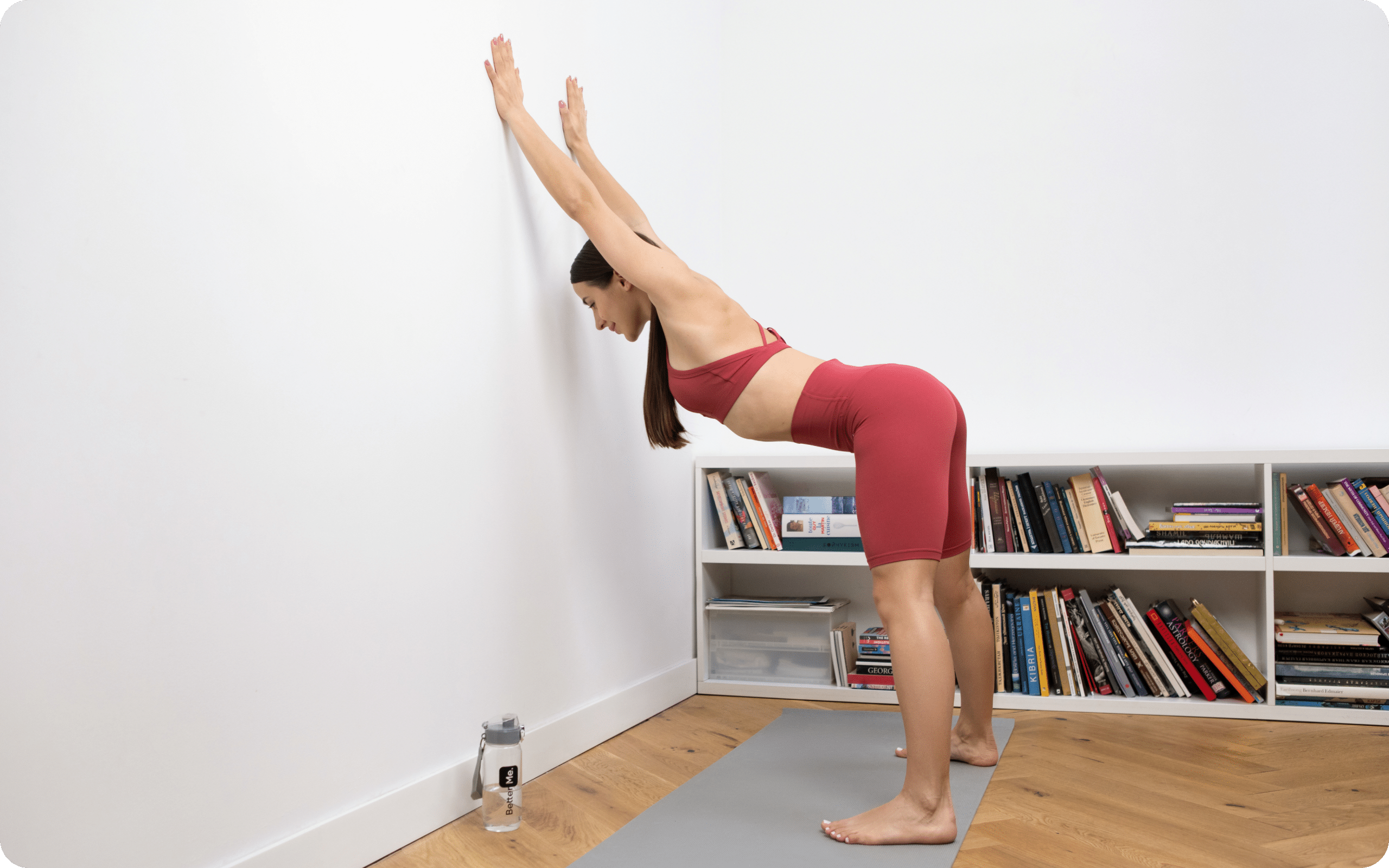
| Wall plank | Hands at wall, feet on floor | 10-20 second hold | Stand closer |
| Supported side leg lift | Side-on, hand at wall | 4-6 per side | Smaller lift |
| Slow wall knee drive | Hands at wall, feet on floor | 4-6 per side | Upright supported march |
| Wall angel | Back near wall | 4-6 reps | Shorter arm range |
| Wall sit | Back at wall, shallow knee bend | 10-15 second hold | Shallower bend or standing rest |
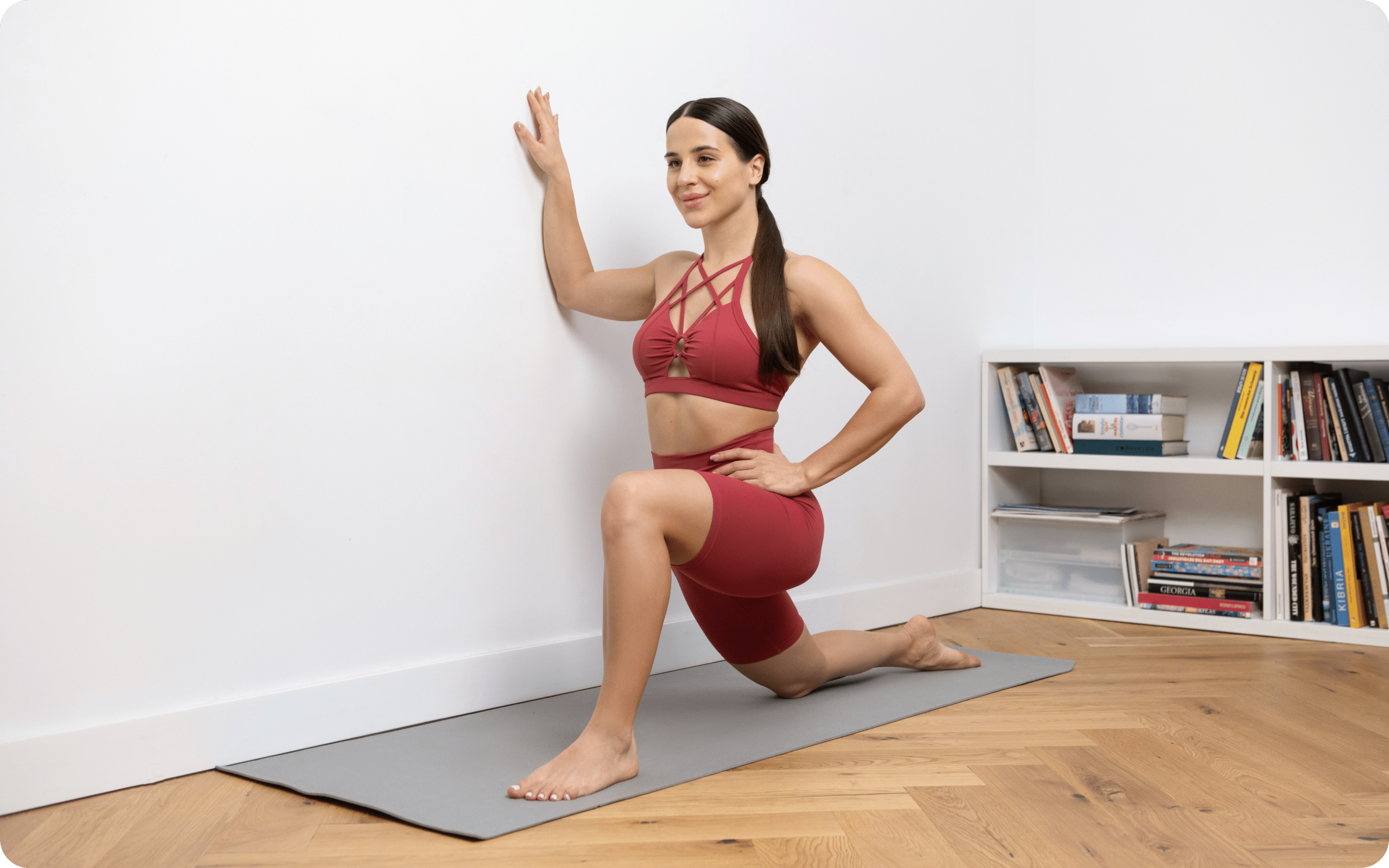
Gentle roll-down
- Stand with your back near the wall and knees relaxed.
- Nod your head a small distance forward.
- Let your upper back round only through a comfortable range.
- Return upright slowly.
Easier option: Use only a small head nod. You do not need to reach the floor.
Wall push-up
- Stand facing the wall with hands at shoulder height and slightly wider than your shoulders.
- Step your feet back to a comfortable incline.
- Bend your elbows as your chest moves toward the wall.
- Press through your hands to return to the starting position.
Easier option: Stand closer. Keep your trunk aligned without pushing your head forward.
Wall squat
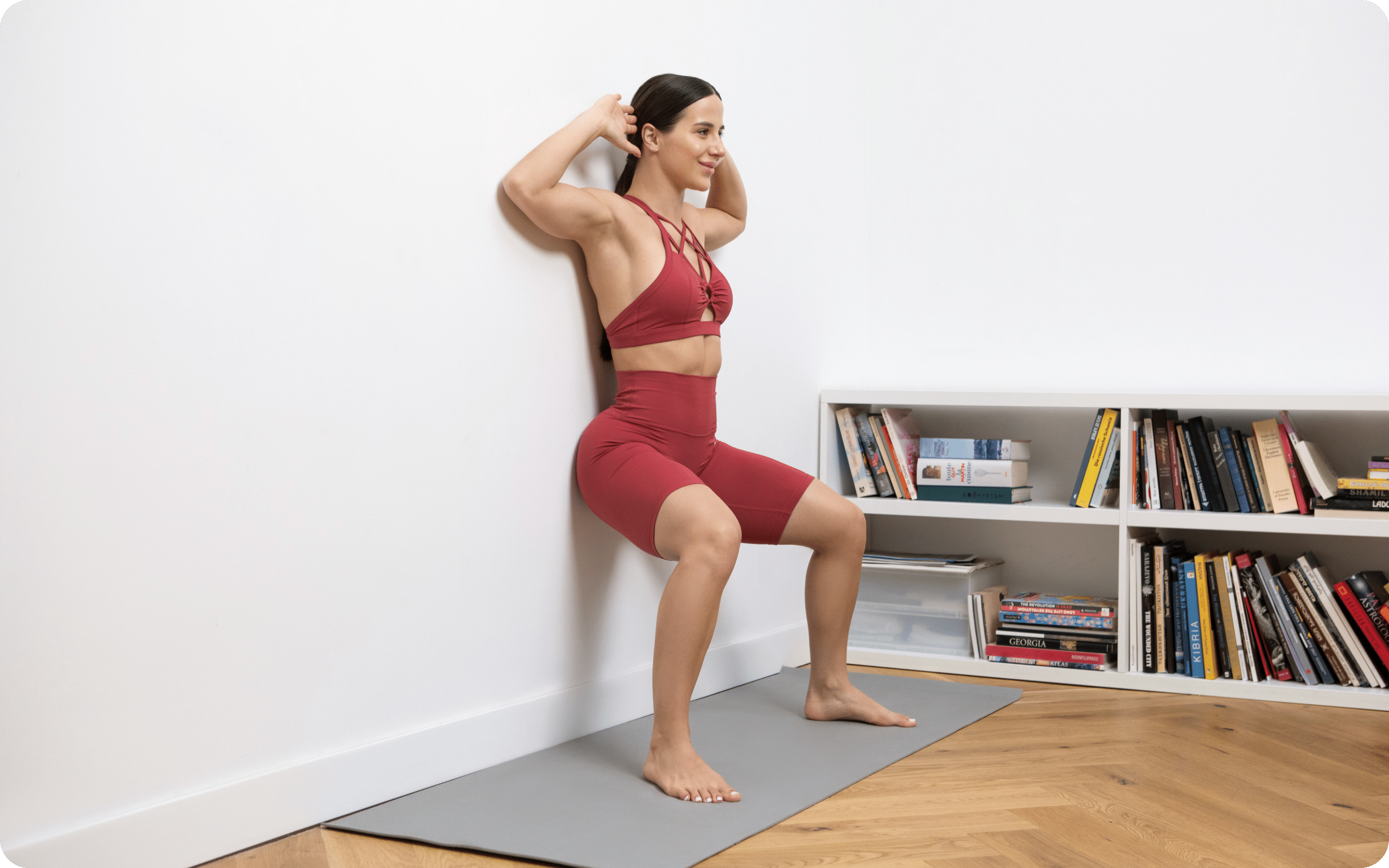
- Stand with your back against the wall and feet slightly forward.
- Slide down a short distance while bending your knees.
- Pause at a depth you can control.
- Press through your feet to slide back up.
Easier option: Use a shallower bend. You do not need a 90-degree knee angle.
Wall plank
- Place your hands on the wall at shoulder height.
- Step your feet back into a comfortable incline.
- Hold your body in a straight, comfortable line while breathing.
- Step closer to finish the hold.
Easier option: Stand nearer the wall. Keep feet down throughout; this is not a feet-on-wall floor plank.
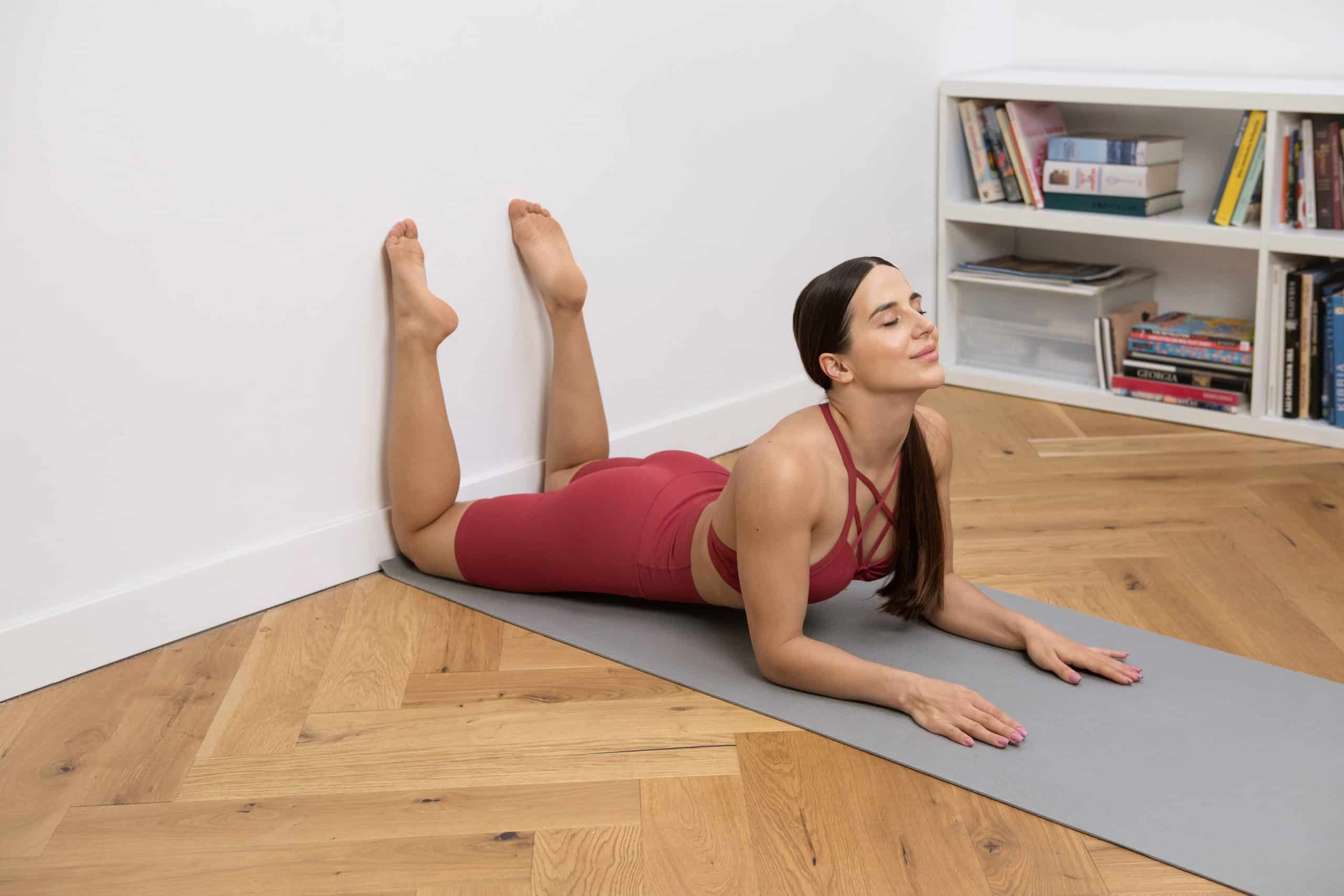
Wall bridge
- Lie on your back near the wall with knees bent.
- Place both feet against the wall so you can keep them from sliding.
- Lift your hips through a small, comfortable range.
- Lower your hips slowly to the mat.
Easier option: Place both feet flat on the floor and perform a small pelvic curl. Skip the wall version if you cannot maintain stable foot contact.
Supported side leg lift
- Stand side-on to the wall with one hand resting lightly against it.
- Move the outside leg a small distance sideways.
- Return that foot beside the standing foot.
- Turn to practice the other side.
Form cue: Keep your torso upright. A smaller lift is more useful than leaning away from the wall.
Slow wall knee drive
- Place your hands on the wall at shoulder height.
- Step your feet back to a comfortable incline.
- Lift one knee a short distance toward your body.
- Return that foot to the floor before changing sides.
Easier option: Stand upright and march with hands lightly supported. Keep your feet on the floor between knee lifts; do not brace your feet against the wall in a floor plank.
Wall angel
- Stand with your back near the wall and knees relaxed.
- Raise your arms into a comfortable bent-elbow position.
- Slide your arms upward only as far as comfortable.
- Lower your arms to the starting position.
Form cue: Do not force your wrists, elbows, or back flat against the wall. Use a shorter range.
Wall sit
- Stand with your back against the wall and feet slightly forward.
- Slide into a shallow knee bend.
- Hold while breathing steadily.
- Slide back to standing to finish.
Form cue: Choose the depth you can control. A deep hold is optional, and a 90-degree angle is not required.
How do you fit the routine into 20 minutes?
Reserve preparation and a gentle finish, then use four selected movements in the middle. General guidance recommends 5-10 minutes of gradual warm-up and cool-down around more demanding activity (4); this session includes the lower end of that range.
| Time | Plan | How to use it |
|---|---|---|
| 0-5 minutes | Easy marching and small shoulder movements | Gradually prepare; do not rush |
| 5-7:30 minutes | Wall push-up | 6-8 reps, then rest and reset |
| 7:30-10 minutes | Wall squat | 6-8 reps, then rest |
| 10-12:30 minutes | Supported side leg lift | 4-6 per side, with pauses |
| 12:30-15 minutes | Wall plank | One 10-20 second hold; repeat only if manageable |
| 15-20 minutes | Gentle walking, arm movements, and breathing | Gradually slow down |
Practice block time includes transitions and rest. Use 30-60 seconds of rest or longer as needed. Choose an alternative from the reference if one movement does not fit; do not add all the extra options on top of the timed session. Our 30-minute Wall Pilates session provides a longer timed version.
Whether you’re looking to simply pep up your fitness routine, jazz up your diet with mouth-watering low-calorie recipes or want to get your act together and significantly drop that number on your scale – BetterMe app has got you covered! Improve your body and revamp your life with us!
How should you schedule and progress this routine?
Begin with two nonconsecutive sessions and repeat the same targets before adding difficulty. General adult guidance includes at least 150 minutes of moderate aerobic activity weekly plus strengthening on at least two days (1). A slow wall routine does not automatically satisfy the aerobic target.
Choose one small progression only when the current routine feels manageable: one or two more repetitions in one movement, a slightly longer hold, or a small increase in comfortable range. The Wall Pilates plan-building guide explains schedule adjustments, and the 28-day Wall Pilates challenge offers a calendar with rest.
What benefits can this wall routine promise?
This specific routine cannot promise a result or deadline. Research on Pilates may support muscular endurance and flexibility, but it should not be presented as a test of this wall routine. A 12-week trial found endurance and hamstring flexibility gains, without balance or posture improvements compared with its control group (2). A review in adult women also found flexibility improvements across varied Pilates programs (5). Neither source validates the exact wall exercises or calendar in this article.
Activity can contribute to weight management, but results depend on activity, eating patterns, and individual circumstances (6). The wall does not make an exercise target fat in one area, and no change in appearance is promised. Track repeatable practice and movement control; individual results vary.

Frequently Asked Questions
Do I need all nine exercises in one session?
No, the nine entries are movement options. The timed routine uses four selected movements so preparation, rest, and a gentle finish fit within 20 minutes.
Should wall planks have feet against the wall?
The standing wall plank in this routine keeps hands on the wall and feet on the floor. A feet-on-wall floor plank is a different, more demanding movement and is not needed here.
Can I shorten the routine?
Choose fewer main exercises while keeping preparation and a gradual finish. For a very short practice, use a familiar low-demand movement rather than rushing through the full session.
Is wall Pilates a complete fitness routine?
It can be one part of a wider routine, but a gentle session may not meet aerobic targets or challenge every major muscle group. Add other suitable activity according to your circumstances.
The bottom line
Choose four familiar movements, keep time for rests, and finish gently. The remaining reference exercises give you alternatives for later sessions; you can repeat the same selection as long as it remains useful.
DISCLAIMER:
This article is intended for general informational purposes only and does not serve to address individual circumstances. It is not a substitute for professional advice or help and should not be relied on for making any kind of decision-making. Any action taken as a direct or indirect result of the information in this article is entirely at your own risk and is your sole responsibility.
BetterMe, its content staff, and its medical advisors accept no responsibility for inaccuracies, errors, misstatements, inconsistencies, or omissions and specifically disclaim any liability, loss or risk, personal, professional or otherwise, which may be incurred as a consequence, directly or indirectly, of the use and/or application of any content.
You should always seek the advice of your physician or other qualified health provider with any questions you may have regarding a medical condition or your specific situation. Never disregard professional medical advice or delay seeking it because of BetterMe content. If you suspect or think you may have a medical emergency, call your doctor.
SOURCES:
- Adult Activity: An Overview (2023, cdc.gov)
- Pilates for Improvement of Muscle Endurance, Flexibility, Balance, and Posture (2010, journals.lww.com)
- Pilates: how does it work and who needs it? (2011, pmc.ncbi.nlm.nih.gov)
- Warm Up, Cool Down (2024, heart.org)
- Effects of Pilates Programs on Body Composition, Flexibility, Muscular Strength, Balance, Functional Performance and Respiratory Function in Adult Women: A Systematic Review and Meta-Analysis (2026, pmc.ncbi.nlm.nih.gov)
- Physical Activity and Your Weight and Health (2026, cdc.gov)
 Reviewed by
 Reviewed by
 Reviewed by