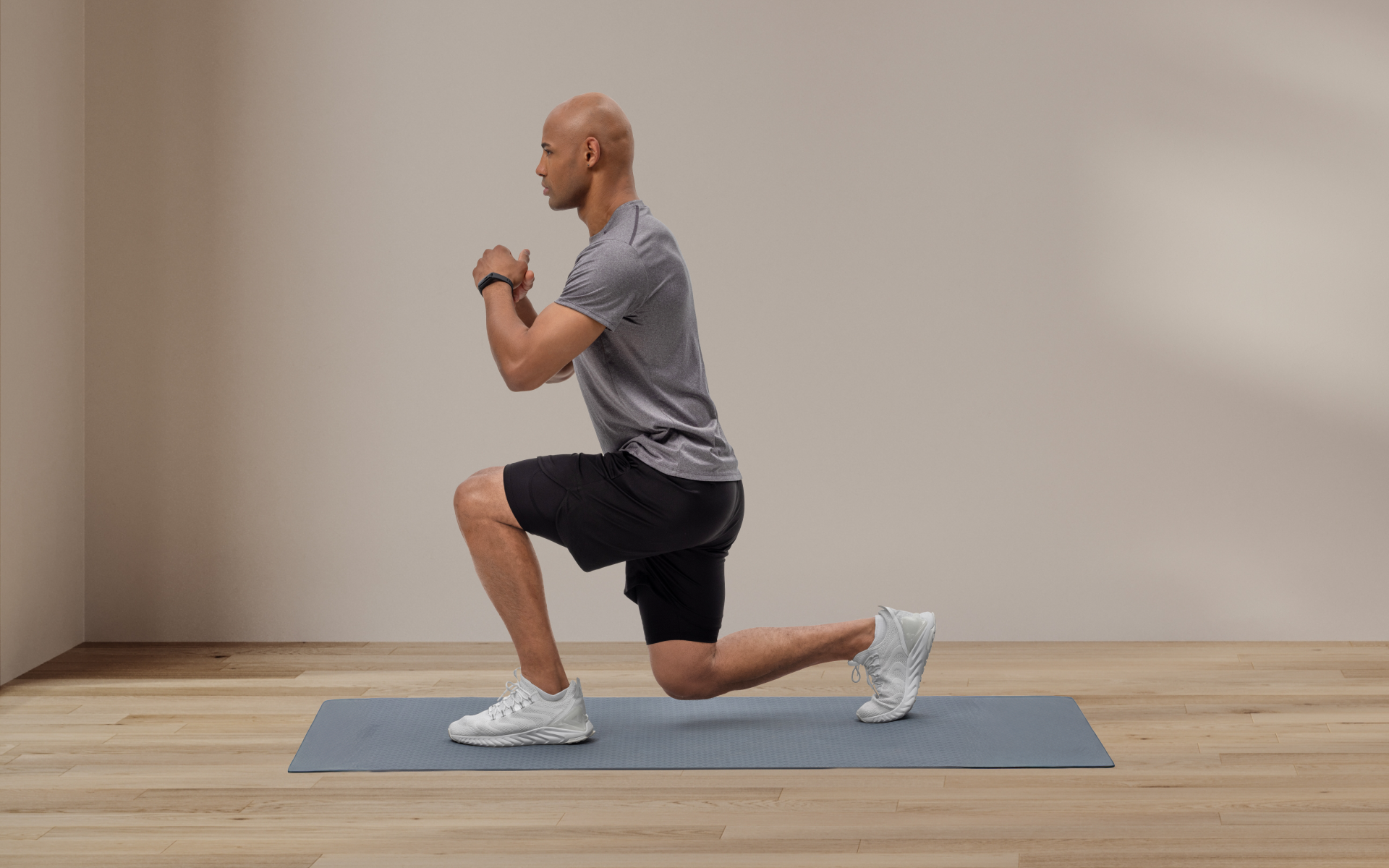
A well-structured leg workout is more than just an aesthetic pursuit, it’s the foundation of functional strength, athletic power, and overall physical resilience. The legs house some of the body’s largest and most powerful muscles, and training them effectively stimulates metabolic and hormonal responses that benefit your entire system. This guide breaks down the science of leg training to provide you with an effective, evidence-based roadmap.
We’ll explore how muscles grow, and provide actionable workout programs designed for both gym and at-home workouts. By the end, you’ll understand not just what to do, but also why you’re doing it.
What’s a Leg Workout for Men?
A leg workout is a resistance training routine that’s designed to strengthen and develop the muscles of the lower body. These muscles can be broadly categorized into several major groups, each with a specific function (1).
- Quadriceps Femoris: Located on the front of the thigh, this group of four muscles (rectus femoris, vastus lateralis, vastus medialis, and vastus intermedius) is primarily responsible for extending the knee.
- Hamstrings: Found on the back of the thigh, this group includes the biceps femoris, semitendinosus, and semimembranosus. Their main functions are to flex the knee and extend the hip.
- Gluteal Muscles: The glutes consist of three muscles – the gluteus maximus, medius, and minimus. The gluteus maximus is one of the strongest muscles in the body and is a primary driver of hip extension, while the medius and minimus are crucial for hip abduction and stabilization.
- Adductors: These inner thigh muscles are responsible for bringing the legs toward the body’s midline.
- Calves: The calf muscles, which include the gastrocnemius and soleus, are located on the back of the lower leg and are responsible for plantar flexion, or pointing the foot downward.
A comprehensive leg workout for men targets all these groups through a series of compound and isolation exercises. Compound movements, such as squats and deadlifts, engage multiple muscle groups and joints simultaneously, which makes them highly efficient for building overall strength and size (2).
Isolation exercises, such as leg curls and calf raises, focus on a single muscle group, which allows for more targeted development (3). The goal is to apply progressive overload – incrementally increasing the demand on your muscles – to stimulate adaptation and growth (4).
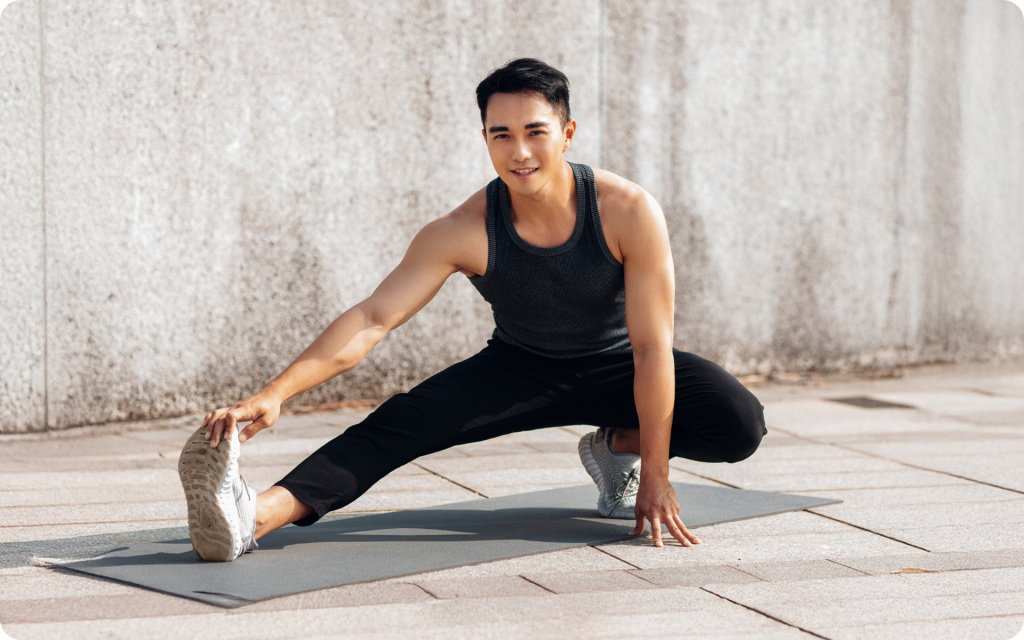
How to Build Legs Fast
Building muscle quickly requires a systematic approach grounded in the principles of exercise science. While “fast” is relative and depends on genetics, training history, and nutrition, you can optimize your progress by focusing on three key mechanisms of muscle hypertrophy (growth): mechanical tension, metabolic stress, and muscle damage.
Mechanical Tension
This is arguably the most important factor for muscle growth. Mechanical tension refers to the force that is generated within a muscle when it contracts against a heavy load. Lifting weights that are challenging enough to recruit a high number of muscle fibers is essential (5).
- Actionable Tip: Focus on lifting heavy loads, defined as weights at or above 85% of your one-repetition maximum (1RM) – the most weight you can lift for a single repetition. This typically corresponds to a range of 1-6 repetitions per set (6).
Metabolic Stress
This is the “pump” or burning sensation you feel during a workout. It’s caused by the accumulation of metabolic byproducts such as lactate within the muscle. This process can trigger an anabolic hormonal response and cell swelling, both of which contribute to hypertrophy (5).
- Actionable Tip: Incorporate sets with moderate loads (65-85% of 1RM) and higher repetitions, typically in the 8-15 rep range (6). Minimizing rest between sets (30-90 seconds) also enhances metabolic stress (5).
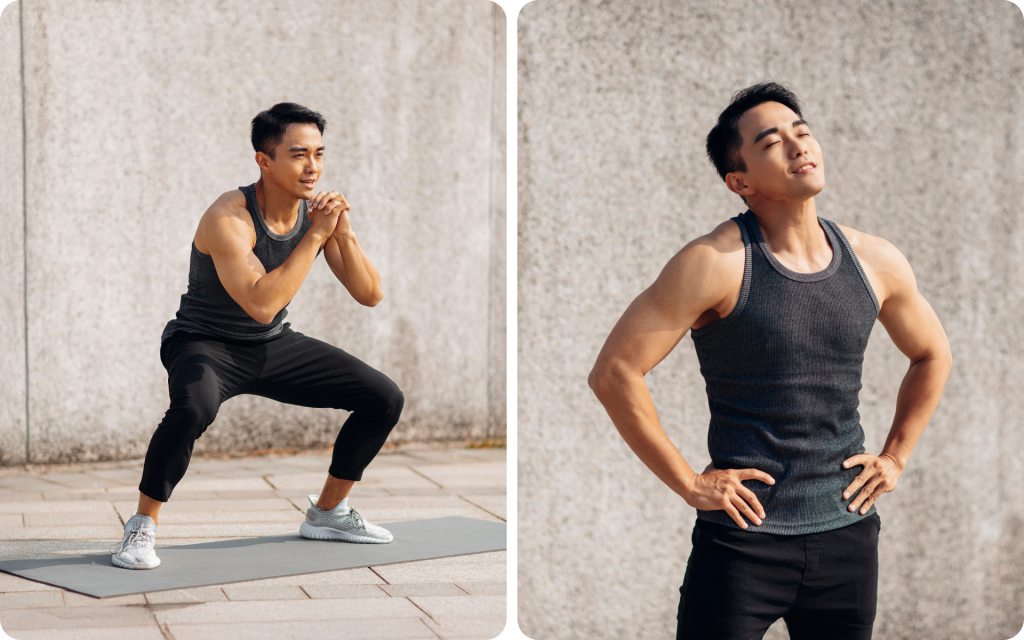
Muscle Damage
This refers to the microscopic tears that occur in muscle fibers during intense exercise. The body’s subsequent repair process can lead to the muscle growing back bigger and stronger. This is often associated with delayed onset muscle soreness (DOMS) (5).
- Actionable Tip: Emphasize the eccentric (lowering) phase of your lifts, as this is where most muscle damage occurs. A controlled tempo, such as lowering the weight over 2-3 seconds, can effectively increase muscle damage and stimulate growth (7).
To build leg muscles effectively, your program should incorporate a variety of exercises and rep ranges that target all three mechanisms. A leg workout for men with weights that combines heavy compound lifts with lighter, higher-rep isolation work will provide a comprehensive stimulus for growth.
BetterMe: Health Coaching app helps you achieve your body goals with ease and efficiency by helping to choose proper meal plans and effective workouts. Start using our app and you will see good results in a short time.
Do Leg Muscles Grow Quickly?
Leg muscles are some of the largest in the body and have a high potential for growth. However, several factors influence how quickly you will see results:
- Training Status: Beginners often experience rapid gains, a phenomenon that is known as “newbie gains”. As you become more advanced, the rate of muscle growth naturally slows (8). A leg workout gym male beginner should focus on mastering form and progressively adding weight.
- Genetics: Your genetic makeup plays a role in muscle fiber type distribution and hormonal profile, which can impact your growth potential (9).
- Nutrition: To build muscle, you must consume enough calories and protein. A caloric surplus (eating more calories than you burn) and a protein intake of around 1.6-2.2 grams per kilogram of body weight are generally recommended for muscle growth (10).
- Recovery: Muscles grow during rest, not during training. Adequate sleep – 7 to 9 hours per night – is essential for hormonal regulation and tissue repair (11).
While you won’t see dramatic changes overnight, studies suggest that beginners can gain 0.5-1% of their body weight in muscle per month with proper training and nutrition. For leg muscles specifically, growth will depend on how much of the training program is focused on lower-body exercises. (12).
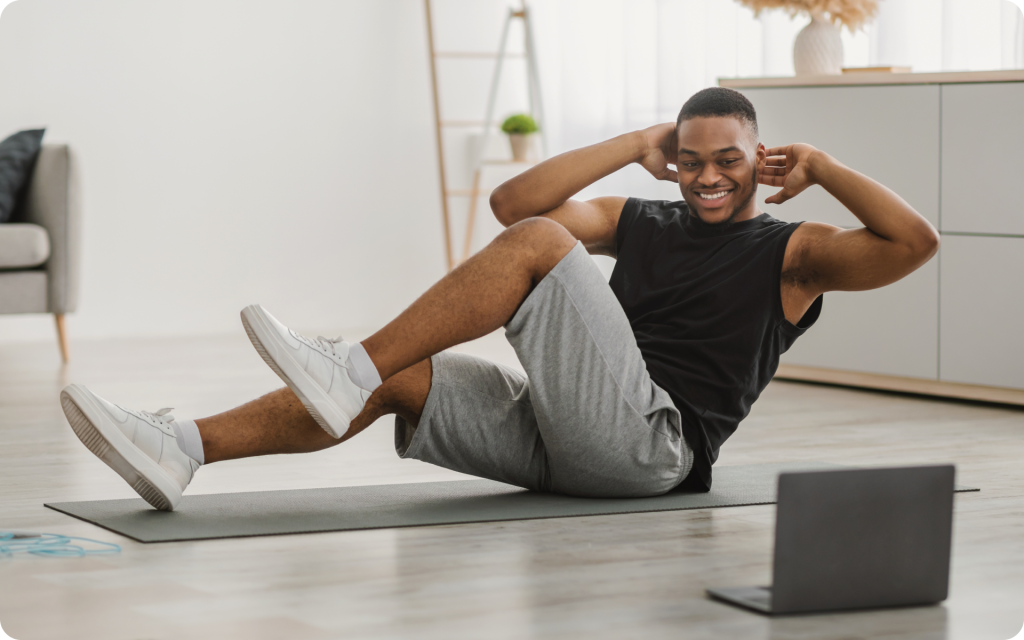
What Is the King of Leg Exercises?
When it comes to building powerful, muscular legs, the barbell back squat is almost universally hailed as the “king”. This compound movement is unparalleled in its ability to stimulate a large amount of muscle mass simultaneously, including the quadriceps, hamstrings, glutes, and adductors. Its benefits extend beyond the legs, as it also challenges the core, lower back, and upper back to maintain stability under load.
Here’s why the squat reigns supreme:
- High Muscle Activation: Squats elicit high levels of muscle activation in the primary leg movers. As it’s a free-weight, multi-joint exercise, it forces numerous stabilizing muscles to work in coordination (1).
- Systemic Anabolic Response: Heavy compound exercises such as the squat have been shown to produce a greater acute increase in anabolic hormones, including testosterone and growth hormone, compared to single-joint isolation exercises (13).
- Functional Strength: The squat mimics a fundamental human movement pattern. The strength and stability that are gained from squatting translate directly to athletic activities such as jumping and sprinting, in addition to everyday tasks (14).
- Progressive Overload Potential: The squat allows for significant and consistent progressive overload. You can incrementally add weight to the bar for years, continually challenging your muscles to adapt and grow.
While the barbell back squat is king, other variations such as the front squat, safety bar squat, and leg press are also highly effective. Each places a slightly different emphasis on the leg musculature, which makes them valuable additions to a comprehensive program.
The best approach is to build your routine around a primary squat movement and supplement it with other exercises to ensure balanced development.
Are you ready to perfect your squat form and build serious leg strength? Explore our detailed guide on the best leg workout for mass.
Read more: Skinny to Muscular Workout Plan: Tips, Tricks, and Training Essentials
What Is the Best Leg Workout for Men?
The “best” workout is one that is tailored to your specific goals, experience level, and available equipment. Below are two sample programs: one for the gym environment and one for at-home training with no equipment.
Leg Workout for Men at the Gym
This program is designed for intermediate lifters and balances heavy compound movements with targeted isolation work. It should be performed twice per week with at least 48 hours of rest in between workouts.
Program Notes:
- 1RM: One-repetition maximum. This is the maximum amount of weight you can lift for a single rep.
- RPE: Rate of perceived exertion. This is a scale of 1-10 describing how hard a set feels. An RPE of 8 means you feel you could have done two more reps.
- Rest: Rest for 3-5 minutes between heavy compound sets and 60-90 seconds for isolation exercises.
- Tempo: Refers to the speed of the lift (eccentric-pause-concentric). A 3-0-1 tempo means a 3-second lowering phase, no pause, and a 1-second lifting phase.
- Equipment: Barbell, squat rack, dumbbells, leg press machine, leg curl machine, calf raise machine.
| Exercise | Sets | Reps | Load | Tempo |
|---|---|---|---|---|
| Barbell back squat | 4 | 4-6 | 80-85% 1RM | 3-0-1 |
| Romanian deadlift | 3 | 6-8 | RPE 8 | 3-1-1 |
| Leg press | 3 | 10-12 | RPE 9 | 2-0-1 |
| Leg curl | 3 | 12-15 | RPE 9 | 2-1-1 |
| Dumbbell walking lunge | 3 | 10 per leg | RPE 8 | N/A |
| Seated calf raise | 4 | 15-20 | RPE 10 (failure) | 1-1-1 |
Exercise Instructions
Barbell Back Squat
- Set the barbell in a squat rack just below shoulder height. Position your hands on the bar, slightly wider than your shoulders.
- Duck under the bar and place it across your upper back – on the trapezius muscles, not on your neck.
- Lift the bar off the rack, take one or two steps back, and set your feet shoulder-width apart with your toes pointed slightly outward.
- Keep your chest up and your core braced. Initiate the movement by pushing your hips back and then bending your knees.
- Lower yourself until your thighs are at least parallel to the floor, keeping your back straight.
- Drive through your heels to return to the starting position, extending your hips and knees.
Romanian Deadlift (RDL)
- Stand with your feet hip-width apart, holding a barbell with an overhand grip just outside your thighs.
- Keeping your back straight and your legs nearly straight (a slight bend in the knees is okay), and hinge at your hips.
- Lower the barbell by pushing your glutes backward, keeping the bar close to your shins.
- Lower the weight until you feel a deep stretch in your hamstrings, typically when the bar is at mid-shin level.
- Reverse the motion by driving your hips forward and squeezing your glutes to return to the starting position.
Leg Press
- Sit on the leg press machine with your back and head resting comfortably against the padded support.
- Place your feet on the platform about shoulder-width apart.
- Press the platform up to full extension, but don’t lock your knees. Release the safety catches.
- Slowly lower the platform until your knees are at a 90-degree angle.
- Push the platform back to the starting position using the balls of your feet and your heels.
Leg Curl
- Lie face down on a lying leg curl machine. The pad of the lever should be positioned just above your heels.
- Grasp the support handles. Curl your legs up as far as possible without lifting your hips off the pad.
- Hold the contracted position for a second, squeezing your hamstrings.
- Slowly lower the weight back to the starting position.
Dumbbell Walking Lunge
- Stand with your feet together, holding a dumbbell in each hand at your sides.
- Take a large step forward with your right leg and lower your hips until both knees are bent at a 90-degree angle.
- Ensure your front knee is directly above your ankle and your back knee is hovering just above the ground.
- Push off your back foot and bring it forward to step into the next lunge with your left leg. Continue alternating legs.
Seated Calf Raise
- Sit on a seated calf raise machine and place the balls of your feet on the platform with your heels hanging off.
- Position the knee pads securely just above your knees.
- Lower your heels as far as possible to get a full stretch in your calves.
- Push through the balls of your feet to raise your heels as high as you can, squeezing your calves at the top.
- Hold the peak contraction briefly before lowering back down.
Looking for more exercises to target your quads? Check out our complete guide to quad-focused exercises.
Leg Workout for Men at Home (No Equipment)
This leg workout for men no equipment routine uses bodyweight exercises to build strength and endurance. Perform this circuit 3-4 times, resting for 60 seconds between circuits.
| Exercise | Reps | Tempo |
|---|---|---|
| Bodyweight squat | 20 | 2-0-1 |
| Glute bridge | 20 | 1-1-1 |
| Reverse lunge | 15 per leg | 2-0-1 |
| Single-leg RDL | 12 per leg | 3-1-1 |
| Bulgarian split squat | 12 per leg | 2-0-1 |
| Calf raise | 25 | 1-1-1 |
Exercise Instructions
Bodyweight Squat
- Stand with your feet shoulder-width apart, your toes pointing slightly outward.
- Keeping your chest up and your core engaged, push your hips back and bend your knees as if sitting in a chair.
- Lower until your thighs are parallel to the floor, or as low as your mobility allows.
- Drive through your heels to return to the starting position.
Glute Bridge
- Lie on your back with your knees bent, your feet flat on the floor hip-width apart, and your arms by your sides.
- Drive through your heels and lift your hips off the floor until your body forms a straight line from your shoulders to your knees.
- Squeeze your glutes at the top.
- Slowly lower your hips back to the starting position.
Reverse Lunge
- Stand tall with your feet together.
- Take a large step backward with your right foot.
- Lower your hips so that your left thigh is parallel to the floor and your right knee is close to the ground.
- Push off your right foot to return to the starting position. Repeat on the other side.
Reasons why BetterMe is a safe bet: a wide range of calorie-blasting workouts, finger-licking recipes, 24/7 support, challenges that’ll keep you on your best game, and that just scratches the surface! Start using our app and watch the magic happen.
Single-Leg RDL
- Stand on your left leg with a slight bend in your knee.
- Hinge at your hips and extend your right leg straight behind you for balance.
- Lower your torso until it’s parallel to the floor, keeping your back straight.
- Return to the starting position by engaging your left glute and hamstring. Complete all reps on one side before switching.
Bulgarian Split Squat
- Stand a few feet in front of a chair or bench. Place the top of your right foot on the bench behind you.
- Keeping your torso upright, lower your hips until your left thigh is parallel to the floor.
- Push through your left heel to return to the start. Complete all reps on one side before switching.
Calf Raise
- Stand on the edge of a step with your heels hanging off.
- Lower your heels as far as you can to feel a stretch in your calves.
- Press through the balls of your feet to raise your body up as high as possible.
- Hold the peak contraction before lowering back down.
For more routines that don’t require a gym, check out our guide to leg calisthenics exercises.
Are 4 Exercises Enough for Leg Day?
Four exercises can be sufficient for a leg day, as long as they’re chosen wisely and performed with adequate intensity. An effective minimalist routine should include:
- A squat variation (e.g. barbell back squat) to target the quads and glutes.
- A hip-hinge movement (e.g. Romanian deadlift) to focus on the hamstrings and glutes.
- A single-leg exercise (e.g. lunge or Bulgarian split squat) to address imbalances and improve stability.
- A calf exercise (e.g. calf raise) to target the lower legs.
Performing 3-4 hard sets of each of these exercises will provide a comprehensive stimulus for growth. The key is volume and intensity. Total weekly volume – the number of hard sets per muscle group – is a primary driver of hypertrophy. Research has suggested that 10-20 sets per muscle group per week is an effective range for most lifters (15).
Read more: 5-Day Workout Routine for Men: The Ultimate Guide
Can I Train My Legs Every Day?
Training your legs every day is generally not recommended for muscle growth. Muscles need time to recover and adapt from the stress of a workout. The process of muscle repair and growth, which is known as protein synthesis, can remain elevated for 24-48 hours after a training session (16). Training the same muscle group daily can interfere with this recovery process, leading to overtraining, diminished performance, and an increased risk of injury.
A more effective approach is to train your legs 2-3 times per week. This frequency allows for sufficient recovery between sessions while still providing enough volume to stimulate growth (17). A higher frequency can work for some advanced athletes who use highly specialized programs, but for most people, more is definitely not better.
For most people, yes. Three high-intensity leg days per week may not allow for adequate recovery, potentially leading to overtraining. A more sustainable and effective frequency for the majority of lifters is two leg workouts per week, which allows for optimal recovery and adaptation. You should always perform the most demanding, heavy compound exercise first in your workout. This is typically a squat or deadlift variation. Performing these movements when you’re fresh will ensure that you can lift with maximal force and proper technique, which reduces the risk of injury. Not necessarily. As with all muscles, leg muscles respond to a wide spectrum of rep ranges. Heavy, low-rep sets (1-6 reps) are superior for building maximal strength, while moderate-to-high rep sets (8-20+ reps) are excellent for inducing metabolic stress and muscular endurance (6). A combination of both is ideal for well-rounded development. Absolutely. While hormonal changes can make muscle growth more challenging after 40, it’s entirely possible to build significant muscle mass. Consistent resistance training, adequate protein intake, and sufficient rest remain the key pillars of muscle growth at any age.Frequently Asked Questions
Is 3 leg days a week too much?
What should I do first on leg day?
Are more reps better for legs?
Can you build muscle at 40?
The Bottom Line
Building a strong, powerful lower body is a journey that requires consistency, effort, and a smart approach. By applying the scientific principles of hypertrophy and structuring your workouts intelligently, you can unlock your full potential. Focus on mastering your form, progressively challenging your muscles, and allowing your body the time it needs to recover and grow. The work you put in today will lay the foundation of strength for tomorrow.
DISCLAIMER:
This article is intended for general informational purposes only and does not serve to address individual circumstances. It is not a substitute for professional advice or help and should not be relied on for making any kind of decision-making. Any action taken as a direct or indirect result of the information in this article is entirely at your own risk and is your sole responsibility.
BetterMe, its content staff, and its medical advisors accept no responsibility for inaccuracies, errors, misstatements, inconsistencies, or omissions and specifically disclaim any liability, loss or risk, personal, professional or otherwise, which may be incurred as a consequence, directly or indirectly, of the use and/or application of any content.
You should always seek the advice of your physician or other qualified health provider with any questions you may have regarding a medical condition or your specific situation. Never disregard professional medical advice or delay seeking it because of BetterMe content. If you suspect or think you may have a medical emergency, call your doctor.
SOURCES:
- Leg Muscles (2021, my.clevelandclinic.org)
- 5 Benefits of Compound Exercises (2016, acefitness.org)
- Cross-Educate Your Muscles Using Unilateral Training (2020, us.humankinetics.com)
- Effects of Resistance Training Overload Progression Protocols on Strength and Muscle Mass (2024, pubmed.ncbi.nlm.nih.gov)
- The six best strength training techniques to increase mechanisms of muscle hypertrophy (2023, us.humankinetics.com)
- Loading Recommendations for Muscle Strength, Hypertrophy, and Local Endurance: A Re-Examination of the Repetition Continuum (2021, mdpi.com)
- The Influence of Movement Tempo During Resistance Training on Muscular Strength and Hypertrophy Responses: A Review (2021, link.springer.com)
- Neuromuscular adaptations to resistance training in elite versus recreational athletes (2025, frontiersin.org)
- An Integrative Review of Genetic and Non-Genetic Factors Influencing Human Skeletal Muscle Hypertrophy (2025, research-archive.org)
- Are you getting enough protein? (2024, mayoclinichealthsystem.org)
- Sleep and muscle recovery: Endocrinological and molecular basis for a new and promising hypothesis (2011, sciencedirect.com)
- Adaptations to Endurance and Strength Training (2018, pmc.ncbi.nlm.nih.gov)
- Hormonal responses and adaptations to resistance exercise and training (2005, pubmed.ncbi.nlm.nih.gov)
- A Biomechanical Review of the Squat Exercise: Implications for Clinical Practice (2024, ijspt.scholasticahq.com)
- A Systematic Review of The Effects of Different Resistance Training Volumes on Muscle Hypertrophy (2022, pmc.ncbi.nlm.nih.gov)
- Resistance training‐induced changes in integrated myofibrillar protein synthesis are related to hypertrophy only after attenuation of muscle damage (2016, pmc.ncbi.nlm.nih.gov)
- Effects of Resistance Training Frequency on Measures of Muscle Hypertrophy: A Systematic Review and Meta-Analysis (2016, link.springer.com)
 Reviewed by