A strong leg workout for mass usually combines a squat or press, a hip hinge, a single-leg move, direct hamstring and quad work, and calf training. Our recommendations are to train legs about twice per week, aim for roughly 10 or more hard sets per muscle group weekly, and keep most sets challenging. You can add small amounts of weight or reps over time.
“Mass” simply means muscle size, or how much visible muscle you build over time. If you want bigger, fuller legs, but you feel lost in conflicting gym advice, then this guide is for you. A good leg workout for mass matters because legs hold some of your largest muscles, and training them well can shape your whole lower body. You don’t need a magic routine or endless hours in the gym—you need a clear plan, steady effort, and patience.
Here, we break down which muscles to focus on, which moves tend to help, a sample 2-day plan, and how to keep making progress. Keep reading, and you’ll leave with a routine you can actually follow.
What Makes a Leg Workout Suitable for Building Mass?
A leg workout suitable for building mass challenges your major leg muscles hard enough, often enough, and with enough total work to encourage growth over time.
Muscle growth here means hypertrophy, the increase in muscle size that happens when muscles adapt to repeated, meaningful effort (1).
The main driver is mechanical tension, which is the force your muscles produce when they work against a load. More load and effort tend to create more tension (1).
A solid plan usually does these things well:
- Targets all major leg muscles, not just one
- Uses enough weekly work to encourage growth
- Keeps most sets challenging
- Allows steady progress over weeks
- Lets you recover between sessions
Training volume matters a lot. This means the total work you do, often counted as hard sets per muscle group each week. A common practical target is around 10 or more weekly sets per muscle group, although beginners often progress with less (2).
You also want effort. Some research has suggested that hypertrophy can happen across a wide range of loads, from heavy to light, as long as the effort stays high (3).
One more point: chasing “the pump” or a post-workout hormone spike shouldn’t be your main goal. These may feel good, but they aren’t the primary reasons muscles grow.
Read more: How To Lose Thigh Fat For Men: Maximize Your Leg Training Results With These Thigh-Blasting Moves
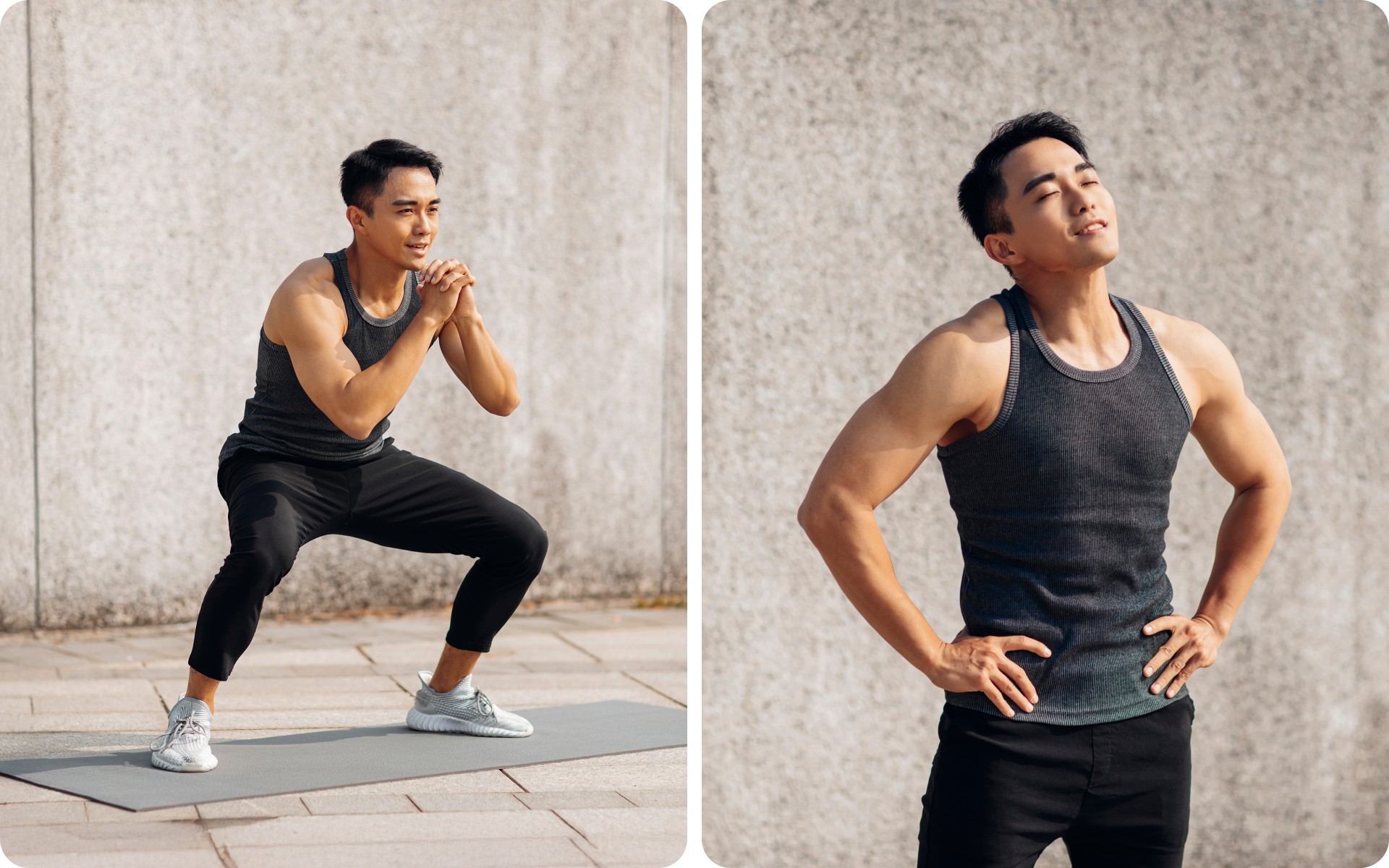
Which Leg Muscles Should a Mass-Building Workout Target?
A mass-building workout should target the quads, hamstrings, glutes, adductors, and calves, as balanced size comes from training all of them.
Here’s a simple breakdown:
- Quads: the front of your thigh—a big part of overall leg size (4).
- Hamstrings: the back of your thigh—important for balance and shape (5).
- Glutes: your hip and rear muscles—a major contributor to lower-body mass (6).
- Adductors: your inner thighs (7)—often ignored but useful for fullness.
- Calves: your lower legs (8)—they finish the look.
A quick note on hamstrings: they cross both your hip and knee (5), so they respond well to two movement types:
- Hip hinge moves, such as Romanian deadlifts
- Knee-bending moves, such as leg curls
Your calves also have two main parts (8). Straight-knee raises tend to focus more on the upper calf. Bent-knee raises tend to focus more on the lower calf. Doing both can help.
The takeaway is simple. Squats alone rarely cover everything. A rounded plan gives each muscle group its own attention.
Workouts, weight management tools, and recipe ideas come together in the BetterMe Well-Being Coach app, giving you practical support for building a more consistent wellness routine.
Which Exercises Can Help Build Leg Mass?
A good leg exercises for mass combine big compound lifts with focused isolation moves so every muscle group gets enough direct work.
Compound leg exercises work several joints and muscles at once. Squats and leg presses are examples. They tend to deliver a lot of stimulus per set. Isolation moves, such as leg curls, focus on one muscle group (9).
Here’s a comparison to help you choose exercises to build leg muscle.
| Exercise category | Main muscles targeted | Why it helps | Practical set/rep range |
|---|---|---|---|
| Squat or leg press | Quads, glutes, adductors | Loads large muscles with high tension | 3-4 sets of 6-12 |
| Hip hinge (RDL, hip thrust) | Hamstrings, glutes | Trains the back of the body through the hips | 3-4 sets of 6-12 |
| Single-leg moves (split squat, lunge) | Quads, glutes, hamstrings | Builds balance and adds per-leg work | 2-3 sets of 8-12 each leg |
| Leg curl | Hamstrings | Focuses on knee-bending hamstring work | 3 sets of 8-15 |
| Leg extension | Quads | Adds direct quad volume | 2-4 sets of 10-15 |
| Calf raise | Calves | Targets a muscle squats often miss | 3-4 sets of 8-20 |
A good quad mass workout leans on squats, presses, and leg extensions. For hamstring mass exercises, combine Romanian deadlifts with leg curls. Glute-building exercises, such as hip thrusts and split squats, round out the hips. Calf mass exercises, done through a full range, help your lower legs keep up.
If you want a ready-made session to try, take a look at our Leg Workout for Mass for another option you can click through and follow.
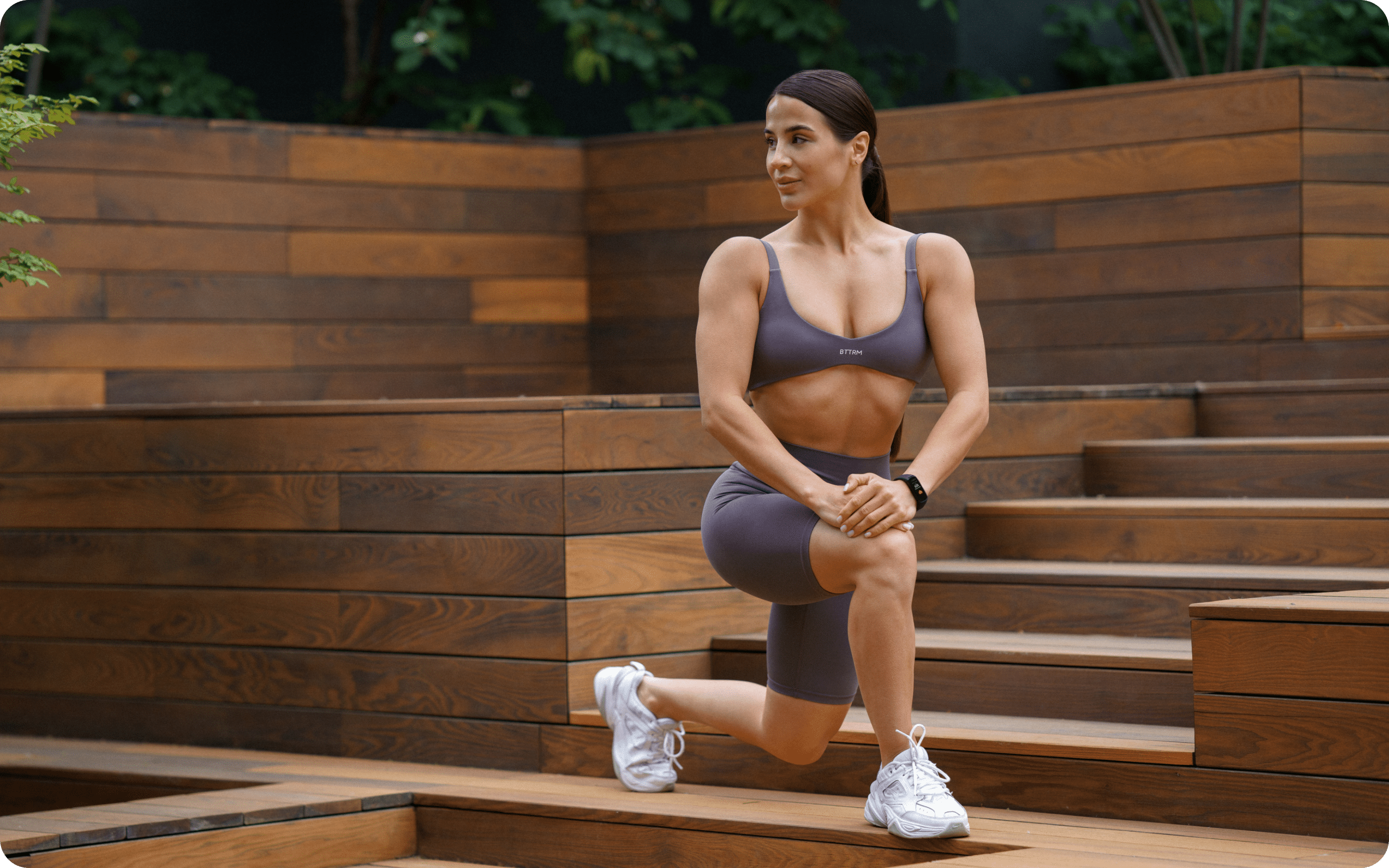
What Is the Good Leg Workout for Mass?
A good leg workout for mass, for most people, is a balanced 2-day plan that covers squats or presses, hinges, single-leg work, and direct quad, hamstring, and calf training.
A split is how you divide your training across the week. A lower-body workout split groups leg-focused sessions together. Training each major muscle group at least 2 times per week tends to work well for many people (10).
Here’s a sample leg mass workout routine spread across two days.
| Day | Exercise | Sets | Reps | Rest | Progression note |
|---|---|---|---|---|---|
| Day 1 | Back squat | 3-4 | 6-10 | 2-3 mins | Add reps, then weight |
| Romanian deadlift | 3 | 8-12 | 2-3 mins | Add reps within range | |
| Bulgarian split squat | 2-3 | 8-12 each leg | 1-2 mins | Add a rep per leg weekly | |
| Seated leg curl | 3 | 10-15 | 60-90 secs | Add reps, then load | |
| Leg extension | 2-3 | 10-15 | 60-90 secs | Control the lowering phase | |
| Standing calf raise | 3-4 | 8-15 | 60-90 secs | Full range each rep | |
| Day 2 | Leg press | 3-4 | 10-15 | 2-3 mins | Add weight in small steps |
| Hip thrust | 3 | 8-12 | 2-3 mins | Add reps, then weight | |
| Walking lunge | 2-3 | 10-14 steps each leg | 1-2 mins | Add steps or load | |
| Lying leg curl | 3 | 8-12 | 60-90 secs | Slow, controlled reps | |
| Leg extension | 2-3 | 12-15 | 60-90 secs | Add reps within range | |
| Seated calf raise | 3 | 12-20 | 60-90 secs | Pause at the top |
Give yourself 48-72 hours between these two sessions (11). Many people see steady changes over 8-12 weeks (12), but individual outcomes vary depending on training history, sleep, food intake, and recovery.
Do you prefer a superset style to save time? You can explore our Superset Leg Workout that pairs moves back-to-back for a click-through option.
Exercise Instructions
Back Squat
- Set the bar across your upper back, not your neck.
- Brace your core and unrack the bar.
- Lower by bending your hips and knees together.
- Descend until your thighs reach about parallel.
- Drive up through your whole foot.
Romanian Deadlift
- Hold the bar in front of your thighs.
- Keep a soft bend in your knees.
- Push your hips back and lower the bar along your legs.
- Stop when you feel a stretch in your hamstrings.
- Squeeze your glutes to stand tall.
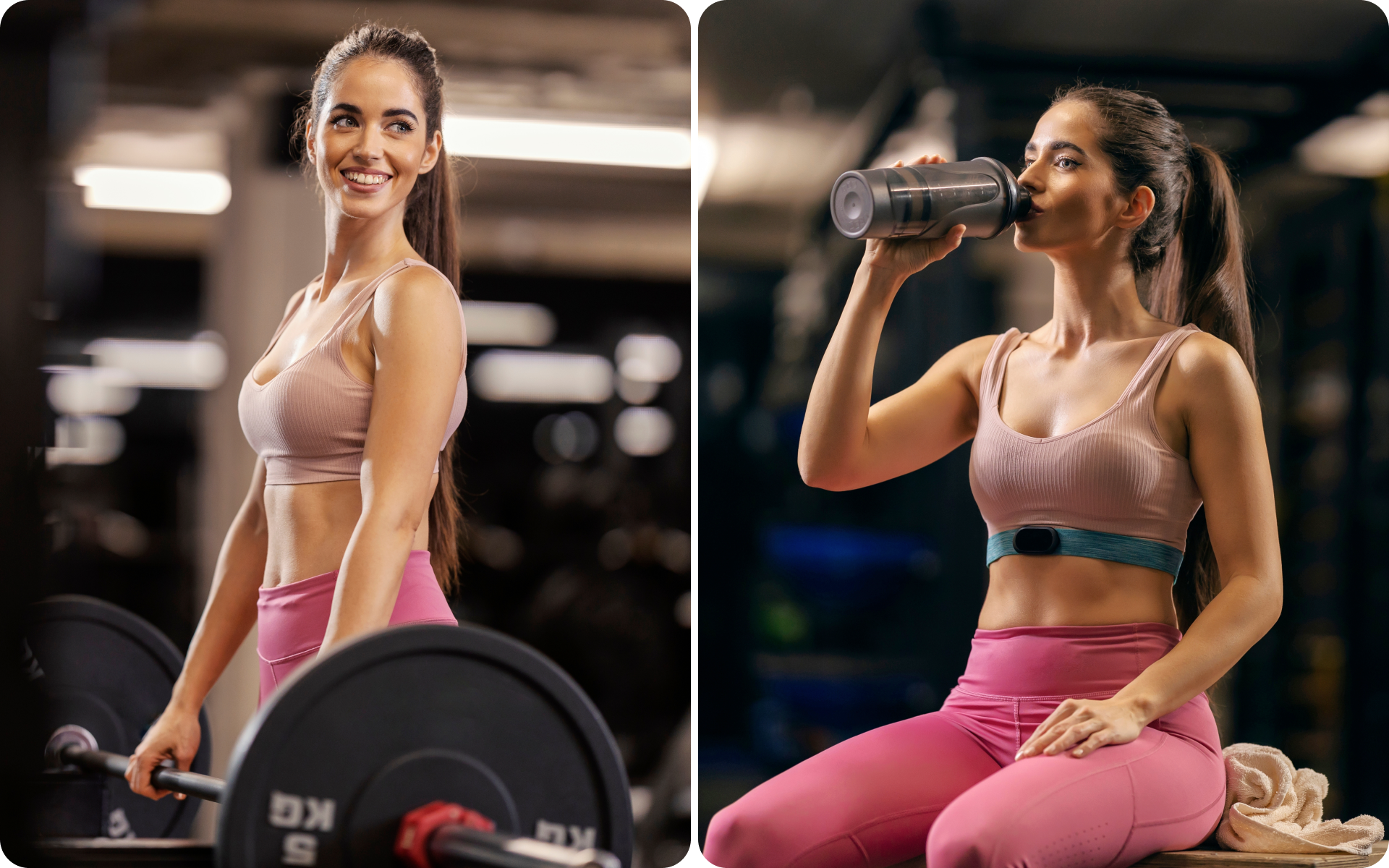
Bulgarian Split Squat
- Place one foot behind you on a bench.
- Keep your front foot flat and forward.
- Lower straight down until your front thigh nears parallel.
- Push through your front heel to rise.
- Finish all reps, then switch legs.
Seated Leg Curl
- Adjust the pad above your heels.
- Sit back with your thighs secured.
- Curl your heels down and under.
- Pause briefly at the bottom.
- Return slowly to the start.
Leg Extension
- Sit with the pad against your lower shins.
- Extend your knees until your legs are almost straight.
- Pause at the top for a moment.
- Lower with control.
- Avoid swinging or rushing.
Standing Calf Raise
- Stand with the balls of your feet on a step.
- Let your heels drop for a stretch.
- Push up onto your toes as high as you can.
- Pause at the top.
- Lower slowly through the full range.
Read more: Squats vs Lunges: Which One of These Time-Honored Exercises is More Effective?
Leg Press
- Sit with your back flat against the pad.
- Place your feet shoulder-width apart on the platform.
- Lower the platform until your knees are close to your chest.
- Keep your lower back on the seat.
- Press up without locking your knees hard.
Hip Thrust
- Rest your upper back on a bench.
- Roll a loaded bar over your hips with a pad.
- Drive through your heels to lift your hips.
- Squeeze your glutes at the top.
- Lower with control.
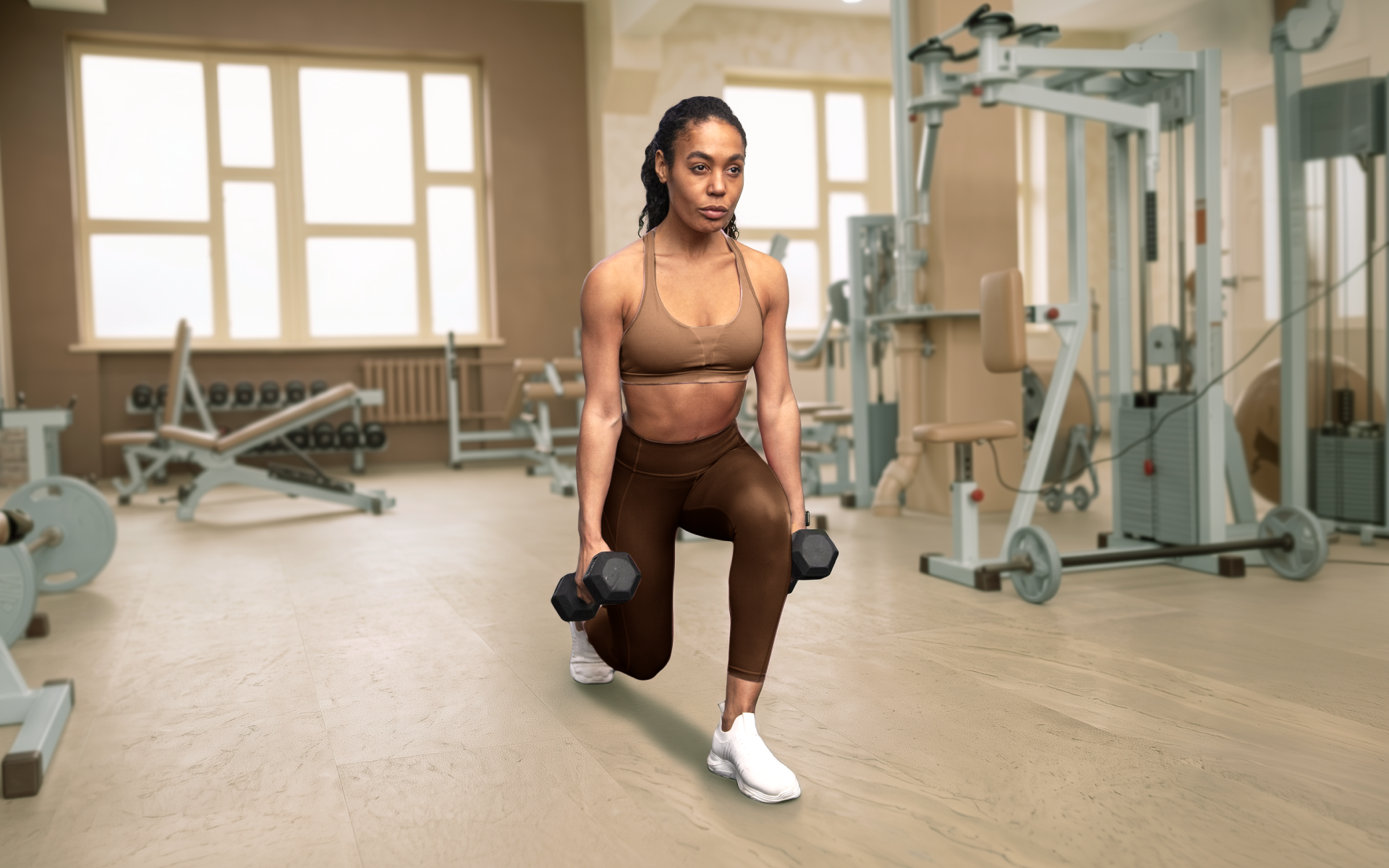
Walking Lunge
- Step forward into a lunge.
- Lower your back knee toward the floor.
- Push through your front heel to stand.
- Step forward with the other leg.
- Keep your torso upright throughout.
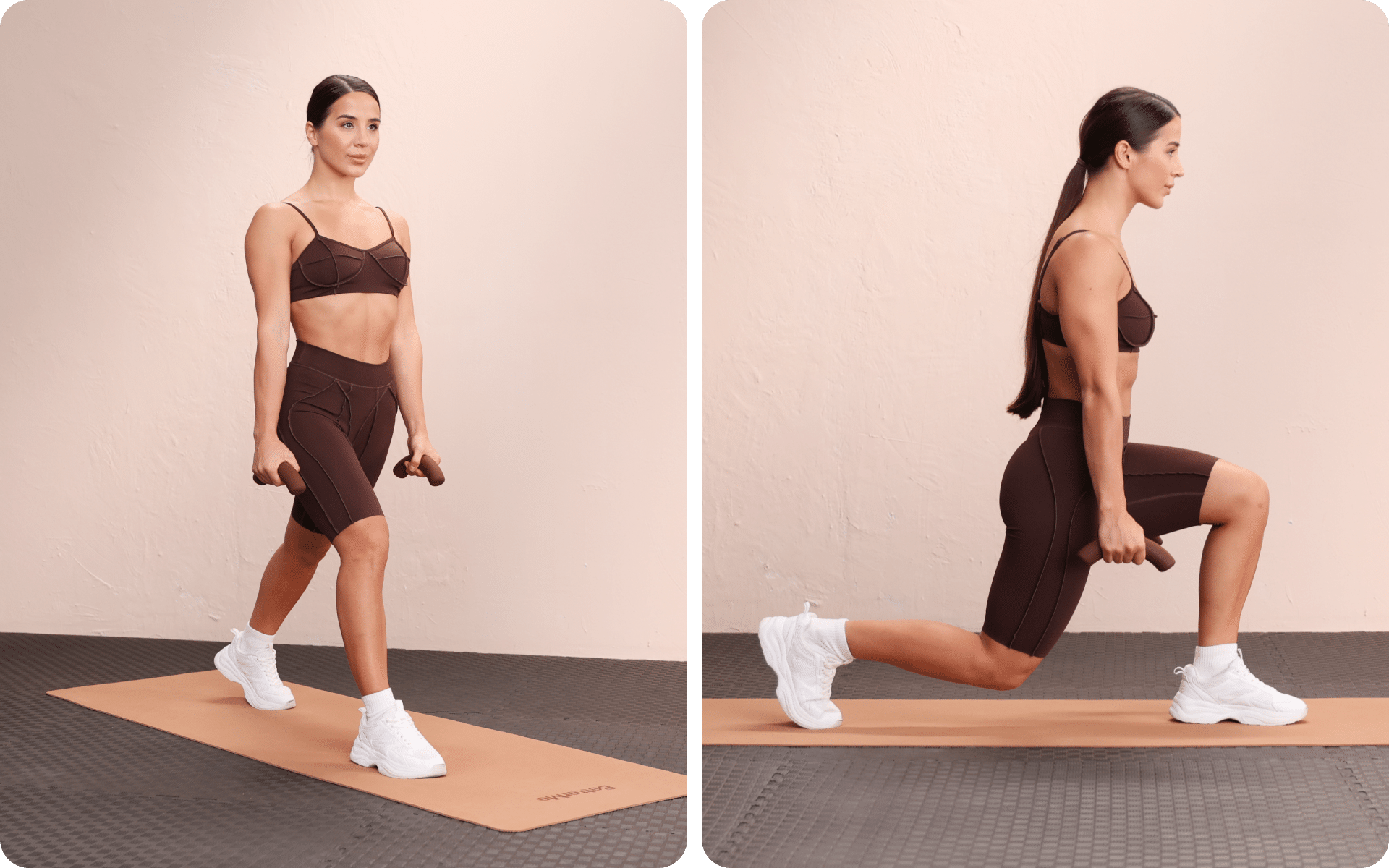
Lying Leg Curl
- Lie face down with the pad above your heels.
- Grip the handles for stability.
- Curl your heels toward your glutes.
- Pause briefly at the top.
- Lower slowly to the start.
Seated Calf Raise
- Sit with the pad across your lower thighs.
- Place the balls of your feet on the platform.
- Let your heels drop for a stretch.
- Push up onto your toes.
- Pause, then lower with control.
How Can You Apply Progressive Overload to Leg Training?
You apply progressive overload for legs by gradually making your training harder over time. This is usually done by adding reps, weight, sets, or better control.
Progressive overload simply means increasing the demand on your muscles as they adapt (13). Without it, progress and gains aren’t as pronounced (14).
A friendly method is double progression. You work within a rep range and add reps before adding weight.
Here’s how it looks with a squat in an 8-12 range:
- Week 1: 135 lbs for 8, 8, 7
- Week 2: 135 lbs for 9, 8, 8
- Week 3: 135 lbs for 11, 10, 9
- Week 4: 135 lbs for 12, 12, 11
- Week 5: move to 145 lbs and restart near 8 reps
You can also progress by:
- Adding a set over time
- Using a fuller range of motion
- Controlling the lowering phase more
- Reducing momentum and swinging
You don’t need to add weight every session—even one extra rep counts. Progress with legs is gradual, and it may look like more reps, cleaner form, or the same weight feeling easier.
How Can Beginners Modify This Leg Workout for Mass?
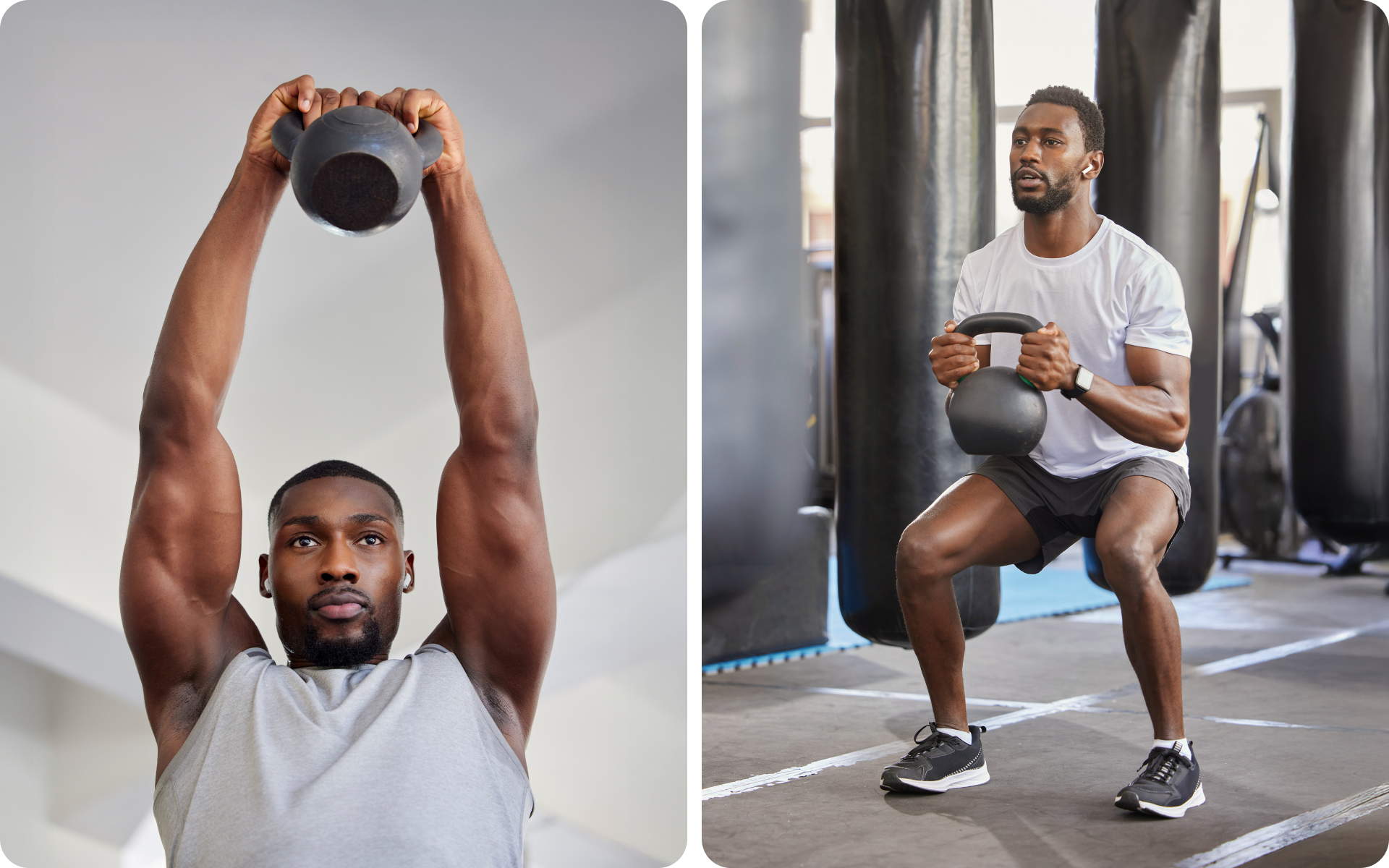
Beginners can modify this leg workout for mass by using fewer sets, simpler moves, and stopping further from failure while form still feels solid.
New lifters often grow with less volume (15), so there’s no need to copy advanced routines. Here’s a gentler version to try twice a week:
- Goblet squat or leg press: 2-3 sets of 8-12
- Romanian deadlift: 2-3 sets of 8-12
- Split squat or step-up: 2 sets of 8-10 each leg
- Seated leg curl: 2-3 sets of 10-15
- Leg extension: 2 sets of 10-15
- Standing calf raise: 2-3 sets of 10-15
A few tips for your gym leg workout as a beginner:
- Leave about 2-3 reps in reserve
- Focus on smooth, controlled reps
- Skip grinding to failure on squats and hinges
- Add volume only when rest feels solid
Reps in reserve means how many reps you could still do at the end of a set (16). Leaving 2-3 reps in reserve keeps effort meaningful without overdoing it.
Start light, master the movements, and let your body adapt. Consistency tends to beat intensity early on.
BetterMe offers a variety of workouts, recipes, challenges, and support tools to help you stay more consistent with your wellness routine. Explore the app to find features that fit your goals, preferences, and schedule.
How Much Rest Do Your Legs Need Between Workouts?
Your legs usually require about 48-72 hours of rest between hard sessions, plus enough rest between sets to keep your effort high (11).
Rest between sets matters more than many people think. Longer rests tend to help you perform better on your next set.
A simple guide:
Very short rests, such as 30 seconds, can leave you too tired to lift well, so they’re better saved for time-crunched days.
For rest between whole sessions, try schedules such as:
- Monday and Thursday
- Tuesday and Friday
If your legs still feel wiped after 72 hours, consider these common causes:
- Too much volume
- Training too close to failure
- Not enough sleep
- Not eating enough
One useful tool is RPE, or rate of perceived exertion. It rates how hard a set feels on a scale of 1-10 (18). Many people train around RPE 7-9, leaving 1-2 reps in reserve.
How Should You Track Your Leg Workout Progress?
You track your leg workout progress by logging your lifts, checking your body weight, taking measurements, and noticing how rest feels.
A training log is your most useful tool. Record these for each move:
- Weight used
- Reps completed
- Sets done
- How hard it felt (RPE)
This helps you spot when it’s time to add reps or load. It also shows progress you might otherwise miss.
Beyond the log, you can track:
- Body weight: weigh in 3-7 mornings a week
- Measurements: mid-thigh, hips, and calves every 2-4 weeks
- Photos: same pose and lighting every 2-4 weeks
- Recovery signs: sleep quality, soreness, and motivation
Take measurements under the same conditions each time. This will keep your data honest.
If lifts stall while fatigue climbs, your plan may be too much. Small adjustments often help. Remember that muscle grows over months and years, so patience pays off. If you want a routine framed for guys, check out our Leg Workout for Men for a click-through variation.
FAQs
Are front squats or back squats better for bigger legs?
Neither front squats nor back squats are clearly better for bigger legs, as both can build strong quads and glutes (19). Front squats tend to shift more focus to your quads and upright posture, while back squats often let you load more weight overall (20). Many people switch between them or pick the one that feels more comfortable. Effort and consistency matter more than the choice itself.
Can high-repetition sets help increase leg muscle size?
Yes, high-repetition sets can help increase leg muscle size when you take them close to a challenging effort. Some research has suggested that hypertrophy happens across a wide load range (3). Lighter, higher-rep sets may work well for isolation moves such as leg curls. The key is to push each set hard enough. Individual results may vary.
Why is one leg growing faster than the other?
One leg may grow faster than the other due to natural side dominance, form differences, or uneven effort (22). Your stronger side often takes over during two-legged lifts. Adding single-leg exercises, such as split squats and lunges, can help balance the work (23). Starting each set with your weaker leg may also even things out over time. Small differences are common and normal.
Can cycling replace resistance training for building leg mass?
No, cycling generally can’t replace resistance training for building noticeable leg mass. Cycling builds endurance and can add some tone, but it lacks the higher tension that drives muscle growth (24). Resistance training with squats, presses, and hinges applies more load to your muscles (25). You can enjoy both together. For size specifically, weights tend to do the heavy lifting.
Should calves be trained on leg day or separately?
Calves can be trained on leg day or separately, depending on your schedule and energy. Adding them at the end of leg day is convenient and works well for many people. Training them on their own days may help if your legs feel too tired to give them focus. Either way, you should aim to hit them at least twice a week through a full range.
The Bottom Line
A well-rounded leg workout for mass isn’t about one hero exercise or brutal soreness. It’s a balanced 2-day plan with squats or presses, hinges, single-leg work, and direct quad, hamstring, and calf training, pushed with steady effort and gradual overload. Keep showing up, track your lifts, and adjust as you go—your legs will thank you for the patience.
DISCLAIMER:
This article is intended for general informational purposes only and does not serve to address individual circumstances. It is not a substitute for professional advice or help and should not be relied on for making any kind of decision-making. Any action taken as a direct or indirect result of the information in this article is entirely at your own risk and is your sole responsibility.
BetterMe, its content staff, and its medical advisors accept no responsibility for inaccuracies, errors, misstatements, inconsistencies, or omissions and specifically disclaim any liability, loss or risk, personal, professional or otherwise, which may be incurred as a consequence, directly or indirectly, of the use and/or application of any content.
You should always seek the advice of your physician or other qualified health provider with any questions you may have regarding a medical condition or your specific situation. Never disregard professional medical advice or delay seeking it because of BetterMe content. If you suspect or think you may have a medical emergency, call your doctor.
SOURCES:
- Anabolic signals and muscle hypertrophy – Significance for strength training in sports medicine (2025, sciencedirect.com)
- Resistance Training Variables for Optimization of Muscle Hypertrophy: An Umbrella Review (2022, frontiersin.org)
- Effects of Resistance Training Performed with Different Loads in Untrained and Trained Male Adult Individuals on Maximal Strength and Muscle Hypertrophy: A Systematic Review (2021, mdpi.com)
- Anatomy, Bony Pelvis and Lower Limb: Thigh Quadriceps Muscle (2023, ncbi.nlm.nih.gov)
- Anatomy, Bony Pelvis and Lower Limb, Hamstring Muscle (2026, ncbi.nlm.nih.gov)
- Training the Glutes (2020, researchgate.net)
- Muscles in the Medial Compartment of the Thigh (2024, teachmeanatomy.info)
- Anatomy, Bony Pelvis and Lower Limb: Calf (2026, ncbi.nlm.nih.gov)
- No Time to Lift? Designing Time-Efficient Training Programs for Strength and Hypertrophy: A Narrative Review (2021, link.springer.com)
- American College of Sports Medicine Position Stand. Resistance Training Prescription for Muscle Function, Hypertrophy, and Physical Performance in Healthy Adults: An Overview of Reviews (2026, journals.lww.com)
- The Importance of Recovery in Resistance Training Microcycle Construction (2024, pmc.ncbi.nlm.nih.gov)
- Load-induced human skeletal muscle hypertrophy: Mechanisms, myths, and misconceptions (2024, sciencedirect.com)
- Exercise progressions and regressions in sports training and rehabilitation (2024, sciencedirect.com)
- Progressive Overload Affects the Magnitude of Muscle Hypertrophy (2026, ovid.com)
- Neuromuscular adaptations to resistance training in elite versus recreational athletes (2025, frontiersin.org)
- Repetitions in Reserve: An Emerging Method for Strength Exercise Prescription in Special Populations (2024, researchgate.net)
- Give it a rest: a systematic review with Bayesian meta-analysis on the effect of inter-set rest interval duration on muscle hypertrophy (2024, frontiersin.org)
- Rating of perceived exertion in continuous sports: a scoping review with evidence gap map (2025, frontiersin.org)
- A Brief Review on the Effects of the Squat Exercise on Lower-Limb Muscle Hypertrophy (2023, ovid.com)
- Mechanobiological and neuromuscular responses to foot-position variations during front and back squat exercises (2026, frontiersin.org)
- Loading Recommendations for Muscle Strength, Hypertrophy, and Local Endurance: A Re-Examination of the Repetition Continuum (2021, mdpi.com)
- An observational study of lower limb muscle imbalance assessment and gait analysis of badminton players (2024, frontiersin.org)
- Effects of unilateral vs. bilateral resistance training interventions on measures of strength, jump, linear and change of direction speed: a systematic review and meta-analysis (2021, pmc.ncbi.nlm.nih.gov)
- Health Benefits of Cycling as a Form of Active Travel: A Pilot Empirical Study (2026, mdpi.com)
- The influence of resistance exercise training prescription variables on skeletal muscle mass, strength, and physical function in healthy adults: An umbrella review (2024, sciencedirect.com)
 Medically reviewed by
 Reviewed by
 Reviewed by