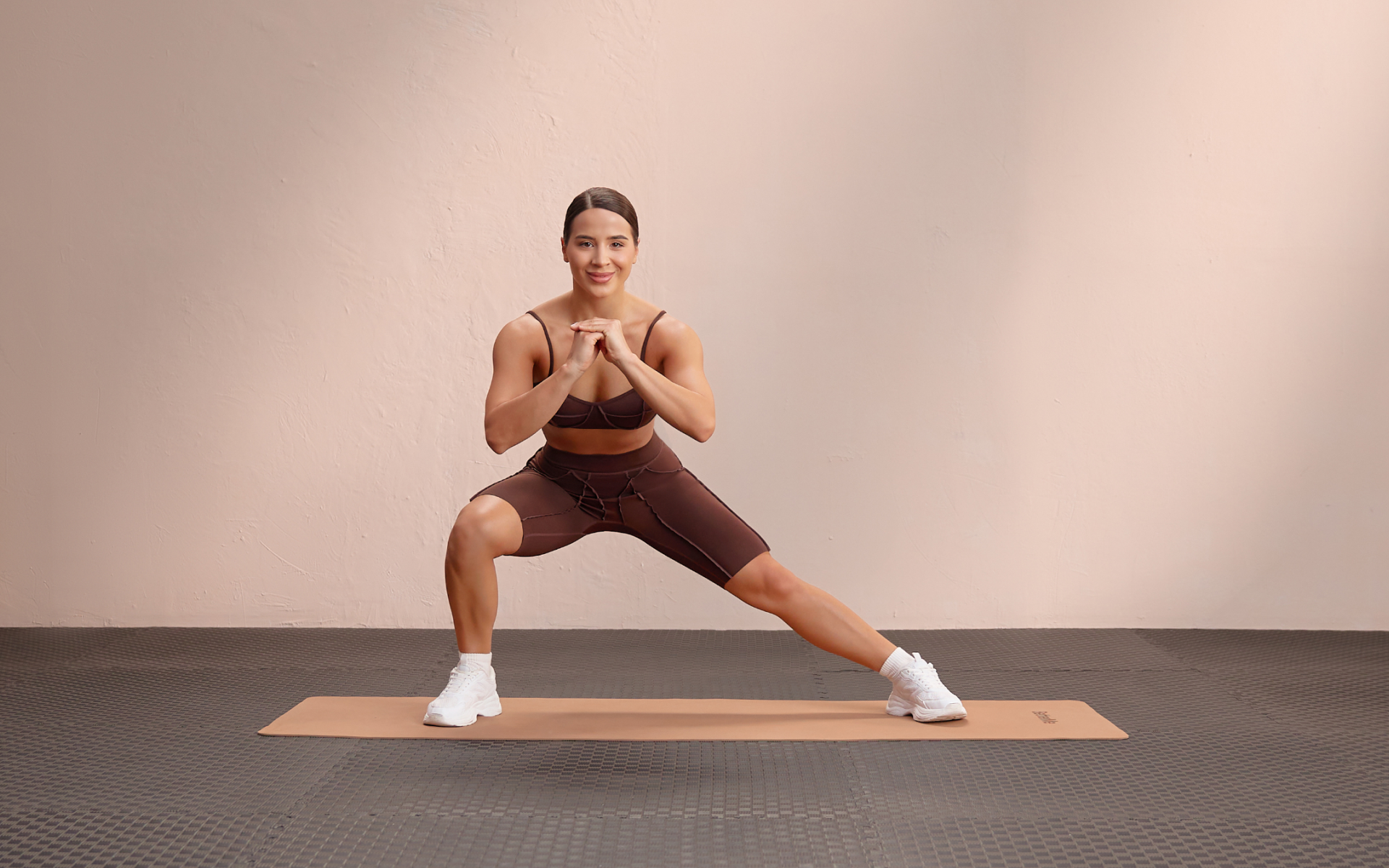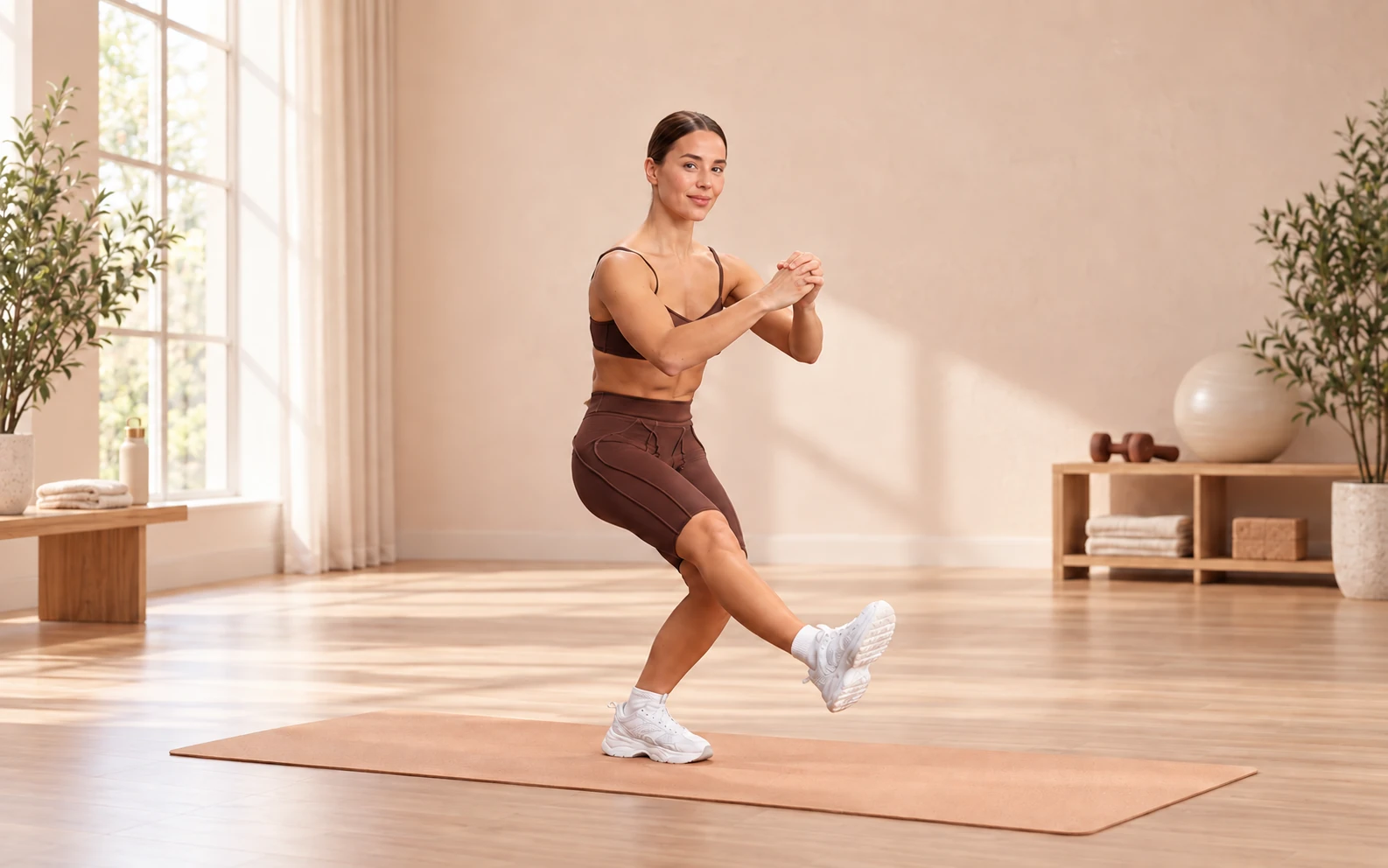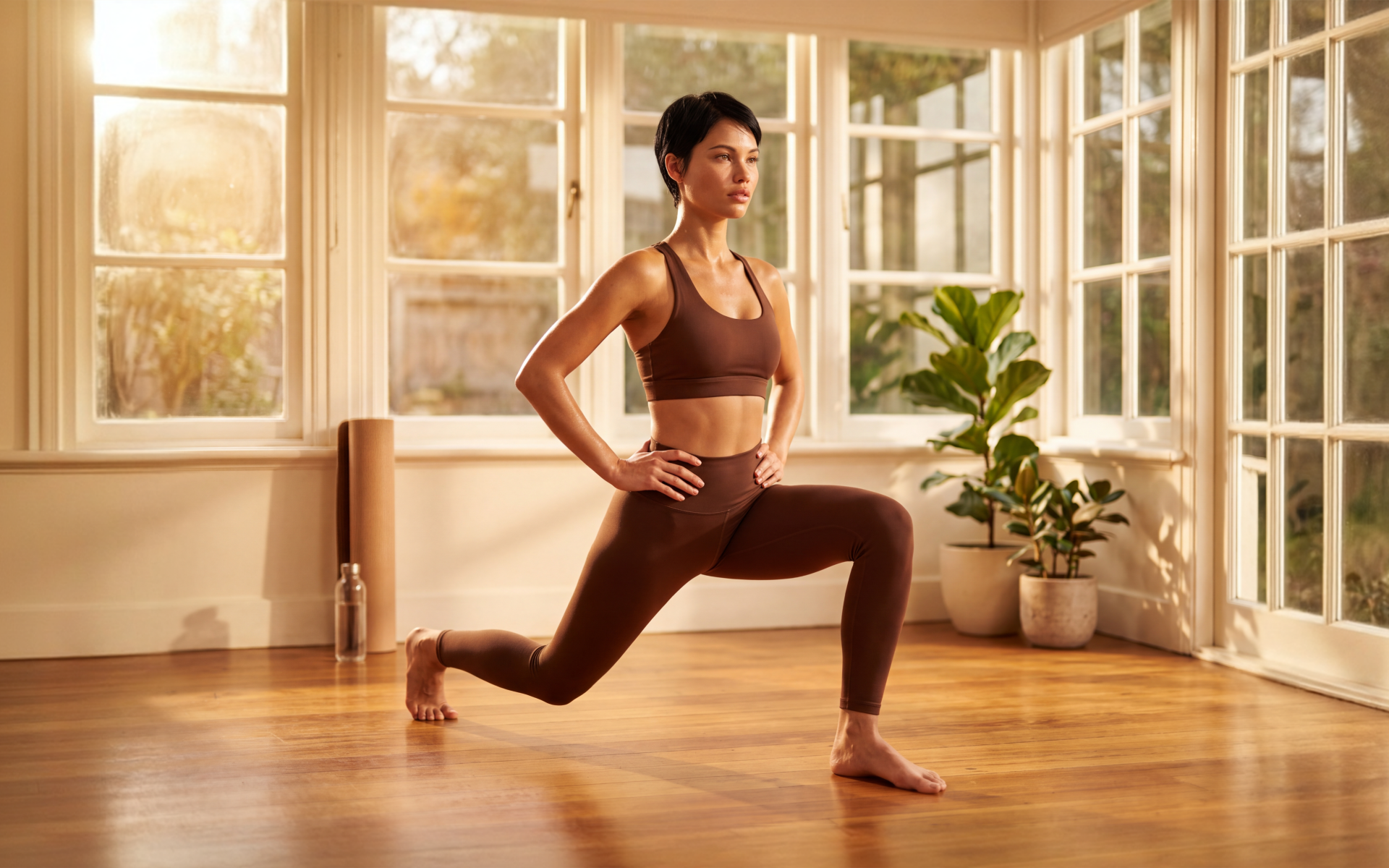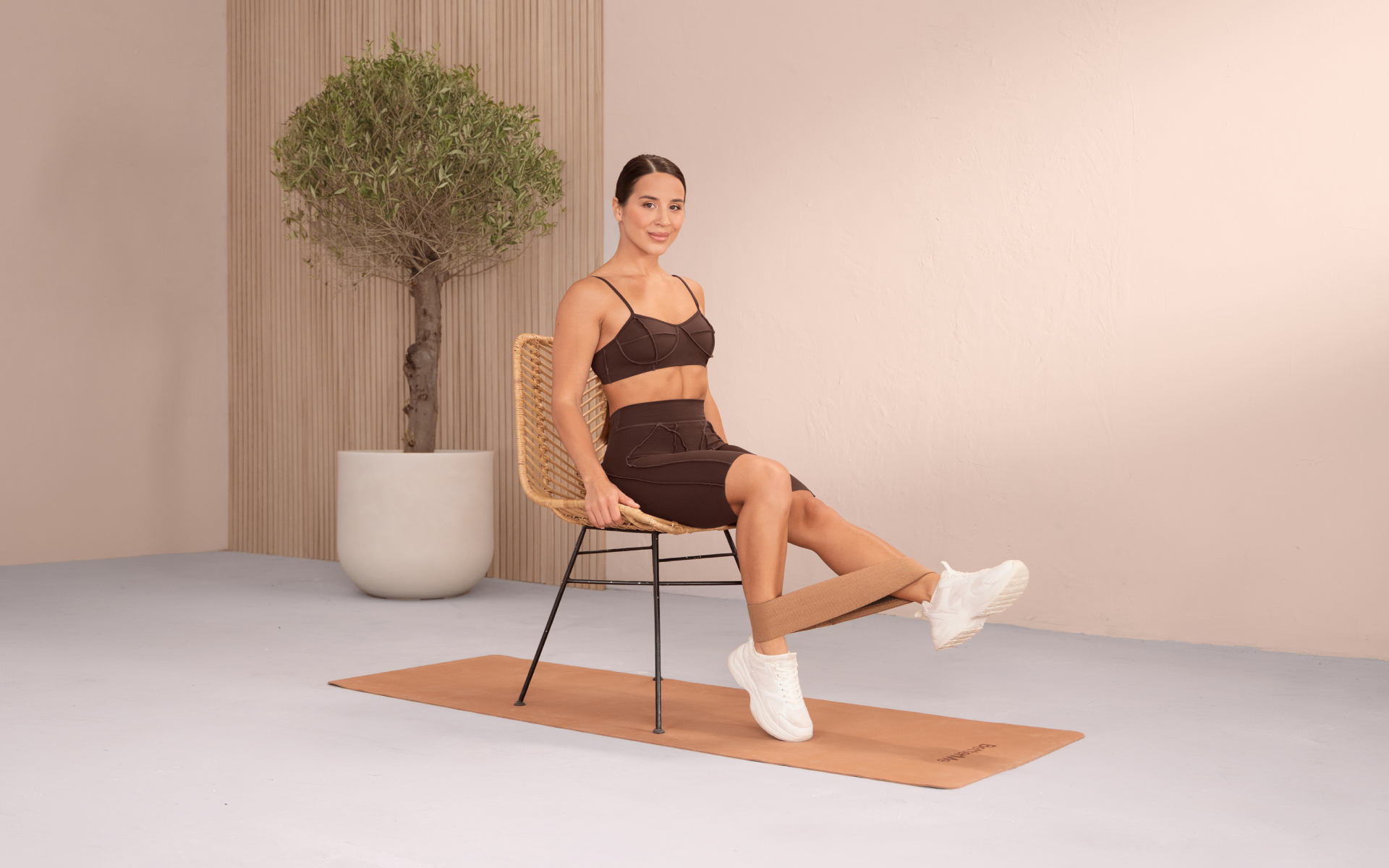

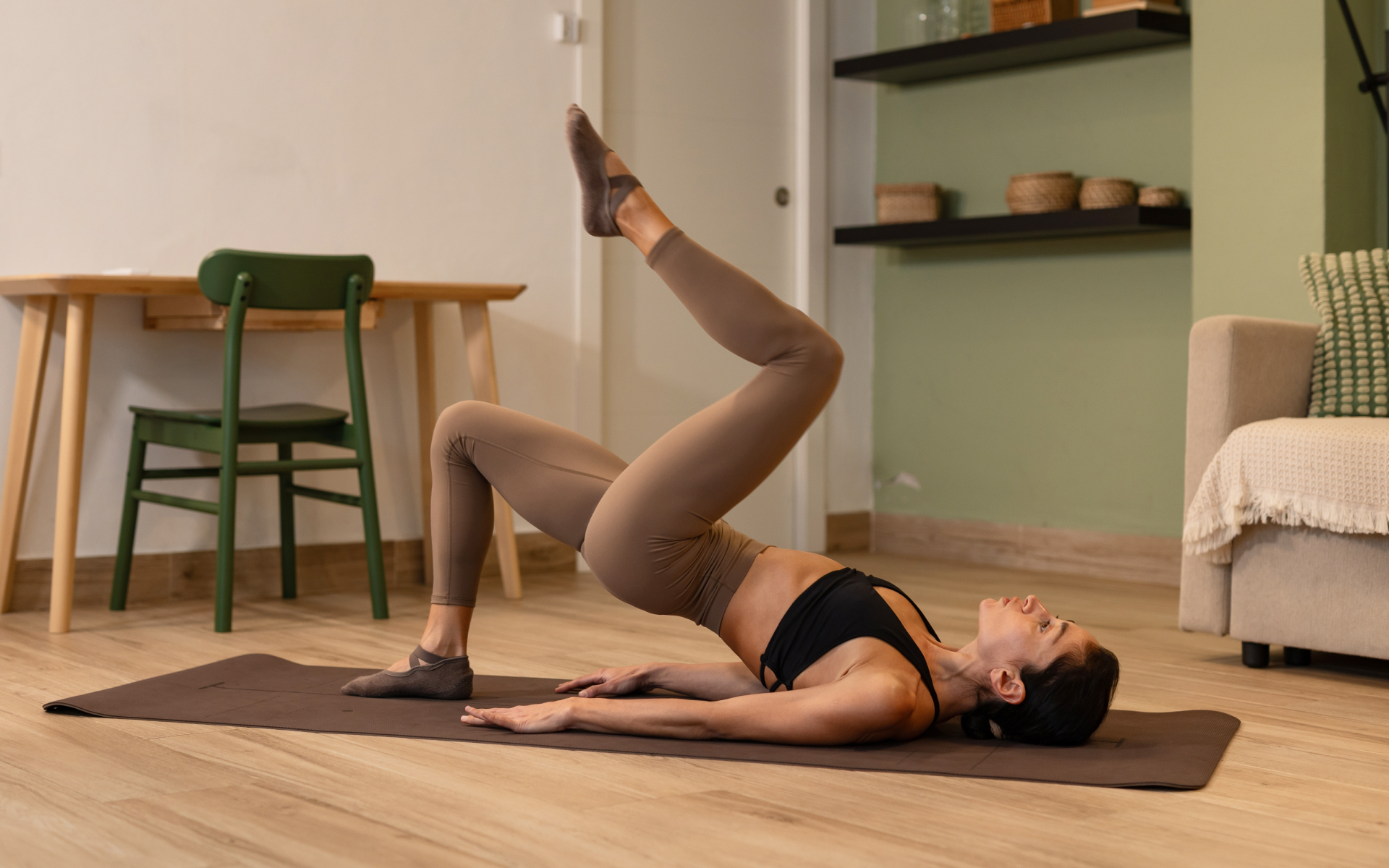
Leg-toning exercises are movements that help build lower-body muscles. They combine resistance training with steady progressive effort over time. For many people, “toned” legs come from two things happening together: growing a little muscle and reducing some body fat.
Well-chosen leg-toning exercises can support wellness, build strength, improve everyday movement, and may even boost confidence. You don’t need fancy equipment or hours in the gym. What helps most is a repeatable plan you can adjust over time. Various healthy lifestyle factors will have to come together in order to see the best results. Below, you’ll find plain-language definitions, a 3-day plan, and simple steps for each move.
What Does “Toning” Your Legs Actually Mean?
“Toning” your legs means building some muscle while reducing enough body fat for that muscle to show. It is not a separate biological process. It’s a non-scientific casual fitness word for more definition and less “softness” in the area.
Two processes take place when you have a well-structured toning routine:
- Muscle building: Also called hypertrophy, which means your muscle fibers grow (1).
- Fat reduction: Enough of a calorie balance shift for the muscle shape to show (2).
Some research has suggested that mechanical tension—the pull your muscles feel under resistance—is a main driver of muscle growth (1). So progressively lifting against resistance tends to matter more than chasing “the burn”.
A common myth says light weights and high reps “tone” while heavy weights make you “bulky”. In practice, muscle can grow across many loads when sets feel close to hard effort (3). So you have options, not one strict rule.
These exercises to tone legs work best when they’re paired with steady habits that support both muscle building and fat reduction. Supporting fat reduction rarely needs extreme measures—a modest calorie deficit can lead to fat loss. Small, repeatable habits tend to make the biggest difference over time.
Here are some habits worth building into your week:
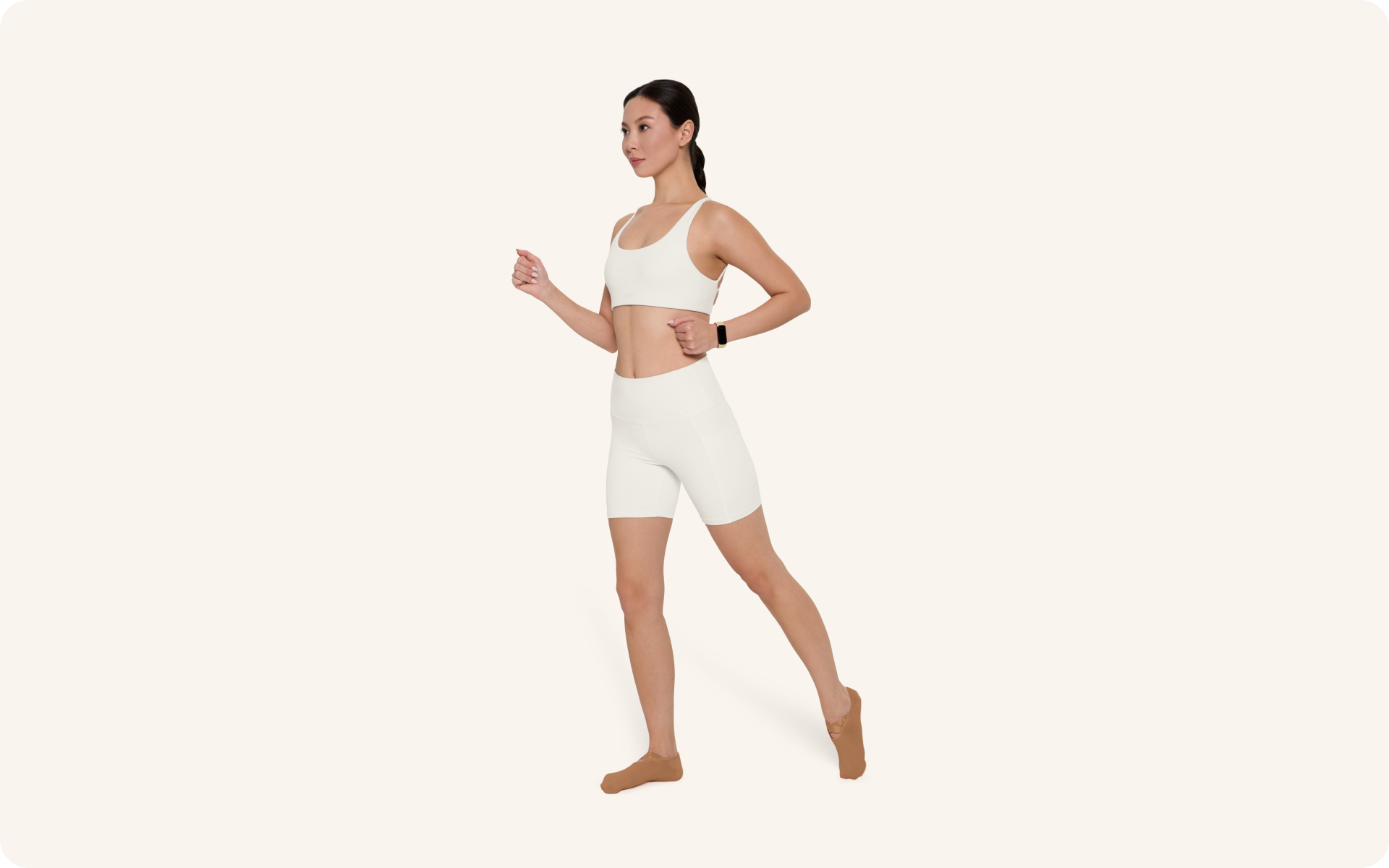
- Daily movement: Aiming for around 8,000-10,000 steps a day can increase how many calories your body uses (4). Walking, taking the stairs, or pacing during calls all count.
- Optional HIIT sessions: Adding 1-2 short, higher-intensity cardio sessions per week may raise your overall energy use (5). This depends on your weekly split, so fit them around your resistance days.
- A slight calorie deficit: For some people, eating around 250 fewer calories per day may support gradual fat reduction (6). Individual needs vary, so adjust based on your energy and how you feel.
- Sleep: Getting around 7-9 hours per night tends to support recovery and steady energy (7). Poor sleep can make it harder to stay consistent.
- Consistency over time: Repeating these habits week after week tends to matter more than any single perfect day.
These habits work alongside your training, not instead of it. Together, they create conditions where muscle definition may gradually become more visible.
Individual outcomes vary and depend on training history, rest, and nutrition.
Whether you’re just starting your fitness journey or looking to add more structure to your routine, BetterMe offers tools that can support different wellness goals. Explore the app and see how its workout, nutrition, and habit-building features can fit into your lifestyle.
Which Compound Exercises Should Form the Base of the Routine?
Squats, Romanian deadlifts, lunges, and step-ups form the base of most leg-day routines.
- Squats: Target the quadriceps (front thighs), glutes, and inner thighs
- Romanian deadlifts: Target the hamstrings (back thighs) and glutes
- Lunges: Target the quads, glutes, and calves
- Step-ups: Target the quads and glutes
A compound exercise is a multi-joint move that works many muscles together (8). Such exercises should form the base of any leg-toning workout as they give you more results for your time. They also allow you to use heavier weights, which supports muscle growth (9).
If you enjoy training two moves back-to-back to save time, you can explore our Superset Leg Workout guide for more ideas.
Which Accessory Exercises Can Complete a Leg-Toning Workout?
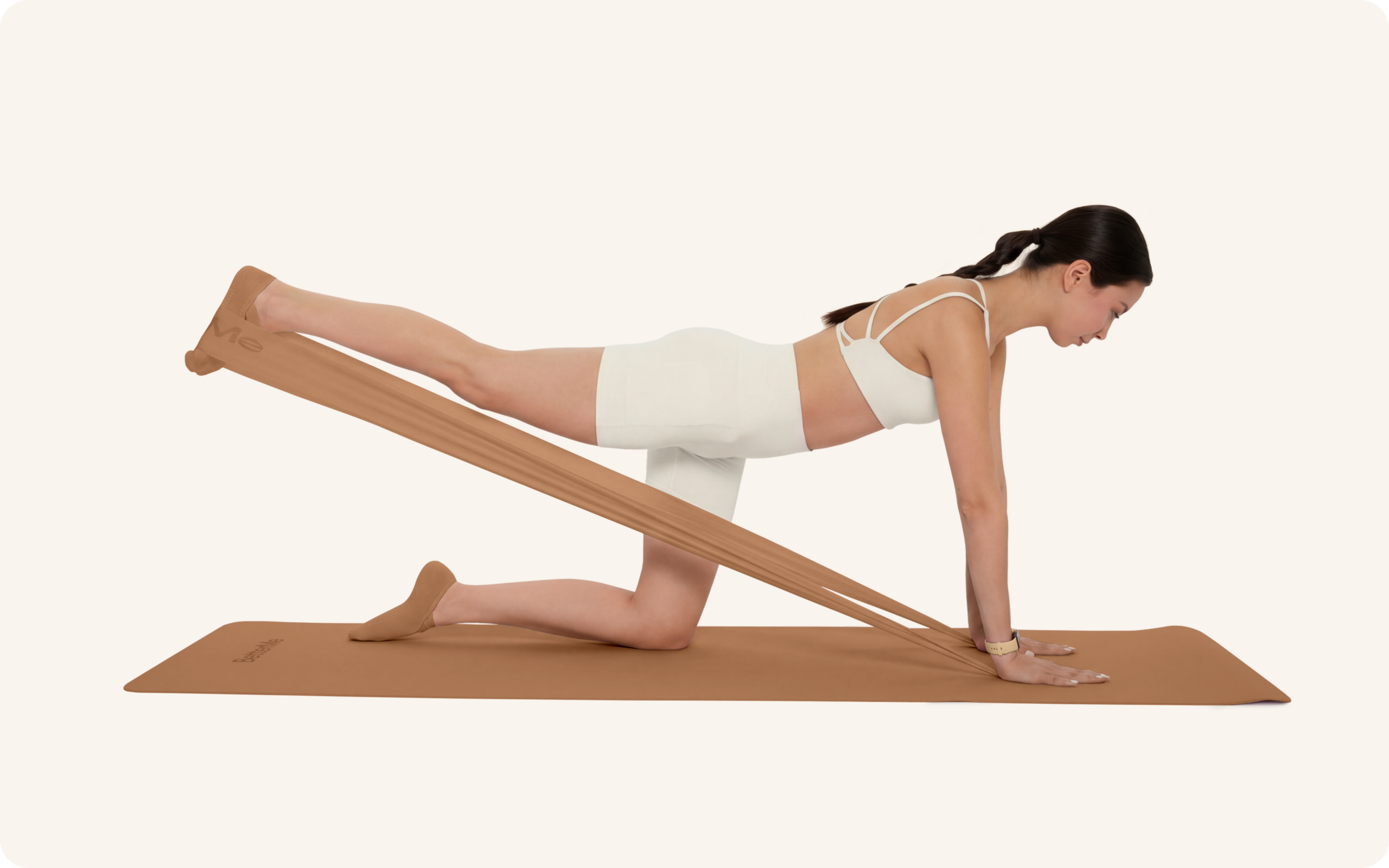
Calf raises, glute kickbacks, and clamshells are some accessory moves that are worth including in a leg-toning workout.
- Calf raises: Target the calf muscles (the gastrocnemius and soleus)
- Glute kickbacks: Target the glutes
- Clamshells: Target the glutes, hips, and core
An accessory exercise is a single-joint move, such as a calf raise, that isolates one area. Such exercises complete a leg-toning workout by loading individual areas that you may want to pay extra attention to for strength or aesthetics. These moves help refine shape and balance (10). They use lighter loads than compound moves.
Think of accessories as finishing touches. Compound moves build the base, and these lower-body toning exercises add detail.
You don’t need many of them. Adding 1-2 accessory moves per session is plenty for most people.
For example, after squats target the entire leg, a clamshell can target the glutes and hips, while a calf raise could isolate the calf.
These toning exercises for legs and thighs also suit home training. A mat and some dumbbells are often enough to begin.
Read more: Low Impact Leg Workout to Sculpt and Strengthen Your Lower Body
What Is a 3-Day Leg-Toning Workout Routine?
A 3-day leg-toning workout routine may include 2 hypertrophy-focused days and 1 cardio-focused day. Two days target muscle building. The third day is steady cardio that may contribute to overall calorie use.
Glossary (11):
- Frequency: How often you train, counted per week. Training a muscle group about 2 times per week is often a practical setup (11).
- Volume: The total work you do, often counted as sets per week.
- Sets: A group of reps done back-to-back before you rest.
- Reps: One full movement, such as lowering and lifting in a squat.
- Rest intervals: How long you pause between sets.
- Effort (RPE): How hard a set feels, scored 1-10, where 10 means no reps left. Many people train around RPE 7-9, leaving 1-2 reps in the tank.
Here’s a sample 3-day leg-toning routine.
| Day | Focus | Exercise | Sets | Reps | Rest | Suggested effort (RPE) |
|---|---|---|---|---|---|---|
| Day 1 | Hypertrophy | Glute bridges | 3 | 12-15 | 60-90 secs | 7-9 |
| Day 1 | Hypertrophy | Squats | 3 | 8-12 | 2-3 mins | 7-8 |
| Day 1 | Hypertrophy | Romanian deadlifts | 3 | 8-12 | 2-3 mins | 7-8 |
| Day 1 | Hypertrophy | Lunges | 3 | 10-12 per leg | 60-90 secs | 7-8 |
| Day 1 | Hypertrophy | Step-ups | 3 | 10-12 per leg | 60-90 secs | 7-8 |
| Day 1 | Hypertrophy | Calf raises | 3 | 15-20 | 60-90 secs | 7-9 |
| Day 2 | Hypertrophy | Repeat Day 1 workout | — | — | — | — |
| Day 3 | Cardio | Erg machine (bike, rower, or SkiErg) | — | 45 mins steady or interval effort | — | 6-8 |
On both hypertrophy days, you repeat the same 6 exercises. Your total weekly volume is shared equally across those 2 days. A commonly used weekly volume target for hypertrophy is around 10 sets per muscle group per week (12). This will give your muscles enough work while leaving time to rest.
However, beginners may progress with slightly less weekly volume. If multiple exercises train the same muscle, their sets usually add together. Compound moves can count for more than one muscle group (8), but not always equally.
Frequency also matters: training a muscle group about twice per week is often a more practical setup than having to get into exact sets per muscle group.
Day 3 is your cardio day. A 45-minute erg machine session—on a bike, rower, or SkiErg—may support overall calorie use. Keep the effort steady and manageable, around RPE 68.
And lastly, more isn’t always better: your results also depend on load, rest, and how well you can handle the work.
For guidance on setting up the resistance moves with machines and free weights, our Full Leg Workout at the Gym guide can walk you through each exercise.
Exercise Instructions
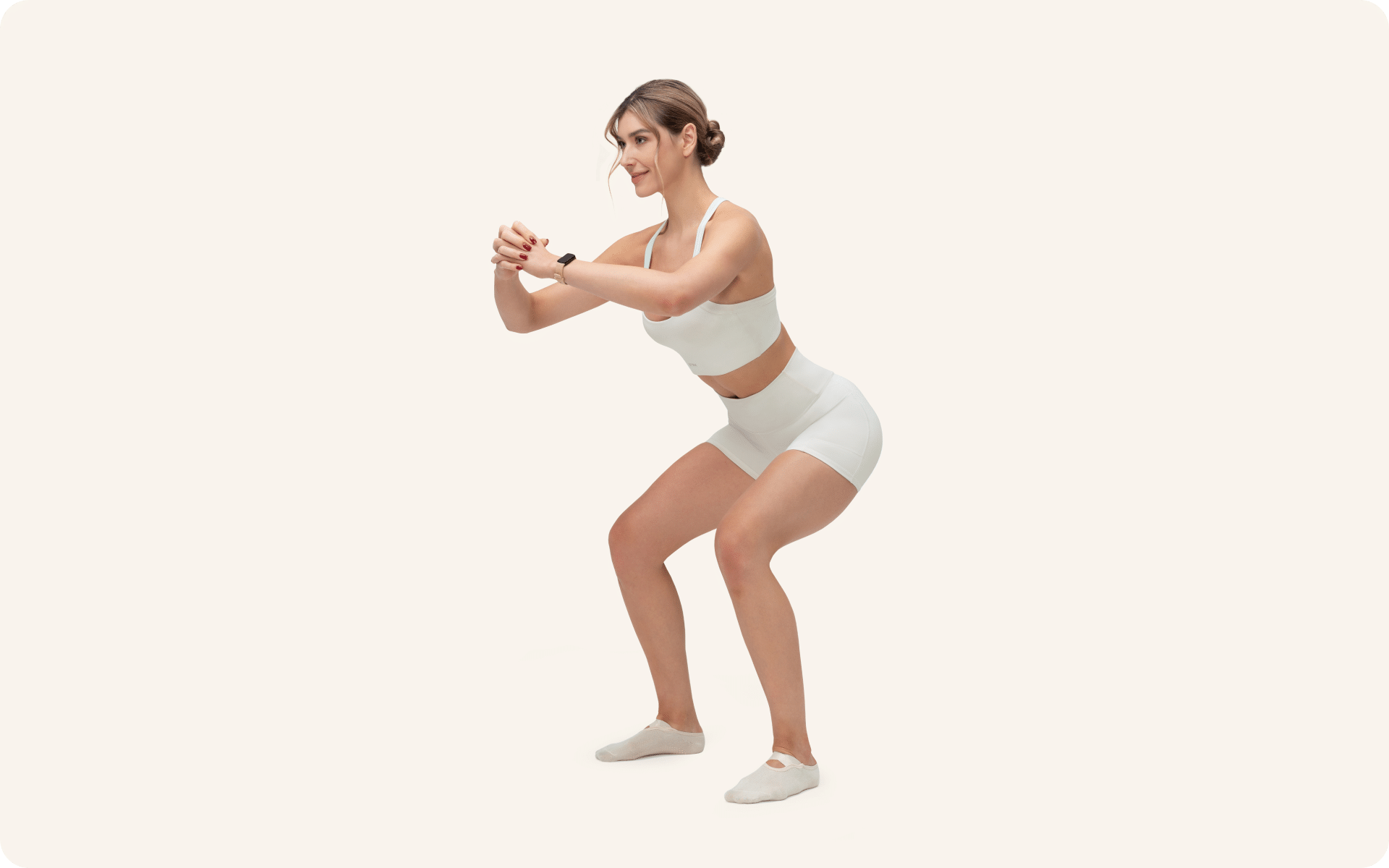
Squats
- Stand with your feet about shoulder-width apart.
- Keep your chest upright and your core braced.
- Hinge at the hips and bend your knees.
- Lower until your thighs are almost parallel to the floor.
- Push through your feet to stand back up.
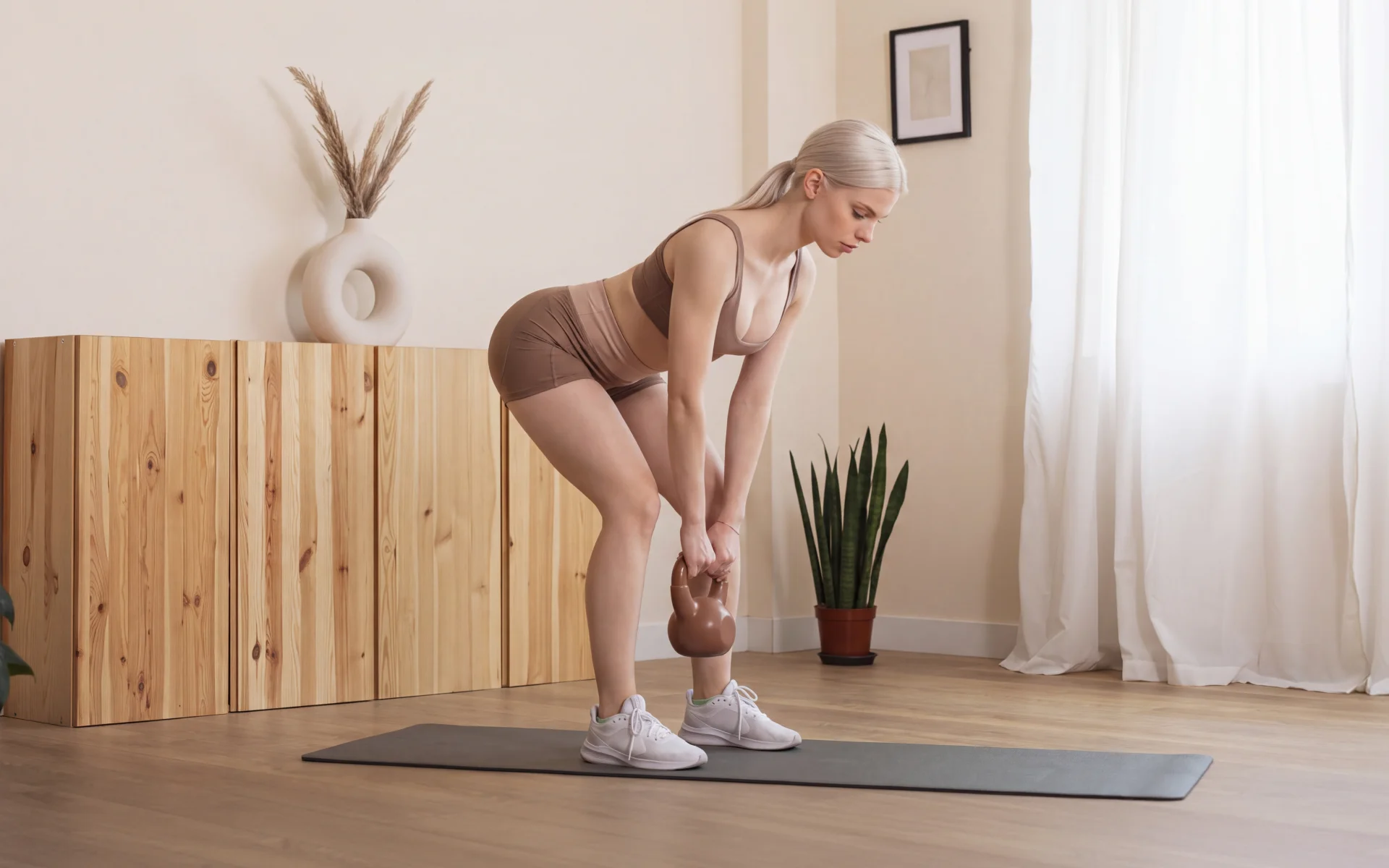
Romanian Deadlifts
- Hold a weight in front of your thighs.
- Keep your back flat and your knees slightly bent.
- Hinge at the hips and push them backward.
- Lower the weight along your shins until you feel a stretch.
- Drive your hips forward to return to standing.
Lunges
- Stand tall with your feet hip-width apart.
- Step one foot forward into a comfortable stride.
- Lower your back knee toward the floor.
- Keep your front knee over your ankle.
- Push through your front foot to return, then switch legs.
Step-ups
- Stand facing a sturdy bench or step.
- Place one full foot on the platform.
- Drive through that heel to lift your body up.
- Stand tall at the top, then lower with control.
- Repeat, then switch legs.
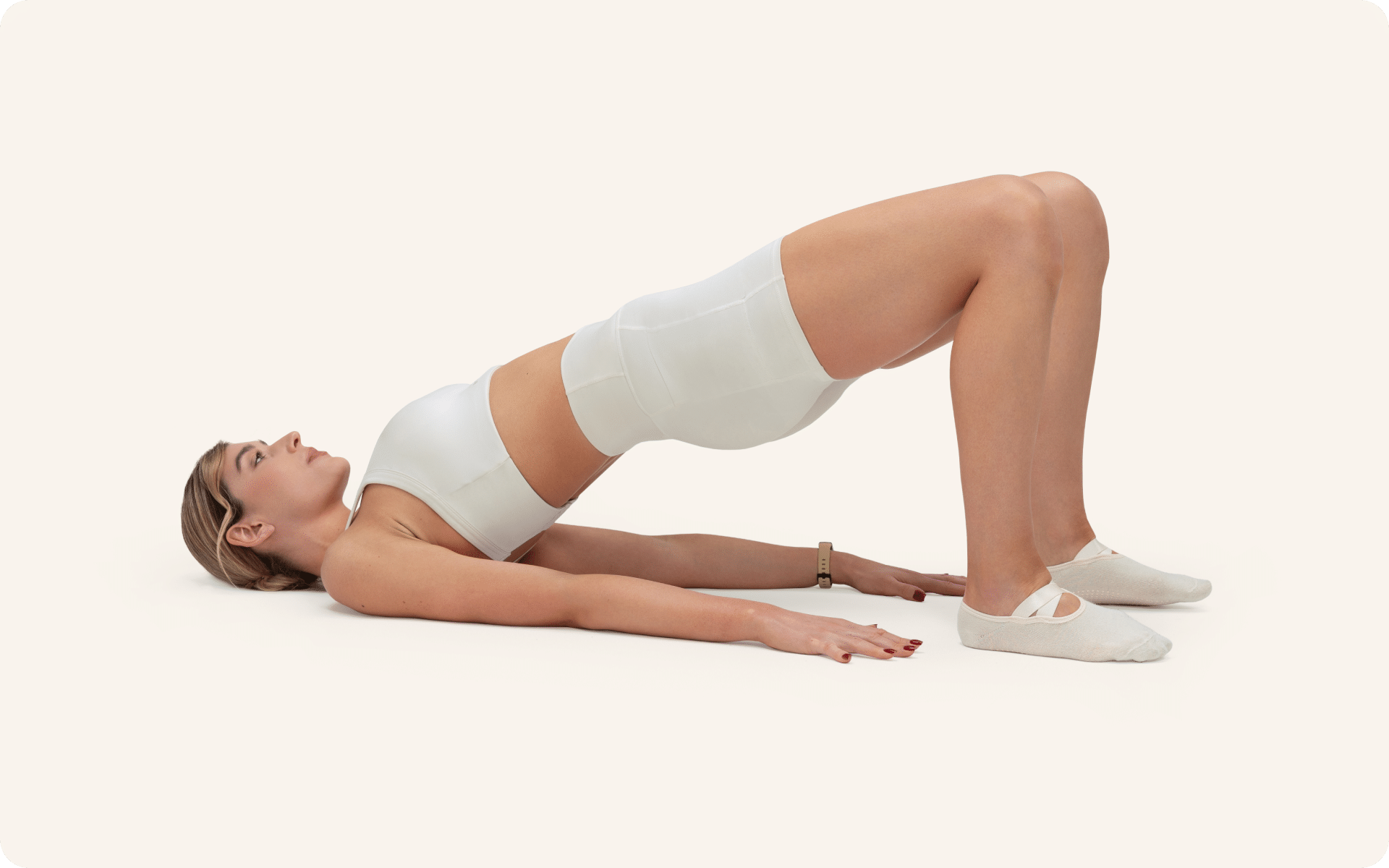
Glute Bridges
- Lie on your back with your knees bent.
- Place your feet flat, hip-width apart.
- Drive your hips upward until your body forms a straight line.
- Squeeze your glutes at the top.
- Lower slowly and repeat.
Calf Raises
- Stand tall with your feet hip-width apart.
- Rise onto the balls of your feet.
- Pause briefly at the top.
- Lower your heels through a full range of motion.
- Repeat with control.
Men who want tailored strategies for training adaptations can read our Leg Workout for Men guide for more details.
How Should You Choose Resistance, Repetitions, and Rest?
Choose resistance, repetitions, and rest based on your goal, then keep effort high enough to feel challenged by the final reps. This balance supports muscle growth without pushing you to your limit every set.
For most exercises to tone the legs, these ranges work well for many people:
- Reps: Around 6-12 for a strength-and-size blend.
- Accessory reps: Around 12-15 for smaller moves.
- Sets: About 2-4 per exercise.
- Rest: 2-3 minutes for heavier compound sets and 60-90 seconds for lighter, higher-rep work.
For example, with squats, you might rest for 2-3 minutes so you can lift well again. With calf raises, 60-90 seconds is usually enough. Effort also matters. Aim for a weight that feels like RPE 7-9, which means that you finish with 1-2 reps left.
Read more: Leg and Glute Workout Guide for Beginners: Exercises, Tips and FAQs
How Can You Progress Without Simply Adding More Repetitions?
You can progress by gradually increasing resistance, sets, or training frequency instead of only piling on reps. Adding reps beyond a certain number, for example 15, eventually shifts your training toward endurance rather than building muscle.
Progression, which is often called progressive overload, means making training a little more challenging over time (13).
Here are simple ways to progress (14):
- Add a small amount of load: For example, when you hit your chosen upper ceiling on a weight (say you can do 12 reps comfortably), add an extra 2-5 pounds on squats.
- Add one rep or one set: Move from 3 sets to 4, or from 10 reps to 11.
Small, steady changes tend to work better than big jumps. You might add one rep this week and a little weight next week.
Keep a short log so you know what to beat next time. This turns your leg-toning routine into a clear, repeatable plan.
If a session feels too easy, that is your signal to nudge one variable up. Progress at a pace that suits your life and rest.
BetterMe offers a variety of workouts, recipes, challenges, and support tools to help you stay more consistent with your wellness routine. Explore the app to find features that fit your goals, preferences, and schedule.
How Can You Track Progress Beyond Body Weight?
You can track progress by watching your lifts, how clothes fit, photos, and how sessions feel over time. Body weight alone rarely tells the full story with any lower-body toning workout.
The scale can move slowly even when your legs change. Muscle and fat shift at different rates for different bodies.
Try tracking these instead:
- Strength: Are you lifting more weight or doing more reps than last month?
- Measurements and fit: Do your clothes feel different around the thighs, waist, arms, or chest?
- Progress photos: Same lighting, same angle, taken every 1-4 weeks.
- Energy and mood: Do sessions feel more manageable?
For example, adding 5 pounds to your squat over a month is real progress, even if the scale holds steady.
Give any plan a fair window, such as 8-12 weeks, before judging results. Individual outcomes vary and depend on many factors.
Which Leg-Toning Workout Mistakes Should You Avoid?
The most common leg-toning exercise mistakes are rushing effort, skipping progression, and neglecting rest. Avoiding these tends to make your training feel smoother and more rewarding.
Here are frequent slip-ups and simple solutions:
- Training too light: If sets feel easy, add resistance so the last reps feel like RPE 7-9.
- Never progressing: Nudge load, reps, or sets up gradually over the weeks.
- Skipping rest days: Muscles grow during rest (15), so keep 1-2 lighter days weekly.
- Rushing reps: Use a controlled 2-3 second lowering phase for better tension.
- Doing only isolation moves: Keep compound lifts as your base.
For example, if your glute bridges feel effortless, add a weight across your hips. That small change keeps the workouts to tone legs challenging.
Consistency beats perfection here—two or three focused sessions each week tend to matter more than one intense session done once per week.
If discomfort feels sharp or ongoing, consider pausing and checking in with a qualified professional.
FAQs
Can leg exercises change the appearance of your thighs and calves?
Yes, regular resistance training can change how your thighs and calves look over time. Building muscle and reducing some body fat together tends to create more definition (2). How quickly this shows will depend on training history, rest, and nutrition. Individual outcomes vary, so give any plan a fair window of several weeks and try your best to pay close attention to your food intake while exercising.
Do light weights and high repetitions tone legs better?
No, light weights and high reps aren’t automatically better for toning your legs. Some research has suggested that muscle can grow across many loads when sets feel close to hard effort (3). What matters most is effort and steady progression. Choose a weight and rep range you enjoy, then challenge yourself over time. Consistency leads to results and the best way to stay consistent is to find an activity that you love to do.
Can walking contribute to a leg-toning routine?
Yes, walking can support a leg-toning routine, mostly by helping with activity and fat balance. Walking alone rarely builds much leg muscle on its own. For more definition, pair walking with resistance work such as squats and lunges. Think of walking as helpful support rather than the main driver of visible changes.
Can you work toward more defined legs without using weights?
Yes, you can work toward more defined legs using body-weight exercises for toned legs. Moves such as squats, lunges, step-ups, and glute bridges challenge your muscles well. To keep progressing, add reps, slow your tempo, or try single-leg versions. Bodyweight training suits home routines and beginner-friendly plans.
Do resistance bands provide enough challenge for leg exercises?
Yes, resistance bands can provide enough challenge for many people, particularly beginners. Bands add tension that increases as you stretch them, which your muscles feel (16). To progress, use a thicker band or add more reps. For advanced trainees, bands may work best alongside weights for extra load.
Can you train your legs without doing squats or lunges?
Yes, you can build a toned legs workout without squats or lunges. However, these exercises are typically ideal options for most fitness enthusiasts. They mimic everyday movements and we definitely recommend adding them into your routine.
That being said, if you want to create a lower-body workout without these exercises, options include Romanian deadlifts, glute bridges, step-ups, and calf raises. These cover your quads, hamstrings, glutes, and calves. Choose movements that feel comfortable for your body, then apply steady effort and gradual progression over time.
The Bottom Line
A well-planned set of leg-toning exercises can help you build stronger, more defined legs while you enjoy the process. Keep your sessions consistent, adjust one variable at a time, and allow your effort to guide you. Pick two or three moves that you like, add them to your week, and watch your progress unfold—consistency will ultimately pay off.
DISCLAIMER:
This article is intended for general informational purposes only and does not serve to address individual circumstances. It is not a substitute for professional advice or help and should not be relied on for making any kind of decision-making. Any action taken as a direct or indirect result of the information in this article is entirely at your own risk and is your sole responsibility.
BetterMe, its content staff, and its medical advisors accept no responsibility for inaccuracies, errors, misstatements, inconsistencies, or omissions and specifically disclaim any liability, loss or risk, personal, professional or otherwise, which may be incurred as a consequence, directly or indirectly, of the use and/or application of any content.
You should always seek the advice of your physician or other qualified health provider with any questions you may have regarding a medical condition or your specific situation. Never disregard professional medical advice or delay seeking it because of BetterMe content. If you suspect or think you may have a medical emergency, call your doctor.
SOURCES:
- Anabolic signals and muscle hypertrophy – Significance for strength training in sports medicine (2025, sciencedirect.com)
- Body Recomposition: Can Trained Individuals Build Muscle and Lose Fat at the Same Time? (2020, journals.lww.com)
- Loading Recommendations for Muscle Strength, Hypertrophy, and Local Endurance: A Re-Examination of the Repetition Continuum (2021, mdpi.com)
- Walking for Exercise (2023, nutritionsource.hsph.harvard.edu)
- Evidence-Based Effects of High-Intensity Interval Training on Exercise Capacity and Health: A Review with Historical Perspective (2021, mdpi.com)
- Body Weight Regulation (2024, ncbi.nlm.nih.gov)
- Healthy Sleep Every Day Keeps the Doctor Away (2022, mdpi.com)
- No Time to Lift? Designing Time-Efficient Training Programs for Strength and Hypertrophy: A Narrative Review (2021, link.springer.com)
- Resistance Training Load Effects on Muscle Hypertrophy and Strength Gain: Systematic Review and Network Meta-analysis (2021, journals.lww.com)
- Hypertrophic Effects of Single- Versus Multi-Joint Exercise of the Limb Muscles: A Systematic Review and Meta-analysis (2023, journals.lww.com)
- American College of Sports Medicine Position Stand. Resistance Training Prescription for Muscle Function, Hypertrophy, and Physical Performance in Healthy Adults: An Overview of Reviews (2026, journals.lww.com)
- Resistance Training Variables for Optimization of Muscle Hypertrophy: An Umbrella Review (2022, frontiersin.org)
- Attention to Progression Principles and Variables of Exercise Prescription in Workplace-Related Resistance Training Interventions: A Systematic Review of Controlled Trials (2022, frontiersin.org)
- Effects of Resistance Training Overload Progression Protocols on Strength and Muscle Mass (2024, pubmed.ncbi.nlm.nih.gov)
- The Importance of Recovery in Resistance Training Microcycle Construction (2024, pmc.ncbi.nlm.nih.gov)
- Effects of elastic band resistance training on the physical and mental health of elderly individuals: A mixed methods systematic review (2024, pmc.ncbi.nlm.nih.gov)
 Reviewed by