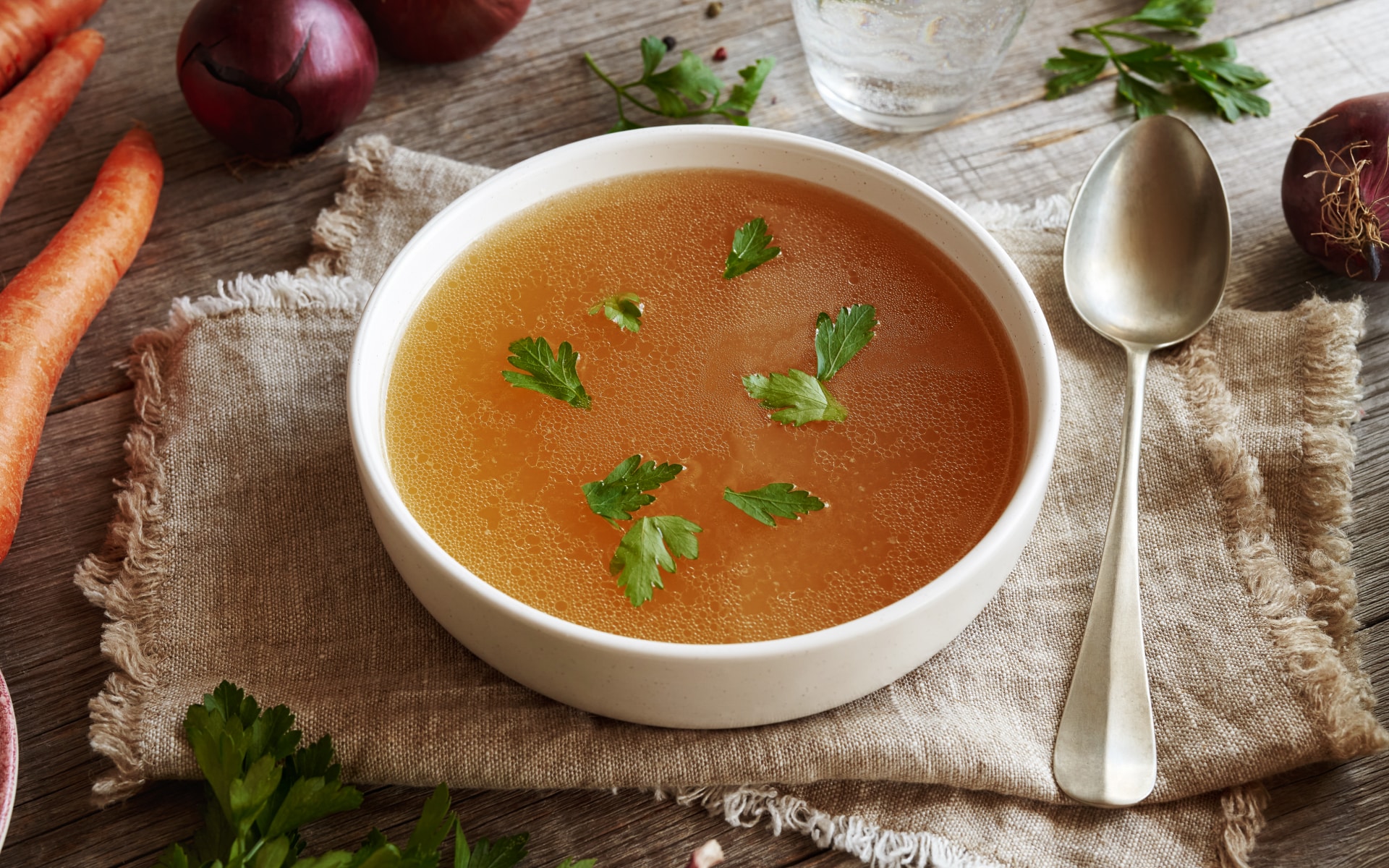
Bone broth fasting is a structured approach that combines periods without solid food with the consumption of bone broth. In most cases, it involves drinking several cups of broth throughout the day, along with water and other low- or no-calorie beverages, instead of eating regular meals for a set period.
Bone broth fasting has become a popular topic among people who are curious about fasting but want something more supportive than a water-only approach. Because bone broth contains fluid, electrolytes, and small amounts of protein, some people find it easier to follow than stricter methods. In this guide, you’ll learn what bone broth fasting is, how it may fit into a broader bone broth diet, what bone broth fast benefits are commonly discussed, and how to make a simple version at home. You’ll also find a sample 3-day plan, timing tips, and FAQs.
Bone broth fasting, particularly multi-day approaches, is not suitable for everyone. Your health status, medication use, and nutritional needs all influence how any fasting approach affects you. Speak with a healthcare provider before starting any extended fasting protocol.
What Is Bone Broth Fasting?
Bone broth fasting is a modified fasting approach that centers on drinking bone broth instead of eating solid meals for part or all of a defined period. A bone broth fast usually includes several cups of broth spread across the day, plus water and sometimes other simple drinks such as herbal tea or black coffee.
Bone broth itself is made by simmering animal bones and connective tissue for many hours. This creates a savory liquid that contains minerals, gelatin, collagen-related compounds, and some protein (1). In a bone broth fasting diet, that broth becomes the main source of nourishment during the fasting window.
Some people use bone broth fasting as part of intermittent fasting. For example, they may follow a 16-hour fast with an 8-hour eating window (16:8), and include broth during the fasting portion. Others explore a short bone broth diet for 1–3 days as a more structured reset from regular eating patterns.
Some people explore bone broth fasting with weight management as a goal. The low calorie content of bone broth may support a calorie deficit, though this depends significantly on overall intake. Some people find short-term bone broth fasting a manageable introduction to calorie-restricted eating. Longer fasts, even while still drinking bone broth, are not likely to lead to sustainable weight loss, however.
It also helps to understand what bone broth fasting is not. It is not the same as a balanced everyday eating plan, and it is not meant to replace long-term nutrition habits. If you’re exploring a bone broth diet, it may be most useful as a short-term practice with a clear start and end point.
Read More: Fact Or Myth: Can Intermittent Fasting Cause Weight Gain?
Can You Drink Bone Broth While Fasting?
Yes, you can drink bone broth while fasting in many modified fasting approaches. Whether it “counts” depends on the type of fast you’re doing. If your goal is a strict zero-calorie fast, then bone broth does break that fast. If your goal is a more flexible routine, many people consider it a practical option because it offers a range of possible advantages, including nutritional support, hydration, and potential gut health benefits.
| Benefit | Mechanism | Research Status |
|---|---|---|
| Nutritional support | Provides minerals, amino acids, and small amounts of protein | Supported by nutrient analysis |
| Hydration support | Adds fluid and sodium during fasting windows | Commonly recognized |
| Gut support | Gelatin and collagen may support digestive function | Early and mixed research |
| Liver health research | Glycine has been explored in liver-related research | Limited, emerging research |
| Calorie balance | Low calorie content may fit reduced-intake plans | Context-dependent |
| Muscle support | Protein may help support muscle during short fasts | Plausible, but modest per serving |
| Hunger management | Warm, savory liquid may feel satisfying | Often reported anecdotally |
| Intermittent fasting fit | Can be used in modified fasting routines | Commonly used in practice |
Nutrient-Dense Nourishment
Bone broth contains amino acids, minerals, and collagen-related compounds in an easy-to-sip form (1). That can feel more manageable than going without anything at all. If you struggle with stricter fasting plans, broth may offer a gentler entry point.
Supports Gut Health
Some researchers suggest the gelatin and collagen in broth may support digestive function during periods of reduced food intake (2). This does not mean broth “heals” the digestive tract, but it may feel easier on the stomach than solid meals for some people. Individual responses can vary.
BetterMe Well-Being Coach app helps you achieve your body goals with ease and efficiency by helping to choose proper meal plans and effective workouts. Start using our app and you will see good results in a short time.
Supports Liver Health Research
Bone broth contains glycine, an amino acid that has been explored in research related to liver function (3). That does not mean broth “detoxes” the body. It simply means some of its components have been studied for their relationship to normal body processes.
May Support Calorie Balance
Bone broth’s low calorie content means it contributes minimally to daily calorie intake during a fast. That is one reason some people explore bone broth for weight loss as part of a broader eating plan.
Glutamine and arginine have been explored in some research for their associations with blood sugar and metabolic markers (4), but bone broth alone is not a complete weight management strategy.
Helps Support Muscle Maintenance
Bone broth contains some protein, which may be helpful during a short fast. The amount can vary a lot depending on how it is made, so it should not be seen as a full protein solution. You’ll still need enough total protein during your regular eating periods.
May Reduce Hunger and Cravings
Warm liquids can be comforting. Many people find that sipping something savory makes a fasting window feel more manageable than relying on plain water alone. That doesn’t remove hunger completely, but it may soften it.
Supports Hydration and Electrolyte Intake
Bone broth naturally contains sodium and may contain other electrolytes in smaller amounts. That can be useful during fasting, especially if you tend to feel low-energy when you go too long without food. Hydration still matters (5), so broth works best alongside regular water intake.
Works With Some Intermittent Fasting Routines
If you’ve wondered, “Can you drink bone broth when fasting?” or “Does broth break a fast?” the answer depends on your method. It does technically break a strict fast because it contains calories and protein. Still, many people use it during modified fasting routines because it can make the process feel more practical and sustainable.
How To Make Bone Broth for Fasting (Including Beef Recipe)
If you want to learn how to make bone broth for fasting, the basic process is simple: roast bones, simmer them for a long time, strain the liquid, and store it. If you’re specifically looking for how to make beef bone broth for fasting, beef bones are a common choice because they tend to create a rich, flavorful broth.
Step 1: Gather Your Ingredients
For a nutrient-dense beef bone broth, you’ll need:
- 3-4 pounds of mixed beef bones (such as marrow bones, knuckles, and oxtail)
- 2 tablespoons of apple cider vinegar
- Filtered water, and optional additions such as vegetables (carrots, celery, onions), herbs (parsley, thyme, bay leaves), and spices (peppercorns, garlic)
Step 2: Roast the Bones
- Preheat your oven to 400°F (200°C).
- Place the bones on a roasting tray and roast for about 30 minutes, or until they are well-browned. Roasting the bones enhances the flavor of the broth.
Step 3: Transfer Everything to a Pot
- Add the roasted bones to a large stockpot or slow cooker.
- Add the apple cider vinegar, which helps extract the nutrients from the bones, and enough filtered water to cover the bones by about 2 inches.
Step 4: Add Optional Flavor Ingredients
If you enjoy a more aromatic broth, add your vegetables, herbs, and spices now. Keep the seasoning simple if the broth is meant for fasting, as a clean, savory taste is often easier to sip several times a day. You can always season individual cups later.
Read More: 9 Intermittent Fast Belly Fat Burner Hacks That Are Science-Backed
Step 5: Simmer Slowly
- Bring the mixture to a gentle boil, then reduce the heat to a low simmer.
- Cover the pot partially and let the broth simmer for a minimum of 12 hours, or up to 48 hours for the most nutritious and flavorful result.
- The longer the broth simmers, the more nutrients will be extracted from the bones.
Step 6: Strain the Broth
- Pour the broth through a fine-mesh strainer or cheesecloth into a clean container.
- Discard the bones and solids.
- Let the liquid cool slightly before storing.
Step 7: Refrigerate or Freeze
Store broth in the refrigerator for up to 5 days, or freeze it for longer storage. If a layer of fat forms on top, you can skim it off or leave a little in for flavor. Reheat one cup at a time as needed.
If you prefer chicken, the method stays almost the same. Use an equal amount of chicken bones, herbs of your choice, and simmer for the instructed time.
| Broth Type | Preparation Difference | Nutritional Note |
|---|---|---|
| Beef bone broth | Richer flavor, often longer simmer | Often higher in collagen-related compounds |
| Chicken bone broth | Lighter flavor, may cook a bit faster | Usually lighter in taste and texture |
3-Day Bone Broth Fast: Schedule & What to Expect
A 3-day bone broth fast is a short-term version of a bone broth diet plan. A common approach is to drink 4–6 cups of bone broth per day, along with plain water and simple calorie-free drinks such as herbal tea. The goal is usually structure and simplicity, not a dramatic outcome.
On Day 1, many people notice hunger more clearly because the body is adjusting to the lack of solid food. If you normally snack often, the shift can feel especially noticeable. Energy may feel uneven, and warm broth every few hours can make the day feel more manageable.
On Day 2, some people say the routine starts to feel more predictable. Hunger may still come in waves, but it often feels less surprising once you have a schedule. This is usually when staying consistent with fluids matters most.
On Day 3, many people report reduced hunger, though individual experiences vary. If you try a 3-day bone broth fast schedule, it helps to plan how you’ll end it. A gentle reintroduction to food—such as cooked vegetables, fruit, rice, eggs, or other simple meals—may feel easier than jumping straight into large portions.
A 3 day bone broth fast weight loss outcome should not be assumed. Some people search for 3 day bone broth fast benefits with weight change in mind, but experiences vary, and short-term changes do not necessarily reflect lasting progress.
| Day | Timing | What to Have | Expected Experience |
|---|---|---|---|
| Day 1 | Every 3–4 hours | Bone broth, water, herbal tea | Hunger may feel strong, routine is still new |
| Day 2 | Every 2–4 hours | Bone broth, water, optional black coffee | Hunger may stabilize somewhat, energy may vary |
| Day 3 | Every 3–4 hours | Bone broth, water, herbal tea, gentle reintroduction later | Many people report reduced hunger, but experiences differ |
A 3-day fast of any kind should be approached carefully and discussed with a healthcare provider before starting.
Want to spring-clean your diet, skyrocket your self-confidence, and shatter your insecurities? Check out the BetterMe Well-Being Coach app and set this plan in motion!
When Should I Drink Bone Broth When Fasting?
If you’re wondering when should I drink bone broth when fasting, the short answer is: spread it out in a way that supports consistency. Many people do well with one cup in the morning, then another every 2–4 hours during the fasting period.
If you’re following a short bone broth fast, having broth at regular intervals can make the day feel more structured. Instead of waiting until you feel drained or overly hungry, it may help to plan your cups ahead of time. That can make it easier to stay aware of both broth and water intake.
If you’re combining broth with intermittent fasting, you might use it during the fasting window only. For example, in a 16-hour fast with an 8-hour eating window (16:8), you may choose broth in the late morning or mid-afternoon if those are the hardest hours for you.
Pay attention to how the timing feels in real life. Some people prefer a cup first thing in the morning. Others find it more helpful later in the day, when hunger tends to build.
Many wonder whether timing matters for bone broth weight loss. We don’t recommend such extreme weight loss methods; a more sustainable approach is to create a calorie deficit while maintaining a balanced, nutrient-rich diet (6).
What Else Can I Have With Bone Broth Fasting?
If you’re asking what else can I have with bone broth fasting, the best answer is to keep it simple. Most people stick with items that support hydration and make the process feel more manageable without turning it back into regular eating.
| Item | Acceptable? | Notes |
|---|---|---|
| Water | Yes | Main fluid to prioritize |
| Sparkling water | Usually yes | Choose unsweetened versions |
| Black coffee | Often yes | Some people find it helps manage energy and hunger |
| Herbal tea | Yes | Good for variety and warmth |
| Green tea | Sometimes | May feel too stimulating for some |
| Electrolytes | Sometimes | Choose simple, low-sugar options |
| Lemon water | Usually yes | Small squeeze for flavor |
| Apple cider vinegar in water | Sometimes | Research on its effects is mixed |
| Salt in water | Sometimes | Used by some people for sodium support |
| Coconut oil, butter, or ghee | Optional in some plans | Adds calories, so it changes the fast more clearly |
Water
Water matters most. Try to drink it consistently through the day rather than waiting until you feel very thirsty. Bone broth helps, but it should not fully replace plain water.
Black Coffee
Some people include plain, unsweetened coffee during fasting windows. Some people find black coffee helps them manage energy and hunger during fasting windows. If it makes you feel jittery or unsettled, it may be better to skip it.
Herbal Tea
Herbal tea is a simple option if you want something warm without adding much complexity. Peppermint, ginger, or chamomile are common choices. It can also help break up the monotony of drinking only water and broth.
Apple Cider Vinegar
Some people include diluted apple cider vinegar during a bone broth fast. Research on its effects is mixed. If you do use it, keep the amount small and dilute it well.
Lemon Water
A squeeze of lemon can make water feel more appealing. It adds flavor without turning it into a full beverage. Many people use this trick simply to drink more fluids.
Electrolytes
Electrolytes can be useful, especially during a longer fasting window or if you sweat a lot. Choose options with minimal sugar and simple ingredients if possible. Bone broth already contains some sodium, so you may not need much extra.
Add-Ins
Some bone broth fasting plans include small amounts of coconut oil, butter, or ghee in broth. These can make broth feel richer and more satisfying, but they also increase calorie intake. Whether that fits depends on how strict or flexible you want your routine to be.
Frequently Asked Questions
Is bone broth good for fasting?
Yes, bone broth can be a useful addition to some fasting routines. Many people like it because it provides fluid, electrolytes, some protein, and a warm, savory flavor that can make fasting feel more manageable.
That said, it does contain calories and protein, so it is not the same as water-only fasting. In many modified fasting approaches, small amounts of bone broth are considered acceptable (7).
Does bone broth break a fast?
Yes, bone broth does technically break a fast. It contains calories, protein, and sometimes small amounts of fat, so it creates some metabolic activity. Still, the calorie content is often relatively low, which is why many people include it in a bone broth fast or modified intermittent fasting routine. If your goal is a strict fast, broth would not fit that method.
How to do a 3 day bone broth fast?
A common approach is to drink 4–6 cups of bone broth per day for 3 days, along with water, herbal tea, and sometimes black coffee. Solid foods are typically avoided during that window. Spacing broth every 2–4 hours can make the plan feel more manageable.
If you want to try this, it helps to review the 3-Day Bone Broth Fast section above and speak with a healthcare provider first.
What happens if I only eat bone broth for 3 days?
Most people notice the biggest adjustment during the first day or two. Hunger may feel stronger at first, and energy can rise and fall as your routine changes. By Day 3, many people report that hunger feels less intense, though experiences vary a lot. A short plan like this is not appropriate for everyone, and it helps to think ahead about how you’ll return to regular meals in a gradual way.
Can you drink bone broth when fasting?
Yes, you can drink bone broth when fasting if you’re following a modified fasting approach. It is especially common in bone broth fast routines and some intermittent fasting plans.
During a strict water-only fast, it would not fit because it contains calories. During more flexible protocols, it is often used as the main component that makes the fasting period easier to manage.
How much bone broth should you drink during a fast?
Most bone broth fasting plans suggest 4–6 cups per day. Many people spread those cups across the day every 2–4 hours rather than drinking large amounts at once. If you’re combining broth with intermittent fasting, you may choose to use it only during the fasting window. Water should still stay part of the plan.
Bone broth fasting, particularly multi-day approaches, is not suitable for everyone. Your health status, medication use, and nutritional needs all influence how any fasting approach affects you. Speak with a healthcare provider before starting any extended fasting protocol.
The Bottom Line
Bone broth fasting is a structured approach that many people explore as part of their overall nutrition and fasting routine. It can feel more manageable than stricter fasting styles because it includes warmth, flavor, fluids, and some nourishment. If you’re curious about bone broth fasting, it may help to start small, keep expectations realistic, and choose an approach that fits your daily life. Multi-day fasting is not suitable for everyone, so it’s a good idea to speak with a healthcare provider before trying an extended protocol.
DISCLAIMER:
This article is intended for general informational purposes only and does not serve to address individual circumstances. It is not a substitute for professional advice or help and should not be relied on for making any kind of decision-making. Any action taken as a direct or indirect result of the information in this article is entirely at your own risk and is your sole responsibility.
BetterMe, its content staff, and its medical advisors accept no responsibility for inaccuracies, errors, misstatements, inconsistencies, or omissions and specifically disclaim any liability, loss or risk, personal, professional or otherwise, which may be incurred as a consequence, directly or indirectly, of the use and/or application of any content.
You should always seek the advice of your physician or other qualified health provider with any questions you may have regarding a medical condition or your specific situation. Never disregard professional medical advice or delay seeking it because of BetterMe content. If you suspect or think you may have a medical emergency, call your doctor.
SOURCES:
- Savoring the benefits of bone broth: Worth a taste? (2023, health.harvard.edu)
- Bone Broth Benefits: How Its Nutrients Fortify Gut Barrier in Health and Disease (2025, link.springer.com)
- Glycine-based treatment ameliorates NAFLD by modulating fatty acid oxidation, glutathione synthesis, and the gut microbiome (2020, pmc.ncbi.nlm.nih.gov)
- The association between dietary amino acid profile and the risk of type 2 diabetes: Ravansar non-communicable disease cohort study (2023, link.springer.com)
- Fasting: How to Guide (2021, mdpi.com)
- Optimal Diet Strategies for Weight Loss and Weight Loss Maintenance (2020, pmc.ncbi.nlm.nih.gov)
- International consensus on fasting terminology (2024, cell.com) 7

 By
By 
 By
By