
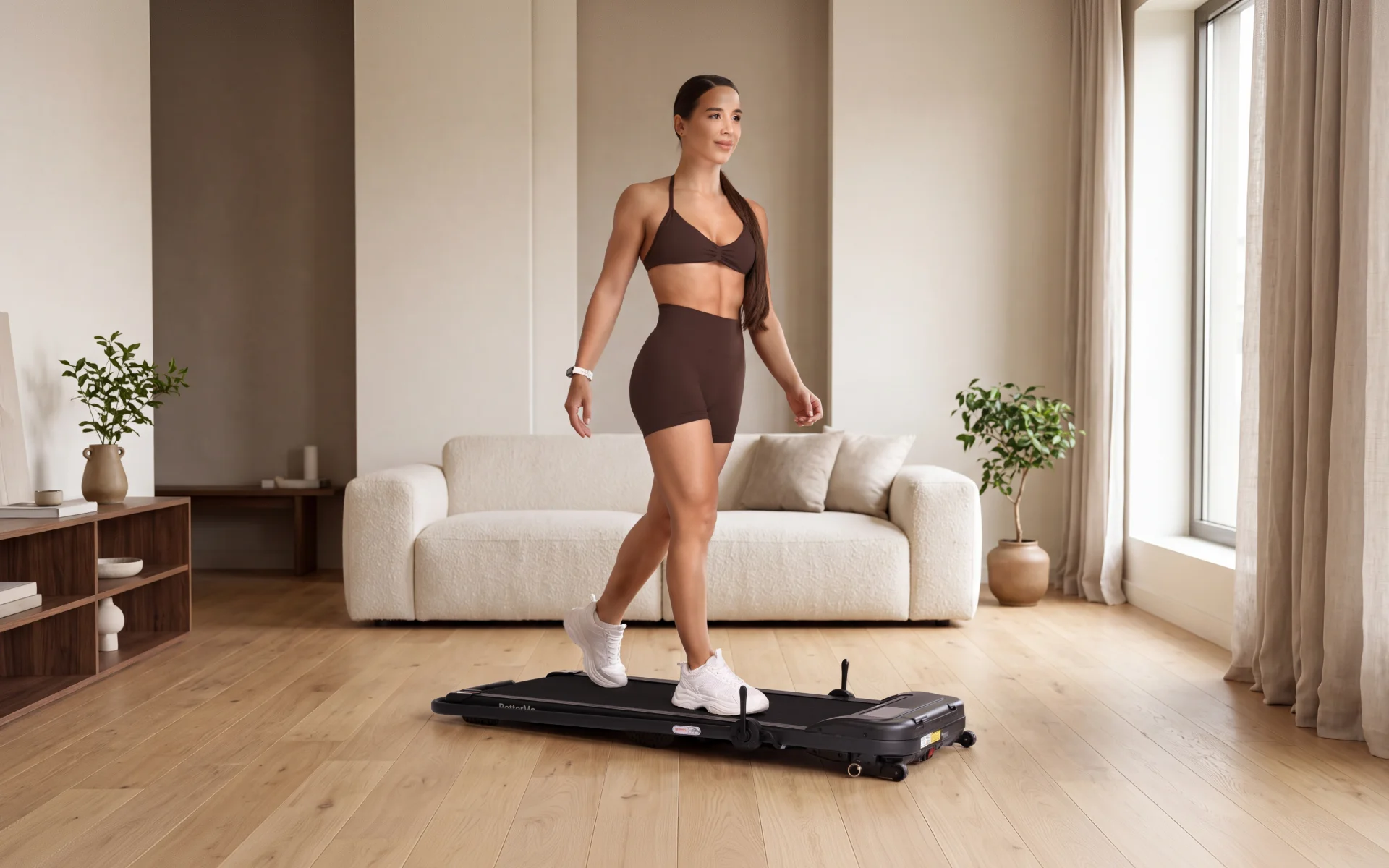
An indoor walking challenge is a short, structured plan to walk more at home over a set period, such as 4 weeks. A sample plan starts with 10 to 15 minutes on 5 days and builds to 25 to 30 minutes on 6 days, which can help many people move daily. It suits busy people, beginners, and older adults who want an easy option with no gym membership or weather getting in the way.
This article is for general information only and isn’t medical advice. Individual results vary. If you have a heart, joint, or balance condition, are pregnant, or are new to exercise, check with a doctor before you start.
Following exercise and diet plans is the key in your fitness journey and greatly impacts results. In 4 weeks users can typically expect to lose not more than 1-2 lbs per week. Individual results may vary.
If you have joint, muscle, or spine-related concerns, please consult your physician before starting this workout.
Key takeaways
A home walking challenge is a low-impact way to move more often, and its value comes from consistency and gradual progress.
- In one 6-week activity challenge, participants reported better fitness, energy, and mood (1).
- About 30 minutes on 5 days a week adds up to the commonly suggested 150 minutes of weekly moderate activity (2).
- Treadmill walking tends to produce slower, shorter strides than walking outside (3).
- A review of home-based programs for older adults suggests possible gains in mobility and walking speed (4).
- Adding pace, intervals, or stairs over time is what turns a habit plan into a more demanding exercise plan.
- A sample 4-week beginner plan builds from 10 to 15 minutes on 5 days to 25 to 30 minutes on 6 days.
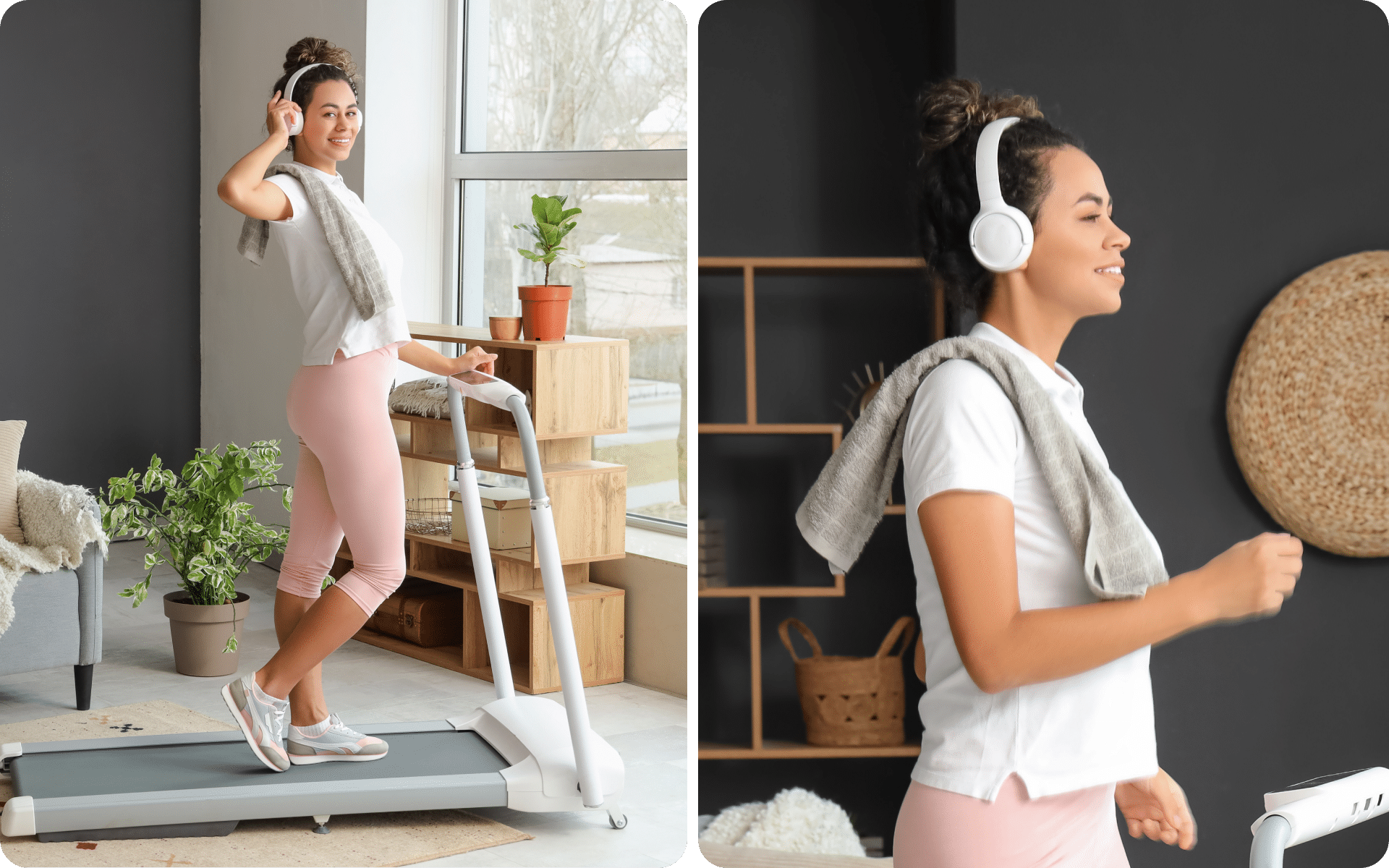
What is an indoor walking challenge, and does it work?
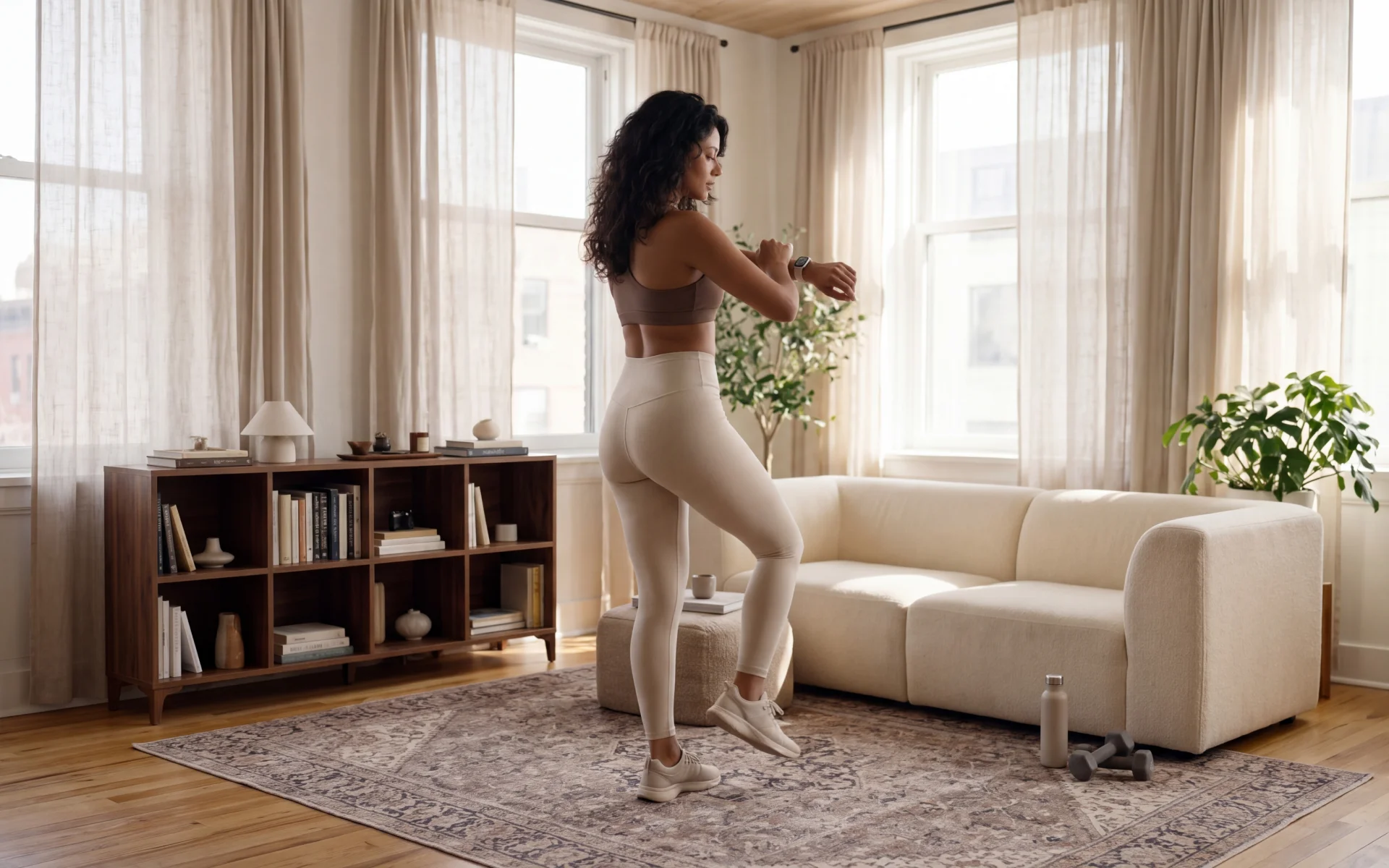
An indoor walking challenge is a self-guided plan to walk at home toward a clear daily or weekly target. It can work by getting you to move more, more often. Hallway laps, marching in place, and treadmill time all count as an indoor walking workout.
One real-world study of a 6-week activity challenge found strong participation and better self-reported fitness, energy, and mood (1). This suggests short, clear targets may help some people stay active. A challenge can lift consistency without big jumps in fitness, though, so it helps to know what improves first:
- Frequency: how many days you move
- Total weekly minutes: your overall volume
- Pace: how briskly you move
- Complexity: intervals, stairs, or add-ons
Without progression, a plan mainly builds a habit. With progression, it starts to build fitness too. For a themed version, see our 28-day indoor walking challenge.
Is walking indoors effective?
An indoor walking workout can be an effective way to build daily movement, support stamina, and keep a routine going. For many people, the main benefit is regular movement.
A systematic review of home-based activity programs for older adults suggests possible gains in mobility, mood, and walking speed (4). The benefits of indoor walking tend to show up in four areas:
- Consistency: no weather or traffic excuses
- Low friction: you start in seconds, with no equipment
- Habit building: same time, same spot
- Breaking up sitting: short movement breaks add up
Where it can fall short is broad fitness. On its own, an easy stroll may not do much for leg strength. To add effort, raise the pace, add intervals, or use an incline.
Read more: Types of walking styles: a practical guide
What do you need to get started?
To get started, you need comfortable shoes, a clear space, and a timer. Remove rugs or clutter you could trip on.
- Supportive walking shoes (3)
- A clear path or a space about 6.5 by 6.5 feet (2 by 2 meters)
- Water within reach
- Optional: a step tracker or walking program app

Is walking inside the same as walking outside?
Walking inside is not quite the same as walking outside, though the two overlap. They use similar movements, but the demands differ.
One gait study comparing indoor, treadmill, and outdoor walking found treadmill walking led to slower, shorter strides, while outdoor walking led to faster, longer strides (3). Outdoors adds terrain, turns, and changes in speed; an enclosed space gives you predictable footing and climate control.
| Feature | Indoor walking | Outdoor walking |
|---|---|---|
| Footing | Flat, predictable | Uneven, variable |
| Conditions | Rarely a factor | Rain or heat can disrupt plans |
| Speed control | Easy to manage | Varies naturally |
| Balance demand | Lower | Higher |
| Suits | Habit, convenience | Terrain, variety |
For more on this comparison, see our guide on Is Walking in Place the Same as Walking.
What is a good indoor walking plan for beginners?
A good beginner plan uses short walks on most days, clear targets, and small weekly increases. This sample indoor walking workout plan adds about 5 minutes or a few brisk intervals each week.
| Week | Days | Minutes each time | Add-on |
|---|---|---|---|
| 1 | 5 | 10 to 15 | Easy pace, build the habit |
| 2 | 5 to 6 | 15 to 20 | 3 x 1-minute brisk intervals |
| 3 | 5 to 6 | 20 to 25 | 4 to 5 brisk intervals |
| 4 | 6 | 25 to 30 | Add stairs or a faster cadence |
A 30-day version follows the same logic, with slower, steadier increases across the month. These are the core moves:
| Move | Focus | Suggested dose |
|---|---|---|
| Steady indoor walk | Base cardiovascular work | 10 to 30 minutes |
| Marching in place | Low-impact movement | 2 to 5 minutes |
| Brisk intervals | Effort | 3 to 5 x 1 minute |
| Stair loops | Quadriceps, hamstrings, and glutes | 3 to 5 minutes |
| Walking backwards slowly, holding a counter | Balance and coordination | 1 to 2 minutes |
BetterMe offers a variety of workouts, recipes, challenges, and support tools to help you stay more consistent with your wellness routine. Explore the app to find features that fit your goals, preferences, and schedule.
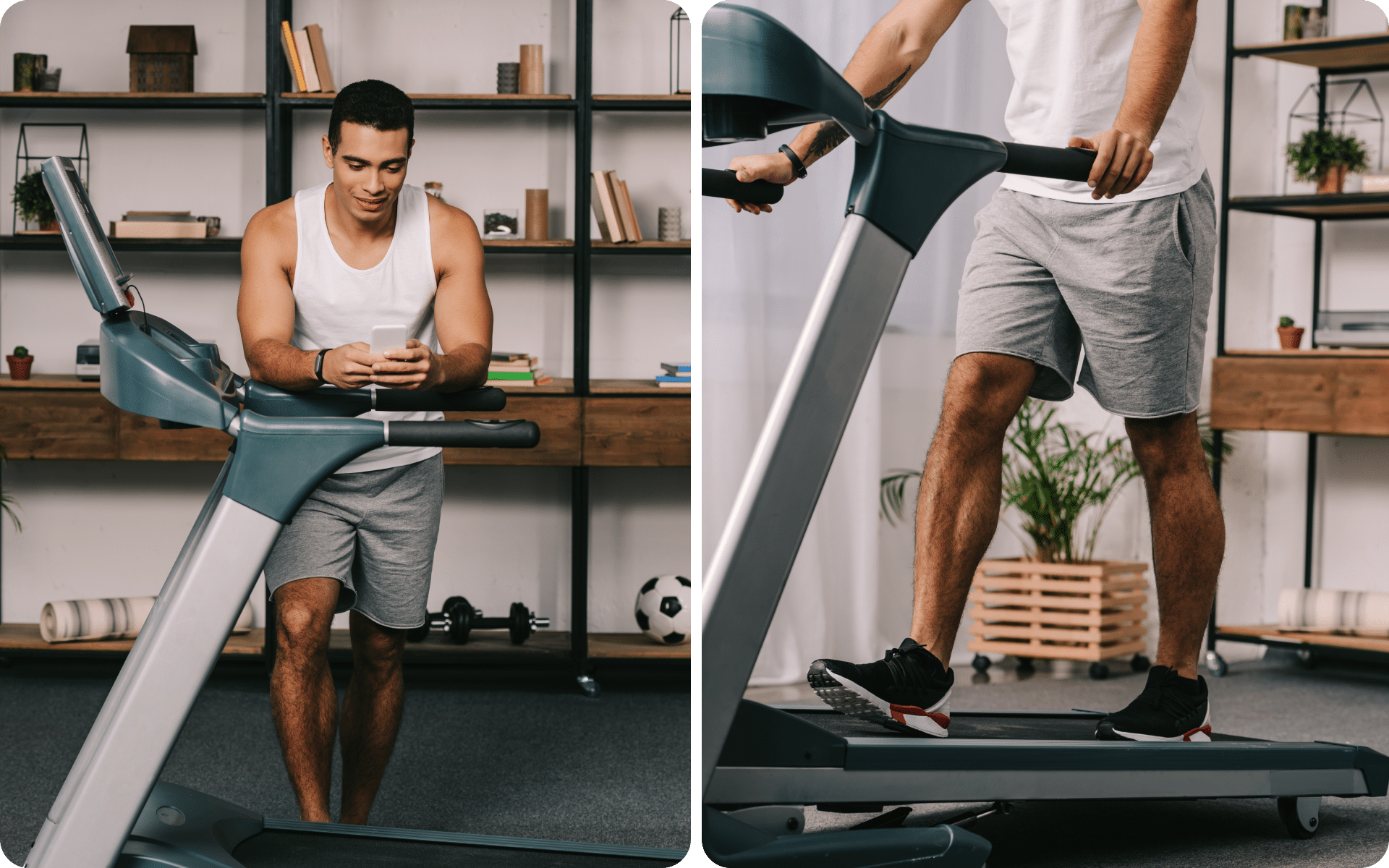
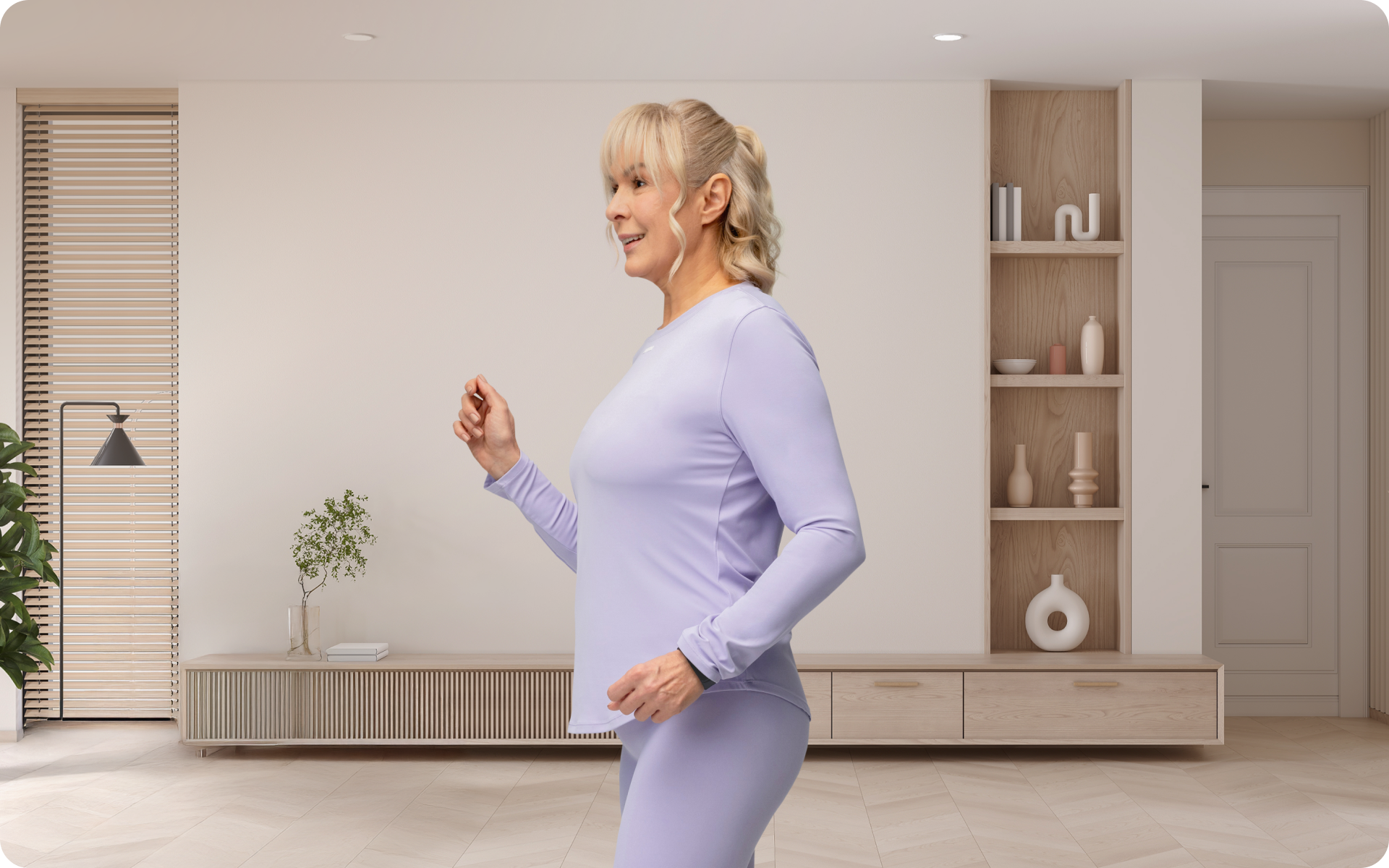
How do you do a steady indoor walk?
A steady walk is your base, done at a pace where you can talk but not sing.
- Clear a straight path or a loop through your home.
- Stand tall with relaxed shoulders and let your arms move.
- Walk briskly enough to breathe a little harder.
- Keep going for your target session time.
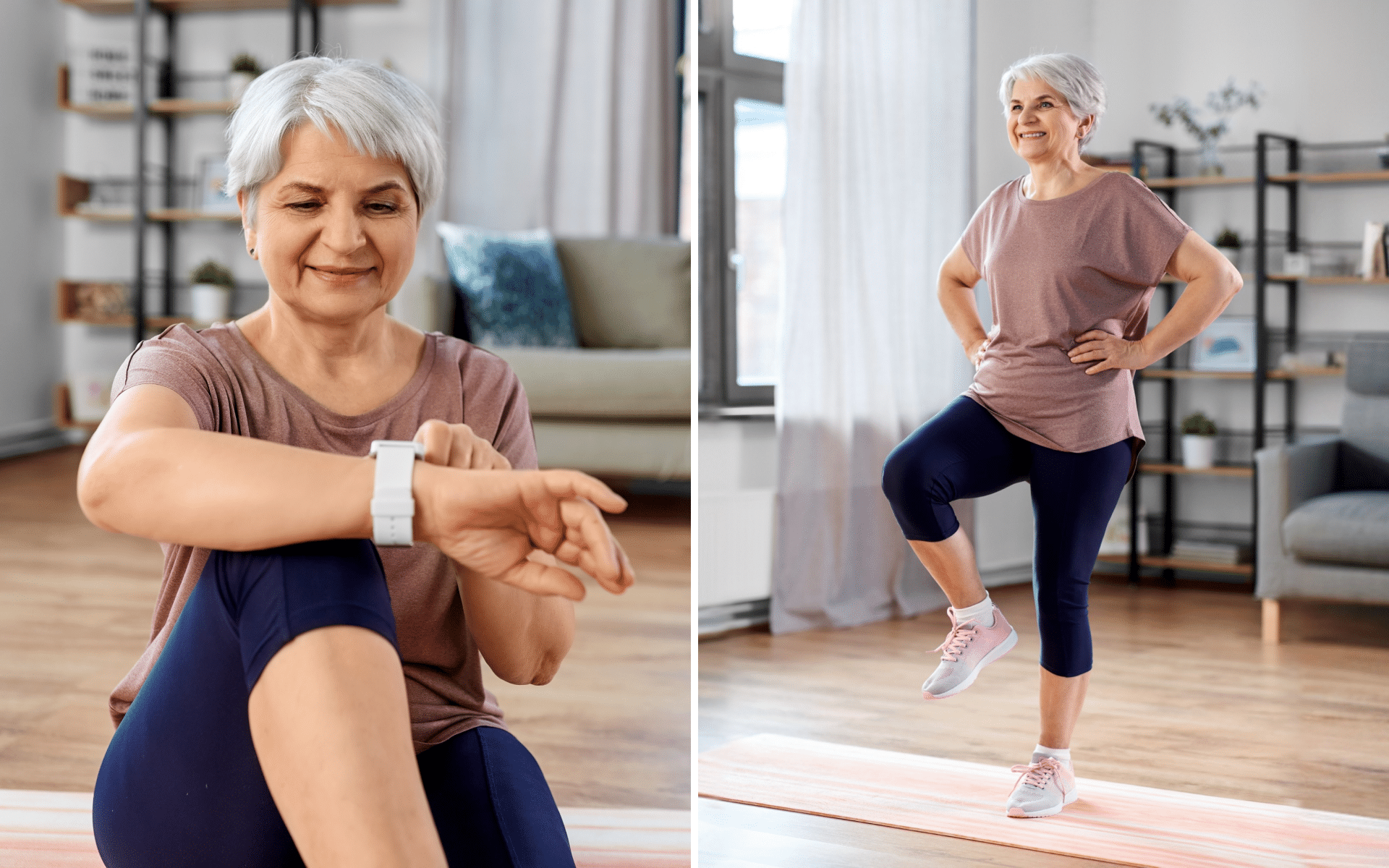
How do you march in place?
Marching in place keeps you moving when floor space is tight.
- Stand with feet hip-width apart.
- Lift one knee to a comfortable height, lower it, then lift the other.
- Swing your arms gently in rhythm.
- For variety, add a small forward kick with each step.
How do you do brisk intervals?
Brisk intervals add short, harder efforts to raise intensity and your heart rate.
- Warm up with 3 to 5 minutes of easy walking.
- Speed up for 1 minute.
- Slow to an easy pace for 1 minute.
- Complete 3 to 5 rounds, then cool down.
How do you do stair loops?
Stair loops add leg training and make the challenge harder.
- Use a sturdy set of stairs with a handrail.
- Walk up at a steady, controlled pace.
- Walk back down carefully, holding the rail.
- Repeat for your target time, resting as needed.
How much should you walk indoors each day?
About 30 minutes a day on 5 days a week adds up to the commonly suggested 150 minutes of weekly moderate activity for adults (2).
- Beginners: 10 to 15 minutes at first, split into short bouts if needed
- General adults: about 30 minutes on 5 days a week
- Progressing walkers: 30 to 45 minutes on some days
For the challenge itself, 2 weeks can help you test the fit, 4 weeks can help you build a steady habit, and 8 to 12 weeks gives more time for changes in fitness. Individual outcomes vary. If you’re curious about higher step targets, see our guide on walking 20,000 steps a day.

Is an indoor walking challenge suitable for seniors?
An indoor plan can suit many seniors, and it removes barriers like bad weather, traffic, and uneven sidewalks. Home-based programs for older adults may be linked with better mobility and less worry about falling (4).
Adjust the plan to your history, and check with a doctor if you have a joint or heart condition. Many older adults pair short walks with:
- Chair stands: for lower-body strength
- Calf raises: for ankle support
- Supported balance holds: for steadiness
- Rest days: for recovery
Tai chi, a slow, flowing practice that pairs mindful movement with balance work, is another gentle add-on. Start where you are, and adjust as you go.
Read more: Does walking in place count as steps?
Can indoor walking help you lose weight?
Indoor walking may support weight loss for some people as part of a wider routine that includes eating habits. Walking alone tends to change weight slowly, and results vary. One study in postmenopausal women looked at how walking speed related to total and regional body fat (5).
Total weekly volume and overall habits tend to matter more than any single walk. Regular sleep and balanced meals also support your routine.
What is metabolic walking?
Metabolic walking is an informal term, not a defined method, usually used for brisk walking with short faster intervals to raise calorie use. In practice, it looks like brisk interval walking: walk at a steady pace, then add 30- to 60-second bursts at a quicker cadence.
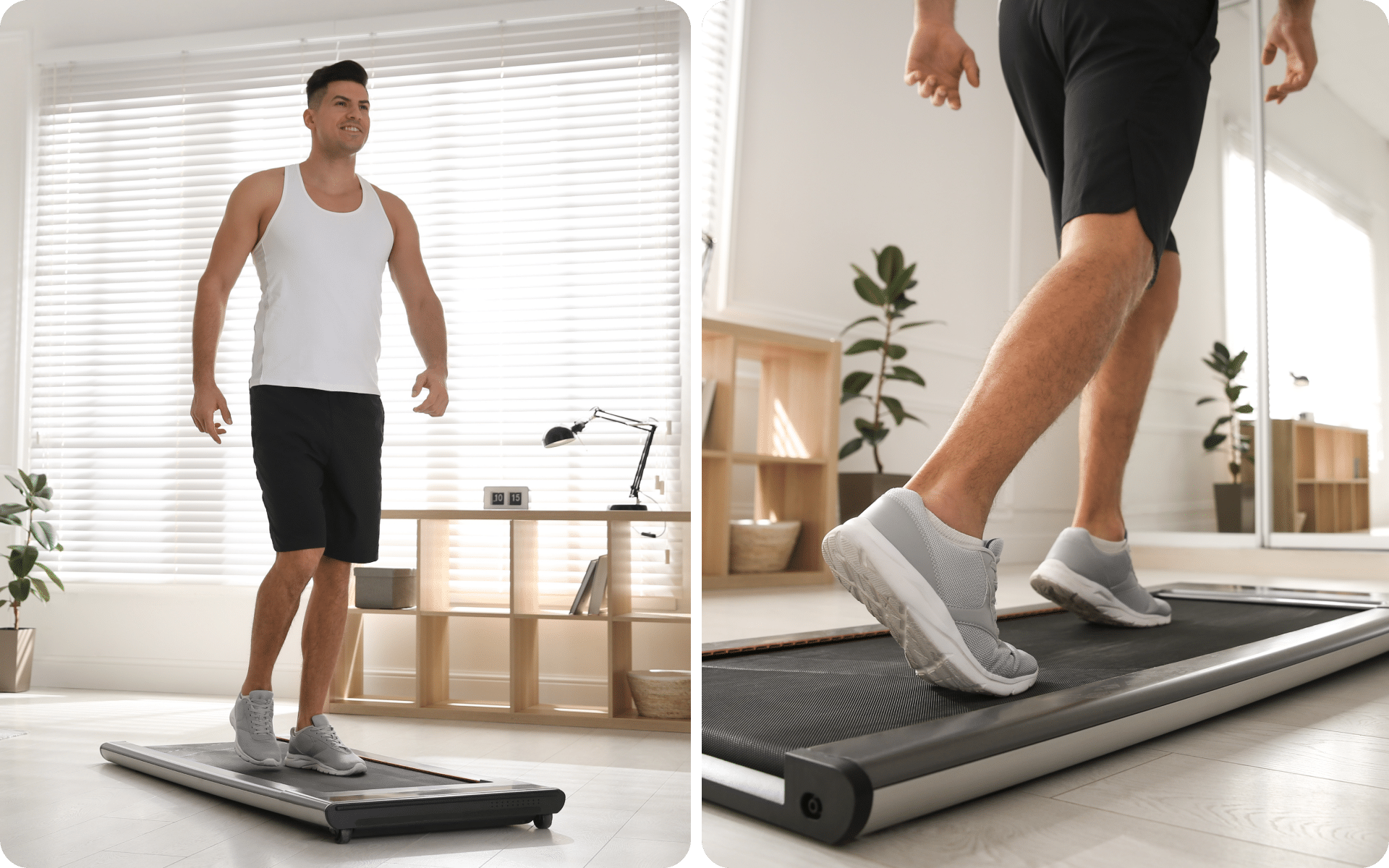
Does 12/3/30 actually help with fat loss?
The 12/3/30 workout, walking for 30 minutes at a 12% treadmill incline and 3 mph, is a demanding incline walk with no special effect on fat loss beyond the energy it uses. Like other walks, any effect on body fat depends on total weekly activity and food intake.
It can be hard on calves and the lower back for beginners. A gentler start is a lower incline for 10 to 15 minutes, built up over several weeks.
How do you start an indoor walking challenge at home?
You start by setting a clear goal, checking your baseline, and choosing one thing to track. Small, steady steps tend to stick, and you can repeat the plan regularly.
- Define your goal: more movement, stamina, or a steady schedule.
- Check your baseline: log your steps or minutes for 3 to 7 days before each indoor walking workout block.
- Pick one measure: minutes, days, or steps.
- Set small increases: add 5 minutes or 500 to 1,000 steps each week.
- Set up your space: clear a path, set a timer, keep shoes ready.
- Add accountability: log each indoor walking workout or share it with a friend or coach.
Decide in advance what counts as exercise: machine walking, hallway or room laps, marching in place, power walking in a larger room, or following guided walking videos. Videos can add a pace, a sense of company, and a full-body workout feel when they include arm moves.
Whether you’re just starting your fitness journey or looking to add more structure to your routine, BetterMe offers tools that can support different wellness goals. Explore the app and see how its workout, nutrition, and habit-building features can fit into your lifestyle.

FAQs
Does indoor walking count as walking?
Yes, indoor walking counts as walking and adds to your daily movement. Whether you use a machine, march in place, or do hallway laps, your steps still add up.
What type of walking may help most with fat loss?
Brisk walking with intervals tends to use more calories than a slow stroll, and an incline or stairs raises effort further. Total weekly volume and overall habits tend to matter more than any single walk. One study looked at walking speed and body fat in postmenopausal women (5).
Is 30 minutes walking on a treadmill enough?
Yes, 30 minutes on 5 days a week can be enough to reach the commonly recommended 150 minutes of weekly moderate activity (2). For a harder cardio workout, raise the incline or add short brisk intervals.
What happens after 60 minutes of walking?
After an hour, many people feel warmer and pleasantly tired. Longer walks can feel demanding for beginners, so splitting them into shorter bouts is a fine option.
What is the 3-3-3 rule for workouts?
The 3-3-3 rule is an informal saying with no official definition. One common walking version is 3 minutes easy, 3 minutes brisk, and 3 minutes easy, then repeat. This gives a light interval format you can adjust to your fitness level.
The bottom line
An indoor walking challenge can be a practical, low-impact way to move more, build a routine, and feel more capable at home. Its real strength lies in regular walks and gentle progression, so pick a plan that fits your week and adjust it as you go.
DISCLAIMER:
This article is intended for general informational purposes only and does not serve to address individual circumstances. It is not a substitute for professional advice or help and should not be relied on for making any kind of decision-making. Any action taken as a direct or indirect result of the information in this article is entirely at your own risk and is your sole responsibility.
BetterMe, its content staff, and its medical advisors accept no responsibility for inaccuracies, errors, misstatements, inconsistencies, or omissions and specifically disclaim any liability, loss or risk, personal, professional or otherwise, which may be incurred as a consequence, directly or indirectly, of the use and/or application of any content.
You should always seek the advice of your physician or other qualified health provider with any questions you may have regarding a medical condition or your specific situation. Never disregard professional medical advice or delay seeking it because of BetterMe content. If you suspect or think you may have a medical emergency, call your doctor.
SOURCES:
The list covers an activity challenge evaluation, activity guidance, a gait study, a home-program review for older adults, and a walking speed study.
- Evaluation of the “15 Minute Challenge”: A Workplace Health and Wellbeing Program (2024, pmc.ncbi.nlm.nih.gov)
- Adult Activity: An Overview (2023, cdc.gov)
- Walking indoors, outdoors, and on a treadmill: Gait differences in healthy young and older adults (2021, pubmed.ncbi.nlm.nih.gov)
- Home-Based Indoor Physical Activity Programs for Community-Dwelling Older Adults: A Systematic Review (2023, pmc.ncbi.nlm.nih.gov)
- Effects of Walking Speed on Total and Regional Body Fat in Healthy Postmenopausal Women (2022, pmc.ncbi.nlm.nih.gov)
 Reviewed by


 Reviewed by