

To learn how to do burpees for beginners, start by stepping back into a plank, stepping forward, and standing up. Choose a version you can control and rest between sets. A calisthenics workout plan for beginners can help you place the movement within a broader routine.
Key takeaways
- A step-back burpee moves from standing into a plank and back to standing.
- A repetition is one complete movement; a set groups repetitions before a rest (1).
- Burpee-test performance was associated with an endurance field test in young men who exercised regularly (2).
- A study of 15 physically active students examined links between burpee performance, strength, and endurance (3).
- A jump and chest-to-floor transition are optional choices when learning the movement.
- Choose one of the four sample session options and adjust it to your current ability.
How do you do a burpee step by step?
Start with the step-back version below. A repetition, or rep, is one complete movement (1).
Follow these steps:
- Stand tall with your feet about hip-width apart.
- Squat down and place both hands on the floor.
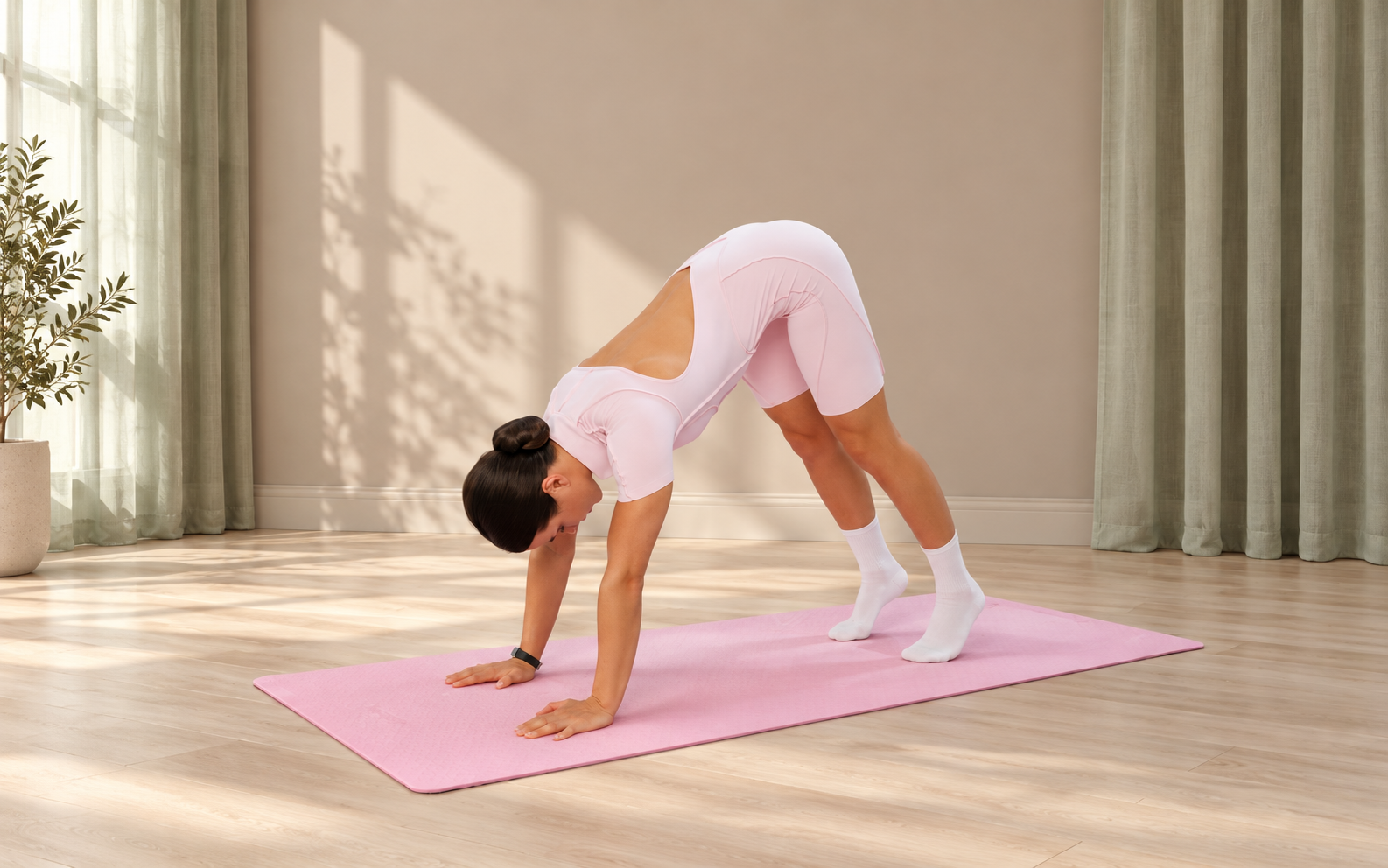
- Step back one foot at a time into a plank.
- Hold the plank briefly with your hands under your shoulders and your body in one line.
- Step forward to bring your feet under your hips.
- Stand up tall, or add a small hop if it feels controlled.
For breathing, try a simple rhythm:
- Inhale as you lower or set up.
- Exhale as you stand or hop up.
Practice the sequence before adding speed or a jump.
What is the difference between a basic and a chest-to-floor burpee?
A basic burpee returns from a plank to standing. A chest-to-floor version adds a floor transition and usually a jump.
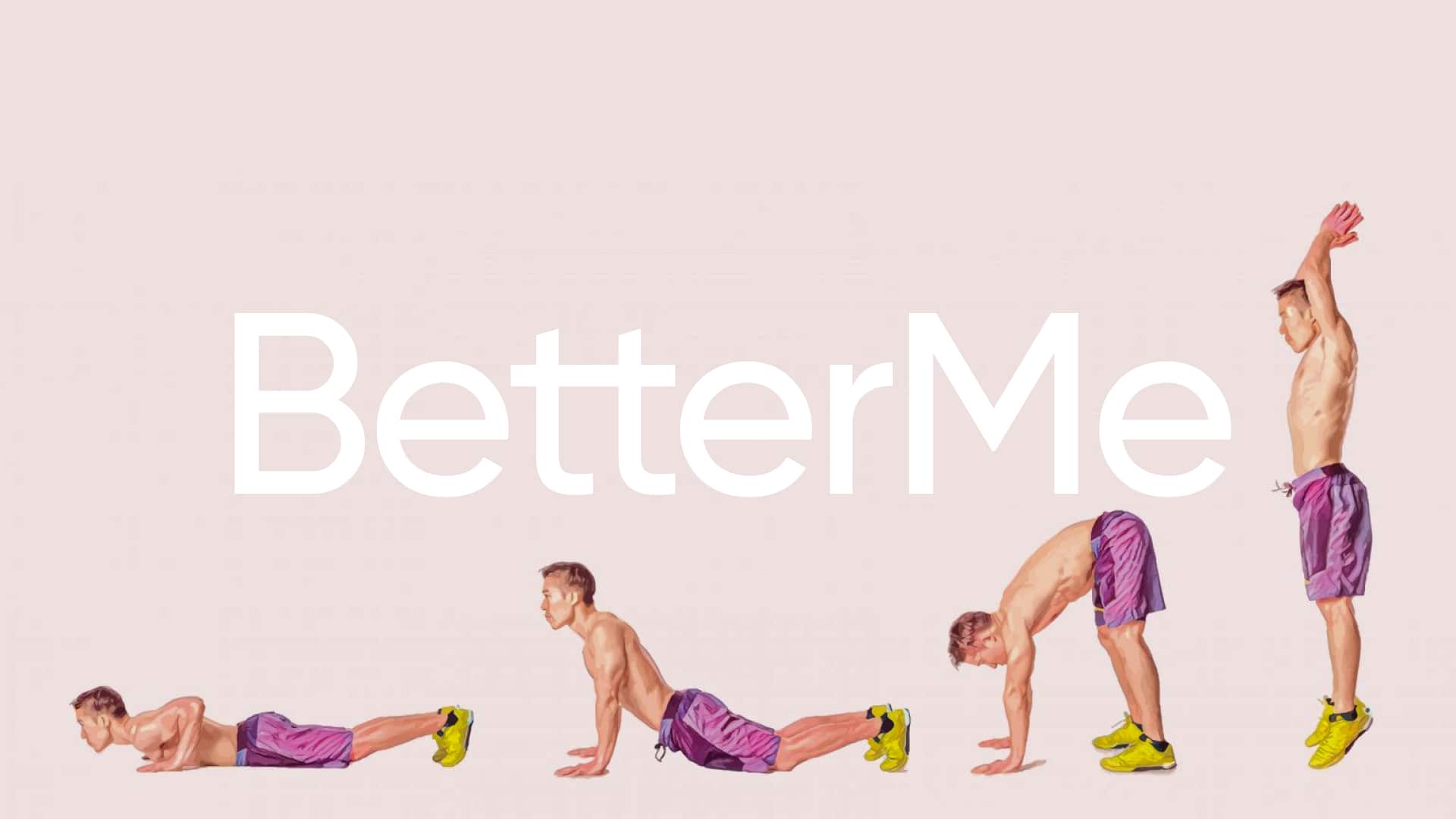
Basic version: move your hands to the floor, step or jump back to a plank, bring your feet forward, and stand.
Chest-to-floor version: move into a plank, lower your chest to the floor, press back up, bring your feet forward, and jump.
If you choose the chest-to-floor version, practice each part with control:
- Drop down and put your hands on the floor.
- Jump your feet back into a plank.
- Lower your chest to the ground.
- Push up to a plank.
- Jump your feet forward to your hands.
- Jump straight up into the air.
Choose the version that fits your current ability and goals.
Read more: What Do Burpees Work: Here’s Why This Move Makes Even The Fittest Of Us Beg For Mercy
How can burpees change after you learn the technique?
Use slower repetitions while learning the sequence. Once you can control it, you may use burpees in a conditioning session.
In a study of 127 young men who exercised at least weekly, performance on a 3-minute burpee test was associated with an endurance field test (2).
You can keep a modified version or add difficulty according to your goals.
Fatigue can be part of conditioning work. Keep the movement controlled as effort rises, and distinguish expected exertion from pain, dizziness, or feeling unwell.
What muscles do burpees target?
Burpees involve lower-body movement, a supported plank position, and, in some versions, a push or jump.
The movement uses muscle groups in different ways:
- Quads: for squatting down and standing up
- Glutes: for extending your hips as you rise
- Hamstrings: for hip control and support
- Calves: particularly if you add a hop
- Chest: more so if you include a chest-to-ground version
- Shoulders: for supporting your body in the plank
- Triceps: for any pushing portion
- Core: for keeping your body stable during transitions
A separate study of 15 physically active students examined relationships between burpee performance, strength, and endurance (3). These performance studies do not establish a starting dose for beginners.
Workouts, weight management tools, and recipe ideas come together in the BetterMe: Health Coaching app, giving you practical support for building a more consistent wellness routine.
How many burpees can a beginner start with?
Start with a short set that lets you practice the sequence without losing control. Adjust the example below to your current ability.
For an initial practice session, you could try:
- 3 to 5 step-back repetitions per set
- Fewer repetitions if floor transitions are demanding
- 2 sets, resting until you are ready to repeat the movement
A set is a group of repetitions completed before a rest (1).
If the suggested number is too much, shorten the set. Add repetitions only when the current amount feels manageable.

Which burpee form mistakes should beginners watch for?
Watch for loss of control during the plank and floor transitions.
Watch for these issues:
- Sagging hips in the plank position
- Rushing through reps too quickly
- Collapsing shoulders with your hands too far forward
- Letting your hips and chest rise at different times when pressing up
- Holding your breath through the movement
- Choosing a version that’s too advanced too soon
If your hips sag, pause and try a step-back or elevated version. Use a slower pace while practicing each position.
Read more: How Many Calories Do Burpees Burn? The Most Efficient Workout Move Explained
How can you make burpees easier?
Reduce one demand at a time, such as impact, range, speed, or repetitions.
Try these adjustments:
- Reduce impact: step back and step in instead of jumping.
- Reduce range: place your hands on a raised surface.
- Reduce speed: skip timed sets and rest fully.
- Reduce volume: do fewer reps with longer rest.
- Control breathing: exhale as you stand up.
A low-impact move keeps one foot on the ground and avoids jumping. This can feel gentler on your joints.
You can also use a 10-minute calisthenics workout to plan a short session with other movements.
Which beginner-friendly burpee modifications can you try?
Choose a variation according to the part of the movement you want to change.
| Burpee version | What it involves | When to use it |
|---|---|---|
| Squat-to-reach | Squat, touch the floor, stand, and reach up | When the floor transition feels like too much |
| Elevated burpee | Hands on a box or bench, step back and in | To lower the load while keeping the pattern |
| Step-back burpee | Hands to floor, step back to plank, step in, stand | For step-based practice without jumping |
| Chest-to-floor burpee without a jump | Step back, lower chest to floor, press up, step in, and stand | To practice the floor transition without a jump |
| Jump-back burpee, no push-up | Jump back, jump in, small hop up | Once step versions feel smooth |
Use a stable raised surface for an elevated burpee. Keep a step-based version if jumping does not suit your goals.
How do you progress from a modified burpee to a full burpee?
Change one variable at a time so you can judge the added demand. Resistance-training guidance recommends adapting progression to the person’s goals, capacity, and training experience (4).
This is one practical progression example:
- Learn the shape with an incline or step-back version.
- Build tolerance by adding a rep or two per set.
- Try jumping back only when you can land in a controlled plank.
- Add a small hop at the top when reps stay clean.
- Add floor contact or a push-up only if you want to.
You can record repetitions to track progression. A 10-week study in previously untrained young adults found that increasing repetitions during leg-extension training improved strength and muscle size (5).
How can you add burpees to a beginner workout?
Use burpees as a short technique practice or conditioning element alongside other exercises.
Choose one sample session below and adjust its repetitions, work time, or rest.
| Plan | Sets | Reps or work time | Rest | Purpose |
|---|---|---|---|---|
| A | 3 sets | 4 step-back burpees | 60-90 seconds | Learn the pattern |
| B | 4 sets | 20 seconds work | 60-90 seconds | Build tolerance |
| C | 3 sets | 5 elevated burpees | 90 seconds | Ease upper-body load |
| D | 5 rounds | 2-3 burpees per minute | Rest of the minute | Control volume |
Use one option per session and allow enough rest to repeat it with control. A full-body calisthenics workout plan can help you include other movements.
How do you perform an elevated burpee?
- Place both hands on a sturdy box or bench.
- Step back into an incline plank.
- Keep your body in one straight line.
- Step your feet back in toward the surface.
- Stand up tall to complete the rep.
When should you reduce the intensity or choose an easier burpee variation?
Pause or reduce the difficulty when you cannot control the movement. Stop if you develop pain, dizziness, or other concerning symptoms.
Consider easing off when:
- Your plank starts sagging or your chest collapses.
- Your breathing becomes chaotic and hard to control.
- You feel joint discomfort in wrists, shoulders, or knees.
- You cannot regain enough control before the next repetition.
- You are tired, under-rested, or returning after time off.
Try an easier version only if the movement is comfortable. If pain persists or symptoms concern you, seek advice from a qualified healthcare professional.
BetterMe can help you add more structure to your daily wellness routine with workouts, meal planning tools, and habit-building features. Explore the app and take a practical step toward a routine that feels more manageable for you.
FAQs
Are burpees suitable for complete beginners?
Some beginners can start with a step-back or elevated version. Choose a variation you can control and reduce the number of repetitions when needed.
Do you have to do a push-up during a burpee?
No. You can return from a plank to standing without adding a push-up.
Can you do burpees without jumping?
Yes. Step back into the plank, step forward, and stand up without a hop.
Can you do burpees slowly?
Yes. A slower pace gives you time to practice each position before using burpees for conditioning.
How long should beginners rest between burpee sets?
The sample options use 60 to 90 seconds, but you can rest longer. Begin the next set when you can repeat the movement with control.
The bottom line
Choose a burpee variation that fits your current ability and practice a short set. Add difficulty only when you can control the transitions, and keep modified options available as your goals change.
DISCLAIMER:
This article is intended for general informational purposes only and does not serve to address individual circumstances. It is not a substitute for professional advice or help and should not be relied on for making any kind of decision-making. Any action taken as a direct or indirect result of the information in this article is entirely at your own risk and is your sole responsibility.
BetterMe, its content staff, and its medical advisors accept no responsibility for inaccuracies, errors, misstatements, inconsistencies, or omissions and specifically disclaim any liability, loss or risk, personal, professional or otherwise, which may be incurred as a consequence, directly or indirectly, of the use and/or application of any content.
You should always seek the advice of your physician or other qualified health provider with any questions you may have regarding a medical condition or your specific situation. Never disregard professional medical advice or delay seeking it because of BetterMe content. If you suspect or think you may have a medical emergency, call your doctor.
SOURCES:
- What Counts as Physical Activity for Adults (2023, cdc.gov)
- The 3-Minute Burpee Test: A Minimalistic Alternative to the Conventional Estimated Oxygen Uptake Test (2023, pubmed.ncbi.nlm.nih.gov)
- The Relationship Between the Burpee Movement Program and Strength and Endurance Performance Measures in Active Young Adults: A Cross-Sectional Analysis (2024, pubmed.ncbi.nlm.nih.gov)
- American College of Sports Medicine position stand. Progression models in resistance training for healthy adults (2009, pubmed.ncbi.nlm.nih.gov)
- Effects of Resistance Training Overload Progression Protocols on Strength and Muscle Mass (2024, pubmed.ncbi.nlm.nih.gov)
 Reviewed by
 Reviewed by
 Reviewed by