Doing 100 kettlebell swings a day adds physical activity, but it does not guarantee weight loss. Repetition count alone cannot tell you calories burned. Nutrition, total activity, and recovery matter. This guide explains the evidence, swing technique, and an adjustable progression that does not require daily training.
If you are new to swings, learn the hip hinge with a qualified trainer first. Seek appropriate clinical advice for pregnancy, persistent discomfort, or conditions affecting exercise. For another session format, explore our kettlebell workout for weight loss.
Following exercise and diet plans is the key in your fitness journey and greatly impacts results. In 4 weeks users can typically expect to lose not more than 1-2 lbs per week. Individual results may vary.
Key takeaways
Swings alone do not ensure weight loss, so here is what to expect from 100 a day.
- Sustainable weight management involves eating habits and overall physical activity, not one exercise challenge (1).
- A widely used activity reference lists an energy estimate for swings, not calories for exactly 100 repetitions (2).
- A broader kettlebell trial found fitness improvements without a significant reduction in fat mass (3).
- Beginners can practice shorter sets before considering 100 swings a day; there is no required progression timeline.
- Recovery depends on workload and individual response, so daily swings are not a universal recommendation (4).
- A balanced weekly plan includes other movements rather than relying on swings alone (5).
Can 100 kettlebell swings a day help with weight loss?
Swings can contribute to physical activity within a weight-management plan. They do not establish that you will lose weight. Long-term eating and activity habits remain relevant (1).
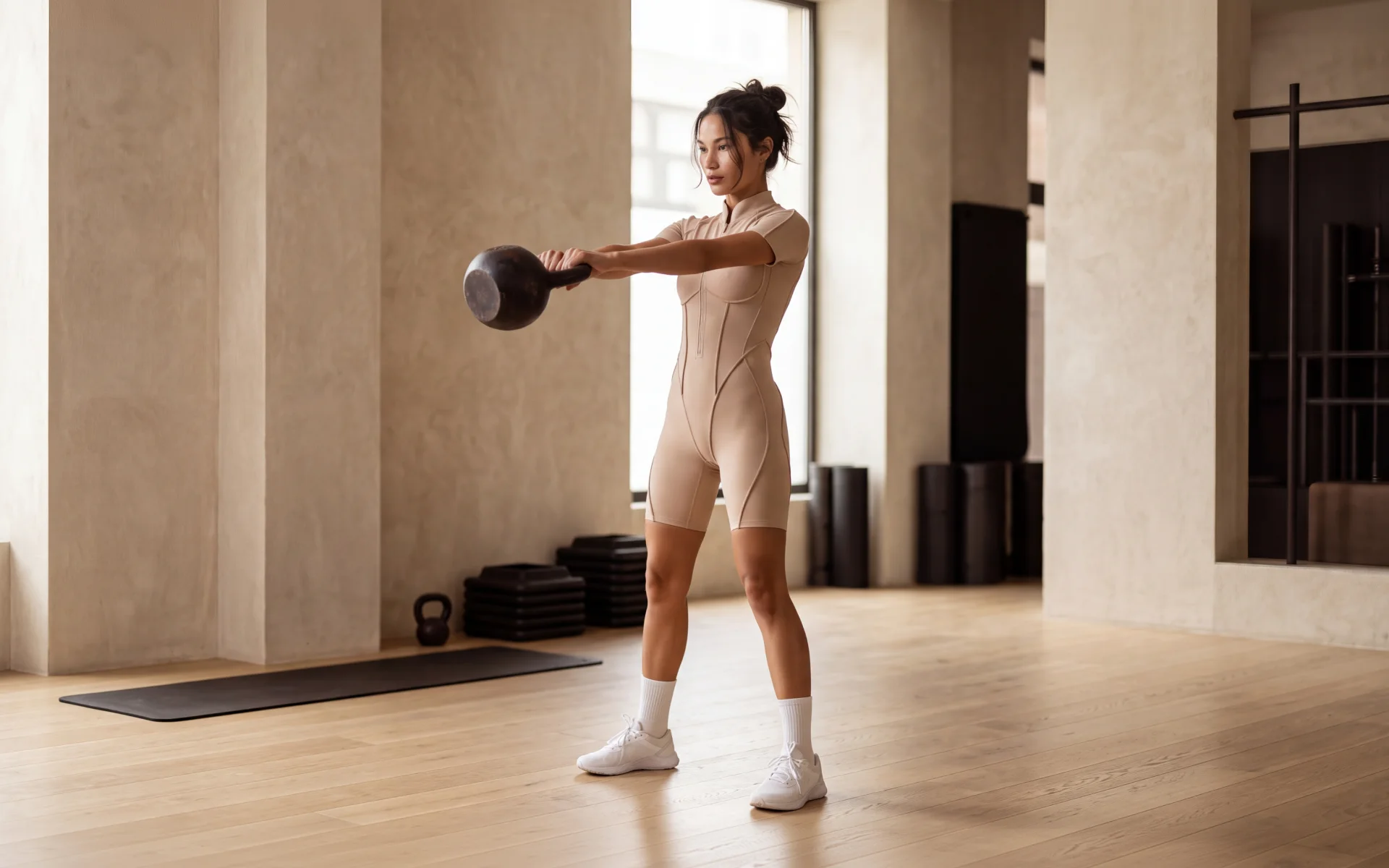
A kettlebell swing is a hip-powered move. You swing a ball-shaped weight with a handle from between your legs up to about chest height.
Energy balance describes energy intake relative to energy expenditure. Sustained expenditure above intake contributes to weight loss (1). Your appropriate eating and activity plan depends on your circumstances.
The BELL trial studied a broader kettlebell program in older adults, rather than 100 daily swings. Body fat mass did not significantly change (3).
A swing session provides several kinds of practice:
- Hip-driven movement against resistance
- Working large muscles, such as the glutes and hamstrings
- Raising your heart rate during each set
- Coordinating breathing, grip, and posture
Here’s what swings can’t promise:
- A set amount of weight loss in a set time
- Changes in one specific body area
- A substitute for a balanced activity and eating plan
Avoid assigning a fixed calorie deficit or expected weight change to a swing challenge. A registered dietitian can help you choose an appropriate nutrition approach.
A practical way to frame your plan:
- Use swings to build strength and conditioning.
- Use eating habits as one main lever for weight change.
- Choose other activities you enjoy and can sustain.
Keep a simple log of sessions, technique, and recovery. Weight change is only one possible outcome to monitor.
How many calories do 100 swings burn?
There is no reliable calorie total from the number 100 alone. Body size, pace, resistance, and actual working time affect the estimate.
Your number depends on several factors:
- Your body size
- Your bell weight
- The rest time between sets
- How powerfully you swing
A MET compares an activity’s energy cost with resting energy use. A 2024 activity reference lists kettlebell swings at 9.8 METs (2). This category is not a measurement of your particular session.
A session includes working time and recovery breaks. Applying a vigorous activity value to every minute can overestimate its energy cost.
Fitness trackers also provide estimates. Avoid treating a displayed calorie number as an exact food allowance or predicted fat loss.
Rather than chasing a calorie target, record the weight used, completed sets, rest periods, and movement quality. Those details describe your training more clearly than repetition count alone.
Read more: Muscular Endurance Exercises: Get in Fighting Shape With These Muscle-Blasting Moves
What happens when you do 100 kettlebell swings a day for weight loss?
Swings challenge your hips, grip, and trunk while increasing breathing demand. Training adaptations depend on the program, and no fixed results timeline applies to 100 daily repetitions.
Muscular endurance means sustaining repeated muscular work. A set may become easier with practice, but that does not directly measure fat loss.
The posterior chain is the group of muscles along the back of your body. It runs from your calves up through your upper back.
People often search, “what do kettlebell swings work out?” The short answer is your posterior chain, plus a few helpers:
- Glutes, the muscles of your buttocks
- Hamstrings, the muscles on the back of your thighs
- Lower-back muscles
- Core muscles around your midsection
- Forearms and grip
If breathing or fatigue prevents controlled movement, end the set and recover.
Monitor your response rather than expecting changes in a particular week:
| What to monitor | What to record |
|---|---|
| During a set | Controlled hip hinge, secure grip, steady balance |
| Between sessions | Whether fatigue affects daily activities or your next session |
| Across repeated sessions | Technique consistency and tolerable workload |
Individual results vary based on starting fitness, sleep, and overall habits.
The BELL trial reported improvements in:
- Grip strength
- Six-minute walking distance
- Some lower-limb strength measures
- Appendicular lean mass
The study enrolled 32 adults aged 59 to 79. It used a usual-activity period followed by three months of varied kettlebell training. It was not randomized and had no separate control group. Four non-serious adverse events occurred. These findings do not validate a 100 swings a day challenge (3).
Watch for signs that your body may need more rest, including:
- Persistent or worsening back discomfort
- Torn calluses or blisters on your hands
- Elbow or shoulder discomfort during swings
- Loss of control, balance, or a secure grip
Stop for sharp discomfort, dizziness, or anything unusual. Talk to a doctor if discomfort persists or concerns you.
For broader context, read about the benefits of kettlebell workouts.
How do you do a kettlebell swing correctly?
A correct kettlebell swing uses a hip hinge and hip snap to float the bell to chest height. Your arms guide the bell, while your hips do most of the work.
These plain-language terms make the steps easier to follow:
- Hip hinge: Pushing your hips back while your back stays long and your knees bend slightly
- Russian swing: A two-hand swing that stops around chest height
- Ballistic: A fast movement where the weight carries momentum
- Brace: Tightening your midsection to keep your torso steady
In a small study, eight physically active men showed temporary lumbar-extensor fatigue after a set of swings (6). It was a short-term effect.
Follow these steps for a two-hand Russian swing:
- Stand with feet slightly wider than hip-width and the bell a comfortable distance ahead.
- Push your hips back to grip the handle with both hands.
- Brace your midsection to engage your core while keeping your back in a comfortable neutral position.
- Hike the bell back between your thighs.
- Drive your hips forward to stand tall without leaning backward.
- Allow the bell to float toward chest height without lifting it with your arms.
- Hinge as the bell returns between your thighs.
- Exhale during the upward phase while avoiding prolonged breath-holding.
- Finish by guiding the bell back and placing it securely on the floor.
Watch for these technique errors:
- Squatting down instead of hinging back
- Lifting the bell with your arms
- Leaning back at the top
- Rounding your lower back at the bottom
Choose a clear area with secure footing and room for the bell’s full path. Keep other people, pets, and obstacles away.
Ask a qualified trainer to assess your technique. Do not force the bell higher to meet a target if control deteriorates.
For additional movement ideas, explore our kettlebell back workout.
How can beginners reach 100 swings?
Beginners can start well below 100 repetitions. First learn a controlled hinge, then practice short swing sets with an appropriate load. Build up in sets of 10 only when technique and recovery remain manageable.
The progression below is illustrative. Move through its stages at your own pace; no stage corresponds to a mandatory week.
For a beginner kettlebell swing challenge, fewer controlled repetitions are more useful than finishing a number with deteriorating technique. Stop before your grip or posture fails.
Here’s a sample progression plan:
| Stage | Sets x reps | Rest between sets | Weekly sessions | Progression trigger |
|---|---|---|---|---|
| Practice | 2 × 5 (10 total) | As needed | 1 to 2 | Controlled hinge and secure grip |
| Build familiarity | 3 × 10 (30 total) | 60 to 90 sec or more | 2 | Technique remains consistent |
| Add work | 5 × 10 (50 total) | 60 to 90 sec or more | 2 | Recovery remains manageable |
| Optional increase | 7 × 10 (70 total) | 60 to 90 sec or more | 2 | No loss of control in later sets |
| Optional target | 10 × 10 (100 total) | 60 to 90 sec or more | 2 | Earlier stages remain manageable |
Use nonconsecutive training days in this example. Repeat or reduce a stage whenever needed. Reaching 100 is optional.
If a challenge starts with 100 repetitions on day one, adapt it to your current fitness level. There is no compulsory adaptation deadline.
Use a simple preparation sequence, adjusting it to your ability:
- Practice several unloaded hip hinges with your hands on your hips.
- Take an easy walk or march to begin moving comfortably.
- Rehearse a few light swings only after you can control the hinge.
- Finish with comfortable walking as your breathing settles.
Workouts, weight management tools, and recipe ideas come together in the BetterMe: Health Coaching app, giving you practical support for building a more consistent wellness routine.
Can you combine swings with other exercises?
Yes, you can combine kettlebell swings with other exercises, and many people find a mix more balanced. Swings train your hips and back, but they leave some gaps.
Swings alone offer little practice in these areas:
- Pushing, such as push-ups
- Pulling, such as rows
- Knee-bending strength, such as squats
- Single-leg balance, such as lunges
Adult activity guidance includes muscle strengthening on at least two days weekly, covering all major muscle groups (5).
Swings do not replace every pushing, pulling, or knee-dominant exercise. Choose additional movements for your workout routine according to your experience and goals.
The following sample pairs swing practice with other exercises. Use the progression stage that currently suits you, rather than automatically completing 100.
Here’s a sample weekly plan:
| Day | Session | Details | Rest approach |
|---|---|---|---|
| Mon | Swings + lower body | Your current swing stage; goblet squat 1 to 2 × 8 | As needed |
| Tue | Walk | Easy walk at a chatty pace | At your pace |
| Wed | Rest or easy walk | Optional comfortable walking; no swing target | At your pace |
| Thu | Rest or walk | Gentle walk or full rest | At your pace |
| Fri | Swings + upper body | Current swing stage; row 1 to 2 × 8 per side; push-up 1 to 2 × 5 | As needed |
| Sat | Longer walk + carry | Optional walk; suitcase carry 1 to 2 × 20 sec per side | As needed |
| Sun | Rest | Optional light stretching | As needed |
This example has two swing sessions, with rest days between them. Reduce accessory exercises if the combined workload is too demanding.
Use a load appropriate for each movement. One kettlebell may not suit every exercise, so some people use two kettlebells as their strength changes.
Read more: Taking A Week Off From Lifting: How Rest Days Could Help You Maximize Your Gains
Exercise instructions
These four moves from the sample weekly plan cover pushing, pulling, squatting, and carrying, which swings leave out.
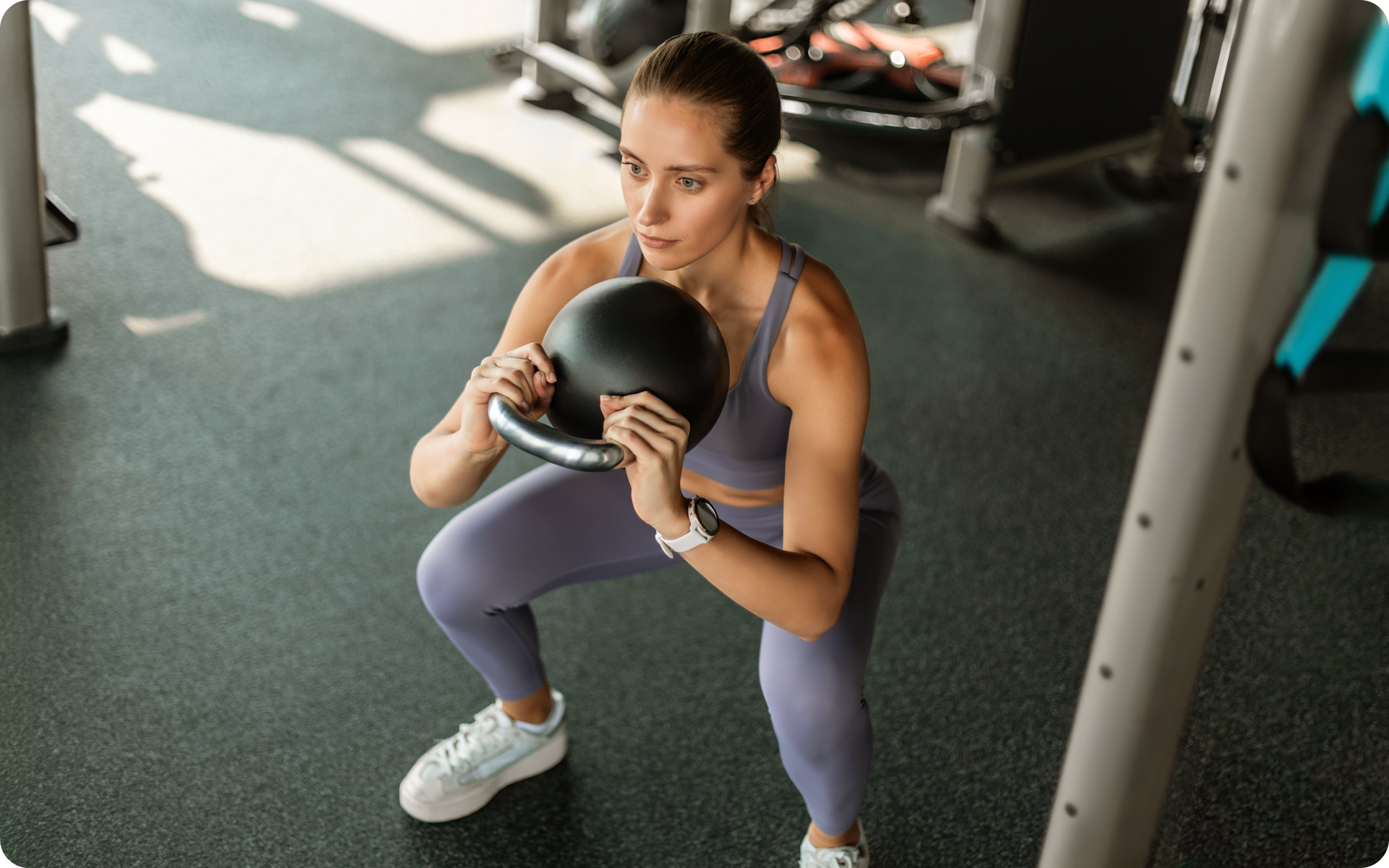
Goblet squat
- Hold the bell: Grip the handle by its sides at chest height.
- Set your stance: Place your feet shoulder-width apart, your toes turned out slightly.
- Bend your hips and knees to squat through a comfortable range.
- Stand up: Push through your whole foot to return to standing.
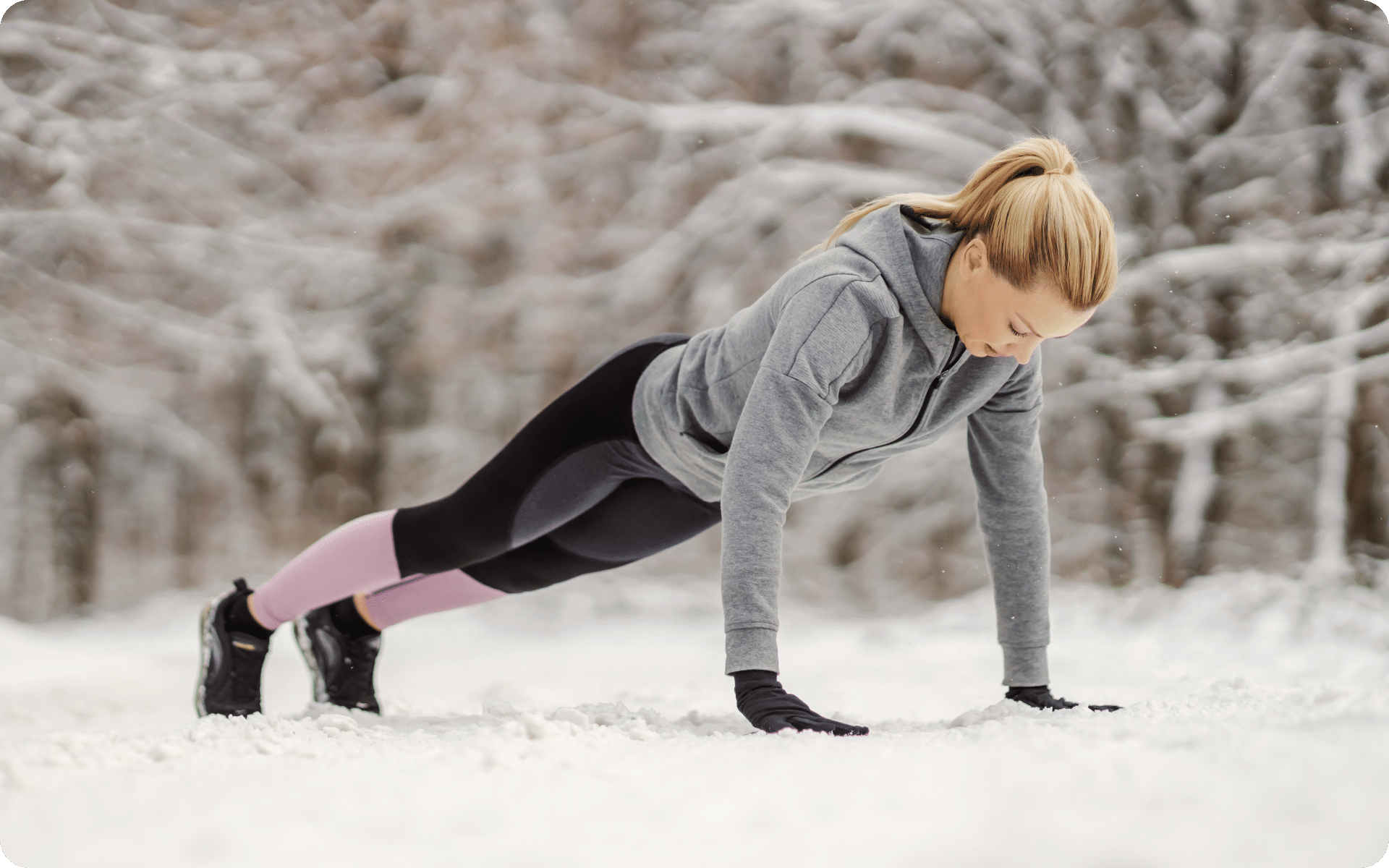
Push-up
- Set your hands: Place your hands slightly wider than shoulder-width apart.
- Form a plank: Step your feet back until your body forms a straight line.
- Lower your chest through a controlled range while keeping your trunk steady.
- Press up: Push the floor away to return to the plank.
- Easier option: Place your hands on a counter or wall.
One-arm kettlebell row
- Support yourself: Rest one hand on a sturdy bench or chair.
- Hinge forward: Push your hips back until your torso tilts about 45 degrees.
- Row the bell: Pull the bell toward your hip, your elbow close to your side.
- Lower the bell: Straighten your arm slowly.
Suitcase carry
- Pick up the bell: Hinge down and lift the bell in one hand.
- Stand tall: Keep your shoulders level, without leaning toward the bell.
- Take slow, steady steps for the prescribed time.
- Switch sides: Set the bell down and repeat with your other hand.
How often should you do kettlebell swings?
There is no established universal frequency for a 100-swing routine. This example uses two nonconsecutive sessions, allowing you to assess recovery. Total workload may matter more than a daily streak (4).
Daily exercise does not need to mean daily swings. Use rest, comfortable walking, or another tolerable activity between sessions.
Recovery is affected by exercise choice, workload, and effort (4). Reduce or postpone swings when fatigue prevents controlled movement.
Consider other hip-dominant training, such as deadlifts, when planning your week. Different exercises are not interchangeable repetition for repetition.
Consider an extra rest day if you notice any of these:
- Loss of a controlled hinge or secure grip
- Persistent or worsening discomfort
- Grip fading before your usual set length
- Ongoing fatigue that affects your usual activities
Whether you’re just starting your fitness journey or looking to add more structure to your routine, BetterMe offers tools that can support different wellness goals. Explore the app and see how its workout, nutrition, and habit-building features can fit into your lifestyle.
Frequently asked questions
Will 100 swings burn many calories?
No set calorie total applies to 100 swings. The swing estimate describes an activity category, not a specific session (2). Avoid converting a daily swing count into a promised amount of fat loss.
Can beginners do 100 swings?
Some beginners may eventually perform 100 controlled swings, but it is not an entry requirement. Learn the hinge and start with short sets. The sample progression begins with ten total repetitions. Choose resistance with qualified guidance and progress according to technique and recovery.
Can you do kettlebell swings every day?
Some people do, but daily swings are not necessary for this sample plan. Frequency depends on workload, technique, and recovery (4).
Do kettlebell swings build muscle?
A broader kettlebell program increased appendicular lean mass in the BELL trial (3). Other resistance exercises can cover muscle groups that swings miss.
How heavy should your kettlebell be?
Choose a weight that allows a controlled hip-driven swing and secure grip. There is no universal beginner weight. Being able to lift a bell with your arms does not prove it is too light. Reduce load or stop when you cannot control its path.
The bottom line
A 100 kettlebell swings a day weight loss challenge cannot promise a calorie total, body change, or results timeline. Swings can be one part of a broader activity plan. Learn the movement, use manageable sets, and adjust training to recovery. Support weight-management goals with sustainable habits and appropriate professional guidance.
DISCLAIMER:
This article is intended for general informational purposes only and does not serve to address individual circumstances. It is not a substitute for professional advice or help and should not be relied on for making any kind of decision-making. Any action taken as a direct or indirect result of the information in this article is entirely at your own risk and is your sole responsibility.
BetterMe, its content staff, and its medical advisors accept no responsibility for inaccuracies, errors, misstatements, inconsistencies, or omissions and specifically disclaim any liability, loss or risk, personal, professional or otherwise, which may be incurred as a consequence, directly or indirectly, of the use and/or application of any content.
You should always seek the advice of your physician or other qualified health provider with any questions you may have regarding a medical condition or your specific situation. Never disregard professional medical advice or delay seeking it because of BetterMe content. If you suspect or think you may have a medical emergency, call your doctor.
SOURCES:
- Weight loss – a healthy approach (2024, betterhealth.vic.gov.au)
- Conditioning Exercise (2024, pacompendium.com)
- Effects of supervised high-intensity hardstyle kettlebell training on grip strength and health-related physical fitness in insufficiently active older adults: the BELL pragmatic controlled trial (2022, link.springer.com)
- The Importance of Recovery in Resistance Training Microcycle Construction (2024, pmc.ncbi.nlm.nih.gov)
- Adult Activity: An Overview (2023, cdc.gov)
- A Comparison of the Effect of Kettlebell Swings and Isolated Lumbar Extension Training on Acute Torque Production of the Lumbar Extensors (2016, pubmed.ncbi.nlm.nih.gov)
 Reviewed by
 Reviewed by