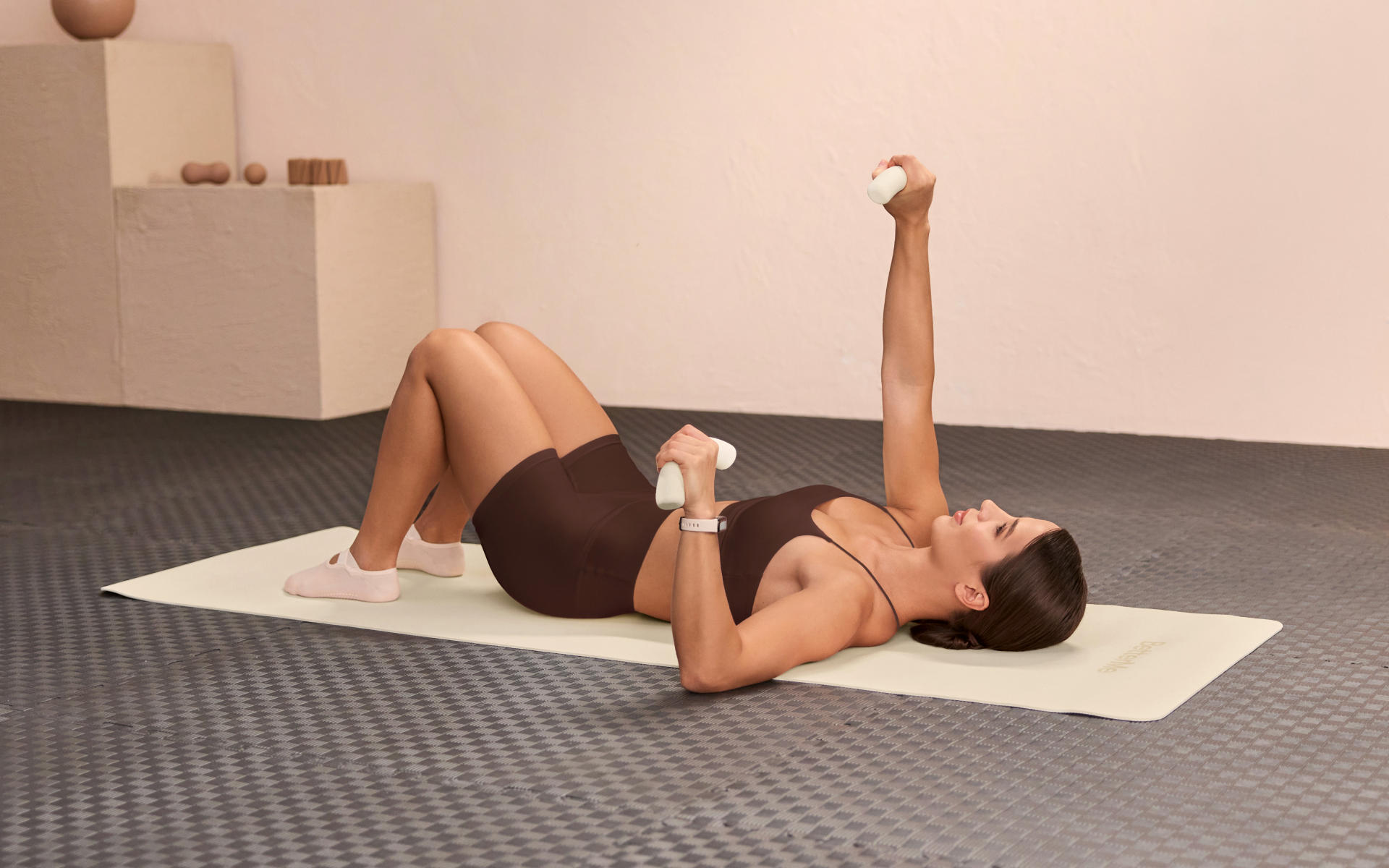
A beginner strength training program can start with five exercises on two or three nonconsecutive days each week. Choose manageable variations, record your repetitions, and increase the challenge when technique stays controlled. This sample combines bodyweight exercises with dumbbell rows. Our calisthenics strength training guide explains more bodyweight options.
Key takeaways
These points cover how to start, progress, and schedule a beginner full-body plan.
- Weight training can help build strength and muscle mass through several approaches in healthy adults (1).
- Increasing repetitions or weight both improved measured outcomes in a trial of young adults starting resistance training (2).
- Mechanical tension is a central stimulus for muscle growth (3).
- Squat depth and body position change muscular demands, so use a variation you can control (4).
- Recovery findings from demanding workouts do not establish one rest interval that suits every beginner (5).
- The five-exercise routine below is a sample; begin with two nonconsecutive sessions and adjust the workload.
How do you start strength training for beginners?
Start with the five movements in the workout plan below. Before each session, spend about five minutes walking or marching at an easy pace. Then rehearse a few chair squats, wall push-ups, and light rows. Use these practice repetitions to check your range of motion before starting the work sets.
How much weight should a beginner lift?
Choose a weight you can control for the planned reps without changing your movement to finish the set. Leave roughly two reps in reserve in this sample, rather than testing your maximum. Resistance training can use weights, bands, or your own body weight. Mechanical tension is a central stimulus for muscle growth (3).
How should beginners progress their strength training?
Progressive overload means gradually increasing the training challenge. A trial of 39 untrained young adults compared adding repetitions with adding weight over 10 weeks. Both approaches produced similar improvements in the measured leg strength and muscle outcomes (2). In this sample plan, add one rep per set when technique remains steady. Once every set reaches the upper limit with about two repetitions remaining, increase the weight slightly using the smallest available increment. Return to the lower rep limit. Keep the load unchanged if technique deteriorates.
Use the same exercise variations initially so your training log compares similar sessions.
Read more: Body composition exercises to build a balanced physique
What exercises should a beginner strength training program include?
Beginners can choose exercises by adjusting the variation, load, range of motion, and available support. An exercise name alone does not establish its difficulty.
For example, start with a chair squat, a wall push-up, and a light dumbbell or band row.
The sample plan uses squat, push, pull, hip extension, and bracing movements. For most dynamic exercises, choose a version you can control for the listed reps. Carries and holds use time or distance instead of repetitions.
- Squat: Bending at the hips and knees to lower and stand
- Hinge: Folding at the hips while keeping the back long
- Push: Moving weight away from your body
- Pull: Bringing weight toward your body
- Carry: Holding weight and walking with control
- Brace: Tightening your midsection to resist movement
These options illustrate movement categories. Choose from them rather than doing every exercise in one workout:
| Exercise | Category | Target muscle group |
|---|---|---|
| Chair squat | Squat | Quads, glutes |
| Bodyweight squat | Squat | Quads, glutes, core |
| Glute bridge | Hip extension | Glutes, hamstrings |
| Wall push-up | Push | Chest, shoulders, triceps |
| Incline push-up | Push | Chest, shoulders, triceps |
| Dumbbell row | Pull | Upper back, lats, biceps |
| Band row | Pull | Upper back, lats, biceps |
| Step-up | Lower-body unilateral | Quads, glutes |
| Romanian deadlift with light dumbbells | Hinge | Hamstrings, glutes, back |
| Farmer carry | Carry | Grip, shoulders, core |
| Plank | Brace | Core, shoulders |
| Dead bug | Brace | Core, hip flexors |
Use the five-exercise program below as your starting example. The other movements in this table are alternatives to learn later. Avoid adding all twelve exercises to the same session. For a timed hold or carry, stop before your posture changes, even if time remains.
Squats involve the hip and knee extensors, with trunk muscles helping stabilize the torso (4). Start with a chair squat if that makes the movement easier to control. For pushing work, use a wall or sturdy elevated surface before attempting floor push-ups.
A home workout can use bodyweight for squats, push-ups, bridges, and planks. The row in this program requires a dumbbell. A resistance-band row is an alternative if you have suitable equipment and a secure anchor. Check equipment instructions before use. A no-equipment session will need a different pulling option; a push-up does not replace a row.
How do you organize a beginner full-body workout plan?
This full-body workout combines movements for your upper body and lower body in each session. Full-body training is one practical way to organize a short weekly schedule. Current evidence supports several resistance-training approaches, including home and elastic-band training (1).
Full-body training is one option. Split routines divide work across days. An upper-lower split separates upper- and lower-body sessions. Push-pull-legs groups pushing exercises, pulling exercises, and leg exercises. Choose a schedule you can repeat and recover from.
Comparing routine styles
A full-body workout keeps the initial schedule to two or three days. Split routines spread muscle groups over more sessions; they are alternatives, not required next steps.
| Routine type | Description | Sample frequency |
|---|---|---|
| Full-body | Works all major muscle groups in a single session. | 2 to 3 days per week |
| Upper-lower split | Alternates upper-body days with lower-body days. | 4 days per week |
| Push-pull-legs | Groups pushing moves, pulling moves, and leg moves. | 3 to 6 days per week |
Begin this sample strength training routine on Monday and Thursday. Add a third nonconsecutive day only when two sessions feel manageable; Monday, Wednesday, and Friday is one option. Start with two sets per exercise, then use the listed sets when sessions feel manageable. Row reps are per arm. Rest longer than the suggested interval when needed to repeat the movement with control. The table is an adjustable example, not a tested universal prescription.
Workouts, weight management tools, and recipe ideas come together in the BetterMe: Health Coaching app, giving you practical support for building a more consistent wellness routine.
How many sets and reps should beginners do?
Start this sample beginner workout plan with two sets of each movement. Use 8 to 12 reps for squats, push-ups, and rows, 10 to 15 for bridges, and a controlled plank hold. The table shows optional additional sets once you can manage that workload.
| Exercise | Sets | Repetitions | Rest period |
|---|---|---|---|
| Bodyweight squats | 3 | 8 to 12 | 60 to 90 seconds |
| Incline push-ups | 3 | 8 to 12 | 60 to 90 seconds |
| Dumbbell rows | 3 | 8 to 12 | 60 to 90 seconds |
| Glute bridges | 2 | 10 to 15 | 60 seconds |
| Plank | 2 | 20 to 30 seconds | 60 seconds |
Bodyweight squats
Lower through a range you can control, using a chair as a depth guide if helpful.
- Stand with your feet approximately shoulder-width apart.
- Bend your hips and knees to lower through a comfortable, controlled range.
- Keep your feet planted as you lower.
- Press through your feet to stand again.
Incline push-ups
Use a higher support to make the pushing movement less demanding.
- Place your hands slightly wider than shoulder-width apart on a stable elevated surface.
- Step back into a straight body position.
- Bend your elbows to bring your chest toward the surface.
- Press through your hands to return to the starting position.
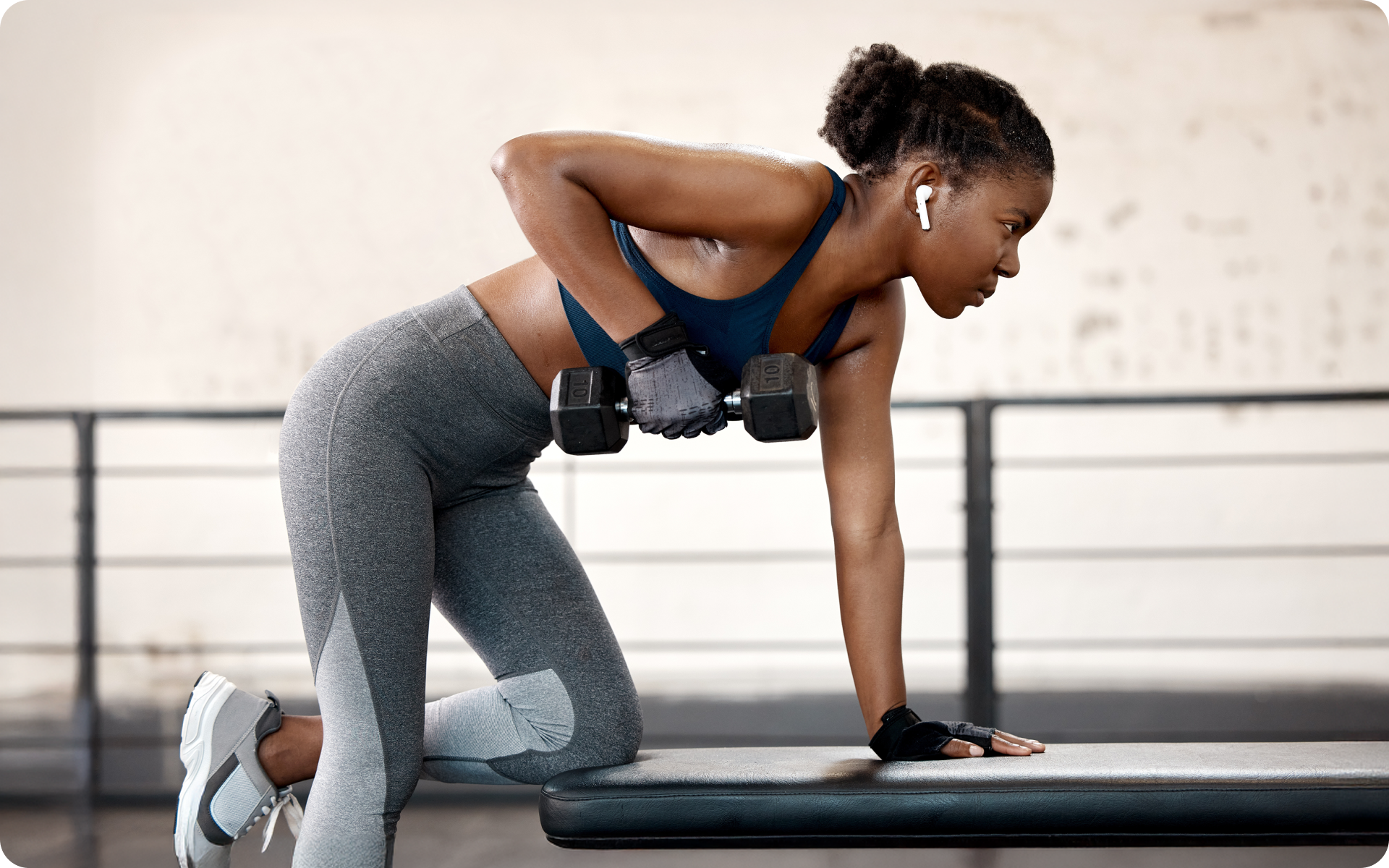
Dumbbell rows
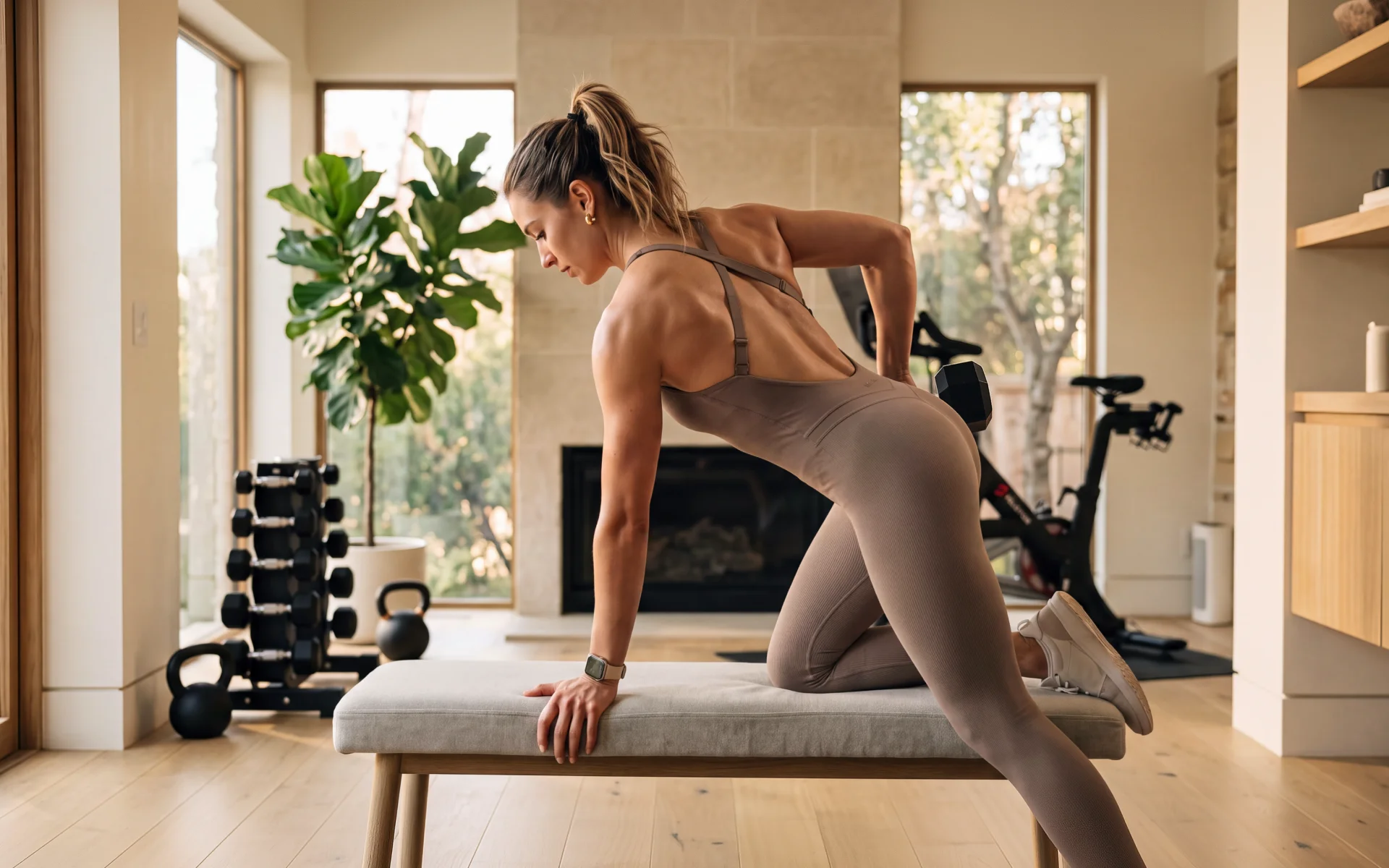
Pull with one arm while keeping your supporting hand, knee, and torso steady.
- Support one hand and knee on a stable bench, holding a dumbbell in the opposite hand.
- Keep your torso steady as you pull the weight toward your hip.
- Lower the dumbbell under control.
- Complete the planned reps before changing sides.
Glute bridges
Raise your hips without pushing into an exaggerated lower-back arch.
- Lie on your back with knees bent and feet flat.
- Place your arms beside you.
- Lift your hips until your shoulders, hips, and knees form a line, without arching your lower back.
- Lower your hips under control.
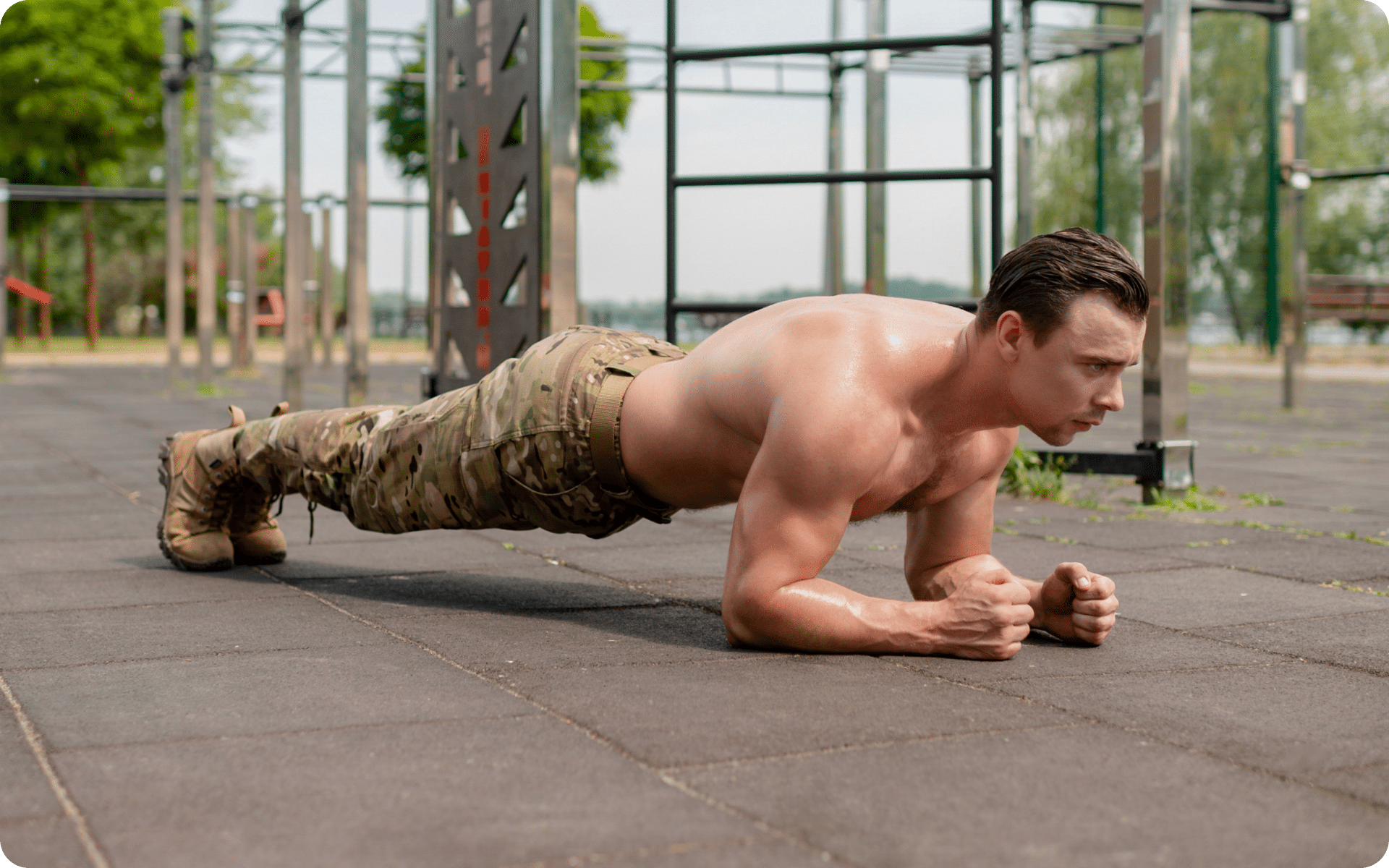
Plank
Choose a knee-supported or full plank and end the hold before your position changes.
- Place your forearms on the floor, with elbows beneath your shoulders.
- Extend your legs behind you, or keep your knees down for a shorter lever.
- Hold your body in a straight line while breathing normally.
- End the hold when posture changes, even before the suggested 20 to 30 seconds.
How many days per week should beginners strength train?
Begin with two nonconsecutive strength sessions per week in this sample, then assess your technique and recovery before adding a third.
How should a weekly workout schedule combine cardio and strength training?
General adult guidance includes strength work on at least two days and 150 minutes of moderate cardio each week (6). Build aerobic activity gradually from your current level. Walking or cycling can complement this strength training workout; the sample lifting sessions do not replace the aerobic target.
For this beginner program, choose two or three nonconsecutive workout days. This is a practical sample schedule, rather than a frequency shown to suit every beginner. Your weekly workload and recovery also matter.
Leave a rest day between the sample strength workouts to allow time to rest. In a study of 15 recreationally trained men, repeating demanding pressing workouts after 24 hours reduced the next session’s workload. The same reduction was not found with 48- or 72-hour intervals (5). That protocol used multiple sets to failure. It does not establish a universal recovery time for this beginner plan.
Reduce the load or sets if you repeatedly miss repetitions, lose movement control, or feel unusually drained across sessions. Adjust a difficult workout as needed. Review workload, sleep, and recovery if performance keeps declining. Stop an exercise that causes sharp or worsening discomfort. Seek qualified guidance if it continues.
Read more: How to incorporate cardio into weight training effectively
What are the benefits of strength training for beginners?
Track what you can repeat with control rather than expecting visible changes by a fixed week. Weight training can help build strength and muscle mass in healthy adults across different approaches (1). Individual progress depends on more than the calendar.
Write down each exercise variation, weight, repetitions, and how demanding the final set felt. Compare several sessions using the same setup. Completing more controlled repetitions with the same weight is one useful sign of progress. A temporary stall is a reason to review the plan, not immediately add more exercises.
The same tracking method works for women and men beginning strength training. For example, record whether your push-up uses a wall or countertop. Lowering the support changes the exercise, so note that change instead of comparing repetition counts alone.
What tips for beginners help progression and proper form?
Avoid choosing a weight that prevents you from completing the movement with control. Reduce the weight or use an easier variation when technique changes. Ask a qualified personal trainer to check unfamiliar movements before increasing the challenge.
Avoid repeating a hard full-body session simply to keep a daily streak. Use the days between these sessions for rest or comfortable activity. If your next session feels unusually difficult, reduce its load or sets instead of forcing the original target.
Avoid changing the entire routine every session. Repeating familiar movements helps you compare performance and make deliberate adjustments. Replace an exercise when discomfort, equipment access, or a specific training need justifies the change. There is no required four- or eight-week waiting period.
BetterMe offers a variety of workouts, recipes, challenges, and support tools to help you stay more consistent with your wellness routine. Explore the app to find features that fit your goals, preferences, and schedule.
Frequently asked questions
Is 10 minutes of strength training enough for beginners?
Ten minutes can provide time to practice a small selection of exercises. Include setup and rest rather than rushing through the full program. A short session does not automatically equal the workload or results of a longer session.
What happens if I strength train every day?
Daily strength training is not necessary for this sample plan. Use the days between full-body sessions for rest or comfortable activity. Reduce the next session if soreness changes your technique or performance keeps declining.
When should I schedule strength training?
Choose a time you can repeat without regularly cutting short sleep or rushing your session. A large evidence overview found no consistent effect of training time on the outcomes reviewed (1). Your schedule can guide the choice.
How many times a week should a 50-year-old lift weights?
Adult activity guidance includes muscle-strengthening work on at least two days per week (6). A beginner aged 50 can use the two-day version here, adjusting for experience and recovery.
If a health condition affects exercise, ask your healthcare professional which movements or loads need modification.
At what age should I stop lifting weights?
Age alone does not set an automatic stopping point. Resistance training studies include older adults, and current guidance addresses adults across age groups (1). Adapt the movements and workload to your function, health circumstances, and recovery.
What should I eat when strength training?
Include varied foods that provide protein, carbohydrates, and fats. Protein supports muscle growth and tissue repair, while carbohydrates provide energy for exercise (7). Keep water available and account for any individual dietary or fluid restrictions.
Do beginners need free weights or a gym workout?
You can begin at home without a barbell. This workout uses bodyweight and a dumbbell, a type of free weight. Home and band-based training can also improve muscle function (1). Choose equipment you can set up securely and control through each rep. A gym offers machines and more loading options, but equipment alone does not determine results.
How long should beginners follow a strength training program?
Keep a manageable plan while it fits your goals and you can track progress. Review the routine when equipment changes, discomfort persists, or progress stalls across repeated sessions. Before adding heavier weight or more training sessions, check your technique, recent workload, and recovery.
The bottom line
Begin with the two-day version of this workout schedule and record each session. Repeat manageable variations before adding repetitions or weight. Use your technique and recovery to decide when the plan needs adjustment.
DISCLAIMER:
This article is intended for general informational purposes only and does not serve to address individual circumstances. It is not a substitute for professional advice or help and should not be relied on for making any kind of decision-making. Any action taken as a direct or indirect result of the information in this article is entirely at your own risk and is your sole responsibility.
BetterMe, its content staff, and its medical advisors accept no responsibility for inaccuracies, errors, misstatements, inconsistencies, or omissions and specifically disclaim any liability, loss or risk, personal, professional or otherwise, which may be incurred as a consequence, directly or indirectly, of the use and/or application of any content.
You should always seek the advice of your physician or other qualified health provider with any questions you may have regarding a medical condition or your specific situation. Never disregard professional medical advice or delay seeking it because of BetterMe content. If you suspect or think you may have a medical emergency, call your doctor.
SOURCES:
The list covers resistance-training reviews and trials, a squat biomechanics review, and adult activity and nutrition guidance.
- American College of Sports Medicine Position Stand. Resistance Training Prescription for Muscle Function, Hypertrophy, and Physical Performance in Healthy Adults: An Overview of Reviews (2026, pmc.ncbi.nlm.nih.gov)
- Effects of Resistance Training Overload Progression Protocols on Strength and Muscle Mass (2024, pubmed.ncbi.nlm.nih.gov)
- Load-induced human skeletal muscle hypertrophy: Mechanisms, myths, and misconceptions (2025, pubmed.ncbi.nlm.nih.gov)
- A Biomechanical Review of the Squat Exercise: Implications for Clinical Practice (2024, pmc.ncbi.nlm.nih.gov)
- Muscle activation and volume load performance of paired resistance training bouts with differing inter-session recovery periods (2021, sciencedirect.com)
- Adult Activity: An Overview (2023, cdc.gov)
- Nutrition and athletic performance (2026, medlineplus.gov)
 Reviewed by
 Reviewed by