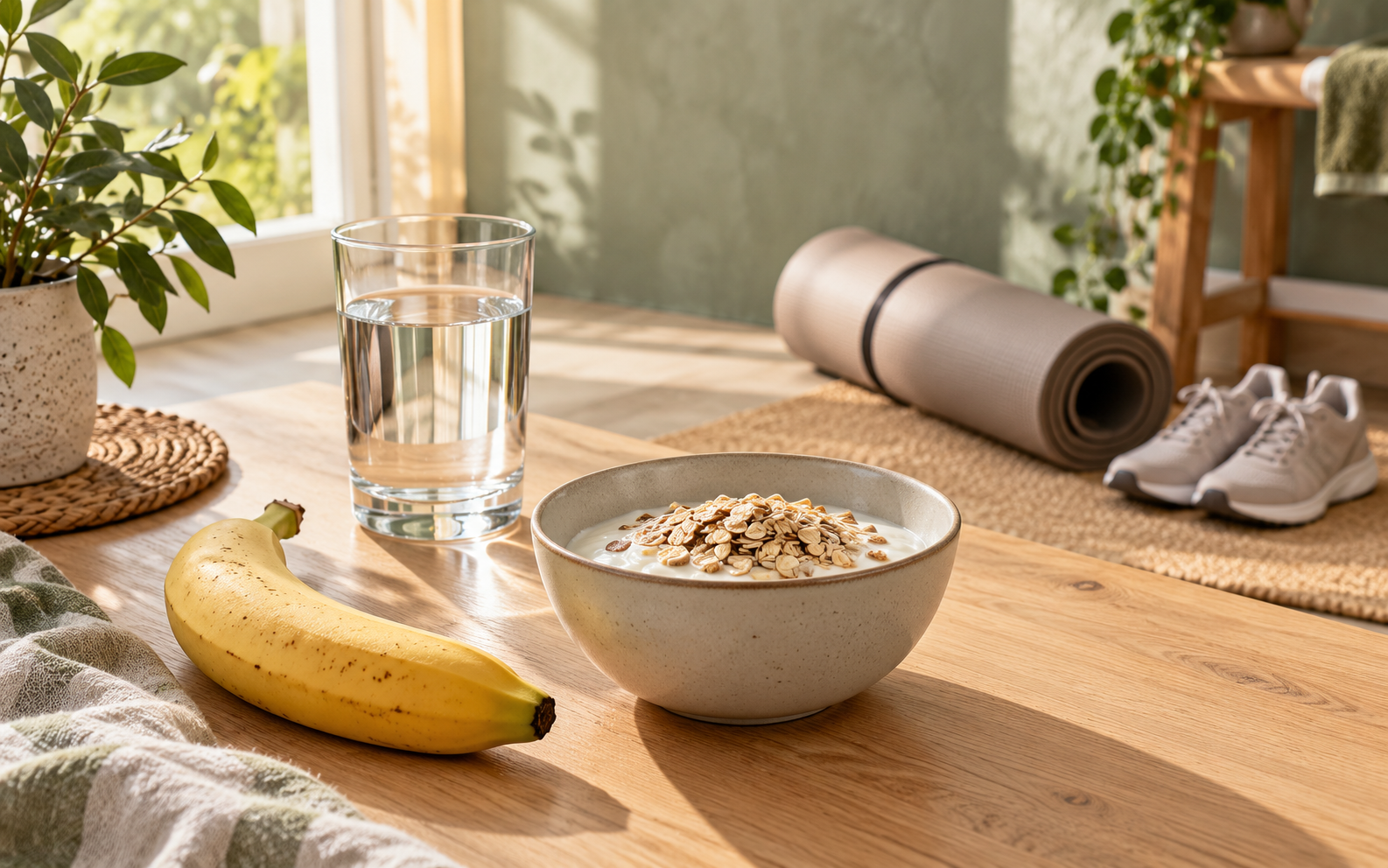
How long to wait to workout after eating depends mainly on meal size. A general starting point is 1 to 3 hours after a small meal or snack and 3 to 4 hours after a large meal (1). Some people tolerate a small snack closer to exercise. Meal size, exercise intensity, and your own comfort matter. Use the timing examples and pre workout meal ideas below to plan your session.
Key takeaways
How long you should wait depends on the food you ate and the exercise you plan. A pre-workout snack before easy cardio differs from a heavy meal before HIIT or lifting weights.
- Sports nutrition guidance places a carbohydrate-based meal 1 to 4 hours before exercise, smaller portions closer to the start (2).
- Eating before exercise improved prolonged aerobic performance in a review; shorter aerobic sessions showed no clear advantage (3).
- A review found that exercise intensity affected stomach emptying, but results varied and most studies tested drinks rather than meals (4).
- About 30 to 50 percent of endurance athletes report digestive complaints during exercise, often tied to reduced blood flow (5).
- Protein eaten before or after training, alone or with carbohydrate, may support strength and muscle goals (6).
- During endurance races, higher carbohydrate intake was associated with more nausea and gas, as well as faster race times; this does not set a pre-workout meal limit (7).
- Drinking fluids several hours before exercise, then small sips during long sessions, supports fluid balance (8).
How long should you wait after a meal or snack?
Meal size affects how long to wait after eating. A larger meal generally needs more time to digest than a small snack. Athlete guidance places carbohydrate intake in the 1 to 4 hours before exercise, adjusted to the session and tolerance (2). Gentle movement may feel comfortable sooner than running or high-intensity exercise, but there is no universal post-meal countdown.
The table separates general timing guidance from practical ways to adapt it. Calorie totals cannot define a reliable waiting time for everyone.
|
Meal size |
General starting gap |
Light activity |
Hard or long workout |
|---|---|---|---|
|
Small snack |
About 1 to 3 hours; a small snack may be tolerated closer (1) |
Start gently if comfortable |
Use a familiar food and check tolerance |
|
Small meal |
Keep movement easy while full |
Allow more time if the portion feels heavy |
|
|
Large meal |
About 3 to 4 hours (1) |
Wait until gentle movement feels comfortable |
Reschedule if fullness or discomfort remains |
The activity suggestions are editorial examples. These ranges are starting points, and comfort varies from person to person.

What happens if you exercise too soon after eating?
A full stomach feels uncomfortable during exercise because hard effort slows digestion and pulls blood away from the gut. During intense exercise, blood flow to the intestines drops, and that drop is a suspected main driver of complaints (5). Reviews estimate that 30 to 50 percent of endurance athletes experience stomach or bowel complaints during exercise (5). Most such complaints are mild (5).
Stomach emptying changes with exercise intensity. A meta-analysis of 20 studies found no significant overall exercise effect; lower and higher intensities differed, and results varied across studies (4). Most trials involved liquid test feeds and active or trained participants, so the review cannot establish exact waiting times after solid meals.
A meal rich in fat or fiber may be harder to tolerate close to exercise (5). A small familiar snack is a different starting point from a large mixed meal. If you have an ongoing digestive condition, ask a clinician how exercise and meal timing fit your situation.
If you’ve mustered up the courage to crush your weight loss goal, let Betterme take the sting out of this demanding process. Our app will help you restructure your habits, remold your life and crank up your fitness results!

What should you eat before a workout?
A pre workout meal works well when it centers on carbohydrates, includes moderate protein, and keeps fat and fiber low. Guidance for athletes suggests about 1 to 4 grams of carbohydrate per kilogram of body weight before exercise (2). The amount scales with the time available, from 1 to 4 hours (2). Protein in the pre-exercise window, alone or with carbohydrate, may support strength and muscle goals (6).
For a meal several hours before training, consider rice, oats, or potatoes with a protein source. Closer to the start, a smaller portion may be more comfortable. The examples below are options to test during ordinary training, since tolerance varies.
The examples below are editorial suggestions for your available time to eat. Choose familiar foods that feel easy to digest for you. A high-calorie meal plan shows one way to organize larger training-day portions.
|
Time before workout |
Food examples |
Why it fits |
|---|---|---|
|
30 to 60 minutes |
A banana, a slice of white toast with honey, a small sports drink, or a handful of dried fruit |
A small carbohydrate portion; choose foods you already tolerate |
|
1 to 2 hours |
Oatmeal with berries, a fruit smoothie with yogurt, or rice cakes with a thin layer of peanut butter |
Carbs plus a little protein in a modest portion |
|
2 to 3 hours |
A turkey sandwich, rice with chicken and vegetables, or a baked potato with cottage cheese |
Complex carbs and protein in a light meal |
|
3 to 4 hours |
A balanced meal: whole grains, lean protein, vegetables, and some olive oil or avocado |
A mixed meal with a longer gap before exercise |
A smoothie with fresh fruit and a scoop of protein powder suits the 1 to 2 hour window. Keep the portion modest and skip added nut butter if the session is intense.


What should you avoid eating before a workout?
Large, fatty, or high-fiber meals can contribute to digestive discomfort close to exercise (5). Personal tolerance and the type of workout matter. Research on carbohydrate intake during endurance races is not a rule about how large your pre-workout meal can be (7).
The foods below are the usual suspects when a session feels heavy.
- Fried and fatty foods such as pizza, burgers, and pastries sit in the stomach for longer.
- High-fiber foods close to the start, such as beans, lentils, large salads, and bran cereal, can cause bloating and gas.
- Carbonated drinks add gas, which often means belching or a bloated feeling during movement.
- Spicy dishes can cause stomach upset or a burning feeling in the chest for some people.
- Alcohol can affect balance and coordination, so many people skip it before training.
- A portion that leaves you uncomfortably full; adjust the amount or timing based on your experience.
- New or untested foods on an important day; testing foods in practice sessions is part of the standard advice (5).
Choose pre-workout stretches that feel comfortable. Stop if bending or pressure on your abdomen worsens discomfort.
Reasons why BetterMe is a safe bet: a wide range of calorie-blasting workouts, finger-licking recipes, 24/7 support, challenges that’ll keep you on your best game, and that just scratches the surface! Start using our app and watch the magic happen.


Is it better to exercise before or after eating?
Eating before exercise may help prolonged aerobic performance. A review of 46 studies found a benefit for longer aerobic sessions, with no clear difference in shorter sessions (3). No single approach suits every workout. Higher circulating fatty acids after fasted exercise do not establish greater long-term fat loss.
For a short, easy session, consider your hunger, comfort, and medical needs. If you feel lightheaded, stopping to rest is usually advised. Recurrent discomfort is worth discussing with a clinician. People using medication that affects blood glucose usually follow an exercise and eating plan from their care team.
How much should you drink before a workout?
Drink fluids with your meals in the hours before exercise and start the session well hydrated. Fluid guidance advises prehydrating several hours before activity, so the body absorbs the fluid and urine output normalizes (8). During exercise, the aim is to keep fluid loss under about 2 percent of body weight (8).
For prolonged activity, fluid and carbohydrate needs vary with sweat losses, conditions, and exercise demands (8). Avoid forcing large volumes at once. Plan drinking around your own needs rather than using a fixed amount as a requirement.

What does a sample pre-workout eating timeline look like?
This example is built around a 6 p.m. strength session. The afternoon meal and snack are optional choices, not a requirement to eat at every listed time. Adapt the amounts and timing to your normal meals and appetite. This exact schedule has not been tested in a study.
|
Time |
What to eat or drink |
Purpose |
|---|---|---|
|
12:30 p.m. |
Balanced lunch: rice, grilled chicken, vegetables, and olive oil |
Main fuel, 5.5 hours before training |
|
3:00 p.m. |
Optional light meal: oatmeal with banana or a turkey sandwich |
Carbs plus protein, 3 hours out |
|
5:15 p.m. |
Optional small snack: a banana or rice cakes, with fluid as needed |
Fast digesting carbs, 45 minutes out |
|
5:45 p.m. |
A few sips of water and a 5 minute warm-up |
Start hydrated without a sloshing stomach |
|
6:00 p.m. |
Strength session, 60 minutes |
Adjust effort if you still feel full |
|
Within 2 hours after |
Meal or snack with 20 to 40 g of protein and some carbohydrate |
Supports muscle protein synthesis after training (6) |
Choose the rows that fit your day. For an early workout, a small familiar snack may be more practical than a full meal. Post-workout food can fit your next regular meal; the example timing is a flexible guide.
How long after eating can you run?
Allow time for your meal to settle before running. Impact and exercise intensity can contribute to digestive discomfort (5). Start with the meal-size guidance above, then test timing on an easy day. A familiar snack before a short jog differs from a large dinner before speed work. Stop if nausea, cramps, or dizziness develop.
Frequently Asked Questions
Can you work out an hour after eating?
An hour may be enough after a small snack for some people. It may be too soon after a substantial meal or before demanding exercise. There is no single 30-minute or one-hour rule that applies regardless of meal size and comfort.
How long should you wait after eating cereal before a workout?
The portion, cereal type, milk, and your own tolerance matter more than the name of the food. Count a substantial bowl as a small meal. If a cereal repeatedly causes bloating before training, try a smaller portion, a longer gap, or a familiar alternative.
What are 7 things to avoid doing right after a meal before a workout?
Seven habits worth skipping straight after a meal are listed below.
- Starting intervals or heavy lifts within the first hour.
- Lying flat, which can make a full stomach feel worse.
- Gulping large volumes of fluid in one go.
- Adding a second large portion because the first felt fine.
- Drinking alcohol.
- Trying a new food before an important session.
- Ignoring early signs of stomach upset instead of easing off.
These are practical comfort suggestions. Stomach complaints during exercise can reflect food choices, intensity, and mechanical movement (5).
Can you work out right after eating if the session is light?
Some people tolerate gentle walking soon after eating. Start slowly and use comfort as your guide. Research on stomach emptying does not establish a universal 15- or 30-minute wait after a meal (4). Stop if movement causes nausea, cramps, or dizziness.
How long should you wait to workout after eating a big dinner?
Use the large-meal range above as a starting point. If dinner leaves you full and a hard session would run late, consider moving the workout or eating the main meal afterward. A lighter activity still depends on comfort; it does not require the same fixed waiting time as strenuous exercise.
The bottom line
Give a large meal more time than a small snack, and account for workout intensity. Use familiar foods before important sessions. Keep a note of what you ate, when you exercised, and how you felt, then adjust your next session. Persistent or severe discomfort is worth discussing with a clinician.
DISCLAIMER:
This article is intended for general informational purposes only and does not serve to address individual circumstances. It is not a substitute for professional advice or help and should not be relied on for making any kind of decision-making. Any action taken as a direct or indirect result of the information in this article is entirely at your own risk and is your sole responsibility.
BetterMe, its content staff, and its medical advisors accept no responsibility for inaccuracies, errors, misstatements, inconsistencies, or omissions and specifically disclaim any liability, loss or risk, personal, professional or otherwise, which may be incurred as a consequence, directly or indirectly, of the use and/or application of any content.
You should always seek the advice of your physician or other qualified health provider with any questions you may have regarding a medical condition or your specific situation. Never disregard professional medical advice or delay seeking it because of BetterMe content. If you suspect or think you may have a medical emergency, call your doctor.
SOURCES:
The sources below support the timing guidance and research discussed in this article.
- Eating and exercise: 5 tips to maximize your workouts (2023, mayoclinic.org)
- American College of Sports Medicine Joint Position Statement. Nutrition and Athletic Performance (2016, pubmed.ncbi.nlm.nih.gov)
- Effects of fasted vs fed-state exercise on performance and post-exercise metabolism: A systematic review and meta-analysis (2018, pubmed.ncbi.nlm.nih.gov)
- Acute exercise and gastric emptying: a meta-analysis and implications for appetite control (2015, pubmed.ncbi.nlm.nih.gov)
- Gastrointestinal complaints during exercise: prevalence, etiology, and nutritional recommendations (2014, pmc.ncbi.nlm.nih.gov)
- International society of sports nutrition position stand: nutrient timing (2017, pmc.ncbi.nlm.nih.gov)
- Nutritional intake and gastrointestinal problems during competitive endurance events (2012, pubmed.ncbi.nlm.nih.gov)
- American College of Sports Medicine position stand. Exercise and fluid replacement (2007, pubmed.ncbi.nlm.nih.gov)
 Reviewed by