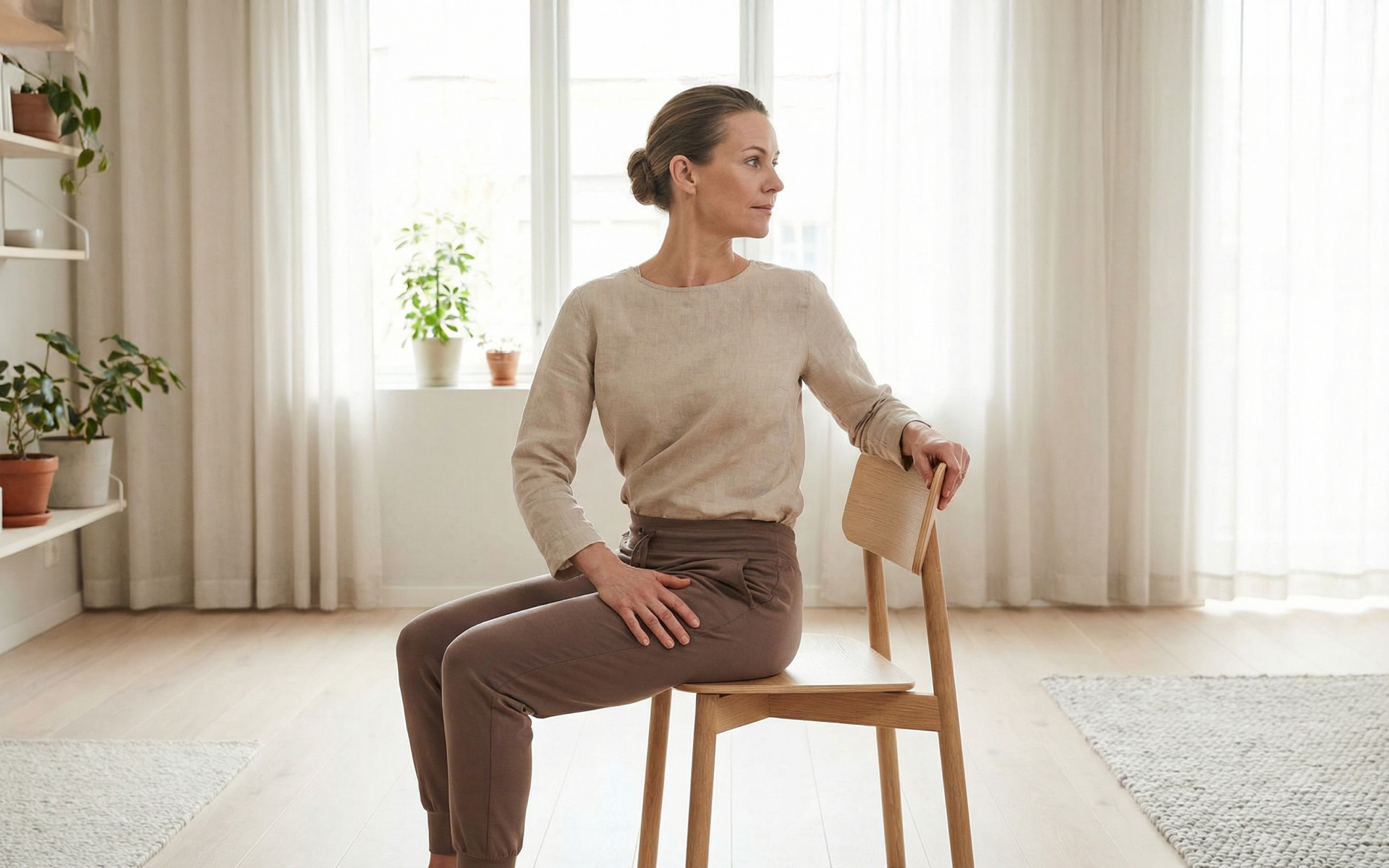
In our fast-paced world, finding moments of calm can feel nearly impossible. Many of us spend our days sitting at work, in the car, or at the kitchen table, all while our minds race from one worry to the next. It’s no wonder that stress can feel like a constant companion. The term has become more than just a buzzword – it’s a public health concern. Chronic stress has been linked to fatigue, poor sleep, low motivation, and a range of mental health challenges that affect millions worldwide. But what if the very chair you spend hours in could also become a place of relief?
Chair yoga offers a practical way to support mental well-being without needing a yoga mat or complicated poses. It’s a gentle practice that blends mindful movement with steady breathing, helping you feel more grounded and clear-headed. Whether you’re navigating high-pressure workdays or simply hoping to ease everyday tension, chair yoga meets you where you are.
Our article explores how chair yoga poses for mental well-being can create a sense of balance in your body and mind. You’ll learn why movement is so effective for stress relief, discover simple poses to start with, and see how this accessible practice can fit seamlessly into your daily routine. If you’ve ever wished for a way to feel calmer without stepping away from your life, chair yoga may be exactly what you need. If you’re curious about chair yoga for stress relief, check out our earlier article.
What Is the Benefit of Yoga Poses for Mental Health?
Let’s be honest: most of us spend a lot of time stuck in our heads – worrying, overthinking, replaying conversations we wish had gone differently. At its core, yoga is about breaking this cycle. It offers a way to get out of your thoughts and back into your body, even if your body is simply sitting in a chair.
When you move through yoga poses, your nervous system gets the memo that it’s finally okay to loosen up. Your shoulders stop pretending they’re earrings. Your jaw remembers it doesn’t have to clench all day. And slowly, the mental static begins to quiet.
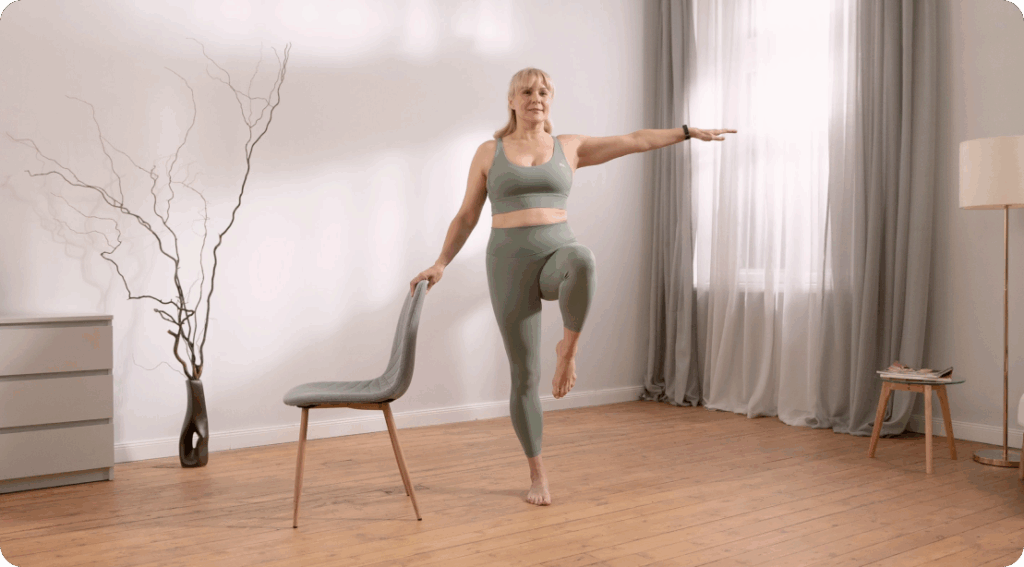
Here are five mental benefits of yoga that have stood the test of time (1, 2):
- More Emotional Resilience: You learn how to sit with discomfort without letting it bulldoze you.
- Less Stress, More Breathing Room: Studies have shown that mindful movement lowers stress hormones, like cortisol, and helps you feel a little more like yourself.
- Sharper Focus: Instead of feeling like your thoughts are ping-pong balls, you find a steadier center.
- A Gentle Energy Boost: Even short practices can help lift that heavy, drained feeling.
- Self-Compassion You Can Feel: Yoga teaches you to meet your body and mind exactly as they are, without the usual self-criticism.
The best part? You don’t need to twist yourself into a pretzel to experience these shifts. Chair yoga poses for mental well-being bring all of this within reach, right where you are.
Reasons why BetterMe is a safe bet: a wide range of calorie-blasting workouts, finger-licking recipes, 24/7 support, challenges that’ll keep you on your best game, and that just scratches the surface! Start using our app and watch the magic happen.
Which Type of Yoga Is Best for Mental Health?
If you’ve ever googled “yoga”, you’ll know that the options can feel endless: Hatha, Vinyasa, Kundalini, power yoga (3). The names alone can sound intimidating, as if you need a secret password to join. But here’s the truth: the best type of yoga for mental well-being is the one that feels sustainable, and doesn’t make you dread showing up.
While faster-paced styles can be energizing, slower practices often create the most space for emotional well-being. For example, Hatha yoga is steady and accessible, focusing on holding simple poses and breathing with intention. Restorative yoga is even gentler, using props to fully support your body so you can let go of tension you didn’t even realize you were carrying (4).
Chair yoga borrows from these slower styles but simplifies things further. No mat required, no need to get up and down off the floor. Instead, you use a sturdy chair as your foundation. That’s why chair yoga poses for mental wellness can feel like an easier gateway into the benefits of yoga – particularly if you’re new, suffer from mobility challenges, or simply don’t have the energy for traditional classes (5).
When you strip yoga down to its essentials – breath, movement, awareness – it becomes clear that you don’t have to do anything extreme to lower your stress and start feeling better – you just have to begin.
Can Chair Yoga Help Mental Health?
It might sound almost too simple: sitting in a chair, moving your arms, breathing more slowly. But sometimes the simplest things are exactly what our minds are starving for.
Chair yoga has been gaining traction for a reason. Studies and anecdotal evidence have shown that this gentle practice can help reduce symptoms of chronic stress and low mood (5). When you bring movement and breath into a space where you already spend a lot of time – such as your living room or even your office – you’re more likely to actually stick with it. And consistency is what rewires the nervous system over time (6).
Here’s how it works (5):
- Movement breaks the stress loop. When your body shifts out of the fight or flight state, your brain follows suit.
- Breath anchors you to the moment. Slower, deeper breaths help lower your heart rate and signal that you’re not in danger, even if your thoughts say otherwise.
- Small wins build confidence. Unlike a long yoga class that can feel overwhelming, chair yoga for beginners is approachable. You get to experience progress without feeling defeated.
Whether you’re dealing with everyday worries, the grind of a stressful job, or the lingering effects of past experiences, chair yoga poses for mental wellness offer an accessible path toward feeling steadier. They won’t erase your challenges, but they can make your mind feel less like a runaway train.
Read more: Desk Chair Yoga for Office Workers: 6 Poses to Support Your Back
What Are the Main Benefits of Chair Yoga for Mental Health?
Chair yoga may look deceptively basic – just you, a chair, and a few quiet movements. However, its benefits can run surprisingly deep. This practice isn’t about flashy poses or perfect form – it’s about giving your body and mind a chance to reset, even if life feels messy.
Here are some of the main ways chair yoga supports mental well-being(5):
- It Helps Release Stored Tension
When stress shows up, your body usually gets the memo first – tight shoulders, a stiff neck, that clench in your jaw you don’t even notice until it aches. Chair yoga gently coaxes those muscles to soften. Over time, this physical release helps your mind feel less jammed up, too (8). - It Supports Better Breathing
Shallow, rapid breaths keep your body in a low-key state of alarm. Many chair yoga poses for mental well-being naturally open your chest and lengthen your spine, which makes it easier to take deeper breaths (9). With each exhale, you’re teaching your nervous system that it’s safe to relax. - It Creates a Sense of Structure and Self-Care
Routines matter, particularly when you’re feeling overwhelmed. A simple chair yoga practice gives you something positive to look forward to, even on rough days. Just five or ten minutes can feel like a small act of reclaiming your time and energy. - It Boosts Mood Without Overwhelm
Some exercise feels like too much when you’re mentally drained. Chair yoga meets you right where you are. You don’t have to change clothes or leave the house. This makes it easier to actually do it – consistency being the real secret to feeling better (8). - It Encourages Mindfulness in Everyday Spaces
Because chair yoga happens right in your regular environment, you learn how to create moments of calm in the middle of your day (9). Over time, this can help you feel more grounded no matter what’s happening around you.
Whether you’re hoping to ease high blood pressure, a quiet and anxious mind, or simply find a little space to breathe, chair yoga poses for mental health can be an uncomplicated and surprisingly powerful tool.
Can Chair Yoga Replace Therapy?
This is a fair question. When something feels this calming, you might wonder if it’s enough on its own. But let’s be clear: chair yoga isn’t a magic fix for everything. It’s a valuable tool – sometimes even a life-changing one – but it’s not meant to stand in for professional help if you need it.
Think of chair yoga like brushing your teeth. It’s great for everyday care and maintenance. It helps you feel better, keeps things from building up, and gives you a sense of control. But if there’s a deeper issue – such as a persistent feeling of emptiness, panic that won’t subside, or thoughts you can’t manage on your own – it’s important to connect with a therapist or counselor.
That being said, chair yoga and therapy can work beautifully together. Many people find that having a daily practice makes it easier to process emotions, stay grounded between appointments, and handle stress in real time. It can also give you small moments of accomplishment, which matter more than most of us realize when we’re struggling (10).
BetterMe: Health Coaching app helps you achieve your body goals with ease and efficiency by helping to choose proper meal plans and effective workouts. Start using our app and you will see good results in a short time.
Here are a few ways to think about how chair yoga fits in:
- As a Companion: Use chair yoga to support the work you’re already doing with a mental health professional.
- As a Grounding Practice: When emotions feel overwhelming, gentle movement can help you come back to the present moment (11).
- As a Daily Ritual: Regular chair yoga can build resilience over time, which makes it easier to handle everyday stress.
- As a First Step: If therapy feels intimidating, starting with chair yoga can help you reconnect to your body and get curious about what you need next.
So, no, chair yoga poses for mental well-being don’t replace therapy. But they can absolutely become a supportive companion, helping you feel steadier and more capable as you navigate whatever else you might be working through.
Read more: Body Awareness Activities for Adults to Reconnect With Your Body
What Are Some Chair Yoga Poses for Mental Health Beginners Can Try?
You don’t need to be a seasoned yogi – or even particularly flexible – to get started. These poses are approachable, beginner-friendly, and designed to help you feel calmer and more present.
Below are some of the best chair yoga poses for mental well-being beginners you can try today (5,10):
- Chair Mountain Pose
How to Do It: Sit tall with your feet flat on the floor, hip-width apart. Let your hands rest on your thighs or by your sides. Imagine a string gently lifting the crown of your head toward the ceiling.
Why It Helps: This simple posture promotes better breathing and an instant feeling of steadiness. - Seated Cat-Cow
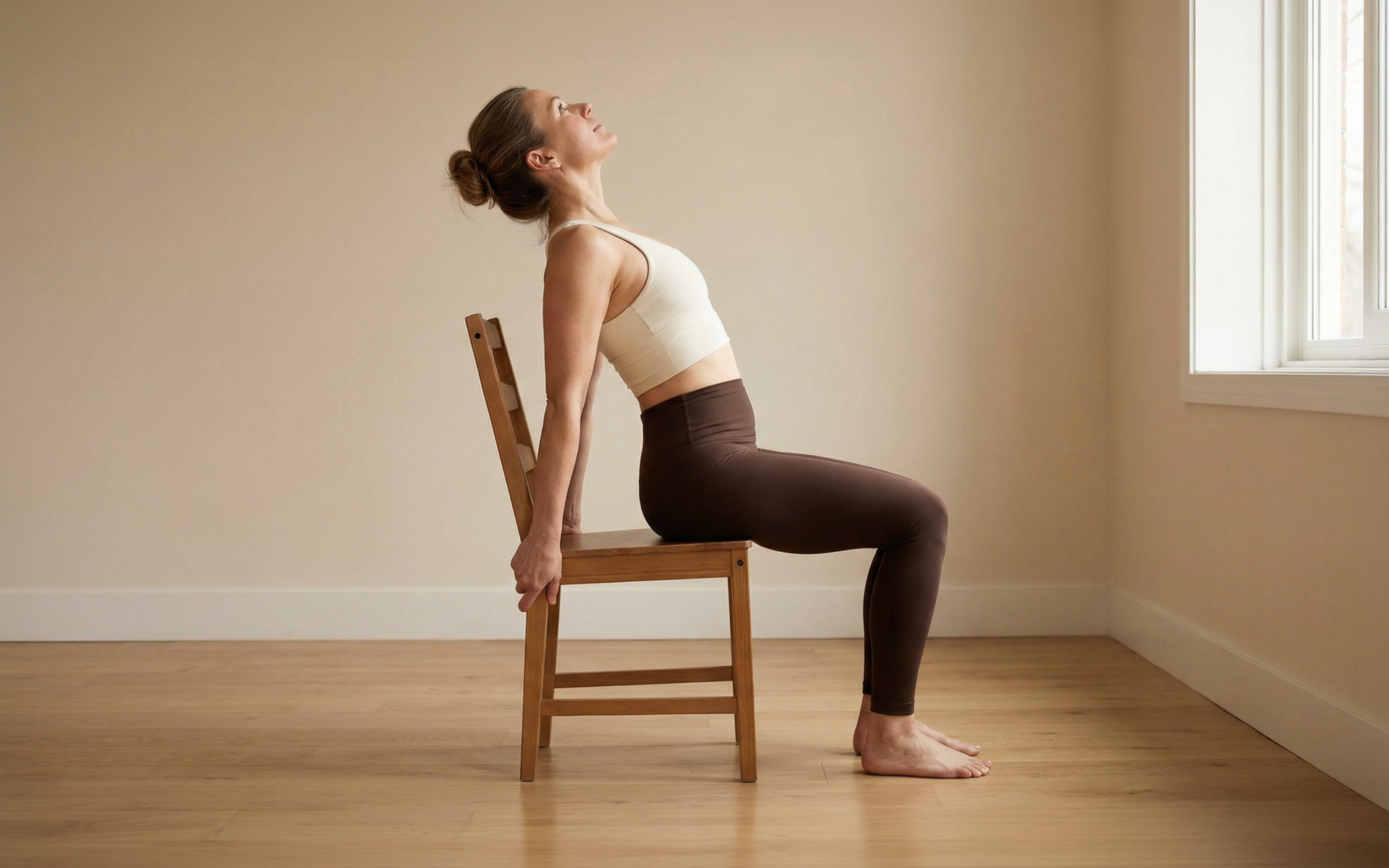
How to Do It: Place your hands on your knees. On an inhale, arch your back and lift your chest (cow). On an exhale, round your spine and tuck your chin (cat). Repeat slowly for 5 to 10 rounds.
Why It Helps: This movement softens tension in your spine and helps you tune into your breath. - Chair Forward Fold
How to Do It: Sit toward the edge of your chair. With your feet firmly on the floor, hinge forward from your hips and let your arms hang toward the ground. Rest your head on your knees if that feels comfortable.
Why It Helps: A gentle inversion that calms the nervous system and stretches the back. - Seated Side Bend
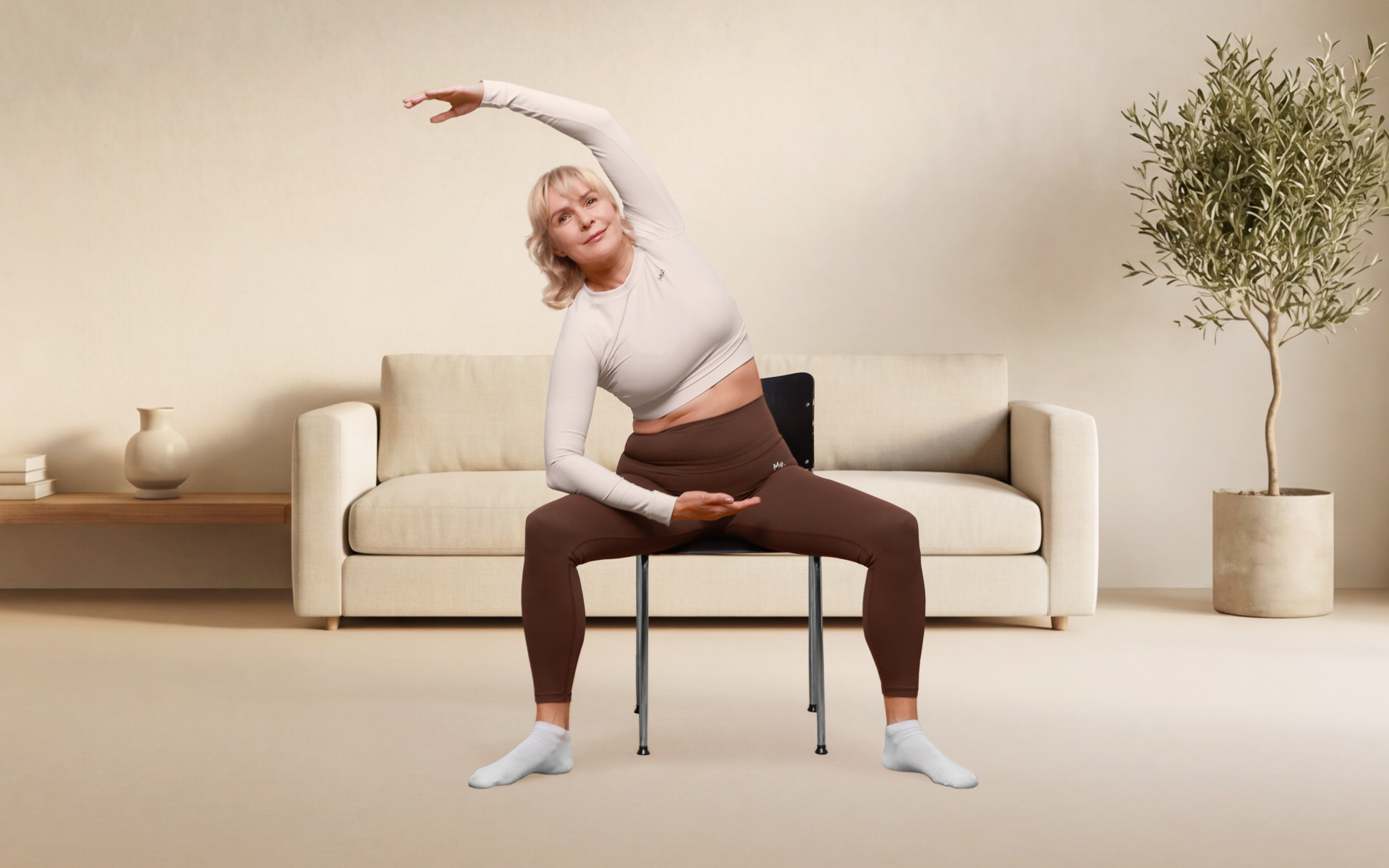
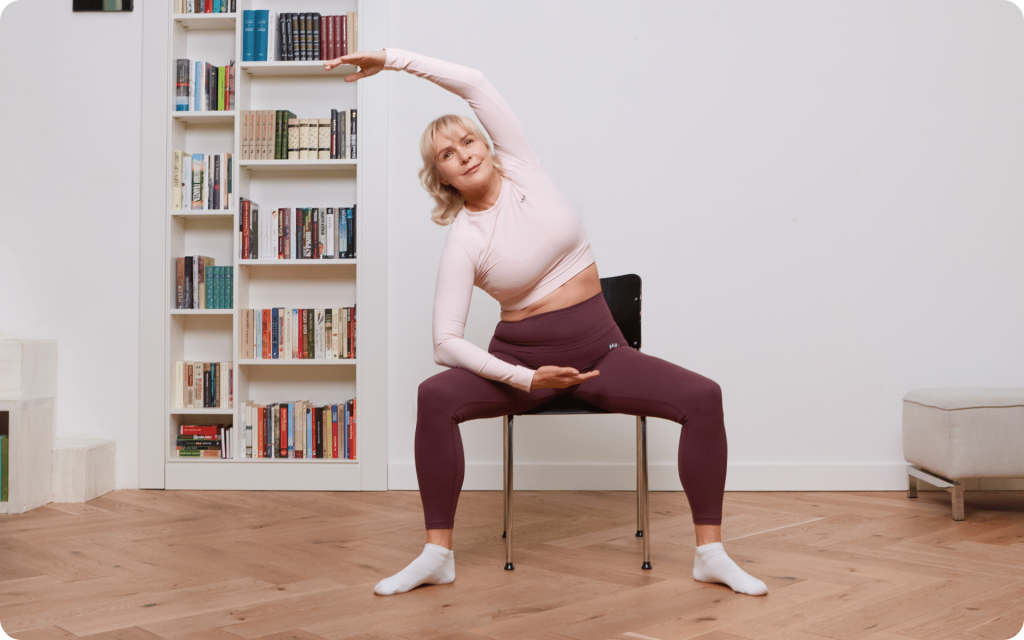
How to Do It: Keep one hand resting on your seat. On an inhale, lift your opposite arm overhead and lean gently to the side. Hold for a few breaths, then switch sides.
Why It Helps: Opens up tight spaces between the ribs and supports deeper breathing. - Gentle Seated Twist
How to Do It: Sit tall. Place your right hand on the back of the chair and your left hand on your right knee. Inhale to lengthen your spine, exhale to twist gently to the right. Stay for a few breaths, then switch sides.
Why It Helps: Twisting can feel like wringing out tension while giving your spine more mobility.
If you’re curious about yoga poses for trauma release, remember that slow, mindful movement is key. Less is often more. These chair poses are designed to feel safe, simple, and grounding. Over time, you may notice that even small practices can have a surprisingly big impact on your mental well-being.
What Is a Beginner-Friendly Chair Yoga Routine for Mental Health?
A well-rounded chair yoga routine doesn’t have to be long or complicated, but it should create space for you to reconnect with your body, reset your breath, and clear some mental clutter. The following short sequence includes both grounding and releasing movements, giving your nervous system exactly what it needs to feel a little steadier.
Step 1: Seated Belly Breathing (1–2 minutes)
Place both hands on your stomach. Inhale through your nose, letting your belly rise under your hands. Exhale slowly through your mouth, feeling your belly fall. Keep your shoulders relaxed.
Why it helps: Slows down your heart rate and centers your attention – ideal before movement.
Step 2: Seated Shoulder Rolls (5 rounds)
Sit upright. On each inhale, roll your shoulders up toward your ears; on each exhale, roll them back and down. Reverse direction after a few rounds.
Why it helps: Releases tension you probably didn’t even realize you were holding.
Step 3: Seated Figure Four Stretch (Hold 3–5 breaths each side)
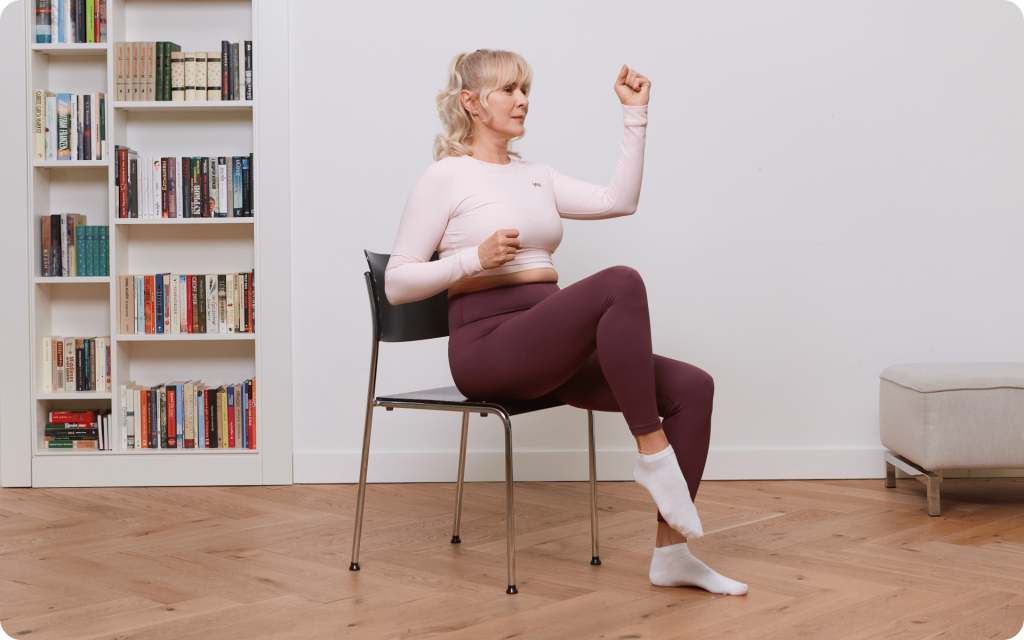
Sit tall. Cross your right ankle over your left knee. Keep your right foot flexed. Gently press your right knee downward. Lean forward slightly if it feels okay. Repeat on the other side.
Why it helps: Opens the hips – an area that can store a lot of emotional tension.
Step 4: Seated Crescent Moon Arms (Hold 2–3 breaths each side)
Lift both arms overhead. Interlace fingers and stretch up. Lean to one side for a gentle side bend. Come back to the center, then switch sides.
Why it helps: Lengthens the spine and creates space in the ribs for deeper breathing.
Step 5: Chair Eagle Arms (Hold 3–5 breaths)
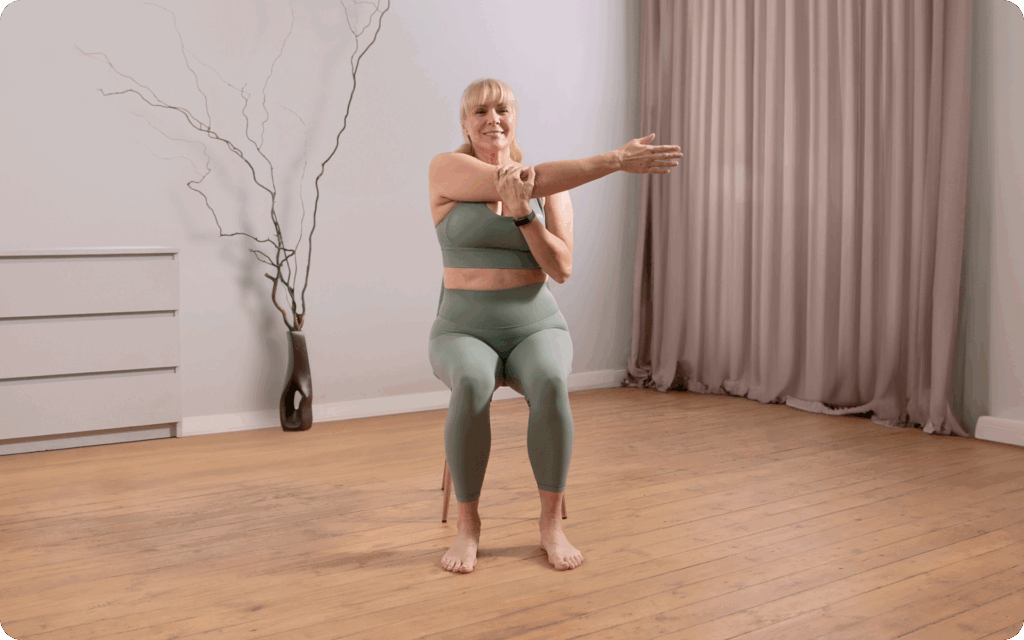
Wrap your right arm under your left, trying to bring the palms to touch. Lift your elbows slightly and breathe into the upper back. Switch arms after a few breaths.
Why it helps: A deeply grounding pose for the upper body that can help with focus and emotional release.
Step 6: Seated Neck Stretch (Hold 2–3 breaths per side)
Drop your right ear toward your right shoulder. Rest your right hand gently on your head for more weight (no pulling). Repeat on the left.
Why it helps: Soothes physical and emotional tension, particularly if you hold stress in your neck.
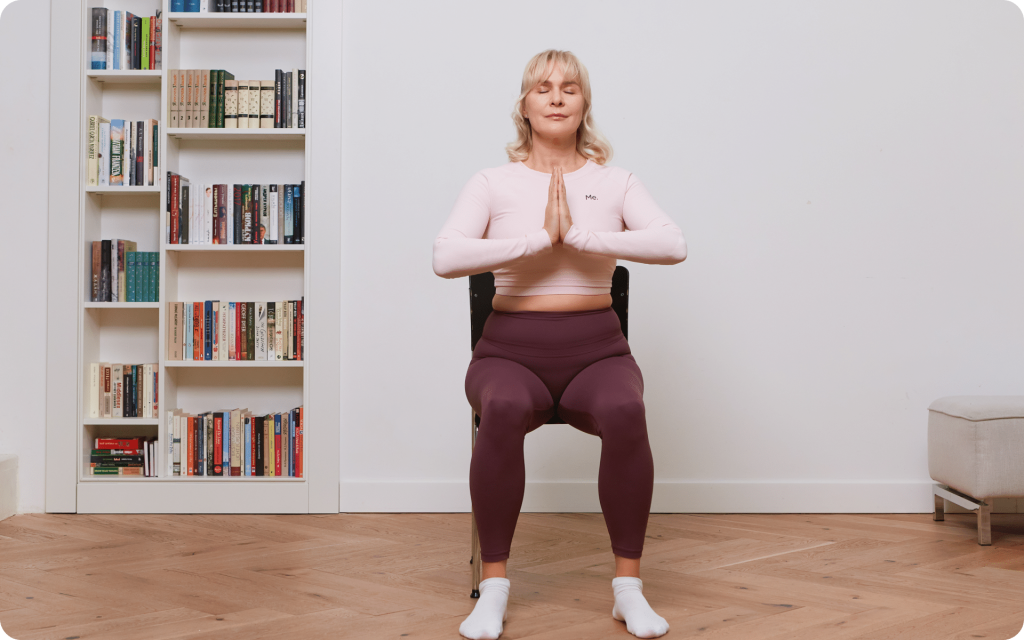
Step 7: Closing Breath with Affirmation (1 minute)
Return to your tall seat. Breathe slowly and say to yourself (silently or aloud): “I am here. I am safe. I am doing enough.”
Why it helps: Ends the practice on a calming note and reinforces self-kindness.
Tips to Get the Most Out of Your Routine:
- Try practicing at the same time each day to create a habit, such as right after your morning coffee, just before lunch, or while the kettle boils.
- Stack it onto something you already do, such as watching the news, listening to a podcast, or winding down after checking emails.
- Use a sturdy chair without wheels.
- Keep a glass of water nearby to stay hydrated.
- Start small – even five minutes counts.
When you practice chair yoga poses for mental wellness, you’re giving yourself more than a break from the noise – you’re building a habit of self-care that can support you long after the session is over.
Yes, yoga can ease stress, improve mood, and help you feel more centered by combining movement, breath, and mindfulness (14). Gentle styles such as Hatha, restorative, or chair yoga work best as they slow you down, encourage mindfulness, and anchor your attention to the present moment. Some small studies have found yoga to be effective for rumination. Yoga generally has a stronger focus on breath and relaxation, which makes it particularly helpful for calming the mind and reducing stress. With regular practice, you may notice better flexibility, steadier moods, less tension, and a more resilient outlook on daily challenges.Frequently Asked Questions
Can yoga help mental health?
Which style of yoga is best to stop overthinking?
Is yoga or Pilates better for mental health?
What happens if you do yoga every day?
The Bottom Line
It’s easy to underestimate the impact of small choices – a few mindful breaths, a gentle stretch, five quiet minutes at the edge of your chair. However, over time, these moments can add up to something powerful – a steadier mind, a body that feels less tense, and a renewed sense that you can handle whatever comes your way.
Chair yoga poses for mental well-being prove that you don’t need to overhaul your life to feel better. You don’t need expensive equipment or an hour-long class – all you really need is a willingness to pause and connect with yourself in a kinder way.
If you’re new to chair yoga, start with the simplest moves. Let your body guide you. Notice how each pose affects not just your muscles, but your mood. And remember, you’re not trying to be perfect – you’re trying to feel a little more at ease.
Whether you’re using chair yoga to ease stress, lift your spirits, or simply reclaim a few moments of calm in a hectic day, you’re already doing something meaningful for your mental well-being. In a world that pushes you to go faster and try harder, choosing to slow down may be the most radical act of care you can practice.
DISCLAIMER:
This article is intended for general informational purposes only and does not serve to address individual circumstances. It is not a substitute for professional advice or help and should not be relied on for making any kind of decision-making. Any action taken as a direct or indirect result of the information in this article is entirely at your own risk and is your sole responsibility.
BetterMe, its content staff, and its medical advisors accept no responsibility for inaccuracies, errors, misstatements, inconsistencies, or omissions and specifically disclaim any liability, loss or risk, personal, professional or otherwise, which may be incurred as a consequence, directly or indirectly, of the use and/or application of any content.
You should always seek the advice of your physician or other qualified health provider with any questions you may have regarding a medical condition or your specific situation. Never disregard professional medical advice or delay seeking it because of BetterMe content. If you suspect or think you may have a medical emergency, call your doctor.
SOURCES:
- Benefits of Yoga (n.d., osteopathic.org)
- 7 Ways Yoga Can Boost Your Mental Health and Resilience (n.d., states.aarp.org)
- Exploring How Different Types of Yoga Change Psychological Resources and Emotional Well-Being Across a Single Session (2020, uconn.edu)
- Different Types of Yoga as a Sport (2023, researchgate.net)
- Chair yoga: Benefits of a mind-body practice without the risk of falling (2023, health.harvard.edu)
- Improving Access to Yoga: Barriers to and Motivators for Practice Among Health Professions Students (2015, researchgate.net)
- Chair Yoga (2021, journals.lww.com)
- Yoga as a Complementary Treatment of Depression: Effects of Traits and Moods on Treatment Outcome (2016, pmc.ncbi.nlm.nih.org)
- Yoga on Our Minds: A Systematic Review of Yoga for Neuropsychiatric Disorders (2018, pmc.ncbi.nlm.nih.org)
- Reasons, Years and Frequency of Yoga Practice: Effect on Emotion Regulation (2018, pmc.ncbi.nlm.nih.org)
- Grounding Techniques (n.d., wellcats.arizona.edu)
- Yoga as Complementary Therapy for Depression: A Systematic Review (2024,pubmed.ncbi.nlm.nih.org)
- Chair Yoga: A supplementary treatment approach to promoting a positive sense of well-being within a general medical rehabilitation population (2014, researchgate.net)
- Effectiveness of Yoga in Reducing Stress, Anxiety, and Depression Among Students and Healthcare Workers (2024, pmc.ncbi.nlm.nih.org)
 Reviewed by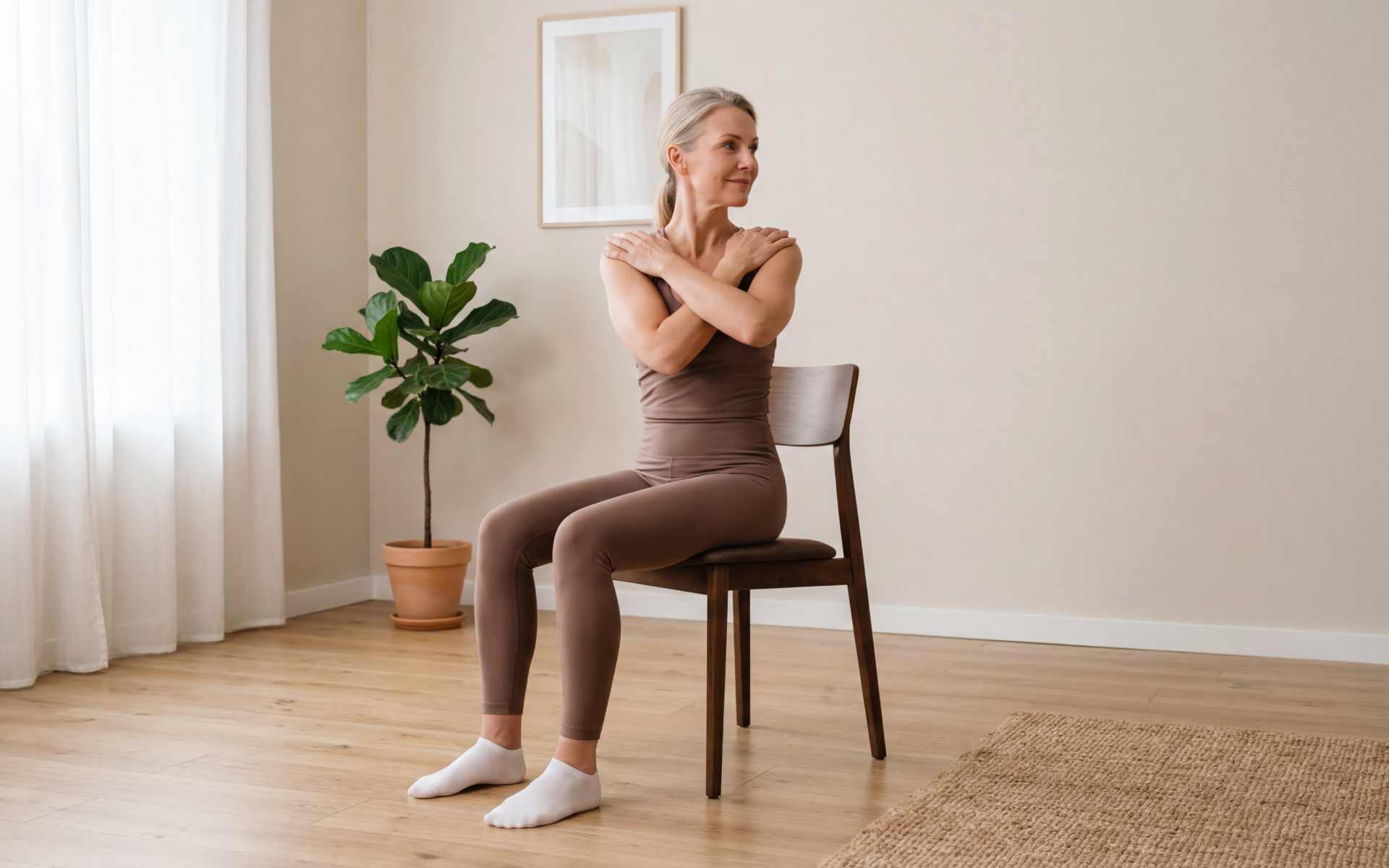
 Reviewed by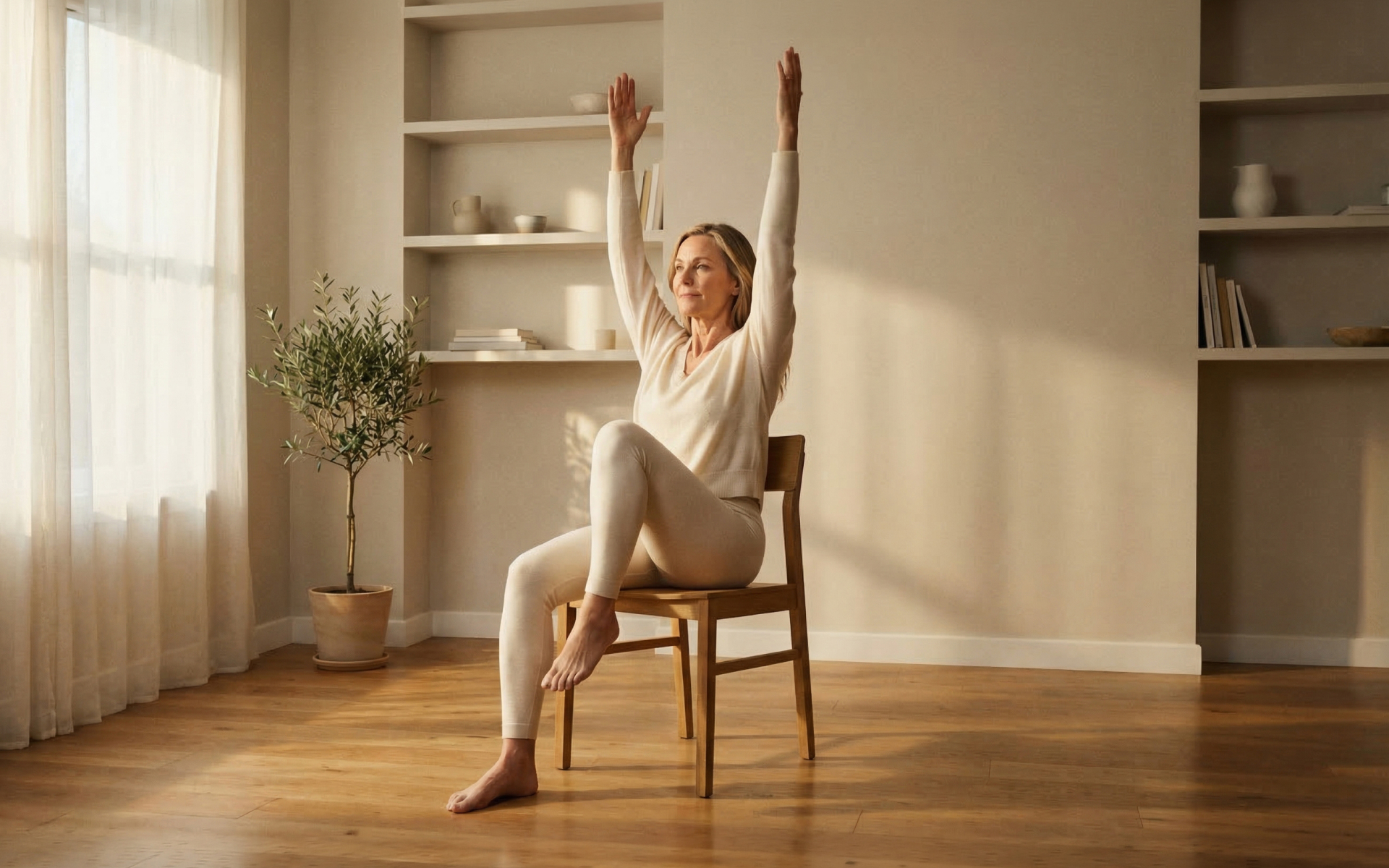
 Reviewed by