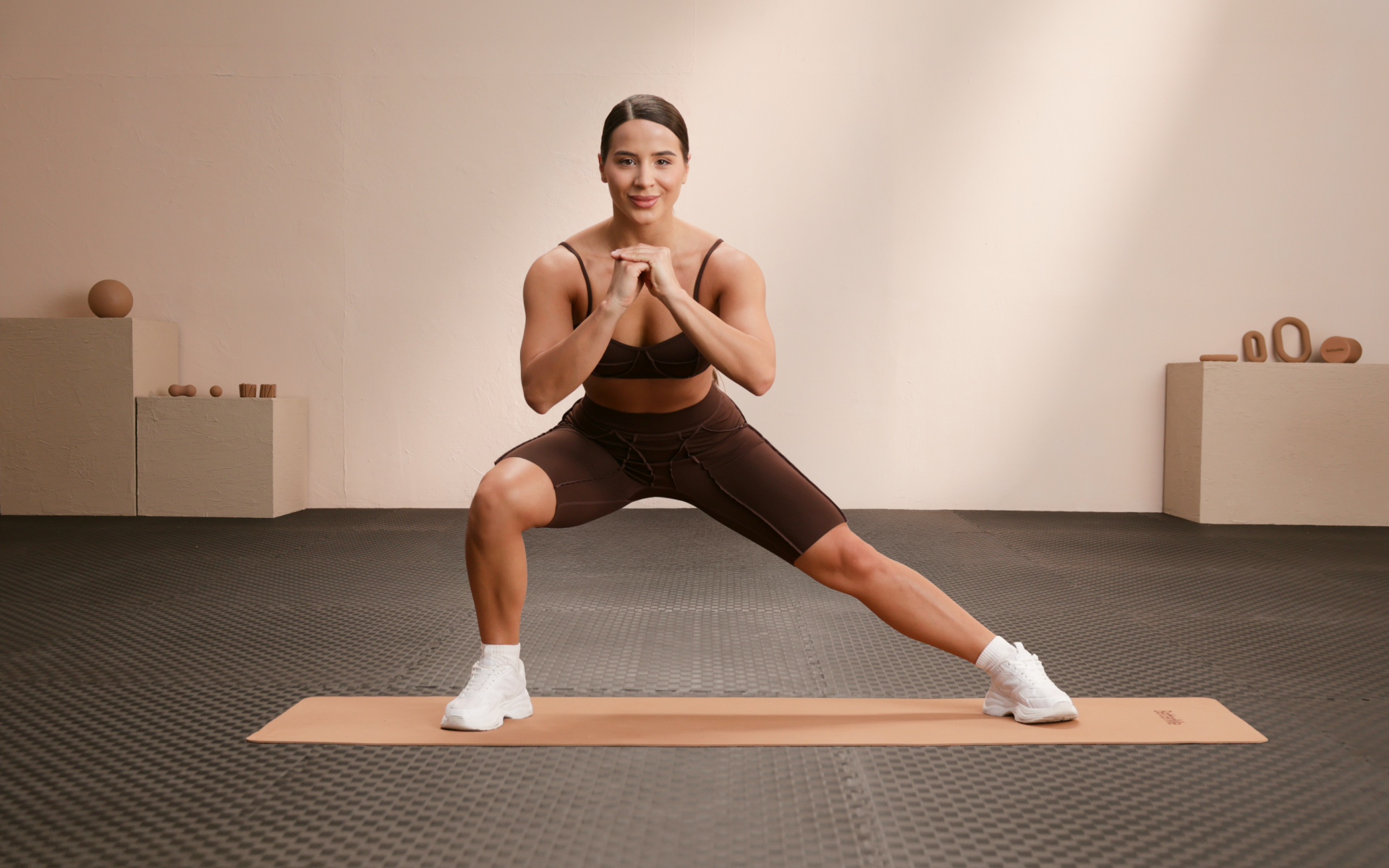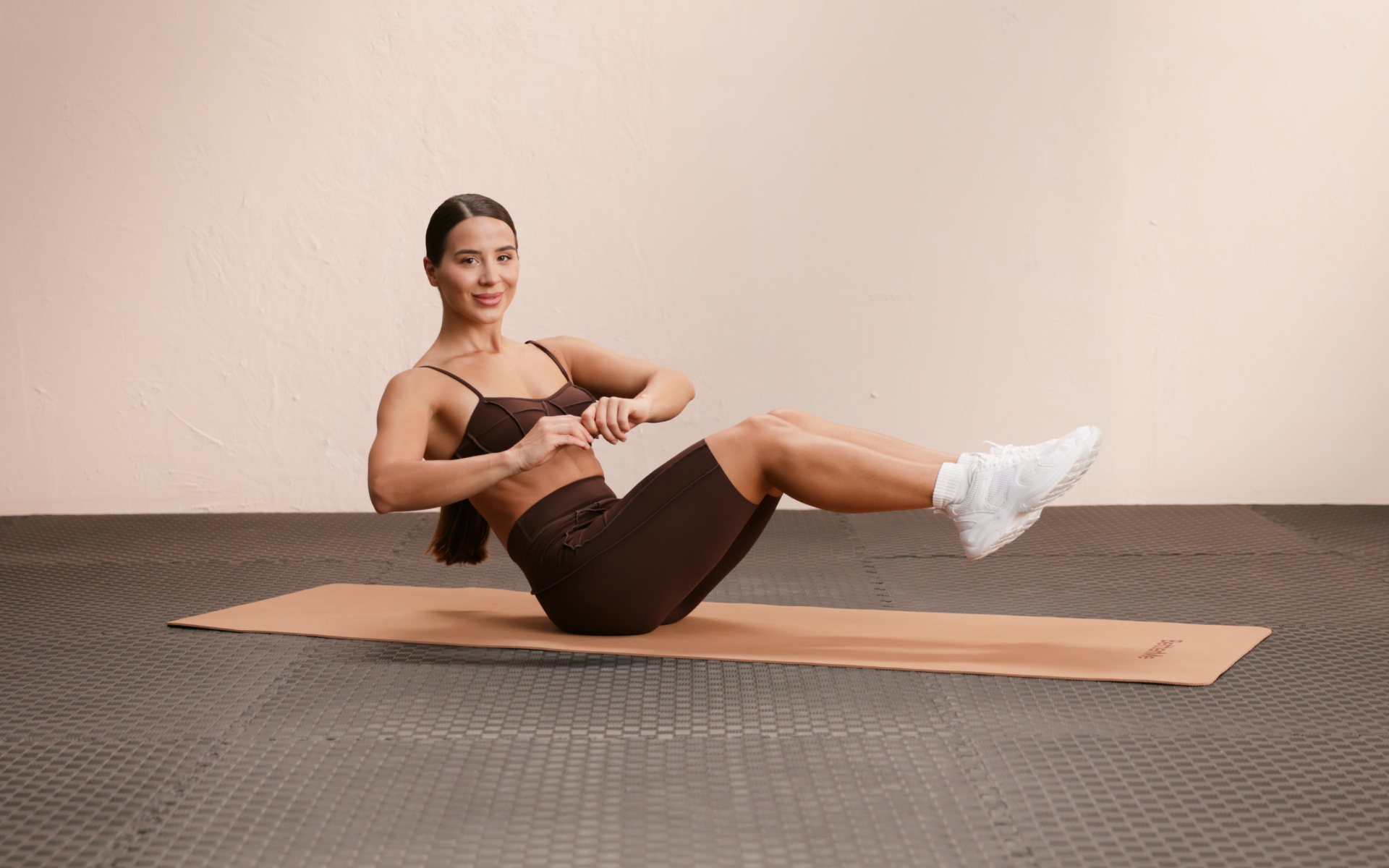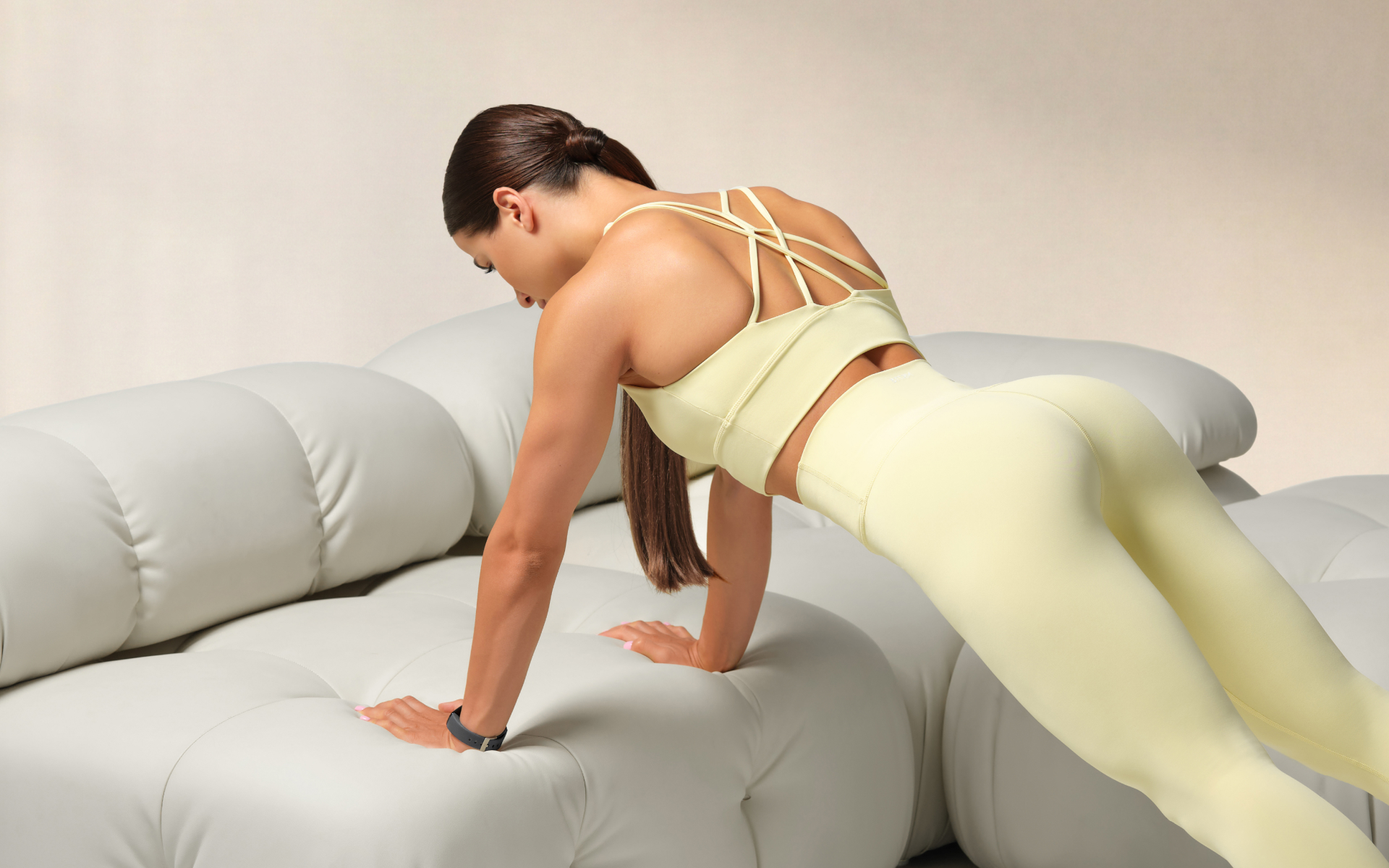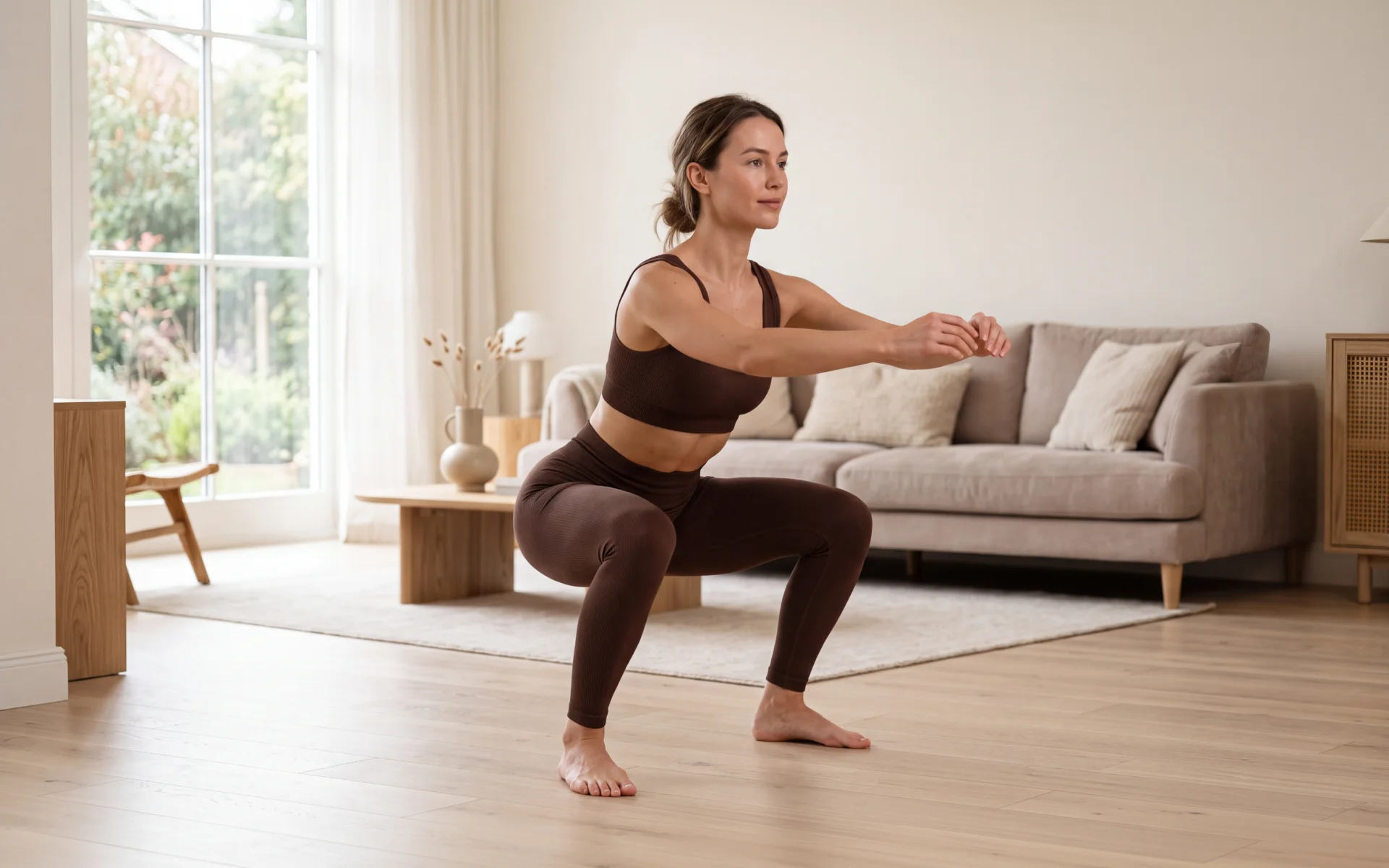
Calisthenics for women uses body weight as resistance. Exercises can be adjusted to your current strength, experience, and available equipment. This guide includes a sample weekly routine and ways to track progress. Our calisthenics workout chart offers another example of organizing training and recovery.
Following exercise and diet plans is the key in your fitness journey and greatly impacts results. In 4 weeks users can typically expect to lose not more than 1-2 lbs per week. Individual results may vary.
Key takeaways
- Calisthenics is strength training that uses your own body weight as resistance, so it needs little to no equipment.
- Some research suggests bodyweight training can improve strength, muscular endurance, and body control (1, 2).
- Most beginner routines cover five patterns: squat, push, pull, hinge, and core.
- The sample routine uses three nonconsecutive strength days, with lighter activity or rest between them.
- Increase repetitions or difficulty when you can complete the current version with control; progression need not happen every week (3).
- Some research suggests short programs of 4-10 weeks can improve strength and endurance markers in women (1, 4).
- Spot reduction is a myth, so calisthenics can support overall fat loss alongside a moderate calorie deficit but cannot target belly fat alone (5).

Is calisthenics good for females?
Yes, calisthenics can be good for many women at different ages and starting points. It offers a practical way to build strength using simple movements.
At its core, calisthenics is resistance training. That means it challenges your muscles to adapt and get stronger. Some research has suggested that bodyweight training can improve strength, muscular endurance, and body control (1, 2).
The calisthenics benefits for women often go beyond muscle. Many people report better balance, coordination, and confidence in daily movement (6).
Here’s what regular practice may support:
- Strength: Push, pull, squat, and core patterns build usable power.
- Endurance: Higher-rep sets can improve muscular stamina.
- Body control: You learn to move with more stability.
- Convenience: Little to no equipment means fewer barriers.
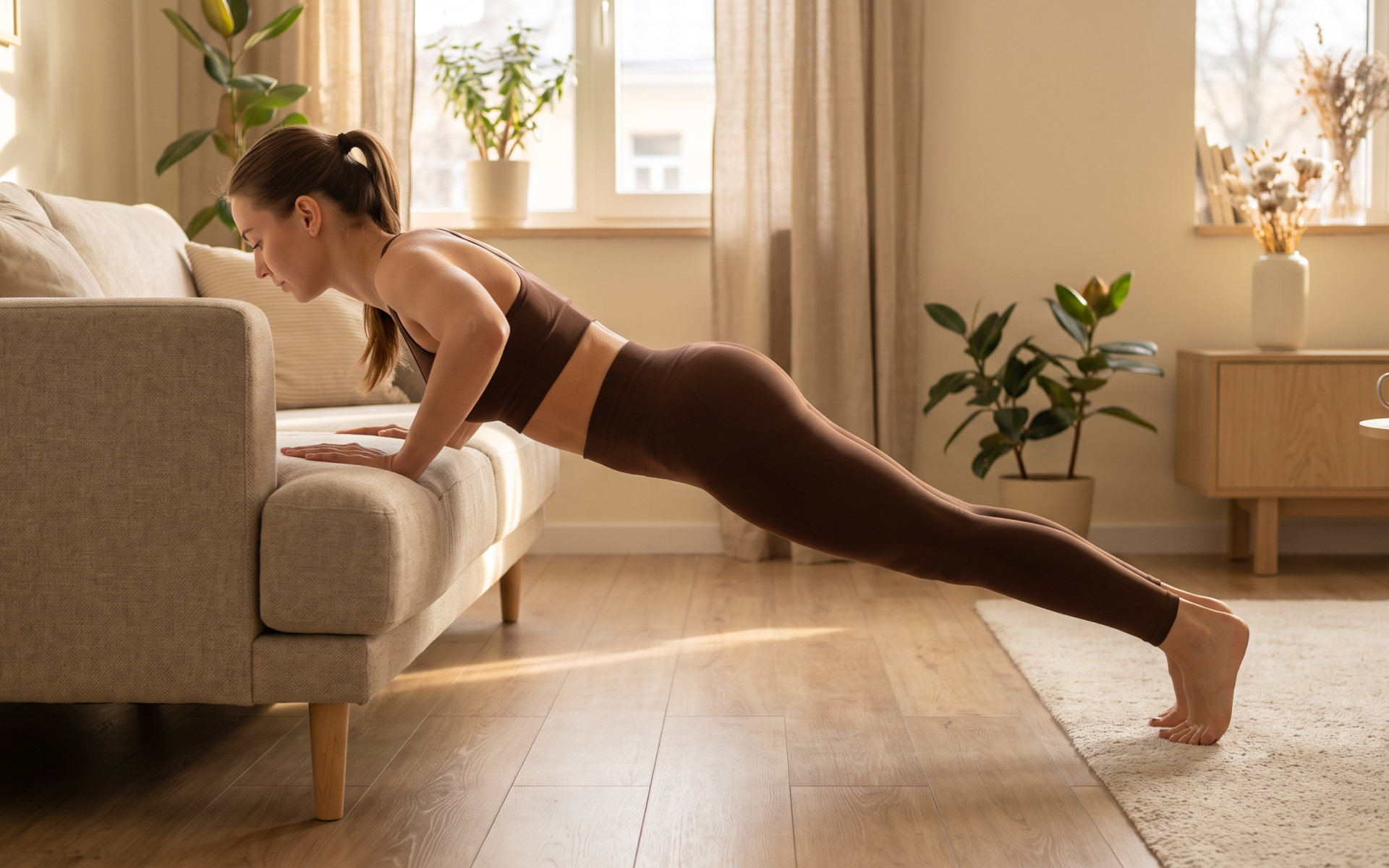
Calisthenics for women over 40 and calisthenics for women over 50 can be particularly appealing. Bodyweight moves scale easily, so you can choose a version that fits your current ability. For example, a wall push-up is a regression of a floor push-up. When you change the angle of your press, it can make the exercise easier to perform.
Some research has explored associations between regular strength work and bone wellness in women (7, 8). That connection tends to matter more as you age. Individual experiences vary, so listen to your body and progress at your own pace.
You don’t need to chase advanced skills to benefit. A steady, beginner-friendly routine done well often beats flashy moves done sporadically and poorly.
If you want a broader look at how bodyweight training fits into a wellness plan, explore our BetterMe Calisthenics Overview.
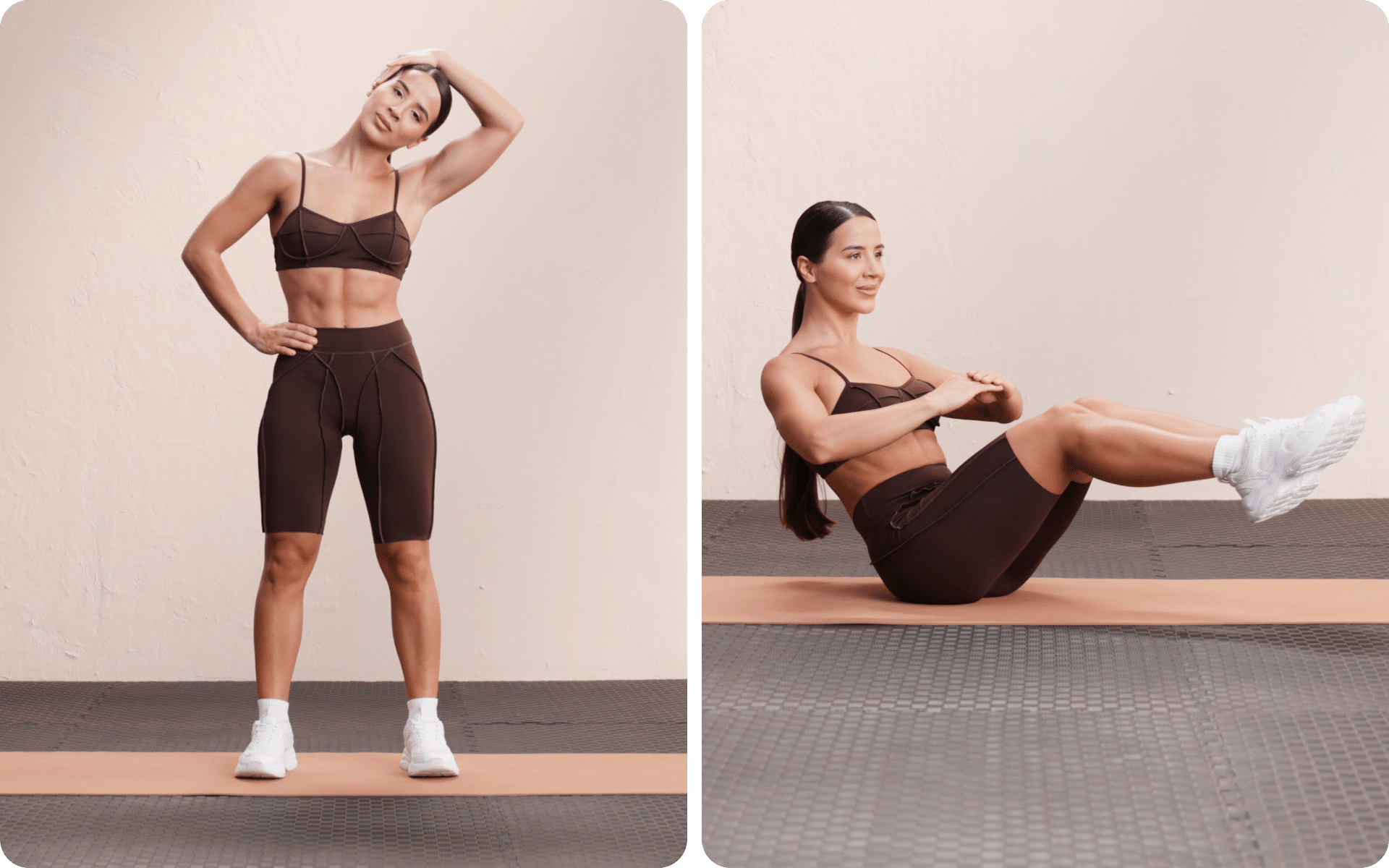
How to start calisthenics as a female
Start by choosing movement versions you can control. Use the sample schedule as an adjustable example, and reduce the workload when needed.
The first phase is about building movement quality and a routine that you can repeat. For calisthenics for female beginners, this means picking exercises you can do with control.
1. Learn the five basic patterns
Most calisthenics workouts for beginners cover five patterns. Focus on these:
- Squat: bodyweight squat, box squat, split squat
- Push: wall push-up, incline push-up, knee push-up
- Pull: band row or ring row using equipment and an anchor rated for exercise
- Hinge: glute bridge, hip hinge, single-leg bridge
- Core: plank, dead bug, side plank
2. Pick the right difficulty
Choose a version you can do for 5-15 controlled reps. If you can’t do 5 reps, pick an easier option. If 25 reps feel easy, make it harder.
3. Set a simple schedule
Train 3 nonconsecutive days per week to start. For example, Monday, Wednesday, and Friday. This gives your body time to recover between sessions.
4. Warm up first
Spend 5-10 minutes on gentle movement. Try arm circles, hip openers, and slow squats. A warm-up preps your joints for the workout routine ahead.
5. Progress gradually
When you can complete the planned sets comfortably with good control, add a repetition or use a slightly harder variation. Repeat the same workload when you need more practice or recovery (3).
Clear enough floor space for the movements. Pulling exercises require suitable equipment and a secure, rated anchor; do not use an ordinary doorframe as a substitute.
Use the sample schedule below to organize your sessions.
Read more: The Simplest Lower Back Calisthenics Guide for Beginners
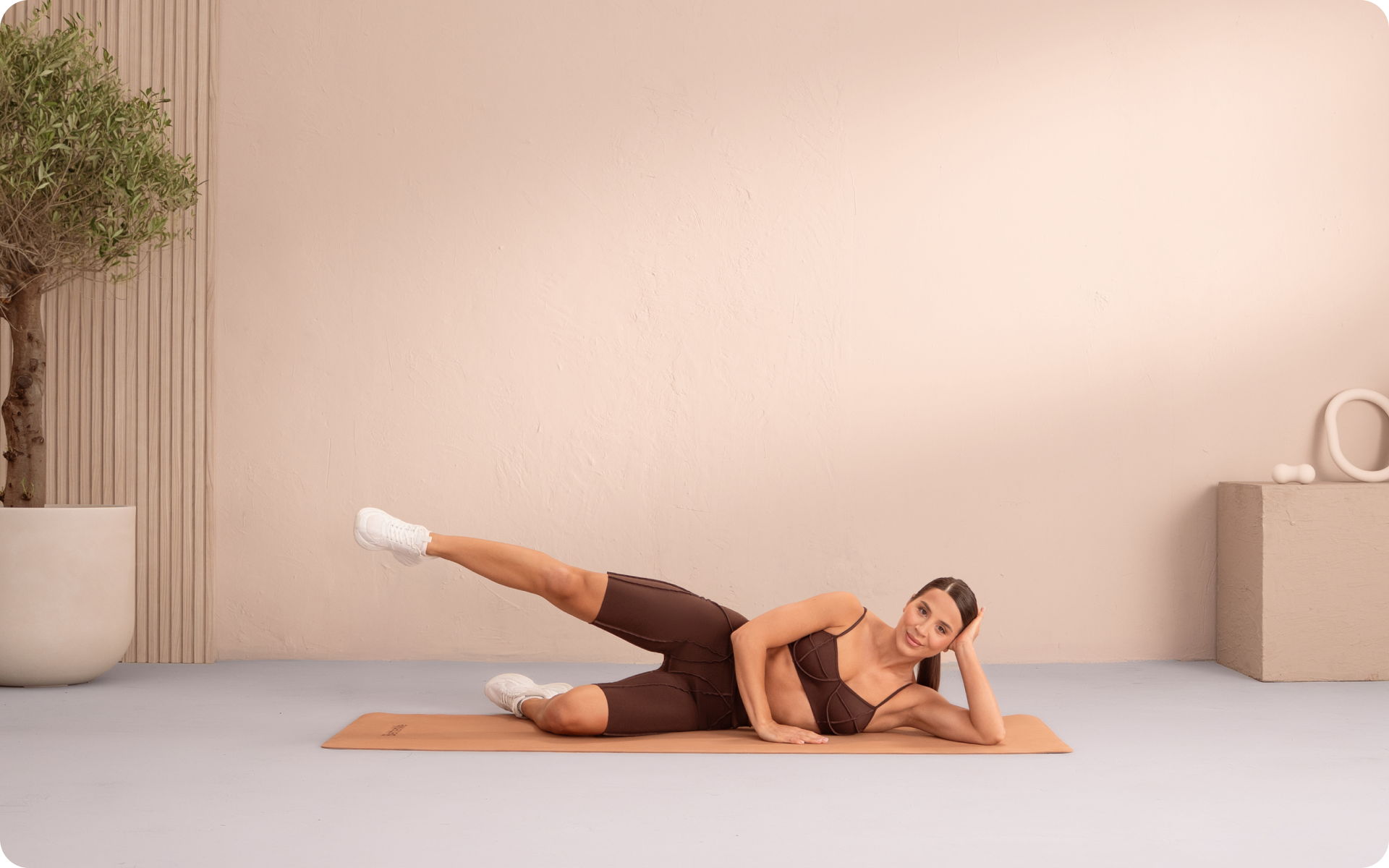
What is a good daily calisthenics routine for women?
A good daily calisthenics routine for women mixes 3 strength days with lighter movement or rest days. Hard training every single day isn’t ideal for most beginners.
Daily movement is helpful, but daily maximal effort on the same muscles is not. Your muscles, joints, and connective tissue all need recovery time (9).
Below is a sample weekly plan. It balances a full-body workout with easier days.
| Day | Focus | Example activity | Time |
|---|---|---|---|
| Monday | Full-body strength | Squat, push, pull, hinge, core | 30-40 mins |
| Tuesday | Rest and mobility | Walk, mobility, breathing | 20-30 mins |
| Wednesday | Full-body strength | Split squat, push, row, bridge | 30-40 mins |
| Thursday | Easy movement | Yoga, cycling, or a stroll | 20-30 mins |
| Friday | Full-body strength | Squat, push-up, pull, lunge, core | 30-40 mins |
| Saturday | Optional light skill | Hangs, scapular work, mobility | 15-20 mins |
| Sunday | Rest | Full rest or gentle stretching | Not timed |
Are you short on time? A 15-minute calisthenics for women session can still count. Do one round of squats, push-ups, rows, and a plank.
Here’s the core calisthenics full-body workout that’s used on strength days.
| Exercise | Pattern | Sets | Reps or time |
|---|---|---|---|
| Bodyweight squat | Lower-body strength | 3 | 8-15 reps |
| Incline push-up | Upper-body strength | 3 | 6-10 reps |
| Band or ring row | Upper-body pull | 3 | 8-12 reps |
| Glute bridge | Hip hinge | 3 | 10-15 reps |
| Reverse lunge | Lower-body strength | 3 | 8 reps per side |
| Plank | Core | 3 | 20-40 seconds |
Rest for 30-60 seconds between sets. These calisthenic poses form a balanced base you can repeat for weeks.
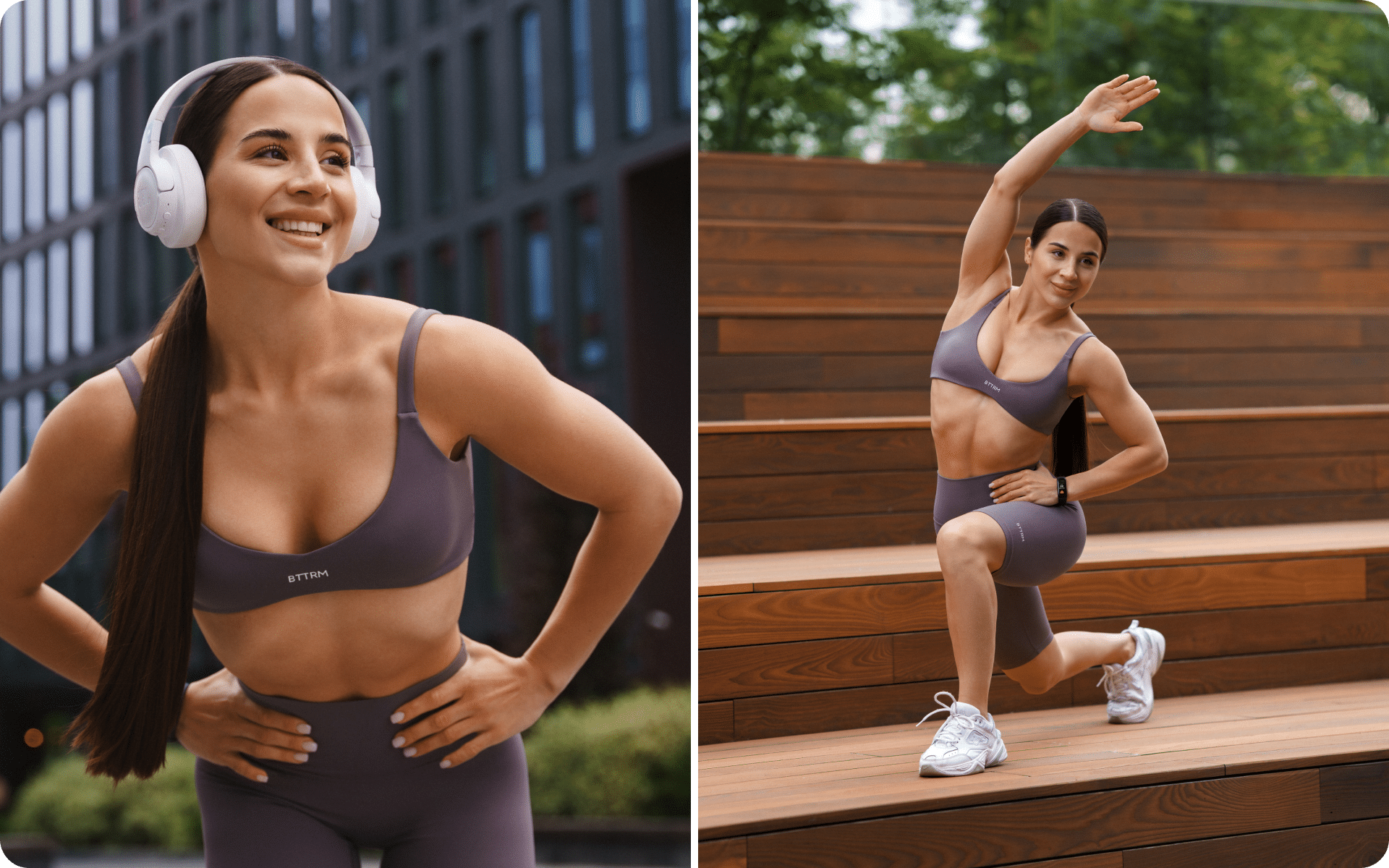
Exercise instructions
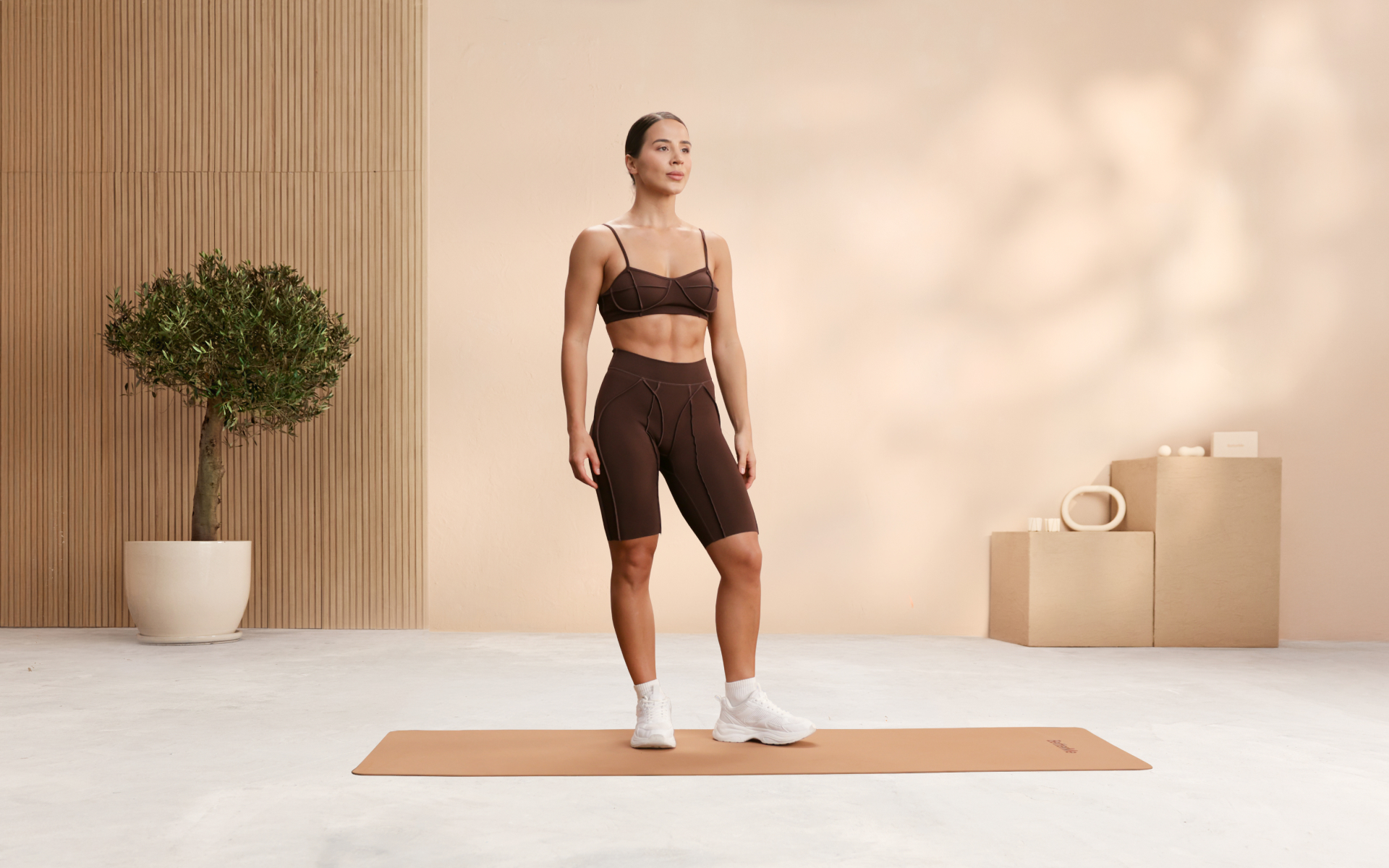
Bodyweight squat
- Stand with your feet shoulder-width apart and your toes slightly out.
- Push your hips back and bend your knees.
- Lower until your thighs reach a comfortable depth.
- Press through your feet to stand tall again.
Incline push-up
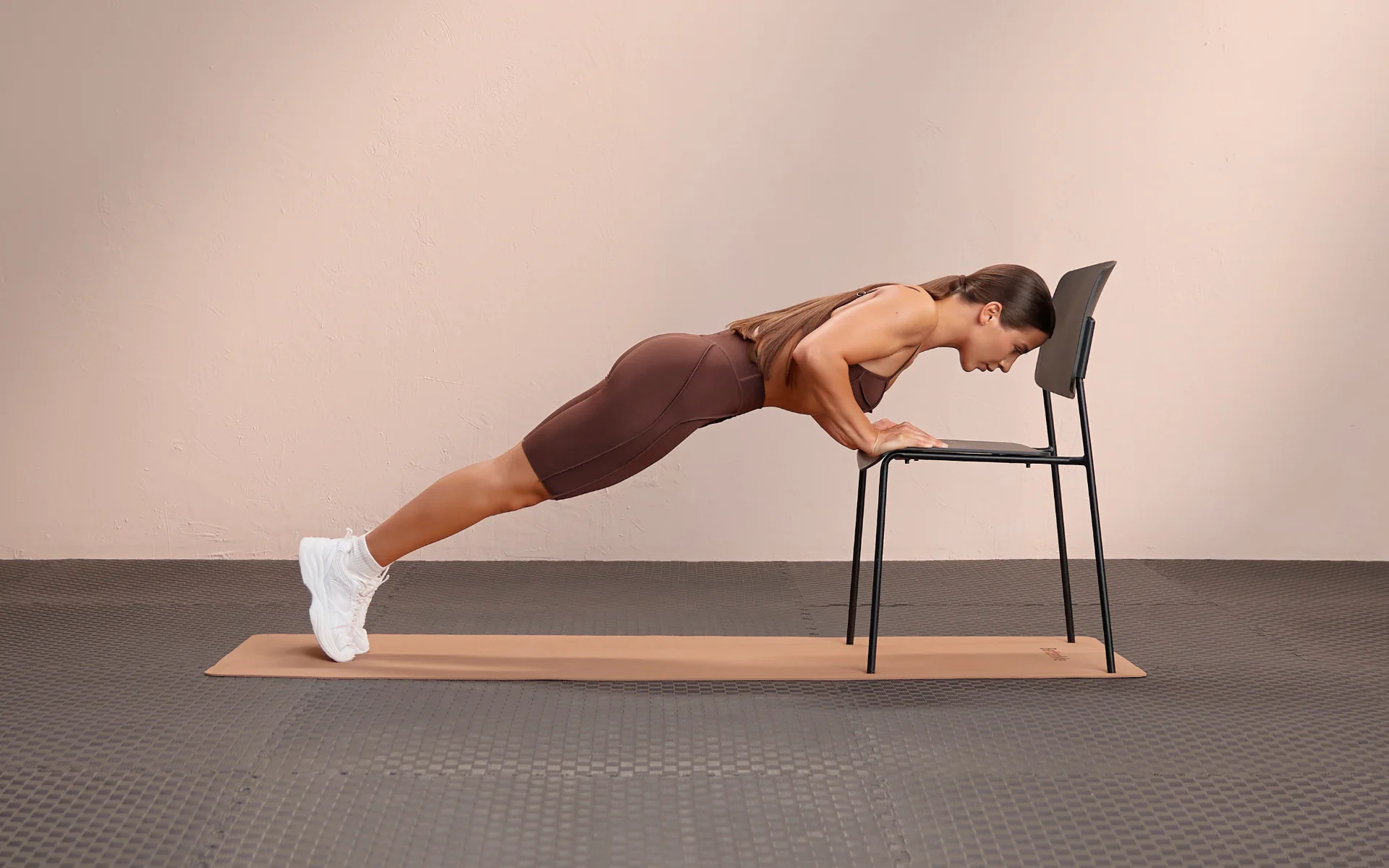
- Place your hands on a sturdy bench, counter, or wall.
- Keep your body in a straight line.
- Bend your elbows to lower your chest toward the surface.
- Push back up to the start with control.
Band or ring row
- Secure the band or rings to an anchor rated for exercise before taking hold with your arms extended.
- Keep your core braced and your chest lifted.
- Pull your elbows back until your hands reach your ribs.
- Slowly return to the starting position.
Glute bridge
- Lie on your back with your knees bent and your feet flat.
- Press through your heels to lift your hips.
- Squeeze your glutes at the top for one second.
- Lower your hips back down slowly.
Reverse lunge
- Stand tall with your feet hip-width apart.
- Step one foot back and lower your knee toward the floor.
- Keep your front knee stacked over your ankle.
- Push through your front foot to return to standing.
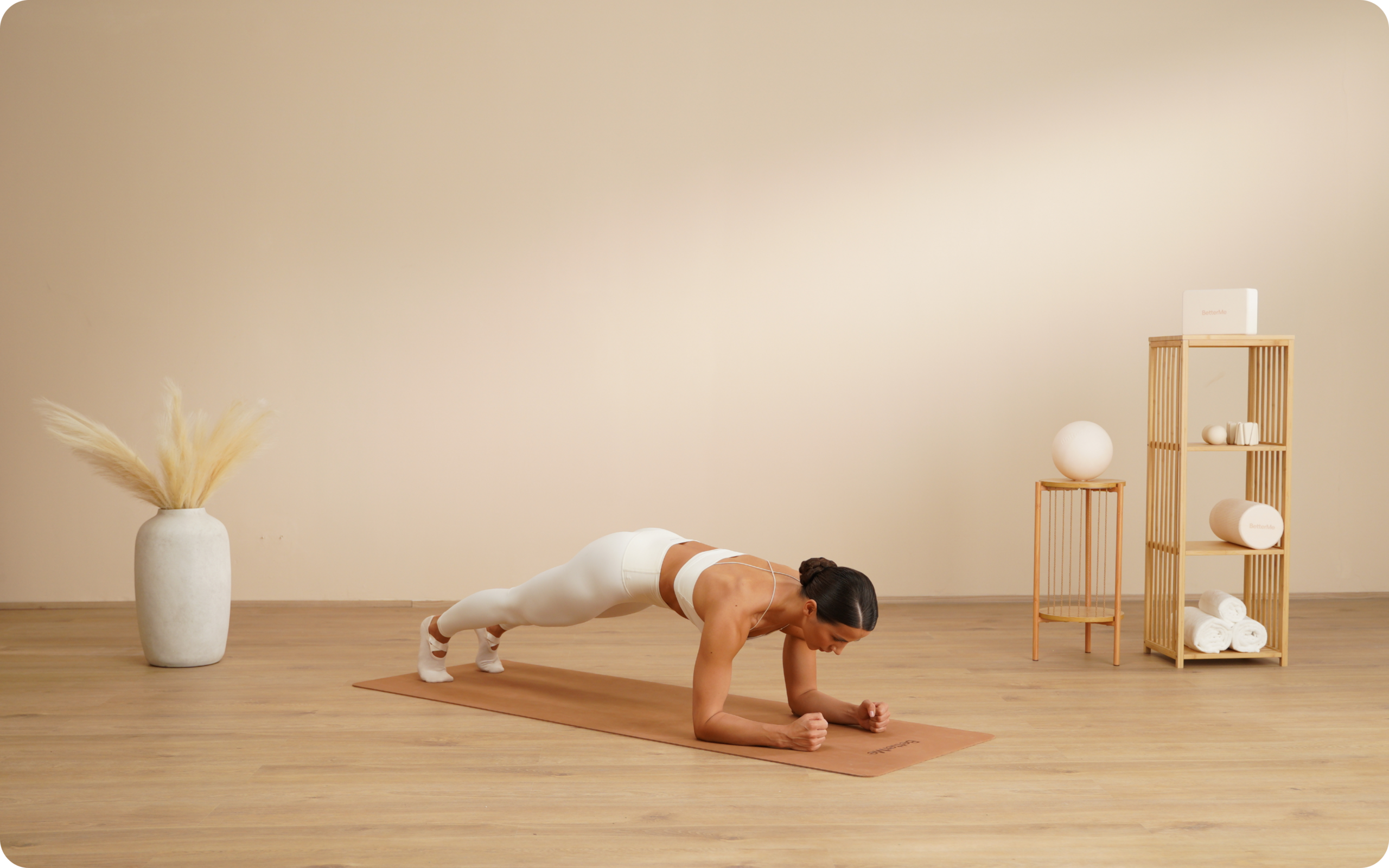
Plank
- Rest on your forearms and toes with your elbows under your shoulders.
- Keep your body in a straight line from your head to your heels.
- Brace your core and breathe steadily.
- Hold for your target time, then rest.
Do you want a week-by-week structure to follow next? Check out our Calisthenics Workout Plan for Beginners.
What happens if I do calisthenics every day?
Doing calisthenics every day can help or hinder you, depending on how hard you train. Daily gentle movement is fine, but daily maximal effort often backfires.
Muscles adapt between sessions, so rest days count toward progress. When you skip recovery, progress can stall.
When you train hard every day
Loading the same muscles daily may lead to:
- Ongoing joint discomfort in your wrists, elbows, or knees
- Slower progress as fatigue builds up
- Lower motivation over time
When you choose smart daily movement
Varied, lighter daily practice may support:
- Better mobility and body control
- A stronger daily habit
- More consistent activity levels
Leave recovery time between demanding sessions. Adjust the next workout if soreness, fatigue, or joint discomfort interferes with controlled movement.
If you enjoy moving each day, rotate your focus. Do strength 3 days, then use easy walks, mobility, or gentle stretching on other days. This will keep your calisthenics workout sustainable.
Workouts, weight management tools, and recipe ideas come together in the BetterMe: Health Coaching app, giving you practical support for building a more consistent wellness routine.

How long does it take to see results from calisthenics?
There is no fixed timeline for visible changes. Track what you can do, how consistently you practice, and how well you recover.
Use these progress checks instead of a deadline for a particular body shape.
| Progress check | What to record |
|---|---|
| Movement control | Whether you can repeat the movement with consistent technique |
| Strength and endurance | Repetitions, resistance, or hold duration at a comparable effort |
| Recovery | Whether fatigue or discomfort affects the next session |
| Consistency | Sessions completed and adjustments that helped you continue |
Some research has suggested that even short programs of 4-10 weeks can improve strength and endurance markers in women (1, 4). Early wins are often about skill and coordination.
Repeat the same exercise version long enough to compare your performance fairly.
Track your progress simply. Note your reps, sets, and how moves feel each week. Small wins add up over time.
Is calisthenics enough to get in shape?
Calisthenics can be enough to get in shape for many general goals, such as building strength and improving body composition. Your target defines what “enough” means.
Bodyweight exercises cover a lot of ground. However, some goals may benefit from added tools.
What calisthenics handles well
- General strength and muscular endurance.
- Better body control and coordination.
- Improved body composition alongside good nutrition.
- A beginner-friendly, low-cost routine.
Where you may want extras
- Maximizing lower-body muscle can be tricky with body weight alone.
- Advanced pulling strength often needs a bar or bands.
- Heart and lung fitness may improve with added cardiovascular work. Using a variety of times and tempo can help transform a calisthenics workout into a HIIT session.
The main limit of calisthenics is load progression. With weights, you just add pounds. With body weight, you change leverage, tempo, or range instead.
For example, a supported split squat can add a new challenge once basic squats feel manageable. Advanced variations need their own preparation.
Many people do well with a hybrid approach. Use calisthenics for upper-body strength and core, then add bands or walks for balance. A blend of strength training and cardio can support overall results (10).
Read more: Calisthenics Shoulder Exercises: Techniques and Workouts
What should I eat for calisthenics?
Choose regular meals that provide enough energy for your activity, with protein foods, carbohydrate sources, and dietary fat. Needs differ by body size, training, health, and goals.
Food gives your body the energy to train and the raw materials to adapt. If your intake is too low, your sessions may feel flat, recovery may take longer, and progress may slow.
1. Aim for enough total energy
Low energy availability can affect health and training. A clinical consensus on the female athlete triad discusses assessment and treatment; it does not provide one calorie-per-kilogram prescription for all women doing calisthenics (11).
A registered dietitian can help estimate your needs if you are changing intake, recovering poorly, or struggling to fuel exercise.
2. How much protein should you eat?
Include protein foods in your meals. The amount you need depends on your activity, body size, and health; a sport-specific target should be adapted to your circumstances.
Food ideas:
- Greek yogurt with fruit
- Eggs with cottage cheese
- Chicken, beans, or tofu with a meal
- A smoothie made with milk or a suitable alternative
3. How many carbs should you eat?
Carbohydrate foods can help fuel exercise. The amount needed varies with training duration and intensity (12).
Simple carb portions:
- Oats
- Potatoes
- Rice
- Fruit
Choose pre-workout meal timing and portions that feel comfortable. A short beginner session does not require a rigid before-and-after carbohydrate dose.
4. How much fat should you eat?
Include foods containing unsaturated fats, such as nuts, seeds, and olive oil, as part of varied meals.
Food examples:
- Olive oil
- Nuts
- Avocado
- Eggs
5. What can a full day of eating look like?
Here is a sample day of food combinations. Portions are deliberately left adjustable, so it is not a calorie or macronutrient prescription.
Sample structure:
- Breakfast: oats, Greek yogurt, berries, and nuts
- Lunch: rice, chicken or tofu, vegetables, and olive oil
- Snack: banana and protein smoothie
- Dinner: potatoes, salmon or beans, and salad
- Optional snack: cottage cheese and fruit
Adjust portions and ingredients to your needs, appetite, preferences, and allergies.
6. How should you adjust intake by goal?
Fat loss
If weight loss is an appropriate goal, discuss an eating pattern that supports training and adequate nutrition. Avoid using the sample menu as a fixed calorie limit.
Muscle gain
Do not assume a larger calorie surplus produces more muscle. In a short trial of resistance-trained adults, larger surpluses mainly increased skinfold thickness; it did not establish a weekly weight-gain target for beginners (13).
Maintenance and performance
Use your energy, training performance, and recovery to help decide whether your intake is meeting your needs.
7. What else matters?
Keep drinking water available and adjust intake for thirst, heat, activity, and any medical guidance.
If you are concerned about iron, calcium, vitamin D, or other nutrients, seek individual dietary advice before adding supplements.
Whether you want to refresh your fitness routine, explore lower-calorie recipe ideas, or bring more structure to your wellness habits, BetterMe: Health Coaching app offers tools that can support your next step. Explore the app and find an approach that works for your lifestyle.
FAQs
What does the 80/20 rule mean in calisthenics?
The 80/20 rule is an informal reminder to focus on basic exercises. It is not an established ratio between effort and results in calisthenics.
Choose a manageable group of movements and practice them consistently. Add skills when they serve your goals and you are ready for them.
Is 40 too late to start calisthenics?
No, 40 isn’t too late to start calisthenics, and many people begin at this age or later. Bodyweight moves scale to your ability, so you pick versions that suit your current level. Start with gentler options such as incline push-ups and box squats. Progress slowly, rest well, and let your body adapt at its own pace over the weeks.
Does calisthenics burn belly fat?
As with all forms of exercise, calisthenics doesn’t burn belly fat only. Spot reduction is a myth and exercise alone cannot make you lose body fat from a specific area of the body (5). It can support overall fat loss when paired with a moderate calorie deficit and steady activity. Consistent training, good nutrition, and sleep tend to matter most for lasting changes. Individual results vary.
Is calisthenics better than weights?
Calisthenics isn’t automatically better than weights. Each has strengths, and the right choice depends on your goals. Calisthenics builds body control and needs very little equipment.
Weights make load progression simpler, particularly for lower-body muscle. Many people combine both for balanced results. Pick what you enjoy and can repeat, as consistency drives progress more than the tool itself.
Is there an ideal age to start calisthenics?
There is no single ideal starting age. Choose exercises suited to your ability and health. Older adults can still benefit from appropriately adapted strength training (8). Seek qualified help if you are uncertain about exercise selection.
The bottom line
Calisthenics for women offers a flexible, beginner-friendly way to build strength, endurance, and confidence, on your terms and at your pace. Pick a few basic moves, train 3 days a week, and fuel your body well. Your progress is yours to shape, so choose the version that fits your life and keep exploring what your body can do.
DISCLAIMER:
This article is intended for general informational purposes only and does not serve to address individual circumstances. It is not a substitute for professional advice or help and should not be relied on for making any kind of decision-making. Any action taken as a direct or indirect result of the information in this article is entirely at your own risk and is your sole responsibility.
BetterMe, its content staff, and its medical advisors accept no responsibility for inaccuracies, errors, misstatements, inconsistencies, or omissions and specifically disclaim any liability, loss or risk, personal, professional or otherwise, which may be incurred as a consequence, directly or indirectly, of the use and/or application of any content.
You should always seek the advice of your physician or other qualified health provider with any questions you may have regarding a medical condition or your specific situation. Never disregard professional medical advice or delay seeking it because of BetterMe content. If you suspect or think you may have a medical emergency, call your doctor.
SOURCES:
- The effect of 10-week wholebody calisthenics training program on the muscular endurance of untrained collegiate students (2024, researchgate.net)
- Bodyweight Training for Muscular Strength & Endurance (2022, researchgate.net)
- Effects of Resistance Training Overload Progression Protocols on Strength and Muscle Mass (2024, pubmed.ncbi.nlm.nih.gov)
- The Effects of Calisthenic Exercises on The Strength and Aerobic Abilities Of Sedentary Adult Women (2023, digitalcommons.lindenwood.edu)
- Spot reduction: why targeting weight loss to a specific area is a myth (2023, sydney.edu.au)
- The Effect of Breaking Up Sedentary Time with Calisthenics on Neuromuscular Function: A Preliminary Study (2022, mdpi.com)
- Effect of Strength Training on Bone Density in Postmenopausal Women in Germany (2025, iprjb.org)
- How can strength training build healthier bodies as we age? (2022, nia.nih.gov)
- Molecular Basis and Practical Applications of Training, Nutrition and Recovery for Maximum Gains in Lean Muscle Mass: A Narrative Review for Optimizing Muscular Hypertrophy (2026, researchgate.net)
- The Effects of Combining Aerobic and Heavy Resistance Training on Body Composition, Muscle Hypertrophy, and Exercise Satisfaction in Physically Active Adults (2023, pmc.ncbi.nlm.nih.gov)
- 2025 Update to the Female Athlete Triad Coalition Consensus Statement Part 2: Clinical Guidelines for Screening, Diagnosis, Treatment, and Return to Play for Adolescents and Adults (2025, link.springer.com)
- Athletes’ nutritional demands: a narrative review of nutritional requirements (2024, frontiersin.org)
- Effect of Small and Large Energy Surpluses on Strength, Muscle, and Skinfold Thickness in Resistance-Trained Individuals: A Parallel Groups Design (2023, link.springer.com)
 Reviewed by