

Going back to the gym after a break requires starting slowly to let your body adjust. You can begin with a few days of light movement, focusing on form and consistency rather than heavy weights. By prioritizing a gentle approach, you can rebuild your strength and cardiovascular fitness over time. This helps you establish a lasting routine that feels manageable and sustainable for your lifestyle.
Taking a break from your fitness routine is incredibly common for many people. Whether life got busy or you just needed a period of rest, returning can feel a bit daunting. Going back to the gym is a journey of rediscovering movement, and there’s no need to rush the process. It’s completely natural to feel a bit out of practice, but your body is highly adaptable.
When you focus on simple, low-impact routines, you give yourself the best chance to build a habit that sticks. This guide explores what happens to your body during a break, and offers practical advice for your return. We’ll look at a gentle back-to-gym workout plan female beginners can try, along with general tips for anyone who is looking to move more.
Going back to the gym after a break can be challenging. You need to re-establish a routine (which is always tough) and your fitness level likely isn’t what it used to be. You may feel weaker and out of breath, unsure of what to do or how hard to push. This matters because jumping back in too aggressively can lead to exhaustion, burnout, or even more setbacks.
We don’t want that, so if you’re getting back to the gym, read this guide first! You’ll learn how to ease back into training with simple workouts while rebuilding consistency and sustainable habits to start training right. You’ll also learn how to manage your expectations and find a rhythm that works for your current fitness level.
Why Is It Hard to Start Working Out Again?
Starting a fitness routine after time away can feel challenging for several reasons. Your body and mind both need time to readjust to physical effort.
When you take a break from regular exercise, your cardiovascular endurance and muscle stamina can naturally decrease, particularly if there’s no exercise or strenuous physical activity (1). This means movements that once felt easy may temporarily require more effort.
The mental hurdle is often just as significant as the physical one. You may remember your past fitness level and feel frustrated that you cannot immediately match it. Going back to the gym requires you to set aside those expectations. Instead, you can focus on where your body is right now.
Another reason why it feels difficult is the disruption of established habits. When you stop exercising, your daily schedule shifts to accommodate other activities. Reintegrating a workout means adjusting your daily routine all over again.
To understand these challenges better, it helps to look at the differences between physical and mental barriers.
| Challenge type | Common experience | Gentle solution |
|---|---|---|
| Physical barrier | Muscles feel tired quickly during movement. | Start with low-impact back-to-gym exercises. |
| Mental barrier | Feeling overwhelmed by past expectations. | Focus on consistency rather than intensity. |
| Routine barrier | Struggling to find time in your schedule. | Schedule short, 15-20 minute sessions initially. |
Understanding these barriers is the first step toward overcoming them. Start small and build your capacity over time. Read more about exercise motivation.
Intense sweat sessions, working weight loss tips, lip-smacking recipes come in one package with the BetterMe Well-Being Coach app—all at your fingertips, start transforming your life now!
What Happens when You Stop Working Out and Then Start Again?
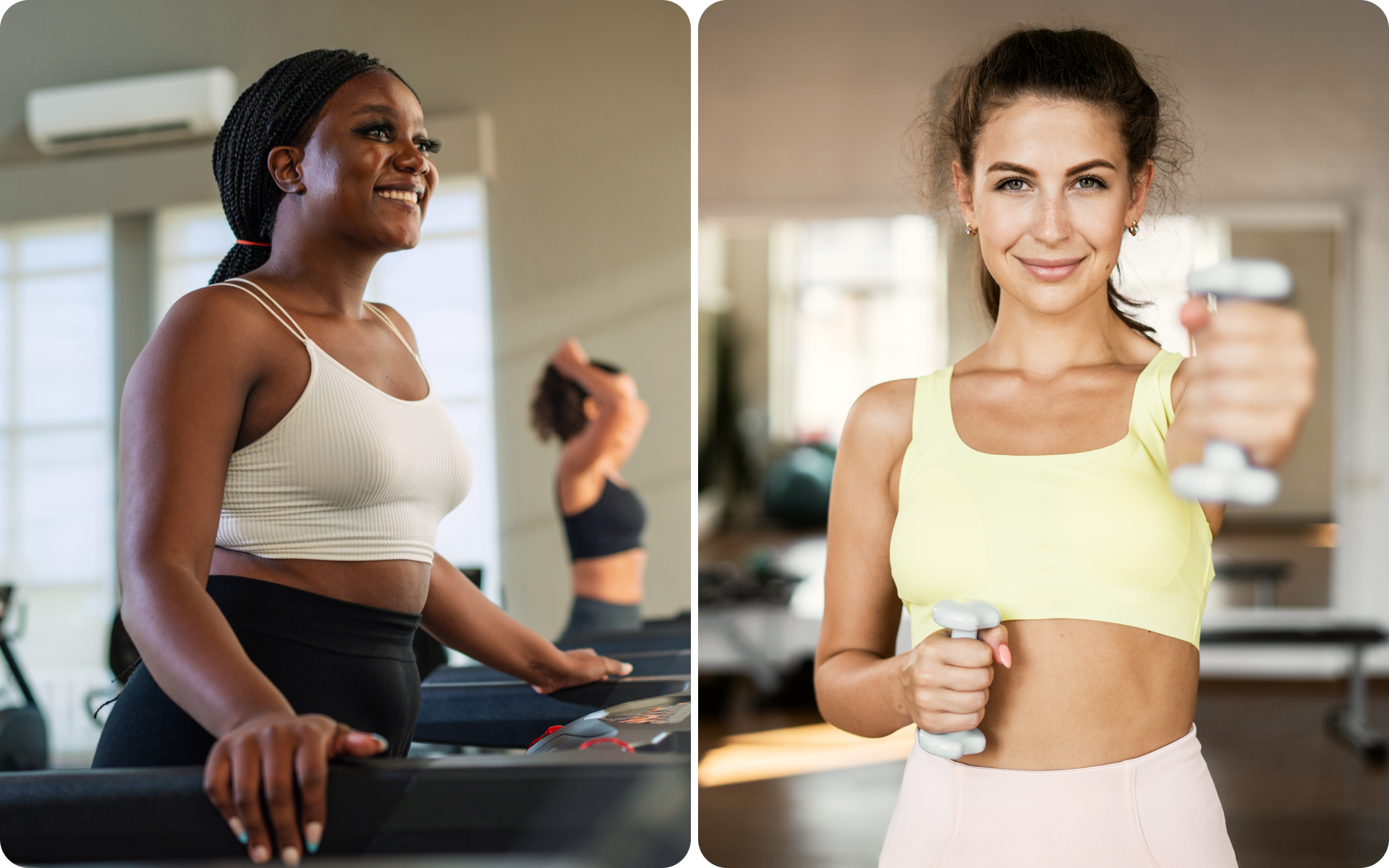
When you stop working out, your body undergoes a process called detraining. This simply means that your body adapts to your new, less active lifestyle.
Cardiovascular fitness tends to decrease first, often within approximately 1-2 weeks of stopping regular training. Muscle strength usually takes a bit longer to diminish, but you may notice a change in your overall stamina (2).
When you begin going back to the gym, your body starts the rebuilding process. You may experience some mild muscle soreness after your first few sessions. This is a normal response to moving in ways you have not recently practiced. Your nervous system is also waking up, relearning how to coordinate muscle movements and increase muscle recruitment efficiently (3).
This rebuilding phase is highly individual and depends on your previous fitness level. Muscle memory plays a helpful role here. Your body often remembers past movement patterns, which can help you regain strength more smoothly (4).
It’s important to listen to your body during this transition. Pushing too hard, too soon can lead to unnecessary discomfort or strain. Instead, choose accessible movements and focus on your form. Over time, your endurance and strength will naturally improve as your body adapts to the stimulus.
Read more: Mobility Calisthenics: Simple Exercises for Everyday Practice
How Do I Go Back to the Gym After a Long Break?
Going back to the gym is all about easing into a sustainable rhythm. The best approach is to drop any pressure to perform at your previous level. Start by planning just one or two short visits for your first week. This helps you get used to the environment without feeling overwhelmed.
Focus on preparation to make your return as smooth as possible. Pack your gym bag the night before, and plan a simple, beginner-friendly routine. A first day back at the gym workout often includes light cardio and basic bodyweight movements. The goal of this first session is simply to move your body and feel good.
During your workouts, prioritize proper form over the amount of weight you lift. If a movement feels too challenging, you can always modify it.
- Use lighter weights
- Reduce your range of motion
- Try a different exercise altogether
Your main objective is to build a positive association with exercising again.
Remember to hydrate well and prioritize rest between your gym visits. Recovery is when your body actually adapts and grows stronger (5). By adopting a thoughtful approach, you set yourself up for lasting success. Read more about habit vs routine.
What Is a Step-By-Step Back-to-the-Gym Workout Plan?
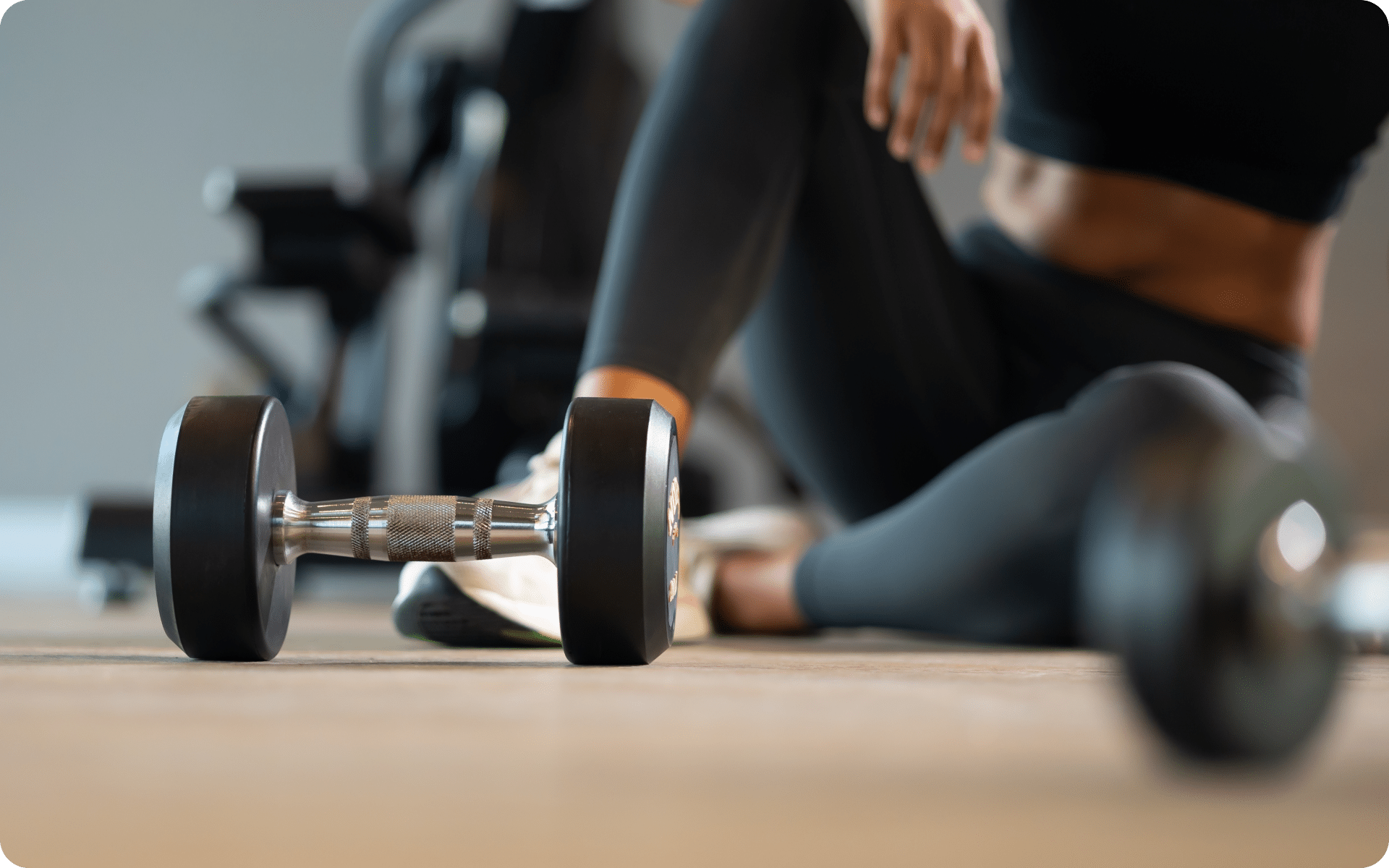
A well-structured back-to-gym workout plan helps remove the guesswork from your sessions. Having a clear guide can make you feel more confident as you step onto the gym floor. This plan is designed to be gentle, focusing on major muscle groups with accessible movements.
Below is a comparison of different workout styles you might want to consider for your first week back.
| Workout style | Focus area | Recommended frequency |
|---|---|---|
| Full-body light resistance | Overall strength and movement patterns | 2-3 days a week |
| Cardio and core | Heart health and core stability | 1-2 days a week |
| Mobility and stretching | Flexibility and joint support | Daily, as needed |
For a balanced approach, consider this gentle routine. It serves as an excellent back-to-gym workout plan that females can use to regain confidence.
Warm-Up
Begin with 5-10 minutes of light cardio. You might choose walking on a treadmill or cycling at a relaxed pace. This gently increases your heart rate and prepares your muscles for movement.
Goblet Squats
- Stand with your feet shoulder-width apart.
- Hold a light dumbbell close to your chest.
- Slowly lower your hips backward and downward, keeping your chest lifted.
- Push through your feet to return to the starting position.
- Aim for 2-3 sets of 8-10 repetitions.
Incline Push-Ups
- Place your hands on a raised surface, such as a bench or a sturdy box.
- Step your feet back until your body forms a straight line.
- Lower your chest toward the bench, then press back up. Complete 2-3 sets of 8-10 repetitions.
Dumbbell Rows
- Support one knee and hand on a bench, keeping your back flat.
- Hold a light dumbbell in your free hand.
- Pull the weight up toward your hip, squeezing your upper back. Lower the weight with control.
- Do 2-3 sets of 8-10 repetitions per arm.
Glute Bridges
- Lie on your back with your knees bent and your feet flat on the floor.
- Press your hips up toward the ceiling, pausing briefly at the top. Slowly lower back down to the mat.
- Aim for 2-3 sets of 10-12 repetitions.
Finish your session with a few minutes of gentle stretching to support your recovery.
Intense sweat sessions, working weight loss tips, lip-smacking recipes come in one package with the BetterMe Well-Being Coach app—all at your fingertips, start transforming your life now!
How Long Should You Stick to a Gym Program?
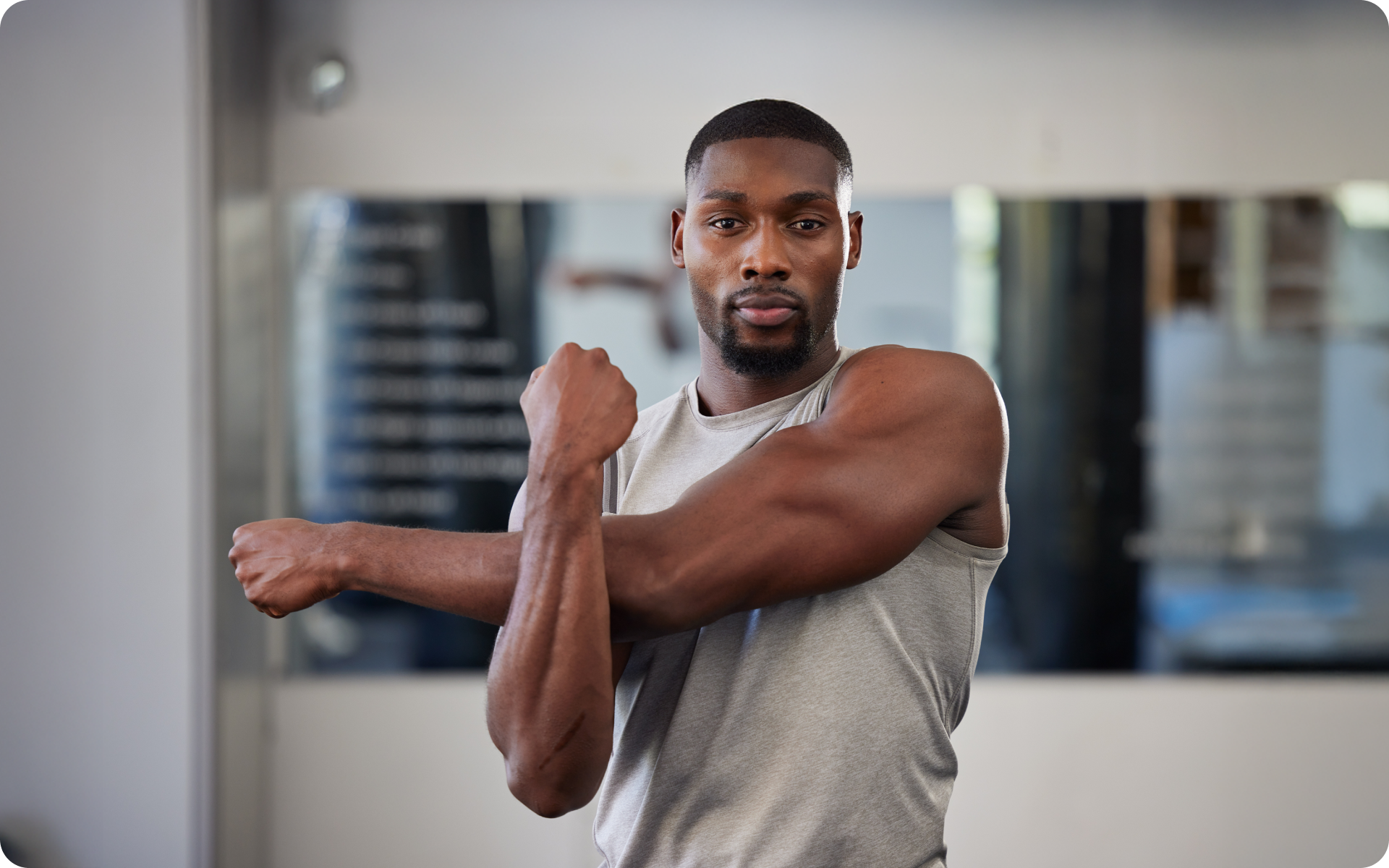
Consistency is the foundation of any successful fitness journey. When you start a new back-to-gym workout plan, it takes time for your body to adapt. Many fitness professionals suggest sticking to a specific program for at least 4-8 weeks. This timeframe gives your muscles a chance to learn the movements and build strength (6).
Changing your routine too frequently can prevent you from seeing measurable progress. As you get back into gym workouts, repeating the same exercises each week can help you build confidence and gradually increase the challenge. You might add a little more weight, try an extra repetition, or rest for a shorter period. These small, incremental changes are what lead to lasting improvements (7).
However, sticking to a program doesn’t mean you can’t make adjustments. If an exercise causes discomfort, you should absolutely swap it for an alternative. The goal is to keep the overall structure similar while making it work for your body.
After 6-8 weeks, you may find that your routine feels less challenging. At this point, you can consider updating your plan to keep things engaging. Until then, focus on showing up and practicing your current movements.
If you want a straightforward weekly plan, read more about full-body workouts 3 times a week.
How Long Does It Take to Get Back in Shape?
Getting back in shape is a gradual process that varies for every individual. It depends on how long your break was, your previous fitness level, and your current routine. Many people start to notice improvements in their energy and mood within the first two weeks. You might find that climbing stairs feels easier or that you sleep more soundly.
Noticeable changes in strength and cardiovascular endurance often take a bit longer. You may start to feel stronger and more capable during your workouts after 4-6 weeks of consistent effort. A thoughtfully designed workout plan after a long break can help support steady progression.
It’s helpful to focus on how you feel rather than on arbitrary timelines. Celebrate small victories, such as completing a workout without feeling overly exhausted. Notice when an exercise that felt difficult on your first day becomes more manageable.
Patience is incredibly important during this phase. Your body is doing a lot of work behind the scenes to adapt to your new routine. By maintaining a gentle, consistent approach, you’ll rebuild your fitness at a pace that’s sustainable for you.
Read more: Military Calisthenics Workouts for Men: Everything You Need for Success
Frequently Asked Questions
What if I leave the gym for 2 months?
Taking a two-month break simply means you’ll need to restart your routine gradually. Your body may have lost some cardiovascular conditioning and muscular endurance during this time. When you return, start with lighter weights and shorter sessions to allow your body to readjust. Consistency will help you regain your previous fitness level in the coming weeks.
Do muscles turn into fat if you stop working out?
No, muscles don’t turn into fat when you stop exercising. Muscle and fat are two completely different types of tissue in the body. If you stop working out, your muscle cells may shrink due to a lack of use (2). At the same time, changes in your activity level may lead to an increase in fat storage (8), but one doesn’t convert into the other.
Which muscles recover the fastest?
Smaller muscle groups tend to recover faster than larger ones. Muscles such as your biceps, triceps, and calves often bounce back more quickly after a workout. Larger muscles, such as those in your legs and back, typically require more rest to fully recover (9). Ensuring you get adequate sleep and nutrition supports the recovery of all muscle groups.
How fast does muscle rebuild?
Rebuilding muscle is often faster than building it for the very first time. Thanks to muscle memory, your body remembers past movement patterns and adapts more quickly. Many people notice improvements in their strength within 3-6 weeks of consistent training (10). Starting with a manageable routine helps facilitate this process without causing unnecessary strain.
Does the gym get easier over time?
Yes, going to the gym generally gets easier as your body and mind adapt. As you practice your routine, your muscles become stronger and your cardiovascular system becomes more efficient. The mental habit of showing up also becomes more automatic over time. While you can always increase the challenge of your workouts, the act of exercising itself often begins to feel more manageable.
The Bottom Line
In summary, returning to exercise is a highly personal journey that benefits from patience and realistic expectations. By starting slowly, focusing on consistency, and listening to your body, you can create a routine that truly supports your well-being. Getting back to gym life doesn’t have to be overwhelming—simply take it one step at a time.
DISCLAIMER:
This article is intended for general informational purposes only and does not serve to address individual circumstances. It is not a substitute for professional advice or help and should not be relied on for making any kind of decision-making. Any action taken as a direct or indirect result of the information in this article is entirely at your own risk and is your sole responsibility.
BetterMe, its content staff, and its medical advisors accept no responsibility for inaccuracies, errors, misstatements, inconsistencies, or omissions and specifically disclaim any liability, loss or risk, personal, professional or otherwise, which may be incurred as a consequence, directly or indirectly, of the use and/or application of any content.
You should always seek the advice of your physician or other qualified health provider with any questions you may have regarding a medical condition or your specific situation. Never disregard professional medical advice or delay seeking it because of BetterMe content. If you suspect or think you may have a medical emergency, call your doctor.
SOURCES:
- Effects of Short- and Long-Term Detraining on Maximal Oxygen Uptake in Athletes: A Systematic Review and Meta-Analysis (2022, onlinelibrary.wiley.com)
- Detraining and its Impact on Physical and Physiological Adaptations (2025, researchgate.net)
- Resistance training-induced adaptations in the neuromuscular system: Physiological mechanisms and implications for human performance (2025, physoc.onlinelibrary.wiley.com)
- Muscle memory in humans: evidence for myonuclear permanence and long-term transcriptional regulation after strength training (2024, pubmed.ncbi.nlm.nih.gov)
- The Importance of Recovery in Resistance Training Microcycle Construction (2024, jhk.termedia.pl)
- Manual resistance training and resistance training elicit neuromuscular strength adaptations but not body composition changes in an 8- week exercise intervention (2025, pubmed.ncbi.nlm.nih.gov)
- Effects of Resistance Training Overload Progression Protocols on Strength and Muscle Mass (2024, pubmed.ncbi.nlm.nih.gov)
- Exploring the effect of sedentary behavior on increased adiposity in middle-aged adults (2024, link.springer.com)
- Recoverability of large vs small muscle groups (2020, scholarworks.uni.edu)
- The effect of resistance training, detraining and retraining on muscle strength and power, myofibre size, satellite cells and myonuclei in older men (2020, sciencedirect.com)
 Medically reviewed by
 Reviewed by
 Reviewed by