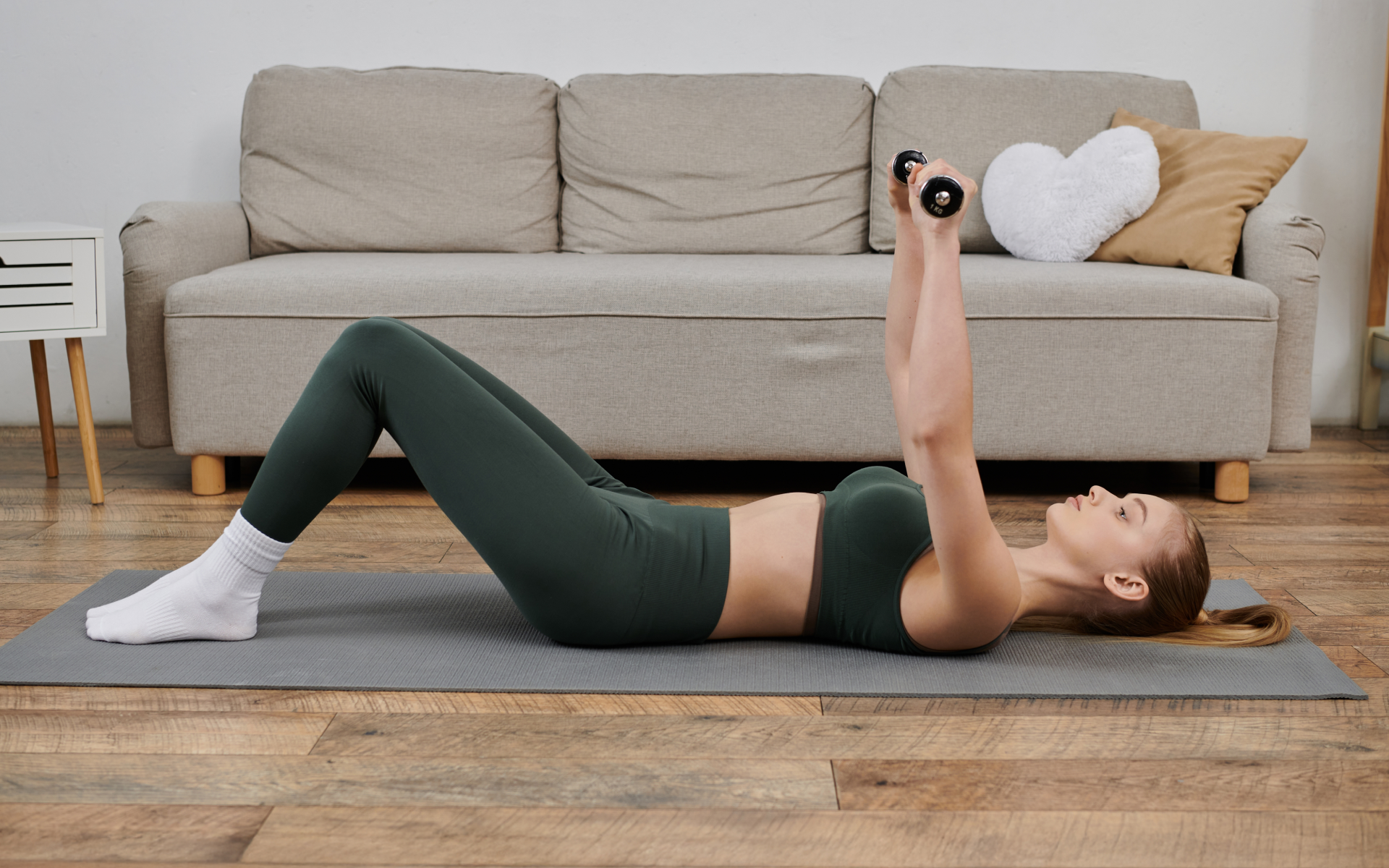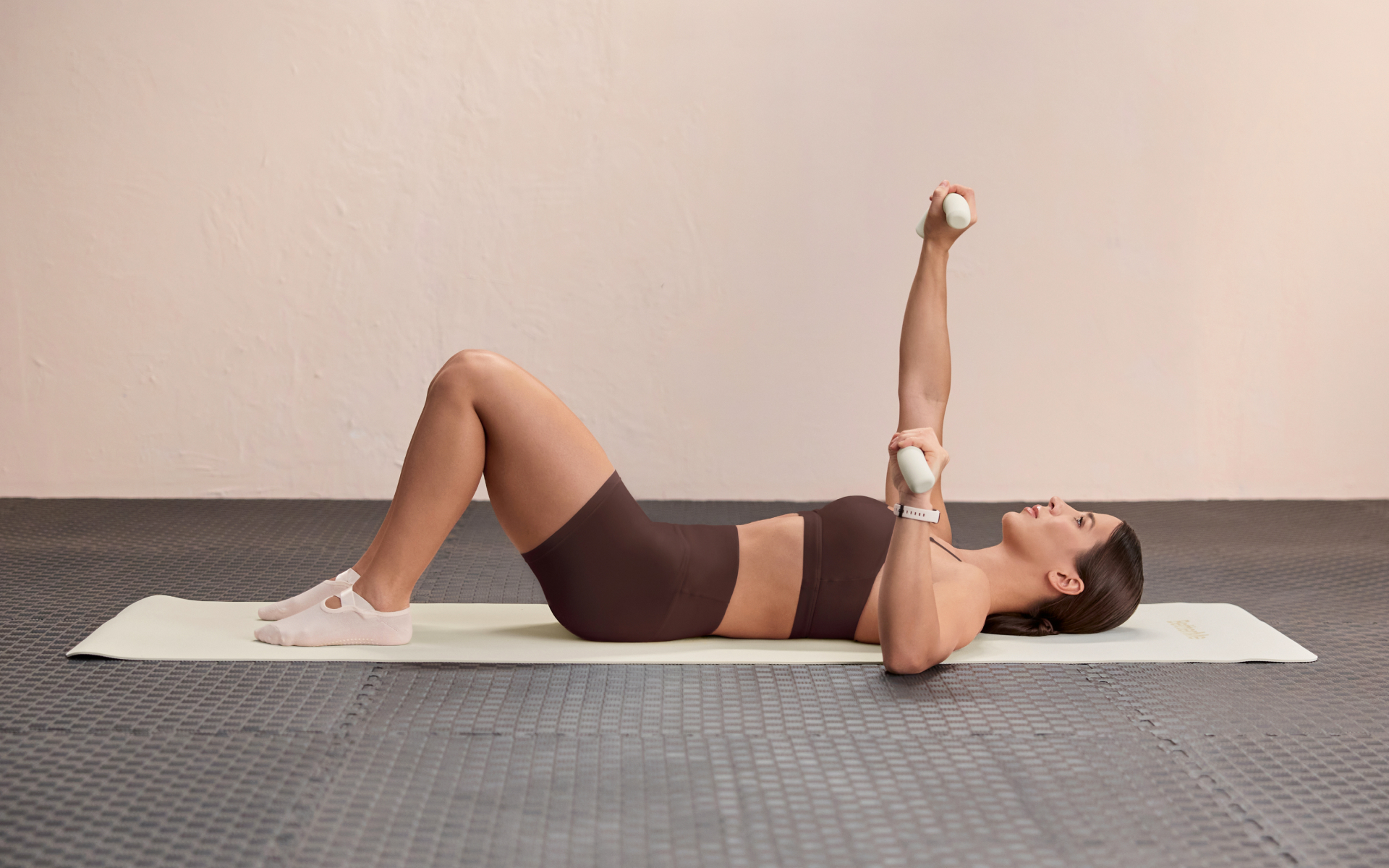

A full-body workout 3 times a week trains upper- and lower-body muscle groups in each session. Each workout can combine squats or hinges, presses, rows or pulldowns, and core exercises. Use manageable loads, leave rest days between demanding sessions, and adjust sets and repetitions to your experience and recovery.
As it happens 3 times a week, you can schedule it on alternate days. This could be Monday, Wednesday, and Friday, or you could go for any other sequence you like. In addition to the days, the exercises, sets, reps, and weights can vary depending on your fitness level and goals. If you’re a bit unsure about how to create a well-rounded full-body workout routine for yourself, you’ve come to the right place. This article includes all the core information you need in this regard. If you need help getting started, see our good starter workout routine.
Let’s find out!
Key takeaways
- Train on 3 nonconsecutive days, such as Monday, Wednesday, and Friday.
- Include squatting, hinging, pushing, pulling, and core work across your sessions.
- Beginners can start with 2-3 sets per exercise and adjust as technique improves.
- In one eight-week trial in untrained men, full-body and split routines produced similar strength and muscle-thickness changes when weekly volume was matched (1).
- Add small increases in reps, load, or difficulty when the current workload is manageable.
- Modify an exercise if discomfort worsens or you cannot control the movement.

Who is a 3-day full-body workout routine suitable for?
A 3-day full-body workout is a highly versatile training split that serves a wide variety of fitness goals and experience levels. It’s particularly useful for beginners, people with busy schedules, and those who prefer a simple, repeatable routine. A well-structured full-body workout plan targets several muscle groups in the same routine.
Research also supports the full-body approach. One study involving 67 previously untrained men found that full-body and split routines produced similar improvements in muscle strength and muscle thickness when weekly training volume was equal. This suggests that you don’t necessarily need a complicated split to make progress (1).
The study has an important limitation. The participants were untrained young men, both groups trained four times weekly, and the intervention lasted eight weeks, so its findings shouldn’t automatically be applied to every population. However, it offers useful insight into training frequency and workout structure and how you can be flexible with your training when total weekly volume is appropriately managed.
The table below shows how different groups can perform these workouts and the practical purpose of each approach:
| Suitable for | Why it works |
|---|---|
| Beginners | A beginners' full-body workout provides repeated practice of basic movements without requiring a complicated split. |
| Busy people | A 3-times-a-week workout routine fits more easily around work and other commitments. |
| People who are returning to training | Full-body sessions let you rebuild strength and movement skills gradually (2). |
| Those who prefer simple routines | You can train the major muscle groups in every session instead of remembering different workouts for each day. |
| People who are focused on general strength | Each session can combine pushing, pulling, squatting, hinging, and core movements. |
| Intermediate lifters | A full-body plan can still work by adjusting exercise selection, training volume, and intensity. |
For most people, the biggest question isn’t “Is three days enough?” It’s whether those three sessions are well structured and consistently completed.
How can you choose the right workout level?
Choosing the right workout level comes down to more than how much weight you can lift. Factors such as your training experience and ability to recover should all influence where you start. Use the guidelines below to find the right fit:
| Workout level | Who it’s for | Focus elements |
|---|---|---|
| Beginners' full-body workout | New to resistance training or returning after a long break | Focus on learning the form of basic movements |
| Intermediate full-body workout | Has consistent resistance-training experience and can perform basic exercises confidently | More challenging variations and greater training volume |
| Advanced full-body workout | Experienced lifters with strong technique and several years of consistent training | Advanced exercise variations performed at high intensity. |
If you’re new to resistance training, start with a beginners’ full-body workout rather than jumping straight into advanced exercises. A study that involved resistance-training experts found that 41 exercises across different equipment types were appropriate for novices. The researchers specifically emphasized choosing exercises that match a beginner’s technical ability, rather than simply making the workout harder (3).
Beginners can build a challenging routine while keeping technique manageable. Choose exercises that match your current skill and increase the challenge gradually.
The lesson here is not to choose your level based on the person lifting next to you. Start where you can perform every exercise with good form and control. You can then progress as your strength improves.
BetterMe can help you add more structure to your daily wellness routine with workouts, meal planning tools, and habit-building features. Explore the app and take a practical step toward a routine that feels more manageable for you.
Which movement patterns should each workout include?
Each full-body session should incorporate 5 movement categories to cover the major muscle groups:
What does the squat movement pattern involve?
Exercises such as back squats or goblet squats target the quadriceps and glutes. This can drive lower-body force production (4).
What does the hinge movement pattern involve?
Deadlifts and Romanian deadlifts engage muscles in the back of the body. A muscle-activation study examined the effects of these variations (5); activation measurements do not by themselves establish long-term strength gains.
What do horizontal and vertical pushing involve?
Bench presses train the chest and triceps, while overhead presses emphasize the shoulders and triceps. Research has examined muscle growth after bench-press training (6) and muscle activation during overhead-press variations (7).
Read more: 2-Day Full Body Workout: Hit All Of Your Major Muscle Groups In One Sweat Sesh
What do horizontal and vertical pulling involve?
Lat pulldowns and rows provide upper-body pulling work to complement presses. A study of pulldown grip variations measured back-muscle activation (8); it did not test shoulder-health outcomes.
How do core exercises fit into the workout?
Core exercises such as planks, dead bugs, and carries train your ability to control your trunk. Include a manageable core exercise alongside squatting, hinging, pushing, and pulling.
Pro tip: Beginners can start with 2-3 sets per exercise and increase only when technique and recovery remain steady. Adjust rep ranges to the movement rather than treating one prescription as a requirement for every pattern.
How can you schedule 3 full-body workouts across the week?
The simplest approach is to space your three full-body workouts across the week with at least one rest day between sessions. This gives your muscles time to recover while keeping your training consistent.
A practical schedule is:
- Monday: Full-body workout
- Tuesday: Rest or light cardio
- Wednesday: Full-body workout
- Thursday: Rest or mobility work
- Friday: Full-body workout
- Saturday: Rest or optional cardio
- Sunday: Rest
You can also move the sessions to fit your routine, such as Tuesday, Thursday, and Saturday. Try to avoid doing demanding full-body sessions on consecutive days. Use rest days for recovery, walking, stretching, or low-intensity cardio rather than another hard strength workout.
This schedule also lets you adjust the workout intensity throughout the week. For example, you could make Monday your heavier session, Wednesday moderate, and Friday slightly lighter to manage fatigue while still training each major muscle group three times.
If you’re a beginner, choose simple movements and practice with controlled form. A qualified trainer can help if you are unsure how to adapt an exercise to your experience or equipment. For home options, explore our home exercise plan.
What does a beginners’ 3-day full-body workout include?
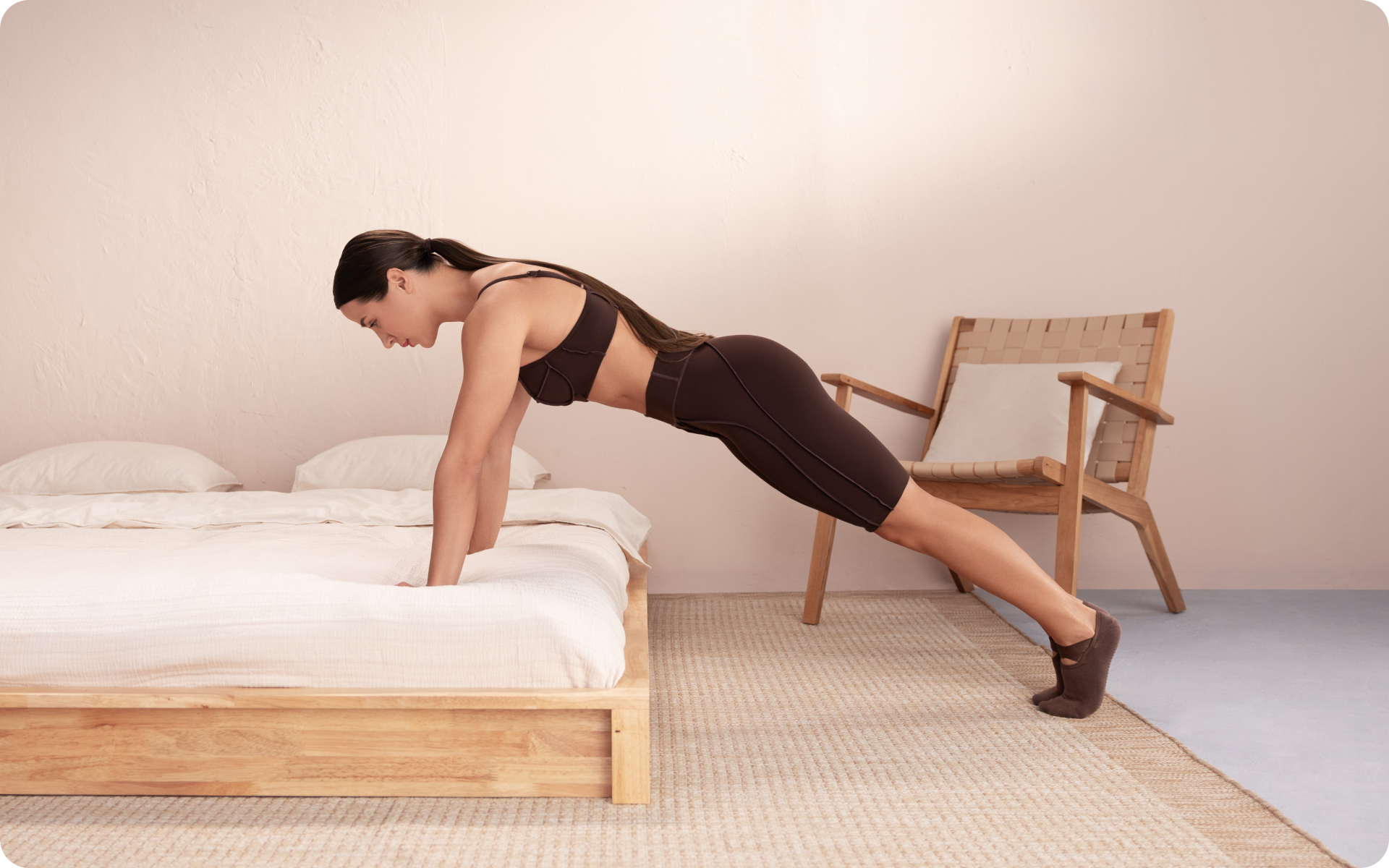
A beginners’ three-day full-body workout should focus on low-impact exercises that train the major muscle groups without making the routine unnecessarily complicated. Each session can include the essential movements, with rest days between workouts.
A typical session may include:
- Lower body: Bodyweight squats and glute bridges
- Chest and shoulders: Incline push-ups and shoulder presses
- Back: Resistance band rows or other exercises from a resistance band full-body workout
- Arms: Biceps curls and triceps extensions
- Core: Dead bugs, bird dogs, or planks
Aim for 2-3 sets of 8-12 repetitions for most dynamic exercises. For planks, use a manageable timed hold rather than counting repetitions. You can adjust the volume to match your fitness level. If you don’t have equipment, a no-equipment full-body workout can still provide a useful starting point. Say you only have a mat and a resistance band, you can choose a resistance band full-body workout and progress at home as you hone your moves.
How can intermediate exercisers structure their 3 sessions?
Intermediate exercisers can structure their three weekly sessions around different training focuses while still working the major muscle groups in each workout. This approach adds variety. You can manage fatigue and get enough muscle stimulus for continued progress.
For example, the first session can emphasize heavier compound exercises, the second can focus on moderate weights and higher repetitions, and the third can combine strength and conditioning. Exercises such as squats, lunges, rows, presses, Romanian deadlifts, and core movements can form the foundation of each session.
Leave at least one rest day between sessions when possible. You can gradually increase the weight, repetitions, or training volume as your strength improves.
Intermediate lifters can rotate lower, higher, and moderate rep ranges across the week. Heavier loads generally favor maximal strength, while muscle growth can occur across a wider load range (9). The following is an illustrative schedule, not a fixed percentage prescription:
| Day | Main-lift reps | Practical focus |
|---|---|---|
| Monday | 4-6 | Use a challenging load you can control. |
| Wednesday | 12-15 | Use lighter loads and adjust sets to manage fatigue. |
| Friday | 8-10 | Use moderate loads and controlled technique. |
What does an advanced 3-day routine look like?
An advanced three-day routine can rotate the training emphasis across the week while still working the entire body in each session.
| Day and focus | Exercises | Sets and reps |
|---|---|---|
| Day 1: strength | Back squat, bench press, pull-up, Romanian deadlift, overhead press, weighted plank | 3-5 sets of 4-8 reps on main lifts; 8-12 reps on accessories |
| Day 2: hypertrophy | Bulgarian split squat, incline dumbbell press, barbell row, hip thrust, lateral raise, hanging leg raise | 3-4 sets of 8-12 reps, using controlled movements and moderate-to-heavy resistance. |
| Day 3: power and conditioning | Deadlift, push press, push-up, walking lunge, pull-up, kettlebell swing, ab-wheel rollout | 3-4 sets; lower reps for explosive movements and moderate reps for strength exercises |
Rest for at least one day between sessions and progressively increase the resistance as your fitness improves.

How should you warm up before a full-body workout?
A good warm-up should gradually raise your heart rate and prepare your muscles for the movements in your workout. Spend around 5-10 minutes warming up before a full-body session.
- Start with light cardio: Spend 2-3 minutes walking briskly, jogging, cycling, or doing jumping jacks.
- Add dynamic movements: Perform arm circles, hip circles, leg swings, bodyweight squats, and walking lunges to prepare the major muscle groups.
- Prepare for your planned exercises: Use comfortable movement ranges and avoid forcing stretches. Include lighter practice sets before heavier lifting.
- Practice your main movements: Complete a few lighter sets of your first exercises, such as bodyweight squats before weighted squats, to reinforce technique and prepare for heavier loads.
A short warm-up gives you time to practice the planned movements before working sets.
Read more: How Many Push-Ups Should I Do To Get My Body In Tip Top Shape?
How should you progress the routine over time?
Progress your routine by adding a small amount of weight, reps, or difficulty when the current workload is manageable. At home, this might mean adding dumbbells after learning the bodyweight versions. Our intermediate workout routine offers further structure for experienced exercisers.
A few typical ways to elevate the challenge are:
- Add a small amount of weight or use a stronger resistance band.
- Gradually work toward the higher end of your target repetition range.
- Add an extra set when the current workload becomes manageable.
- Progress to a more challenging variation once you have mastered the basic movement.
- Give your muscles enough time to recover before increasing your training load again.
Small, consistent increases can keep the routine challenging without unnecessarily increasing the risks.
When should you stop or modify an exercise?
Stop or modify an exercise if you experience sharp or worsening discomfort, rather than normal muscle fatigue or the burning sensation that can accompany hard training. Poor form, dizziness, or difficulty controlling the movement are also signs to reduce the intensity or choose an alternative.
Remember, progress should challenge you, not break you down. Knowing when to push and when to modify is just as important as completing the workout itself.
Workouts, weight management tools, and recipe ideas come together in the BetterMe: Health Coaching app, giving you practical support for building a more consistent wellness routine.
FAQs
How long should a full-body workout take?
A full-body workout often takes about 45-60 minutes, including a warm-up and cool-down. Beginners may need less time, while advanced exercisers may spend longer on additional sets. Adjust the exercise count to your available time while preserving controlled technique.
Can you combine this routine with cardio?
Yes, cardio can complement a 3-day full-body routine. Schedule manageable cardio on rest days or after lifting. Adjust hard cardio if it reduces your lifting performance or recovery.
Can women and men follow the same full-body plan?
Yes, the basic exercises and training principles can work for both women and men. Adjust resistance, reps, and exercise variations to your fitness level, goals, experience, and preferences. Gender alone does not determine the appropriate workload.
Is a full-body routine better than a 3-day split?
Neither format is automatically better; one trial in untrained men found similar strength and muscle-thickness changes with matched weekly volume (1). A full-body plan can be practical for 3 weekly sessions, while a split may suit different preferences. Choose a routine you can complete consistently and recover from.
What should you do if you miss a workout day?
Don’t try to cram two demanding workouts into one day. Simply move the missed session to your next available day and maintain a rest day between full-body workouts when possible. If you can’t fit it in, skip it and return to your normal schedule rather than letting one missed workout disrupt your routine.
The bottom line
A 3-day full-body workout can help you practice the major movements and build strength without training every day. Choose exercises that match your experience, progress gradually, and leave time for recovery. Results vary, so adjust the routine to your schedule and response.
DISCLAIMER:
This article is intended for general informational purposes only and does not serve to address individual circumstances. It is not a substitute for professional advice or help and should not be relied on for making any kind of decision-making. Any action taken as a direct or indirect result of the information in this article is entirely at your own risk and is your sole responsibility.
BetterMe, its content staff, and its medical advisors accept no responsibility for inaccuracies, errors, misstatements, inconsistencies, or omissions and specifically disclaim any liability, loss or risk, personal, professional or otherwise, which may be incurred as a consequence, directly or indirectly, of the use and/or application of any content.
You should always seek the advice of your physician or other qualified health provider with any questions you may have regarding a medical condition or your specific situation. Never disregard professional medical advice or delay seeking it because of BetterMe content. If you suspect or think you may have a medical emergency, call your doctor.
SOURCES:
- Split or full-body workout routine: which is best to increase muscle strength and hypertrophy? (2021, pmc.ncbi.nlm.nih.gov)
- Building better muscle (2026, health.harvard.edu)
- Selecting Resistance Training Exercises for Novices: A Delphi Study with Expert Consensus (2022, researchgate.net)
- The effects of squat variations on strength and quadriceps hypertrophy adaptations in recreationally trained females (2024, onlinelibrary.wiley.com)
- The effect of the conventional deadlift and Romanian deadlift on muscle activation and joint angles at submaximal intensity (2024, researchgate.net)
- Muscle hypertrophy response across four muscles involved in the bench press exercise: Randomized 10 weeks training intervention (2024, sciencedirect.com)
- Front vs Back and Barbell vs Machine Overhead Press: An Electromyographic Analysis and Implications For Resistance Training (2022, frontiersin.org)
- Electromyographic Analysis of Back Muscle Activation During Lat Pulldown Exercise: Effects of Grip Variations and Forearm Orientation (2025, mdpi.com)
- Loading Recommendations for Muscle Strength, Hypertrophy, and Local Endurance: A Re-Examination of the Repetition Continuum (2021, mdpi.com)